My first Sydney whale watching cruise — what actually happened
| At a glance | |
|---|---|
| Where | Departs Darling Harbour (also Circular Quay and Manly operators run similar trips) |
| Cost | Varies by operator (see the operator’s official website); a standard morning cruise takes 2.5–3.5 hours |
| Time needed | 2.5–3.5 hours including harbour transit |
| Getting there | Walk or light rail to Darling Harbour wharves |
| Best time | June to August for peak northward migration; book a few days ahead in peak season |
Booking in June
I had been told, by several people who had done it before, that Sydney’s whale watching is unusually reliable. “You will see whales,” a Sydneysider told me, with the confidence of someone who knows their city’s geography. “It’s not like somewhere that calls it whale watching but means maybe-whale-watching.”
She was right about the reliability and I am glad she mentioned it, because nothing about the morning of the cruise — a Saturday in late June — suggested things would go well. It was 8°C at Darling Harbour at 7:30am, overcast, and blowing a steady fifteen knots from the south. The kind of morning that makes outdoor activities look optimistic.
I had booked the standard 2.5-hour morning cruise through a Darling Harbour operator — not the premium breakfast cruise, but the base-level whale watching product. The vessel was a purpose-built catamaran, wide-beamed enough to be stable in a swell, and it held perhaps 100 passengers. By 8am, about 80 people were aboard, many of them in borrowed orange waterproofs supplied by the company.
If you are choosing between formats, it helps to know that the standard cruise is only one of several. There is a faster option such as a shorter express whale watching cruise for people who want less time on open water, and the fuller comparison of vessel types lives in our whale watching vs cruise guide. If the weather is part of your worry, the Sydney in winter guide explains what the season is like on land as well as on the water.
Getting out of the harbour
The first 20 minutes of a Sydney whale watching cruise are not whale watching. They are the transit from the wharf at Darling Harbour through the inner harbour, past the Opera House and Circular Quay, and out through the Sydney Heads — the two sandstone headlands that mark the entrance from the harbour to the open ocean.
This transit is not nothing. Passing between the Heads with the open Tasman Sea spreading ahead and the harbour behind, the scale of Sydney Harbour becomes apparent in a way it doesn’t from the shore. The cliffs of South Head and North Head rise vertically from the waterline. The harbour pilot station sits on the northern cliff. This passage is how every ship that has ever come to Sydney arrived.
Beyond the Heads, the ocean swell that had been invisible in the sheltered harbour became relevant. The catamaran lifted into the first significant swell and a third of the passengers audibly reconsidered their decisions. The crew had already circulated with seasickness tablets and provided the standard advice: stay on deck, look at the horizon, avoid the interior of the vessel.
I have a generally robust constitution in ocean conditions. I stayed on the aft deck, which is where most of the action happens, and watched the headlands recede. About fifteen people retreated to the interior. They missed the whales.
The first sighting
It happened quickly and not at all in the way I expected.
The crew member stationed on the roof — all whale watching vessels have someone with binoculars on elevated watch — called over the loudspeaker. “Whale at two o’clock, approximately half a kilometre.” Then: “That’s a big one.” The vessel changed course slightly.
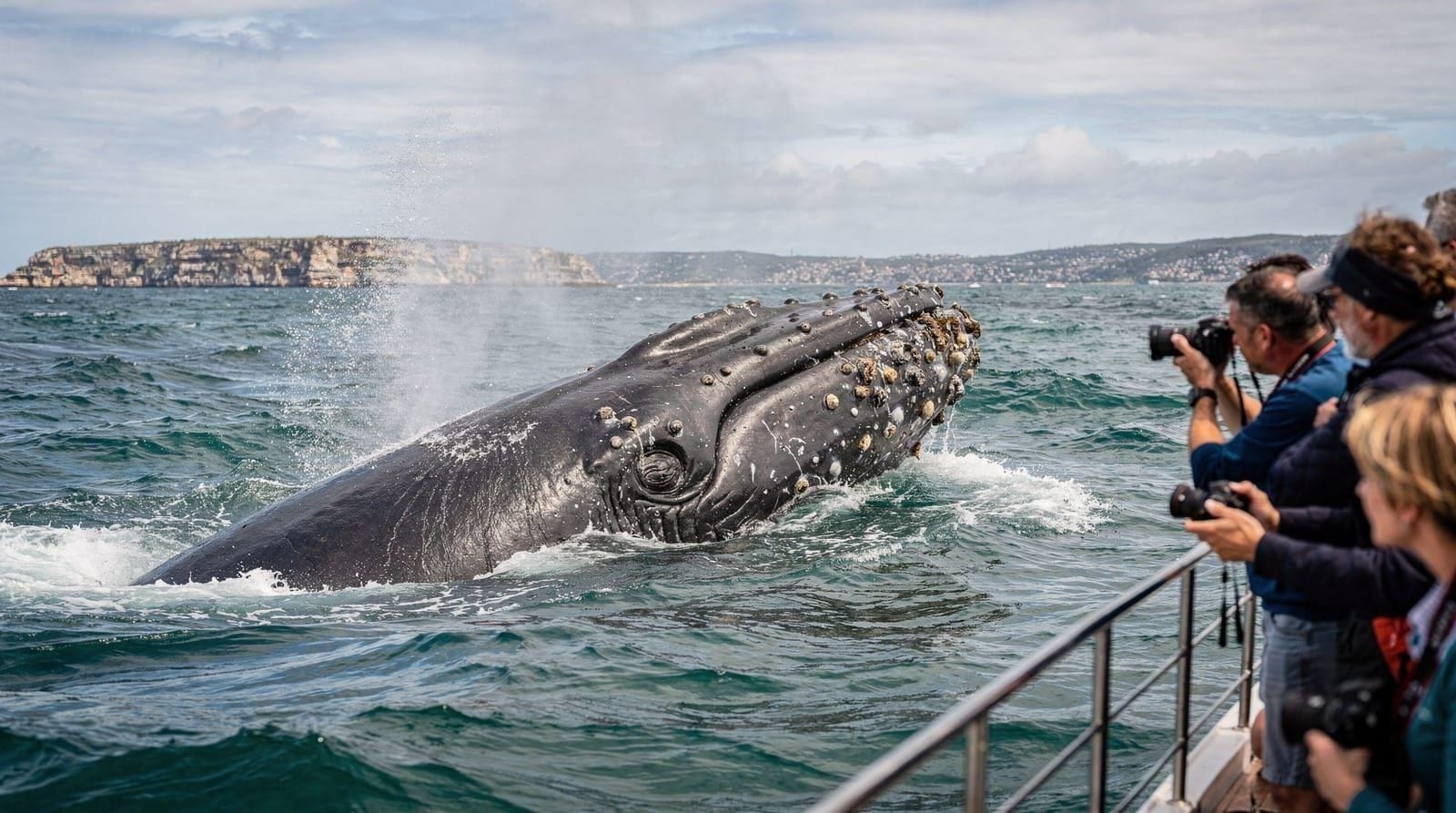
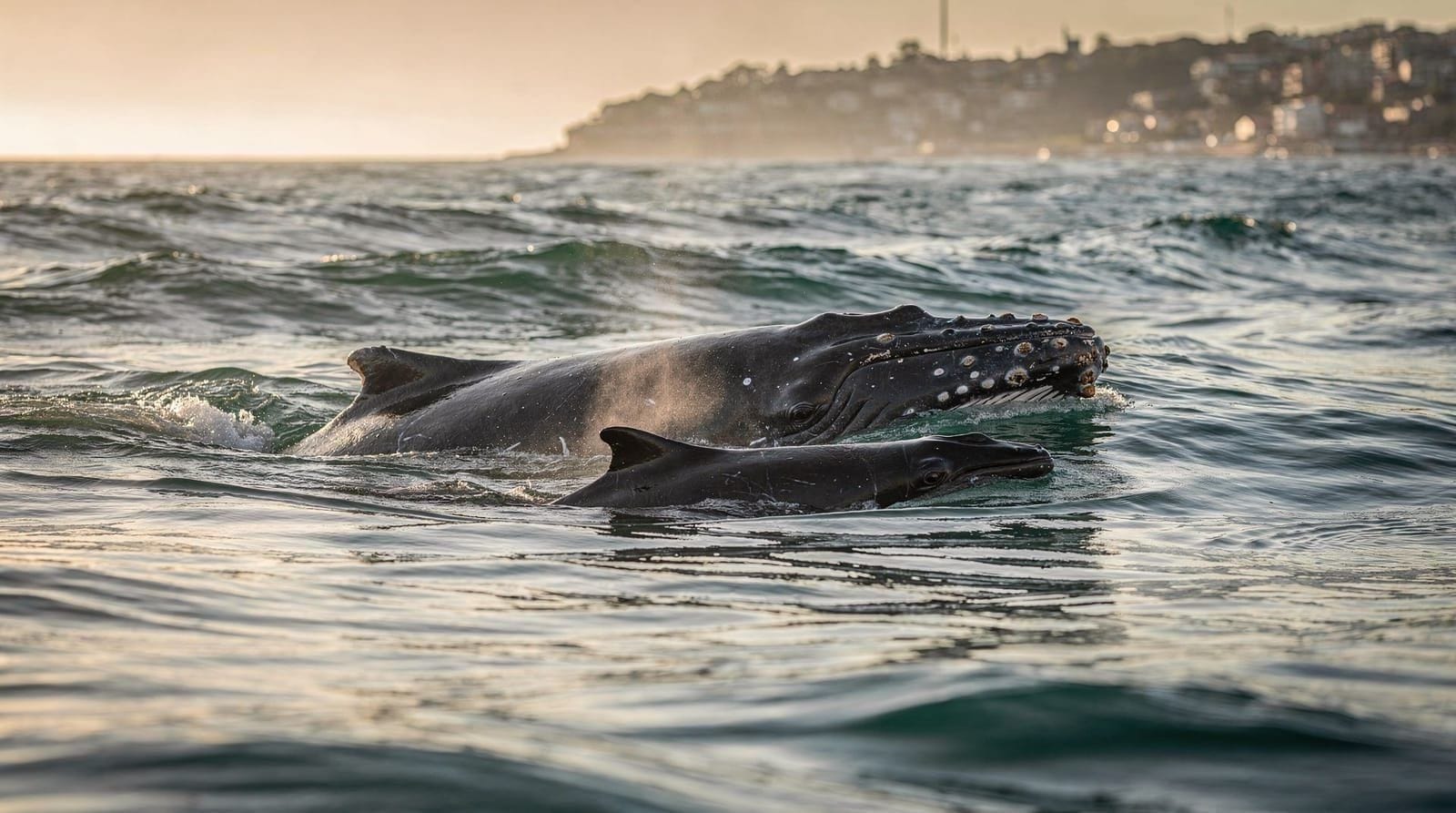
I had imagined something more dramatic for a first sighting: a distant spout on the horizon, a gradual approach, a building anticipation. What actually happened was that a humpback whale surfaced approximately 200 metres off the starboard bow, blew — the spout is genuinely audible, a pressurised exhale that carries across water — rolled, and showed its flukes as it dove. The whole sequence took perhaps eight seconds and covered more water than I’d expected. Humpback whales are large. The photographs I’d seen had not adequately communicated the scale.
The vessel slowed and maintained distance. NSW marine regulations require a minimum distance of 100 metres from whales and prohibit actively pursuing them. The operators work with this, maintaining position and allowing the whales to approach or not as they choose. In practice, the whales in June are moving on a specific migration corridor — heading north from Antarctic feeding grounds — and the vessels have learned where this corridor runs. You don’t chase the whales; you position yourself in their path.
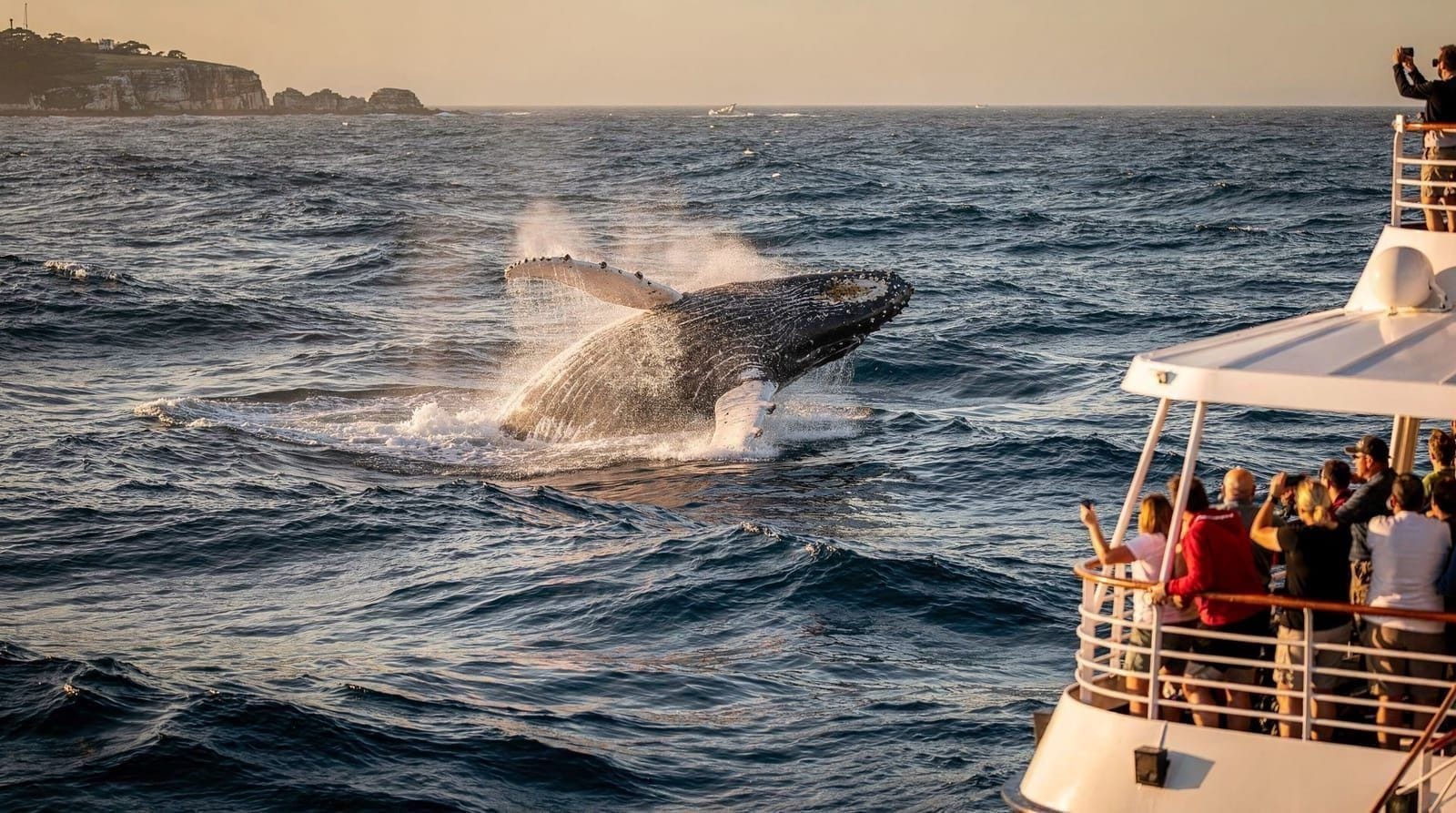
Over the next 90 minutes, we saw seven humpbacks individually or in pairs. The highlight was a sequence of three breaches from a whale approximately 150 metres to port — a humpback launching itself clear of the water, rotating, and landing on its back in an explosion of white water. This happened three times in quick succession. The boat had gone very quiet. The crew member on the roof said, quietly, “that’s a good one.”
The practical reality
I should be honest about the parts that aren’t pure wonder.
The swell was significant enough that the vessel rolled consistently for the 90 minutes we were in open water. The official advice is correct: stay on deck, look at the horizon. I spoke to two people who got sick despite following this advice, and one who got sick despite taking medication. Ocean swell at the intensity Sydney whale watching vessels operate in is not manageable for everyone, and this is worth knowing before you book.
The photography challenge is real. A whale breach lasts two to three seconds. The interval between a whale surfacing and submerging is eight to fifteen seconds. The light on a cloudy June morning does not help. I took approximately 90 photographs and have about six that are worth keeping, none of which are technically excellent. Bring whatever camera or phone you have, accept that the experience is for your memory rather than your feed, and spend more time watching with your eyes than through a lens.
The crew were excellent without exception. The commentary was factual and not oversold — the naturalist on board explained humpback biology and the migration route without dramatising or anthropomorphising excessively. Questions were answered accurately. When a passenger asked if we’d see more whales after the third sighting, the crew member said “possibly, we’re in a good position but I can’t guarantee it” rather than performing confidence. I appreciated this.
What made the difference
I had a much better time than several people I spoke to who had done the same cruise in the same week, and I attribute most of the difference to position on the vessel.
Be on the aft deck. The elevated position of the main cabin and bow deck sounds appealing, but the aft deck is where the crew positions itself when whales are visible, because it has the best view arc and allows for quick movement to either side as whales surface at different positions. If you’re in the interior because of cold or seasickness, you will hear the crew calling sightings and see the mass movement of other passengers to one side, and you will miss the critical ten seconds.
Dress warmer than you think necessary. June in Sydney is 12–18°C in the daytime, but on open water at 8am it is significantly colder. Thermals under waterproof layers are the right approach. Hands particularly — bring gloves, or the vessel’s supplied waterproofs.
Book a mid-morning cruise if possible. The 8am departures mean you’re transiting the harbour in the darkest, coldest part of the day. The 10am or 10:30am departures still catch peak whale morning activity and the light improves for photography.
Choosing the kind of boat
Boat style changes the experience more than most first-timers expect. A large, stable catamaran like mine suits families and anyone nervous about the swell, while a catamaran whale watching cruise with a naturalist on board is the sort of trip I would point a first-timer towards. Smaller, faster craft feel closer to the water and are bumpier, which is a trade-off worth weighing honestly if you already know you get queasy. Whichever you pick, read the whale watching cruises in Sydney guide first so you know what each style involves.
Once you are back on dry land, the harbour is right there for the rest of the day. A ferry ride is an easy way to keep the maritime mood going, and the Sydney ferries guide explains how the network works, while the Sydney Harbour page covers the waterfront you have just seen from the water.
The whale watching within Sydney’s winter itinerary
June is not Sydney’s warmest or most visually spectacular month, but it is the month where the city’s marine environment is most active. If you’re planning a winter visit specifically for whale watching, the Sydney winter whale itinerary builds a 6-day structure around June–August that pairs whale watching with Vivid Sydney (which runs into June), the Bondi Icebergs winter swimming culture, and the coastal walks that are most enjoyable in cool, clear winter conditions.
Combining a whale watching cruise with a morning swim at the Icebergs pool makes for an unusual but genuine Sydney winter day: wet, cold, and extraordinary by turn. It is not the Sydney of the tourist brochures, and that is precisely its appeal.
Land-based whale watching: the no-booking alternative
For those who are definitely motion-sensitive or budget-constrained, Sydney offers genuine land-based whale watching during migration season. The headlands at Barrenjoey (Palm Beach), Cape Solander in Botany Bay, South Head, and the clifftops above Maroubra are all established land-based watching points.
Cape Solander in Kamay Botany Bay National Park is the most structured land-based option — it has a viewing platform with information displays about local whale species. On clear June and July mornings, humpbacks pass close enough to the headland to be watched without binoculars. A park entry fee applies per vehicle in the Kurnell area, and the experience is surprisingly good.
The land-based whale watching guide covers all the access points and what to realistically expect from each. On a perfect day, land-based watching and cruise watching are differently excellent rather than one being obviously superior. On a rough weather day, the land-based option is significantly more comfortable.
Choosing where to depart from
Darling Harbour is not the only option, and if I did this again I’d at least compare it against the alternatives before booking. Circular Quay departures put you closer to the Heads from the start, shaving a few minutes off the harbour transit. Manly-based operators are worth considering if you’re already staying on the northern beaches, since you skip the CBD entirely.
None of these meaningfully changes the whale-sighting odds — the migration corridor is the same regardless of departure wharf — so the decision really comes down to where you’re staying and how much harbour transit you want as part of the experience. The best whale watching tours page compares operators across all three departure points in more detail.
Worth doing?
The whale watching cruise from Sydney is one of the genuinely exceptional wildlife experiences that this part of the world offers, and June is peak season for a reason. The humpback migration corridor runs within easy reach of Sydney’s ocean vessels, the sighting success rate is genuinely high (in peak season, with some operators offering free return trips if no whales are sighted), and the scale of the experience — humpback whales are 12–15 metres long and weigh 30–40 tonnes — is not something photographs or natural history documentaries prepare you for.
It is also cold, potentially rough, and not cheap for the base experience. If you are seriously motion-sensitive, the 2.5-hour ocean cruise in winter conditions will be difficult.
But if you’re visiting Sydney between May and November, and particularly in June or July when the northward migration is at its peak, this is not a thing to skip out of cost concerns or weather nervousness. The Sydney whale watching guide covers all the operators, seasons, and booking details. The whale season Sydney page explains why June specifically is the best month.
I stood on the aft deck of that catamaran in the June cold and watched a 14-metre humpback breach three times in succession and could not, at that moment, think of anywhere I’d rather have been. That is what whale watching from Sydney is capable of delivering.
Frequently asked questions about My first Sydney whale watching cruise
Do I need to book a whale watching cruise in advance? In peak season (June–August) booking a few days ahead is sensible, especially for weekend departures. In shoulder months (May, September–November) same-week booking is usually fine.
What if the boat doesn’t see any whales? Most Sydney operators offer a free return trip if no whale is sighted, though this typically guarantees at least one sighting rather than a specific quality of encounter.