Sydney winter whale itinerary — 6 days in June, July or August
Sydney: Whale watching adventure cruise whales guaranteed
The honest case for winter in Sydney
Sydney winters (June–August) are mild by European standards — daytime temperatures of 14–19°C, rarely below 10°C overnight, and significantly drier than autumn. The beaches are swimmable in a wetsuit; the ocean pools are heated. Hotel rates drop 30–50% from the summer peak. And from late May through August, the east Australian coast is one of the best places in the world to see humpback whales on their northern migration.
The Vivid Sydney light festival (28 May–19 June 2027) falls in early winter and transforms the CBD waterfront into an outdoor light installation — worth planning around if your visit is in late May or June.
This plan is structured for 6 days and assumes a June–August arrival. Adjust the Vivid content accordingly (if you’re in July–August, skip the Vivid evenings and add a day trip to the Southern Highlands or Hunter Valley instead).
At a glance
| Where to base yourself | CBD or Circular Quay, for easy access to whale cruises and Vivid |
| Cost | around AUD 1,117–3,277 per person for 6 days (full breakdown below) |
| Time needed | 6 days covers whale watching, Vivid (if in season) and one day trip |
| Getting there | Airport Link train, around 13 minutes to Central |
| Best time | June–August for peak whale numbers; late May–19 June if you also want Vivid |
Day 1 — Arrival, Circular Quay and first evening
Afternoon
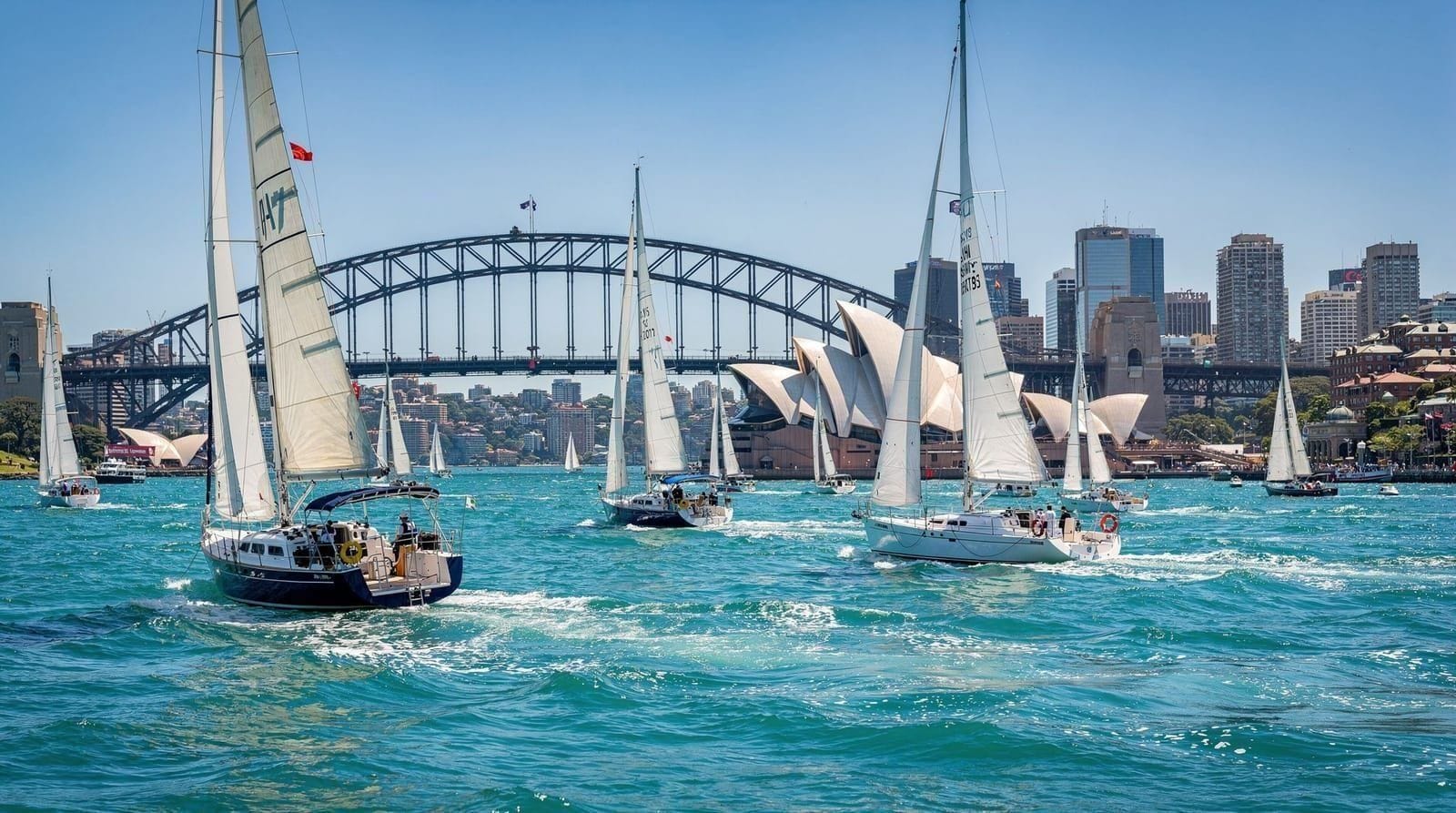
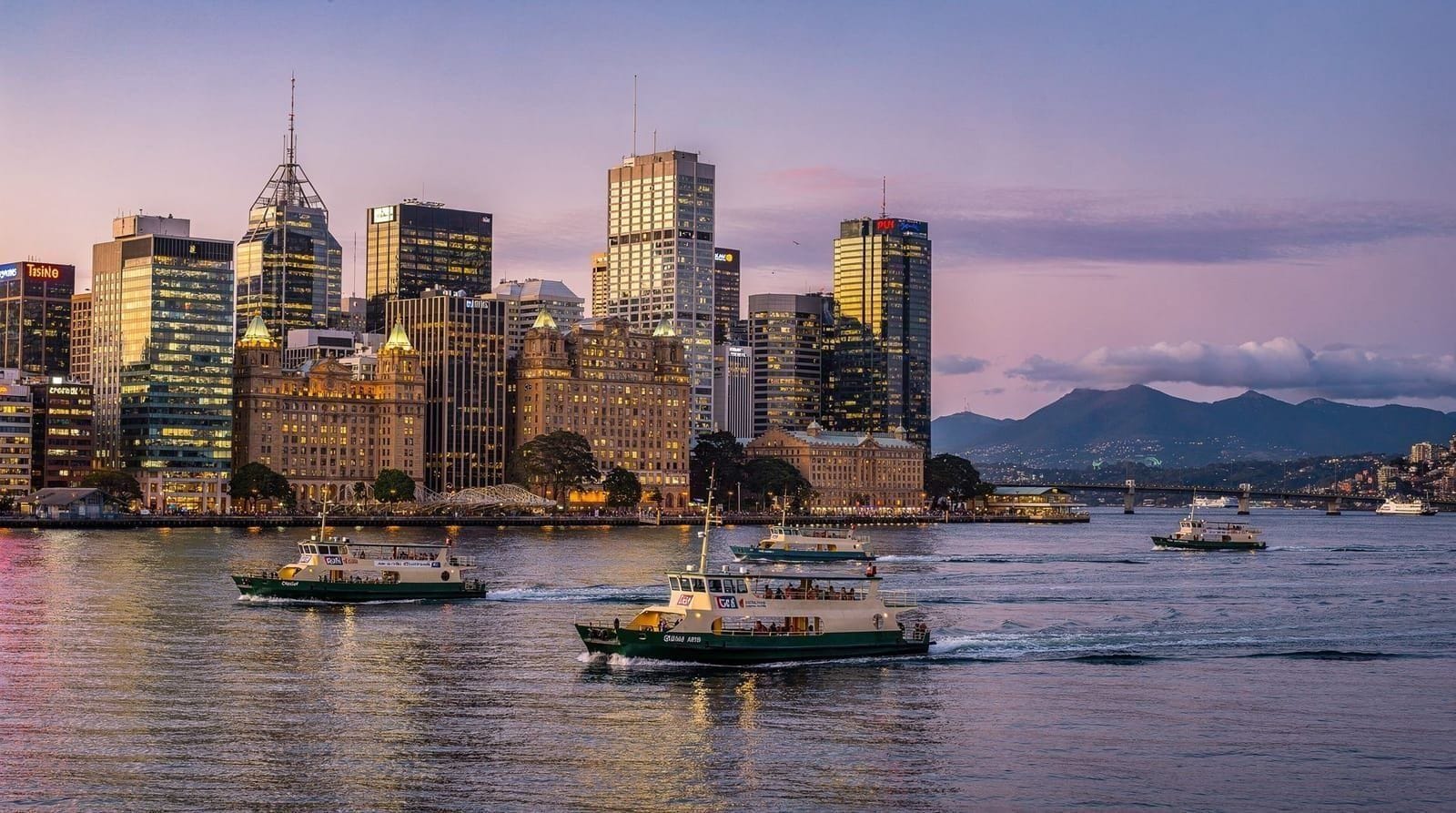
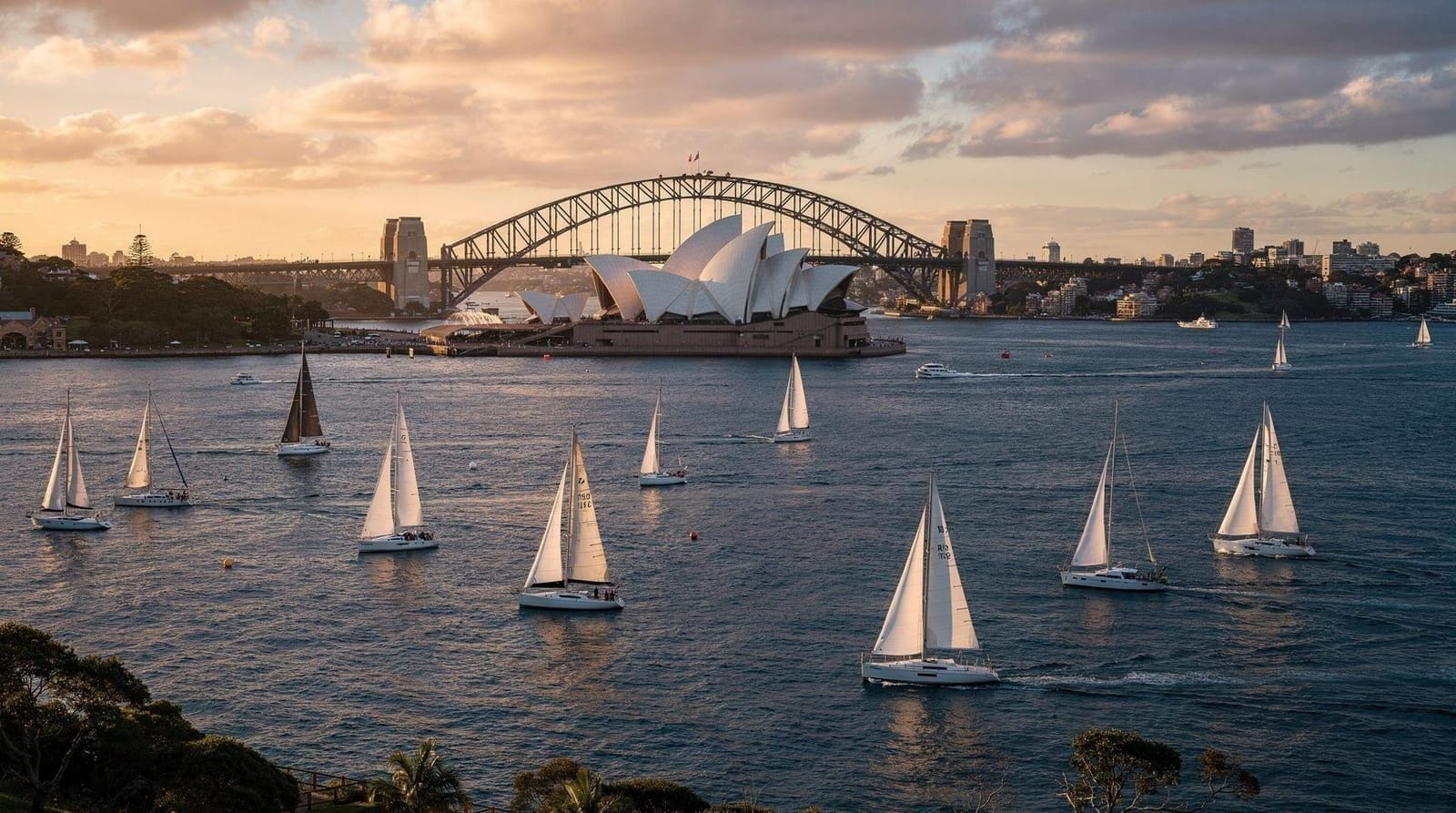
Airport Link to Central (13 minutes). Winter arrivals mean you have until 5–5:30 pm before darkness — enough for a harbour walk. The Circular Quay promenade at dusk in winter is particularly good: the harbour is calm, the light is flat and blue, the Opera House looks its best without summer haze.
Walk from Circular Quay to The Rocks and the Rocks Discovery Museum (free, close at 5 pm). Then along the promenade to the Opera House.
If your arrival is in the Vivid period (28 May–19 June 2027), the light installations begin at dusk along the harbour. The Vivid Sydney trail covers the Opera House sails (projected light art), the Harbour Bridge (lit), the Museum of Contemporary Art, and several CBD streets. Vivid is free to walk; guided Vivid tours provide narrative context.
Evening
Dinner at Aria on Macquarie Street (AUD 95–115 three-course, good winter menu, winter lamb dishes particularly strong in June–July). Or the more casual Fratelli Fresh near Circular Quay.
Day 2 — Whale watching harbour cruise
Morning
Sydney’s whale season runs May–November, with the peak in June–August when humpback whales pass the headlands on their northward migration to warmer waters. Sighting rates in June–August are high, though never guaranteed. A three-to-four-hour whale watching cruise from Circular Quay or Darling Harbour departs at 9 am and returns by 12:30–1 pm.
A Sydney whale watching adventure cruise with sighting guarantee costs around AUD 89–109 per adult and operates from Central Wharf, Darling Harbour. The guarantee (a return cruise voucher if no whale is sighted) is only meaningful from June–August when the whale traffic is consistent. Outside this window, sighting is less certain.
A Sydney whale watching cruise with breakfast or lunch includes a meal on board and runs 3.5 hours. Cost: around AUD 109–139 per adult. The meal is reasonable (continental breakfast or a simple lunch buffet); the upgrade is worth it if you’d otherwise need to eat before or after the cruise.
Humpback whales on the east Australian migration often travel in groups of two to six and breach regularly — the behaviour here is more active than in many other whale watching destinations. Southern right whales are rarer but possible in June–July.
Afternoon
Post-whale cruise: lunch on the harbour. The Maldon Hotel on Miller Street has good value food and a nice outdoor area if the sun is out (winter afternoons in Sydney can reach 18–19°C).
Vivid Sydney afternoon walk (if in festival period): the daytime Vivid installations in the CBD streets are quieter than evenings and easier to photograph without crowd blur.
Evening
Vivid Sydney night walk (if in festival period, 6–10 pm). The Opera House light installation changes each year — the 2025 edition projected animated works from Australian artists across all five shells.
If outside Vivid: dinner at Quay Restaurant on the Overseas Passenger Terminal — winter is their best season for game, aged beef and cold-water shellfish.
Day 3 — Bondi winter swim and coastal walk
Morning
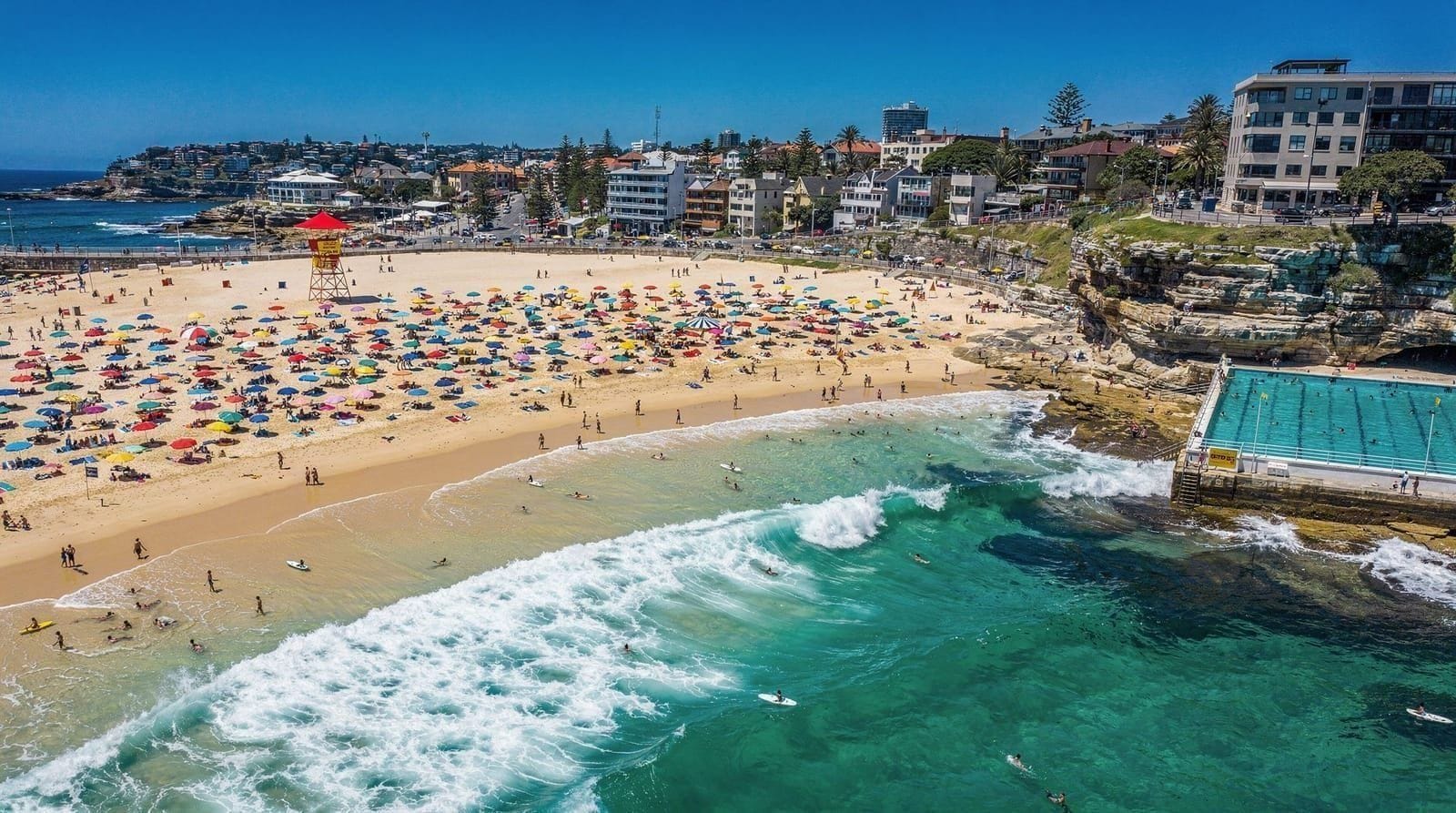
Bondi Beach in winter. The beach is almost deserted by summer standards; the Bondi Icebergs members swim year-round from 6:30 am, and the pool (AUD 10 entry) maintains a temperature warmer than the 17–18°C ocean. The surf at Bondi in winter is typically 1.5–2.5 m from south-west swells — excellent for experienced surfers, manageable for bodyboarders.
Breakfast at Porch and Parlour on Warners Avenue (AUD 22–30, excellent coffee, opens 7 am).
Afternoon
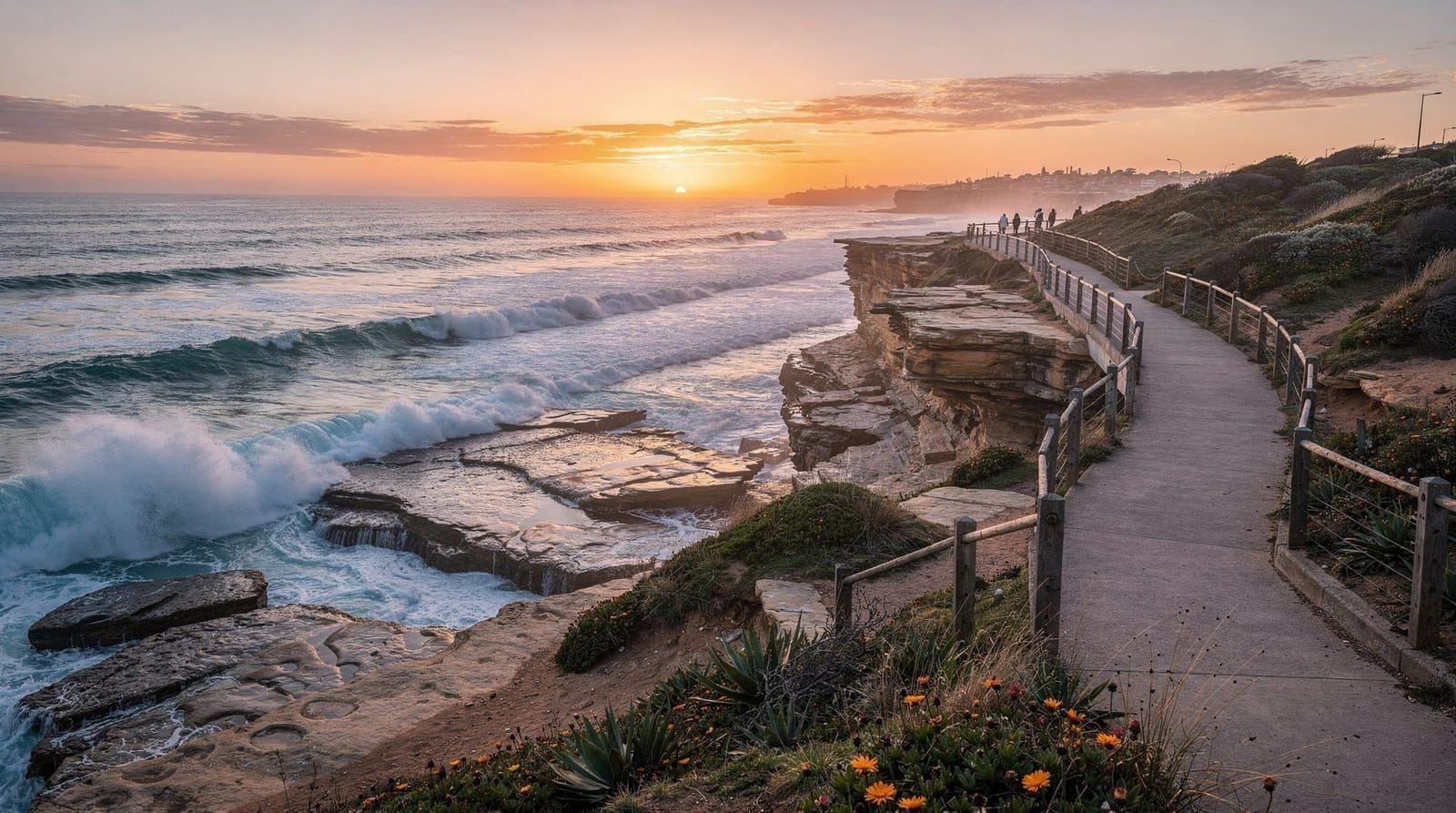
Walk the Bondi to Coogee coastal path. In winter this walk is ideal: 20°C air temperature, no sun glare, the sea is dark blue rather than the bleached turquoise of summer and the cliff light is different. Tamarama, Bronte, Clovelly and Wylie’s Baths at Coogee. Return by bus.
A guided Coogee to Bondi coastal walk with Icebergs access takes the route from south to north with a local guide covering the Aboriginal place names, the coastal ecology and the history of the ocean pool system (several pools along this coast date from the 1920s–1940s). Cost: around AUD 79–99 per person.
Evening
Dinner in Surry Hills. Porteño on Cleveland Street — the Argentine wood-fired lamb is at its best in winter when the hearth is lit and the room is warm. AUD 38–55 per main.
Day 4 — Blue Mountains or Vivid (by date)
Option A — Vivid day (late May to 19 June)
If you’re here during Vivid and haven’t fully explored the festival, Day 4 can accommodate the daytime Vivid installations and a harbour cruise specific to the festival.
A Sydney Harbour sunset catamaran cruise during Vivid Sydney positions you on the water as the harbour light installations begin — the Opera House projection and the bridge light from the water are significantly better than from the shore.
Option B — Blue Mountains (all winter)
Drive west to the Blue Mountains (104 km, 1h 40m). The mountains in winter are outstanding: morning fog in the valleys, the possibility of frost on the plateau (June–August), and the waterfalls at their fullest after the May–June rains. The ferns in the Jamison Valley are lush and the bush is dramatically quieter than in the summer tourist peak.
Echo Point at dawn in winter: fog sits in the valley, the Three Sisters emerge through the mist — one of the best photographs in NSW.
A Blue Mountains sunset tour to the Three Sisters covers Echo Point at dusk when the sandstone is lit gold — in winter this happens around 4:30–5 pm. Cost: AUD 89–119 per adult, includes transport and a local guide.
Stay overnight in the Blue Mountains or return to Sydney by 8 pm.
Day 5 — Harbour kayak and Opera House
Morning
Winter morning kayak on Sydney Harbour.
A Sydney Harbour kayak tour past the Opera House and Harbour Bridge runs year-round. In winter the water temperature is 17–18°C (wetsuit provided), the harbour is calmer than summer and the morning light is long (sunrise at 7 am in June). Cost: AUD 89–99 per person for a 2-hour tour.
The Opera House reflection before 8 am in winter is exceptional — a completely still harbour and flat light make the shells look three-dimensional from water level.
Afternoon
Opera House guided tour at 1 pm (around AUD 50, book ahead). Winter tours are less crowded than summer and the guide has more time for questions. The tour covers the Joan Sutherland Theatre, the Concert Hall and the Drama Theatre — the pre-concert atmosphere at 6 pm for an evening show is the best way to use the building.
Check the Sydney Symphony or Opera Australia programs for winter performances — both organisations program heavily in June–August and tickets for weeknight performances can be as low as AUD 45.
Evening
Performance at the Opera House if booked, or dinner in Surry Hills or the CBD.
Day 6 — Whale watching from land and departure
Morning
Land-based whale watching. Several Sydney headlands provide good access in June–August: North Head at Manly (ferry to Manly, then bus to North Head, 40 min total), Cape Banks at Botany Bay, and the headlands at Watsons Bay and South Head. Bring binoculars — humpbacks often travel within 1–2 km of the coast at headland points.
The North Head Sanctuary at Manly is a national park (entry fees apply; check the official NSW National Parks website) with cliff-top tracks and a lookout over the Pacific Ocean. The humpbacks are visible on clear winter mornings from this vantage point — this is land-based whale watching without the boat cost.
Ferry to Manly from Wharf 3 (30 min). Bus from Manly to North Head (15 min). Walk the 1 km North Head Track to the Fairfax Lookout.
Afternoon
Return ferry to Circular Quay by 1 pm. Slow last lunch in The Rocks: the Orient Hotel on George Street has a pub lunch from AUD 25 and has been serving since 1844. Or the The Rocks Brewing Co for local craft beer and pub food.
Last walk along the harbour promenade before the airport transfer. The winter afternoon light on the harbour — the low sun angle and the clear air — makes the Opera House and bridge look genuinely cinematic.
Airport Link from Central: 13 minutes.
What this costs (6 days, per person, winter)
| Category | Budget (AUD) | Mid-range (AUD) |
|---|---|---|
| Accommodation (6 nights) | 420–720 | 1 080–1 800 |
| Meals (6 days) | 240–480 | 480–840 |
| Whale watching cruise (×1) | 89–139 | 89–139 |
| Harbour kayak | 89–99 | 89–99 |
| Opera House tour | 50 | 50 |
| Coastal walk tour | 79–99 | 79–99 |
| Blue Mountains day | 50–120 | 50–120 |
| Opal transport + airport | 100–130 | 100–130 |
| Total | ~1 117–1 787 | ~2 017–3 277 |
Winter savings vs. summer: typically 25–40% on accommodation.
Where to stay
Mid-range: Primus Hotel Sydney on Pitt Street (AUD 180–260/night, Art Deco building, excellent breakfast, warm and dry in winter). Pullman Quay Grand on Alfred Street (AUD 250–350, harbourside, large studio apartments).
Budget: Wake Up! Sydney Central (AUD 42–55 dorm, AUD 120–145 private room). YHA Sydney Harbour in The Rocks (AUD 55 dorm, AUD 150 private — the most beautifully located budget accommodation in Sydney).
Luxury: Park Hyatt Sydney (AUD 700–1 100 in winter, reduced from summer rates — the same Opera House view at significantly better value).
Vivid Sydney quick reference
Dates 2027: 28 May–19 June.
Free highlights: Opera House light projection (nightly, 6–11 pm), Harbour Bridge LED display, Circular Quay promenade light trail, various CBD street installations.
Ticketed events: Vivid Music at the Sydney Opera House and Carriageworks (see the official Vivid Sydney website for prices).
Vivid crowds peak: Friday and Saturday 7–10 pm. Weeknights are noticeably quieter and the walk is more pleasant.
Whale watching quick reference
Species: Humpback whales (primary, June–August) and southern right whales (less common, May–July). Blue whales are very rare but occasionally sighted well offshore.
Season: May–November. Peak is June–August.
Operators: From Darling Harbour and Circular Quay — reputable operators include Sydney Whale Watching (based at Darling Harbour), Captain Cook Cruises and Fantasea Cruises. The guarantee policy varies — check before booking.
Land-based: North Head (Manly), Cape Solander (Kurnell, Botany Bay, the best land-based whale watching in Sydney), Barrenjoey Headland (Palm Beach), The Gap (Watsons Bay).
For more detail, see the whale watching Sydney guide, whale season dates and tips, and the best whale watching tours comparison.
Boat cruise or land-based — which to pick
A boat cruise gets you closer and the sighting rate is higher in peak months, but a cruise costs AUD 89–139 and takes half a day including transfers. Land-based watching from North Head, Watsons Bay or Cape Solander is free (aside from the North Head sanctuary’s small entry fee) and works well on a clear winter morning, but you’ll see whales further out and less often in a single session.
If your six days include only one whale attempt, the boat cruise on Day 2 is the safer bet; if you have flexibility, add a land-based session on a different headland as a free bonus rather than a replacement. The whale watching vs cruise comparison breaks down the trade-off in more detail.
Extending this trip beyond 6 days
Six days is enough for the whale cruise, Vivid (if the dates line up) and one day trip, but it doesn’t leave room for a proper Hunter Valley wine day or a second regional stop. If you can add two or three nights, a Port Stephens day trip adds dolphin-watching and sand dunes to the wildlife theme, and works well as an overnight extension from Day 6 rather than a rushed return to the airport. The Sydney 7-day itinerary shows how the extra days get allocated if you have the time.
Frequently asked questions about Sydney winter whale itinerary
Will I definitely see whales in June–August? No sighting is ever guaranteed, but sighting rates are high in peak season and many operators offer a free return cruise if nothing is spotted. May and September–November have a wider migration window but lower density, so June–August remains the safer bet for a single-attempt visit.
Can I do Vivid and whale watching in the same trip? Only if your dates overlap the festival window (28 May–19 June 2027) — outside that, treat this as a pure winter/whale itinerary and use the freed-up Vivid slot for the Southern Highlands or an extra Blue Mountains day, as covered in the Blue Mountains day trip guide.