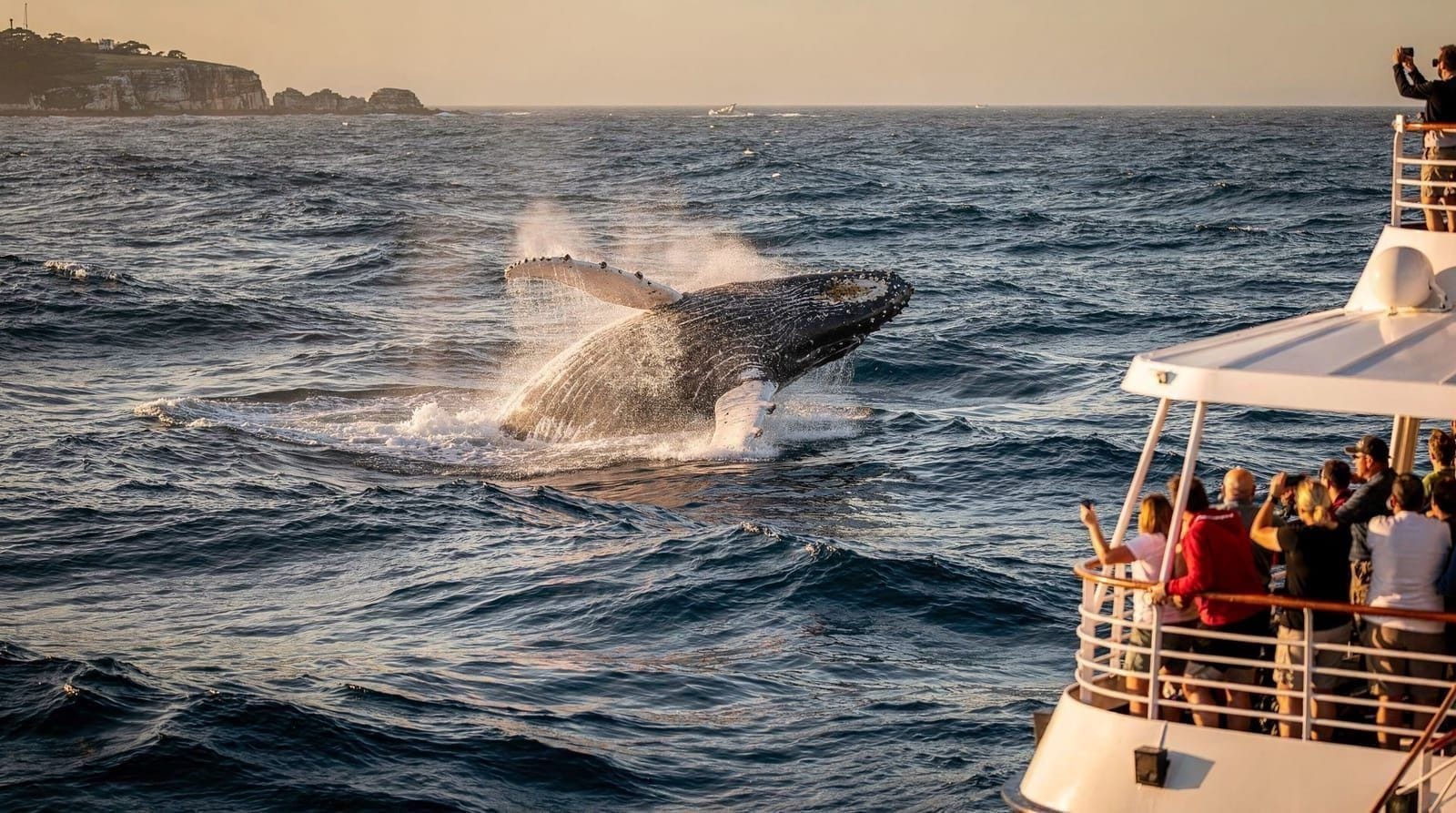
Whale watching in Sydney — the complete guide
Sydney: Whale watching adventure cruise
When is the best time to see whales in Sydney?
Humpback whales migrate past Sydney from May to November, with peak sightings in June, July, and August. June is often considered the single best month — sightings are very frequent and the winter days are mild and clear, which is good for viewing.
Sydney’s annual whale season is one of the most accessible wildlife events in Australia. Each year, around 40,000 humpback whales pass the NSW coastline in one of the longest mammal migrations on Earth — travelling between the Antarctic feeding grounds and their tropical breeding waters near the Queensland coast and beyond. For Sydney, this means a reliable, long window (May through November) where whale sightings from both water and land are genuinely common.
This guide explains the migration pattern, your options for getting out on the water, where to watch from land, and what you realistically need to budget.
| Where | Departures from Circular Quay or Darling Harbour; land-based spots at Cape Solander, North Head, South Head, Barrenjoey |
| Cost | Varies by operator; see the operator’s official website. Land-based watching needs no booking (park entry fees may apply) |
| Time needed | Around 2.5–4 hours door-to-door for a boat tour; 1–2 hours for a land-based lookout |
| Getting there | Ferry or bus to Circular Quay for boat departures; car or ferry+walk for land lookouts |
| Best time | May–November, peak sightings June–August |
Understanding Sydney’s whale migration
The migration runs in two distinct phases, each with a different character:
Northward migration (May–July): Whales travel from the Antarctic toward warmer waters along the Queensland coast. This phase brings the highest numbers past Sydney — the humpbacks tend to stay closer inshore during the early legs of the journey. Expect busy whale-watching waters in June and July, with multiple pods potentially visible from a single two-hour cruise. Dolphins frequently escort migrating pods.
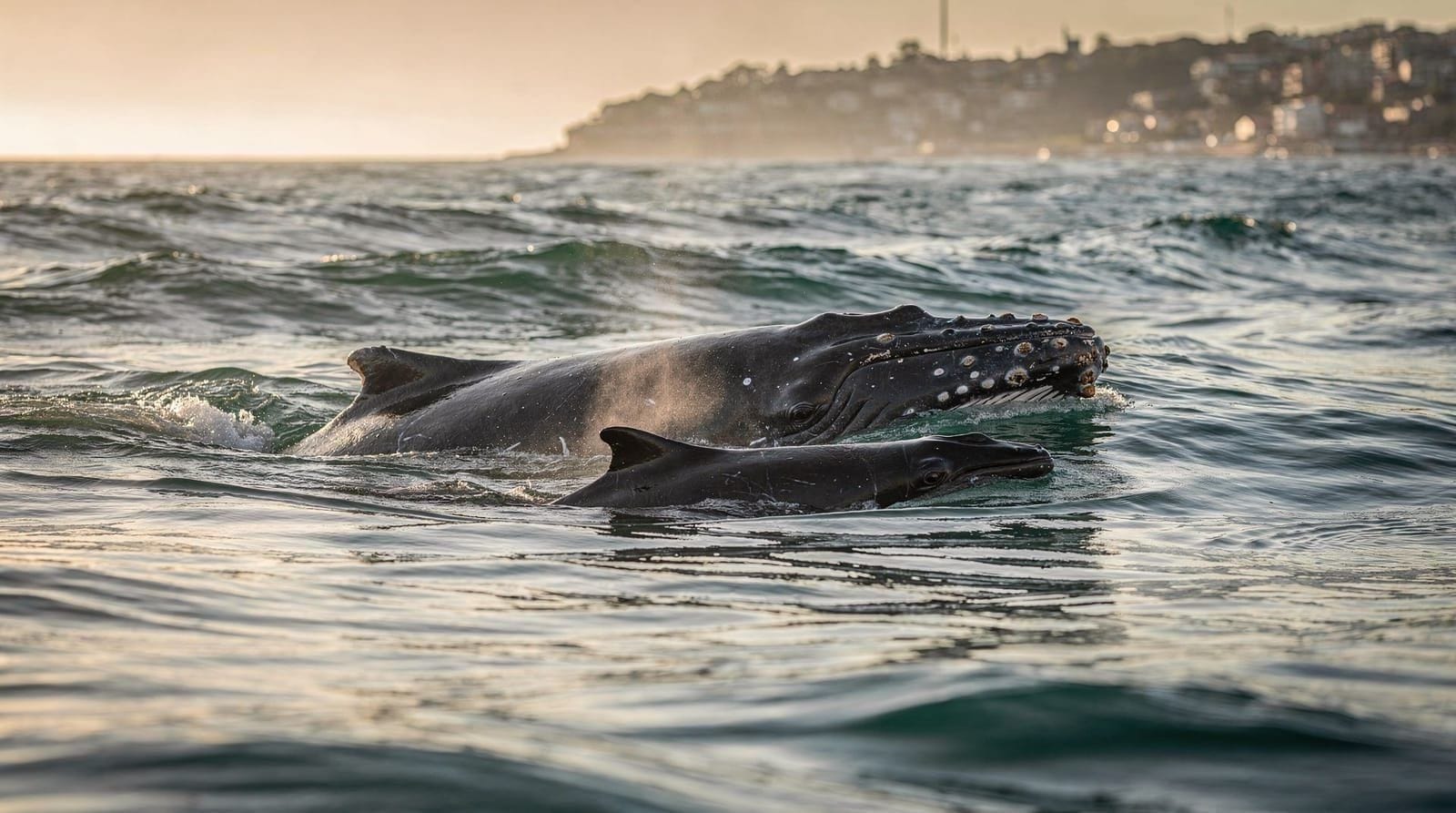
Southward migration (August–November): The whales return south, often with calves born during the breeding season. This phase is slower — whales are resting and feeding more, which means longer surface intervals and more breaching behaviour. Mothers with calves tend to travel even closer to shore during the southward journey, which makes land-based watching particularly rewarding in September and October.
Peak month: June. Water temperatures, whale density, and weather (cool, clear winter days) combine well. July is a close second. May is the start — sightings increase week by week through the month.
Whale watching from a boat
Standard catamaran cruises (most common)
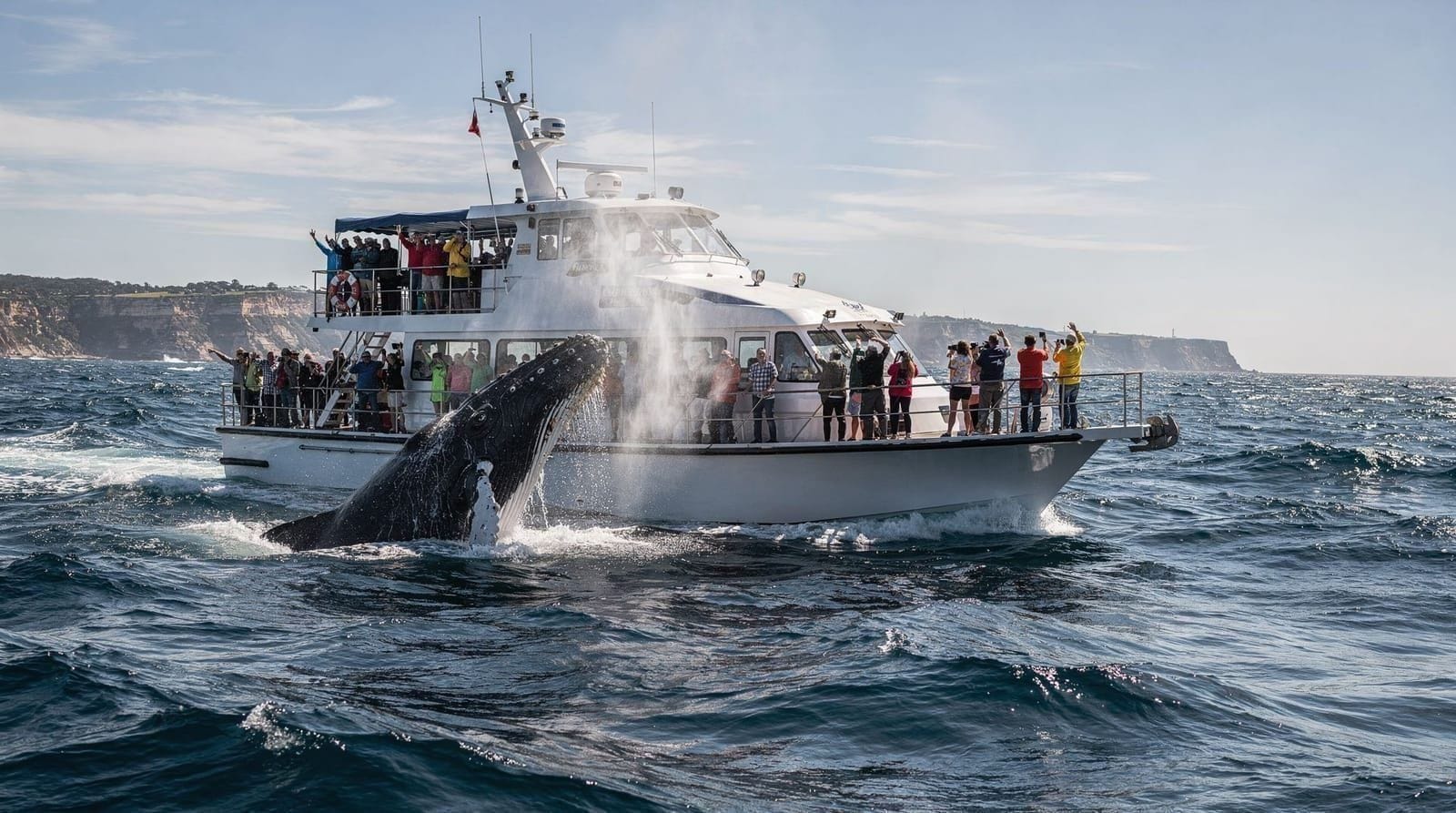
The majority of Sydney whale watching tours use large catamarans departing from Circular Quay, typically from Wharf 2 or from Darling Harbour. Tours run 2–3 hours. You travel outside Sydney Heads into the open ocean (the harbour itself is too enclosed to reach the whale migration route) — this takes about 20–30 minutes each way, leaving 1–1.5 hours in the whale zone.
What to expect:
- Onboard naturalist commentary (varies in quality by operator)
- Covered upper and lower decks
- Bar and kiosk service (bring motion sickness medication if needed)
- Some operators include breakfast or lunch in the price
The Sydney whale watching cruise with breakfast or lunch included is one of the more popular mid-range options — you eat on the way out, which means you can focus on watching once you reach the whale zone.
Guaranteed sighting cruises
Some operators offer a guarantee: check the operator’s official terms for what applies if no whales are spotted.
The whale watching cruise with a whale guarantee offers a guarantee; check the operator’s official terms.
Express 2-hour cruises
Shorter tours run by speedboat or smaller monohull. The upside is flexibility — you can sometimes book same-day. The downside: less stability in swell, no food service, and less time in the whale zone. Suited to confident sea-goers with limited time.
Private whale watching charters
Full-day private charters on a dedicated vessel for 4–12 people. These make sense for groups who want to combine whale watching with swimming in the outer harbour, or for photographers who need control over positioning. Some captains can anchor at secluded bays after the whale sector.
The private whale watching cruise runs 3–4 hours and takes a group of up to 12 people. The experience — a smaller vessel that can reposition quickly to follow a pod — is materially different from a large-scale commercial tour.
Speedboat tours
High-speed RIB (rigid inflatable boat) tours seat 20–40 people. Much faster response to whale sightings — these vessels can reposition to within the closest legal approach distance (100 metres under NSW law) in minutes rather than half an hour. Trade-offs: louder, wetter, harder on your back in swell, no food service. Not recommended if you have a bad back, are pregnant, or are travelling with young children.
The Sydney whale watching speedboat day trip is a 2.5-hour trip — compact and purpose-built for whale sightings rather than a full day out.
Land-based whale watching
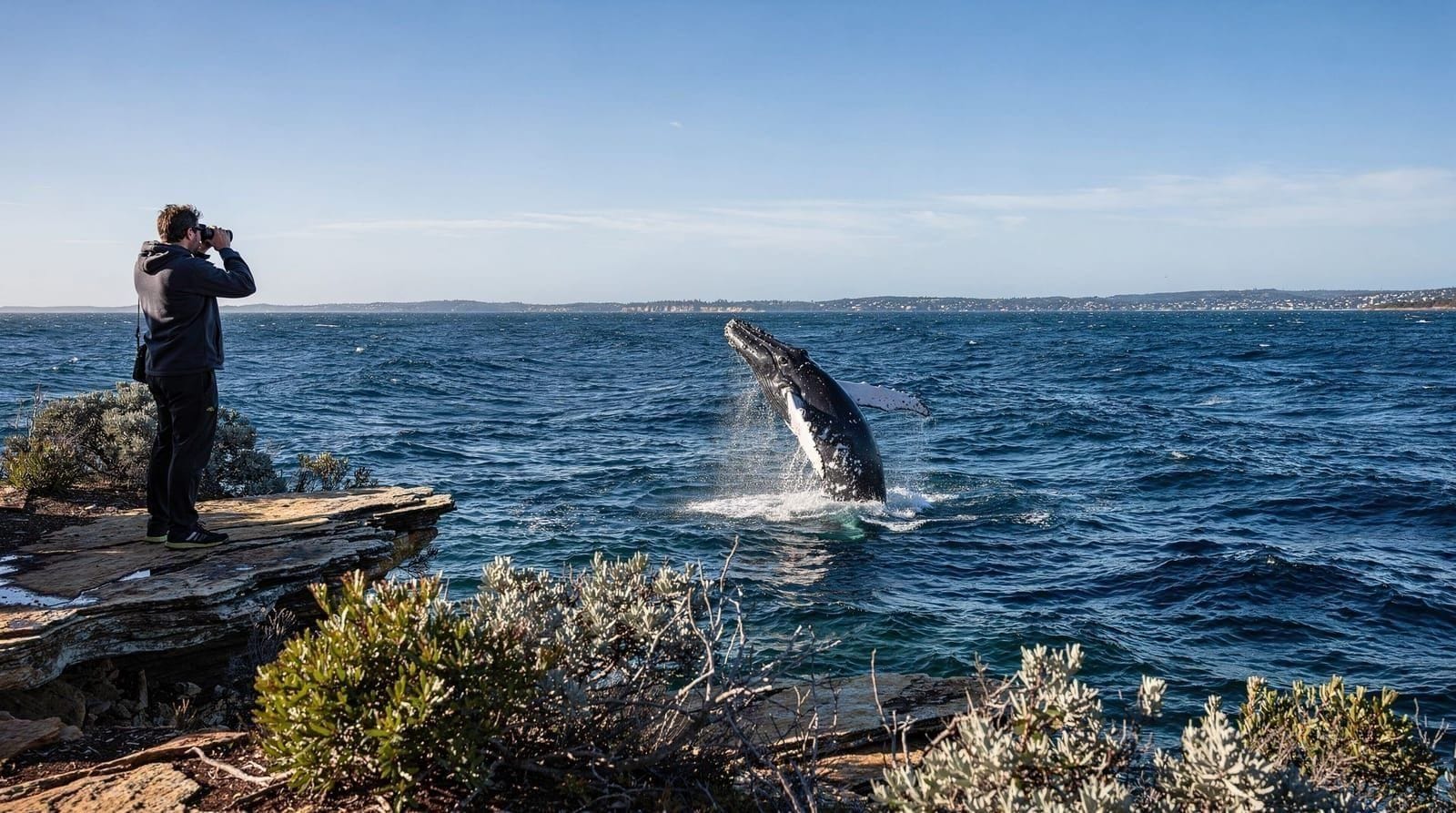
Land-based watching needs no booking (park entry fees may apply) and, during peak season, often highly productive. The cliffs around Sydney’s entrance to the ocean provide elevation — critical for spotting distant blows.
Cape Solander, Kamay Botany Bay National Park
The best dedicated land-based site near Sydney. The headland sits at around 50 metres above the waterline, with clear views along the migration corridor. The site has a viewing platform with information displays about local whale species. Check the official NSW National Parks website for whale watching information. Parking is available; it fills early on weekends.
Getting there: Drive to Kurnell via Captain Cook Drive, then follow Cape Solander Drive to the end. For public transport, use the Transport for NSW trip planner.
North Head, Manly
North Head gives you an elevated view from the northern headland at Sydney Heads. Accessible by public ferry from Circular Quay to Manly (Opal card), then a 3 km walk or rideshare to the headland. The old fortifications provide wind shelter while you scan.
South Head, Watsons Bay
The southern headland at Sydney Heads. Accessible by ferry from Circular Quay to Watsons Bay (Opal card). Walk up to the Signal Station — a short, steep climb from the wharf. The Hornby Lighthouse area at the tip of the headland is the most exposed point, with a clear western outlook toward the city as a backdrop while you face east toward the migration route.
Barrenjoey Headland, Palm Beach
The northern beaches culminate at Barrenjoey — a 20-minute walk up from Palm Beach gives 100-metre elevation over the entry to Pittwater and Broken Bay. During the southward migration (September–October), whales sometimes enter Broken Bay. The walk is rewarding regardless, with views north along the coast toward the Central Coast.
For more land-based options and practical directions, see land-based whale watching in Sydney.
What to bring on a whale watching boat
- Layers: Sydney’s winter whale season (June–August) can be 10–17°C on the water, 5–8°C colder than on land with wind chill. Even if the forecast shows 18°C in the city, bring a windproof jacket.
- Motion sickness medication: The ocean beyond the Heads can have 1–2 metre swell in winter. Even if you do not normally get seasick, a gentle precaution helps. Take it 30–60 minutes before departure.
- Sunscreen: The UV index in Sydney is high year-round. SPF 30 minimum, reapply every 2 hours.
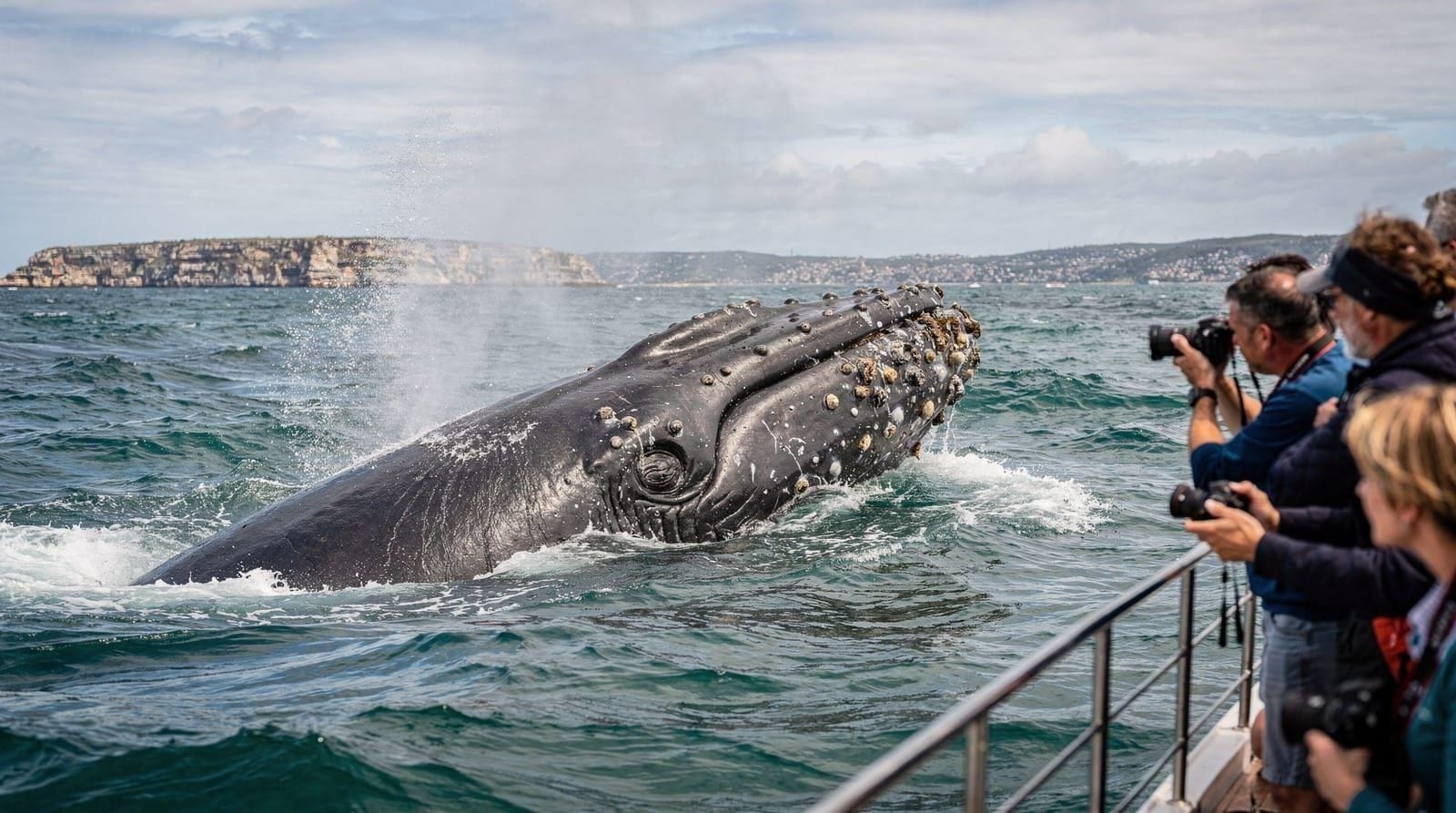
- Binoculars: Useful but not essential — on an average tour the whales come within 200–400 metres. A phone camera with moderate zoom is sufficient for documentary photos.
- Camera considerations: Fast shutter speed (1/1000s+) is needed to freeze a breaching whale. If you are shooting from a moving boat, burst mode improves your hit rate significantly.
Sydney vs Port Stephens vs Jervis Bay
Sydney is the most convenient base for whale watching, with multiple daily departures from a major city. But it is worth knowing that Port Stephens (2.5–3 hours north) and Jervis Bay (2.5–3 hours south) are also strong whale destinations during the same season.
Port Stephens typically has slightly calmer water (inside Soldiers Point) and adds resident dolphins to the picture year-round. See the Port Stephens day trip guide for logistics.
Jervis Bay has exceptionally clear water and a sheltered bay that southern right whales occasionally use as a nursery. See the Jervis Bay day trip guide for more.
The advantage of Sydney is not whales per se — it’s the infrastructure. Dozens of departures daily and no need for a separate day trip.
Combining whale watching with other Sydney activities
Vivid Sydney + whale season overlap (late May–mid June): Vivid Sydney 2027 runs from 28 May to 19 June, and the whale season starts in May. This overlap creates a genuinely unusual combination — whale watching by day, light festival by night. See the Vivid Sydney guide for the festival schedule.
Winter whale itinerary: A structured 6-day combination of whale watching, harbour cruises, and inner-city Sydney is laid out in the Sydney winter whale itinerary.
Taronga Zoo combo: Some operators run a combined Taronga Zoo + whale watching ticket — you take the ferry to Taronga Zoo in the morning, then join the whale watching cruise in the afternoon. Not the best value unless you want to visit both on the same day, but the logistics work.
For the full seasonal picture — whale timing, Vivid, Mardi Gras, NYE — see the best time to visit Sydney guide.
Practical booking information
Where to book: Through GetYourGuide, directly via operator websites, or at the quayside ticket booths at Circular Quay (walk-up availability is common on weekdays outside peak season).
Cancellation policy: Most operators cancel in severe weather (gale-force winds, very rough seas). Refunds are generally given for operator cancellations. If you cancel yourself, policies vary — check the operator’s official terms.
Best days: Tuesday through Thursday have the lowest passenger volumes and easiest booking. Saturday mornings in peak season (July) fill fastest.
Departure point: Most Sydney whale watching tours depart from Circular Quay or Darling Harbour. Confirm exact wharf when booking — there is nothing more frustrating than arriving at Wharf 6 when your vessel departed from King Street Wharf 15 minutes earlier.
Duration: Budget 3–4 hours total (transit to wharf, check-in, cruise, and return) for a standard 2.5-hour tour. Morning departures typically leave at 9:00–9:30 AM. Afternoon departures at 1:30–2:00 PM.
Whale watching with kids, and other practical angles
Families often ask whether whale watching suits younger children — see Sydney with kids for a broader view of family logistics in the city, and rainy day Sydney with kids for a backup plan if a tour is cancelled for weather. If you’re building a longer stay around the season, the best time to visit Sydney guide already linked above covers how whale season overlaps with school holidays and pricing.
If a rough ocean crossing puts you off, Sydney Harbour kayaking is a calmer on-water alternative for the same trip, and comparing the two experiences directly is covered in whale watching vs harbour cruise.
Whale watching and safety
Operators in Australian waters must stay at least 100 metres from a whale (300 metres if a calf is present) unless the whale approaches the vessel itself — this is a hard legal limit, not a courtesy. It means the closest encounters are often initiated by curious whales, not the boat. Sydney’s open-ocean whale watching zone can also have residual swell even on a calm-looking day in the harbour, so check the marine forecast (Bureau of Meteorology) the morning of your tour rather than relying on the city weather app. For general layering advice beyond the boat itself, see the Sydney packing guide.
Related guides
- Whale season in Sydney — detailed month-by-month calendar
- Best whale watching tours compared
- Land-based whale watching spots near Sydney
- Whale watching cruises as part of harbour activity
- Port Stephens day trip from Sydney
- Jervis Bay day trip from Sydney
- Sydney winter whale itinerary (6 days)
- Best time to visit Sydney
Frequently asked questions about Whale watching in Sydney
How much does a whale watching tour in Sydney cost?
Prices vary by operator, trip length and season; check the official operator website for current fares.Which species of whales are seen in Sydney?
Humpback whales are by far the most common — around 40,000 make the migration past the NSW coast each year. Southern right whales are seen occasionally. Minke and blue whales appear rarely. Orcas visit infrequently but have been spotted from Sydney waters. Bottlenose and common dolphins are a near-constant companion on any whale watching cruise.Is a whale sighting guaranteed?
No operator can guarantee wildlife. However, sighting rates are high in peak season (May–Nov) but never guaranteed. Some operators offer a "whale guarantee"; check the operator's official terms before booking.How far from shore do whales come in Sydney?
During the northward migration (May–July) humpbacks typically travel 5–20 km offshore but regularly come within 1–2 km of the Sydney cliffs. During the southward migration (September–November) they move inshore, and are frequently sighted from headlands like North Head, South Head, Cape Solander, and Barrenjoey. Land-based sightings are common in peak season.Are whale watching cruises suitable for children?
Yes, most operators accept children from age 2 upwards, with children's fares set by each operator (check the official operator website). The boats are large and reasonably stable — Sydney Harbour cruises are sheltered but ocean whale watching tours venture outside the Heads, where there can be swell. If your child is prone to motion sickness, bring medication and choose a catamaran (more stable) over a speedboat.What is the difference between a whale watching cruise and a speedboat tour?
Standard whale watching cruises use catamarans or large monohull vessels departing from Circular Quay. These are stable, have covered decks, and often serve food. Speedboat tours use high-speed RIBs (rigid inflatable boats) — faster, wetter, and bumpier. Speedboats can reach whales faster and get closer, but are not suitable for anyone with back problems or seasickness.Can I see whales from land in Sydney?
Yes — Cape Solander in Kamay Botany Bay National Park is one of Australia's best land-based whale watching spots, with elevated views across the migration path. North Head (Manly) and South Head (Watsons Bay) also offer good elevated vantage points. During peak season (June–August) it is not unusual to see multiple blows from a single headland in a morning.Should I book whale watching in advance?
For weekend departures during peak season (June–August), book at least 1–2 weeks ahead. Weekday departures are easier to get last-minute, even in peak season. If you book a guaranteed-sighting cruise, read the voucher policy carefully — check the operator's official terms.
Top experiences
Bookable activities with verified prices and instant confirmation on GetYourGuide.