Best whale watching tours from Sydney — compared and ranked
Sydney: Whale watching cruise with breakfast or lunch
Which Sydney whale watching tour is best?
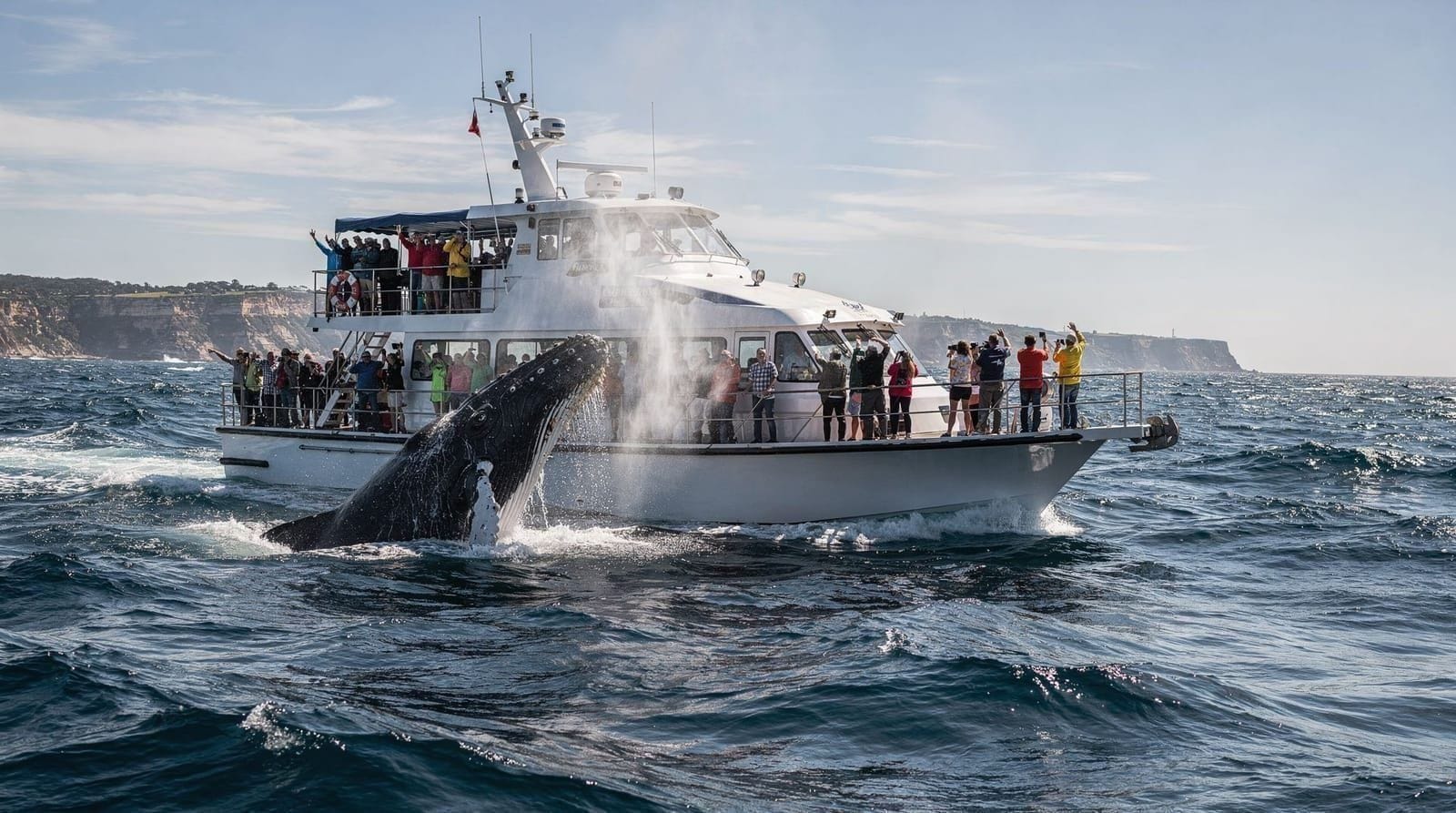
For most visitors, the 2.5-hour catamaran cruise with a marine naturalist on board gives the best combination of comfort, educational value, and time in the whale zone. If budget is the priority, the 2-hour express cruise is the shorter, lower-cost option that still gives a real chance at close sightings during peak season.
Sydney runs more daily whale watching departures than almost any other city in Australia during the season. This makes choosing the right tour genuinely confusing — there are a dozen operators, multiple vessel types, and a wide price range. This guide compares the main options honestly so you can choose based on your priorities rather than marketing language.
| At a glance | |
|---|---|
| Where | Departs Circular Quay or Darling Harbour |
| Cost | Varies by operator; see the operator’s official website |
| Time needed | 2–3 hours on the water, plus 20–30 min check-in |
| Getting there | Central departure points, reachable by Opal card, ferry or on foot |
| Best time | May–November season; June–August for the highest sighting density |
Tour comparison at a glance
| Tour | Length | Price | Best for |
|---|---|---|---|
| Breakfast/lunch cruise | 2.5–3 hrs | See operator’s official website | Best overall, families |
| Guaranteed/return trip | 2.5–3 hrs | See operator’s official website | Limited time in Sydney |
| Wildlife cruise | 2.5 hrs | See operator’s official website | Naturalist detail, curious teens |
| Express cruise | 2 hrs | See operator’s official website | Tight budget, peak season |
| Ocean premium | 2.5–3 hrs | See operator’s official website | Less crowded rail space |
| Private charter | 3–4 hrs | See operator’s official website | Groups of 8–12+ |
What makes Sydney a strong whale watching destination
Several Australian cities offer whale watching — Hervey Bay (Queensland), Eden (NSW), and Albany (Western Australia) among them. Sydney’s advantages are logistical rather than zoological:
Access: Departures from a major city with no travel overhead. You can book a morning whale watching cruise, return by noon, and have an afternoon free for other Sydney activities. No overnight travel, no remote access roads, no special equipment.
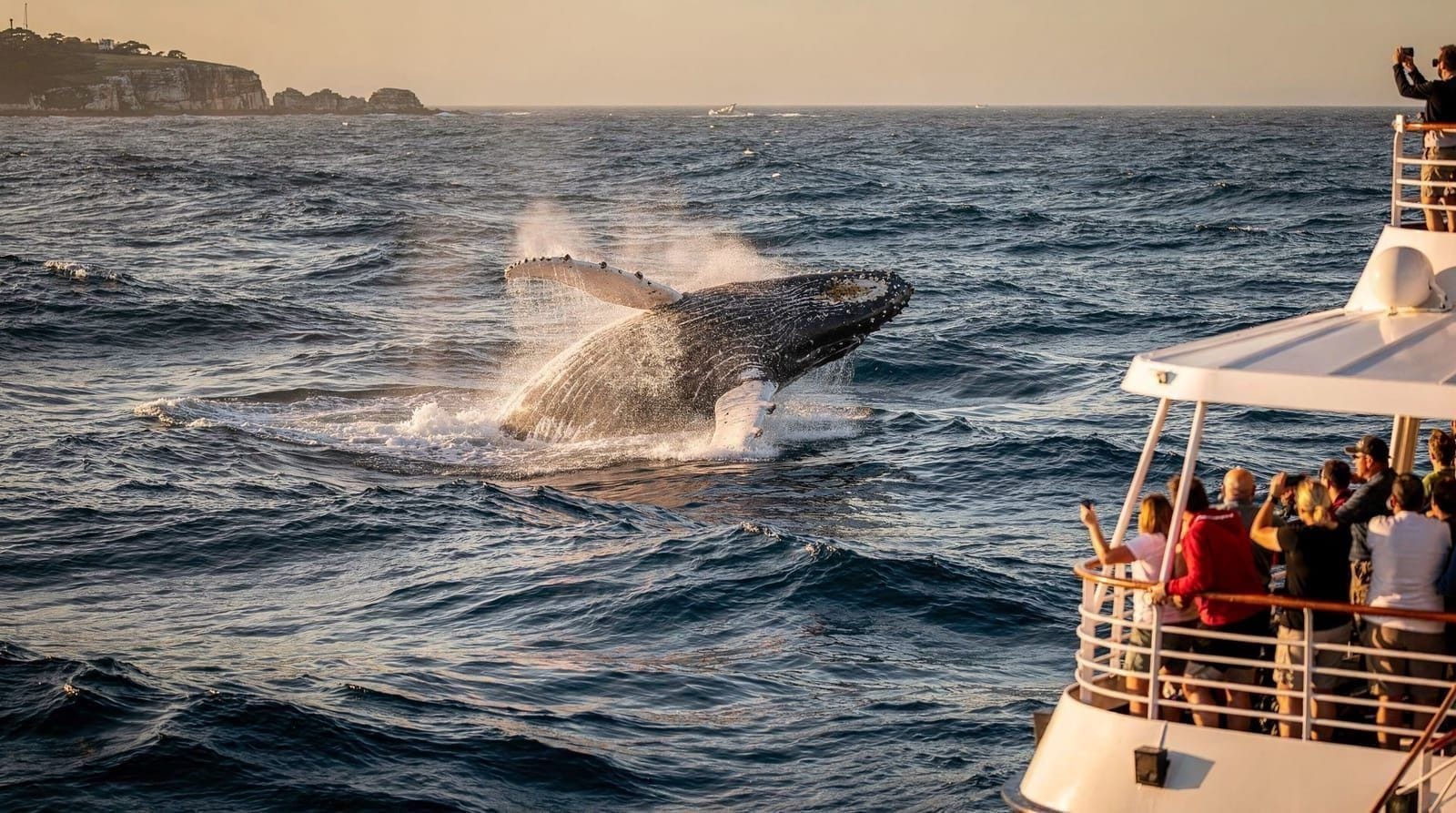
Migration volume: The humpback migration past NSW is one of the largest on Earth. In June–July, dozens of individual animals may be sighted in a single 2.5-hour cruise. Quantity of encounters is high.
Season length: May through November gives six months of opportunities — longer than almost any other Australian city.
Tour infrastructure: Dozens of daily departures across multiple operators means competitive pricing, last-minute availability on weekdays, and a wide range of vessel types and price points.
The trade-off vs dedicated whale watching destinations: Sydney tours run in open ocean swell (occasionally rough in winter), and the whales are typically in transit rather than resting, which means sightings can be briefer than in calmer waters like Hervey Bay, where whales often linger for hours.
What makes Sydney a less than ideal choice
If you specifically want multi-hour encounters with individual whales — photographing flukes for ID, watching extended socialising behaviour, or seeing a predictable aggregation — then Jervis Bay (southern right whales in winter) or Hervey Bay (humpbacks resting before the final migration leg) may serve you better. These require day trips from Sydney or separate travel.
For a single compelling morning of wildlife on the water from a world-class city, Sydney is hard to beat.
Context: why tour choice matters
The sea conditions outside Sydney Heads vary significantly by season and weather. A tour that was smooth in calm June conditions can be rough when a southerly swell kicks up. The vessel type — large catamaran vs speedboat vs small monohull — determines how the trip feels when conditions aren’t flat calm.
Also important: during the peak of the season (June–July), humpbacks are numerous enough that even a 2-hour express tour has a good chance of close sightings. In early May or late November, a longer tour with more time in the whale zone is worth the premium.
The tours
Best overall: whale watching with breakfast or lunch
The whale watching cruise with breakfast or lunch runs 2.5–3 hours and includes a meal served on the outbound transit — you eat while heading to the whale zone, leaving full attention for when you arrive. The catamaran is large and stable, with covered and open decks. Suitable for all ages. Prices vary by operator and season; check the operator’s official website for current fares.
This tour consistently scores well in independent reviews for value and crew quality. The naturalist commentary is more detailed than the average operator.
Best with a guarantee: whales guaranteed or return trip
The whale watching adventure cruise with whale guarantee backs sightings with a genuine return-trip policy — if no whales are seen, a return trip applies under the operator’s terms. This is the logical choice if your time in Sydney is limited and you cannot afford a blank day.
Prices vary by operator and season, and the guarantee terms are set by the operator: check the operator’s official terms and website.
Best for wildlife education: 2.5-hour wildlife cruise
The 2.5-hour whale watching wildlife cruise has the most substantive on-board naturalist component — the commentary covers humpback biology, migration ecology, and the NSW coastline in a way that goes beyond pointing out blows.
Recommended for visitors with a genuine interest in marine wildlife, or for travelling with curious teenagers. Prices vary by operator and season; check the operator’s official website for current fares.
Best budget: 2-hour express cruise
The 2-hour express whale watching cruise is the shorter, lower-cost option for a genuine ocean experience. The vessel is typically a smaller, faster monohull. Duration is short: roughly 25 minutes each way leaves 1 hour in the whale zone.
Best suited to peak season (June–August) when sighting rates are high but never guaranteed. In shoulder months, the shorter time in the whale zone reduces your chances of a meaningful encounter.
Best premium experience: ocean whale watching
The Sydney ocean whale watching experience is a higher-end tour running on a quality vessel with a smaller passenger count. The reduced crowding means more rail space per person and a less chaotic experience when a whale surfaces nearby. Prices vary by operator and season; check the operator’s official website.
Best for a private group: private whale watching charter
The private Sydney whale watching cruise is a full charter for your group of up to 12 people — 3–4 hours, with a captain who can follow whales at their own pace and anchor at bays if you want to combine with swimming. The vessel cost varies by operator (it becomes reasonable per-head in a group of 10+); check the operator’s official website.
What to prioritise
If you have one chance at whale watching: Book the guaranteed cruise and check the operator’s official terms.
If you’re on a tight budget: The express 2-hour cruise in June or July is a real risk/reward proposition — sightings are likely, and the savings can be meaningful.
If you’re travelling with children: The breakfast/lunch cruise catamaran gives the most comfortable experience — covered areas, a meal, and enough space to move around during a long-ish ocean transit.
If you want the best possible sighting quality: The private charter gives maximum positioning flexibility, but requires a group to be economical.
What affects sighting quality
Beyond the tour itself, three factors determine the quality of your whale watching experience:
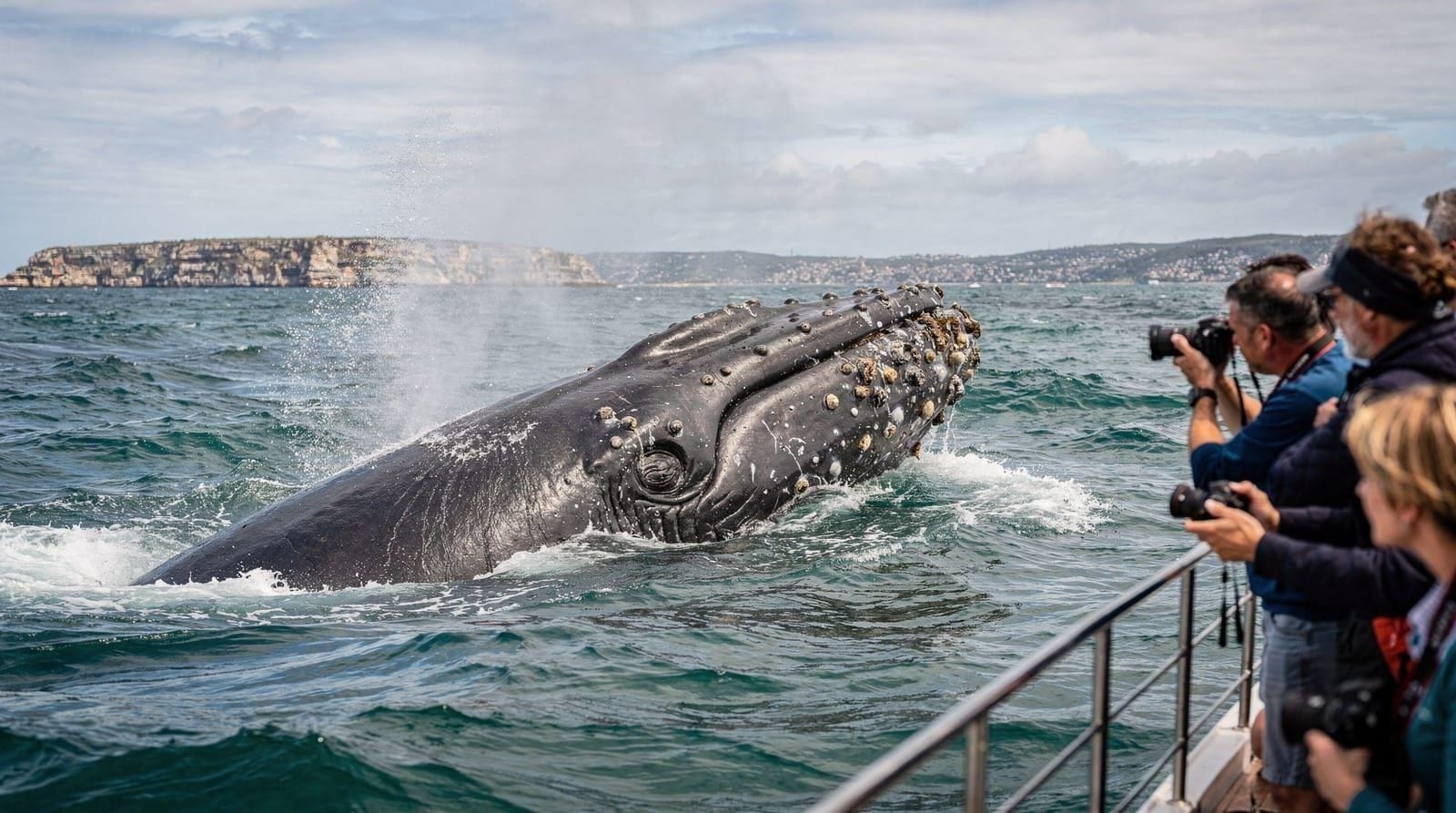
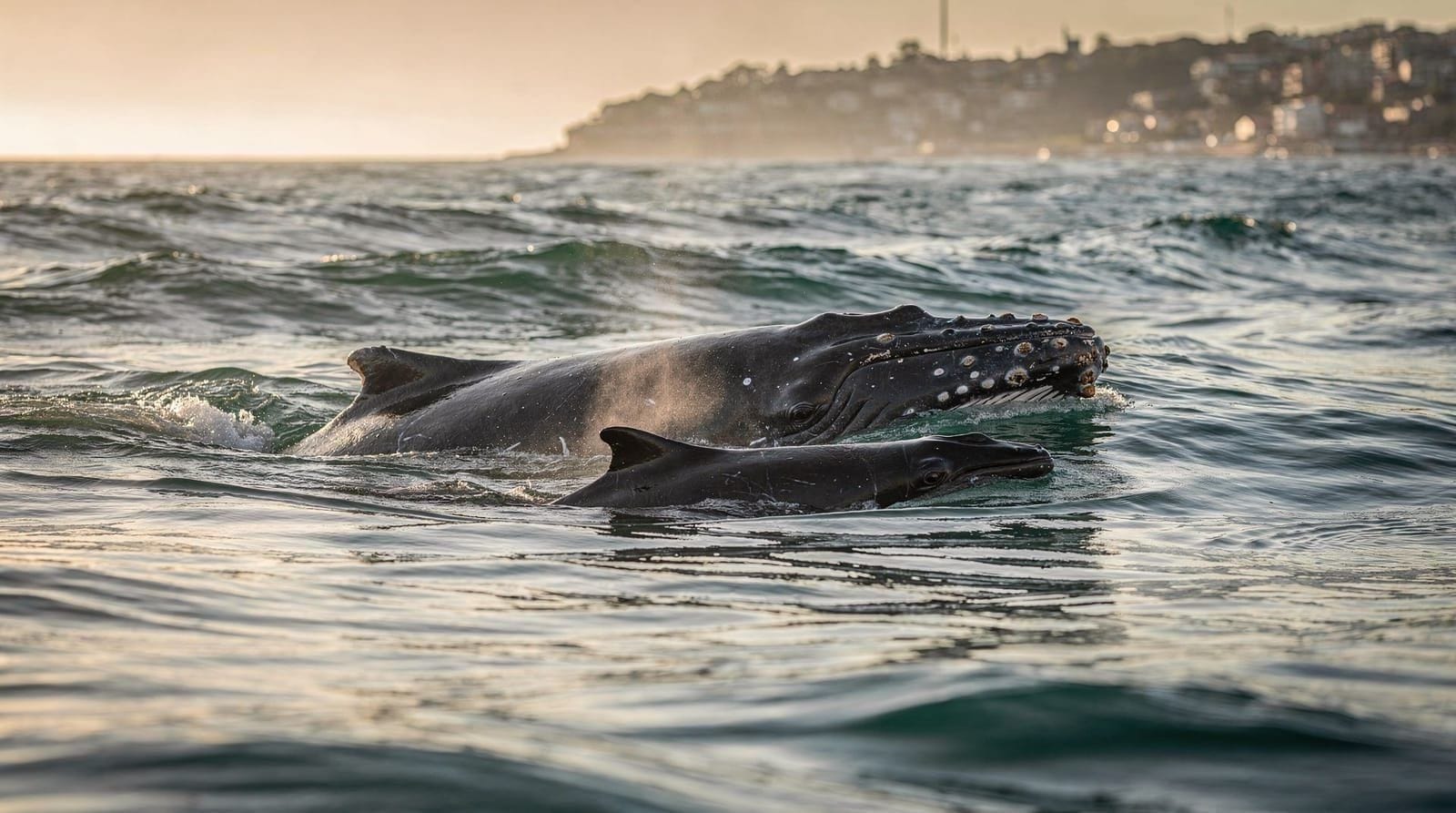
Time of season: June–July gives the highest density of passing whales. May and November are at the edges of the season — sightings are possible but less reliable. September–October is excellent for mothers with calves, which behave differently (slower, more curious, more time at the surface).
Time of day: Morning cruises (9:00–11:00 AM departures) have slightly higher reported sighting rates. The exact reason is unclear — possibly calmer seas in the morning, or whale activity patterns. The difference is marginal, but if choosing between a morning and afternoon departure of the same tour, morning is a marginal advantage.
Weather: Rough conditions reduce visibility of blows and make the crossing to the whale zone uncomfortable. Most operators monitor conditions and will call off a trip rather than run it in conditions likely to produce a blank day and miserable passengers. Check the operator’s official terms for what a weather cancellation includes.
Combining whale watching with other activities
Taronga Zoo + whale watching (same day): The Taronga combo ticket pairs zoo entry with a whale watching cruise — morning at Taronga, afternoon cruise. It works logistically (Taronga is a 12-minute ferry from Circular Quay, whale watching departs from Circular Quay after you return). Value depends on your zoo interest.
Vivid Sydney + whale season (28 May–19 June 2027): Whale watching by day, light festival by night. One of Sydney’s best seasonal combinations — see the Vivid Sydney guide for the light festival schedule.
Port Stephens extension: If you are staying in Sydney for 5+ days, a day trip to Port Stephens (2.5–3 hours north) adds dolphins, sand dunes, and a second whale watching option in the calmer waters of Nelson Bay. See the Port Stephens day trip guide.
Booking logistics
Where to book: All major tours are available through GetYourGuide with cancellation terms set by each operator (check the operator’s official terms). Direct booking via operator websites is also available.
Meeting point: Confirm the exact departure wharf at the time of booking. Most Sydney whale watching cruises depart from Circular Quay (various wharves) or Darling Harbour (King Street Wharf area). These are 10–15 minutes apart — not negligible if you arrive at the wrong one.
Check-in time: Most operators request arrival 20–30 minutes before departure. The larger the vessel, the slower the boarding process. Do not cut this fine.
Timing and season — for all the seasonal detail — which months give the best sightings, what to expect from early vs late season — see the Sydney whale season guide.
For land-based alternatives that need no booking, see land-based whale watching in Sydney.
Budget breakdown: what you actually spend
A standard morning whale watching cruise (2.5 hours, catamaran, with breakfast or lunch) is priced by the operator (check the operator’s official website for current fares). That is the base cost. Add:
- Transport to departure wharf: Depends on where you stay. Most departures are from Circular Quay or Darling Harbour — central, accessible by Opal card.
- Seasickness medication (if needed): AUD 5–15 at a pharmacy. Buy the day before, not the morning of.
- Sunscreen: Bring your own. SPF 30+ recommended even in winter.
- Optional upgrade (guaranteed sighting): Check the operator’s official terms.
- Optional onboard photos/video: Check with the operator if offered.
Prices vary by operator and season; check the operator’s official website for current fares, including children’s fares.
After the cruise
Most whale watching tours return by noon–1:00 PM. The afternoon is free. Natural continuations:
Circular Quay area: The Sydney Museum and MCA (Museum of Contemporary Art) are both a 5-minute walk from the wharf. The Rocks market runs on weekends. Opera House tours depart throughout the afternoon.
Manly ferry: Board the F1 at Circular Quay (departures every 30 minutes) immediately after your whale watching return. You’re already at the water — extend the maritime theme with a 30-minute crossing to Manly Beach. On the return, you’ll pass through the same Heads you just sailed through on the whale watching cruise, but from a different vessel at different speed.
Taronga Zoo: A 12-minute ferry from Circular Quay. Combine a morning whale watching cruise with an afternoon zoo visit — the full day covers most of Sydney’s key wildlife experiences in one sequence. See the Taronga Zoo guide for what to prioritise.
Whale watching vs a scenic cruise: don’t confuse the two
Not every harbour cruise with “whale” in the marketing is a dedicated whale watching tour. A sunset harbour cruise or general Sydney harbour cruise stays inside the harbour and may occasionally spot a whale near the Heads in season, but it isn’t built around finding them — no dedicated spotting crew, no time budgeted in the open-ocean whale zone. If seeing a whale is the actual goal rather than a bonus, book one of the tours in this guide, which run specifically out past Sydney Heads into open water where the migration passes. For a head-to-head on this exact distinction, see whale watching vs a general cruise.
Seasickness and comfort — an honest note
Open ocean beyond the Heads has real swell, especially June–August. Larger catamarans (breakfast/lunch cruise, wildlife cruise, ocean premium) handle chop far better than smaller monohulls like the express cruise. If you are prone to seasickness, choose a larger vessel, take medication the night before and morning of (not after symptoms start), and sit low and central rather than at the bow. First-time cruisers who are unsure how they’ll cope are better served by a mid-length tour than the private charter, which commits you to 3–4 hours regardless of conditions.
Related guides
- Whale watching in Sydney — complete guide
- Sydney whale season — month by month
- Land-based whale watching spots
- Whale watching cruises (harbour-cruises angle)
- Taronga Zoo guide
- Port Stephens whale watching and dolphins
- Sydney winter whale itinerary
Frequently asked questions about Best whale watching tours from Sydney
Can you see whales from land in Sydney without booking a tour?
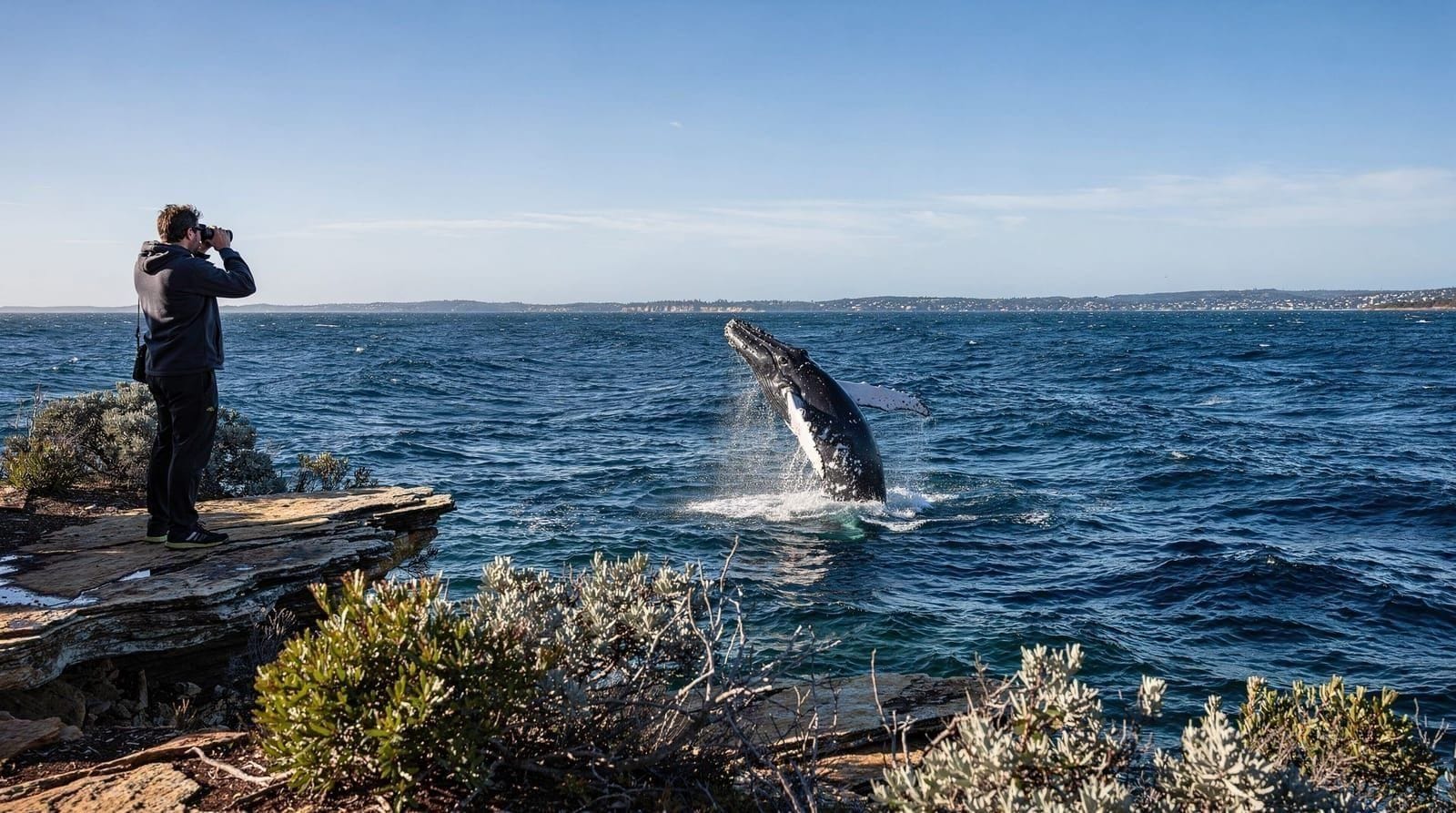
Yes — headlands like North Head, South Head and Watsons Bay offer genuine free whale watching during the migration, especially June–August, though sightings are less certain and further away than on a boat. See the land-based whale watching guide for the best specific spots.
How likely are you to actually see a whale on a Sydney tour?
During peak season (June–August) sighting rates on most operators are high, though never guaranteed, since the migration corridor is dense with animals. In shoulder months (May, September–November) rates are lower and more variable, which is when a guaranteed/return-trip tour earns its keep.
Top experiences
Bookable activities with verified prices and instant confirmation on GetYourGuide.