Sydney whale season — month-by-month guide for 2026
Sydney: Whale watching adventure cruise
When does whale season start and end in Sydney?
Sydney's whale season runs from May through November. Humpbacks begin appearing in mid-to-late May on the northward migration. The peak for northward sightings is late June to early July; the southward migration brings mothers and calves in October and November, often closer to shore. Sightings are rare outside this window.
Sydney’s whale season is governed by the humpback whale migration along Australia’s east coast — one of the longest mammal migrations on Earth, covering roughly 10,000 km between Antarctic feeding grounds and tropical breeding waters near Queensland and beyond. The NSW coastline, and Sydney’s headlands in particular, sit directly on the migration corridor.
| At a glance | |
|---|---|
| Season | May through November; northward peak late June–early July |
| Cost | Free from land-based headlands; for cruise prices, see the operators’ official websites |
| Time needed | 2–3 hours for a cruise; 30–60 minutes at a headland for land-based watching |
| Getting there | Cruises depart Circular Quay or Darling Harbour; headlands like South Head and North Head are reachable by ferry, bus, or car |
| Best time | June–July for the highest density; September–October for calves and closer-to-shore sightings |
Scale of the migration
The eastern Australia humpback whale population numbers approximately 40,000 animals — one of the largest humpback populations in the world and the result of successful conservation following near-extinction from commercial whaling. The NSW coast sees an estimated 30,000+ individuals pass each year.
This scale has a practical implication: whale watching in Sydney is not a “lucky if you see one” situation. During peak season, sightings are reliable. You are not chasing a scarce animal; you are positioning yourself to observe a reliable seasonal phenomenon.
The humpback’s behaviour during migration varies significantly. Adults on the northward leg (May–July) travel at 1.5–5 km/h, resting at the surface (called “logging”) for extended periods, then diving for 5–15 minutes before surfacing again. Their predictability — appearing at similar locations, moving in a consistent direction — makes sighting from both land and boat relatively straightforward. The southward journey (August–November) sees more complex behaviour: socialising between pods, competitive groups of males, and mothers actively protecting calves.
The migration pattern
Humpback whales migrate in two distinct phases with different characteristics:
Northward migration (approximately May–July): Whales travel toward warmer waters. Numbers are high — population estimates put around 40,000 humpbacks on the east coast migration annually. During this phase, whales travel more consistently and at higher density, making sighting rates very high from both boat and land.
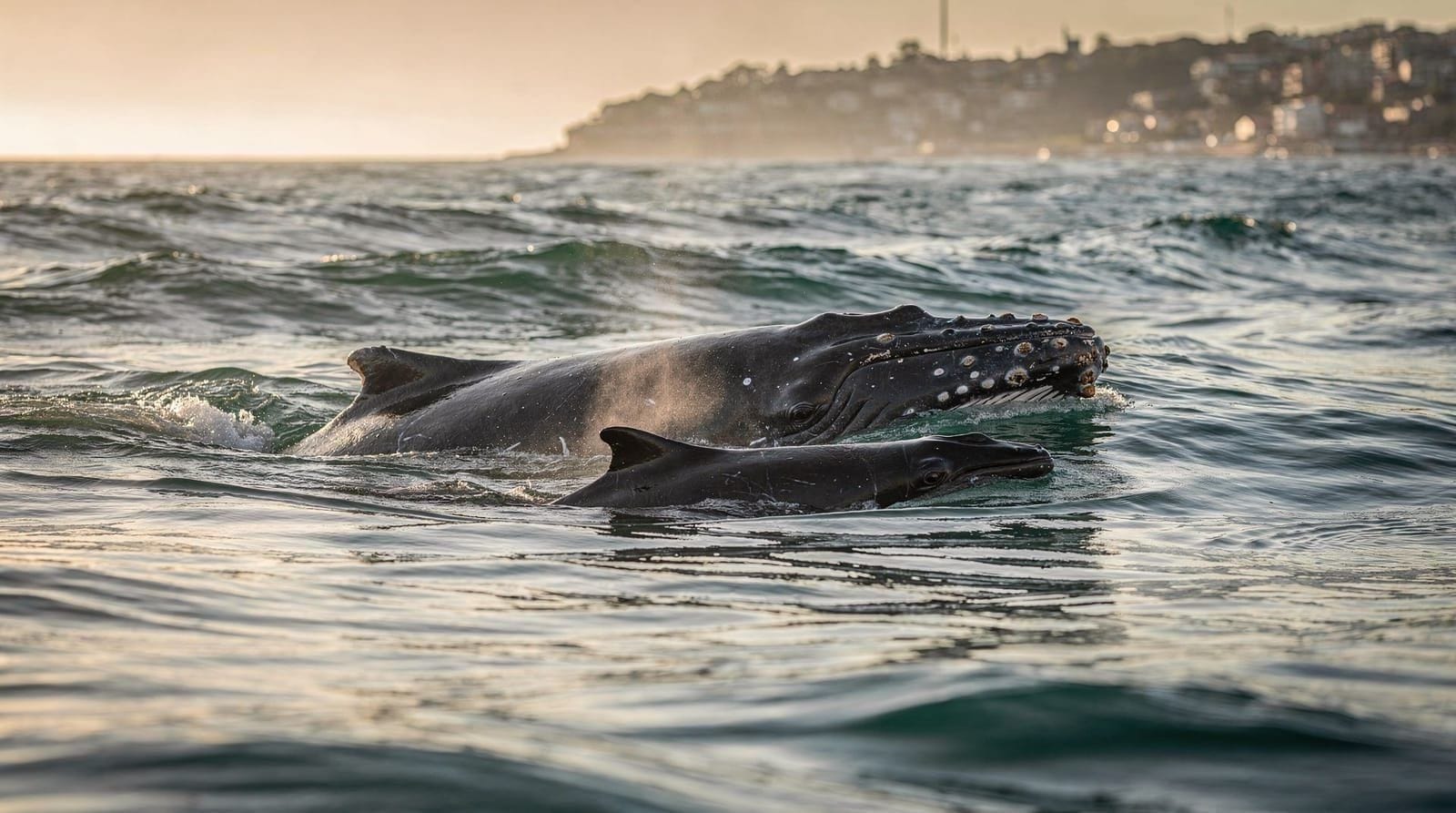
Southward migration (approximately August–November): The return journey. Whales are often with calves born during the tropical breeding season. They travel more slowly and irregularly, stopping to rest, nurse, and socialise. This phase brings more complex behaviour — more breaching, longer surface intervals — and whales often come very close to shore.
Month-by-month conditions
May: Season opens. Numbers build through the month — early May sightings are possible but not certain, particularly before mid-month. By late May, sightings from boats are reliable. Land-based sightings from Cape Solander are starting. Water temperature: 18–20°C (still warmish from summer). Good overlap with Vivid Sydney (28 May–19 June 2027) for visitors planning around the festival.
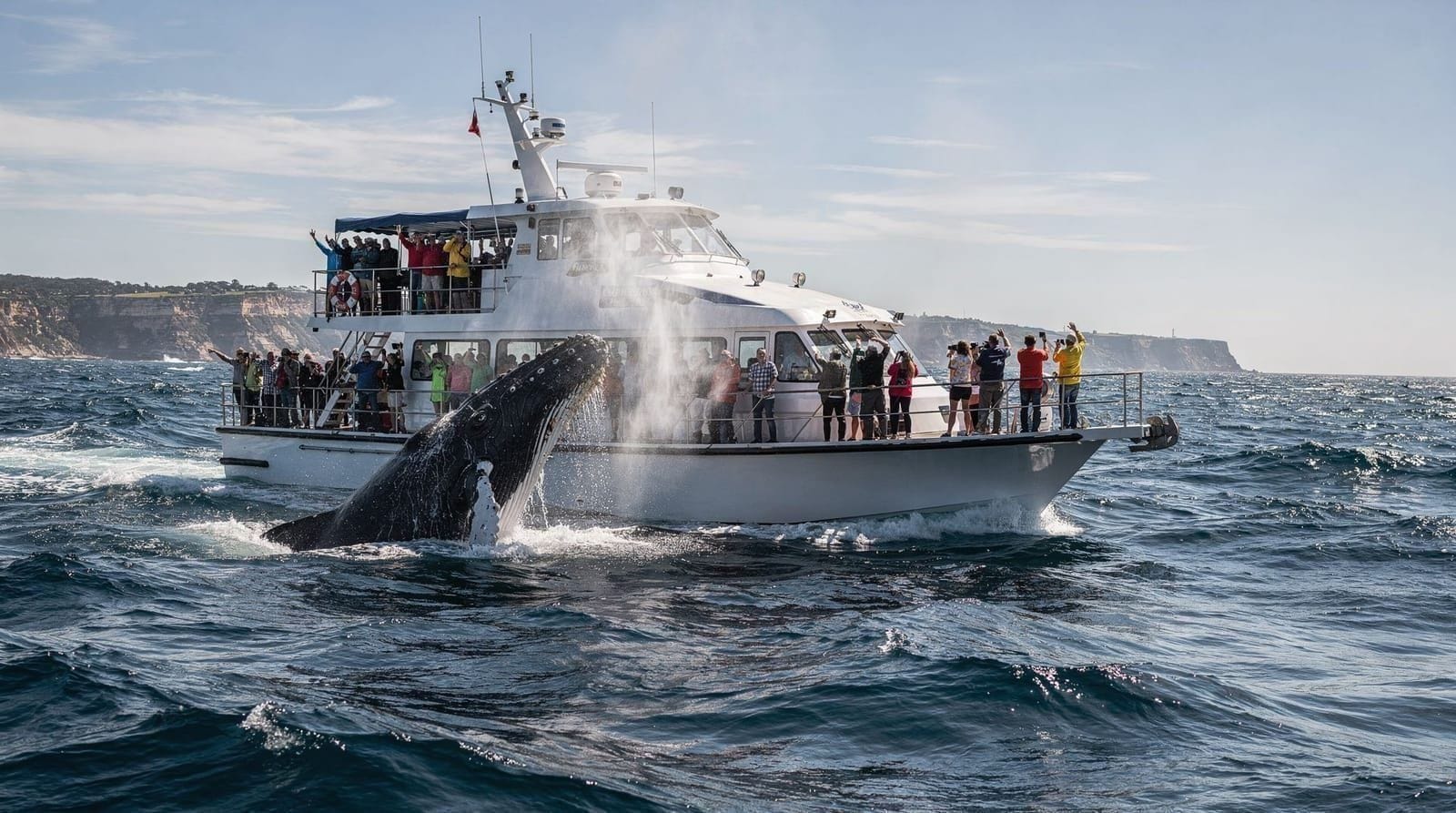
June: Peak month for northward migration. High whale density, clear winter days (cool but rarely rough), and reliable sighting conditions. The whale watching adventure cruise and similar tours have reliable sightings in June. Best single month for first-time whale watchers — predictable, high density, reasonable weather.
July: Continues at peak density. Slightly colder (12–15°C in the mornings), clearer skies, and the migration is often compressed close to the coastline. The coldest month to be outdoors but arguably the best for sightings per hour on the water. The whale watching cruise with breakfast or lunch adds useful warmth — you’re indoors eating on the outbound transit.
August: Transition month. The northward flow tapers off as the last late-season whales pass. The southward migration begins building. You may encounter both phases overlapping in August — a mix of fast-moving northward pods and slower southward travellers. Still excellent for sightings; more diverse behaviour observable.
September: Southward migration strengthens. Mothers with calves become more common. Breaching frequency tends to increase — calves in particular are enthusiastic breachees. Whales move closer to shore than during the northward phase. Good month for land-based watching from North Head and South Head.
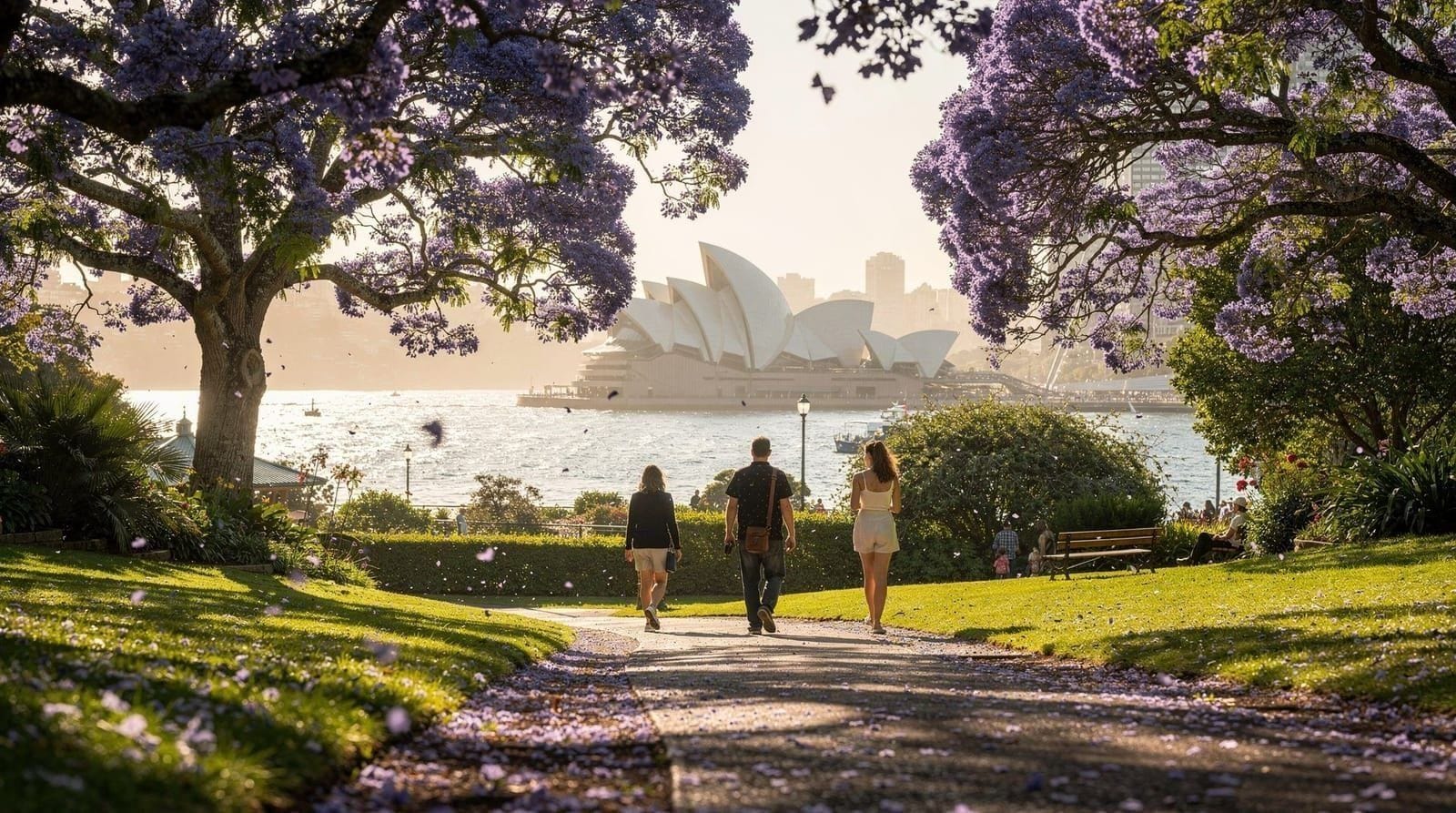
October: The southward migration continues but at lower density than June–July. Weather transitions to spring — warmer, more variable wind. Jacarandas bloom in the city (peak late October). Excellent month to combine whale watching with Sydney’s spring character. The 2.5-hour wildlife cruise is a good option to maximise time in the whale zone as numbers thin.
November: Season tail-end. Numbers are declining but sightings still occur regularly in the first half of the month. By late November, most whales have continued south toward the Antarctic. Some operators scale back to reduced departures. Water temperatures rising (20–22°C).
December–April: No humpback migration. Isolated dolphin encounters are possible on any harbour cruise, but dedicated whale watching tours do not operate.
Species notes
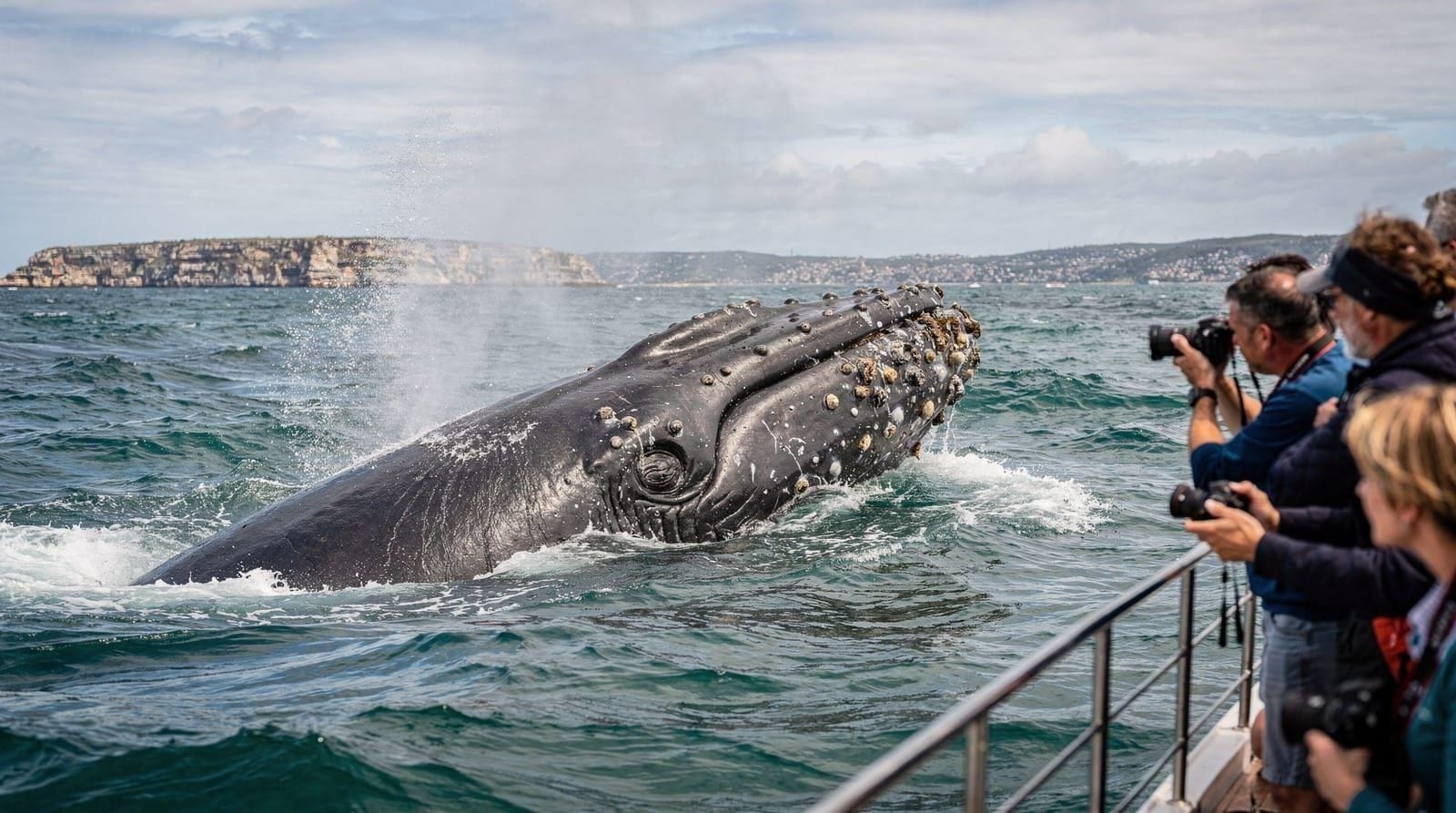
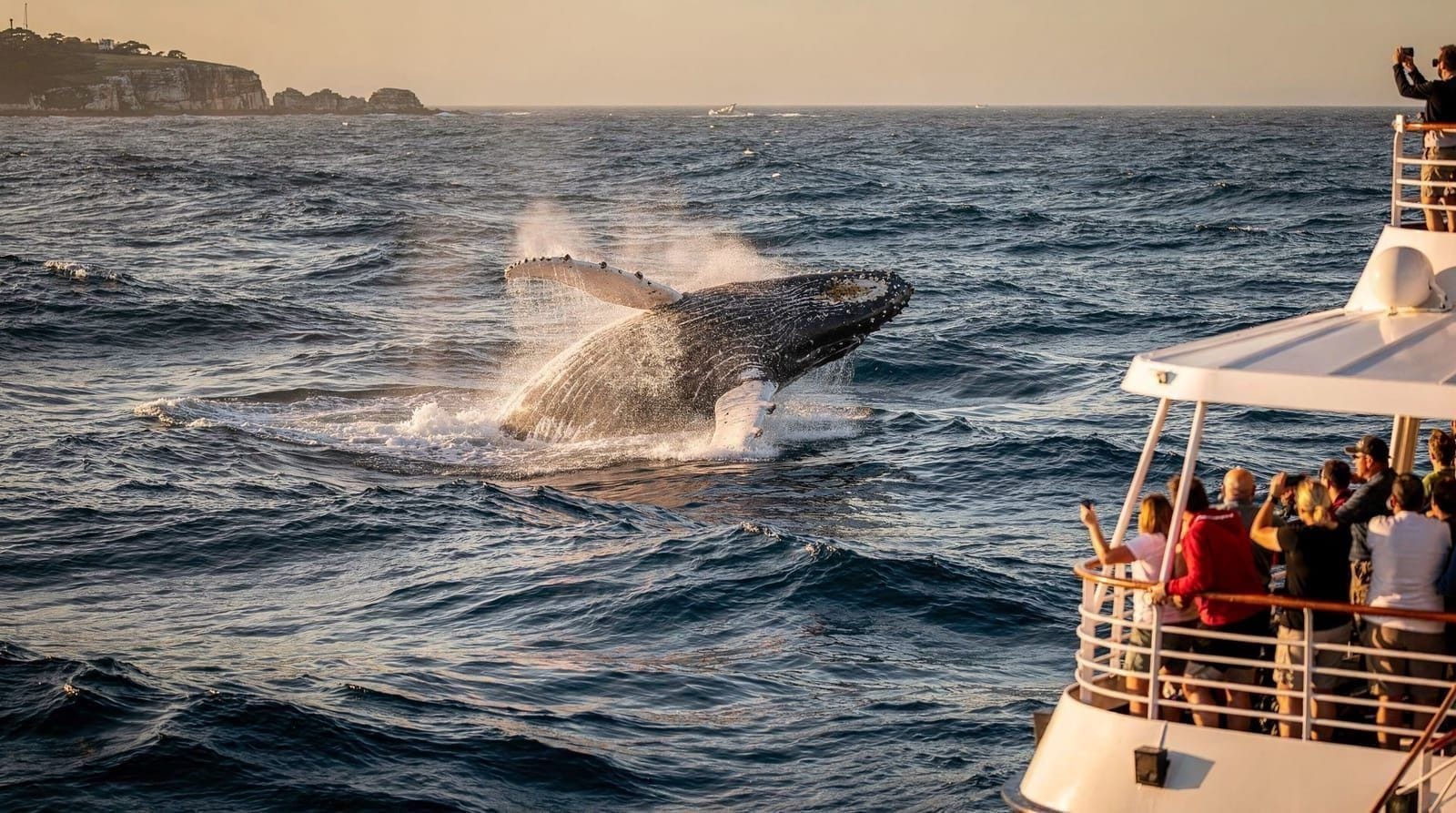
Humpback whale (Megaptera novaeangliae): The primary species. Adults reach 12–16 metres and 36,000 kg. Identified by their long pectoral fins (up to 5 metres) and distinctive tail flukes. Highly active above the surface — breaching, lobtailing, and pec-slapping are all observable from boats during the season.
Southern right whale (Eubalaena australis): Occasional visitors, more common at Jervis Bay and Eden (further south). Distinguishable by the absence of a dorsal fin and callosities (rough patches) on the head. If you specifically want to see southern rights, Jervis Bay in July–September is a better target than Sydney. See the Jervis Bay day trip guide.
Common and bottlenose dolphins: Present year-round. Almost every whale watching cruise encounters dolphins regardless of the season.
What year-round residents know about the season
Sydney locals who pay attention to the harbour can often spot blows from waterfront parks and headlands without taking a dedicated tour. From Observatory Hill in The Rocks (elevation 40 metres, view of the harbour mouth), Bradleys Head in Mosman (north side), and Fort Denison (in the middle of the harbour — accessible by ferry), you can see the distant Heads and, on good days, the plumes of humpback blows.
This is not a reliable substitute for a tour. But it is a reminder that during peak season (June–August), whale sightings are woven into the fabric of the city in a way that few places in the world can match. The ferry from Circular Quay to Manly exits the Heads — in season, it is not unusual for regular commuters to see a blow from the top deck without looking for it.
Temperature and conditions by month (ocean outside the Heads)
| Month | Air temp (°C) | Ocean temp (°C) | Swell (typical) | Notes |
|---|---|---|---|---|
| May | 18–22 | 20–22 | 0.5–1.5m | Season opening; manageable conditions |
| June | 14–17 | 18–20 | 0.5–2m | Peak density; cool but often clear |
| July | 12–16 | 17–18 | 0.5–2m | Coldest; driest; highest whale density |
| August | 13–17 | 17–18 | 0.5–2.5m | More variable; southward migration begins |
| September | 16–20 | 18–20 | 0.5–1.5m | Spring warming; calves common |
| October | 18–23 | 19–21 | 0.5–1.5m | Good conditions; thinning numbers |
| November | 21–25 | 20–22 | 0.5–1.5m | Season tail-end; warm; comfortable |
Combining whale season with other Sydney events
Vivid Sydney + early whale season (28 May–19 June 2027): A genuinely unusual combination — whale watching by day, light festival by night. This pairing is one of Sydney’s best seasonal sequences and is underused by visitors who focus on one or the other. See the Vivid Sydney guide.
Sydney in winter (June–August): The cheapest period for accommodation and flights. Hotel rates in Sydney are 30–50% lower than in December. Combined with peak whale season, this makes June–July an excellent-value time to visit for nature-focused travellers. See Sydney in winter for the full seasonal guide.
Practical timing: when to book around whale season
If whale watching is the primary purpose of your Sydney trip: Target June or July. Book accommodation 6–8 weeks ahead for these peak months — Sydney’s winter deals mean accommodation is actually cheaper in June–July than in December–February, so the whale season peak is not reflected in hotel prices. Budget 30–50% less for accommodation than summer rates.
If whale watching is one part of a multi-day trip: Early autumn (March–May) is Sydney’s best all-round season for weather and crowds. The whale season opens in May, meaning a late-April/early-May visit captures the very beginning of the season alongside excellent autumn weather. Alternatively, spring (September–October) catches the southward migration with calves and the city’s jacaranda blooms.
If you are visiting in December–February (summer peak): No whale season. Sydney’s summer is the most expensive and crowded time to visit. The trade-off is NYE fireworks and Bondi Beach at its most energetic.
Whale season and the honest-planner perspective
A small number of visitors are disappointed by whale watching because they expect guaranteed dramatic encounters — breaching within 50 metres of the vessel, extended surface displays. This happens, but it is not typical. A typical encounter involves watching a whale blow, surface briefly, and dive. Repeat several times over 20–30 minutes. If no breach occurs, some visitors feel they didn’t “see” a whale properly, despite having observed a 40-tonne animal at legally close range.
Set realistic expectations: the likely outcome of a June whale watching cruise is multiple confirmed sightings of humpback whales at 50–200 metres, a few extended surfacing displays, probably a dolphin pod encounter, and a naturalist explaining what you are seeing. The unlikely but possible outcome is a full breach or a curious whale approaching the vessel.
With sightings this reliable during peak season, the question is not whether you’ll see a whale — it’s how dramatic the encounter will be. The season is long enough that if your first cruise is underwhelming, a return trip later in the season may give you the encounter you hoped for.
Planning resources
For the complete guide to booking whale watching cruises — vessel types, operators, what to bring — see the whale watching in Sydney guide.
For free land-based alternatives — headland locations, timing, and what to look for — see land-based whale watching in Sydney.
The Sydney winter whale itinerary is a 6-day plan built around peak whale season, combining harbour activities, inner-city sightseeing, and at least one dedicated whale watching day.
Related guides
- Whale watching in Sydney — complete guide
- Best whale watching tours from Sydney
- Land-based whale watching in Sydney
- Best time to visit Sydney
- Sydney in winter
- Vivid Sydney guide
- Sydney winter whale itinerary (6 days)
Choosing land-based vs a cruise by month
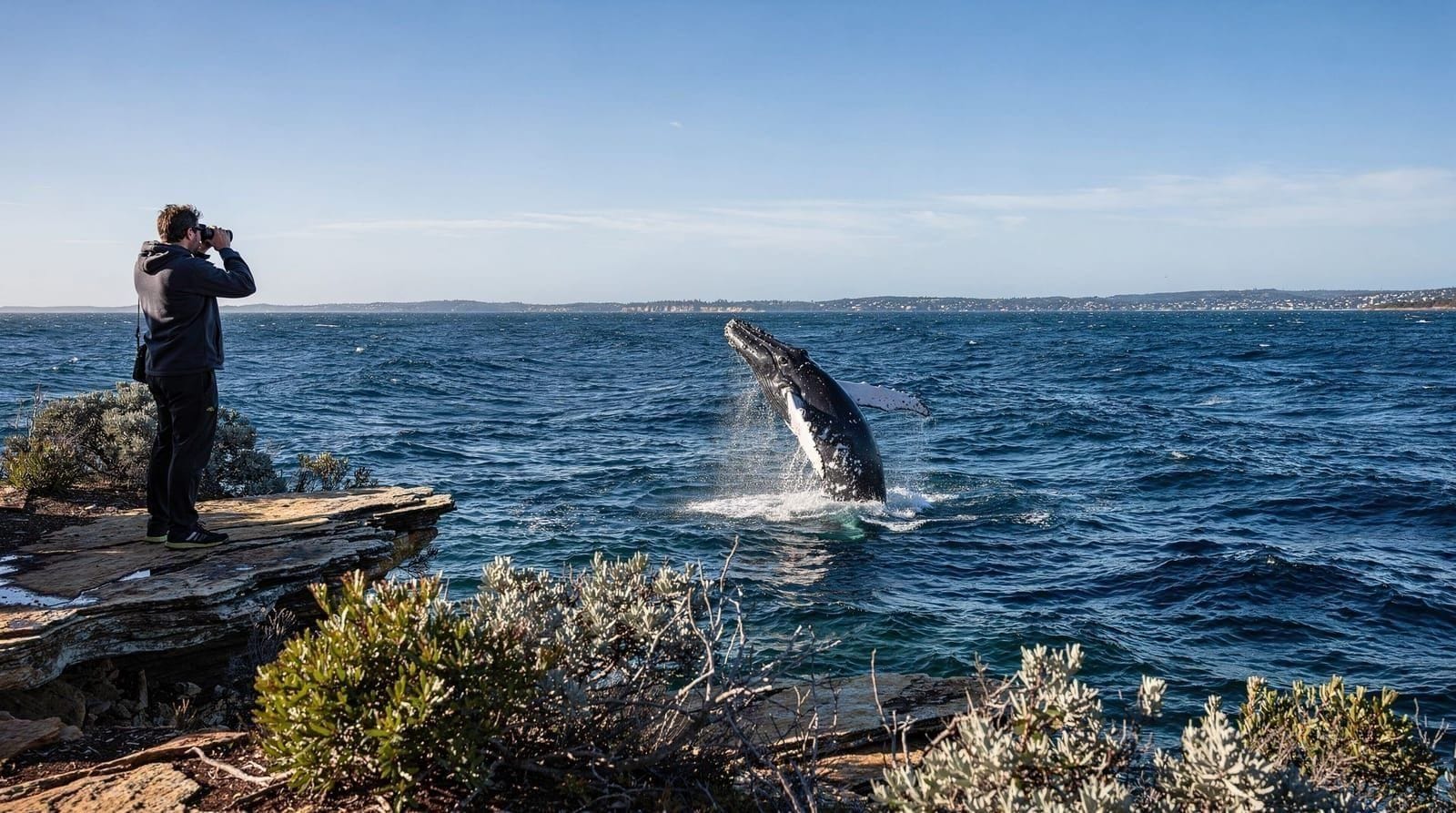
The right choice between watching from a headland and booking a boat shifts across the season. In June–July, density is so high that land-based watching from South Head or North Head can deliver multiple sightings in under an hour, making a free option genuinely competitive with a paid cruise for casual visitors.
In May and November, numbers are thinner and less predictable, so a cruise’s active search matters more — you are paying partly for the guarantee, not just proximity. September–October sits in between: shore sightings improve because southbound whales with calves travel closer to the coast, but a cruise still gets you inside the migration corridor rather than waiting for it to pass a fixed point.
What can disrupt a whale watching plan
Weather is the main variable. A strong southerly swell (common in winter) can make operators modify routes or, in rare cases, cancel departures for passenger comfort and safety — check the operator’s cancellation policy before booking, particularly for a one-off cruise on a tight itinerary. Land-based watching is not weather-dependent in the same way, though heavy rain or fog obviously reduces visibility from a headland. If your Sydney visit is short and whale watching matters to you, building in a day of slack around the planned cruise date is the safest hedge against a weather reschedule.
Frequently asked questions about Sydney whale season
Do I need to book a whale watching cruise in advance? During peak season (June–July) and on weekends, yes — book at least a few weeks ahead, since popular departures sell out. In shoulder months (May, November) or weekday sailings, availability is usually more flexible.
Is whale watching in Sydney better from land or by boat? Both work well in peak season. A cruise gets you closer and inside the migration corridor with a naturalist explaining behaviour; land-based watching from headlands like South Head is free and, in June–July, can deliver comparable sighting rates for a casual visitor with no boat needed.
Top experiences
Bookable activities with verified prices and instant confirmation on GetYourGuide.