Swimming at Bondi Icebergs in winter — what it's actually like
Why July at an outdoor pool
It was 13°C at 7am. Not cold by the standards of anywhere in the Northern Hemisphere that gets proper winters, but cold enough that the handful of Sydneysiders I mentioned my plan to treated me with a mix of respect and quiet concern. “The Icebergs in July,” one said, in the tone you might use for something you had heard about but never attempted yourself.
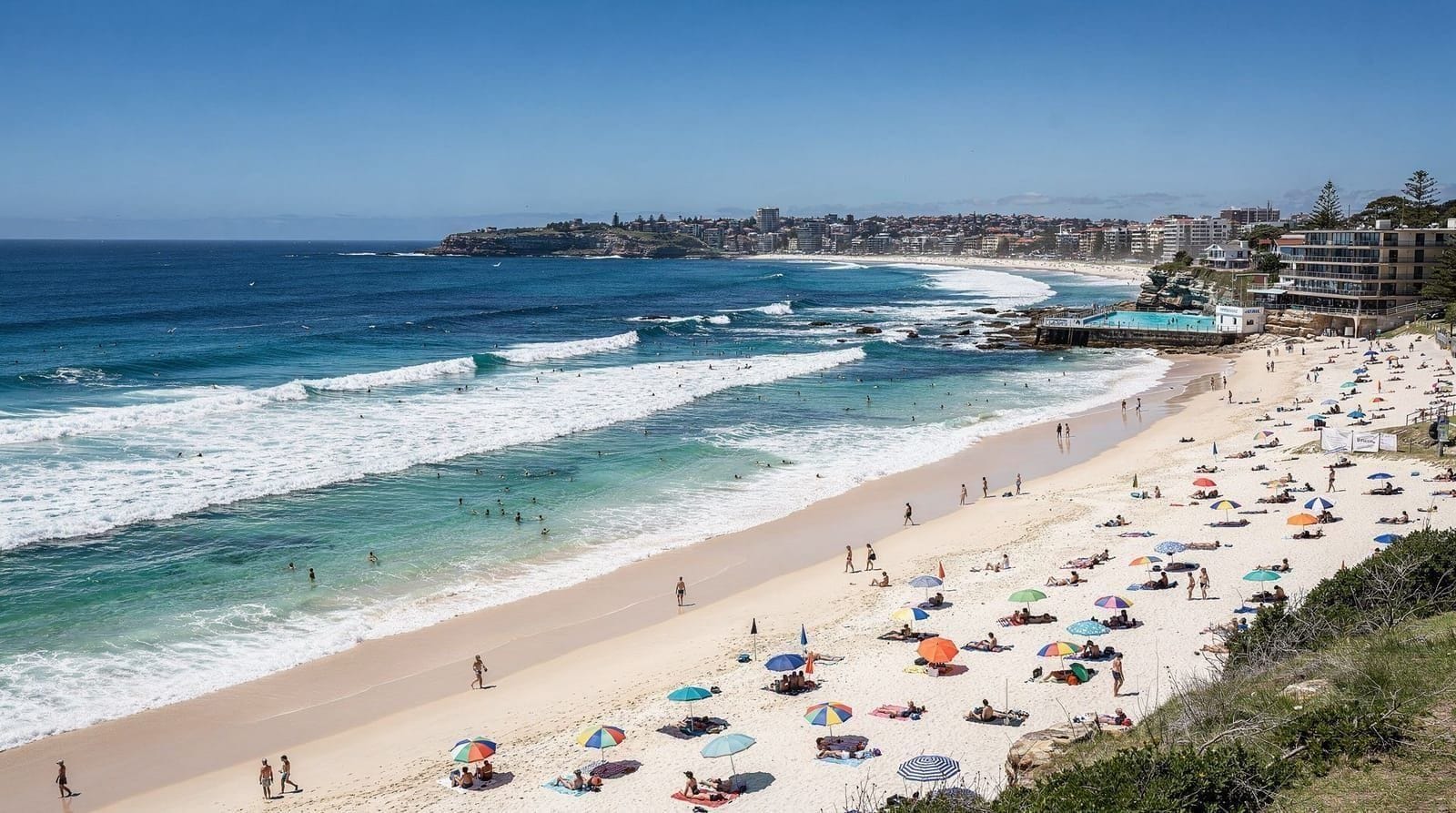
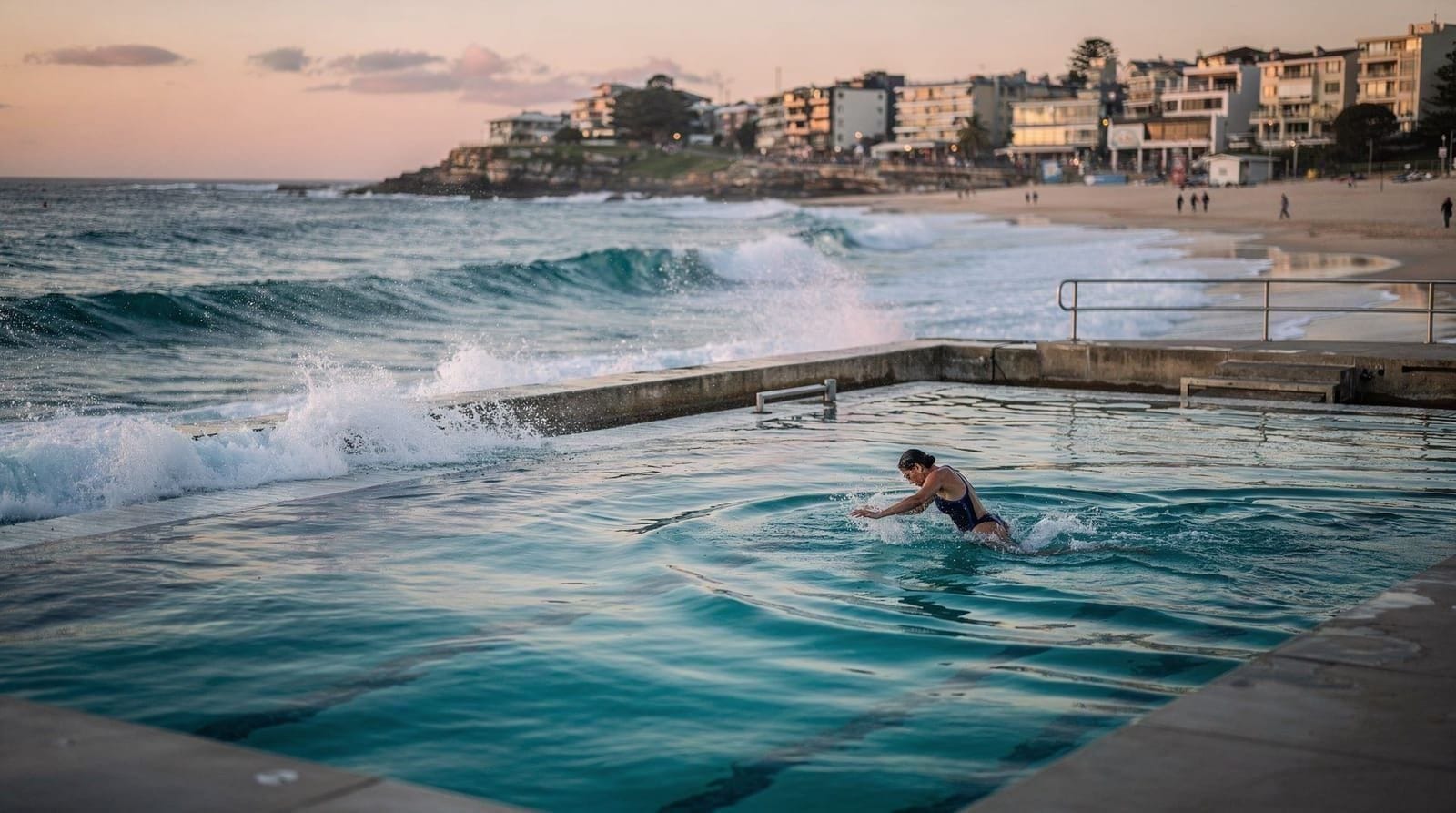
The Bondi Icebergs Swimming Club has occupied the southern end of Bondi Beach since 1929. It’s the kind of institution that Sydney does well — genuinely old, genuinely local, with rules and rituals accumulated over nine decades, and a setting that any number of newer facilities would trade their architecture for. The main pool sits at the edge of the sandstone cliff, separated from the open Tasman Sea by a wall of rock and concrete. When the swell runs, waves break directly over the pool. The pool fills with seawater, not chlorinated tap water. In winter, that water is cold.
The name comes from the club’s original membership requirement: to be an Icebergs member, you must swim in the pool at least three Sundays out of four through winter. They have been enforcing this since the 1920s. There is a waiting list.
At a glance
| Where | Southern end of Bondi Beach, below the coastal walk steps |
| Cost | Around $10 for non-member adult entry |
| Time needed | 45 minutes to an hour for a proper swim |
| Getting there | Bus from Bondi Junction, or walk from the Bondi to Coogee coastal path |
| Best time | 7am on a weekday, winter, before the pre-work crowd |
Getting there
Bondi Beach in winter at 7am has a specific quality. The backpacker crowd that dominates the peak summer beach is absent. The cafes on Campbell Parade are running but quiet. The beach itself, without its summer carpet of bodies, reveals how genuinely impressive it is — a broad arc of golden sand backed by headlands, the Norfolk Island pines at the northern end unmoved by the off-season. A few diehards are in the ocean despite the cold.
The Icebergs facility is at the southern end of the beach, down the steps from the coastal walk. Entry for non-members is $10 for adults. You pay at a counter and receive a towel if you need one. The changing rooms are functional and warm.
The complex includes two pools: the competition pool used for lane swimming and club races, and a smaller children’s pool closer to the cliff edge. There is also a gym and a sauna, and the Icebergs Dining Room and Bar upstairs is one of Sydney’s better restaurants with one of its more objectively spectacular views — the restaurant has a different entry and different pricing from the pool facility.
If you are not staying near the beach, the getting around Sydney guide explains how buses and trains fit together, and the Opal card guide covers paying for them. For the wider picture of the beach itself, the Bondi Beach guide goes into the other things worth doing along the sand, and Sydney in winter is useful if you are planning the rest of a cold-season trip around a swim like this one.
The water itself
I am going to be honest about the temperature. The pool water in July 2020 measured 17°C according to the posted board at the entry counter. Seventeen degrees Celsius is not dramatically cold — competitive open water swimmers race in 16°C without wetsuits regularly. But walking into 17°C ocean water at 7am in winter requires a different level of commitment than settling into it.
The shallow end of the main pool is mercifully close to the entry steps. You can lower yourself in gradually, which I did, spending an embarrassing 90 seconds standing chest-deep and breathing slowly before committing to swimming. The first stroke is a shock. The second stroke is less so. By the fourth length of the pool you are warm enough to have stopped thinking about the cold and started noticing the view.
The view is the thing that makes this pool extraordinary. Bondi Beach curves north in one direction. The ocean extends south towards the horizon. When swell comes in, it crests and breaks over the eastern wall of the pool in a rush of white water that is — there is no other word for it — spectacular. Not threatening; the wall is solid and the pool’s drainage handles the overflow. But visceral in a way that no indoor pool can approach.
I swam eight lengths — 200 metres — before I was ready to stop. Not because I was cold, but because I had to be somewhere.
The social dimension
The Icebergs in winter has a specific social atmosphere. Most of the people in the water before 8am are regulars. They know each other. There are informal agreements about which lanes are for faster swimmers, and the lanes are used seriously — people are actually training, not just enjoying the scenery.
I was the only obvious tourist in the pool that morning. Nobody was unwelcoming, but nobody was performing for my benefit either. This is a club pool used by its members, and the fact that it is open to the public is an act of generosity rather than a tourist strategy. Behave accordingly.
The lane etiquette is the same as any lane pool: tap a swimmer’s feet if you need to overtake, keep to the left of the lane (Australian pools use left-hand traffic), and be aware of faster swimmers coming up behind you. This is not a place to dawdle in the centre of a lane.
The Icebergs in context: Sydney’s ocean pool culture
The Icebergs is the most famous of Sydney’s ocean pools, but it is not alone. The city has a remarkable network of ocean baths carved into its clifftops and headlands — Bronte Baths, Clovelly, Wylie’s Baths at Coogee, Mahon Pool at Maroubra, Malabar Pool at the southern end of the coastal walk.
The Sydney ocean pools guide covers all of them. The general principle is the same: safe swimming in a tidal pool that fills with seawater, separated from the open ocean by a rock or concrete wall, while the ocean does what it chooses on the other side. It is a distinctly Australian institution — this specific configuration of cliff, pool, and open sea exists in a handful of other places in the world, but nowhere at the same density.
In winter, most of these pools are less crowded than in summer. Bronte Baths, a five-minute walk south of Tamarama on the coastal walk, is a good alternative to Icebergs on summer days when the Icebergs’ popularity makes lane swimming frustrating. In winter, both are quiet enough that the choice is largely about which you prefer aesthetically.
If you want to see more of the coast’s swimming spots before choosing, Bronte Beach and Clovelly both sit along the same stretch of coastline and are easy to add to a morning out. The best beaches in Sydney guide helps if you would rather compare sand and surf with the pools.
Wylie’s Baths at Coogee has a different character — less formal, no lap lanes, with a café and a view of Wedding Cake Island offshore. It is warmer in feeling even in winter. Mahon Pool at Maroubra is rougher and wilder, set in a natural rock shelf rather than a constructed facility, and on certain swell directions it becomes spectacular and borderline unusable simultaneously.
What to bring
The practical details, because they matter:
Towel and swimwear: The Icebergs has towels to borrow but bringing your own is faster. In winter, a microfibre travel towel dries you quicker than a thick cotton one in the cold air.
Shoes: The sandstone around the pool edge is wet and occasionally slippery. Pool sandals make moving from changing room to water sensible.
Wetsuit: Not necessary or particularly used by locals. The pool temperature is bracingly cold but safe. If you are genuinely cold-sensitive, a wetsuit will help, but you will look conspicuous — the locals swim in standard swimwear as a point of philosophy.
Timing: 7am on a weekday is ideal for winter swimming. The lanes are less contested than at 8am when the pre-work crowd arrives. Weekends from 8am onwards are busier.
Coffee afterwards: The café at the Icebergs complex is decent but small. The coffee scene on Campbell Parade and in the streets behind the beach — Gould Street, Lamrock Avenue — is strong. Bear Street Coffee, Porch and Parlour, and a handful of other independent roasters operate within ten minutes’ walk.
Worth it in winter?
Yes, clearly and without reservation. The winter swim at the Icebergs is a better experience than the same swim in summer. In summer, the facility is crowded, the lanes are shared five or six swimmers at a time, the social atmosphere skews heavily tourist, and you queue for the showers. In winter, you have the pool mostly to yourself, you can see clearly to the bottom in the better light, and the combination of cold air and cold water and spectacular ocean swell creates something that feels almost meditative.
Sydney in winter is not the Sydney of international marketing. It is the Sydney that Sydneysiders actually use, and the Icebergs on a July morning is as good an argument for the winter visit as the city has. Pair it with a walk up the Bondi to Coogee coastal path after your swim, stop at Bronte for a second look at the baths from above, and have lunch in Coogee. The whole morning costs you one Opal fare and $10 pool entry.
If you would rather not work out the route yourself, a guided option can take the planning away: a guided coastal walk between Coogee and Bondi that passes the Icebergs is a simple way to see the pool from the cliff path, and a sunrise yoga session followed by a coastal walk suits anyone who wants an early start without a lap swim. Both are easy to combine with a dip afterwards if the mood takes you.
Winter swimming works best as part of a slow coastal morning rather than a single event. The Sydney coastal hikes guide lists other cliff walks worth pairing with a swim, and the Sydney coastal beaches itinerary strings several of these stops into a longer plan. If you are weighing up the season for your trip overall, the best time to visit Sydney puts winter in context against the other months.
A word on the open sea beyond the pool wall: the pool is the sheltered option, and the ocean itself behaves differently from day to day. The Sydney safety guide and the surfing guide for beginners are good reading if you plan to move from the pool to the surf later in your stay.
Icebergs vs the other ocean pools: which suits you
For visitors deciding whether to prioritise the Icebergs or one of Sydney’s other ocean pools, the choice usually comes down to atmosphere and how serious a swimmer you are:
| Pool | Character | Lap swimming | Crowds in winter |
|---|---|---|---|
| Bondi Icebergs | Iconic, serious club culture, spectacular swell views | Yes, dedicated lanes | Low before 8am |
| Bronte Baths | Simpler, more relaxed, five minutes from Tamarama | Yes | Low |
| Wylie’s Baths, Coogee | Informal, café, no lanes | Limited | Low |
| Mahon Pool, Maroubra | Wild, natural rock shelf, dramatic in swell | No | Very low |
If you want the full club experience and don’t mind serious lane swimmers around you, the Icebergs wins. If you want something quieter and more contemplative, Wylie’s Baths or Mahon Pool suit better.
A question people ask
Do you need a wetsuit for the Icebergs in winter? No — locals swim in standard swimwear, and the water, while cold, is safe without one. Bring a wetsuit only if you’re genuinely cold-sensitive, though you’ll be the only one wearing it.