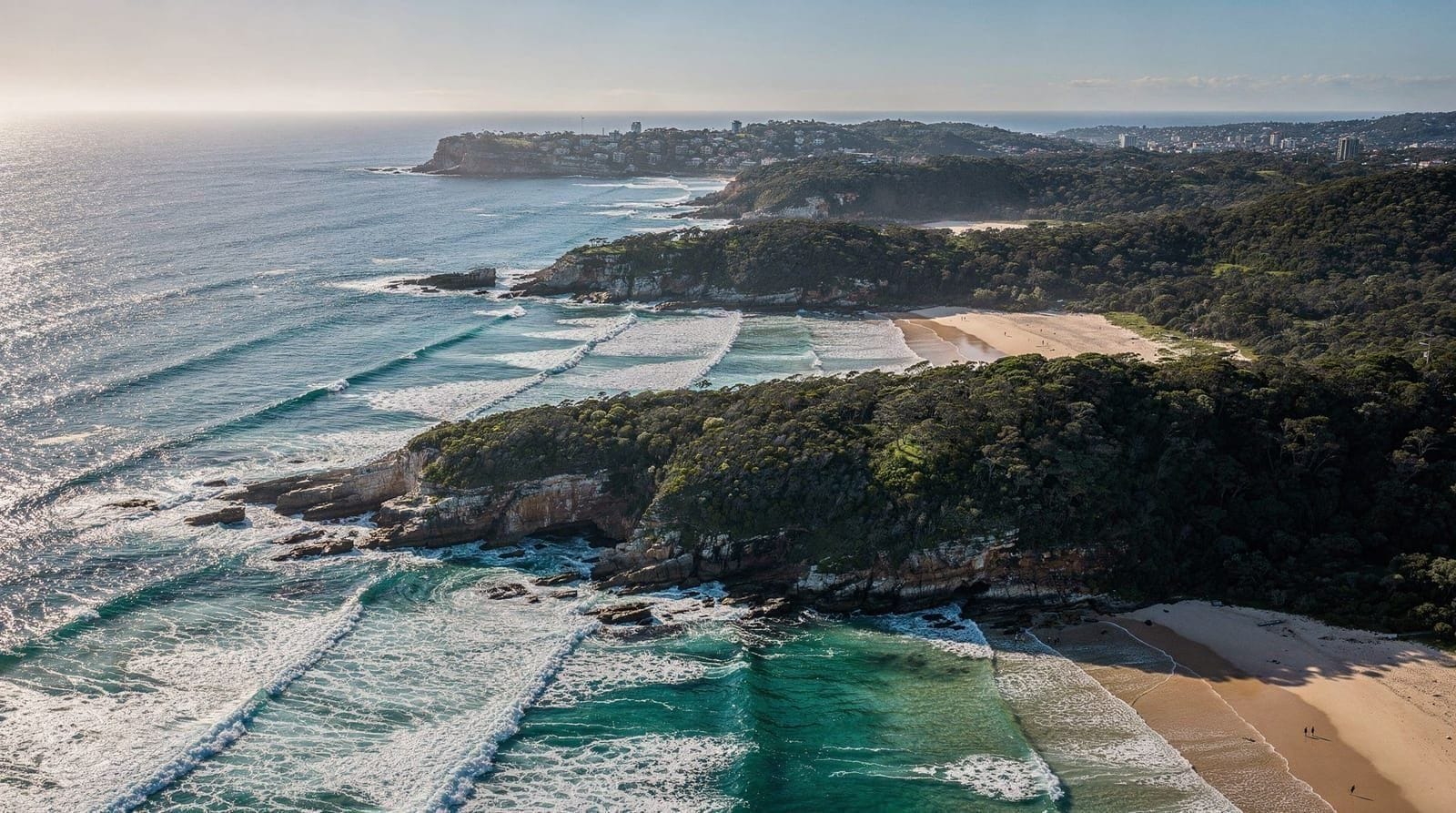
Best beaches in Sydney — honest rankings for 2026
Sydney: From Bondi beach fun 2 hour surf experience for beginners
Duration: 2 hours
What is the best beach in Sydney?
It depends what you want. Bondi is the most famous and most crowded. Manly has more space and a village atmosphere. Coogee is the best family option on the eastern suburbs coast. Bronte is quieter with a rock pool. For near-deserted sand, Palm Beach (northern beaches) is harder to reach but worth it.
| At a glance | |
|---|---|
| Where | Eastern suburbs, northern beaches, Cronulla/south, and harbour beaches around Greater Sydney |
| Cost | Free to swim; buses and ferries at the standard Opal fare (check the Transport for NSW website) |
| Time needed | Half a day for one beach; a full day for the Bondi to Coogee walk |
| Getting there | Train, bus, or ferry from the CBD depending on zone (details per beach below) |
| Best time | October–April for swimming; UV is extreme even on cool or overcast days |
How Sydney’s beaches divide
Sydney has over 100 beaches within the Greater Sydney area, a figure that surprises most visitors who associate Sydney primarily with Bondi. They fall into four distinct coastal zones, each with different character, transport access, and crowd levels:
Eastern suburbs (Bondi, Bronte, Clovelly, Coogee, Maroubra): Urban, accessible by public transport, mostly south-facing, consistent swell.
Northern beaches (Manly, Dee Why, Narrabeen, Collaroy, Palm Beach): A 40 km stretch of coast north of the Harbour, generally larger surf and less crowded. Harder to reach from the city.
Cronulla and the south (Cronulla, Wanda, Garie): South of the city, train access to Cronulla, wilder and emptier beaches further south in Royal National Park.
Harbour beaches (Balmoral, Shark Beach at Nielsen Park, Clontarf): Sheltered, calm, no surf. Good for families with small children. Not what most visitors picture when they think “Sydney beach.”
This guide covers the main beaches across each zone and ranks them honestly rather than by fame.
Eastern suburbs beaches
Bondi Beach
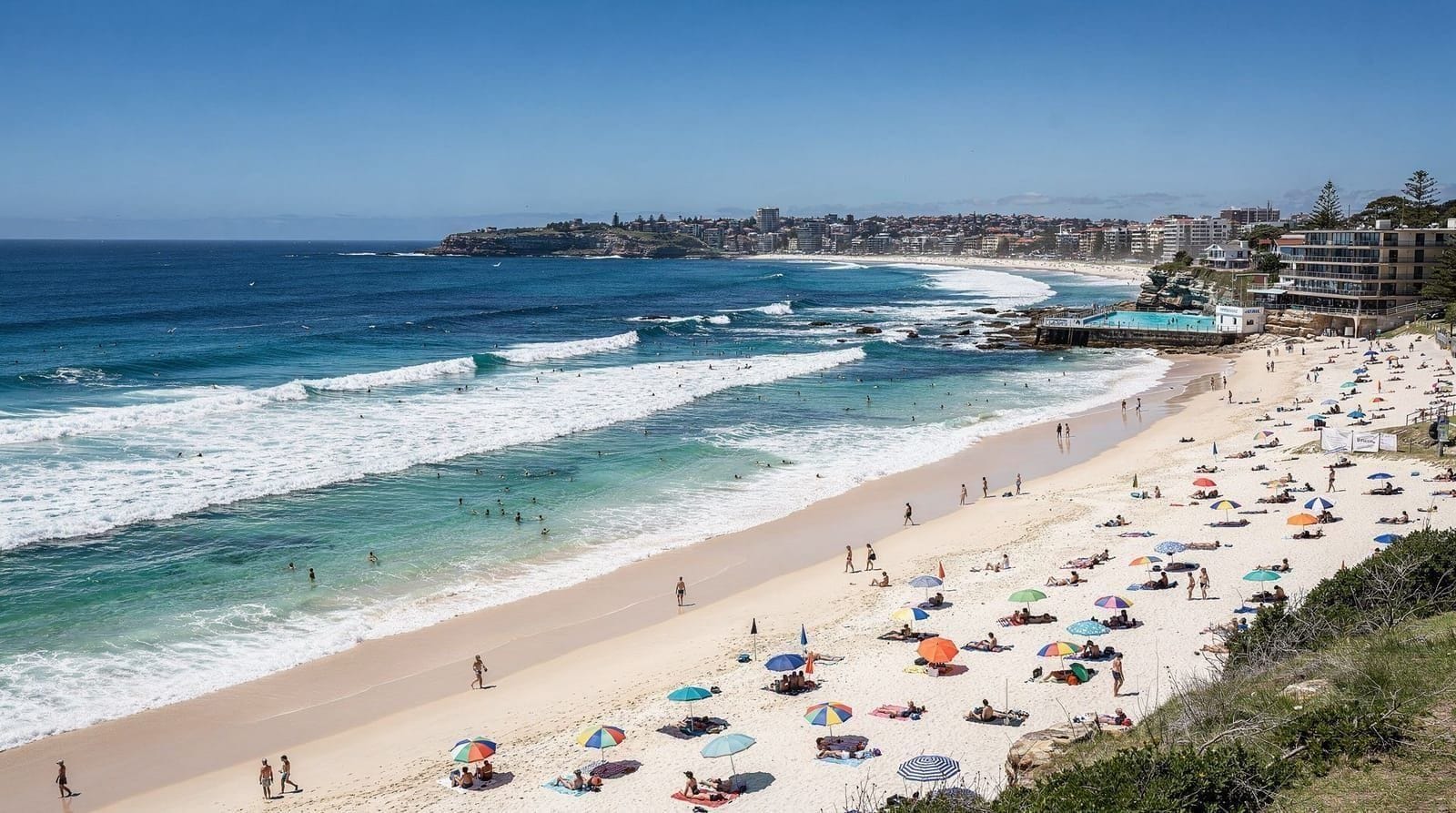
The benchmark. 1 km of white sand in a curved north-east facing bay, consistent 1–1.5 m swell, professional lifeguard service, and more facilities than any other beach in Sydney. The reason not to oversell it: peak summer (January) crowds are intense, the beachfront commercial strip is tourist-priced, and the beach itself is not Sydney’s prettiest.
Best for: First-time visitors wanting the “Sydney beach” experience, surf lessons, the coastal walk to Coogee. Worst time: January weekends, 10 am–3 pm. Transport: Train to Bondi Junction, bus 333/380 to beach (~30 min from CBD, ~standard Opal fare). Facilities: Excellent — changing rooms, toilets, showers, cafes, surf hire, lifeguards.
See the Bondi Beach guide for complete detail.
Book a beginner surf lesson at BondiBronte Beach
Bronte is Bondi’s less-famous neighbour 2 km south on the coastal walk. A creek runs through the park behind the beach — a rarity on this coast — and creates a natural picnic zone under large fig trees. The beach is about 400 m long and narrower than Bondi. The ocean pool at the southern end is free and excellent.
Best for: Families, picnics, a quieter alternative to Bondi within easy walking distance. Transport: Bus 379 from Bondi Junction or walk from Bondi (25 min) or Coogee (35 min). Facilities: Good — change rooms, ocean pool, cafe strip, park with barbecues.
Clovelly
Technically not a beach — it is a narrow concrete channel built into the rock shelf and filled by tidal seawater. But it functions as one of Sydney’s best urban snorkelling spots. The water is almost always calm. Large blue groper fish are permanent residents and are accustomed to human interaction. Bring your own snorkelling gear or hire from Coogee shops 700 m away.
Best for: Snorkelling, families with children who want calm water, photography. Transport: Bus 360 from Bondi Junction. Facilities: Toilets, change rooms, a kiosk (seasonal). No lifeguard patrol.
Coogee Beach
The end point of the Bondi to Coogee walk and a genuinely excellent beach in its own right. Coogee is about 400 m of sand, family-oriented, slightly less crowded than Bondi, and flanked by two heritage ocean pools at either end: Wylie’s Baths (mixed, AUD 6.50 adult entry) and McIver’s Baths (women and children only). The village behind the beach has good cafes and is less tourist-saturated than Bondi.
Best for: Families, ocean pools, visitors who want quality without Bondi crowds. Transport: Bus 372/373/374 from Circular Quay (~40 min, ~standard Opal fare). Facilities: Full — changing rooms, two ocean pools, lifeguards, cafes, accommodation.
Maroubra Beach
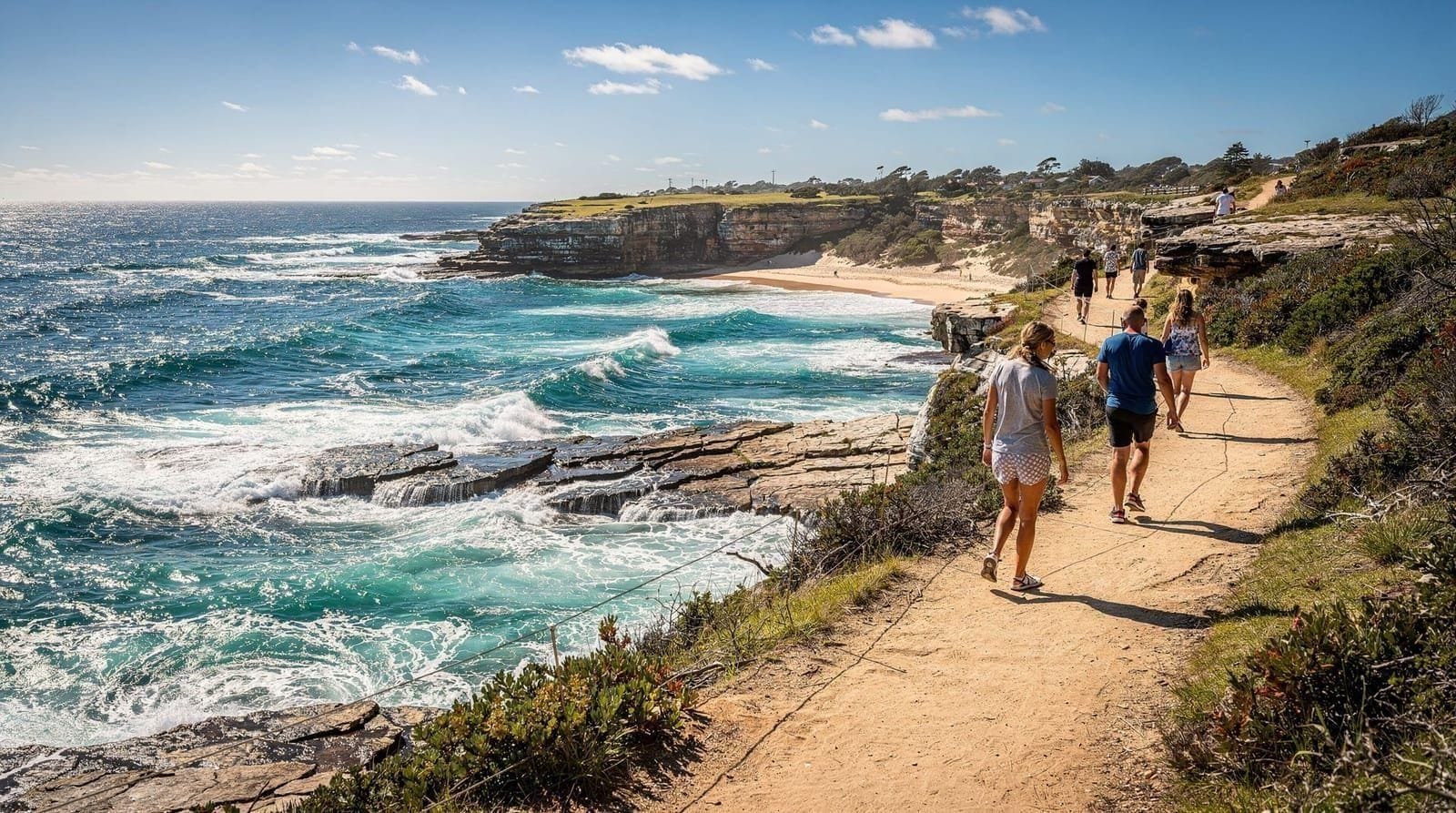
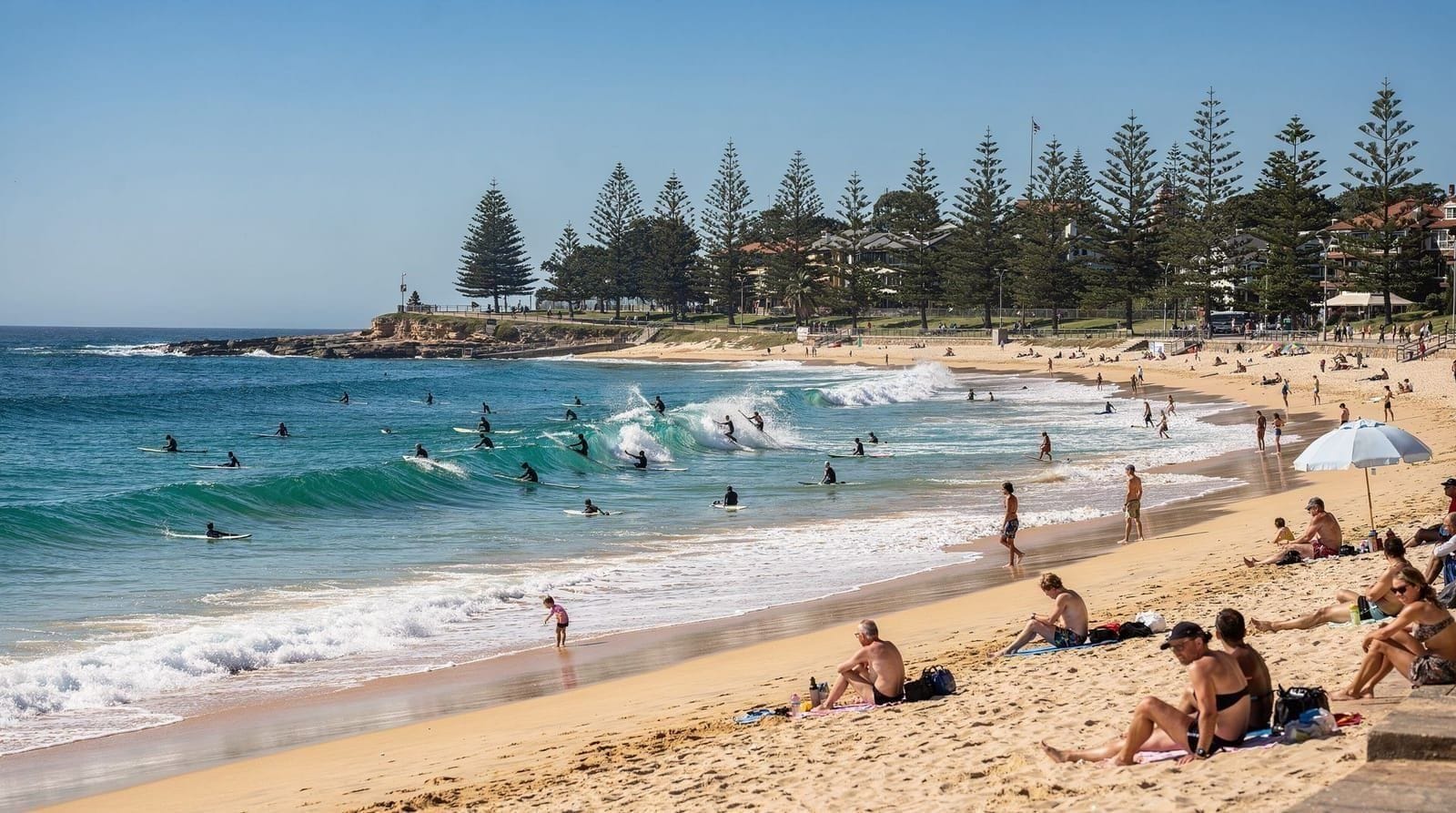
Maroubra is Sydney’s largest eastern suburbs beach at approximately 900 m, but receives a fraction of Bondi’s tourist traffic. The surf is often bigger than at Bondi, and the beach has a genuine local character. The southern end has a headland walking path. Less glamorous than the northern beaches, but cheaper accommodation and a more authentic neighbourhood feel.
Best for: Actual surfing (more space, less ego), budget accommodation in the area. Transport: Bus 395/396 from Circular Quay (~35 min). Facilities: Good — change rooms, lifeguards, surf hire, a modest cafe strip.
A surf lesson at Maroubra offers a slightly different experience than Bondi — smaller class sizes typically.
Surf lesson at Maroubra BeachNorthern beaches
Manly Beach
Manly is the northern equivalent of Bondi — famous, accessible (by ferry from Circular Quay in 30 minutes), and backed by a village with good restaurants and services. The beach is longer than Bondi (approximately 1.2 km), faces north-east, and has a protected area called Shelly Beach immediately around the headland that is excellent for snorkelling.
Best for: A full day — ferry + beach + village + snorkelling at Shelly Beach. Transport: Ferry from Circular Quay (30 min, standard Opal fare). The ferry ride itself is part of the experience. Facilities: Excellent — everything Bondi has, plus the quieter village behind the beach strip.
See the Manly Beach guide for full detail.
Manly and Shelly Beach snorkelling tourDee Why and Long Reef
Dee Why is the northern beach most commonly suggested to visitors willing to take a bus north of Manly. About 700 m of sand, reliable surf, and a local atmosphere. Long Reef, immediately south, offers a headland walk and rock pools. Good for intermediate surfers; quieter than Manly but still accessible.
Transport: Bus E65 or 151 from Manly (~15 min).
Narrabeen and Collaroy
A continuous beach system stretching 2 km from Narrabeen to Collaroy, with the Narrabeen Lakes entering the sea at the northern end. Very popular with locals for the open exposure to swell. Hard to reach by public transport from the city (45 min minimum from Manly by bus). Worth the effort for a beach that feels genuinely uncrowded by tourist standards.
Palm Beach
Palm Beach sits at the northern tip of the Sydney peninsula, 52 km from the CBD. It is where the TV show Home and Away is filmed; the celebrity associations are the worst-kept secret in Australian television and not relevant to the beach itself. The beach faces the open ocean on its east side and the calmer Pittwater on its west side. Both are excellent. The surrounding headland walk to Barrenjoey Lighthouse takes about 40 minutes each way from the car park.
Best for: A full-day escape, anyone wanting genuinely uncrowded premium sand. Transport: Bus 190 from Wynyard Station to Palm Beach (~90 min). Or part of the northern beaches tour. Facilities: Cafe, SLSC, change rooms, lifeguards. Accommodation is high-end.
A guided tour covering the northern beaches and Ku-ring-gai National Park covers more ground in less time.
Northern beaches and Ku-ring-gai National Park guided day tourSee the Palm Beach guide for specific detail on the lighthouse walk, Pittwater ferry, and the Barrenjoey headland.
Cronulla and south Sydney beaches
Cronulla Beach
Cronulla has the distinction of being Sydney’s only ocean beach reachable by train. It takes approximately 55 minutes from the CBD and arrives at a genuine beach suburb rather than a tourist precinct. The beach is about 4 km long in total (broken into sections), with good surf and a local food and cafe scene that is significantly cheaper than Bondi or Manly.
Best for: Value, a long beach without crowds, visitors willing to travel further south. Transport: Train from Central to Cronulla (~55 min, standard Opal fare). Facilities: Full — change rooms, multiple surf clubs, good cafes, surf hire.
See the Cronulla beaches guide for detail on the different beach sections and the Cronulla to Bundeena ferry.
Harbour beaches
The harbour beaches are calm, enclosed, and unsuited to surfing. Their attraction is the tranquil swimming environment and, in some cases, the fine location.
Balmoral Beach (Mosman): The best-regarded harbour beach. Shark netted, patrolled in summer, a tidal pool at the northern end, and some of the best cafe and restaurant options of any Sydney beach setting. Train to Mosman Village + walk, or ferry to Taronga Zoo and bus north.
Nielsen Park / Shark Beach (Vaucluse): Shark-netted harbour swimming in a national park reserve. Not served well by public transport but worth the effort for the setting. Accessible by ferry from Circular Quay in summer (seasonal service).
Clontarf Reserve (Seaforth): Family-oriented harbour beach with barbecue facilities and shallow water. Very popular with local families on weekends.
Honest rankings by use case
Most famous / first-timer: Bondi Best family beach: Coogee (ocean pools + calmer vibe) or Balmoral (calm harbour water) Best for snorkelling: Shelly Beach (Manly) or Clovelly Best for serious surfing: Maroubra or Narrabeen Most scenic overall: Palm Beach (but 90 min from city) Best accessible value: Cronulla (train access, half the prices) Best morning walk connection: Bondi (start) → Coogee (end) via coastal path Least tourist-compromised: Narrabeen, Collaroy, or Garie Beach (Royal National Park)
What to know about all Sydney beaches
Rip currents: Present at almost every Sydney beach to some degree. Always swim between the red and yellow flags at patrolled beaches. If caught in a rip, float and signal for help rather than fighting the current.
UV index: Sydney’s UV regularly reaches extreme (11+) from October to April. SPF 50+ sunscreen, reapplied every 2 hours, and a hat are not optional. The beach UV is significantly stronger than at European equivalents even on overcast days.
Bluebottles: Common November through February when northerly winds blow. The lifeguards post warning signs at affected beaches. Treat stings with hot water (not cold, not vinegar for bluebottles).
Sharks: Rare at patrolled beaches. Most Sydney beaches in established zones have shark nets (installed in the 1930s) which significantly reduce (but do not eliminate) risk. Dawn and dusk are statistically higher-risk times. In practice, the risk is low enough that it should not influence swimming decisions at patrolled beaches.
Patrol seasons: All major beaches are patrolled daily by volunteer surf lifesavers and/or paid lifeguards. Summer patrols run year-round at Bondi and Manly; many beaches reduce to weekends-only in winter.
For current beach conditions and patrol status, the Surf Life Saving NSW Beachsafe app provides real-time information.
Best beach by season
| Season | Water temp | Crowds | Notes |
|---|---|---|---|
| Summer (Dec–Feb) | ~21–24°C | Very high, especially Bondi in January | Bluebottles more common; go early morning |
| Autumn (Mar–May) | ~19–22°C | Moderate | Often the best swimming-to-crowd ratio of the year |
| Winter (Jun–Aug) | ~16–18°C | Low | Cold for swimming but excellent for the coastal walks; whale season begins |
| Spring (Sep–Nov) | ~17–20°C | Moderate, rising toward summer | Good for the Bondi to Coogee walk before the crowds arrive |
Choosing between the eastern suburbs and the northern beaches
Most first-time visitors default to Bondi simply because it is the name they know, but the choice between the eastern suburbs and the northern beaches should really come down to how much travel time is on offer. The eastern suburbs cluster (Bondi, Bronte, Clovelly, Coogee) can all be visited in a single day using the coastal walk and local buses, with no beach more than 40 minutes from Circular Quay.
The northern beaches are more spread out — Manly is a straightforward 30-minute ferry, but Dee Why, Narrabeen, Collaroy, and Palm Beach each add another 15–60 minutes of bus travel on top. For a single beach day with limited time, the eastern suburbs win on convenience. For travellers with a full day or a hire car who want a quieter, more local-feeling coast, the northern beaches reward the extra effort — see the full Bondi vs Manly comparison for a head-to-head.
Beach safety essentials worth repeating
Even seasoned beachgoers underestimate two things about Sydney’s beaches: the strength of the UV index and how quickly a calm-looking rip current can form. Swimming only between the red-and-yellow flags at a patrolled beach removes almost all of the risk; swimming at an unpatrolled beach or cove (Clovelly outside patrol hours, remote sections of Royal National Park) requires genuine caution and, ideally, local knowledge of the specific break. If snorkelling is the goal rather than swimming laps, Shelly Beach in Manly and Clovelly are both sheltered enough that the rip-current risk is minimal.
Frequently asked questions about Best beaches in Sydney
Is it safe to swim at Sydney beaches?
Yes, provided you swim between the red-and-yellow flags at a patrolled beach. Shark nets have operated at major Sydney beaches since the 1930s and significantly reduce (though don’t eliminate) risk, and lifeguards actively monitor rip currents and marine stingers. The real everyday risk is UV exposure and rip currents at unpatrolled spots, not sharks.
Which Sydney beach is best for someone who can’t swim well?
The harbour beaches — Balmoral, Nielsen Park/Shark Beach, and Clontarf Reserve — have no surf and calm, shallow water, making them the safest option for weak swimmers or young children. Among ocean beaches, Coogee’s two ocean pools (Wylie’s Baths and McIver’s Baths) offer a calmer, contained alternative to open swimming.
Top experiences
Bookable activities with verified prices and instant confirmation on GetYourGuide.