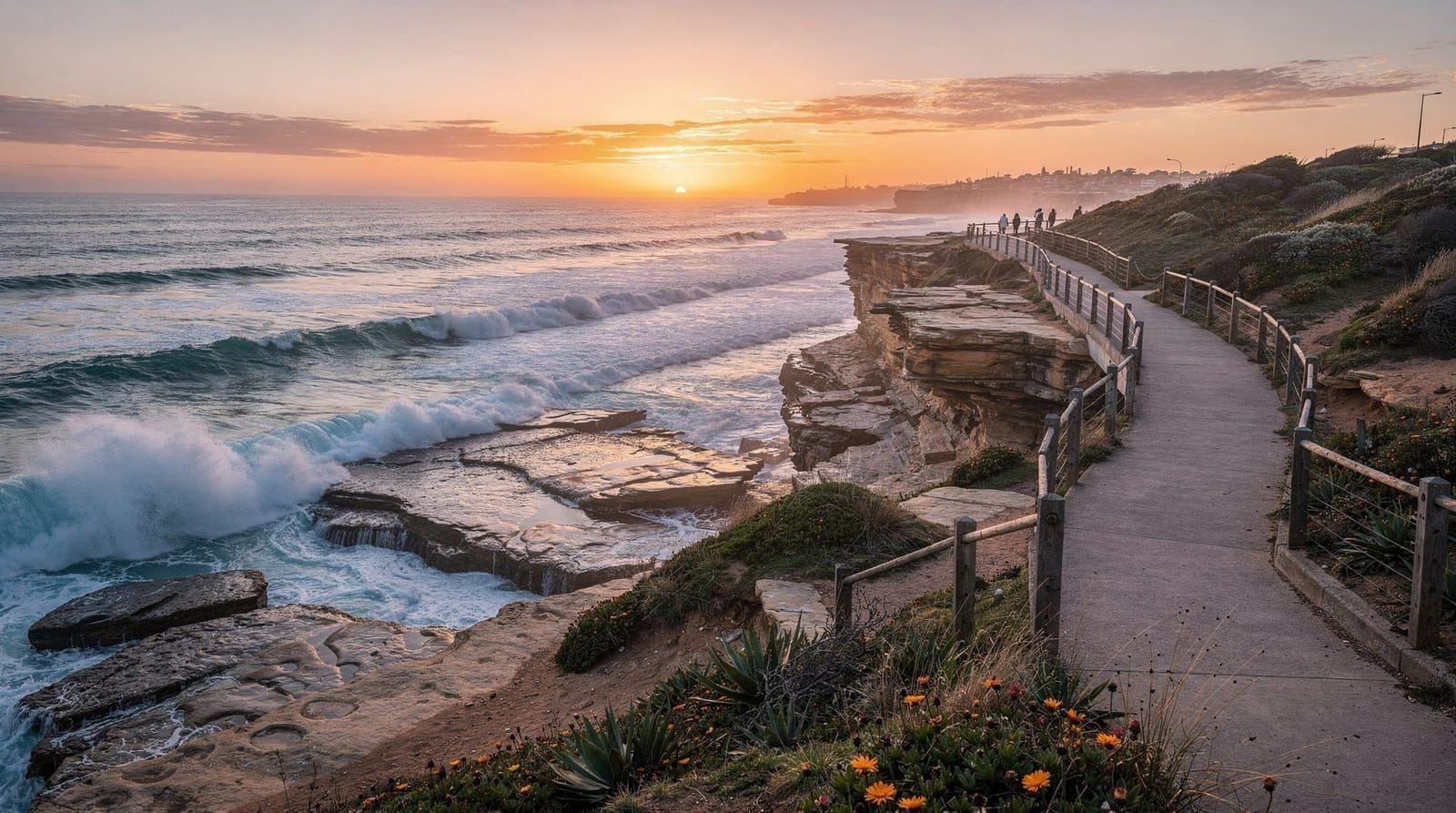
Bondi Beach guide — what to do, when to go, and what to skip
Sydney: From Bondi beach fun 2 hour surf experience for beginners
Duration: 2 hours
Is Bondi Beach worth visiting in 2026?
Yes — but go mid-week or outside summer (Dec–Feb) to avoid extreme crowds. Autumn (Mar–May) and spring (Sep–Nov) offer comfortable 20–24°C water and far less congestion. The beach itself is free; the surrounding area has inflated prices you can easily sidestep.
Getting your bearings at Bondi
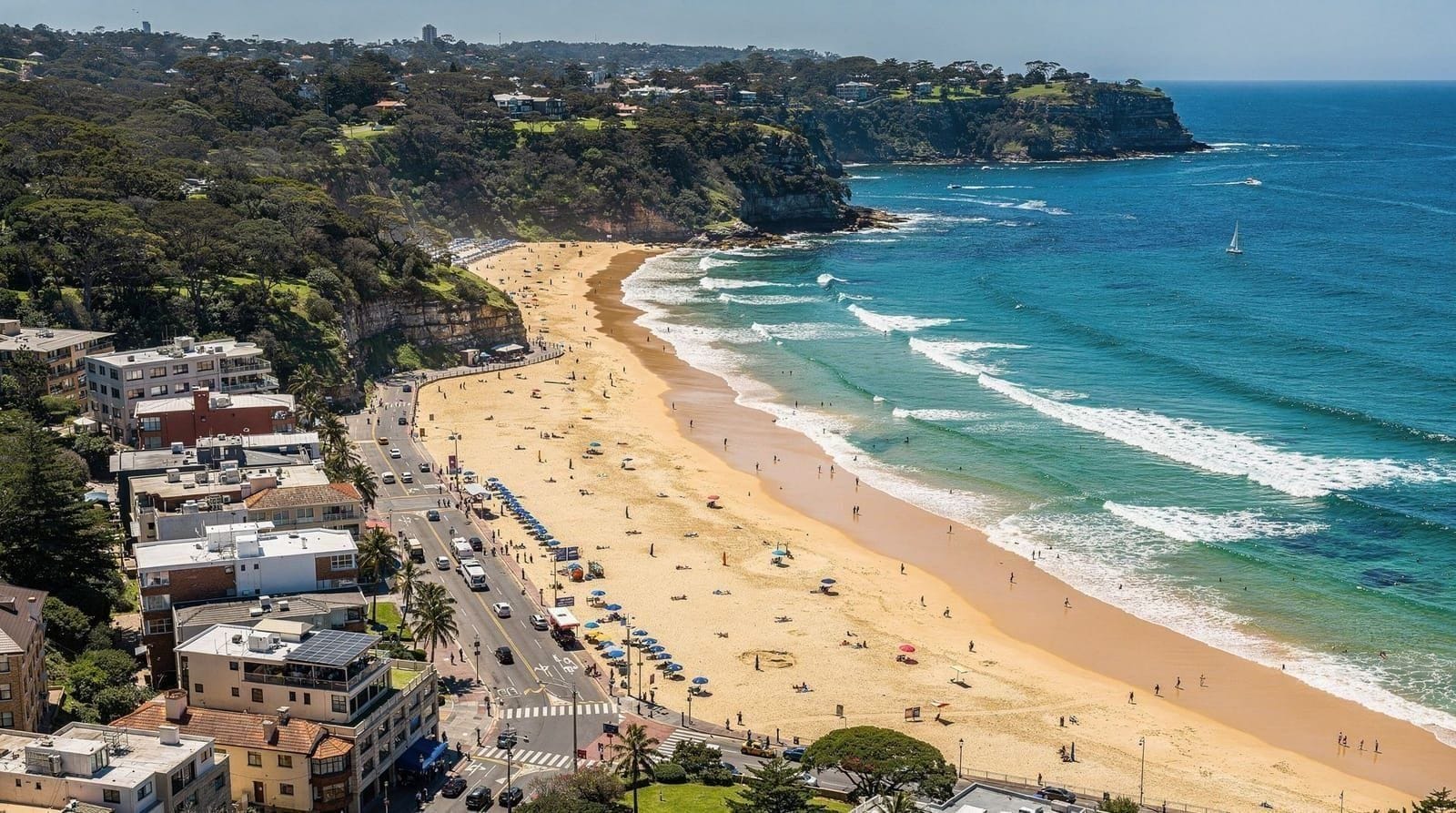
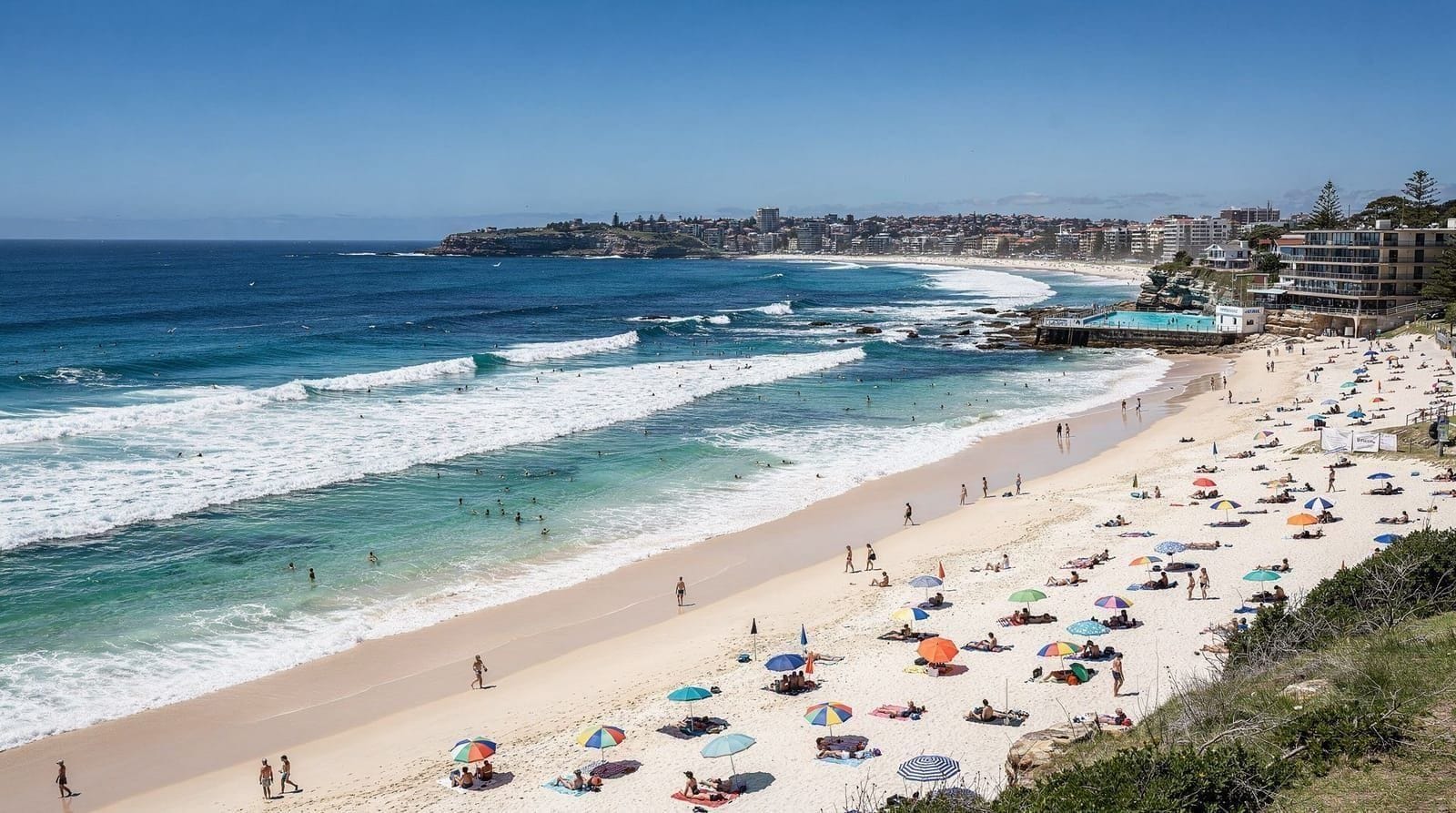
Bondi Beach is 6 km from Sydney CBD — close enough for a morning trip, famous enough to draw 2.5 million visitors per year. That popularity is the main thing you need to plan around. The beach itself is 1 km of white sand in a curved bay, consistently clean, backed by a busy strip of cafes and apartments. The ocean is the star; the commercial zone around it ranges from genuinely good to aggressively mediocre.
This guide covers the beach and its immediate surrounds honestly — what is actually worth your time and money, what is overpriced, when to arrive, and how to use it as a base for the excellent coastal walk south to Coogee.
At a glance
| Where | 6 km south-east of Sydney CBD, Bondi |
| Cost | Beach is free; Icebergs pool around AUD 10; surf lesson around AUD 75–90 |
| Time needed | 2–3 hours for the beach; half a day combined with the coastal walk |
| Getting there | Train to Bondi Junction then bus 333/380, roughly 25–30 minutes from the CBD |
| Best time | Weekday mornings, autumn (Mar–May) or spring (Sep–Oct) for lighter crowds |
The beach itself
Bondi sits in a bay facing roughly north-east. Swell arrives year-round, averaging 1–1.5 m through most months. The beach is divided into three unofficial zones by the lifeguard patrol flags:
North end (near Ben Buckler headland): sheltered, calmer waves. This is where surf schools operate and where families with young children tend to congregate. The rip current along the northern rocks is the one that catches unaware swimmers most often — stay inside the flags.
Central beach: the largest surf zone. This is where experienced surfers and bodyboarders dominate. The shore break can be powerful; it has hospitalized more than a few tourists who underestimated it.
South end (near Icebergs): another rip runs alongside the rocks here. The southern end also catches the late-afternoon shade first, which makes it more bearable in summer.
The sand is fine and pale. At peak summer (January), it is wall-to-wall towels by 10 am. Outside the December–February period, finding a comfortable spot is not difficult even on weekends.
Swimming safety — the facts
Bondi Lifeguard Service performs roughly 2,000 rescues per year, the vast majority involving rip currents. Three rules cover 95% of safety:
- Swim between the red and yellow flags — these are moved daily to mark the safest zone.
- If caught in a rip: do not fight it. Float and signal for help, or paddle parallel to the shore until you are out of the current’s pull.
- Do not swim outside patrol hours — roughly 6 am–7 pm from October to April, 7 am–5:30 pm from May to September.
Bluebottle jellyfish (Physalia) wash in during northerly winds, typically November through February. They sting sharply and cause welts lasting several hours. The lifeguards post flags at the water’s edge to warn of bluebottle conditions.
Surf lessons
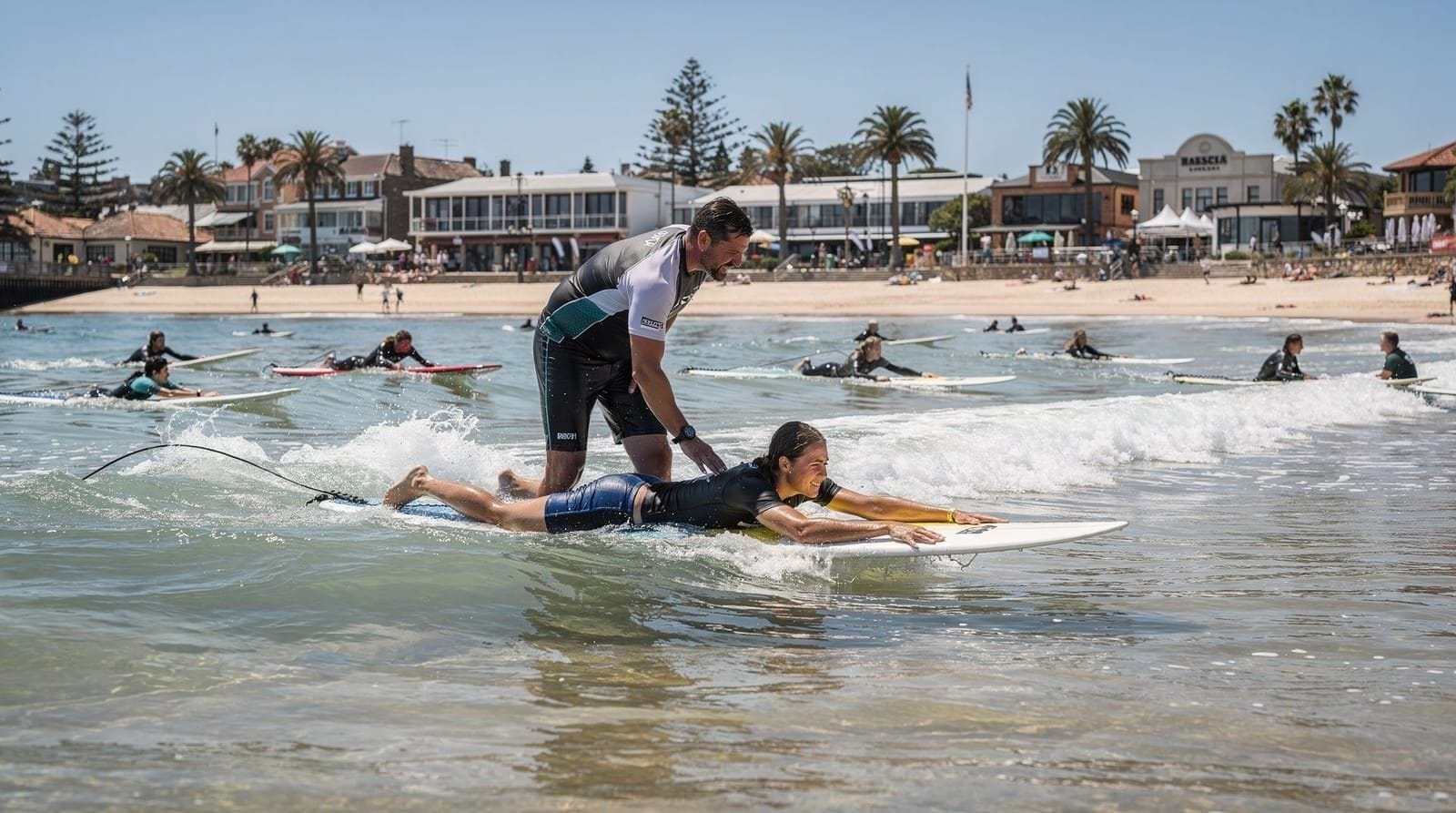
If you have never stood on a board, Bondi’s calmer northern section is a reasonable place to learn. The water is relatively warm (19–22°C in autumn, 22–24°C in summer), and several surf schools operate legally from the beach.
Lessons run for two hours and typically include about 30 minutes of instruction on the sand before entering the water. Most beginners stand up at some point during the first session; many stand consistently. Group sessions (6–8 students per instructor) cost around AUD 75–90 (roughly EUR 49–58, USD 54–65) and are adequate for first-timers.
Book a 2-hour beginner surf lesson at Bondi BeachPrivate lessons cost AUD 140–180 per hour and are worth the premium only if you have specific goals — learning to read swell, paddling technique, or progressing past whitewater. For a once-off holiday experience, the group format is fine.
Private surf lesson at Bondi for dedicated learnersBondi Icebergs
The Bondi Icebergs pool sits at the southern end of the beach, carved into the rock shelf. It is a 50-metre saltwater pool that fills naturally from ocean water at high tide. The setting is genuinely dramatic — water surges over the low wall during bigger swells.
Entry costs AUD 10 for adults. The pool is open Monday to Friday 6 am–7.30 pm and Saturday to Sunday 6.30 am–6.30 pm. It closes on Thursdays for cleaning. The changing rooms are functional rather than luxurious.
The Icebergs restaurant and bar adjacent to the pool carries significant prestige and appropriate prices. Main courses run AUD 45–70. If that is in budget and the view matters, the Sunday afternoon session is the most atmospheric. Otherwise, the pool entry is excellent value on its own.
The Icebergs brand also operates a members club — not relevant to visitors, but useful context for why the locals who swim here year-round are willing to endure cold winter sessions.
The Bondi to Coogee coastal walk
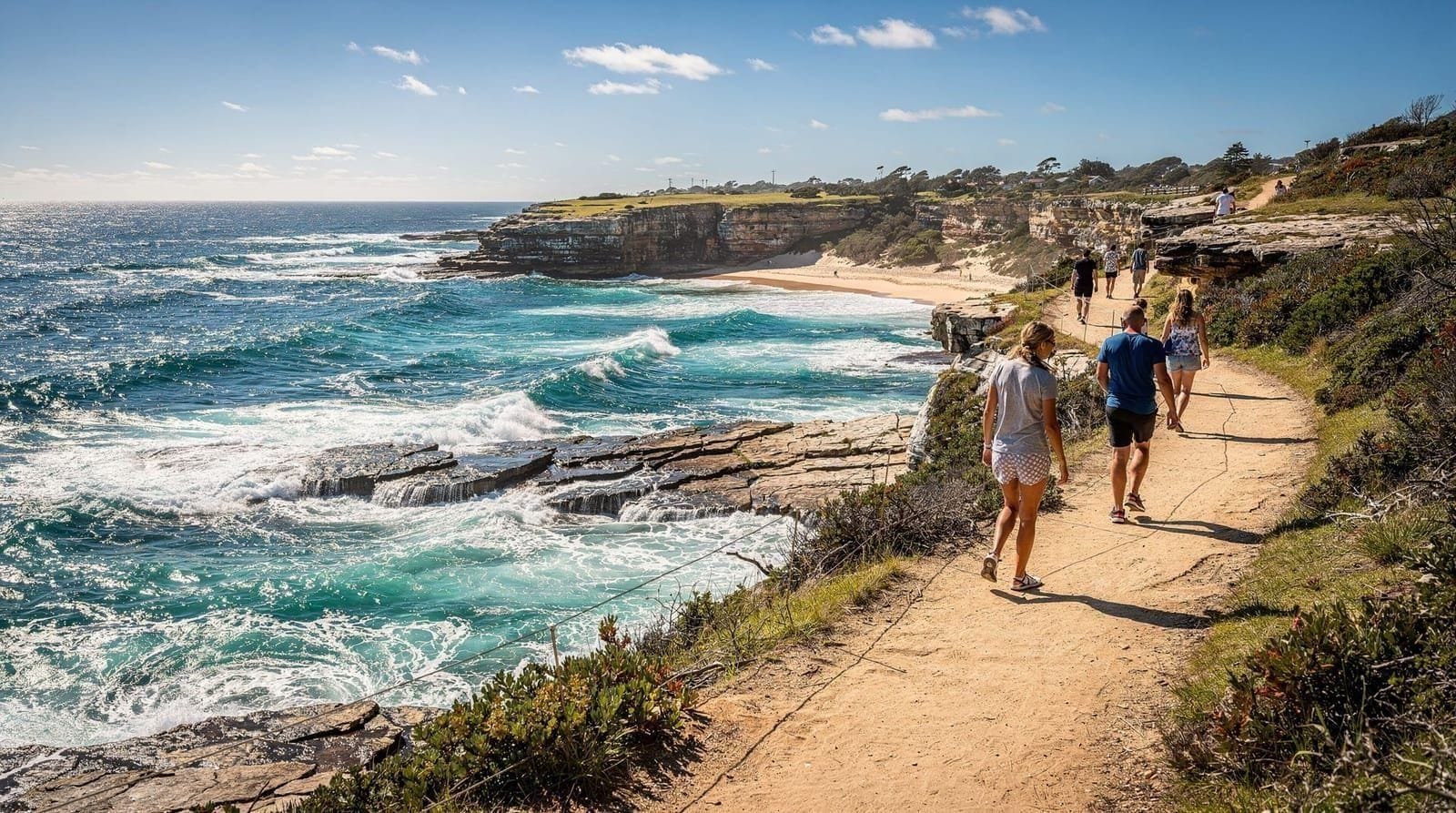
This is the single best free activity connected to Bondi Beach. The Bondi to Coogee walk begins at the southern end of Bondi (below Icebergs) and follows the cliff tops for 6 km to Coogee, passing through Tamarama, Bronte, and Clovelly.
It takes 2–2.5 hours at a relaxed pace. The path is paved throughout, accessible to most fitness levels, and free. The views of the ocean and the sandstone cliffs are the highlight — cleaner and more dramatic than anything you see from the beach itself.
If you want a hike that ends with a proper sit-down meal at the Coogee end, a Bondi to Coogee hike with an a la carte lunch is a close alternative, and it takes care of the logistics for you.
Bondi to Coogee hike with a la carte lunchYou can also walk the route in reverse — starting from Coogee and finishing at Bondi Icebergs for a late-afternoon swim.
Coogee to Bondi coastal walk with lunch at IcebergsSunrise yoga and morning coastal walks
The Bondi sunrise is genuinely worth waking up for, particularly in autumn and spring when the air temperature is comfortable (15–20°C at 6 am) and the light is warm. Several operators run sunrise yoga sessions on the beach or the coastal path. These combine a guided morning walk along the cliff tops with a yoga session at a viewpoint — typically finishing by 9 am before the day crowds arrive.
Bondi sunrise yoga and coastal walk tourIf yoga is not your interest, arriving at the beach between 6 and 7 am on any day gives you the place largely to yourself — the light is at its best and the Icebergs pool is open.
Getting to Bondi
Train + bus (recommended): Eastern Suburbs line from Town Hall or Central to Bondi Junction (approximately 15 minutes; check the Opal fare on the official Transport for NSW website). Then bus 333 or 380 from outside the Bondi Junction shopping centre — the 333 is slightly faster, 10–12 minutes. Total door-to-door roughly 30 minutes from the CBD.
Bus direct: The 333 runs from Circular Quay through the city to Bondi. It covers more ground but takes 40–50 minutes depending on traffic. Useful if you are starting from the harbour end of the city.
Uber/taxi: Around AUD 30–40 from the CBD to the beach. The Bondi Rd–Campbell Parade junction is reliably congested from 10 am on weekends. Only useful if you are travelling with heavy bags or from a point poorly served by trains.
Driving and parking: There is a council car park at the beach (corner of Campbell Parade and Lamrock Ave) with paid metered parking (see Waverley Council for current rates). Finding a free street spot within 1 km on weekends before noon is difficult. Do not drive here unless necessary.
Cycling: Bondi is uphill from the eastern suburbs — the final stretch down Campbell Parade is steep. Fine going in, less pleasant coming back. Several hire services operate from Bondi Junction.
What to eat and where
Breakfast and coffee: The beachfront strip on Campbell Parade has a high proportion of mediocre, tourist-priced cafes. The exceptions: Speedos Cafe (corner of Hall and Gould Streets, away from the strip) is a genuine local favourite with inventive breakfast menus and AUD 6–7 coffees. Trio at 1 Warners Ave is solid for an unpretentious breakfast at fair prices.
Fish and chips: Sean’s Panaroma on Campbell Parade is the long-standing local choice — the fish is genuinely fresh and the chips are proper. Expect to pay AUD 25–35 for a sit-down meal. No reservations for lunch at the casual downstairs level.
Supermarket supplies: The IGA on Hall Street (walking distance from the beach) is well-stocked for picnic supplies — better value than any restaurant if you are buying food to eat on the beach.
Avoid: The strip of identical-looking beachfront restaurants with A-frame sandwich boards offering “amazing deals” — uniformly overpriced and indifferent quality. The food court inside Bondi Beach Public School markets on certain Saturdays (check ahead) is a legitimate exception.
When to visit: seasons
Autumn (March–May): Best overall. Water 19–22°C, air 20–25°C, crowds manageable even on weekends, accommodation in Bondi/Coogee 30–50% cheaper than January. The ocean pools are excellent in this period.
Spring (September–October): Second choice. Water warming from 17°C to 21°C, spring light excellent for photography. Jacaranda trees bloom in October in the parks behind the beach strip.
Summer (December–February): The peak. Water 22–24°C, air 25–35°C, beach genuinely crowded by mid-morning on weekends. Bluebottles possible. Heatwaves (above 35°C) arrive several times per season. Hotel rates are at their highest.
Winter (June–August): Not for swimming (17°C water). Excellent for the coastal walk, photography, and watching surfers in heavier swell. The Icebergs pool is most atmospheric in winter when seas are bigger. Accommodation is cheapest; the beach neighbourhood functions normally.
Tourist traps to avoid
Beachfront restaurants with “sea view” premiums: Most deliver indifferent food at inflated prices backed by the view. The food worth paying for in Bondi is generally away from the immediate beachfront.
Inflated surf hire: Boards rent for AUD 20–30 per hour at legitimate operators. Anyone quoting significantly more without explanation deserves scrutiny.
“Bondi to Manly” claims: Some tour operators market this as a single walk. Bondi and Manly are on different sides of the Harbour entrance and are not connected by a coastal path — there is a ferry and walking link via the Spit Bridge, but it takes a full day. The Bondi to Coogee walk is the real coastal route here.
Parking near the beach on summer weekends: The council car park and the streets around it are reliably full by 9 am in January. The time wasted circling far exceeds the cost of public transport.
A little history and why the name matters
Bondi (pronounced “bon-dye”) comes from an Aboriginal word from the Gadigal/Dharawal language groups, generally translated as “noise of water breaking over rocks” — a fitting description of the surf that still defines the place. The Gadigal people are the traditional custodians of this stretch of coastline, and middens and rock engravings survive in pockets around the headlands. For a deeper look at this layer of Sydney, the Sydney Aboriginal heritage guide is worth reading before or after a Bondi visit.
The beach became a fashionable seaside resort from the 1880s, and the surf lifesaving movement that now defines Australian beach culture effectively began here — the Bondi Surf Bathers’ Life Saving Club, founded in 1906, is recognised as the world’s first. That history is part of why the red-and-yellow flag system feels less like a rule and more like a local institution.
Whale watching from Bondi’s headlands
Between May and November, humpback whales migrate along this coastline, and the headlands either side of Bondi — particularly the southern cliffs near Icebergs and the start of the Bondi to Coogee walk — are legitimate free vantage points. You will not get as close as a boat tour, but on a clear winter morning with binoculars, sightings are common. The land-based whale watching guide covers the best specific lookouts and timing if this interests you, and the whale season guide breaks down month-by-month odds.
Packing and safety basics for a Bondi day
Sydney’s UV index is genuinely severe, and Bondi has zero shade on the sand itself. SPF 50+, a hat, and a rash vest for extended swims are not optional extras here — sunburn is the single most common way visitors have their Bondi day ruined. The Sydney packing guide and the Sydney safety guide both cover this in more depth, including bag-watching etiquette on a beach where phone and bag theft, while not epidemic, does happen during peak summer crowding.
Bondi and nearby beaches compared
Bondi is the most famous and the most crowded. Bronte Beach, 2 km south on the coastal walk, is smaller but has a rock pool, a creek, and a fraction of the crowds. Clovelly, another 1 km further, is actually a natural cove rather than an open beach — calm water, good for families and snorkelling. For a complete comparison of Sydney’s eastern suburbs beaches, see the best beaches in Sydney guide.
The Bondi vs Manly comparison is worth reading if you are choosing between the two flagship beaches — they serve different purposes and suit different visitors.
Combining Bondi with other areas
Bondi works well as a half-day anchor in an eastern suburbs afternoon. A common structure: arrive by 8 am for sunrise or morning swim, walk the coastal path to Coogee by midday, lunch in Coogee, return by bus. Alternatively, combine Bondi with a late afternoon at Watsons Bay — ferry from Circular Quay to Watsons Bay (35 minutes), then Uber to Bondi for a sunset swim, back to the city by bus.
For a full eastern beaches day, the Sydney coastal beaches itinerary covers Bondi, the walk, and two additional beaches in a structured 4-day plan.
Practical information
Lifeguard patrols: Daily, about 6 am–7 pm (October to April) and 7 am–5:30 pm (May to September). Off-peak swimming outside these hours is at personal risk.
Toilets and changing rooms: Public toilets at both ends of the beach, plus inside the Bondi Pavilion (the large building in the centre of the beach). Outdoor showers at the water’s edge.
Bondi Pavilion: The heritage sandstone building at the centre of the beach contains public facilities, a gallery, and event spaces. Entry free for the public areas. The gallery runs changing exhibitions; quality varies.
Dogs: Not permitted on Bondi Beach, in the intertidal zone or in the ocean pools; they must be on a leash elsewhere in the park.
Wi-Fi: Bondi Pavilion has free public Wi-Fi. Most cafes offer it with purchase.
Nearby pharmacy: Several on Campbell Parade and Hall Street. Useful for sunscreen (essential — UV index in Sydney reaches 11+ on summer days), antihistamine for bluebottle stings, and after-sun.
Emergency: Triple Zero (000) for serious incidents. Bondi Lifeguard Service operates from the tower at the centre of the beach during patrol hours. In a genuine emergency in the surf, attract attention by waving one arm above your head — the international distress signal recognised by lifeguards worldwide.
Frequently asked questions about Bondi Beach guide
How do I get to Bondi Beach from Sydney CBD?
Take the train to Bondi Junction (Eastern Suburbs line, ~15 min from Town Hall; check the Opal fare on the official Transport for NSW website), then bus 333 or 380 to Bondi Beach (another 10 min). Total journey roughly 25 minutes and capped under the Opal daily rate. Taxis or rideshare run around AUD 30–40 from the CBD — not worth it unless you have heavy luggage.What are the surf conditions like at Bondi?
Bondi faces north-east and picks up consistent 1–1.5 m swell for most of the year. The beach is divided into sections — the northern end (near the rocks) is calmer and used for learners. The central beach sees the biggest break. Rip currents form on either side of the beach near the rocks; always swim between the red and yellow flags patrolled by Bondi's famous Lifeguard Service.When is the best time to visit Bondi Beach?
March to May (autumn) and September to October (spring) are the sweet spots — water temperatures of 19–22°C, lighter crowds, and accommodation 30–50% cheaper than January. January and February are the peak: hot (25–32°C), very crowded, and expensive. Winter (June–August) is too cold for swimming (17°C water) but great for the coastal walk and photography.Are surf lessons worth booking at Bondi?
If you have never surfed before, a 2-hour group lesson in the calmer north end of the beach is a reasonable way to spend around AUD 75–90. Most school-age participants stand up within the first session. Private lessons run AUD 140–180 but are only worth the premium if you have specific technique goals — group classes for true beginners are equally effective.What is the Bondi Icebergs pool?
Icebergs is a 50-metre saltwater pool built into the rocks at the southern end of Bondi Beach. Entry costs AUD 10 (adult), open Mon–Fri 6 am–7.30 pm and Sat–Sun 6.30 am–6.30 pm. It is closed on Thursdays for cleaning (weather permitting). It fills with ocean water at high tide and the views across the beach are excellent. The adjacent restaurant is overpriced — the pool entry is not.Is the Bondi to Coogee walk accessible from Bondi Beach?
Yes — the walk begins at the southern end of Bondi Beach (near Icebergs) and follows the cliff tops for 6 km to Coogee. It takes 2–2.5 hours at a comfortable pace, passing Tamarama, Bronte, and Clovelly along the way. The path is paved and mostly flat, with some short climbs. It is free, open all year, and offers the best views of Sydney's eastern suburbs coastline.Where should I eat near Bondi Beach without getting ripped off?
The beachfront strip on Campbell Parade is tourist-priced and mostly mediocre. Walk one block inland for better value — Gertrude & Alice on Hall Street is a good bookshop-cafe, Trio on Campbell Parade is a local favourite for breakfast without being extortionate. For fish and chips, Sean's Panaroma on Campbell Parade is the genuine article but book ahead. The supermarket IGA on Hall Street is ideal for picnic supplies.Can I swim safely at Bondi without a lifeguard?
Bondi is patrolled by volunteer and professional surf lifesavers every day, about 6 am to 7 pm from October to April and 7 am to 5:30 pm from May to September. Outside patrol hours, swimming is your own risk. The Bondi Lifeguard Service performs around 2,000 rescues per year — most involve rip currents. The red and yellow flags mark the safest swimming zone and move daily based on conditions. Never swim beyond them.Can I see whales from Bondi Beach?
Yes, in season. Between roughly May and November, humpback whales migrate along the coastline and the headlands at either end of Bondi are legitimate free vantage points, especially on a clear winter morning. A boat tour gets you closer, but the free clifftop lookout is a genuine option if the timing lines up.Is Bondi Beach good for a first Sydney visit?
Yes, and it is usually one of the first stops on any first-timer itinerary. Plan a half-day covering the beach, a swim or Icebergs pool visit, and the start of the coastal walk toward Coogee, then head back to the CBD by mid-afternoon.
Top experiences
Bookable activities with verified prices and instant confirmation on GetYourGuide.