Sydney in winter — what to expect June to August
Sydney: 25 hour whale watching wildlife cruise
Duration: 2.5 hours
What is Sydney like in winter (June to August)?
Sydney winter is mild by almost any northern hemisphere standard — 8–17°C, occasionally rainy, rarely harsh. It is the cheapest time to visit by a significant margin, coincides with peak whale watching season (June–August), and overlaps with Vivid Sydney (28 May–19 June 2027). You cannot comfortably swim in the ocean, but almost everything else is fully operational and far less crowded.
| At a glance | |
|---|---|
| When | June to August |
| Cost | Cheapest of the year — accommodation around 30–40% below summer rates |
| Weather | Mild, 8–17°C, occasional short rain bursts |
| Best for | Whale watching (peak season), Vivid Sydney (overlap in early June), fewer crowds |
| Book ahead | Not usually required except whale cruises and Vivid weekends |
Sydney winter (June–August) is the most misunderstood travel period in Australian tourism. Visitors from the northern hemisphere hear “winter” and mentally picture something resembling Stockholm in January. The reality is closer to an October day in Barcelona — cool, occasionally grey, but entirely functional for outdoor tourism.
Weather in Sydney winter
| Month | Average high | Average low | Rainfall days | Sea temp |
|---|---|---|---|---|
| June | 17°C | 10°C | ~12 days | 18°C |
| July | 16°C | 9°C | ~11 days | 17°C |
| August | 17°C | 10°C | ~11 days | 16°C |
A few clarifications:
- Overnight lows reach 8–9°C but rarely below 5°C
- Snow in Sydney is essentially unheard of — there has been significant snowfall in the CBD fewer than 10 times in recorded history
- The Blue Mountains (1,000m+ elevation) do get occasional frost and very rare snowfall
- Rain comes in short bursts rather than sustained grey days
- July still averages more than six hours of sunshine a day
UV is still relevant in winter — a high-UV day in July (index 4–6) can still cause sunburn in fair skin after extended outdoor exposure. Continue applying SPF 30+ on active outdoor days.
Why winter is worth serious consideration
Cheapest time of the year: Hotel rates in the CBD drop 30–40% from summer peaks. A 3-star hotel room in Surry Hills runs AUD 150–200 in July vs AUD 240–320 in January. Flights into Sydney are at their annual low in July. For European visitors doing a long-haul trip, the cost difference over 7–10 days can be AUD 600–1,200 in accommodation alone.
Fewer crowds: Bondi Beach in July has Sydney-local joggers and café-goers — not the international tourist density of December. You can actually walk from Bondi to Coogee without navigating around other tour groups. Taronga Zoo, the Opera House and BridgeClimb all operate with meaningfully shorter queues.
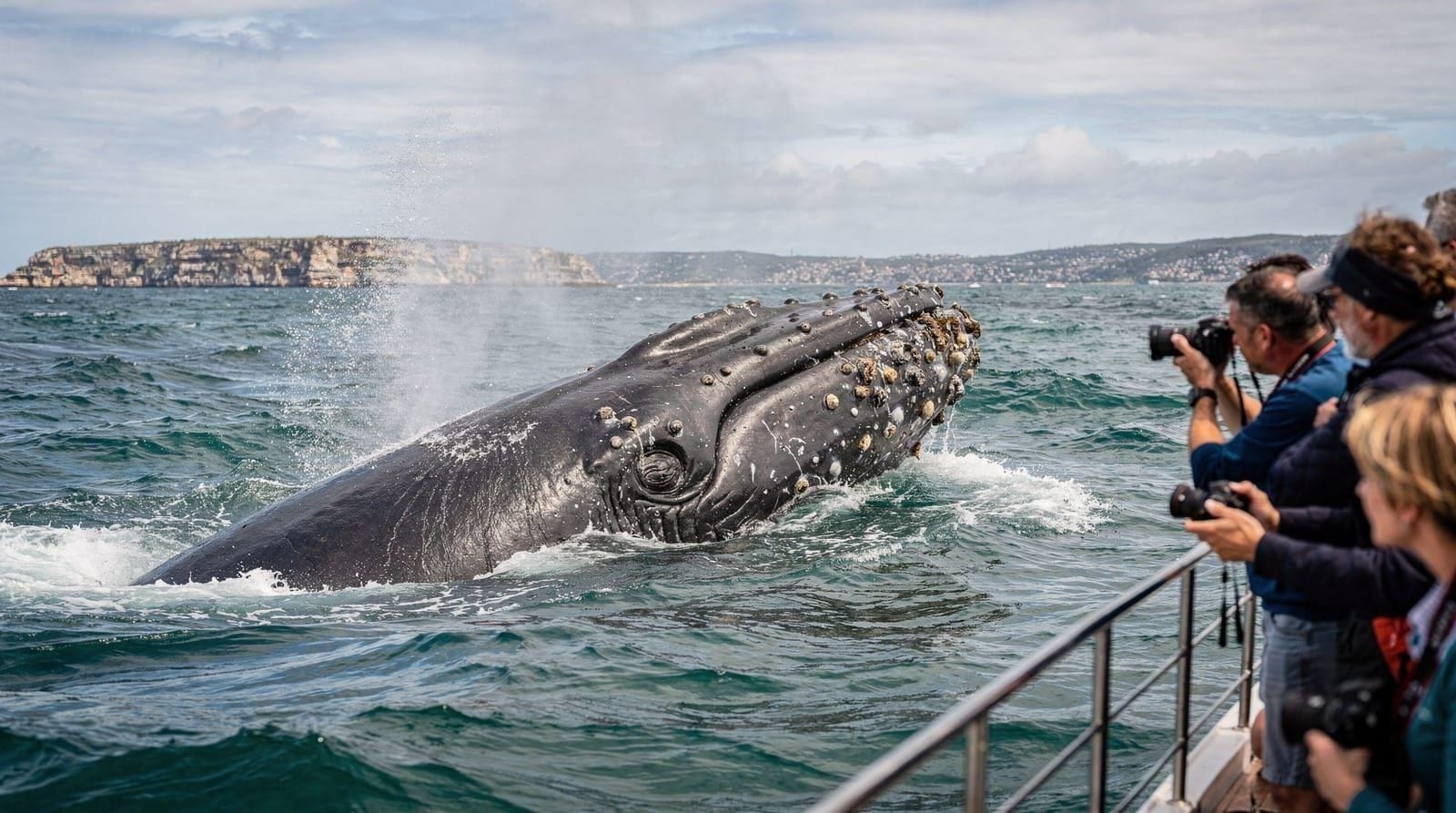
Peak whale watching: Humpback whales migrate north past Sydney Harbour through June–August, making this the highest-yield period for whale watching cruises. Sighting rates on reputable cruises in this window are very high. A 2.5-hour wildlife and whale watching cruise is one of the most reliable wildlife experiences in Australia during this period.
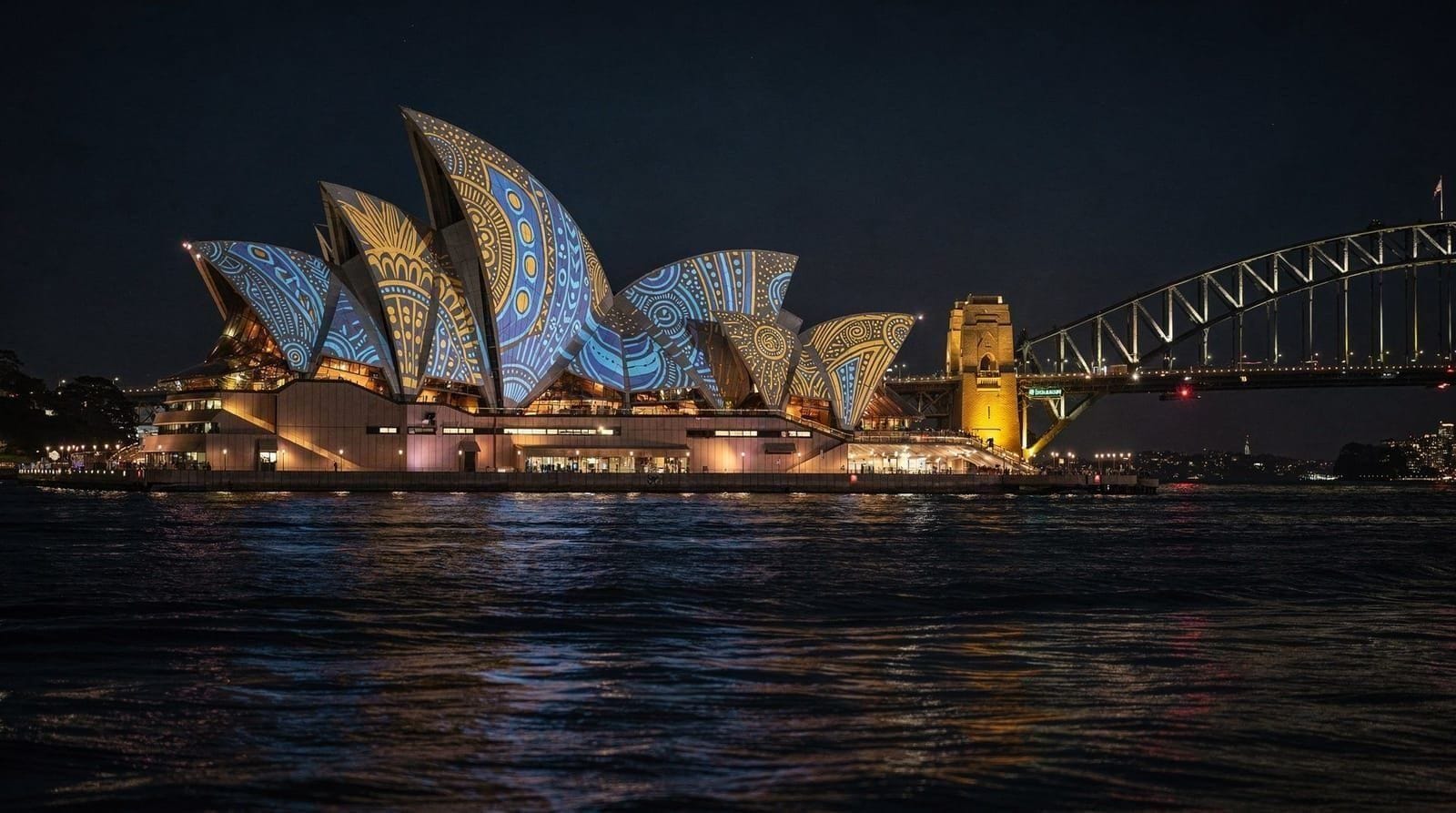
Vivid Sydney (28 May–19 June 2027): The transition from autumn to winter brings Sydney’s most distinctive night-time event. While the official program typically runs in late May through mid-June, the light installations and evening programme overlap with the start of the winter period. See the dedicated Vivid Sydney guide.
Blue Mountains: Winter mornings in the Blue Mountains are spectacular — crisp clear air, eucalyptus mist in the valleys at dawn, jagged sandstone visibility that summer haze sometimes obscures. The Three Sisters at Echo Point are at their most photogenic on a clear winter morning. Katoomba temperatures run 5–10°C colder than Sydney — bring warm layers.
What you cannot do in winter
Ocean swimming: Sea temperature of 16–18°C is cold for recreational swimming. Locals who swim year-round (Bondi Icebergs Ocean Pool has year-round swimmers) handle it, but most visitors from warmer climates will not find this enjoyable. Heated hotel pools are an alternative.
Beach days: You can walk beaches and coastal paths in winter (often more pleasant than in summer’s heat), but sunbathing at the beach is not a significant winter activity.
What you can do
Almost everything else:
- All major attractions: Opera House, BridgeClimb, Taronga Zoo, SEA LIFE, harbour cruises — fully operational year-round
- Coastal walks: The Bondi to Coogee walk (6 km) and Manly Scenic Walkway (10 km) are if anything more pleasant in cool, clear winter air
- Day trips: Blue Mountains, Hunter Valley (wine tasting is year-round), Jervis Bay. The Blue Mountains day trip guide covers what to expect in each season.
- Museums and galleries: Art Gallery of NSW and Australian Museum have free general entry, and the Museum of Contemporary Art (see its official website for admission) is also excellent on rainy winter days
- Food and restaurant scene: No seasonal difference — Sydney’s restaurant scene operates year-round without summer/winter shifts
What to wear in winter
Sydney winter dressing is manageable for anyone from northern Europe or the US. A medium-weight jacket is sufficient for most days. The wind chill off the harbour on a July evening can make it feel cooler than the thermometer suggests.
Layer suggestions:
- Base layer or thermal on particularly cold July days
- Medium fleece or sweater
- Wind-resistant outer layer for harbour and coast areas
- Comfortable walking shoes (closed, not sandals)
See the packing guide for the full winter-specific list.
Whale watching in winter
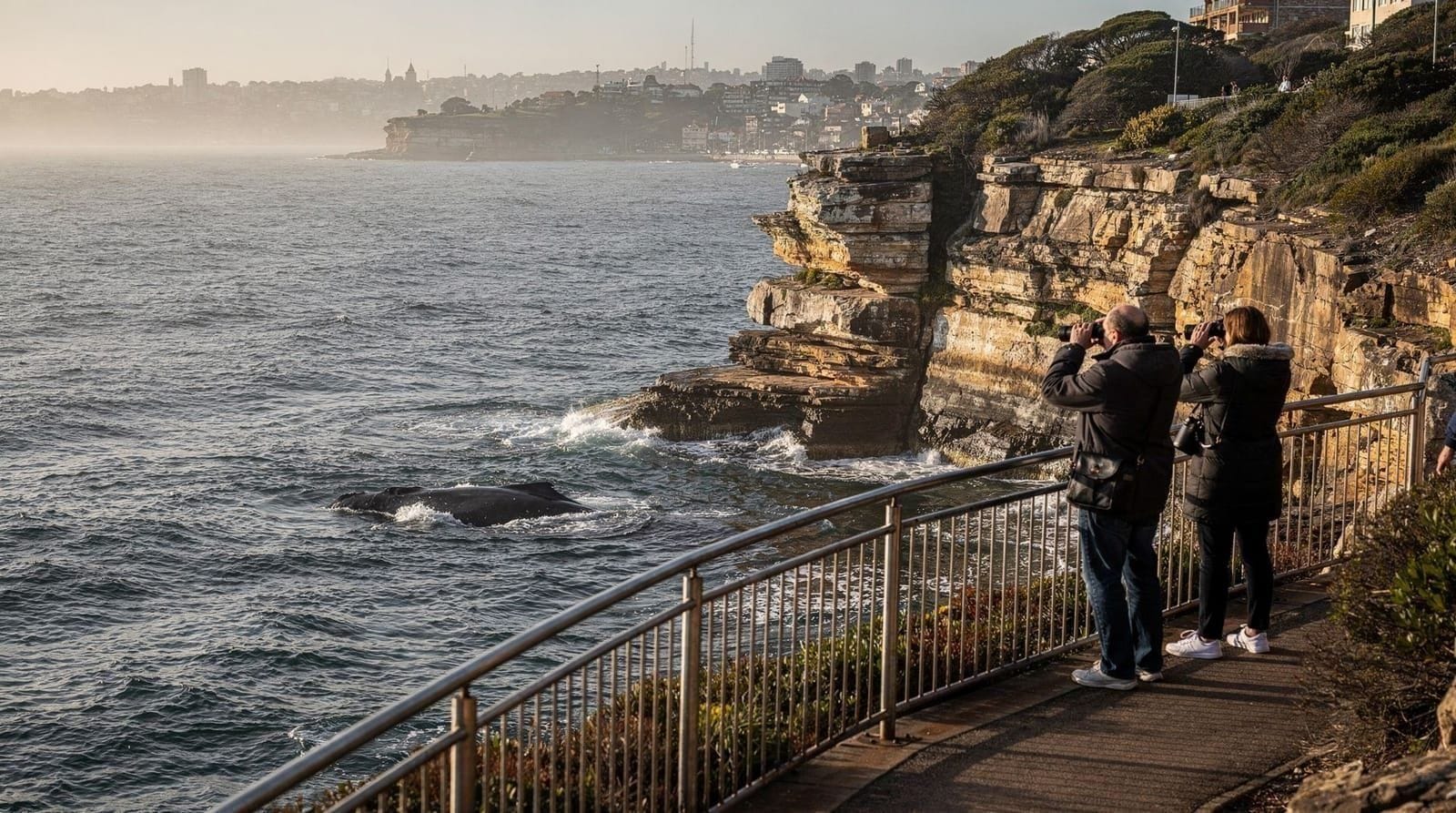
Humpback whale migration north past Sydney occurs June–August. The whales travel close to shore — within 2–5 km of the Sydney coastline — making offshore viewing easy on the many harbour-based whale watching cruises.
Standard cruise duration: 2.5–3 hours. Departure from Darling Harbour or Circular Quay. Sighting rates peak June–August. Some cruises include breakfast or lunch making them a full morning or afternoon experience.
For those wanting a longer, more relaxed experience, the Sydney winter whale itinerary combines 6 days of Sydney sightseeing with targeted whale watching scheduling.
Getting the most from a winter visit
Plan an evening at the Vivid festival if arriving in late May or early June. Even after the main program closes (19 June), early June brings residual winter atmosphere in the city that pairs well with harbourside dining.
Use the cost advantage actively. The savings on accommodation (AUD 50–80 per night vs summer) are real — redirect that budget toward one premium experience: BridgeClimb at twilight, a whale watching cruise, or an overnight in the Blue Mountains.
Embrace the Opal system. Winter is particularly good for getting around Sydney on public transport — no summer heat waiting at bus stops, no crowd management on ferry decks. The Manly Ferry at sunset in July is genuinely beautiful.
The full seasonal comparison is in the best time to visit Sydney guide.
Winter-specific activity recommendations
Hikes and coastal walks
Sydney’s coastal walks are at their most pleasant in winter. Mild temperatures, clear air, and the absence of summer crowds make the Bondi to Coogee walk and Manly Scenic Walkway genuinely enjoyable. A few winter-specific considerations:
-
Bondi to Coogee (6 km): The clifftop sections are windier in winter but the views are often clearer. Bronte and Clovelly pools remain swimmable for those accustomed to cold (18°C). The walk itself takes 2–3 hours at a moderate pace. See the Bondi to Coogee walk guide.
-
Manly Scenic Walkway (10 km): This walk from Manly to Spit Bridge through Sydney Harbour National Park is excellent in winter — the vegetation is green from winter rain and the harbour views from the headlands are exceptional on clear days.
-
Blue Mountains bushwalks: The Grand Canyon walk at Blackheath, the National Pass near Wentworth Falls, and various Katoomba valley trails are extraordinary in winter. Cold morning mist in the eucalyptus forest, empty trails, dramatic sandstone walls. The Blue Mountains best hikes guide covers the specific options.
Indoor cultural Sydney in winter
Rainy winter days call for Sydney’s indoor cultural offering:
- Art Gallery of NSW: One of Australia’s major collections in a grand sandstone building. Free for permanent collection. Special exhibitions vary — check the programme.
- Australian Museum (Hyde Park area): Natural history and Indigenous cultures of the Pacific. Well-suited for a winter afternoon.
- Museum of Contemporary Art (MCA): Rotates exhibitions of Australian and international contemporary art. See the official Museum of Contemporary Art Australia website for admission.
- Sydney Observatory (Observatory Hill): Open Thursday to Sunday (see the official Sydney Observatory website for tickets); night sky sessions are a specific winter attraction given the longer winter nights.
Winter dining and wine
Sydney’s restaurant scene in winter is at its most comfortable — the outdoor dining culture steps back slightly, but the quality of indoor restaurant dining in Surry Hills, Newtown and the CBD is unchanged.
The “Christmas in July” tradition in many restaurants: a mid-winter festive menu with roast meats and traditional European-style winter food. A specific and quirky Sydney experience that runs through most of July.
Hunter Valley wine tours in winter (June–August): fewer tourists, cooler conditions ideal for tasting, cellar doors less crowded. June and August are particularly good months for a Hunter Valley day trip. See the Hunter Valley wine tour guide for operator recommendations.
The winter whale watching window in detail
The humpback whale migration north (toward calving grounds in the Coral Sea) runs May–July through Sydney waters; the return south migration runs August–November. June–August represents the peak of the northward migration — the largest numbers pass closest to Sydney Harbour during this period.
What whale watching actually involves in winter:
- Departure: Most cruises depart Darling Harbour or Circular Quay between 9:30am and 11am. The ocean south of Sydney Harbour is open Pacific — swells of 1–2m are common, occasionally more.
- Motion sickness: Real consideration for those susceptible. Take medication 1 hour before departure. Catamarans (stable) and larger vessels handle swell better than smaller rigid-hulled inflatables.
- Sighting guarantee: Several operators offer a sighting guarantee (return trip if no whales seen). In peak June–August, sighting rates are very high and guarantees are rarely needed.
- Duration: Standard cruise 2–2.5 hours. Premium experiences (breakfast or lunch included) run 3+ hours.
See the whale watching Sydney guide and the whale season guide for species information and the best operators.
Winter accommodation deals — how to find them
Hotel yield management in Sydney means winter prices are genuinely lower, but they are not advertised as “discounts” — you find them by searching:
- Most hotel chains lower base rates for June–August automatically
- LastMinute and HotelTonight apps often have exceptional deals on Thursday and Friday for same-week or next-week bookings in winter
- Direct hotel website booking can be cheaper than OTA (online travel agencies) for 3–5 night stays — call the hotel directly and ask about their “best available rate”
The where to stay in Sydney guide covers the best-value winter neighbourhoods and specific hotel recommendations.
The winter verdict in one paragraph
Sydney in winter is the correct choice for budget-conscious visitors, whale watching enthusiasts, Vivid Sydney attendees, and anyone who would rather explore a beautiful city comfortably than overpay for the same experience in sticky summer heat. The cold is not cold by the standards of northern Europe, the beaches are empty and walkable, the restaurants are excellent, and you might watch a humpback whale breach in Port Jackson Harbour on a clear June morning. The Sydney winter whale itinerary structures a 6-day trip around exactly this combination.
Sydney winter for specific visitor types
European visitors in summer (December–January) vs winter
The financial argument for winter is significant from a European perspective. A couple spending 7 nights in Sydney:
- January (peak): Mid-range hotel AUD 280/night × 7 = AUD 1,960 (€1,274). Flights from Amsterdam: AUD 2,600–3,200 return per person.
- July (winter): Mid-range hotel AUD 185/night × 7 = AUD 1,295 (€842). Flights from Amsterdam: AUD 2,100–2,500 return per person.
Saving on the ground for a couple: approximately AUD 665 in accommodation (€432). Additional flight saving: AUD 300–700 per person. Total trip savings: AUD 1,265–2,065 for a couple (€820–1,340).
The weather trade-off: 16°C and occasional rain in July vs 26°C and occasional thunderstorms in January. For most active visitors, this is not a significant downgrade.
German and Dutch visitors
German and Dutch travellers statistically favour Sydney in winter — the outdoor and nature emphasis of both markets aligns with winter’s coastal walks, national park day trips and whale watching. The Blue Mountains and Hunter Valley are arguably more interesting to walk and taste in winter than in summer heat. The Blue Mountains day trip guide covers both seasons.
Polish visitors
July–August is peak budget travel season from Poland to long-haul destinations. AUD is competitive against PLN (approximately 1 AUD = 6.5 PLN). A tight budget is more feasible in winter than in summer. See the Sydney on a budget honest guide for specific cost strategies.
Winter-specific itinerary suggestions
The classic 5-day winter structure:
Day 1: Arrive, Bondi to Coogee walk (clear winter day, almost deserted), settle in Surry Hills.
Day 2: Whale watching cruise (morning departure, 2.5 hours, pack a jacket). Afternoon at Taronga Zoo or the Art Gallery of NSW.
Day 3: Blue Mountains full day — Echo Point, Scenic World, Grand Canyon walk at Blackheath if energy allows.
Day 4: Manly by ferry, Manly Scenic Walkway (10 km in crisp winter air), dinner in Manly.
Day 5: Sydney city day — The Rocks history walk, Observatory Hill view, Australian Museum.
Optionally, if arriving in late May or early June: replace day 5 with a Vivid Sydney evening (see Vivid Sydney guide).
Frequently asked questions about Sydney in winter
Do cafés and restaurants open differently in winter? No. Sydney’s hospitality industry has no significant winter closures. Most venues operate year-round. A small number of beachside food trucks and kiosks run on reduced hours in winter, but the restaurant and café scene is unchanged.
Can you still surf in winter? Yes. The surf continues year-round. Water temperature of 16–18°C is cold for most recreational swimmers but manageable in a wetsuit. Bondi Beach attracts year-round surfers. The best beaches Sydney guide covers which beaches are active in winter.
Is the BridgeClimb more or less enjoyable in winter? Many experienced climbers prefer winter — clear, crisp air, excellent visibility for the view (summer haze reduces it), and a less intense crowd dynamic. The twilight climb times in June–August mean the sun sets during the climb, which creates a different experience from summer twilight. See the BridgeClimb guide for details.
Does Sydney get cold enough to require heavy winter gear? No. A medium-weight jacket, a fleece or sweater, and closed shoes are adequate for all urban activities. The Blue Mountains (1,000m elevation) can feel noticeably colder in winter, particularly if wind is present at the lookout points — an additional warm layer is worth packing for that day trip.
Is winter a good time to visit with kids? Yes — school holidays are shorter and less crowded than the summer break, indoor attractions (Australian Museum, Art Gallery of NSW, SEA LIFE, WILD LIFE) are all fully operating, and the mild temperatures mean no heat-management stress. See the Sydney with kids guide for age-specific planning.
Do the Sydney beaches close in winter? No beach in Sydney closes for winter — the sand, coastal walks and ocean pools remain open and popular with local walkers, swimmers and surfers year-round; only the water temperature (16–18°C) puts most visitors off swimming without a wetsuit. See the best beaches Sydney guide.
Winter vs summer — the quick comparison
For visitors weighing the two ends of the calendar, the Sydney in summer guide covers the December–February season in the same depth, and the best time to visit Sydney guide lays out the full month-by-month comparison including the shoulder seasons.