Best time to visit Sydney — honest month-by-month guide
Sydney: Whale watching adventure cruise
What is the best time to visit Sydney?
March–May (autumn) is the single best period for most visitors — mild temperatures of 18–25°C, 25–40% lower accommodation prices than summer, and far fewer crowds. September–October (spring) is a close second. Winter (June–August) offers the cheapest prices and coincides with peak whale watching season. Avoid January if you dislike heat and crowds — it is peak tourist season with prices to match.
Sydney’s seasons are the inverse of Europe and North America. December is midsummer; July is the coldest month. This single fact trips up more travel planning than any other, and means that what looks like “summer” in marketing images — Christmas on the beach — comes with peak prices, intense heat and crowds.
This guide covers the honest reality of each season with specific event dates.
| At a glance | |
|---|---|
| Best overall | March–May (autumn), with September–October a close second |
| Cheapest | July–August, typically 20–40% below December–January peak |
| Whale watching | May–November, peak sightings June–August |
| Big events | Mardi Gras (Feb), Vivid Sydney (28 May–19 June 2027), NYE fireworks |
| Avoid if budget-sensitive | Mid-December to late January (school holidays + peak season) |
Understanding Sydney’s seasons
Sydney sits at 33°S latitude — roughly equivalent to the inverse of Morocco or Los Angeles in the northern hemisphere. It has a humid subtropical climate: defined seasons, no extreme cold, summer humidity in February, and relatively consistent sunshine year-round.
| Season | Months | Avg. temp | Notes |
|---|---|---|---|
| Summer | Dec–Feb | 24–30°C | Peak tourists, expensive, NYE, Mardi Gras |
| Autumn | Mar–May | 18–24°C | Best shoulder season, shoulder prices |
| Winter | Jun–Aug | 8–17°C | Cheapest, whales peak, Vivid festival |
| Spring | Sep–Nov | 18–25°C | 2nd shoulder, jacarandas Oct, warming |
March–May: the best season for most visitors
Autumn in Sydney is the most underrated travel period in Australia. Temperatures are mild (18–24°C), humidity drops from summer levels, and accommodation costs 25–40% less than December–January. The water is still warm enough for swimming through April (sea temperature around 21°C), and most major attractions are operating without summer holiday crowds.
March is arguably the single best month. Average 24°C, moderate rainfall, the ocean still swimmable, Mardi Gras events winding down in early March. Restaurants and cafés are full but not chaotic.
April brings Anzac Day (25 April) — a national public holiday with a genuinely moving dawn service at the Martin Place Cenotaph and various RSL ceremonies. Coastal walks are at their most pleasant.
May begins the whale watching season (officially) and the lead-up to Vivid Sydney. Temperatures cool to 18–20°C but days remain largely sunny. Whale watching cruises start operating regular departures in May.
June: Vivid Sydney + peak whale watching
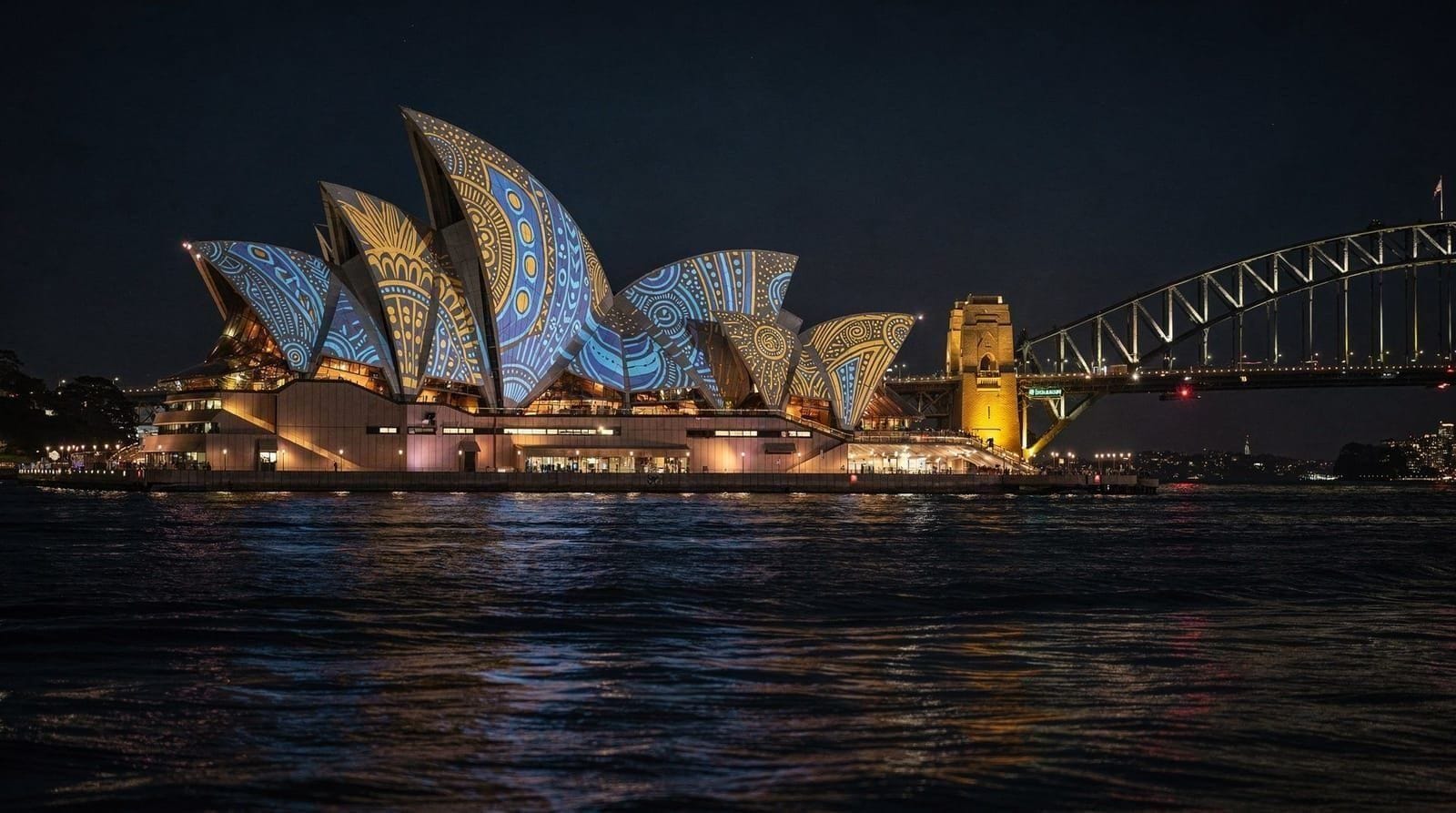
June is a strong month to visit if you can tolerate mild winter temperatures. Vivid Sydney runs from 28 May to 19 June (2027 dates) — a light, music and ideas festival that transforms the CBD, Darling Harbour, The Rocks and several suburban precincts into illuminated installations.
Vivid includes:
- Projected light installations on the Opera House sails, Customs House and Harbour Bridge
- A self-guided Vivid Walk connecting installations
- Drone light shows over the harbour
- Live music programme at various venues
- Ideas forums and conference events
Evening crowds around Circular Quay are large on weekends. Visit on a Tuesday or Wednesday evening for a noticeably more relaxed experience. The installations are visible from 6pm each evening.
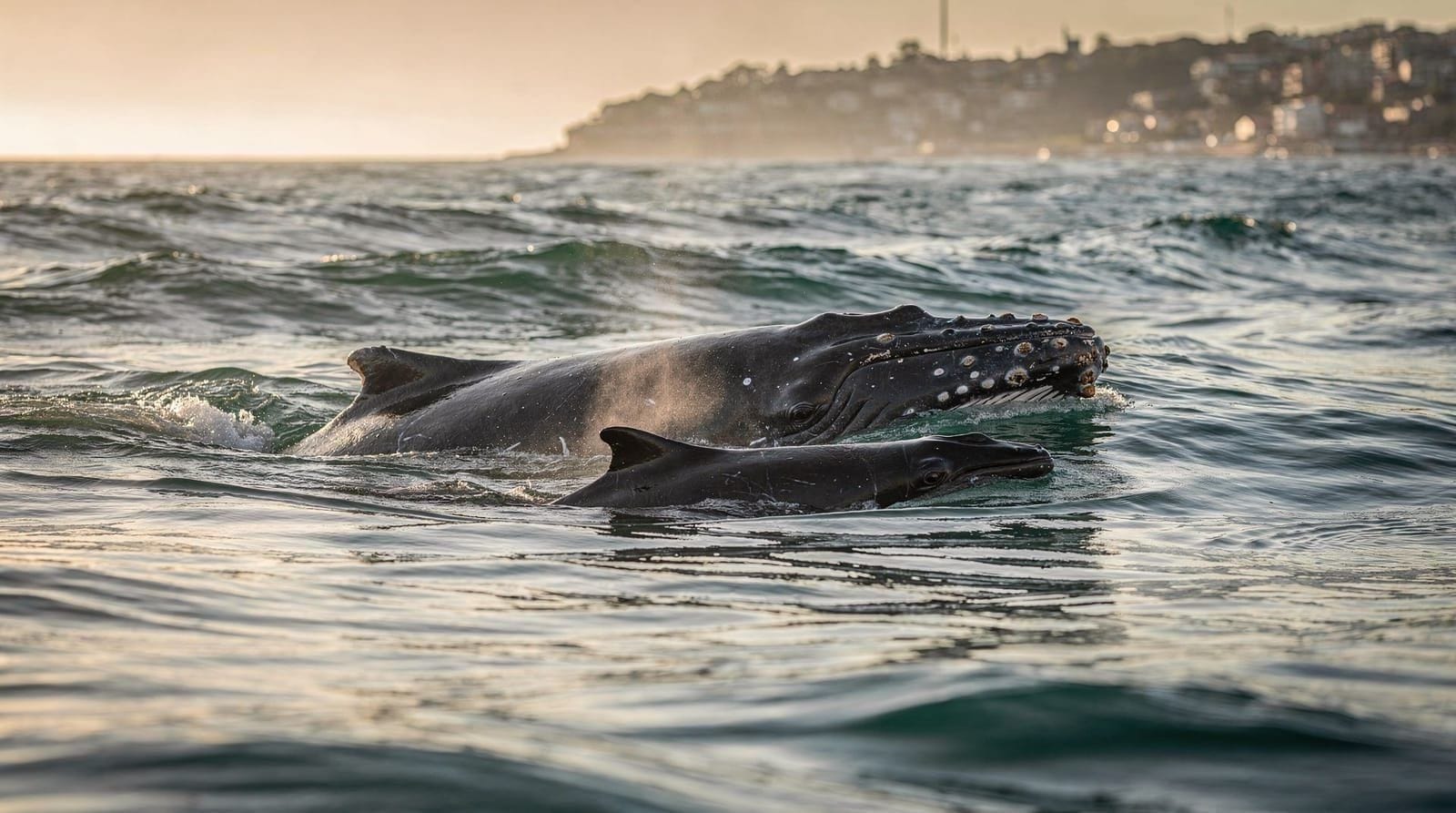
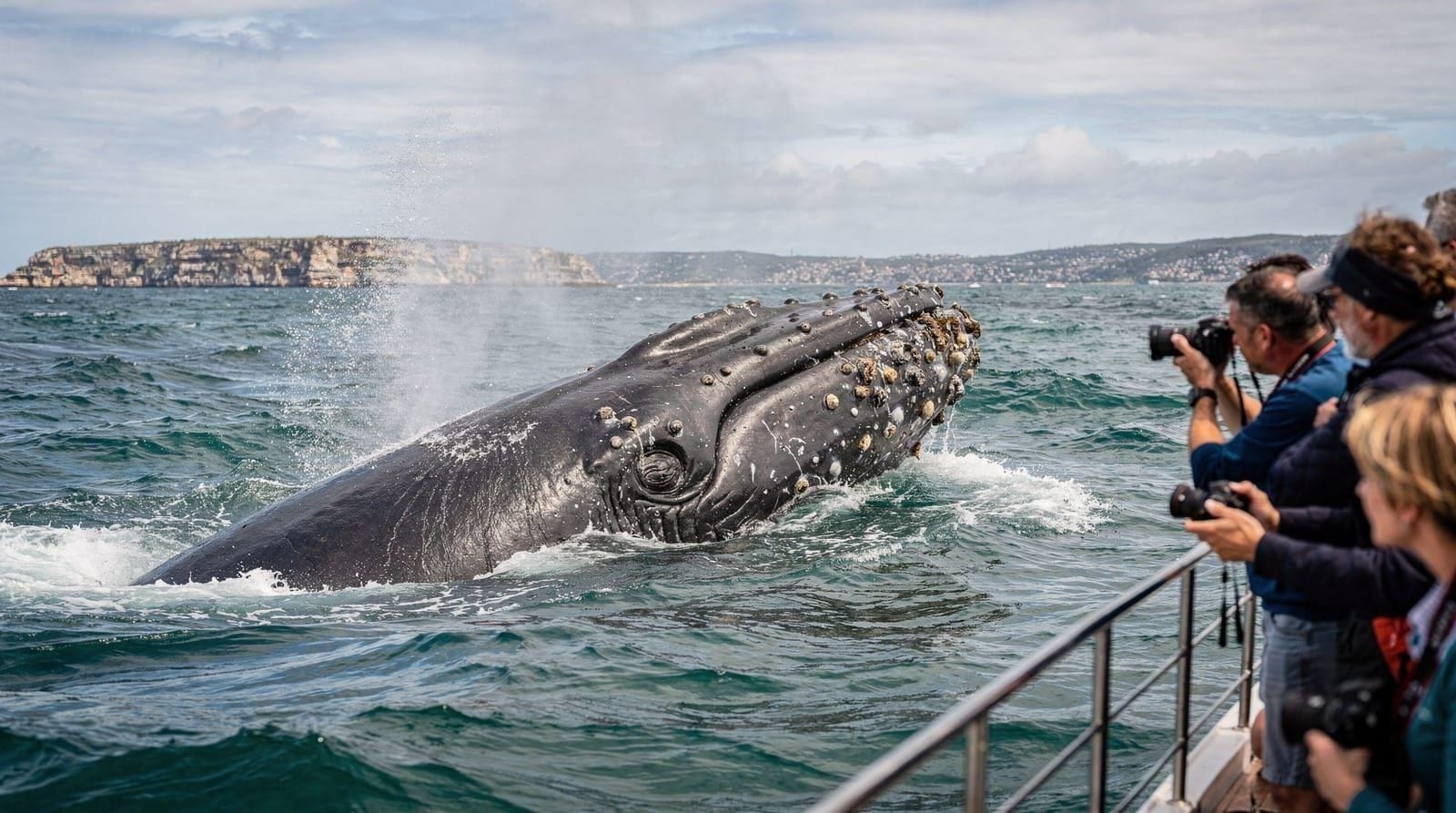
June is also peak whale season — humpback whales migrate north past Sydney Harbour, and sightings rates on whale watching cruises peak June–August. Sydney whale watching cruises typically guarantee a sighting or offer a return trip.
July–August: cheapest, quietest, whale season continues
July is Sydney’s coldest month at an average of 16°C — but this is still mild by the standards of most northern hemisphere visitors. There is no ice, no snow and no extreme wind. It is closer to a mild autumn day in London than anything resembling a proper winter.
Advantages of visiting July–August:
- Cheapest flights of the year (typically 20–30% less than December–January)
- Cheapest accommodation — mid-range hotel rates drop noticeably
- Whale watching peak (humpback migration continues through August)
- Vivid installations are gone but the city is genuinely quieter
- Blue Mountains day trips are at their best — crisp air, clear visibility, valleys occasionally filled with mist in the morning
Disadvantages: swimming is technically possible (sea temperature 17°C) but not most visitors’ priority. The Royal Botanic Garden is less lush. Some outdoor dining is more limited.
September–October: spring and jacaranda season
Spring begins in Sydney around mid-September with warming temperatures (18–22°C) and increasing sunshine. The jacaranda trees — planted extensively across Sydney suburbs in the 19th century — bloom through October in a well-documented wave of purple flowers. Key jacaranda viewing areas: Grafton Street in Kirribilli, Jacaranda Avenue in Kirribilli, and across university campuses including the University of Sydney (main oval).
Spring is the second best shoulder season. Prices remain lower than summer, weather is excellent for outdoor activity, and the city has a strong festival and event calendar:
- Sydney Running Festival (typically September): starts at Milsons Point, crosses the Harbour Bridge
- Biennale of Sydney (even years): major contemporary art festival
- Sculptures by the Sea (late October–early November): free outdoor sculpture exhibition from Bondi to Tamarama Beach — one of Sydney’s most genuinely popular free events
December–February: summer peak — expensive and hot
Summer is the season most northern hemisphere visitors instinctively target. It delivers warm swimming weather, long days and the undeniable spectacle of New Year’s Eve fireworks over Sydney Harbour.
The honest assessment:
- Accommodation: 40–60% more expensive than winter/shoulder
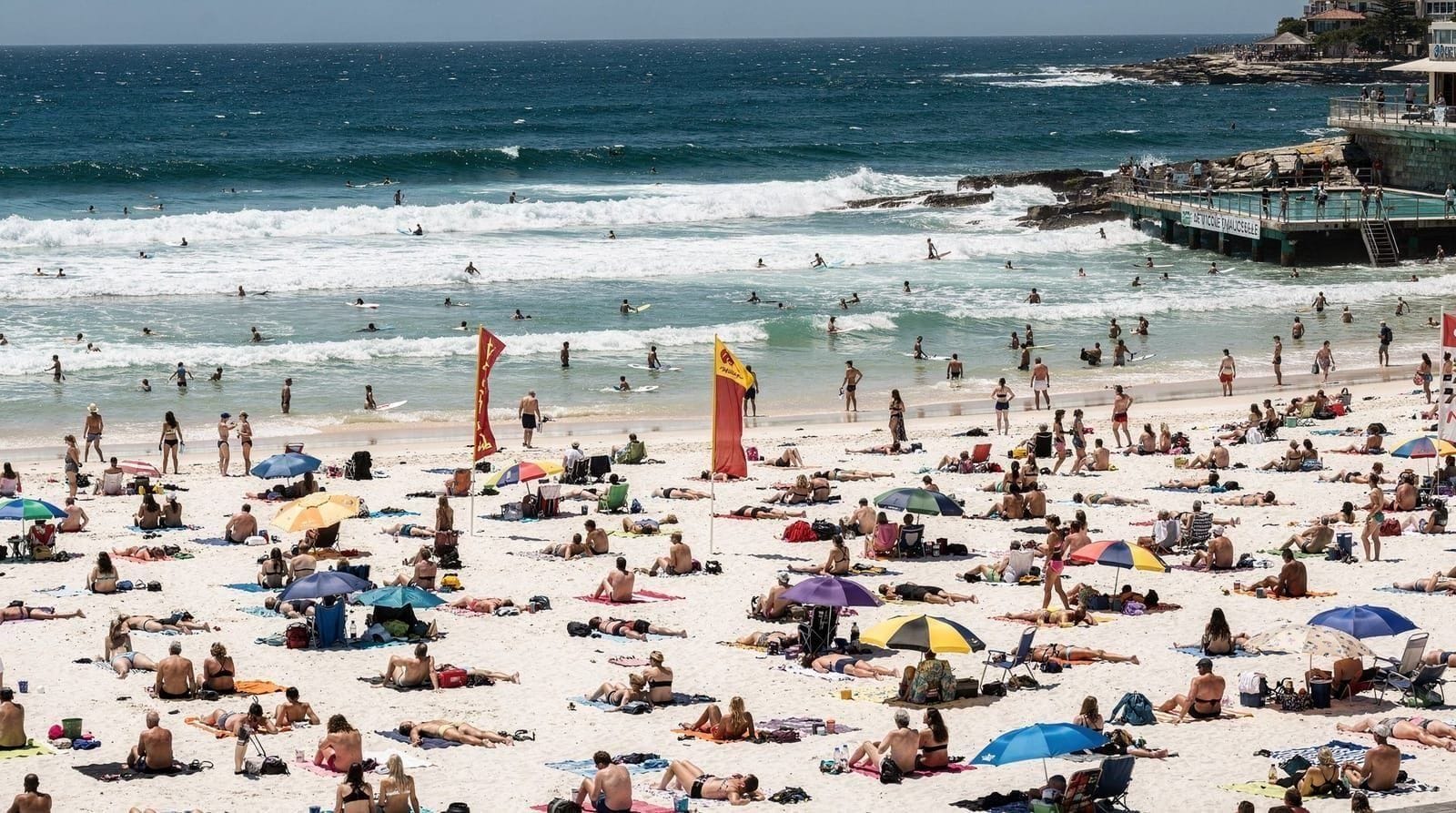
- Crowds: Bondi, Manly and Circular Quay are significantly more crowded
- Heat: January averages 26°C but regularly reaches 35–40°C, sometimes exceeding 40°C for multiple days. Air conditioning is essential for sleep. Outdoor activities in afternoon heat are genuinely uncomfortable.
- Bushfire risk: Outer Blue Mountains and coastal scrubland areas carry increased fire risk (check RFS.NSW.gov.au before day trips)
- NYE: Sydney New Year’s Eve is spectacular but requires planning months in advance — good viewing spots sell out. See the NYE guide.
Who should come in summer: Those who specifically want beach swimming, NYE, or are connecting Sydney summer with a northern hemisphere winter escape. Also worth it for Mardi Gras in late February (see the Mardi Gras guide).
Who should avoid summer: Budget travellers, those sensitive to heat, families with young children (UV + heat combination is challenging), and first-timers who will find the crowds exhausting.
Month-by-month quick reference
| Month | Weather | Price level | Top event | Swimming? |
|---|---|---|---|---|
| January | 26°C, humid | Peak | School holidays | Excellent |
| February | 26°C | High | Mardi Gras | Excellent |
| March | 24°C | Moderate | Autumn begins | Good |
| April | 21°C | Moderate–low | Anzac Day | Possible |
| May | 18°C | Low–moderate | Vivid begins, whales | Cool |
| June | 17°C | Low | Vivid peak, whale peak | Cold |
| July | 16°C | Lowest | Winter quiet | Cold |
| August | 17°C | Low | Whale season | Cold |
| September | 20°C | Moderate | Spring starts | Cool |
| October | 22°C | Moderate | Jacarandas, Sculptures | Possible |
| November | 24°C | Moderate–high | Pre-summer warm | Good |
| December | 26°C | High–peak | NYE prep, Christmas | Excellent |
Whale watching — planning the timing
Humpback whales migrate north along the NSW coast from May onward, passing close to Sydney Harbour and the northern headlands. The migration south (return journey) runs August–November. Both directions offer sightings, with June–August being statistically the highest-yield period.
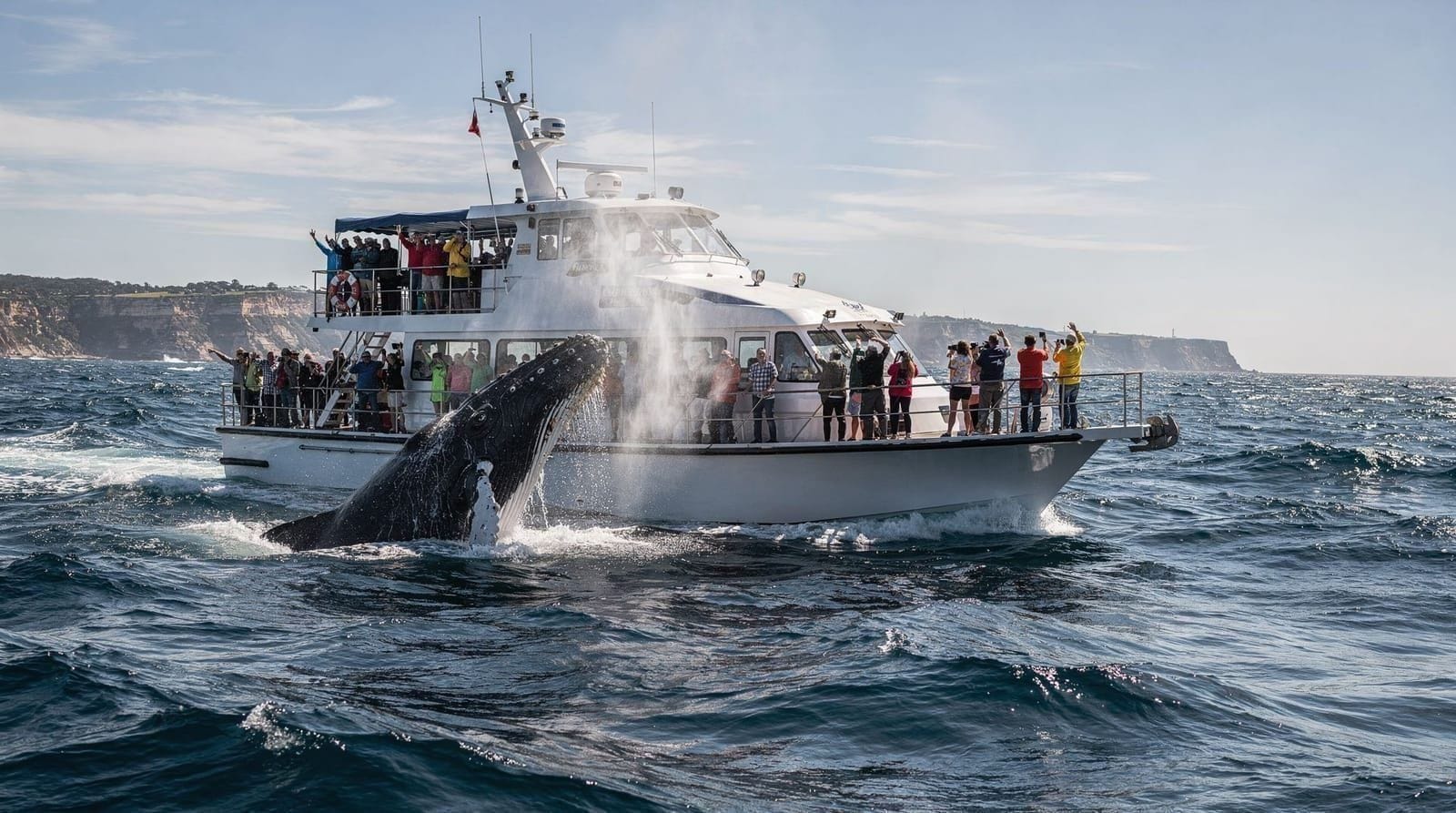
Most whale watching cruises depart from Darling Harbour or Circular Quay. A standard 2.5-hour whale watching cruise runs on the open ocean. The species: humpback whales (predominant), with occasional southern right whales and minke whales. Pods of orca (killer whales) are occasionally sighted May–July.
Some operators offer a guarantee — if no whale is sighted, you get a return trip at no extra cost. This is a useful option in May or November when sightings are less certain. See the dedicated whale watching guide.
Planning tools
The Sydney best-time tool lets you compare seasons across temperature, crowds, price and events.
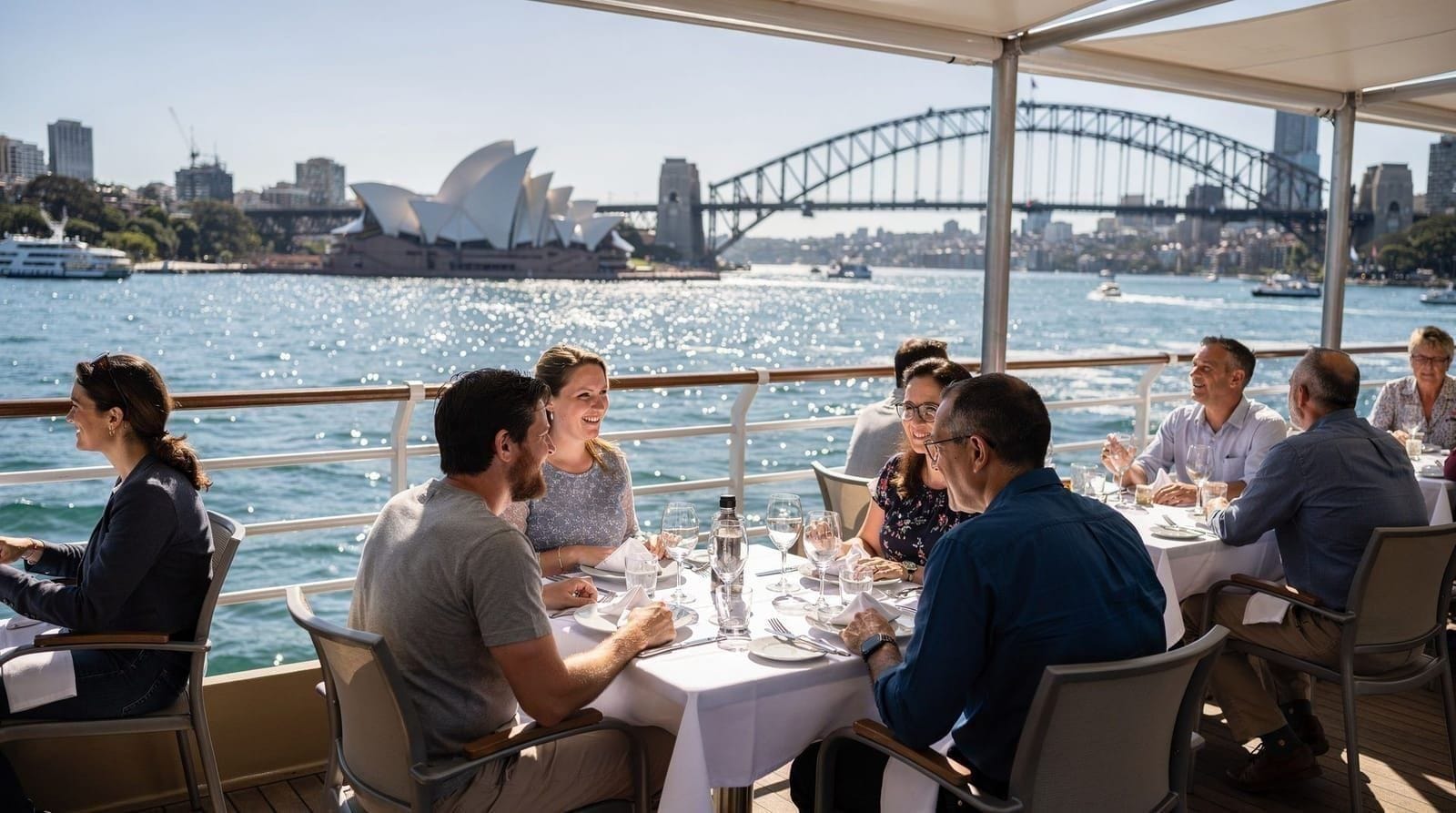
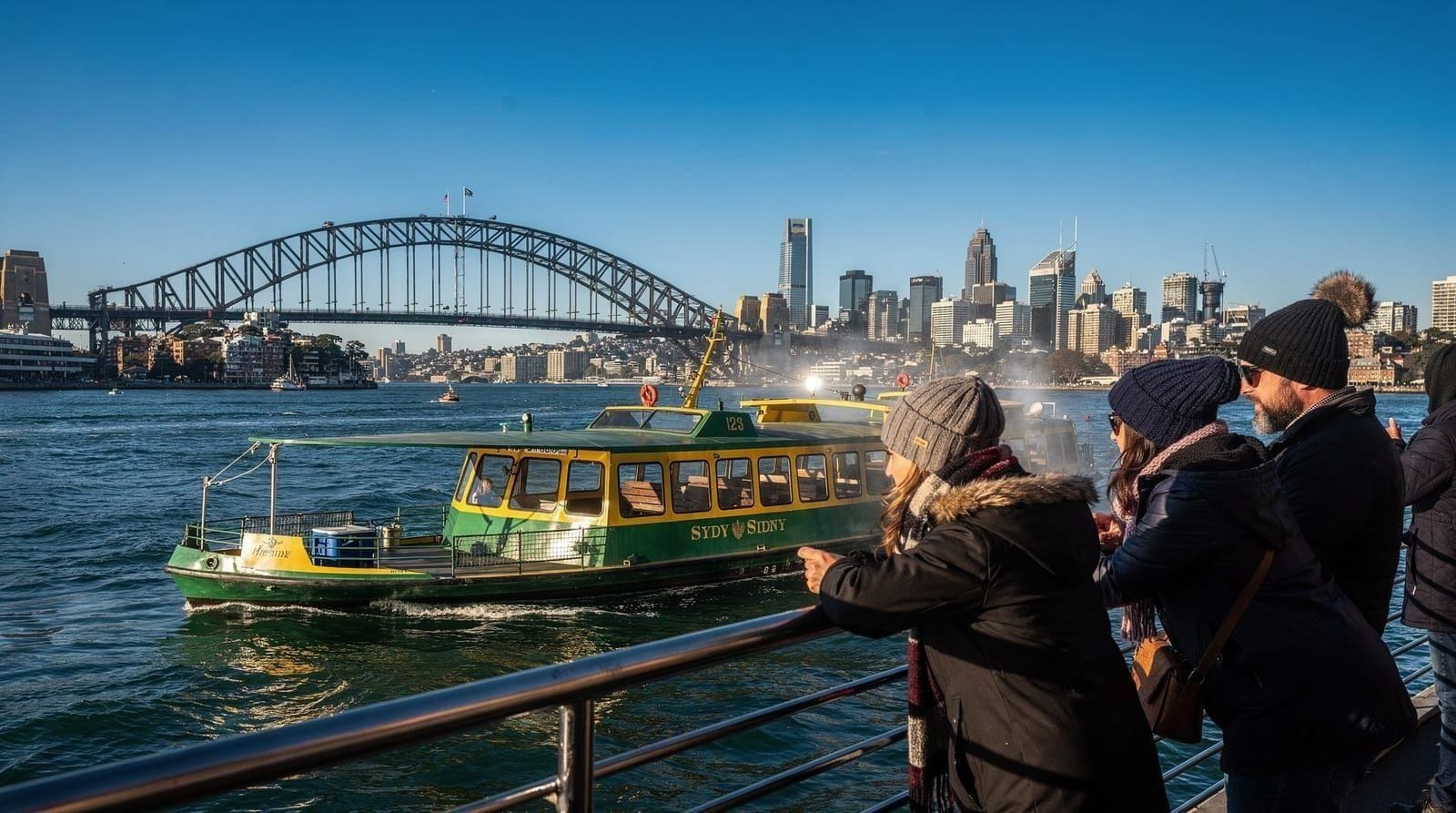
For a sunset harbour experience that works in any season, a sunset catamaran cruise from Circular Quay is one of the most reliable Sydney experiences regardless of month.
Events and festivals that drive travel timing
Beyond the main events already covered, several smaller but significant events affect travel planning:
Sculptures by the Sea (late October–early November): A free outdoor exhibition from Bondi Beach to Tamarama Beach featuring about 100 sculptures by Australian and international artists. It runs for approximately 3 weeks and draws large crowds on weekends. The walk itself is 2 km — shorter than Bondi to Coogee. This is one of Sydney’s most genuinely accessible arts events.
Sydney Running Festival (September): The Run event includes the iconic Harbour Bridge crossing. The City2Surf (August, from Hyde Park to Bondi) is a separate event. Both affect road closures and CBD transport for the relevant weekend.
Biennale of Sydney (even years): Major international contemporary art festival occupying multiple venues across Sydney, including the Art Gallery of NSW. Runs for several months.
Sydney Film Festival (June): Major international film festival based at State Theatre, Event Cinemas and other venues. Less than two weeks of programming. Good overlap with Vivid Sydney timing.
Christmas in July (mid-winter tradition in Australian restaurants): Not a public event but a widespread cultural practice — many Sydney restaurants offer traditional Christmas menus in July. A quirky winter dining experience.
Weather reliability — what to expect
Sydney’s climate has been experiencing more extreme events in recent years:
Heatwaves: Multi-day periods above 35°C are more frequent than in previous decades. These can extend through January and February. The southern suburbs (Cronulla, Sutherland) are more exposed than the coastal suburbs which benefit from sea breeze.
Rain events: Sydney receives most of its annual rainfall spread across the year, but East Coast Lows (large storm systems) can produce intense rain for 2–4 days at any time. March–May has moderate rainfall but not persistent grey skies — these events are breaks in otherwise mild weather.
Drought periods: Eastern Australia experiences periodic multi-year drought cycles. During drought periods, water restrictions may apply; more relevantly, some bush walk areas (Blue Mountains) experience dry conditions that elevate fire risk and reduce waterfall flows.
La Niña years: La Niña events (roughly every 2–7 years) increase rainfall significantly across eastern Australia. During La Niña, spring and summer can be considerably wetter than average. Check Bureau of Meteorology outlooks (bom.gov.au) for the seasonal forecast before your trip.
Comparing seasons for different travel styles
| Travel style | Best season | Why |
|---|---|---|
| Beach-focused | Dec–Feb | Best ocean temperatures, longest days |
| Active outdoor/hiking | Mar–May or Sep–Oct | Comfortable temperatures, no summer heat |
| Budget-first | Jun–Aug | Lowest prices across accommodation and flights |
| Whale watching | May–Nov | Migration season; peak Jun–Aug |
| Festival-driven | Feb (Mardi Gras), May–Jun (Vivid), Dec (NYE) | Event-specific |
| First-time visitor | Mar–May | Best balance of weather, cost, and crowd levels |
| Photography | Sep–Oct | Jacaranda blooms, spring light, clear skies |
Booking windows by season
How far ahead to book major elements:
December (NYE) trips: Book accommodation 4–6 months ahead. Flight prices firm 3+ months before departure.
February (Mardi Gras) trips: Accommodation on or near Oxford Street: 3–4 months ahead. Parade grandstand tickets: when the ballot opens (usually October).
May–June (Vivid Sydney) trips: Accommodation: 6–8 weeks for weekday stays, 2–3 months for weekend dates. Whale watching tours: available on short notice but popular departure times sell out in June.
March–May and September–October (shoulder): Greater flexibility. 3–4 weeks for accommodation is often sufficient outside weekends.
July–August (winter): Often bookable with less than 2 weeks notice for accommodation. Best flight prices are found 8–12 weeks out.
Use the Sydney best-time tool for a personalised season recommendation based on your priorities.
Matching season to trip type
If this is a first Sydney trip built around a broader itinerary, the season you land in should shape how many outdoor days you plan. Autumn or spring both suit a packed schedule like the Sydney 3-day first-timer itinerary or the Sydney 5-day essentials itinerary, since good weather forgives a tight walking pace. Winter trips work better with a slightly slower plan that swaps a beach day for indoor stops such as the Sydney museums guide or the Sydney best restaurants guide for long, unhurried lunches.
Families timing a trip around Australian school holidays should also cross-check the Sydney school holidays guide — the summer holiday window (mid-December to late January) is the single biggest crowd and price driver of the year, bigger than any single festival.
Frequently asked questions about the best time to visit Sydney
See the FAQ section at the top of this page for answers to the most common questions on seasons, events, whale watching, and travel pricing.
Is Sydney hot year-round?
No. Sydney has four distinct seasons, reversed from the northern hemisphere. Summer (December–February) brings 24–30°C with occasional heatwaves to 40°C+. Autumn (March–May) is 18–24°C and pleasant. Winter (June–August) is 8–17°C — cool and sometimes rainy but rarely harsh. Spring (September–November) is 18–25°C, warming toward summer.
When is it cheapest to visit Sydney?
July is typically the cheapest month for both flights and accommodation. Winter in general (June–August) sees the lowest prices — up to 40% less than December–January peak. Shoulder seasons (March–May and September–October) balance good value with better weather than winter.
When is whale watching season in Sydney?
Whale watching runs May–November, with peak sightings June–August when humpback whales migrate north past Sydney. Most whale watching cruises operate year-round during the season with high sighting rates June through August.
When does Vivid Sydney happen?
Vivid Sydney runs from 28 May to 19 June in 2027. It is an annual light, music and ideas festival with installations across the CBD, Darling Harbour, The Rocks and surrounding areas. Best viewed on weekday evenings to avoid weekend crowds.
When is Sydney Mardi Gras?
Sydney Mardi Gras runs through February into early March. The main parade on Oxford Street takes place on Saturday 6 March in 2027. Surrounding LGBTQIA+ events run throughout the festival period.
Should I avoid visiting during school holidays?
Australian school summer holidays run mid-December to late January. This period is packed with domestic tourists alongside international visitors. Prices spike and Bondi, Manly and theme parks are significantly more crowded. Avoid if possible — the shoulder seasons give you Sydney without the school holiday chaos.
Is it worth visiting Sydney in winter?
Yes, for the right type of trip. Sydney winter is mild by European standards (8–17°C). It is the best time for whale watching, the cheapest period for accommodation and flights, and Vivid Sydney runs in the overlap between late autumn and early winter (May–June). You miss the beach season but gain affordability and smaller crowds.
What is the worst month to visit Sydney?
January. It is the hottest month (average 26°C, heatwaves to 40°C+), the most expensive, and the most crowded. The combination of summer school holidays, international peak season and NYE hangover makes it genuinely unpleasant for many visitors. February is better — still warm, with Mardi Gras adding a genuine event reason to be there.
What is the single best week to visit Sydney?
The last week of March or first two weeks of April is a strong pick if you have to choose one week. Temperatures are comfortable (20-24C), the ocean is still swimmable, Mardi Gras crowds have cleared, and accommodation prices have already dropped from summer peak. Avoid the Easter school holiday dates if they fall in that window, since prices and crowds spike briefly.
Does it rain a lot in Sydney?
Sydney gets a moderate amount of rain spread across the year rather than a defined wet season, so a few rainy days are likely on any trip of a week or more. Rain tends to arrive as short, heavy bursts (East Coast Lows) rather than persistent grey skies, so it rarely ruins a whole day of plans.
Top experiences
Bookable activities with verified prices and instant confirmation on GetYourGuide.