Paddington
Paddington: Victorian terrace houses, Oxford Street boutiques, weekly Saturday markets and Sydney's densest gallery district, just east of the CBD.
Sydney: City rocks 35 hour walking tour
Duration: 3.5 hours
Quick facts
- Best for
- Victorian terrace architecture, art galleries, boutique shopping, Paddington Markets
- Getting there
- Bus 333, 380, or 389 from Circular Quay or Town Hall along Oxford Street
- Don't miss
- Paddington Markets (Saturday), Five Ways junction, Brett Whiteley Studio
- Best for galleries
- Paddington is home to 20+ commercial galleries — Sydney's most concentrated gallery district
- Avoid
- Oxford Street chain retail (same as everywhere); explore the side streets for independent finds
Paddington: terrace houses and gallery culture
Paddington sits on a ridge running east from Darlinghurst, about 3 kilometres from the CBD, overlooking both the city and the eastern suburbs toward Bondi. It is best known for two things: the Victorian terrace houses that line its steep streets in extraordinary density, and the concentration of commercial art galleries that has made it Sydney’s most significant gallery neighbourhood.
The terrace houses deserve a moment. Paddington contains the largest intact collection of Victorian terrace houses in any Australian city — hundreds of two-storey terraces built between roughly 1880 and 1900, each with ornate cast-iron lacework on the first-floor verandah balconies that is so characteristic of the neighbourhood that “Paddington lace” has become a recognisable phrase. The terraces were built for the working-class families employed in the nearby Victoria Barracks and small manufacturing operations. They fell out of favour in the mid-20th century, were renovated by creative and professional residents in the 1970s, and are now among the most expensive properties in Sydney.
Walking the residential streets above Oxford Street — Glenmore Road, Jersey Road, Gurner Street — is a genuinely pleasurable exercise that requires no admission fee and delivers an architecture experience unavailable in most of Sydney’s newer suburbs.
Take the walk slowly and look up: the lacework, the narrow frontages and the small front gardens are where the neighbourhood’s character lives. If the streets leave you curious about how Sydney’s older buildings fit together, the Sydney architecture walk puts Paddington’s terraces in a wider context, and a guided look at the city’s earliest streets, such as a historical walking tour of The Rocks, makes a good contrast with the Victorian suburb. The Rocks history walk covers the same ground on your own.
| At a glance | |
|---|---|
| Where | Oxford Street ridge, about 3 km east of the CBD, between Darlinghurst and Woollahra |
| Cost | Gallery entry mostly free; markets AUD 40-200 for craft items; mains AUD 18-100 depending on venue |
| Time needed | Half day to 1 day; pairs well with Centennial Park or the eastern beaches |
| Getting there | Bus 333, 380, or 389 from Circular Quay/Town Hall (15-20 min); nearest train is Edgecliff, 10-15 min walk |
| Best time | Saturday for markets and galleries; spring (Sep-Nov) for terrace gardens in bloom |
The galleries
Paddington’s gallery district is centred on the streets running off Oxford Street, particularly Glenmore Road and Woollahra Avenue (which slides into Woollahra proper on the eastern edge). The galleries range from large established spaces showing mid-career and senior Australian artists (Roslyn Oxley9, Sullivan+Strumpf, White Cube) to smaller commercial galleries focusing on emerging or more experimental work.
Roslyn Oxley9 Gallery on Soudan Lane is arguably the most internationally connected commercial gallery in Sydney — it represents several of Australia’s most significant artists and regularly shows work that has been exhibited internationally. Entry is free. The opening receptions (usually Thursday evenings for new exhibitions) are open to the public and worth attending if the timing works.
Brett Whiteley Studio at 2 Raper Street, Surry Hills (technically just south of Paddington’s border but closely associated with the neighbourhood’s artistic identity) is a state-run museum and preserved studio of the Australian painter Brett Whiteley, who worked and lived in the space until his death in 1992. Check opening days and entry details on the official Art Gallery of NSW website. The studio has the compressed, layered quality of a working creative space rather than a conventional museum. Whiteley’s obsessive harbour paintings are particularly well represented.
The commercial galleries pair naturally with the larger institutions. The Art Gallery of NSW gives you the historical sweep, while the Museum of Contemporary Art sits closer to the experimental end that Paddington’s smaller spaces share. Seeing one of each on the same trip makes the gallery streets easier to read. For the wider picture, see the Sydney museums guide.
Paddington Markets
The Paddington Markets at St John’s Uniting Church on Oxford Street run every Saturday from 10am to 4pm. They have operated since 1973 — among the oldest continuously running community markets in Australia — and have maintained their character as a genuinely artisan market rather than a flea market or tourist attraction.
The stalls cover handmade jewellery, locally designed clothing, ceramics, leather goods, original artworks, and food. Quality is consistently high. Prices reflect the artisan production costs — budget AUD 40–200 for craft items depending on complexity. The market is also a good place to find Australian-made souvenirs with actual provenance (the seller often is the maker).
Arrive by 10:30am on a Saturday for the widest selection before popular stalls sell out their best work. The church grounds include several café stalls serving decent coffee.
Oxford Street and eating
Oxford Street in Paddington is a different proposition from its Darlinghurst extension to the west. The Paddington section (roughly from Boundary Street east to Woollahra) skews toward fashion boutiques, galleries, and restaurants that have been operating long enough to have a local following.
Restaurants: The Paddington Inn on Oxford Street has a comfortable front bar and a menu that is better than typical pub food without being pretentious. Lucio’s on Windsor Street is an Italian restaurant of the old school — white tablecloths, serious service, and food that has been consistently excellent for decades; expect to pay AUD 75–100 per person with wine. For a more affordable option, the Vietnamese and Korean restaurants on the Woollahra side of Oxford Street offer good value at AUD 18–30 per person.
Coffee: Feather and Bone on Oxford Street has a good coffee program alongside a serious butcher counter and specialty food products. Darlo Bar on Darlinghurst Road (technically Darlinghurst, a short walk west) is a reliable option for a late breakfast. For more on the city’s café scene, read the Sydney coffee culture guide.
If you would rather have someone else choose where to eat, a guided foodie tour of the inner city is an easy way to taste several places in one outing. The Sydney food tours guide compares the options, and the best restaurants guide is the place to start if you prefer to book your own table.
The Victoria Barracks and Centennial Park
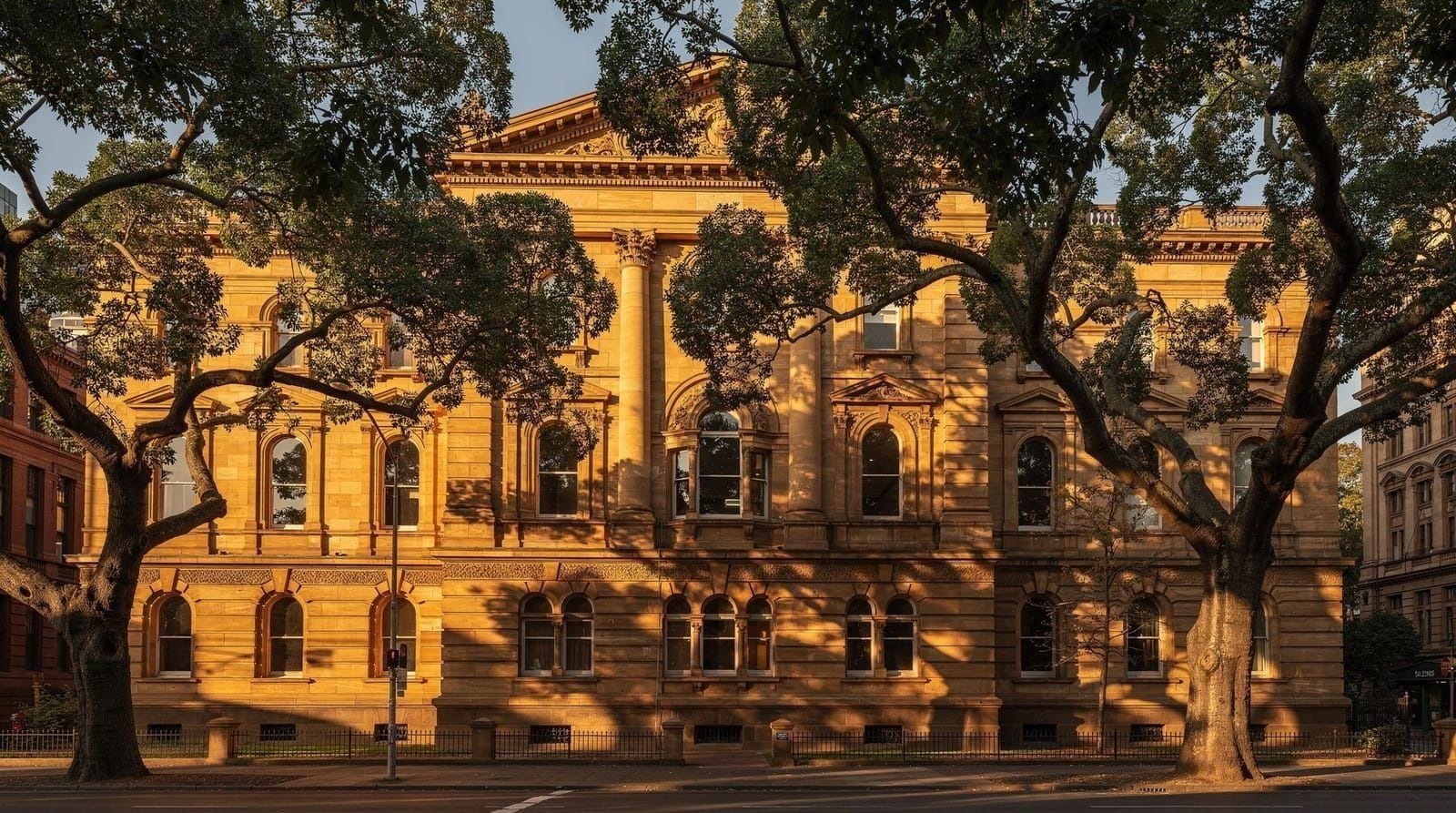
The Victoria Barracks at the eastern end of Oxford Street is a colonial military complex built between 1841 and 1848 from Pyrmont sandstone. The main building is one of the finest examples of colonial institutional architecture in Sydney. Free public tours run on Thursday mornings; the parade ground and barrack rooms are accessible. Call ahead to confirm tour times.
Centennial Park is a 10-minute walk east from Paddington’s main intersection at Five Ways. The 189-hectare park has cycling tracks, bridle paths, large artificial ponds, and enough space to feel genuinely removed from the inner city. Entry is free. On weekends, bikes and rollerblades are available to hire at the park’s main entrance. The park connects Paddington to the eastern suburbs and is frequently used as the middle section of an Oxford Street-to-Bondi walking route.
That route ends at Bondi Beach, and the Bondi beach guide explains what to do once you arrive. If green space is the draw, the Royal Botanic Garden is another option nearer the harbour, and a foraging walk among native food plants in the Botanic Gardens offers a different way to see it.
Woollahra: the quieter neighbour
Immediately east of Paddington, Woollahra shares much of the neighbourhood’s character — Victorian terraces, art galleries, independent restaurants — but at a slightly lower commercial intensity. Queen Street in Woollahra is one of Sydney’s better streets for antiques and art, with a concentration of dealers and small galleries that complements the Paddington circuit. The Woollahra Hotel on Queen Street is a good neighbourhood pub with a large beer garden.
For visitors exploring on foot, the walk from the Five Ways intersection in central Paddington through to the Woollahra hotel and back via the gallery streets takes about 45 minutes and covers most of what both neighbourhoods have to offer in terms of retail and gallery browsing.
Paddington Reservoir Gardens
At the southern end of Oxford Street (at the Paddington/Surry Hills border), the Paddington Reservoir Gardens occupy the site of an 1866 water reservoir that was decommissioned in 1899 and converted to a public park in 2009. The conversion retained the underground brick arched chambers, which are now exposed as an unusual garden feature — a sunken landscape with original engineering infrastructure visible above the waterline.
The gardens are free, small, and worth 20 minutes if you are walking through the southern end of Oxford Street. The brick arches and the combination of industrial heritage with planting design is genuinely unusual. It appears on various design and landscape architecture awards lists for good reason.
The Five Ways junction
Five Ways is the central junction where Glenmore Road, Heeley Street, Goodhope Street, Broughton Street, and Heeley Street converge in central Paddington. It functions as the neighbourhood’s social heart — several good cafés face the junction, the streets radiating outward are the most picturesque residential streets in the neighbourhood, and the junction itself is wide enough to have a public outdoor seating character unusual for an inner-city residential area.
Sitting at a Five Ways café table on a Saturday morning and watching the neighbourhood’s Saturday rhythm is a low-effort, high-reward Sydney experience. The coffee is good (Zinc is the most reliable of the Five Ways options), the architecture around the junction is dense with heritage terraces, and the Paddington Markets are a 5-minute walk north.
Oxford Street after the markets close
Paddington’s Oxford Street changes character significantly between day and evening. During the day, it is a shopping and gallery street. By 7pm, the emphasis shifts to dining and bars. A concentrated strip of restaurants between Boundary Street and Woollahra runs the range from Italian and Thai to modern Australian and wine-focused casual dining.
The Wine Room on Oxford Street has a serious wine list biased toward Australian producers from the Hunter Valley and Adelaide Hills, with good but not outstanding food to accompany it. For a better food experience, the Vietnamese restaurants on the eastern section of Oxford Street near Edgecliff deliver consistently good value — AUD 18–28 for a main course in a neighbourhood where AUD 45+ is the standard for sit-down dining.
Getting there
Bus services are the most practical option. Routes 333 (from Circular Quay), 380 (Circular Quay to Bondi via Oxford Street), and 389 (Museum to Edgecliff via Oxford Street) all stop along Paddington’s Oxford Street section. The bus takes 15–20 minutes from the CBD depending on traffic.
The Eastern Suburbs railway (through Museum and Kings Cross) does not stop directly in Paddington — the closest station is Edgecliff (10–15 minutes’ walk from the Oxford Street galleries section).
Driving is manageable on weekday mornings but weekend parking near the markets and gallery district is difficult. The bus is consistently faster door-to-door on Saturdays.
For fares and tapping on, see the Opal card guide, and the getting around Sydney guide covers how buses fit with trains and ferries. Paddington also sits close to Surry Hills and the Sydney CBD, so it is easy to fold into a day that touches all three.
Paddington connects naturally with a Sydney coastal beaches itinerary — the route from Paddington through Woollahra leads to Double Bay and Rose Bay, from which ferries run to Circular Quay or Watsons Bay. For the Sydney museums and galleries guide, Paddington’s commercial gallery district represents the non-institutional end of Sydney’s art scene — important context for understanding the overall gallery ecosystem.
Paddington vs Surry Hills for a gallery-and-food day
Both inner-east neighbourhoods have strong food and culture scenes, but the emphasis differs. Paddington is built around Victorian terraces, commercial galleries, and the Saturday markets — a slower, browsing-oriented day. Surry Hills leans more toward its restaurant and small-bar density, covered in the best bars guide and fine dining guide. If your priority is art and architecture, Paddington wins; if it’s an evening of dining and drinks, Surry Hills is the more efficient choice. Many visitors combine both on a longer stay — see the Sydney foodie weekend itinerary for a route that touches both.
A realistic Saturday in Paddington
Start at the Paddington Markets by 10:30am for the best stall selection, then walk the Glenmore Road and Soudan Lane gallery strip through midday — Roslyn Oxley9 and the smaller commercial spaces are free and take about 90 minutes if you visit three or four. Lunch on Oxford Street or in Five Ways, then either walk east into Woollahra for antiques and Queen Street browsing, or head to Centennial Park for a quieter afternoon. This whole loop is walkable in comfortable shoes and needs no car — parking near the markets is genuinely difficult on Saturdays.
Frequently asked questions about Paddington
Is Paddington walkable without a car?
Yes, and it’s the better option. Buses 333, 380, and 389 run frequently from the CBD along Oxford Street, and the neighbourhood itself — markets, galleries, Five Ways, Centennial Park — is entirely walkable once you arrive. Weekend parking near the markets is difficult enough that driving is a disadvantage.
How does Paddington compare to Surry Hills for a short Sydney visit?
Paddington suits travellers prioritising art, architecture, and a Saturday market; Surry Hills suits those prioritising restaurants and bars. If you only have time for one and it’s a weekday, Surry Hills’ dining scene is active every evening, while some of Paddington’s appeal (galleries, markets) is concentrated on Tuesday-Saturday and Saturday respectively.
Top experiences
Bookable activities with verified prices and instant confirmation on GetYourGuide.