Art Gallery of NSW — what to see, entry costs and practical tips
Sydney: Manly north harbour guided kayaking tour reef beach
Is the Art Gallery of NSW free to enter in 2026?
The permanent collection is free. Major exhibitions are ticketed; check the official Art Gallery of NSW website for current prices. The new North Building opened in 2022 and is connected to the original 1909 building by a public plaza — both are free to access.
What the Art Gallery of NSW is
The Art Gallery of New South Wales (AGNSW) is Australia’s second-largest art museum by collection size, after the National Gallery of Victoria in Melbourne. Free entry to the permanent collection makes it one of Sydney’s best genuine cultural experiences at zero cost. If you visit Sydney for a week, the gallery warrants at least one extended visit.
The collection spans Australian art from 1788 to the present, a substantial European section (Old Masters through 20th century), an Asian art wing covering China, Japan, Korea, India and Southeast Asia, and the Yiribana Gallery — one of Australia’s foremost permanent displays of Aboriginal and Torres Strait Islander art. The 2022 Sydney Modern extension (the “North Building”) doubled the gallery’s floorspace and added a new Art Garden, rooftop terraces, and additional galleries for large-scale contemporary works.
Plan at least two to three hours for the combined buildings on a first visit. Serious art museum visitors could spend a full day.
| At a glance | |
|---|---|
| Where | Art Gallery Road, The Domain, Sydney CBD |
| Cost | Permanent collection free; major exhibitions ticketed (see the official Art Gallery of NSW website) |
| Time needed | 2–3 hours combined buildings; a full day for enthusiasts |
| Getting there | St James station, then around a 7-minute walk through The Domain |
| Best time | Weekday mornings, or Wednesday evening (open until 10pm) |
Getting there and opening hours
Address: Art Gallery Road, The Domain, Sydney CBD.
Nearest train: St James station (City Circle line), then a 7-minute walk through The Domain. Martin Place station is slightly further, about 12 minutes on foot. There is no direct bus route to the front entrance, though several bus routes stop on College Street nearby.
Opening hours: 10am–5pm daily (Wednesday until 10pm). Closed Christmas Day and Good Friday. Free entry to permanent collection throughout.
Parking: Limited and expensive in the area. If driving, use the Domain or Hyde Park carparks — check parking rates on the official car park websites. The gallery is better reached by public transport.
The permanent collection — what to prioritise
Australian art
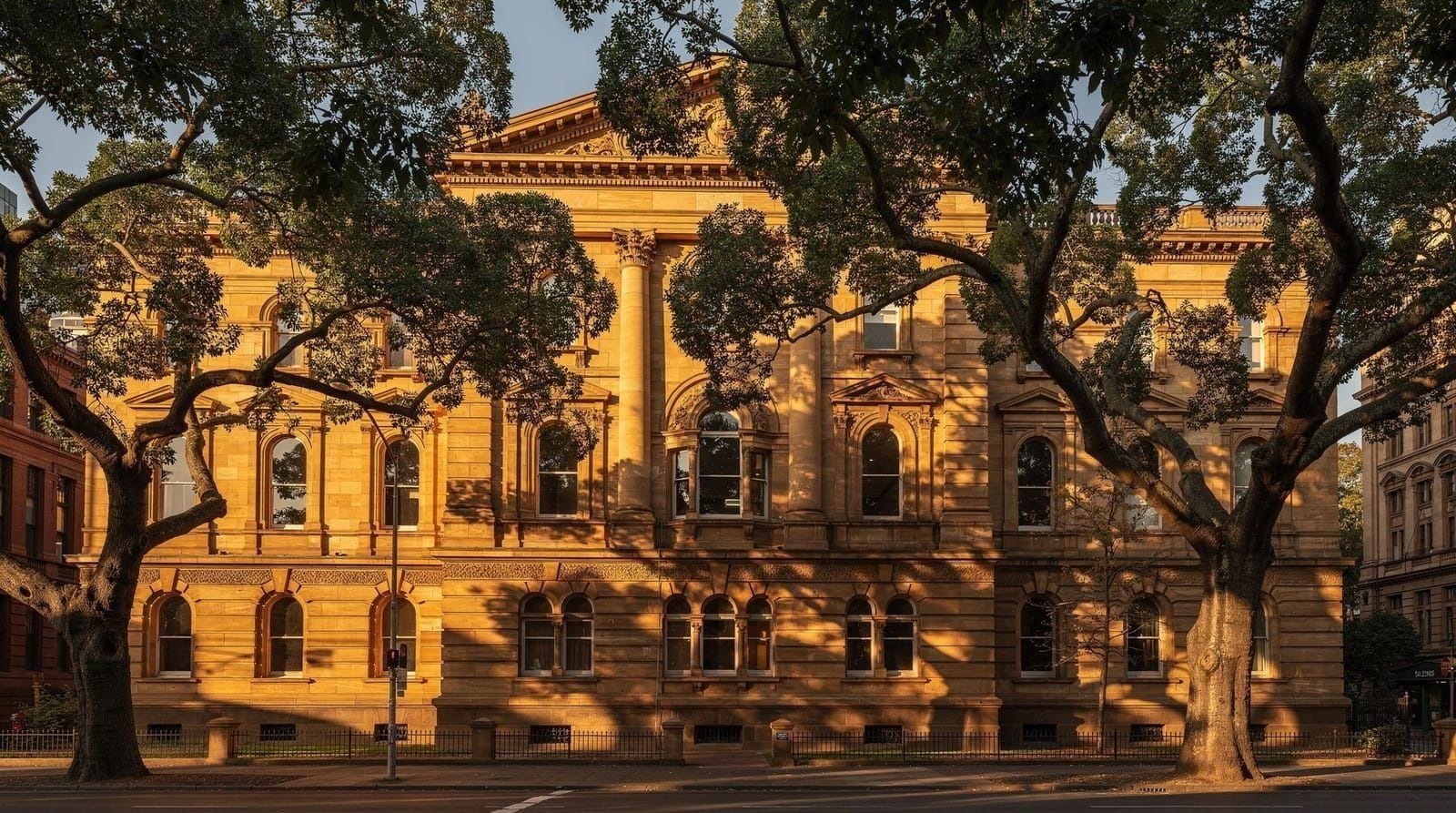
The Australian art galleries occupy the central section of the main (1909) building. The 19th century galleries contain the canonical colonial and Heidelberg School paintings — Tom Roberts, Arthur Streeton, Frederick McCubbin — that form the visual iconography of European Australia. They read differently depending on your interest in colonial history.
The 20th century Australian galleries are more rewarding for most visitors: Brett Whiteley’s large-scale Sydney Harbour paintings are technically stunning and genuinely specific to place. Sidney Nolan’s Ned Kelly series is the most recognisable body of Australian art internationally and holds up to extended viewing.
Contemporary Australian work occupies multiple floors in the North Building, with rotating displays from the collection.
Yiribana Gallery — Aboriginal and Torres Strait Islander art
The Yiribana Gallery on the lower level of the main building is one of the most significant permanent displays of Aboriginal art in any public institution. The name means “this way” in the Eora language of the Sydney basin. The collection includes bark paintings from Arnhem Land, Western Desert acrylics (the dot-painting tradition that became internationally recognised from the 1970s), and a substantial number of works by living artists.
This is the gallery to visit if you have limited time and want substantive engagement with Indigenous Australian culture rather than the tourist-market version available in souvenir shops. The contextual notes alongside each work are well written and do not condescend.
European collection
The European collection is strong in 17th century Dutch and Flemish painting and has reasonable representation of French Impressionism and Post-Impressionism. The highlight is the Rubens Bequeath room. For visitors with a strong interest in European art, this gallery functions as a credible stop, though it will not satisfy specialists expecting the depth of a European national collection.
Asian art wing
The Asian art wing is housed in a separate corridor of the original building and contains one of Australia’s best collections of Chinese ceramics, Japanese prints, and decorative arts from the broader Asia-Pacific region. The Korean ceramics section is particularly underrated.
The North Building — Sydney Modern extension
The North Building opened in November 2022 after years of construction and controversy about the cost (around AUD 344 million). The building itself is a significant piece of architecture by Pritzker Prize-winning firm SANAA (designers of the Louvre-Lens and the Rolex Learning Centre). It steps down the hillside toward the harbour, with views across Woolloomooloo Bay from the rooftop terraces.
The ground-level Art Garden connects the new building to the old one and is freely accessible without entering the gallery. Several large-scale outdoor sculptures are installed here permanently, including a James Turrell Skyspace that can be experienced at dusk for a ticketed fee (check the gallery’s program for timing).
Inside, the North Building holds the gallery’s largest contemporary works — pieces that could not be displayed in the 1909 building’s lower-ceilinged rooms. A large permanent commission by Aboriginal artist Karla Dickens occupies one of the main halls.
Ticketed exhibitions
The gallery runs two to four major ticketed exhibitions annually, typically running eight to twelve weeks each. Entry is ticketed, with concession and member rates available; check the official Art Gallery of NSW website for current prices. These exhibitions tend to feature international loans (major Impressionist collections, Asian art from foreign museums, survey shows of blue-chip contemporary artists) and attract queues on weekends.
Booking online saves time at the ticket desk. The gallery’s website maintains a programme calendar up to 12 months in advance. If visiting Sydney specifically for an exhibition, book well in advance — popular shows sell out in advance for weekend sessions.
Annual membership (see the official Art Gallery of NSW website for current prices) covers free entry to all ticketed exhibitions plus early access. For visitors spending a week or more in Sydney who plan multiple exhibition visits, membership can pay for itself in a single visit to a major show.
The gallery shop and café
The Shop at the Art Gallery is one of the better art museum shops in Australia. Reproduction prints, design objects, art books, and a selection of jewellery by Australian makers. Prices are not cheap but the quality and authenticity of goods is consistently high — genuinely different from the tourist souvenir market.
The Café in the original building serves light meals and good coffee at moderate museum prices. The terrace looks out over the Domain. The new North Building has additional food and beverage facilities at the lower level with harbour views.
Visiting with children
The Art Gallery is welcoming to children and runs family programs most weekends. The “Gallery Kids” activities are unstructured — worksheets, art materials available in certain galleries — and do not require booking. The Yiribana Gallery, with its bold colours and patterns, tends to engage younger children. The North Building’s rooftop terrace is a natural break point for children who need outdoor time.
Pushchairs are allowed throughout. Carrier bags for infants are available at the cloakroom.
AGNSW vs MCA — which gallery to choose?
Visitors with limited time often ask whether to prioritise the Art Gallery of NSW or the Museum of Contemporary Art (MCA) at Circular Quay. They serve different audiences:
The AGNSW has broader historical range, a much larger permanent collection, and stronger Aboriginal art holdings. It’s the choice for visitors who want depth across periods and media.
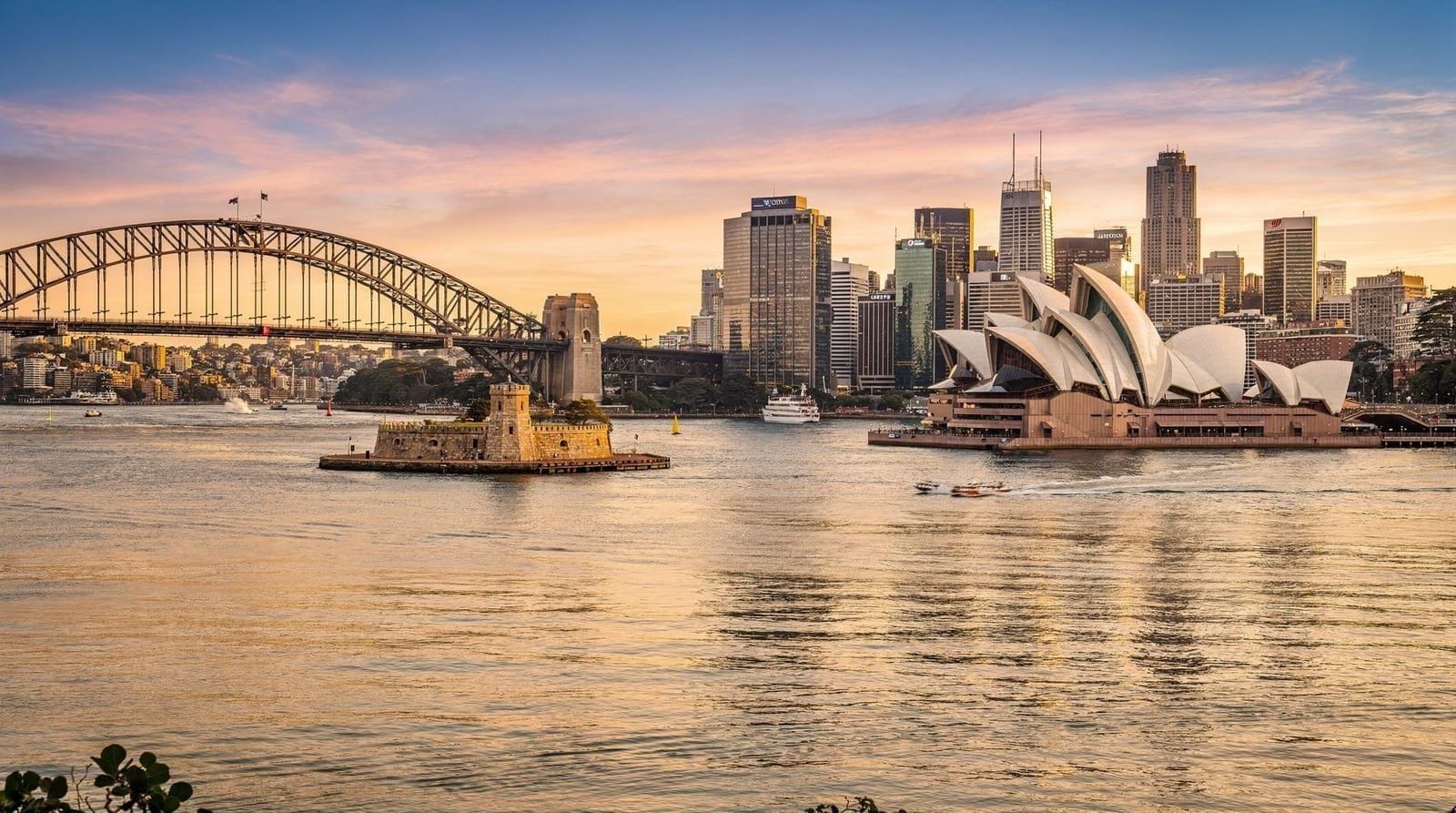
The MCA is smaller, focused exclusively on post-1950 work, and has a stronger record of showing emerging artists alongside established names. Its Circular Quay location means the terrace café has direct views of the Opera House and Harbour Bridge — among the best views in Sydney at café prices.
There is no wrong choice. Both are free for the permanent collection. If you have a full day and some interest in contemporary art, visiting both in sequence is realistic — the walk from the AGNSW to the MCA takes about 20 minutes via the Royal Botanic Garden path or 10 minutes via taxi. See the MCA guide for that collection in detail.
Planning your visit — practical summary
Best time to visit: Weekday mornings are least crowded. Wednesday evenings (open until 10pm) offer a different atmosphere with reduced visitor numbers. Avoid Saturday afternoons during school holidays — the main galleries can be genuinely congested.
Cloakroom: Free at the main entrance. Leave large bags here — bag searches at the entrance can slow entry on busy weekends.
Audio guide: The gallery offers an app-based audio guide through the Dora companion app. Check the official Art Gallery of NSW website for details.
Guided tours: Guided tours of the permanent collection are offered; check the official Art Gallery of NSW website for current times. Good for first-time visitors without specialist knowledge.
Photography: Allowed throughout the permanent collection without flash. Temporary exhibitions may restrict photography — check signage at the entrance to each show.
For visitors building a full cultural day, the AGNSW connects naturally to a walk through the Royal Botanic Garden and then Circular Quay, where you can pick up ferries to Manly or Taronga Zoo, or continue to The Rocks for the city’s oldest history.
Nearby cultural stops to combine with your visit
The Domain area sits within easy reach of several other Sydney museums, which makes the AGNSW a natural anchor for a culture-focused day rather than an isolated stop. The Sydney museums guide rounds up the full set of options if you want to plan a multi-stop itinerary rather than a single gallery visit.
Families sometimes wonder whether the AGNSW is a good fit alongside other Sydney attractions on a longer trip. If you’re building out a broader itinerary that includes wildlife, harbour walks and beaches alongside culture, the Sydney for first-timers guide has the wider context, and free things to do in Sydney is useful if you want to stack more no-cost activities around the gallery’s free permanent collection.
If the gallery is part of a rainy-day plan, the rainy day Sydney with kids guide and the Sydney Observatory guide give you indoor options that sit well alongside a morning among the paintings. For a wider look at the buildings around the Domain, the Sydney architecture walk fits neatly with the SANAA-designed North Building, and the Sydney Aboriginal heritage guide adds context to what you see in the Yiribana Gallery.
Balancing art with the outdoors
A gallery day works best when it is not your only plan. Many visitors spend the morning inside and the afternoon on the water, and the walk down through the Domain towards Circular Quay makes that switch easy. If you would like to be active after hours of looking at art, a guided paddle such as a kayak trip around North Harbour and a reef beach near Manly gives a very different view of the harbour from the one you get through the North Building’s windows.
If you are travelling with children who have had enough of quiet galleries, a trip to see native animals is a good counterweight; entry to a wildlife park where you can meet Australian animals pairs well with a gallery morning, and the Featherdale Wildlife Park guide explains what to expect. Browse the Sydney itineraries if you want to see how a gallery visit slots into a short stay.
Accessibility
Both buildings have step-free access, lifts between levels, and accessible toilets. Wheelchairs are available to borrow at the main entrance cloakroom on a first-come basis. The North Building’s connecting plaza is fully level, avoiding the stairs that separate parts of the older 1909 building.