Whale-watching cruises from Sydney — boat types, timing, and what to expect
Sydney: Whale watching adventure cruise
What type of cruise is best for whale watching in Sydney?
A catamaran cruise (2–2.5 hours) is the most comfortable choice for most people. It has covered decks and a bar, and balances speed with stability. Speedboat tours get you there faster and can position closer to whales, but are rougher and not suited to children, the elderly, or anyone prone to seasickness.
Sydney whale-watching cruises take a different route from standard harbour cruises: rather than circling the inner harbour, they head outside Sydney Heads into open ocean, where humpbacks travel along the NSW coast during their annual migration (May–November, peak June–August).
This page focuses specifically on the cruise experience itself — vessel types, what the journey feels like, and how to choose the right tour for your group. For the broader guide including land-based watching and seasonal detail, see the complete whale watching in Sydney guide.
| At a glance | |
|---|---|
| Where | Departs Circular Quay or Darling Harbour, out through Sydney Heads |
| Cost | Varies by operator; see the operator’s official website |
| Time needed | 2–2.5 hours typical; some tours run longer with breakfast/lunch |
| Getting there | Board at Circular Quay or Darling Harbour wharves, an easy walk or ferry from the CBD |
| Best time | June–July for highest density; September–October for closer, calf-accompanied sightings |
From harbour cruise to whale watching
The transition from inner harbour to ocean happens at Sydney Heads — the narrow passage between North Head (Manly side) and South Head (Watsons Bay side). In calm conditions this transition is barely noticeable. In typical winter weather with a southerly swell, you’ll feel the boat lift and pitch as you clear the headlands.
Travel time from Circular Quay to the whale zone is roughly 20–30 minutes each way. Most 2.5-hour tours spend about 1–1.5 hours actively in the whale area. On a 2-hour express tour, you get approximately 1 hour on location.
Vessel types compared
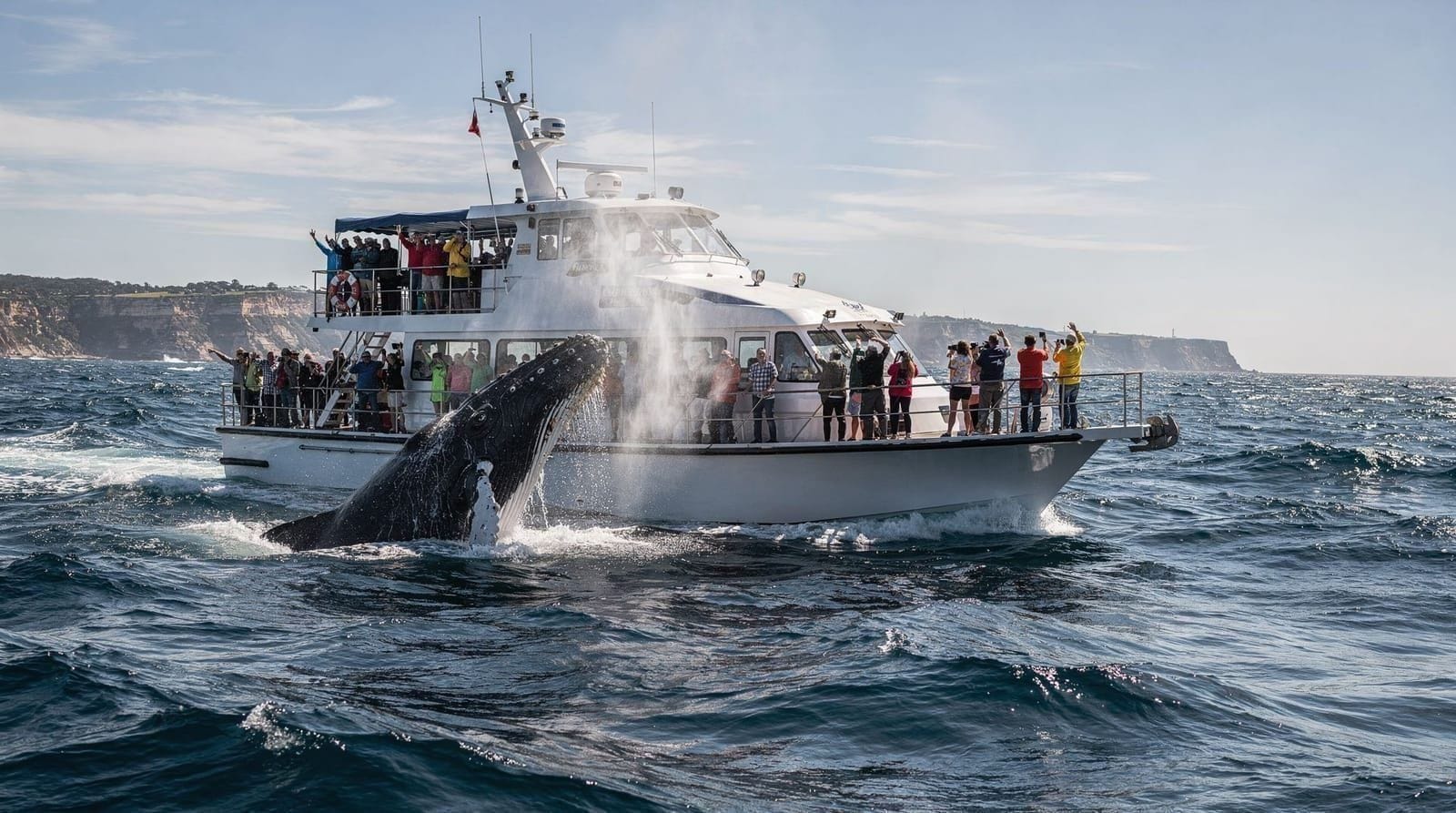
Large catamaran: The workhorse of Sydney whale watching. Stable, multiple decks (sheltered and open), bar service, and naturalist commentary. The Sydney whale watching adventure cruise uses this format — a well-suited vessel for families and those who want comfort over speed.
2.5-hour wildlife catamaran: A mid-size vessel with an ecological focus. The 2.5-hour whale watching wildlife cruise includes a marine naturalist on board with genuine commentary about humpback behaviour, migration science, and the ecology of the NSW coast. Recommended for anyone with a serious interest in the biology rather than just the spectacle.
Express 2-hour cruise: Shorter and cheaper. The 2-hour express whale watching cruise is the budget option, with less time in the whale zone. Fine if you’re visiting during peak season (June–July) when sighting rates are high, though never guaranteed. Higher risk of a limited encounter in early May or late November.
Discovery catamaran: The 2.5-hour discovery whale watching catamaran is a newer-design vessel with better deck layout — more open-air viewing space per passenger than older catamarans. Useful if you want to move around freely during the cruise rather than claim a rail spot and hold it.
Taronga Zoo combo: The Taronga Zoo and whale watching cruise combines entry to Taronga Zoo with a whale watching departure. Logistically clever — Zoo in the morning, cruise in the afternoon. Value depends on whether you were planning to visit Taronga separately; it’s not a meaningful discount if you weren’t.
Vessel types at a glance
| Vessel | Duration | Price | Best for |
|---|---|---|---|
| Large catamaran | 2–2.5 hrs | See operator’s official website | Families, comfort-focused travellers |
| 2.5-hour wildlife catamaran | 2.5 hrs | See operator’s official website | Naturalist commentary, ecology interest |
| Express 2-hour cruise | 2 hrs | See operator’s official website | Budget, peak-season confidence |
| Discovery catamaran | 2.5 hrs | See operator’s official website | More open-deck space, mobility around vessel |
| Taronga Zoo combo | Half day | See operator’s official website | Combining zoo and cruise in one day |
What actually happens on a whale watching cruise
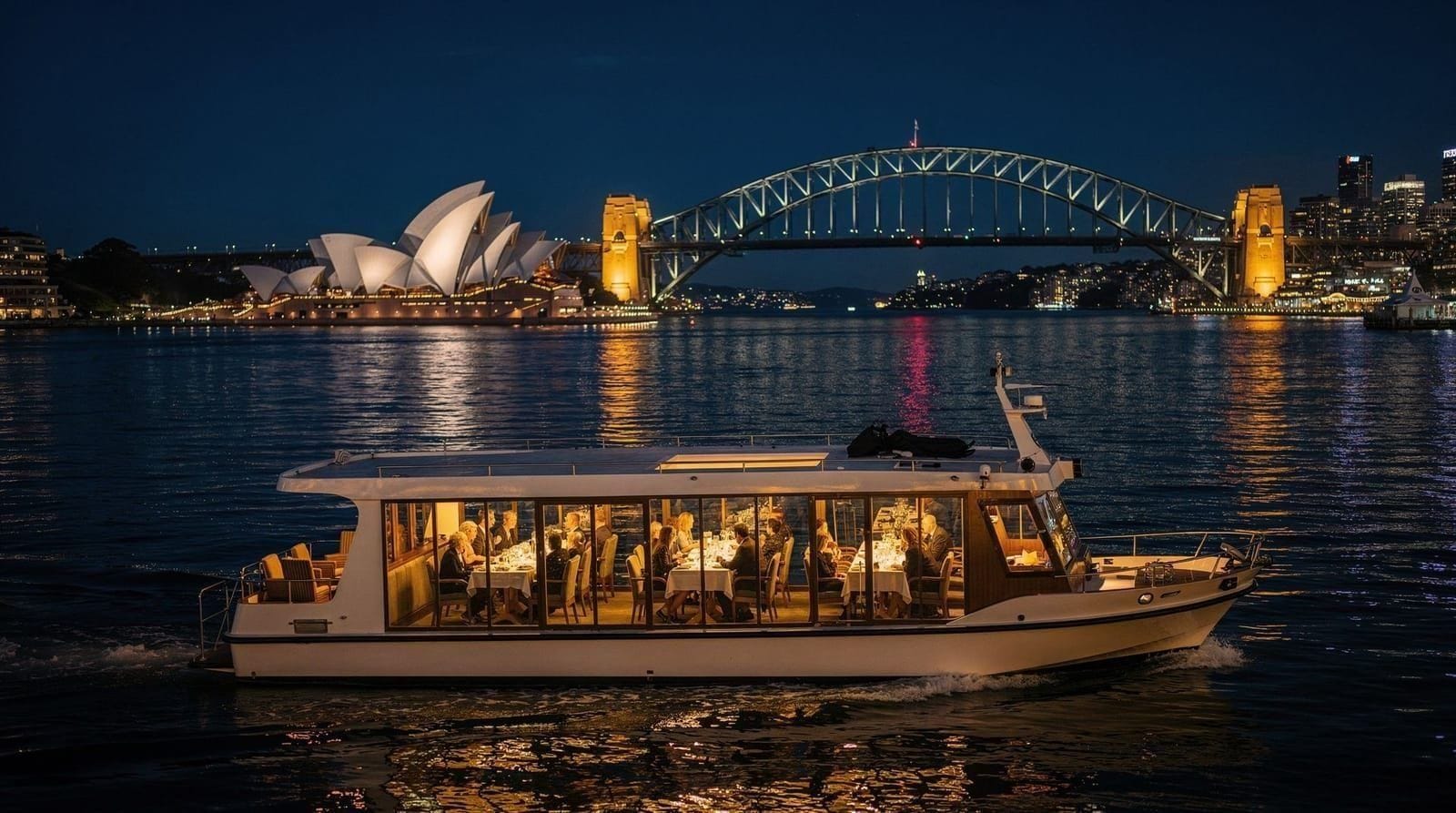
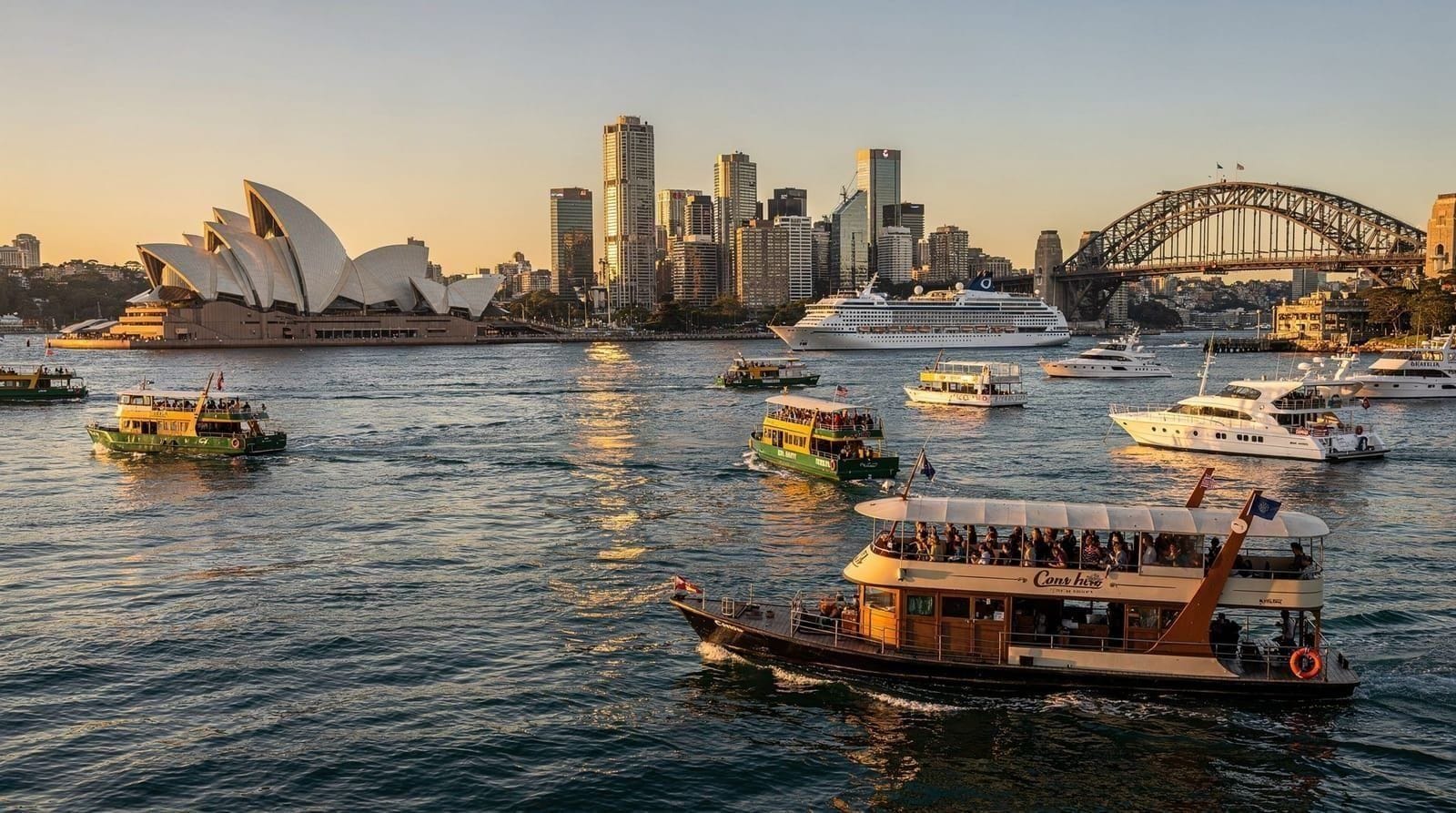
Departure (0:00–0:30): The vessel leaves Circular Quay or Darling Harbour. The naturalist introduces themselves and explains safety procedures. The inner harbour section is scenic but the focus is transit — you’ll pass the Opera House and Bridge, then Shark Island and the Heads.
Crossing the Heads (0:25–0:35): Motion changes. If there is any swell, you’ll feel it here. People who didn’t take seasickness medication before boarding often wish they had.
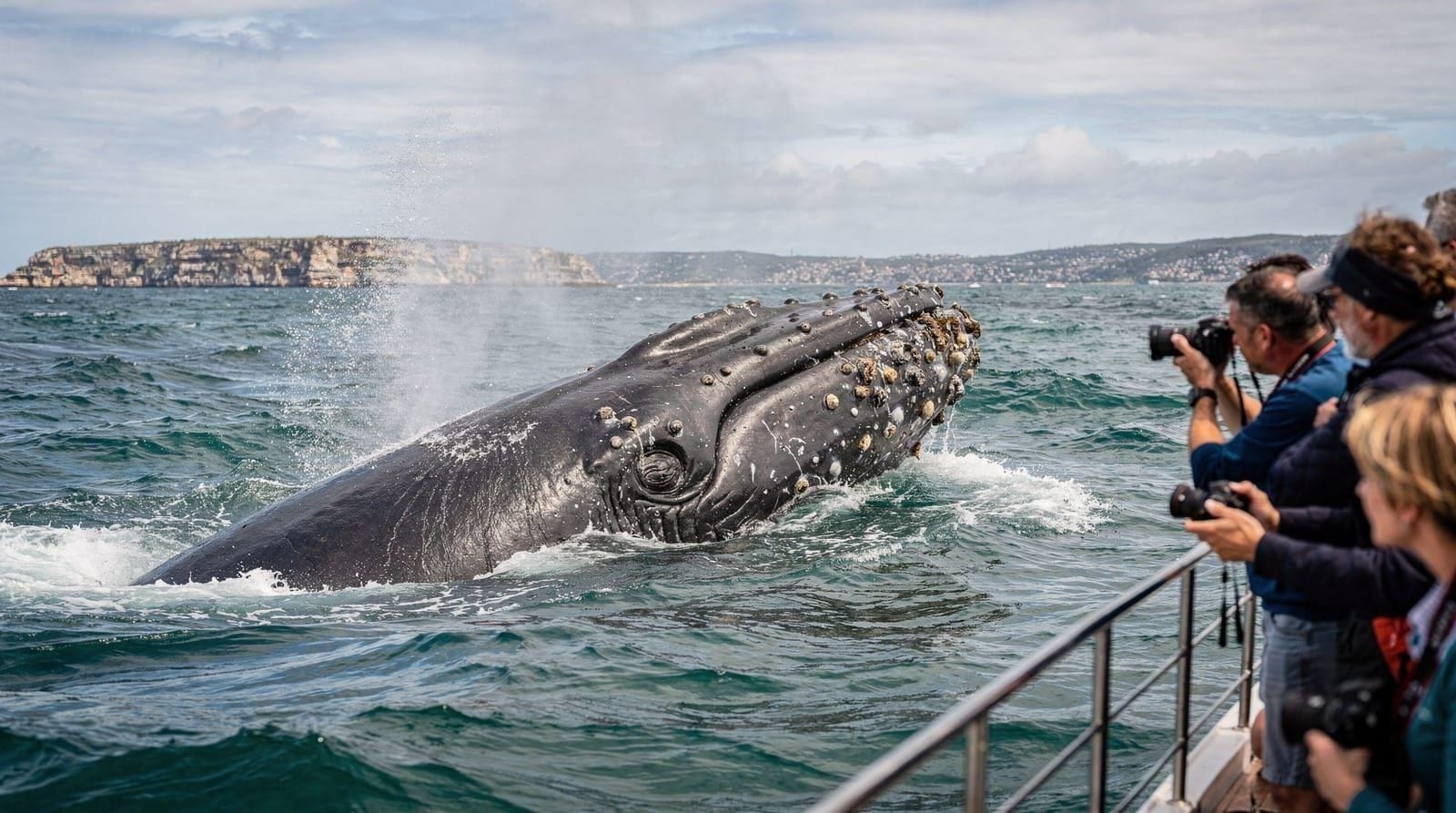
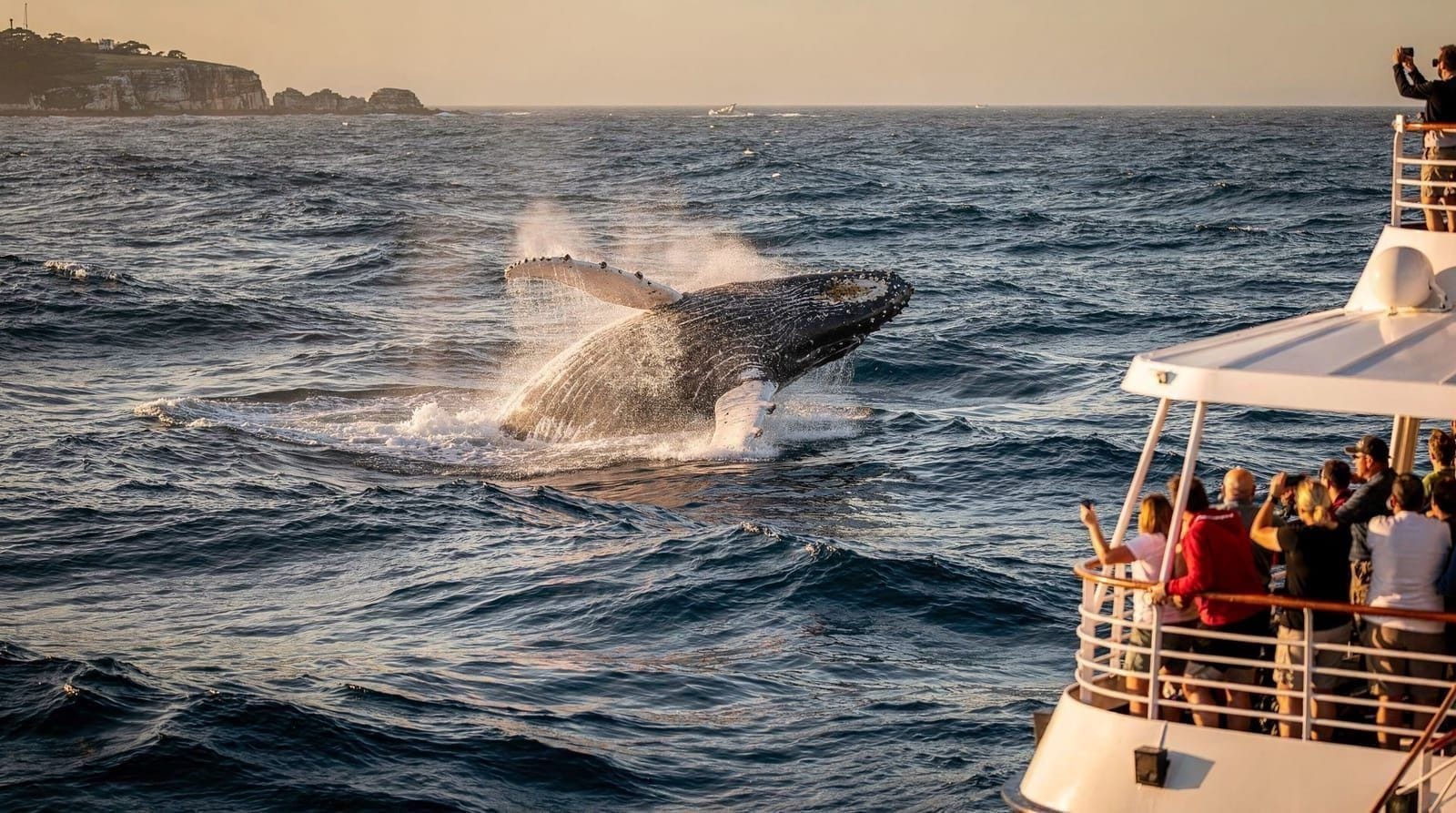
Active whale zone (0:35–1:45 on a 2.5-hour tour): The captain slows and begins scanning. Blows are spotted — a column of vapour that can be visible from 3–4 km in good conditions. The vessel approaches to the minimum legal distance (100 metres under NSW law) and the naturalist identifies the whale’s behaviour: travelling, logging (resting), socialising, or breaching. Breaching is uncommon but happens. Logging pods — multiple whales resting at the surface together — can allow several minutes of close observation.
Return (1:45–2:30): The crossing back is usually smoother if you’re now heading downwind. Bar service is busy. Most passengers head inside for warmth.
What a typical 2.5-hour cruise schedule looks like
9:00 AM: Board at Circular Quay or Darling Harbour. Safety briefing. Some cruises serve breakfast during the outbound leg.
9:00–9:30 AM: Transit through the inner harbour — passing the Opera House, under the Harbour Bridge, through the Heads. The Heads passage marks the transition from harbour to ocean. Motion changes.
9:30–10:30 AM: Active whale zone. The captain reduces speed and the crew scans for blows. When a whale is found, the vessel approaches legally (minimum 100 metres under NSW wildlife protection law). The naturalist provides commentary on species, behaviour, and migration status.
10:30–11:00 AM: Return transit to Circular Quay. Bar service and debrief from the naturalist.
11:00 AM: Back at Circular Quay. Rest of day free.
This schedule leaves the afternoon entirely open for other Sydney activities — a significant advantage of the morning cruise format over a full-day outing.
Conditions and comfort
The ocean outside Sydney Heads is exposed to the Tasman Sea. In typical June–July conditions, expect a 0.5–1.5 metre southerly swell — gentle enough for most passengers but enough to cause seasickness in susceptible individuals. August can bring larger southerly swells (2–3 metres in gale conditions), in which case operators may modify the route or cancel.
The catamaran hull design reduces swell motion compared to a monohull vessel. If you are prone to seasickness:
- Take medication 30–60 minutes before boarding (not immediately before)
- Sit in the centre of the lower deck, not in the bow or stern
- Focus on the horizon, not on the water immediately adjacent to the vessel
- Eat a light breakfast before boarding — an empty stomach makes nausea worse, as does an overfull one
Clothing: 10–16°C on the ocean in winter. Dress in layers and bring a windproof jacket. The open deck is exposed at speed; the covered lower deck is significantly warmer.
Seasonality and how it affects the cruise
The cruise experience changes meaningfully across the May–November window:
May–July (northward migration): High whale density, fast-moving pods of adults. Multiple pods may be visible simultaneously. The naturalist’s job is partly triage — deciding which of several blows to approach first.
August: Transition. Both north and southbound whales present. More complex social dynamics observed — pods interacting with each other, sub-adult males practising competitive behaviour.
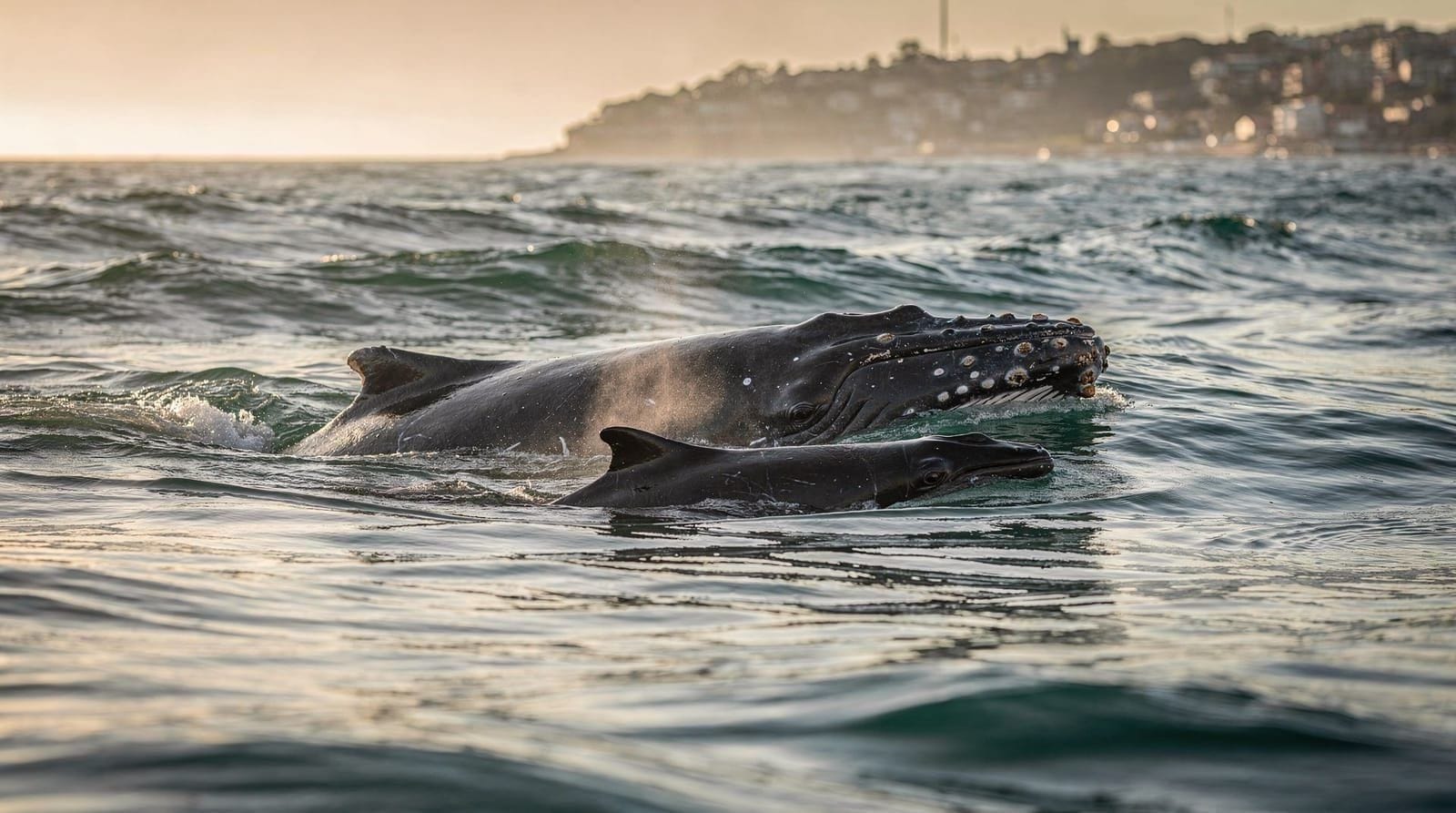
September–November (southward migration): Mothers with calves. Calves breach frequently and approach the vessel out of curiosity (whales, not the calves, make the decision — calves don’t yet understand the 100-metre rule). More time at the surface. More complex behaviours. Generally the most rewarding period for extended observation, even if raw numbers are lower.
Tips for the cruise
- Sit at the bow for departures and at the stern for returns — you get the most unobstructed views
- Don’t look at the whale zone through your phone the entire time — whale behaviour is fast. A breach that lasts two seconds requires eyes on the water, not a screen
- Check the operator’s sighting statistics — reputable companies publish their sighting rates online: sighting rates are high in peak season but never guaranteed
- Dress for open ocean: even in Sydney’s winter (June–August), 10–15°C with a 10-knot southerly feels significantly colder at sea
Accessibility
Most large catamaran whale watching vessels are accessible to wheelchair users via a boarding ramp. Confirm with the specific operator when booking. The lower deck is typically the most stable and most accessible seating area. Speedboat tours are not accessible.
Wildlife beyond whales: what else you’ll see
Whale watching cruises don’t guarantee whales are the only wildlife encountered. Beyond the humpbacks (and occasional southern rights), expect:
Common dolphins (Delphinus delphis): The most frequent companion on any Sydney ocean cruise. Pods of 20–100+ animals are common year-round. They ride the bow wave — you will see them within metres of the vessel at the front. Extremely fast and acrobatic; their presence at the bow is typically the most reliably close animal encounter of the trip.
Bottlenose dolphins (Tursiops truncatus): Resident pods in Sydney Harbour and near the Heads. Larger and slower than common dolphins. Often seen near the inner harbour even on calm, non-whale days.
Little penguins (Eudyptula minor): A few small colonies survive on the rocks near the Heads (primarily Manly side). Rare sighting on cruise transits, but possible. The Manly penguin colony is monitored by volunteers.
Seabirds: Gannets are frequently seen diving near the whale zone — they follow the same fish schools that attract cetaceans. Short-tailed shearwaters (mutton-birds) pass through in large flocks during their own migration (April–May and September–November). Crested terns and silver gulls are ubiquitous.
Sea turtles: Not common near Sydney but occasional loggerhead turtle sightings occur, particularly in warmer months (December–April).
Comparison: Sydney whale watching vs Port Stephens
Port Stephens (2.5–3 hours north of Sydney by car) offers a different kind of whale watching:
- Departure from Nelson Bay, inside a calmer bay — less swell than Sydney open ocean
- Year-round dolphin watching (resident pods in the bay)
- Whale season overlap May–November
- Smaller operators, less volume, potentially more attentive service
- The bay context means calmer conditions for passengers who are sensitive to motion
Sydney’s advantage: no travel overhead — you depart from the CBD and return to it. Port Stephens makes more sense as a dedicated day trip that combines whale watching with sand dunes and beaches (see the Port Stephens day trip guide). Sydney makes sense as a morning activity slotted into a multi-day city visit.
Related guides
- Whale watching in Sydney — complete guide
- Best whale watching tours from Sydney
- Sydney whale season guide
- Sydney Harbour cruises guide
- Port Stephens day trip from Sydney
- Sydney winter whale itinerary
Choosing a departure time and dock
Morning cruises (typically 9–11 am) are the most common format and, as the sample schedule above shows, leave the whole afternoon free for other Sydney activities. Afternoon departures exist on some operators and can be a good option if you’ve already spent the morning at Taronga Zoo or doing harbour sightseeing. Circular Quay and Darling Harbour both work as departure points; Circular Quay is closer to the Opera House and Bridge for the scenic transit-out photos, while Darling Harbour suits visitors already staying in that precinct. Neither location has a meaningful advantage once you’re through the Heads and into the whale zone.
Group size and boat crowding
Large catamarans mean you are sharing rail space with a lot of other people during a sighting — arrive early to claim a spot near the bow or along the open deck rather than assuming you’ll get a clear view whenever a whale appears. Smaller wildlife-focused vessels and the discovery catamaran carry fewer passengers per deck area, which matters if photography or an unobstructed view is a priority over price.
Frequently asked questions about Whale-watching cruises from Sydney
How rough is a Sydney whale watching cruise? It depends on the day’s swell. Inside the harbour it’s calm; once you clear the Heads into open ocean, expect a 0.5–1.5 metre swell in typical winter conditions, occasionally rougher in August. Catamaran hulls handle this more smoothly than a monohull, but anyone prone to seasickness should take precautions beforehand.
Which cruise is best for families with young children? A large catamaran is the most stable and comfortable option, with covered decks, bar/food service, and more space to move around than a speedboat tour, which is unsuitable for young children or anyone sensitive to rough motion.
Top experiences
Bookable activities with verified prices and instant confirmation on GetYourGuide.