Sydney travel tips — practical advice for first-time visitors
Sydney: Guided daytime summit climb of Sydney Harbour Bridge
Duration: 3 hours
What do first-time visitors to Sydney most need to know?
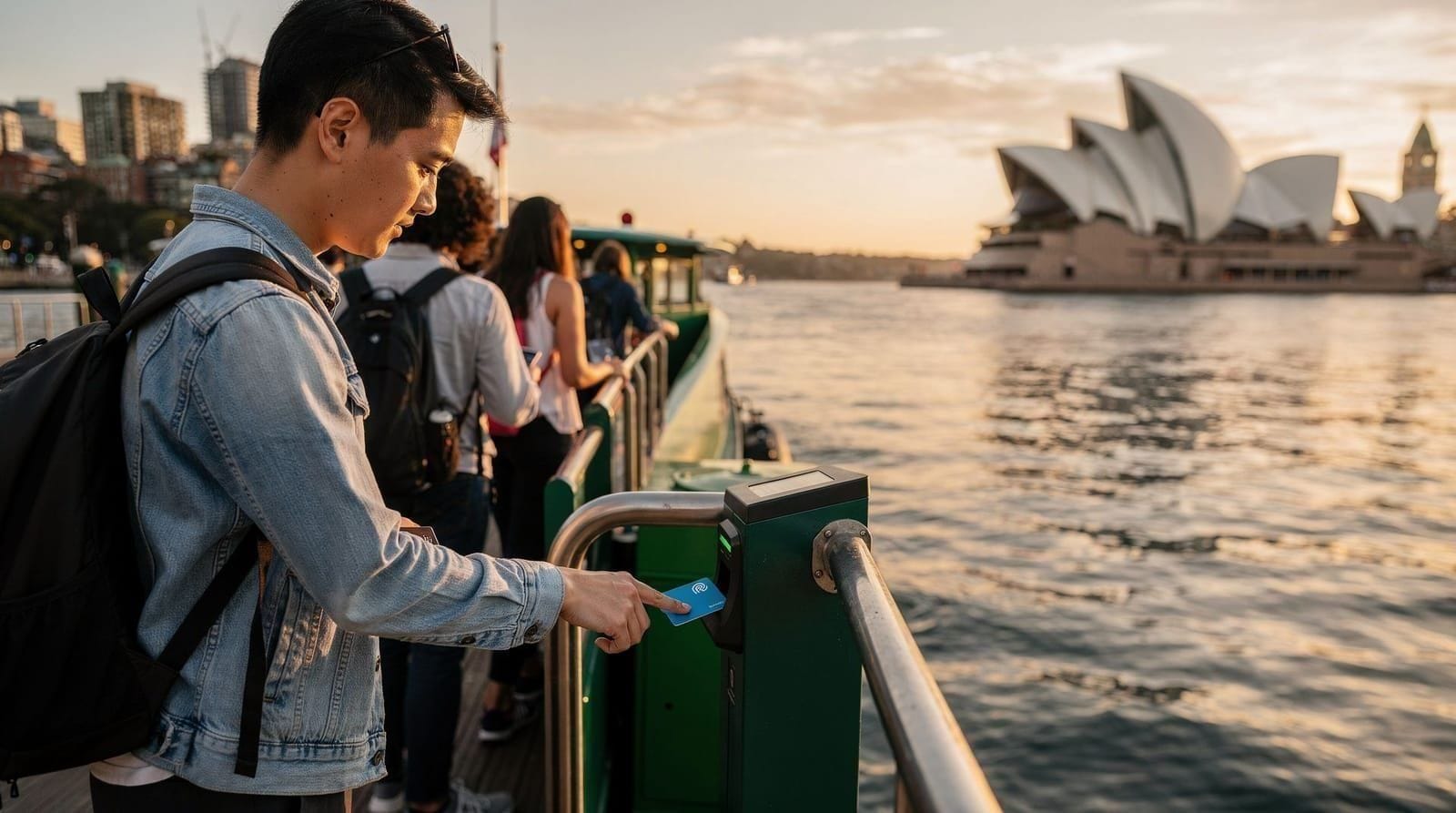
Get an Opal card (or use a contactless bank card) for all public transport — it covers trains, ferries, buses and light rail with a daily cap of AUD 9.65–19.30. The UV is far stronger than in Europe or the US, so SPF 50+ sunscreen is essential. Tipping is not expected. Emergency services are reached on 000. Most European visitors enter on a free eVisitor visa applied for online.
This guide collects the practical details that experienced Sydney visitors wish they’d had before arriving. No marketing language — just the useful facts.
At a glance
| Entry | Free eVisitor visa (EU/UK) or paid ETA (US) applied for online before arrival |
| Getting around | Opal card / contactless card, daily cap around AUD 9.65–19.30 |
| Currency | Australian Dollar (AUD); cards accepted almost everywhere |
| Biggest hazard | UV strength, not crime — SPF 50+ daily is non-negotiable |
| Best first stop for orientation | The getting around Sydney guide and the Sydney for first timers guide |
Visa and entry
Most European visitors and UK citizens need an eVisitor visa (subclass 651) to enter Australia. It is free, applied for entirely online via the Australian Department of Home Affairs website, and linked electronically to your passport. You do not receive a physical sticker or stamp — the visa exists in the system. Apply at least a few days before departure to allow processing time, though it is often approved within hours.
US citizens need an Electronic Travel Authority (ETA, subclass 601) — similar process, costs roughly AUD 20.
The eVisitor allows stays of up to 3 months per visit, with the visa valid for 12 months from grant. It cannot be extended inside Australia.
Currency and payments
Australia uses the Australian Dollar (AUD). As of June 2026: 1 AUD ≈ 0.65 EUR ≈ 0.72 USD ≈ 6.5 PLN.
Contactless card payment is accepted almost everywhere in Sydney — cafés, markets, transport, most street food vendors. Apple Pay and Google Pay work seamlessly on Opal card readers and most retail terminals. Keep a small amount of cash for Glebe Markets, some Aboriginal art vendors and occasional farmers markets that run card-free.
Avoid airport currency exchange kiosks — their rates are significantly worse than bank ATM rates. Withdraw from an ATM (avoid independent ATMs in tourist areas, which charge high fees) or use a low-fee travel card like Wise or Revolut.
Tipping: Not mandatory, not expected in most settings. A 10% tip at a restaurant is generous and well-received. Taxis: rounding up to the nearest dollar is standard. Hotel housekeeping: not typically tipped. You will not face any negative reaction for not tipping. See the Sydney trip cost guide for more budget details.
Getting around
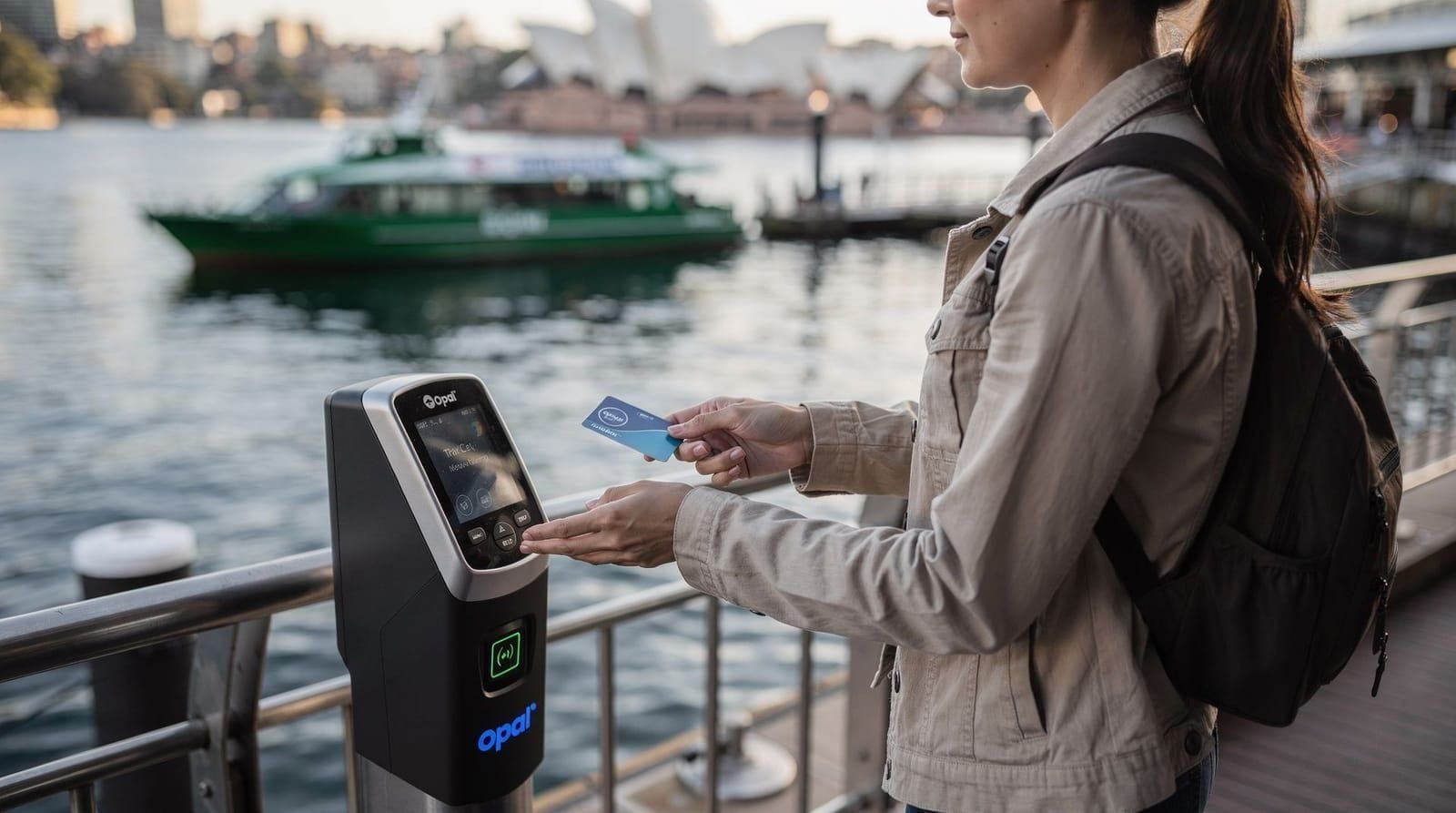
The Opal card covers all public transport in Greater Sydney: trains, buses, ferries and light rail. Key facts:
- Daily cap: AUD 19.30 Monday–Thursday; AUD 9.65 Friday–Sunday. Once you hit the cap, all further travel that day is free.
- Weekly cap: AUD 50. If you travel daily, you effectively travel free on Sunday.
- Contactless bank cards, Apple Pay and Google Pay work on all Opal readers and apply the same caps — you do not strictly need a physical Opal card.
- Where to get it: Airport train station, any train station machine, convenience stores (7-Eleven, newsagents)
For detailed transport options and fares see the Opal card guide and the getting around Sydney guide.
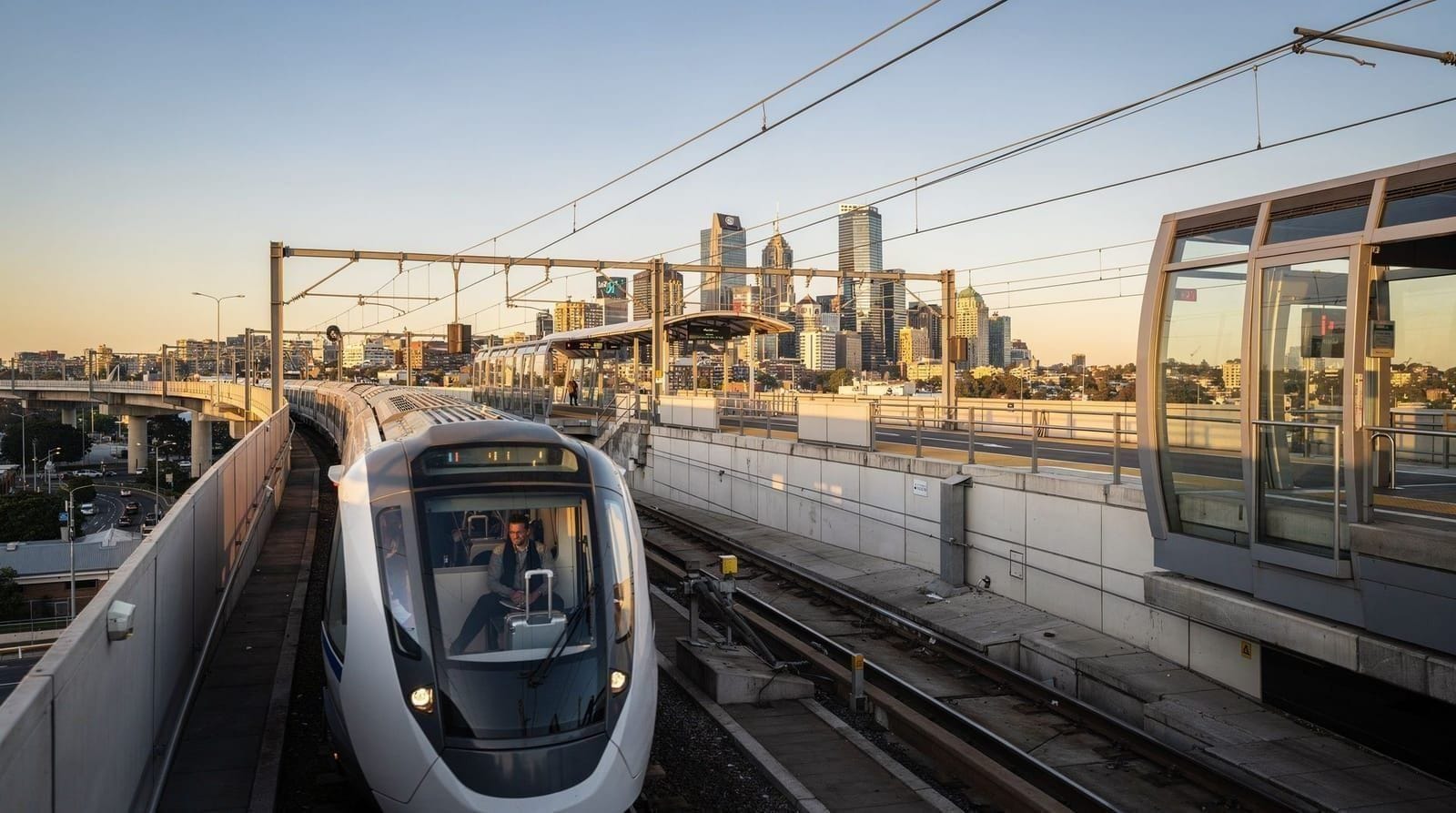
Airport to CBD: Airport Link train from T1/T2/T3 takes 13 minutes to Central Station; the Sydney Airport station access fee is charged on top of the Opal fare and is not included in the daily cap. A taxi/Uber to the CBD takes 20–40 minutes depending on traffic. Uber and Ola both operate from the airport pickup zone. See Sydney airport to CBD for detailed options.
Left-hand traffic: Australia drives on the left. Look right first when crossing the road — this is the direction traffic comes from. Most pedestrian crossings have the reminder painted on the road.
Sun and UV safety
UV radiation in Sydney is classified as “extreme” (UV index 11+) on many summer days, and “very high” even in mild weather. This is the most commonly underestimated hazard for visitors from the northern hemisphere.
Key rules:
- Apply SPF 50+ sunscreen every morning and reapply every two hours outdoors
- UV penetrates cloud cover — overcast days are not protection
- 10am–4pm is the peak UV window; plan indoor or shaded activities during these hours in summer
- UV-blocking sunglasses and a wide-brim hat are essential for all-day outdoor activities
See the Sydney safety guide for beach-specific safety including rip currents.
Beach safety
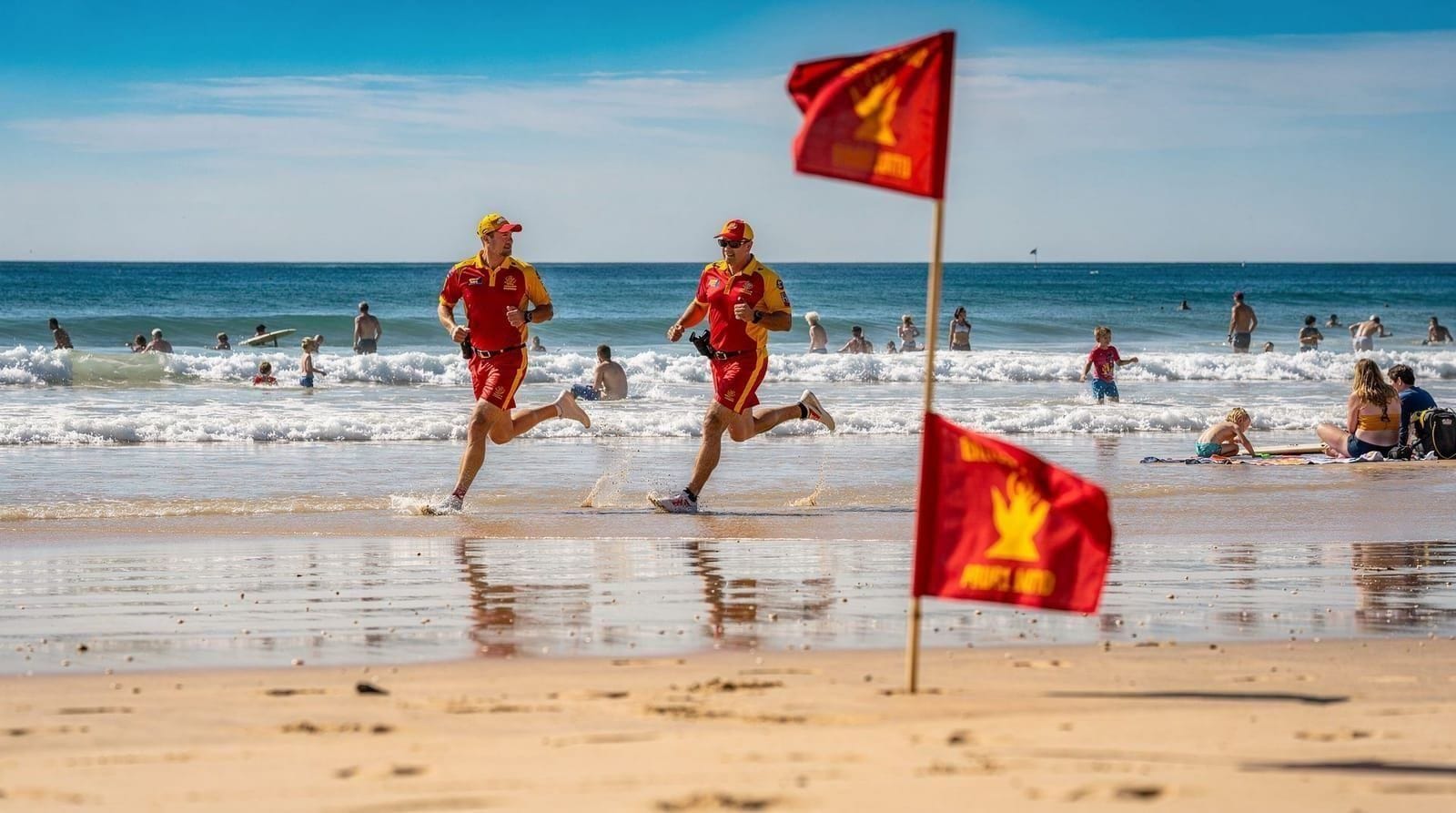
Swim between the red and yellow patrol flags at all times on patrolled beaches. These flags mark the area actively monitored by surf lifesavers and are positioned to avoid rip currents and other hazards.
If caught in a rip current: do not panic and do not try to swim directly back to shore against it. Paddle parallel to the beach (perpendicular to the rip) until you exit the current, then swim back to shore at an angle. Or float calmly and wave for assistance — lifesavers will respond.
Most major Sydney beaches — Bondi, Manly, Coogee, Cronulla — are patrolled year-round on weekends and school holidays, and daily in peak summer season. Unpatrolled beaches carry significantly higher risk.
Electricity
Voltage: 230V, 50Hz. Plug type: Australian Type I (three flat angled pins in an inverted V). EU/US/UK plugs need an adapter — pick one up at the airport arrival hall or any electronics retailer. A multi-country travel adapter usually includes Australia.
Tap water
Sydney tap water is safe, well-filtered and actively tested. One of the better urban water supplies in the world by filtration standard. No need to buy bottled water — bring a refillable bottle.
Language and communication
English is the primary language. Australians speak quickly and use significant slang; if you are not a native English speaker, “no worries,” “arvo” (afternoon), “servo” (service station), “bottle-o” (liquor store) and “brekkie” (breakfast) will be among the most common terms you encounter.
Phone and data: International roaming is expensive in Australia. Local tourist SIM cards from Optus, Telstra or Vodafone are available at the airport on arrival, at convenience stores and electronics shops; see the official Optus, Telstra and Vodafone websites for current plans. Optus has better inner-city coverage in some areas; Telstra has the broadest national coverage.
Pharmacies and healthcare
Pharmacies (chemists) are widely available throughout Sydney. Major chains include Chemist Warehouse (cheapest), Priceline and independent community pharmacies. If you need over-the-counter medications, Chemist Warehouse typically undercuts other retailers by 20–40%.
Emergency services: 000 (police, ambulance, fire). International standard 112 also works and redirects to 000. Text relay for hearing/speech impaired: 106.
Medicare (Australian public health) does not cover overseas visitors. Travel insurance with health cover is strongly recommended, particularly for adventure activities. Medical costs in Australia can be high without insurance.
Public holidays and closures
Key Australian public holidays that affect Sydney business hours:
- Australia Day: 26 January — some businesses closed, parks and beaches very busy
- Easter (Good Friday and Easter Monday): Many restaurants and attractions closed or on reduced hours
- Anzac Day: 25 April — significant national holiday; most things closed in the morning; RSL clubs open for the afternoon
- Christmas Day and Boxing Day: 25–26 December — near-universal closures
Check individual venue hours around these dates. Sydney’s major attractions (Opera House, BridgeClimb, zoos) typically operate year-round with modified hours on public holidays.
Avoiding common mistakes
Trusting “Aboriginal souvenir” shops in tourist areas: Many souvenir shops selling didgeridoos, boomerangs and generic “Aboriginal art” stock mass-produced goods from overseas. If you want genuine Aboriginal art, visit Cooee Art Gallery in The Rocks, the Art Gallery of NSW gift shop, or Gavala Aboriginal Art in Darling Harbour (which does stock genuine community-sourced work). See the tourist traps guide for more.
Overpaying for tours at the hotel desk: Hotel concierges frequently direct guests toward operators who pay referral commissions rather than the best-value options. Research tours independently and book directly or through GetYourGuide. For the big-ticket harbour experiences, compare a few options first: a daytime summit climb of the Harbour Bridge and a paddle on the water are very different days out, as the BridgeClimb guide and the Sydney harbour kayaking guide explain.
Underestimating distances: Sydney is large. What looks nearby on a map can be 40 minutes by public transport. Always check actual travel time before planning your day. Use the Sydney day trip planner tool.
Missing the shoulder seasons: Most first-time visitors plan for December–January (summer) because it is the most recognisable season. But March–May (autumn) offers better weather for activity, 25–40% lower accommodation costs and far fewer crowds. See the best time to visit guide for a full comparison.
Cultural norms and etiquette
A few Sydney-specific behavioural norms worth knowing before arrival:
Waiting in line (queuing): Australians queue consistently and will notice if you do not. This applies at bakeries, café order counters, ticket windows and transport stops. Pushing to the front or ignoring line order is noticed and unwelcome.
Directness: Australian communication style is generally direct. Service staff will answer a question honestly rather than tell you what you want to hear. If a restaurant cannot accommodate your dietary requirement, you will be told so rather than served something unsuitable. This directness can initially seem blunt to visitors from more indirect communication cultures.
The “no worries” culture: Australians use “no worries” and similar reassurances liberally and genuinely. It is not a dismissal — it is a social lubricant indicating that a request or apology is accepted. You will hear it constantly.
Switching off devices at meals: Sydney café and restaurant culture increasingly values phone-free or phone-limited dining. You will not be asked to put your phone away but the social norm around dedicated meals and conversation is stronger than in many equivalent European cities.
Public beaches: Sydney beaches are public spaces. There are no private beach access rights for hotels or adjacent properties. All beaches in NSW are publicly accessible (though some land access routes are privately owned). Nude sunbathing is not standard and is not permitted at patrolled beaches.
Where to find reliable Sydney information
The quantity of Sydney travel advice online is large and the quality variable. Sources worth trusting:
Destination NSW (sydney.com): Official state tourism site. Comprehensive events calendar, accurate opening hours, operator listings. Promotional tone but factually reliable.
TimeOut Sydney (timeout.com/sydney): Good for current restaurant, bar and entertainment recommendations. Content is updated regularly by local writers.
City of Sydney Council (cityofsydney.nsw.gov.au): Definitive source for public events, park schedules, construction closures, and community information.
Bureau of Meteorology (bom.gov.au): Australian Government weather authority. Better than commercial weather apps for Sydney’s specific conditions, particularly during storm events and extreme heat.
NSW Rural Fire Service (rfs.nsw.gov.au): For bushfire and hazard information during October–March if doing day trips to outer areas.
Transport for NSW (transportnsw.info): Live service status, timetables, journey planner. The Opal Travel app is a consumer-facing front-end for this data.
Practical Sydney numbers and addresses
Sydney Airport (SYD): Located at Mascot, 9 km south of the CBD. International terminal (T1) and domestic terminals (T2, T3) connected by the Airport Link rail.
Central Station: Sydney’s main rail hub. Airport Link, regional trains, suburban trains and several bus routes. Located at the southern edge of the CBD.
Circular Quay: Ferry hub and train/bus interchange at the northern edge of the CBD. The starting point for Manly, Watsons Bay and harbour ferries.
000 Emergency Services: 000 is the Australian emergency number (police, ambulance, fire). This cannot be overstated — Australian mobile phones allow 000 calls even without credit. Do not call 999 (UK number) — it does not work here.
Lost property: NSW Police Assistance Line (131 444). For items lost on public transport: Transport for NSW Lost Property (131 500).
For the full practical logistics picture, use the getting around Sydney guide and the Sydney airport to CBD guide for your arrival day.
Food and coffee culture — quick primer
Sydney has a genuinely developed café and restaurant culture. A few practical notes for first-time visitors:
Flat white vs cappuccino: The flat white originated in Australia (and New Zealand). In Sydney, a flat white is the standard espresso-with-milk drink — stronger ratio than a latte, less foam than a cappuccino. Most Sydney coffee drinkers order flat whites. A cappuccino here is the same as anywhere; a latte is a larger, milkier drink.
Breakfast culture: Sydneysiders take café breakfasts seriously. Avocado toast and eggs benedict are genuinely good and ubiquitous. Breakfast is typically served until noon or 1pm at most cafés. Expect to pay AUD 18–28 for a full breakfast with coffee.
BYO restaurants: Many Sydney restaurants (particularly in Surry Hills and Newtown) operate BYO (bring your own alcohol) policies, usually with a small corkage fee of AUD 2–8 per person. A BYO policy dramatically reduces the total cost of a restaurant meal since you buy wine from a bottle shop before entering.
Pub meals: The classic Australian pub counter meal (chicken parmigiana, fish and chips, steak and chips) runs AUD 20–32 and is consistently filling. Pub kitchens in Surry Hills and Newtown are often legitimately good.
Internet and data connectivity
Free wi-fi: The City of Sydney network operates in the CBD and several tourist areas. Quality varies. The Opera House, Darling Harbour venues, and major shopping centres all offer free wi-fi.
Data SIM options: For 7+ day stays, a local data SIM is significantly cheaper than roaming. Optus, Telstra and Vodafone tourist SIM cards are available at the airport arrival hall and at 7-Eleven convenience stores. See the official Optus, Telstra and Vodafone websites for current plans.
Recommended apps:
- Opal Travel: trip planning, service alerts, tap-card top-up
- Transport NSW: live departure times across all modes
- Beachsafe: patrol flag status and conditions at Sydney beaches
- Google Maps: Sydney coverage is excellent including live transit data
- NSW Food Authority: restaurant hygiene ratings
Aboriginal history and cultural context
Sydney (known to the Gadigal and broader Eora Nation peoples before colonisation) has a rich Aboriginal history that pre-dates European arrival by at least 30,000 years. Visitors interested in understanding this context will find it informative to:
- Visit the Aboriginal collection at the Art Gallery of NSW (free)
- Take one of the guided Aboriginal cultural tours through the Botanic Garden or The Rocks — these are run by Aboriginal guides with genuine cultural knowledge (see the Aboriginal cultural tours guide)
- Note that many Sydney landmarks have Gadigal or other Eora nation names alongside their English names — Barangaroo (former Millers Point waterfront precinct) is named for an 18th-century Cammeraygal woman
The Welcome to Country and Acknowledgement of Country are common practices at Sydney public events. If you attend an official function or public ceremony, you will likely hear an Acknowledgement of Country at the start — this is a statement recognising the traditional custodians of the land.
If you would rather hear this history from the people who carry it than read it on a plaque, a guided option such as an Aboriginal-led walking tour with a smoking ceremony is a good way to start a trip. Doing it early gives context to everything else you see. The Sydney Aboriginal heritage guide and the Royal Botanic Garden Aboriginal tour guide go deeper on what is available.
Getting the most from Sydney’s public spaces
Sydney’s public spaces are genuinely excellent and underutilised by visitors who spend their time queuing at paid attractions:
Royal Botanic Garden: 30+ hectares adjacent to the Opera House. The Mrs Macquaries Road route within the garden has the best free view of the Opera House and Harbour Bridge from land. Open every day from 7am to sunset, free.
Observatory Hill: The sandstone plateau above The Rocks with the Sydney Observatory (open Thursday to Sunday; see the official Sydney Observatory website for tickets). Good 360-degree view over the CBD, Darling Harbour and harbour. Often missed because it requires a short uphill walk.
Barangaroo Reserve: The newly restored headland at the western edge of the CBD. Harbour views, Aboriginal heritage markers, weekend food stalls. A significant improvement on the corporate waterfront that preceded it. See the Barangaroo guide for more.
Once you have walked the shoreline, seeing it from the water is a different perspective: a guided kayak past the Opera House and Harbour Bridge is one way to do it without needing prior experience of the harbour. Free spots such as Sydney’s ocean pools and the free things to do guide round out a low-cost itinerary.
Nielsen Park (Vaucluse): Shark-netted harbour beach on the eastern harbour. Quieter than Manly, beautiful National Parks setting, café above the beach. 25 minutes by bus from the CBD. Known to Sydney locals, rarely mentioned in tourist guides. See the best beaches Sydney guide for more options.
Packing and preparation checklist
A short, practical list beyond the obvious: SPF 50+ sunscreen (Australian pharmacy brands are excellent and cheap if you forget), a reusable water bottle (tap water is safe, see above), a light rain layer even in summer (Sydney gets sudden downpours), swimwear year-round if you plan any beach or harbour activity, and a universal power adapter for the Australian Type I sockets. Full seasonal packing detail, including what changes between summer and winter, is in the Sydney packing guide.
First 24 hours — a practical sequence
For a typical arrival: clear customs, get an Opal card or confirm your contactless card works (available at the airport station), take the Airport Link train to your accommodation area, then use the rest of day one for a low-effort orientation walk rather than a packed itinerary — jet lag makes ambitious first-day plans a common early mistake. The Sydney airport to CBD guide covers the arrival journey in detail, and the how many days in Sydney guide helps calibrate expectations for the rest of the trip.
Frequently asked questions about Sydney travel tips
Do I need travel insurance for Sydney?
Strongly recommended, and effectively essential if you plan any adventure activity (BridgeClimb, diving, hiking in the Blue Mountains). Medicare does not cover overseas visitors, and medical costs without insurance can be very high in Australia.What is the most common mistake first-time Sydney visitors make?
Underestimating the size of the city and the strength of the sun. Distances that look short on a map can be 40 minutes by public transport, and the UV index is genuinely extreme even on mild or overcast days — both catch visitors from the northern hemisphere off guard. See the Sydney safety guide for the full picture.