Sydney Airport to CBD — train, taxi, rideshare and bus compared
Sydney: Private airport transfer with meet and greet
What is the fastest way to get from Sydney Airport to the city?
The Airport Link train takes 13 minutes to Town Hall station and costs the normal train fare plus a AUD 18.61 station access fee (adult, charged by the airport stations) using an Opal card or contactless bank card. Taxis take 20–30 minutes depending on traffic and cost a fixed AUD 60 from the airport rank to the CBD. The bus takes about 45 minutes and is the cheapest option.
At a glance
| Fastest option | Airport Link train — around 13 minutes, normal fare + AUD 18.61 access fee |
| Cheapest option | Bus 350/420 — fare depends on distance (check the Transport for NSW trip planner), approximately 45 minutes |
| Cost range | bus (cheapest) to private transfer (most expensive) |
| Getting there | Follow “Train” signs from arrivals for Airport Link; taxi ranks and rideshare zones are clearly signed at each terminal |
| Best for groups | Taxi, rideshare, or a pre-booked private transfer split between passengers |
Sydney Airport (SYD) — the basics
Sydney Kingsford Smith Airport (IATA: SYD) is located 9 km south of the CBD in the suburb of Mascot. It is the busiest airport in Australia and one of the most operationally complex — international and domestic terminals are separated and served by different train stations on the same Airport Link line.
Most international flights arrive at T1 (International Terminal). Domestic flights use T2 and T3 (Domestic Terminals), a short internal bus ride from T1. Budget domestic carriers (Jetstar, Rex) use T2; Qantas mainline and most others use T3.
The airport has foreign exchange booths, ATMs, and Opal card retail outlets at the train station level — buy your Opal card before exiting to the surface.
Arriving at T1 after a long international flight, a pre-arranged driver can be easier than working out the Airport Link line with bags. Check that the booking covers your terminal, that flight tracking is included so a delay does not leave you stranded, and that the fixed fare is confirmed before you pay. You can arrange a Sydney airport pick-up through Kiwitaxi for your CBD transfer.
Option 1: Airport Link train — the fastest route
How it works
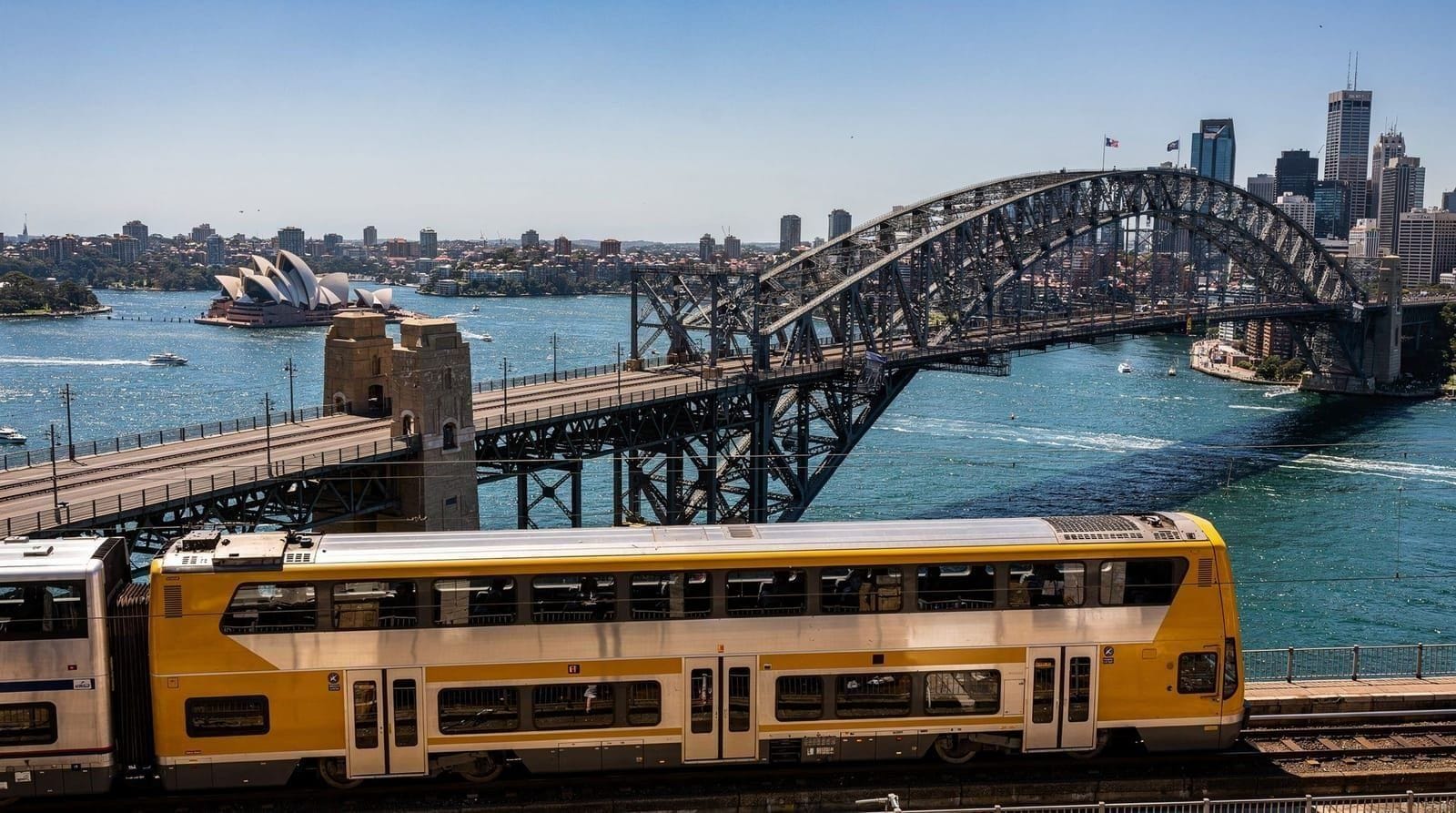
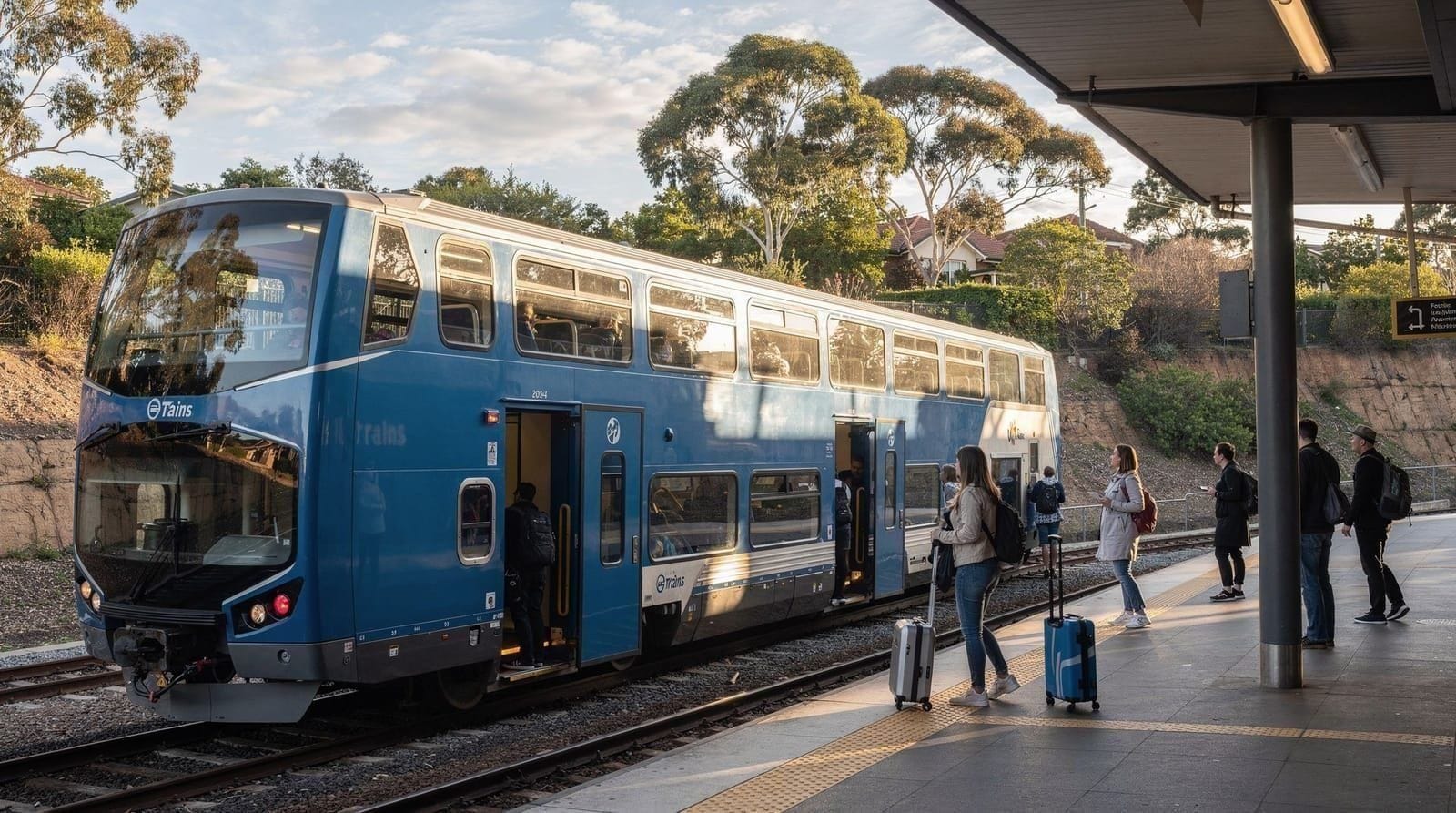
The Airport Link is a dedicated train line connecting both airport terminals to the Sydney Trains network at Central and Museum stations. From the International Terminal (T1) to Town Hall station takes 13 minutes. Central station (1 stop before Town Hall) takes 11 minutes.
Trains run approximately every 10 minutes throughout the day (every 8 minutes during peak hours). Services begin from approximately 5am and run until past midnight.
The fare
The Airport Link train costs the normal train fare plus a AUD 18.61 station access fee (adult) using an Opal card or contactless payment, from either terminal to the CBD. Check the exact total in the official Transport for NSW trip planner. This fare is higher than equivalent-distance journeys elsewhere on the network because it includes a Station Access Fee (AUD 18.61 each way) charged to all passengers entering or exiting the airport stations.
The station access fee is not included in the Opal daily or weekly travel caps; it has its own weekly cap.
The return journey
The same fare applies on the return from the CBD to the airport, so the access fee is paid twice on a round trip. The Sydney Airport access fee has its own weekly cap (AUD 37.75 for adults).
Buying tickets
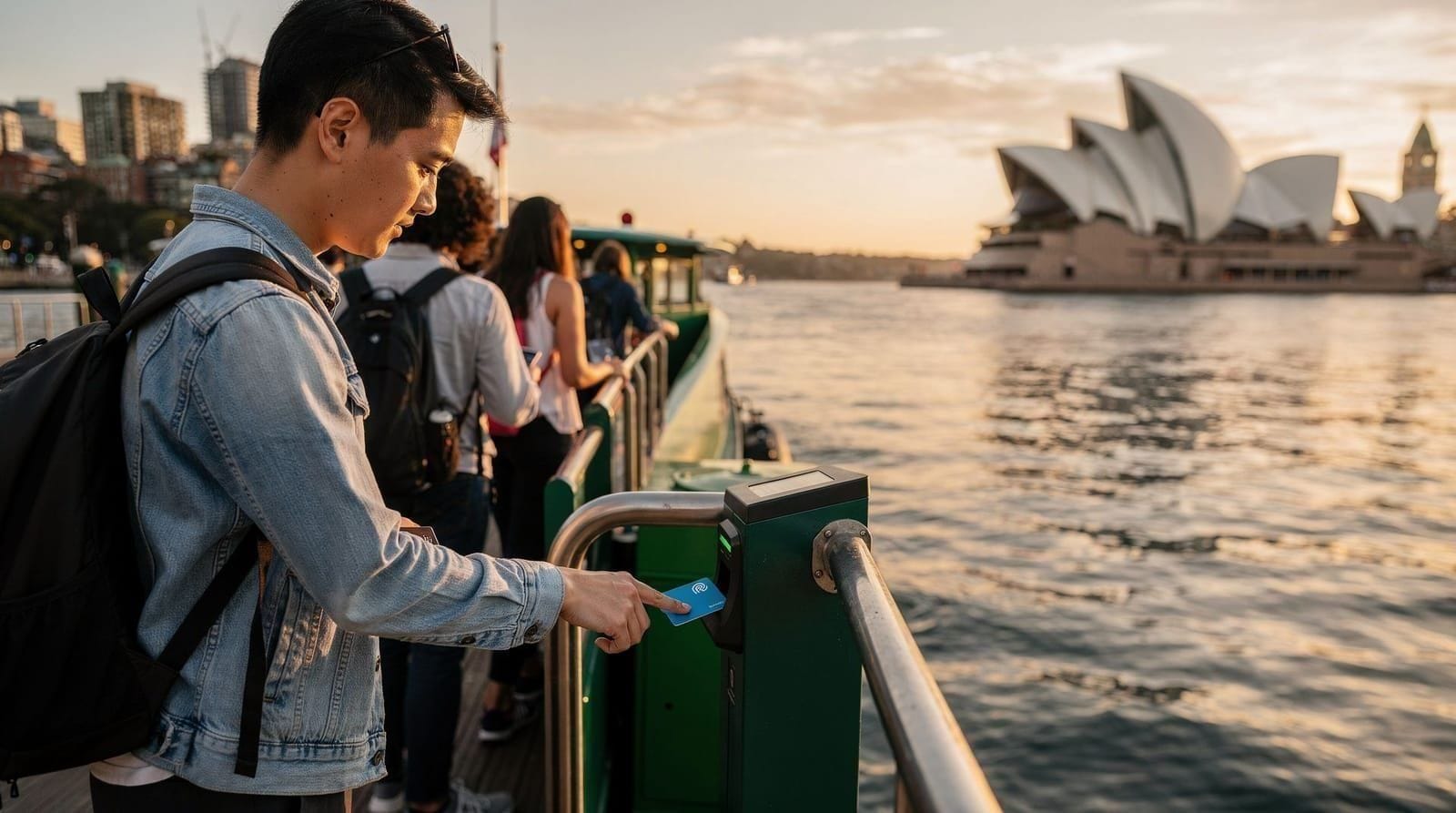
Use your contactless Visa or Mastercard bank card directly on the gate readers — no need to buy an Opal card first. Alternatively, buy an Opal card at the station (retail machine or staffed window, minimum AUD 10 load). Cash is not accepted at fare gates.
Pros and cons
Pros: Fastest option (13 min), no traffic dependency, runs to the heart of the CBD (Town Hall, Wynyard, Circular Quay all within 3 further stops).
Cons: Higher fare than other train journeys due to station access fee; no luggage storage on trains (overhead racks and standing room only on busy services); no direct connection to hotels not near a CBD train station.
Option 2: Taxi
How it works
Metered taxis queue in designated ranks at T1 International Arrivals (ground level) and at T2/T3 Domestic. Do not use unlicensed vehicles offered by individuals in the arrivals hall — use the official taxi rank only.
The fare
Taxis from the airport rank to the CBD are a fixed AUD 60 (AUD 80 for a maxi-cab on request) during the NSW government fixed-fare trial; tolls and airport access fees cannot be added. Journey time: 20–30 minutes in normal traffic, 40+ minutes during peak hour (7–9am outbound from airport, 4–6pm inbound).
Surcharges and extra charges
- Luggage: Large items in the boot may attract a small additional charge (optional)
- Credit card surcharge: A small percentage applies on card payments in some taxis — ask in advance or pay cash
The meter should be running from the moment the taxi departs. If a driver proposes a fixed rate before departure, check that it is reasonable against the metered estimate.
Pros and cons
Pros: Door-to-door delivery to any address; comfortable with heavy luggage; no train changes.
Cons: Traffic-dependent; fixed AUD 60 versus the train fare plus the AUD 18.61 access fee; potential for overcharging if meter is not checked.
Option 3: Rideshare (Uber, Ola, DiDi)
How it works
Uber, Ola, and DiDi all operate at Sydney Airport from designated rideshare pickup zones. Follow in-app directions to the pickup point — it is not the same as the taxi rank. T1 International: the rideshare zone is on the ground floor of the short-term carpark (follow app directions). T2/T3 Domestic: similar dedicated zones.
The fare
Uber estimates for airport to CBD vary with demand; check the app for a live quote. Surge pricing during peak arrival times (particularly international flight clusters) can push fares significantly higher.
Pros and cons
Pros: Usually 10–20% cheaper than metered taxis; tracked journey via app; price estimate before departure.
Cons: Surge pricing during busy periods; pickup zones are a walk from arrivals; reliability can vary with driver supply at off-peak times.
Option 4: Bus (routes 350 and 420)
How it works
Routes 350 and 420 connect the airport to the CBD via Mascot, Redfern, and central Sydney. The bus stops are at the airport’s ground floor level near the terminal exits.
The fare
Bus fares depend on the distance travelled; check the fare in the Transport for NSW trip planner (transportnsw.info). It is by far the cheapest airport transfer option. The weekly Opal cap includes bus journeys.
The journey
Journey time from the airport to the CBD is approximately 45 minutes in normal conditions. With traffic on King Street, Mascot, or the CBD approaches, this can extend to 60+ minutes.
The buses are standard city buses — not coach-style with luggage storage. Large bags and suitcases must be carried with you on board.
Pros and cons
Pros: Cheapest option; no need to navigate the train system; drops off at multiple CBD stops.
Cons: Significantly slower than the train; no luggage rack; potentially very crowded at peak times.
Option 5: Private airport transfer
Private transfer services (booked in advance) offer fixed-price door-to-door service with a meet-and-greet driver. Several operators offer this service, and booking through GetYourGuide provides competitive rates with verified operators.
This option is particularly useful for:
- Larger groups (4+ people) where the per-person cost approaches taxi rates
- Travellers with significant luggage who want help from the terminal
- First-time visitors arriving late at night who want a confirmed, pre-booked service
Prices vary by operator; check with the provider when booking. Per-person costs can be reasonable for groups.
If you want a driver waiting for you, you can book a private car from the airport to your address before you fly. If your hotel is in the central city, a transfer straight to a CBD hotel is a simple alternative. Either way, the confirmation is in your inbox before you land, which takes the pressure off a long-haul arrival.
Which option to choose
| Situation | Recommended option |
|---|---|
| Solo, standard luggage, CBD hotel near a train station | Airport Link train (fare + AUD 18.61 access fee) |
| Group of 3–4, any luggage amount | Taxi or rideshare (fixed taxi fare split) |
| Very tight budget, patient | Bus 350/420 (cheapest) |
| Heavy luggage, hotel far from train | Taxi or rideshare |
| Arriving very late at night | Rideshare (trains still run past midnight) |
| Want confirmed booking with driver | Private transfer |
Where you will probably end up first
Most arrivals head for a hotel in the Sydney CBD, around Circular Quay and The Rocks, or across to Darling Harbour. The train works well for all of these because the line runs through the heart of the centre. If you have not chosen where to sleep yet, the where to stay in Sydney guide compares the areas, and it is worth settling that before you decide how to leave the airport, since a hotel next to a station makes the train an easy choice.
If this is your first visit, the Sydney for first-timers guide gives an overview of what to do with your first day after you drop your bags. A relaxed first evening around the harbour is usually better than a packed schedule after a long flight.
Getting to the airport from the CBD — the return journey
The same options apply for the return journey. The Airport Link train is typically the most time-reliable option — trains run on schedule regardless of road traffic. Allow 30 minutes from the CBD station to your terminal for check-in if you’re checking luggage.
If your hotel is not near a train station, a taxi or rideshare for the return journey is practical. Uber pickups from the CBD are generally fast and surge pricing is less common outbound from the city.
Allow extra time for T1 International during peak morning departure periods (6–10am). The airport is large and bag drop queues for busy international routes can be substantial. Many airlines recommend arrival 3 hours before international departure.
Practical notes
The Airport Link train station at T1 is reached from the arrivals hall by following “Train” signs through the terminal — approximately a 5-minute walk including the elevator or escalator to the underground platform. The station has Opal card machines and staffed windows.
Foreign exchange is available at the terminal before you reach the train station. ATM rates are consistent with city rates. Do not carry significant amounts of foreign currency — Sydney is a low-cash city and virtually all transactions accept card.
The Sydney trains guide explains how to read the platform boards and which line to take once you change at a CBD station. Scams are rare but do happen at transport hubs, so the avoiding scams in Sydney guide and the Sydney safety guide are worth a quick read before you go. To plan your spending beyond the transfer, see the Sydney trip cost guide and the Sydney travel tips.
See the Opal card guide for how the daily cap applies to your first day’s journeys, and the getting around Sydney guide for transport planning beyond the airport.
Travelling with luggage or as a family
The Airport Link train has no dedicated luggage racks beyond overhead space, so it works best for one or two carry-on-sized bags per person. Families with multiple large suitcases, a pram, and young children generally find a taxi or rideshare considerably less stressful than navigating turnstiles and platform gaps with a trolley — the fare difference (roughly AUD 20–35 more than the train) is often worth it for a smoother arrival. See the Sydney with kids guide for wider family travel logistics once you’re in the city.
If you’re arriving with more than two large bags per person and travelling solo or in a pair, a private transfer booked in advance removes the guesswork entirely — a fixed price, no queue for a taxi rank, and a driver who will help load the boot. For groups of four or more, splitting a taxi or private transfer usually beats the per-person cost of the train once the Station Access Fee is added.
If you plan to explore the harbour by water soon after landing, the Sydney ferries guide shows how Circular Quay connects to the rest of the harbour, and the Sydney itinerary for three days gives a ready-made plan for a short first stay. For something memorable once you have settled in, a jet boat ride from Circular Quay is a high-energy way to see the harbour, and the jet boat guide explains what to expect.
Do you need a car once you arrive?
Most visitors staying centrally do not need a hire car for the CBD, harbour, and inner suburbs — the is a car needed in Sydney guide covers this in detail, but the short answer is that a car is more often a liability than an asset in the city centre (parking costs, traffic, and one-way streets). If your plans include the Blue Mountains, Hunter Valley, or other day trips outside the rail network, it’s worth arranging a hire car separately rather than at the airport arrival desk, where rates are typically higher than city branches.
Frequently asked questions about Sydney Airport to CBD
Is there a night bus or train from Sydney Airport? The Airport Link train runs until past midnight and resumes around 5am, covering the vast majority of arrival times. For flights landing in the small hours outside train operating times, a taxi or rideshare is the only practical option.
Can I walk from the airport to a CBD hotel? No — the airport is around 9 km from the CBD, well beyond a practical walk, particularly with luggage. Use one of the options above.