Aboriginal cultural tours in Sydney — what's genuine, what's not
Sydney: Aboriginal rock art tour with smoking ceremony
Duration: 3 hours
What are the best Aboriginal cultural experiences in Sydney in 2026?
The most substantive options are the rock art tour with smoking ceremony (3 hours, led by Gadigal guides in Lane Cove National Park), the Royal Botanic Garden Aboriginal heritage tour, and the BridgeClimb Burrawa experience on the Harbour Bridge. The Rocks Dreaming tour covers colonial-era heritage. Avoid generic "Aboriginal art" souvenir shops with no cultural backing.
At a glance
| Best for | Genuine cultural depth, not just souvenirs — rock art, smoking ceremonies, guided heritage walks |
| Cost | Free options at the Australian Museum and Royal Botanic Garden; guided experiences are priced by the operator |
| Time needed | 3 hours for the rock art tour; a full day for the wilderness explorer option |
| Getting there | Most tours depart from central Sydney meeting points or include hotel pickup |
| Best time | Available year-round; book a day or two ahead, a week ahead in school holidays |
Understanding the context
Sydney exists on Gadigal and Darug Country. The Gadigal people — a clan of the broader Eora Nation — have maintained connection to the land around Sydney Harbour for at least 60,000 years, making it one of the oldest continuously inhabited landscapes on earth. European colonisation from 1788 attempted to sever that connection through displacement, disease, and deliberate cultural destruction. It did not succeed entirely — Aboriginal culture survived, adapted, and continues.
Understanding this context matters for visitors choosing cultural experiences in Sydney, because the market for “Aboriginal” tourism contains both genuinely substantive experiences run by or in partnership with Aboriginal communities, and opportunistic enterprises with no meaningful cultural connection. This guide helps distinguish between the two.
How to tell a genuine operator from a marketing label
A few simple questions sort most of the market. Who owns the business? Who actually leads the walk? Is the community named, and does it have a say in what is told? A genuine operator answers these plainly on its booking page and again when you ask by email. If the answers are vague, or the word “Aboriginal” appears only in the product title, treat that as a warning. The same instinct helps across the city, and our guides to avoiding scams in Sydney and Sydney tourist traps apply it to other parts of the visitor economy.
For a wider picture of the cultural and historical background before you book anything, the Sydney Aboriginal heritage guide is the natural companion to this page. It explains the people, the places and the long history that the tours below only touch on.
The genuine experiences
Rock art tour with smoking ceremony (Lane Cove National Park)
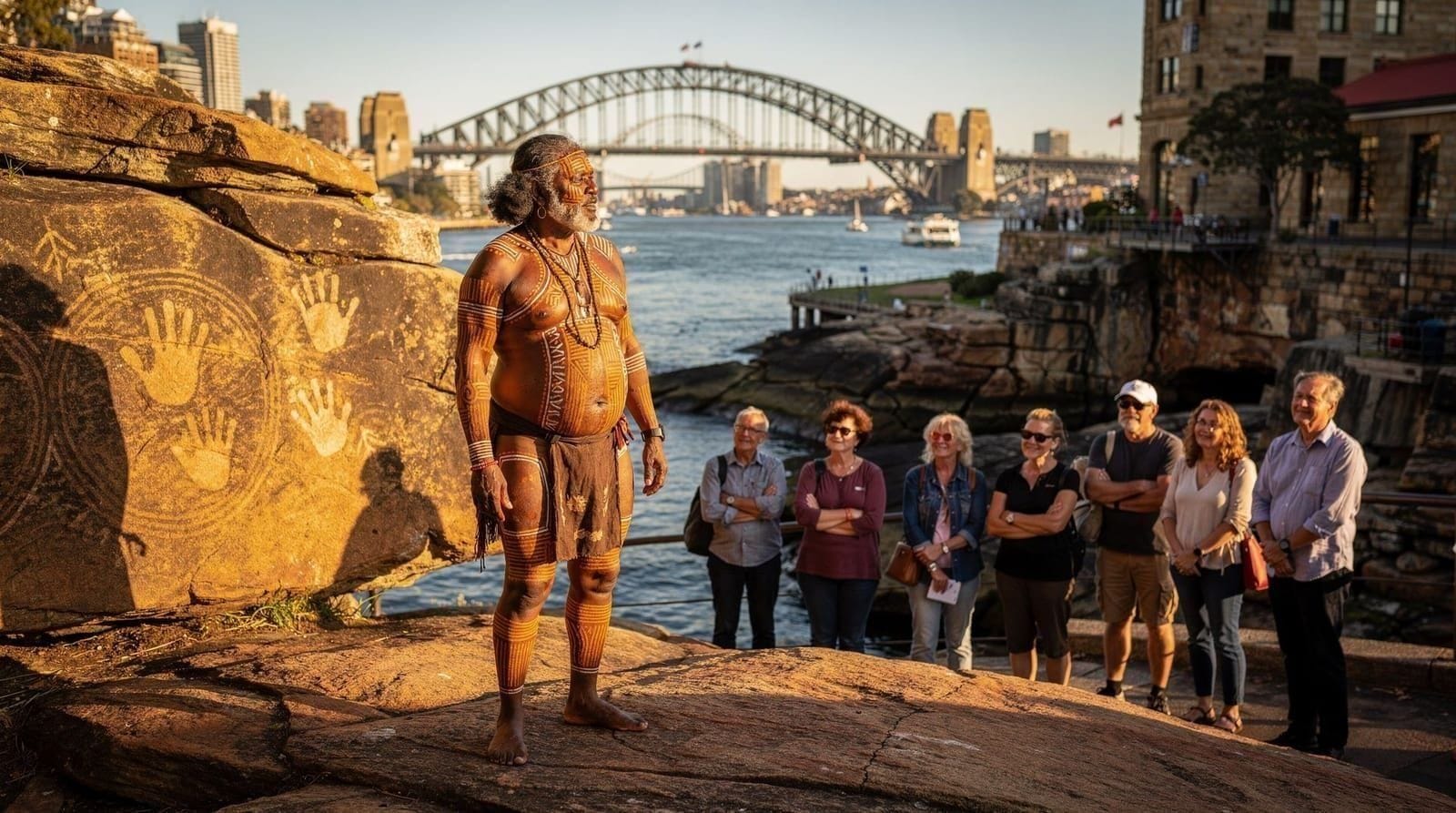
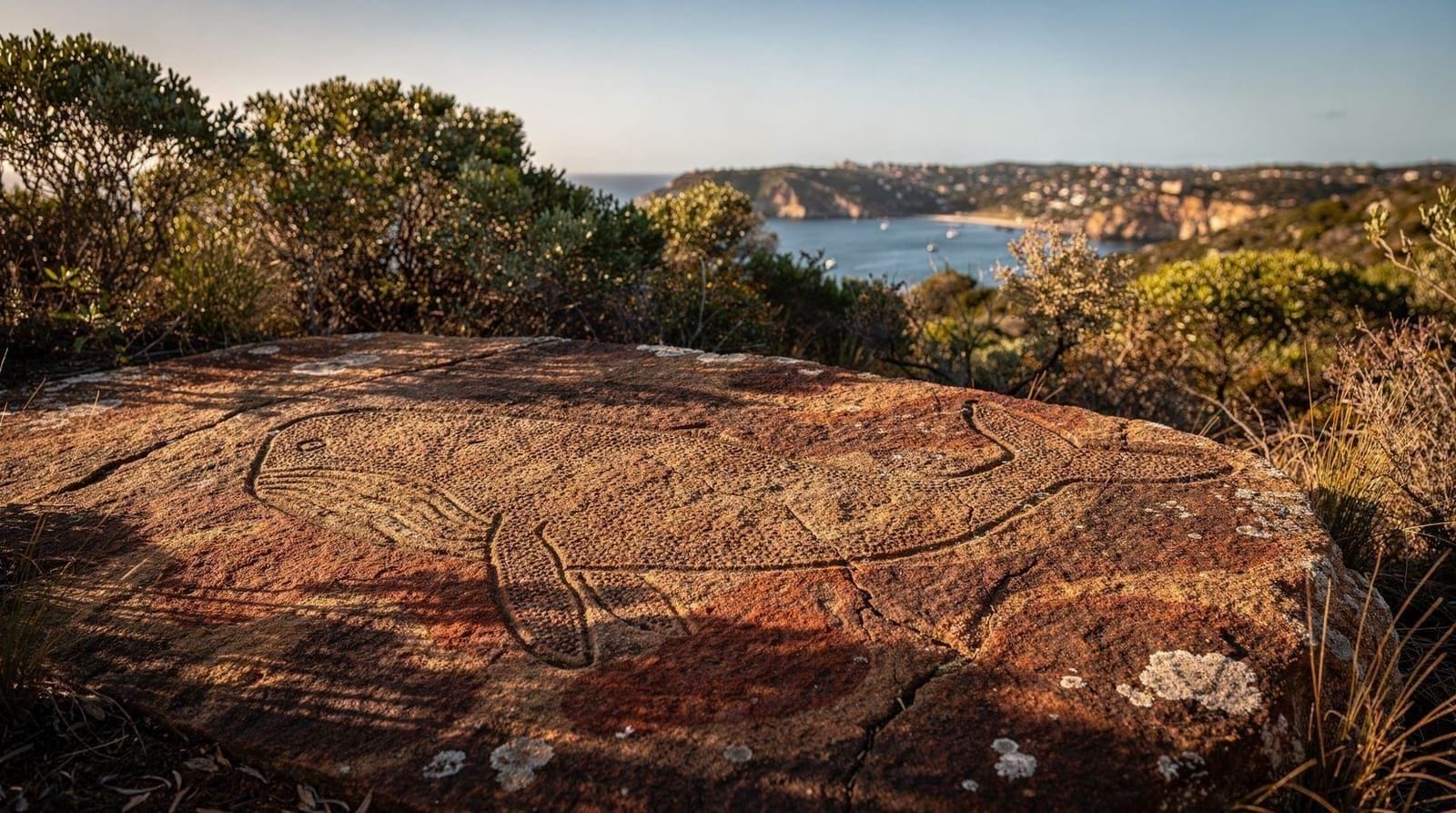
This is the most substantive Aboriginal cultural experience available in metropolitan Sydney. The tour visits rock engraving sites in Lane Cove National Park — a national park within the suburban northern Sydney landscape that contains some of the most accessible and well-preserved Eora rock art in the greater Sydney region.
The engravings were made into the Hawkesbury Sandstone platform over many generations. They depict figures, animal tracks, and ceremonial subjects — the interpretation of which belongs primarily to the communities whose ancestors created them. Seeing these sites with a guide from the relevant community provides context that a guidebook cannot replicate.
The tour includes a smoking ceremony — conducted by Gadigal community members, not by non-Indigenous guides using borrowed ritual. This matters. A smoking ceremony conducted by the people who hold the tradition is a genuine cultural exchange; the same ceremony performed by non-Aboriginal guides is theatre.
Duration is approximately 3 hours.
Book the Aboriginal rock art tour with smoking ceremonyWilderness Aboriginal explorer day tour
For those wanting a longer immersive experience, a full-day wilderness Aboriginal explorer tour extends beyond the metropolitan Sydney rock art sites into broader Country — covering plant knowledge, tracking, and a more comprehensive narrative of pre-colonial and contemporary Gadigal and Eora culture.
Duration approximately 8 hours, departing from the city.
Book the full-day wilderness Aboriginal explorer tourBridgeClimb Burrawa
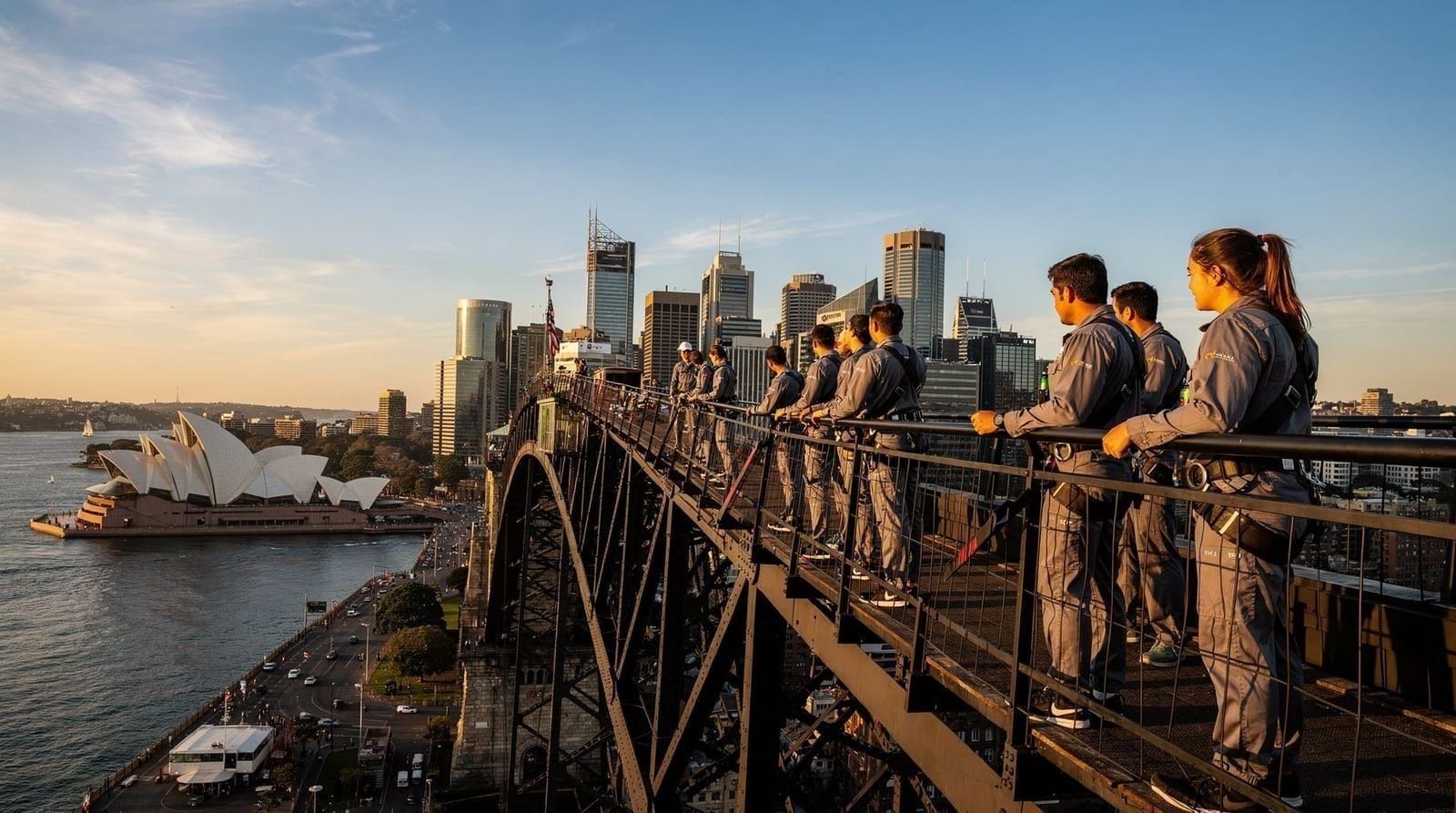
The BridgeClimb Burrawa experience offers the same physical climb to the summit of the Harbour Bridge as the standard BridgeClimb product, with an Aboriginal cultural narrative woven throughout. “Burrawa” means “high rock” in Gadigal language — an appropriate name for a climb that brings participants to the highest point of a structure built on Gadigal Country.
The cultural content was developed with input from the Gadigal community and includes stories about the harbour and its surrounds that predate European contact. Guides are specifically trained in this content rather than delivering it as an add-on to standard climb narration.
Book the BridgeClimb Burrawa Aboriginal experienceBlue Mountains Aboriginal experience day tour
The Blue Mountains region was part of the territory of the Darug and Gundungurra peoples. A guided day tour from Sydney to the Blue Mountains with an Aboriginal cultural focus visits significant sites within the mountains landscape and provides historical and contemporary context for Aboriginal culture in this region.
Book the Blue Mountains Aboriginal experience day tourWhich one should you choose?
The four experiences answer different questions, so the right pick depends on what you want from the day rather than on which is most famous.
- You want the clearest, most direct cultural encounter: the rock art and smoking ceremony tour. It is short, it is led by community members, and it puts you in front of the engravings themselves.
- You want depth and have a full day to give: the wilderness explorer tour. The longer format leaves room for plant knowledge, tracking and conversation that a short walk cannot hold. If you enjoy bushland, it also pairs naturally with the landscapes in our Royal National Park guide.
- You were going to climb the bridge anyway: Burrawa adds a cultural layer to something you had already planned. Our BridgeClimb guide and the Sydney Harbour Bridge guide cover the practical side of the climb itself.
- You were going to the mountains anyway: the Blue Mountains day tour replaces a standard sightseeing trip instead of adding a day. See the Blue Mountains destination page and the Three Sisters at Echo Point to understand what the landscape looks like, and the Katoomba page for the town where many mountain days begin.
If you can only do one paid experience, choose the one that matches how you already like to travel. A person who dislikes heights will not enjoy Burrawa for its stories alone, and a person who hates long coach days will be happier on the shorter walking tour.
What a good guide will and will not do
A good cultural guide shares what the community has chosen to share, and says clearly when something is not theirs to tell. Expect honest answers such as “that is not something I can discuss”, and treat them as a sign of integrity rather than a gap in the service. Expect stories to be told in the guide’s own voice, with humour as well as seriousness. Do not expect a lecture that covers everything, a performance staged for photographs, or a neat summary of a living culture.
The less substantive options
Several well-marketed “Aboriginal experiences” in Sydney’s tourist precinct deserve honest assessment:
Souvenir shops in The Rocks: The majority of items sold as “Aboriginal art” in the tourist shopping strip around The Rocks and Circular Quay are not Aboriginal art — they are mass-produced items made in overseas factories with Aboriginal-adjacent imagery. Some are openly labelled as “inspired by Aboriginal art.” Others are not, and are being purchased under a misapprehension. Genuine Aboriginal art has artist provenance; if the shop cannot provide it, the item is not authentic.
Hotel and cruise “didgeridoo shows”: Some Sydney dinner cruises and hotel events include a didgeridoo player as cultural entertainment. This ranges from meaningful (Indigenous performer with genuine cultural connection) to tokenistic (non-Aboriginal performer using a cultural instrument for novelty). The distinction matters; ask before you book.
“Cultural centre” exhibits without community connection: There are commercial exhibits in and around Sydney’s tourist precinct that present Aboriginal cultural material in museum-style settings without formal community partnership. These vary widely in quality and cultural integrity.
Free and lower-cost options
Australian Museum
The Australian Museum (corner of College and William Streets, CBD) has one of the most significant collections of Aboriginal cultural material in the world, with particularly strong holdings from the Sydney region. The First Nations galleries include Eora objects, historical material from the colonisation period, and contemporary Aboriginal art. Interpretation is generally strong.
Entry: free general entry. Open daily 10 am–5 pm (closed Christmas Day).
Royal Botanic Garden
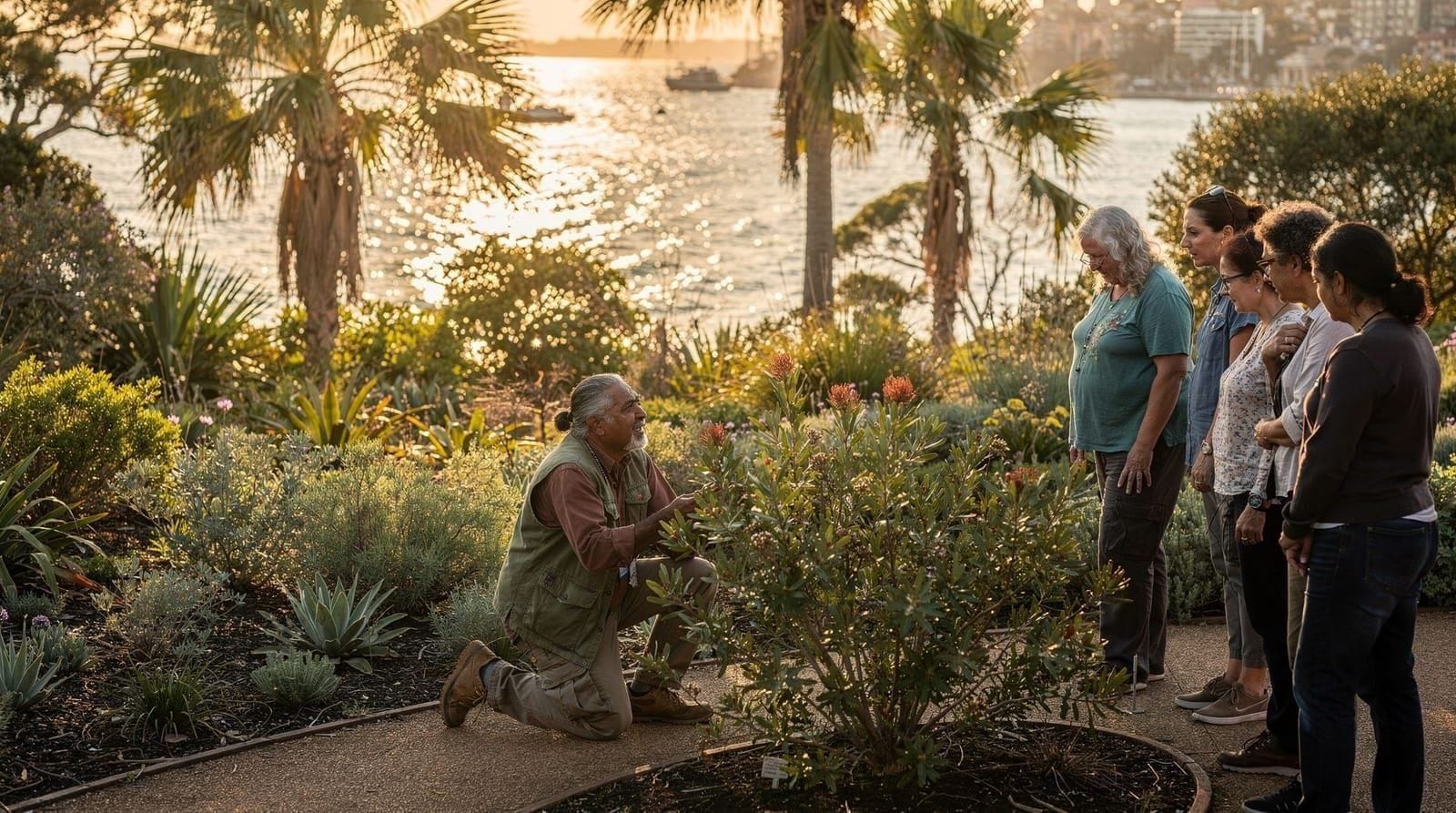
The Royal Botanic Garden’s Aboriginal heritage tour focuses on the garden’s plant collection through the lens of Gadigal plant knowledge — food sources, medicines, fibre, and the ecological management practices that sustained the land before colonisation. The garden itself sits on Gadigal Country at the site of one of the first areas of European encroachment from 1788.
See the separate Royal Botanic Garden Aboriginal tour guide for full detail.
Self-guided walking
Several walking routes in Sydney’s CBD and inner suburbs include Aboriginal cultural interpretation at significant sites. The Barangaroo reserve — the foreshore park redevelopment on the western CBD — incorporates Gadigal cultural interpretation in its design, including native plant species of significance and public artworks referencing Eora history.
The Walking On Country self-guided trail (information from the City of Sydney) connects several Gadigal significant sites in the CBD area.
The Rocks Dreaming tour and history walk
In The Rocks itself, the Rocks Dreaming tour is a dedicated Aboriginal-guided walk that covers the pre-colonial Cadigal history of the site before European settlement, complementing the colonial-focused Rocks history walk. Doing both on the same day, in that order, gives a more complete picture than either alone — the pre-1788 history first, then the colonial period that followed. The The Rocks destination guide also has a section on buying Aboriginal art responsibly in the same precinct.
How this fits into a Sydney itinerary
For visitors planning which day to slot in a cultural experience, the rock art and smoking ceremony tour (3 hours) fits comfortably into a morning or afternoon slot on a 5-day Sydney itinerary without displacing a full day. The Blue Mountains Aboriginal day tour is a better fit if you were already planning a Blue Mountains day trip, since it replaces rather than adds a day. For a broader sense of how much cultural heritage content is worth prioritising against beaches and harbour activities, see the Sydney for first-timers guide.
More places that carry Gadigal and Eora history
Beyond the tours, several well-known places in the city reward a slower look once you know what you are looking at. The Royal Botanic Garden is the obvious one. Sydney Harbour itself was the centre of daily life for the clans who fished and travelled its waters, and a ferry ride gives a sense of that geography; the Sydney ferries guide explains how to ride. Cockatoo Island has its own layered history, and the cliffs around Watsons Bay and The Gap show the coastline that long predates the city. Walkers can follow the Bondi to Coogee walk or other Sydney coastal hikes with a different eye, remembering that this coast was already Country long before it was a postcard.
Rainy-day visitors will find more context in the Sydney museums guide, and anyone watching their budget can build a respectful, low-cost day from our list of free things to do in Sydney.
Going with children
Younger visitors often connect strongly with stories, plants and animals, which is where most Aboriginal cultural content begins. Prepare children beforehand by explaining that they are visiting someone’s Country as guests, that some things may not be touched or photographed, and that questions are welcome. For wider family planning, see the Sydney with kids guide and the Blue Mountains with kids guide.
Acknowledging Country
Formal events and public gatherings in Sydney typically begin with an Acknowledgement of Country — a statement recognising the traditional custodians of the land. Visitors to Sydney are welcomed to offer their own acknowledgement: “I acknowledge the Gadigal people of the Eora Nation as the traditional custodians of this land, and pay my respects to their Elders past, present, and emerging.”
This practice is a simple and meaningful way to recognise the continuity of Aboriginal connection to Country.
Planning your Aboriginal cultural experience
Best first-timer choice: The rock art and smoking ceremony tour is the most substantive and immediately accessible experience — 3 hours, clear cultural content, led by community members.
For bridge climbers: Add the Burrawa designation to your existing BridgeClimb booking for cultural depth without altering the physical experience.
For day-trip context: The Blue Mountains Aboriginal day tour pairs well with a broader mountains visit and provides cultural layer to the landscape that a standard tourism tour does not.
Budget: Guided experiences are priced by the operator; check the booking page. Free options at the Australian Museum and Royal Botanic Garden are genuinely worthwhile for visitors with time constraints or budget limitations.
Children: Most cultural tours accept children from around age 8, with the guide tailoring the content. Check minimum ages when booking.
Timing, transport and what to bring
Plan the cultural experience for a day when you are not rushing between bookings. If you are still deciding how long to stay, the how many days in Sydney guide and the 3-day first-time itinerary show where a half-day tour fits. A short stay can still include one, as the 48-hour weekend itinerary shows.
Weather and season shape the experience. Winter days are comfortable for walking in the bush, while summer calls for early starts, sun protection and water; see Sydney in winter and Sydney in summer. Busy periods such as the school holidays and the Vivid Sydney festival fill small-group tours first, which is why booking ahead matters.
Getting to meeting points is straightforward with public transport. Our getting around Sydney guide and Opal card guide cover tickets, and Circular Quay is the hub for ferries and trains if your tour starts near the harbour. For general preparation, the Sydney travel tips and the Sydney packing guide are worth a quick read. Wear closed, comfortable shoes for bush walking, bring water, and keep your phone away during ceremony.
Honest limitations
No cultural experience, however well-designed, fully communicates 60,000 years of continuous culture in 3 hours. The tours described in this guide represent genuine opportunities for respectful introduction — not comprehensive education. Visitors who want to go deeper should seek out Aboriginal-led writing, films, and other cultural work as preparation or follow-up.
The cultural landscape of Sydney is also not static. Aboriginal communities in Sydney continue to assert, maintain, and develop their cultural practices and political rights. The Country these tours visit is not historical — it is living.
Frequently asked questions about Aboriginal cultural tours in Sydney
Are Aboriginal cultural tours in Sydney run by Aboriginal guides?
The best ones are. The rock art and smoking ceremony tour is guided by Gadigal community members. The Royal Botanic Garden Aboriginal tour is guided by rangers with specific Aboriginal cultural training in partnership with Gadigal knowledge holders. BridgeClimb's Burrawa experience involves Aboriginal story telling designed with input from the Gadigal community. Always check whether the operator is Indigenous-owned or has a formal community partnership.What does 'Gadigal' mean and who are the traditional custodians of Sydney?
The Gadigal (sometimes spelled Cadigal) are the clan of the Eora Nation whose Country includes much of what is now inner Sydney — the southern harbour shore from South Head to Darling Harbour. The broader Eora Nation comprised many clans around Sydney Harbour and its surrounding waterways. The area around what is now Parramatta was Darug territory. Aboriginal custodianship of Country is not historical — many Gadigal and Darug people continue to live and maintain connections to this land.What is a smoking ceremony?
A smoking ceremony is a traditional form of spiritual cleansing and welcome. Native plants (including various species of eucalyptus and wattle) are burned, and participants move through the smoke. The practice varies between Aboriginal nations — in the Sydney region, Gadigal smoking ceremonies are used to welcome visitors to Country, mark significant occasions, and provide spiritual protection. On guided cultural tours, the ceremony is a genuine cultural practice conducted with the explicit intention of sharing it with visitors.Where can I see Aboriginal rock engravings near Sydney?
Significant rock engraving sites exist in several locations accessible from Sydney. Lane Cove National Park (guided tour access), Ku-ring-gai Chase National Park (north of Palm Beach, accessible by ferry), the Royal National Park near Bundeena, and within the Bondi area (some sites along the coastal walk route, not publicly marked to prevent damage). Most significant sites are not signposted publicly to reduce vandalism; guided access provides both context and protection.Is the Burrawa BridgeClimb experience worth the premium?
The Burrawa experience costs more than a standard climb (check the official BridgeClimb website for current prices), and includes a narrative about Sydney Harbour's Aboriginal history woven into the climb experience by trained guides. The views and physical experience are identical to a regular climb; the value is entirely in the cultural content. For visitors whose primary goal is to climb the bridge, the standard experience is sufficient. For those with a genuine interest in Aboriginal heritage, the Burrawa version provides substantive content that the standard climb does not.Are there free Aboriginal cultural experiences in Sydney?
Yes. The Australian Museum (corner of College and William Streets, CBD) has an extensive permanent collection of Aboriginal cultural material with well-curated interpretation, including Sydney-specific Eora material. General entry to the Australian Museum is free. The Royal Botanic Garden in the CBD contains Aboriginal plant collections and interpretation signs with Gadigal language names and uses — free to enter. The Macquarie Street precinct near the State Library contains public artworks referencing Eora culture and history.What should I know about buying Aboriginal art in Sydney?
The tourist precinct around The Rocks, Circular Quay, and Sydney Airport contains many shops selling items marketed as Aboriginal art or souvenirs. A significant proportion of these are produced in overseas factories with no connection to Australian Aboriginal communities. Genuine Aboriginal art comes with provenance information — the artist's name, community, and Country. Two reliable galleries in Sydney for authentic Aboriginal art are Boomalli Aboriginal Artists Co-operative in Leichhardt and the Australian Aboriginal Art Gallery in the city. If a souvenir has no artist information and looks mass-produced, it almost certainly is.How should visitors behave respectfully during Aboriginal cultural experiences?
Follow the guide's instructions exactly, particularly around photography (some cultural material and sites may not be photographed). Do not touch rock engravings or cultural objects. During a smoking ceremony, participate if invited — declining is also perfectly acceptable. Ask questions respectfully; guides on legitimate cultural tours expect and welcome questions. Do not claim cultural connection or knowledge you do not have. Acknowledge the traditional custodians of the land you are visiting.Do I need to book Aboriginal cultural tours in advance?
Yes, for the rock art and smoking ceremony tour and the wilderness explorer day tour, since group sizes are kept small to preserve the quality of the experience and the sites themselves. A day or two ahead is usually enough outside peak season (school holidays and Vivid Sydney in May-June), but book a week ahead if your dates are fixed.Can children join Aboriginal cultural tours in Sydney?
Most operators accept children from around age 8, with guides adjusting the depth of content for younger participants. The BridgeClimb Burrawa experience has the same age and height requirements as the standard climb. Always confirm minimum ages directly with the operator when booking, since policies vary by tour.
Top experiences
Bookable activities with verified prices and instant confirmation on GetYourGuide.