Getting around Sydney — transport options, costs and honest advice
Sydney: Taronga zoo billett med returferge og taubane
What is the best way to get around Sydney as a tourist?
Public transport (Opal card or contactless bank card) covers virtually everything tourists need — trains for the CBD and major destinations, ferries for Manly and Circular Quay harbour routes, buses for beaches and inner suburbs. A car is not needed for central Sydney but is useful for day trips to the Blue Mountains or Hunter Valley if you want full flexibility.
| At a glance | |
|---|---|
| Where | Citywide — trains, ferries, buses, light rail on the Opal system |
| Cost | Around AUD 9.65–19.30 daily cap; AUD 50 weekly cap |
| Time needed | Most journeys 15–45 minutes within the network |
| Getting there | Opal card or contactless bank card / phone wallet |
| Best time | Off-peak (outside 7–9am and 4:30–6:30pm) for a more comfortable ride |
Sydney’s transport network — the overview
Sydney’s public transport network is extensive but has genuine limitations that visitors should understand before arriving. The train network covers the CBD and major residential corridors well. Ferries provide scenic harbour access and are genuinely useful rather than purely touristic. Buses fill critical gaps — particularly for beaches like Bondi, which have no train connection.
The network operates on the Opal card (or contactless Visa/Mastercard) with a daily cap of AUD 19.30 Mon–Thu and AUD 9.65 Fri–Sun, and a weekly cap of AUD 50. This pricing structure means a tourist who moves around frequently pays a capped amount regardless of how many journeys they make once the cap is reached.
The honest limitations: some important tourist areas are not well served by rail (Bondi Beach requires a bus change; the Northern Beaches beyond Manly require ferries and buses). Peak hour on the train network (7–9am and 4:30–6:30pm) is crowded to the point of discomfort on some lines.
If you only read one other page before landing, make it the Opal card guide, which explains the tap-on, tap-off habit that keeps the caps working in your favour. First-time visitors who want the wider picture of how the city fits together will also find the Sydney for first-timers guide useful, and the Sydney travel tips page covers the small practical details that sit around transport. Where you sleep changes how much of this network you use, so it is worth skimming where to stay in Sydney before booking.
Trains — the backbone of the network
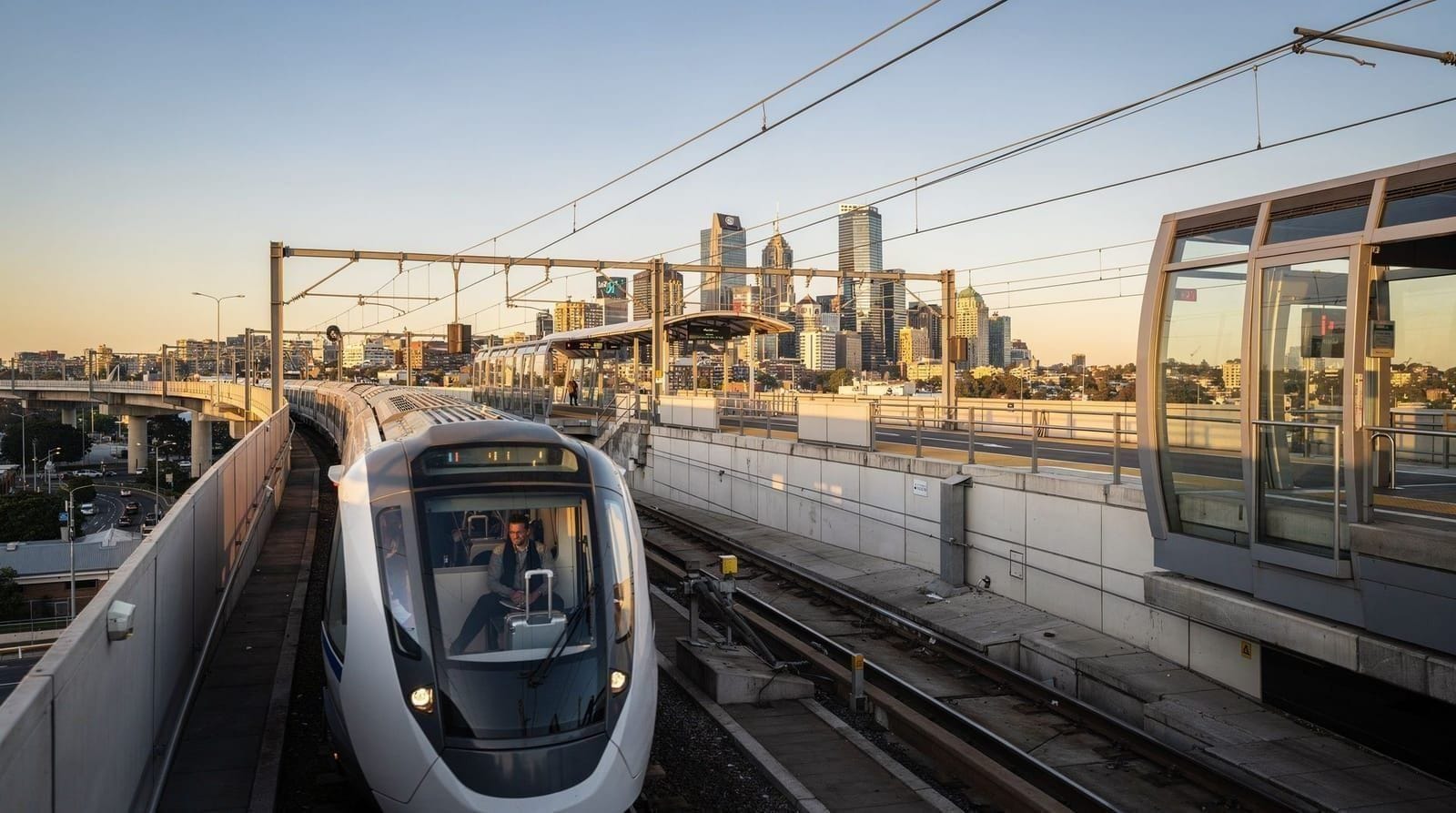
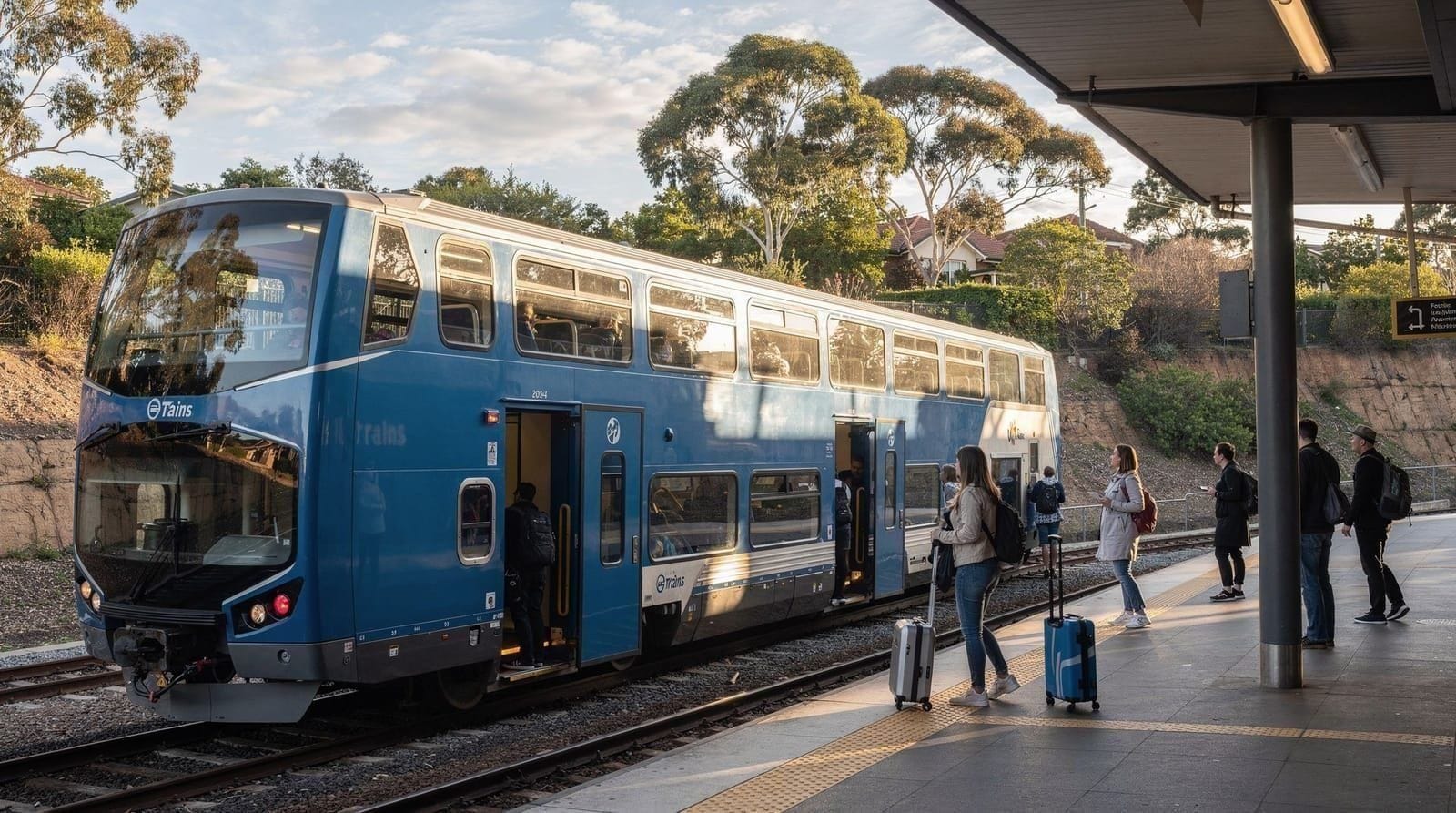
The Sydney Trains network comprises nine lines radiating from the CBD, with a City Circle loop connecting Central, Town Hall, Wynyard, Circular Quay, St James, and Museum stations. For tourists, the most useful lines are:
T4 Eastern Suburbs/Illawarra Line: Central → Town Hall → Wynyard → Circular Quay → Martin Place → Kings Cross → Edgecliff → Bondi Junction. This is the core tourist line — Opera House and The Rocks (Circular Quay), Darlinghurst and Paddington (Kings Cross), and the bus interchange for Bondi Beach (Bondi Junction).
T1 North Shore/Western Line: Connects the CBD to Parramatta (western suburbs) and to the North Shore (Wynyard → North Sydney → Chatswood direction). Also covers the Blue Mountains line — Katoomba for the Blue Mountains day trip is on this line, approximately 2 hours from Central.
Airport Line (T8): Central → Mascot → Domestic Airport → International Airport. The dedicated airport link. Note the higher fare due to the station access fee (~AUD 19 from CBD).
T2/T3/T7 for western suburbs and Parramatta.
Trains run frequently in the CBD — every 3–5 minutes on busy lines during the day. In the outer suburbs and off-peak, frequency drops to every 15–30 minutes. The Opal app or Google Maps shows real-time departures.
Ferries — scenic and practical
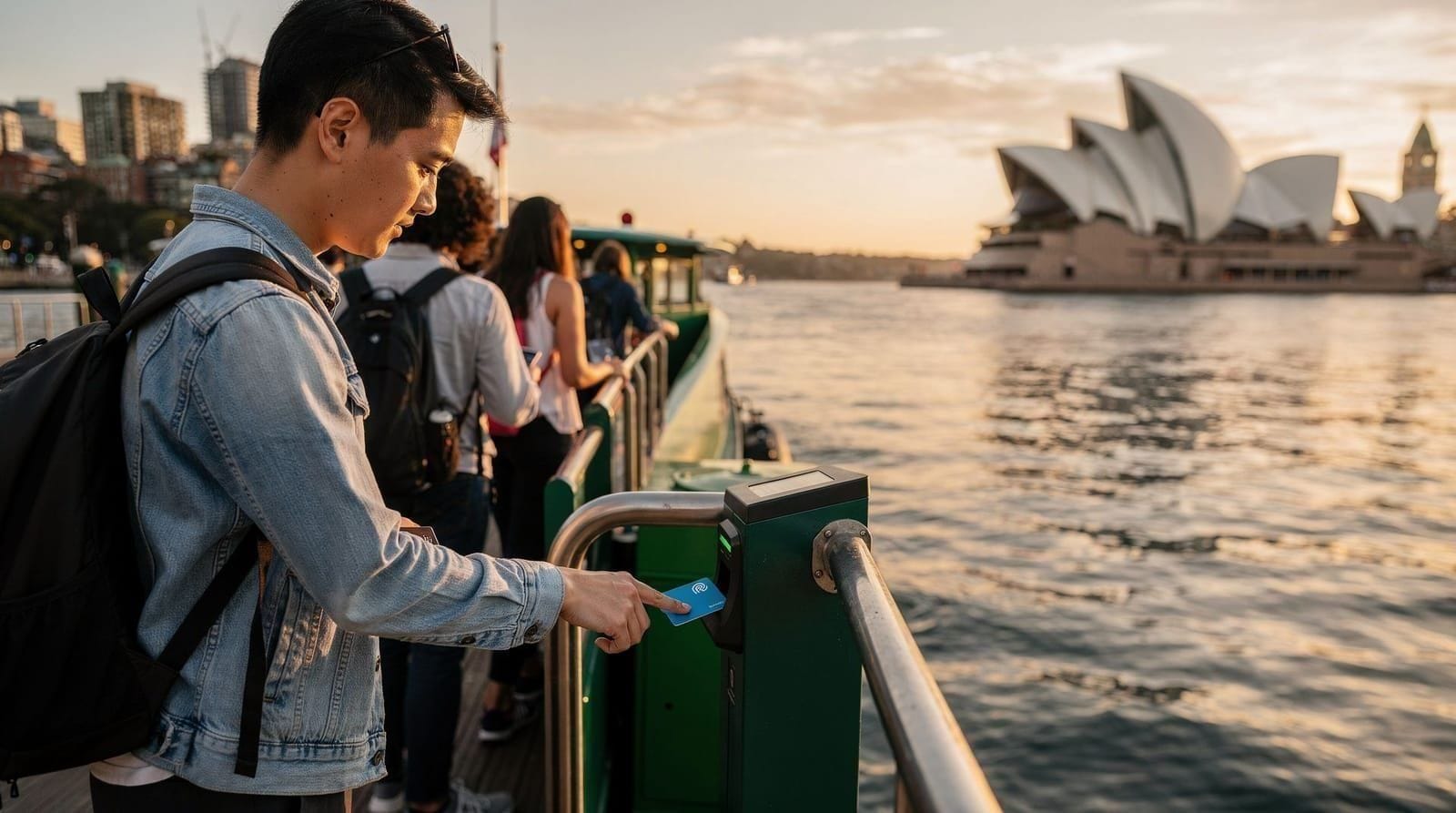
Sydney’s ferry network is operated by Transport for NSW and covers eleven routes from Circular Quay. Unlike many cities where a tourist cruise is separate from the working ferry network, Sydney’s ferry routes are used by commuters and visitors alike — you’ll share the Manly ferry with people going to work.
Key routes for visitors:
| Route | Time | Best for |
|---|---|---|
| F1 Manly | 30 min from Circular Quay | Beach, scenic harbour crossing, Manly Scenic Walkway |
| F2 Taronga Zoo (Mosman) | 12 min from Circular Quay | Zoo visit, harbour views |
| F5 Neutral Bay | 10 min from Circular Quay | North Shore access, short harbour crossing |
| F8 Watsons Bay | 30 min from Circular Quay | South Head, Watsons Bay village |
| Parramatta River | 1 hr+ from Circular Quay | Upstream views, Parramatta itself |
All routes operate on Opal card (or contactless). Private ferry operators — Captain Cook Cruises, Fantasea — run their own ticketing and are separate from the Opal system.
The Manly Ferry (F1) is consistently cited as one of the best value experiences in Sydney. The 30-minute crossing provides views of the Opera House, Harbour Bridge, North Head, and the open harbour that no land-based viewpoint replicates — included in the Opal daily cap.
See the Sydney ferries guide for complete route information and timetables.
Ferries are also the easiest way to combine transport and sightseeing. The Manly crossing pairs naturally with the Manly Beach guide and the Manly destination page, while the Taronga route leads straight into the Taronga Zoo guide. If you would rather have the zoo entry and the harbour crossing sorted in one purchase, a zoo ticket that bundles the ferry and cable car is one way to do it, though the standard Opal ferry plus a zoo ticket works just as well.
For a slower day on the water, a hop-on hop-off harbour service such as a hop-on hop-off ferry around the harbour lets you step off at several waterfront stops without planning each leg. It is a comfortable choice for a first day, although the regular Opal ferries cover many of the same views for less effort on the wallet. For more ways to see the water, the Sydney harbour cruises guide compares the options.
Buses — essential for beaches
Sydney’s bus network covers areas not reached by train, most importantly the Eastern Beaches (Bondi, Bronte, Coogee) and the Northern Beaches (Dee Why, Narrabeen, Avalon, Palm Beach).
Key bus routes for visitors:
| Route | Covers | Journey from CBD |
|---|---|---|
| 333 | Circular Quay → Oxford St → Bondi Beach | 35–45 min |
| 380 | Circular Quay → Oxford St → Bondi via Rose Bay | 40–50 min |
| 373/374 | Circular Quay → Coogee | 40 min |
| 350/420 | City → Airport (cheaper but slower than train) | 45 min |
| L90/L94 | Liverpool Street → La Perouse | varies |
Bus fares on Opal or bank card depend on the distance travelled; check the fare in the Transport for NSW trip planner. Buses are Sydney’s best-value transport option for longer cross-city routes.
Buses in the inner city run frequently (every 5–10 minutes for major routes). Outside peak periods in the suburbs, frequency reduces. Check real-time departures via Google Maps or the TfNSW app.
Light rail — inner city connections
Sydney’s light rail network covers two main routes:
Inner West Light Rail (L1): Dulwich Hill to Circular Quay, passing through Glebe, Pyrmont, and the Darling Harbour/Exhibition area. Useful for reaching the Powerhouse Museum (Exhibition Centre stop) and the Darling Harbour area.
CBD and South East Light Rail (L2/L3/L4): Central to Randwick, Kingsford, or Juniors Road. Passes through Surry Hills and Moore Park. Useful for SCEGGS and the stadium area; less critical for typical tourist destinations.
Light rail fares are on the same Opal system as trains and buses. Light rail uses distance-based fares.
Taxis and rideshares
Taxis: Available from designated ranks at the airport (T1 and T2 terminals, ground level), major hotels, and Circular Quay. Can be hailed on the street in the CBD when available. All taxis have meters — ensure the meter is running from departure. Taxis from the airport rank to the CBD are a fixed AUD 60 (AUD 80 for a maxi-cab on request) during the NSW government fixed-fare trial; tolls and airport access fees cannot be added.
Typical taxi fares:
- Airport to CBD: fixed AUD 60 from the airport rank during the NSW fixed-fare trial (20–30 min depending on traffic)
- CBD to Bondi Beach: AUD 25–35 (15–25 min)
- CBD to Manly (Northern Beaches): AUD 50–70 (30–45 min over Harbour Bridge)
Rideshares: Uber and Ola are both widely available. The Uber app works identically to elsewhere; prices are broadly competitive with metered taxis. Surge pricing applies during peak events.
When taxis beat trains: Late at night (after midnight), from venues not near train stations, or for groups of three or more where the shared cost becomes competitive with multiple Opal fares.
Walking — Sydney’s walkable districts
The CBD, Circular Quay, The Rocks, and the Domain/Botanic Garden area are all genuinely walkable and connected by pedestrian paths. The walk from Circular Quay to the Opera House is 10 minutes; from the Opera House to the Art Gallery of NSW, 15–20 minutes through the Botanic Garden.
The Bondi to Coogee coastal walk (6 km, 1.5–2.5 hours) is the single best walking route in the city for visitors — dramatic clifftop views, multiple beaches, and genuinely diverse landscapes. See the Bondi to Coogee walk guide for the full route.
The CBD itself is not especially walkable for cross-city distances — it’s 3 km from Circular Quay to Central station, which is manageable but not quick. Use trains for cross-CBD distances.
Walking also links several of the best neighbourhoods. The Circular Quay and The Rocks area can be explored entirely on foot, and the Sydney Opera House guide and Royal Botanic Garden guide fit neatly into the same stroll. Wear comfortable shoes, carry water, and use the Sydney packing guide to plan for sun and changeable weather.
Is a car needed in Sydney?
For the city itself: no. Central Sydney, the beaches, and most tourist attractions are well-served by public transport. Parking in the CBD is expensive (AUD 15–25 per hour in commercial carparks), traffic on the Harbour Bridge and Eastern Distributor is significant during peak hours, and the Opal card is cheaper and faster for most journeys.
For day trips: the picture changes. The Blue Mountains are accessible by train (2 hours to Katoomba), but a car gives you access to Jenolan Caves, Leura, and the scenic valley roads that the train cannot reach. Hunter Valley wineries are clustered around Cessnock — no practical public transport links between wineries, so a car or tour is effectively required. Port Stephens is technically accessible by bus, but the journey from Sydney is very slow.
See the is a car needed in Sydney guide and the driving in Sydney and NSW guide for detailed day-trip logistics.
If you are weighing the train against a guided option for the mountains, the Sydney to Blue Mountains transport guide and the Blue Mountains day trip guide lay out the trade-offs, and the best day trips from Sydney page helps you decide which destinations justify the extra logistics.
Bike and scooter sharing
Sydney has several electric bike-share schemes (Beam, Bolt) operating in the CBD, Inner West, and Eastern Suburbs. Dockless electric scooters (Neuron) also operate in select areas. These are useful for short trips within a 5–10 km radius but require the relevant app and a credit card on file.
Cycling infrastructure in the CBD has improved significantly since 2020, with dedicated lanes on several major corridors. The Moore Park / Oxford Street route and the King Street, Newtown route are the most established. However, Sydney is not a cycling-first city, and mixing with traffic requires confidence.
Getting to and from the airport — summary
See the Sydney Airport to CBD guide for the full comparison. The short version:
- Airport Link train: 13 minutes, ~AUD 19 (fastest)
- Taxi: 20 minutes, fixed AUD 60 from the airport rank (door-to-door, traffic-dependent)
- Rideshare (Uber): 20–30 minutes (traffic-dependent; fare varies by app)
- Bus 350/420: 45 minutes, fare by distance (cheapest, slowest)
For most visitors arriving with standard luggage, the train is the best choice unless you have very heavy bags or are arriving to a hotel outside the CBD train catchment.
Accessibility on Sydney’s transport network
Most Sydney Trains stations have step-free access via lifts or ramps, though a number of older inner-city stations (including some City Circle stations) still have stairs-only access at certain entrances — check the Transport for NSW website for a specific station before relying on it. All buses are low-floor and wheelchair accessible, and ferries have accessible gangways at major wharves including Circular Quay and Manly. Light rail is fully step-free. The Opal system itself has no accessibility barrier — the same card or contactless tap works for every mode.
Cruise passengers and one-off transfers
Visitors arriving by cruise ship at the Overseas Passenger Terminal (Circular Quay) or White Bay (near the Anzac Bridge) land within walking distance or a short taxi ride of the CBD. From Circular Quay, the Opera House, The Rocks, and the T4 line are all a short walk away — no transport booking is needed. From White Bay, a taxi or rideshare into the CBD takes about 10–15 minutes; there’s no direct rail or ferry connection from that terminal.
Transport at a glance
| Mode | Opal Fare | Best for |
|---|---|---|
| Train | AUD 3–12 | CBD, Bondi Junction, airport, Blue Mountains |
| Ferry | Standard Opal fare, check the Transport for NSW website | Manly, Taronga Zoo, harbour views |
| Bus | By distance | Bondi Beach, beaches, inner suburbs |
| Light rail | AUD 2–5 | Darling Harbour, Randwick, Surry Hills |
| Taxi (CBD-Bondi) | AUD 25–35 | Late night, heavy luggage, groups |
All modes: daily cap AUD 19.30 weekday / AUD 9.65 weekend. Weekly cap AUD 50.
Frequently asked questions about Getting around Sydney
How much does it cost to get around Sydney for a week?
With the Opal weekly cap of AUD 50, a tourist covering multiple destinations by train, ferry, and bus can travel for AUD 50 or less for the entire week. Individual daily spending runs AUD 9.65 (weekends) to AUD 19.30 (weekdays) once the cap is reached.Can I get around Sydney without a car?
Yes, for virtually everything in central Sydney and inner suburbs. Trains reach the CBD, Bondi Junction, Newtown, Parramatta, and the airport. Ferries serve Manly, Taronga Zoo, and Watsons Bay. Buses fill gaps. A car adds value for Blue Mountains and Hunter Valley day trips but is not necessary for the city itself.Are Sydney taxis reliable?
Taxis are metered and available from taxi ranks at the airport, major hotels, and Circular Quay. Uber and Ola (rideshare) are widely available and usually slightly cheaper. Taxis from the airport rank to the CBD are a fixed AUD 60 (AUD 80 for a maxi-cab on request) during the NSW government fixed-fare trial; tolls and airport access fees cannot be added. Taxis are not needed for most tourist purposes given the quality of public transport.How do I get from Circular Quay to Bondi Beach?
No direct train or ferry. From Circular Quay, take the train to Bondi Junction (15 minutes), then bus 333 to Bondi Beach (10 minutes). Total journey approximately 25 minutes. Or bus 380 from the CBD (Oxford Street route) to Bondi, about 35–45 minutes. Bus fares depend on the distance travelled, so check the fare in the Transport for NSW trip planner; add the train fare if starting from outside the CBD.Is the Sydney Hop-on-Hop-off bus worth it?
The Big Bus tour (approximately AUD 53 per day) covers the major tourist zones with commentary, but Sydney's own transport network is efficient enough that the hop-on hop-off adds limited value for most visitors. It makes sense for first-timers who want an overview in one day without navigating the public transport system.Can I use Google Maps or Apple Maps for Sydney transport?
Yes — both work well for Sydney public transport planning and provide real-time departures, walking directions, and journey options. Transport for NSW also has its own Trip Planner app and website which is sometimes more accurate for ferry times and disruption notifications.What is the best way to get from the CBD to the Blue Mountains?
The train to Katoomba on the T1 line takes around 2 hours from Central and is the simplest option, with no traffic risk. A car or guided day tour gives access to Leura, Jenolan Caves and the scenic valley roads the train does not reach. See the Blue Mountains day trip guide for a full comparison of the two approaches.Do I need an Opal card or can I just tap a bank card?
A contactless Visa or Mastercard (or phone wallet) works identically to an Opal card on every mode of transport and applies the same daily and weekly caps automatically. An Opal card is only worth buying if you prefer a dedicated transport card or don't want to use a foreign card for transit taps.