Sydney safety guide — hazards, tips and emergency contacts
Sydney: Guided daytime summit climb of Sydney Harbour Bridge
Duration: 3 hours
Is Sydney safe for tourists?
Sydney is one of the safer large cities in the world for tourists. Violent crime against visitors is rare. The real safety priorities are natural hazards — rip currents at beaches, extreme UV radiation, and occasional bushfire smoke in outer regions. Know the emergency number (000), swim between the flags, apply SPF 50+ sunscreen, and exercise standard urban awareness in entertainment zones late at night.
At a glance
| Main real risks | Rip currents at unpatrolled beaches, extreme UV, occasional bushfire smoke — not crime |
| Emergency number | 000 (works on any phone, even without a SIM or credit) |
| Cost of caution | Essentially free — sunscreen, swimming between the flags, standard urban awareness |
| Where to be more careful | Kings Cross and Central Station precinct late at night |
| Best general approach | Treat Sydney like any safe major city, but take sun and surf warnings seriously |
Sydney does not have the security concerns of many major cities. Pickpocketing, violent crime and scams targeting tourists are low by international comparison. The hazards that actually send visitors to hospital or leave them with a ruined day are almost entirely natural — and almost entirely preventable with basic knowledge.
Emergency contact
Triple Zero: 000 — police, ambulance, fire brigade. Works from any mobile phone, including phones without a SIM card or with zero credit.
International standard 112 also connects to 000 in Australia.
Text relay: 106 — for hearing or speech impaired callers.
Non-emergency police: 131 444 (NSW Police general enquiries).
Nearest major public hospitals: Royal Prince Alfred Hospital (Camperdown), St Vincent’s Hospital (Darlinghurst), Royal North Shore Hospital (St Leonards), Prince of Wales Hospital (Randwick). All have 24-hour emergency departments.
Beach and water safety
Rip currents cause roughly 80% of all beach rescues in Australia. They are the primary cause of drowning at Sydney’s beaches, and they are largely invisible to the untrained eye.
How to recognise a rip
A rip current is a narrow channel of water moving away from shore, often at 2–8 km/h — faster than most people can swim. Signs to look for:
- A channel of calmer, darker water between breaking waves
- Foam or debris moving seaward
- Discoloured (brown or foamy) water stretching beyond the surf zone
- Fewer breaking waves in one section of beach compared to adjacent areas
What to do if caught in a rip
- Stay calm — panicking and fighting the current exhausts you rapidly.
- Do not swim directly toward shore against the current.
- Float on your back and raise an arm to signal for help. Wave for lifesavers.
- Alternatively, swim parallel to the beach (perpendicular to the rip) until you exit the current’s flow, then angle back toward shore.
Swim between the flags
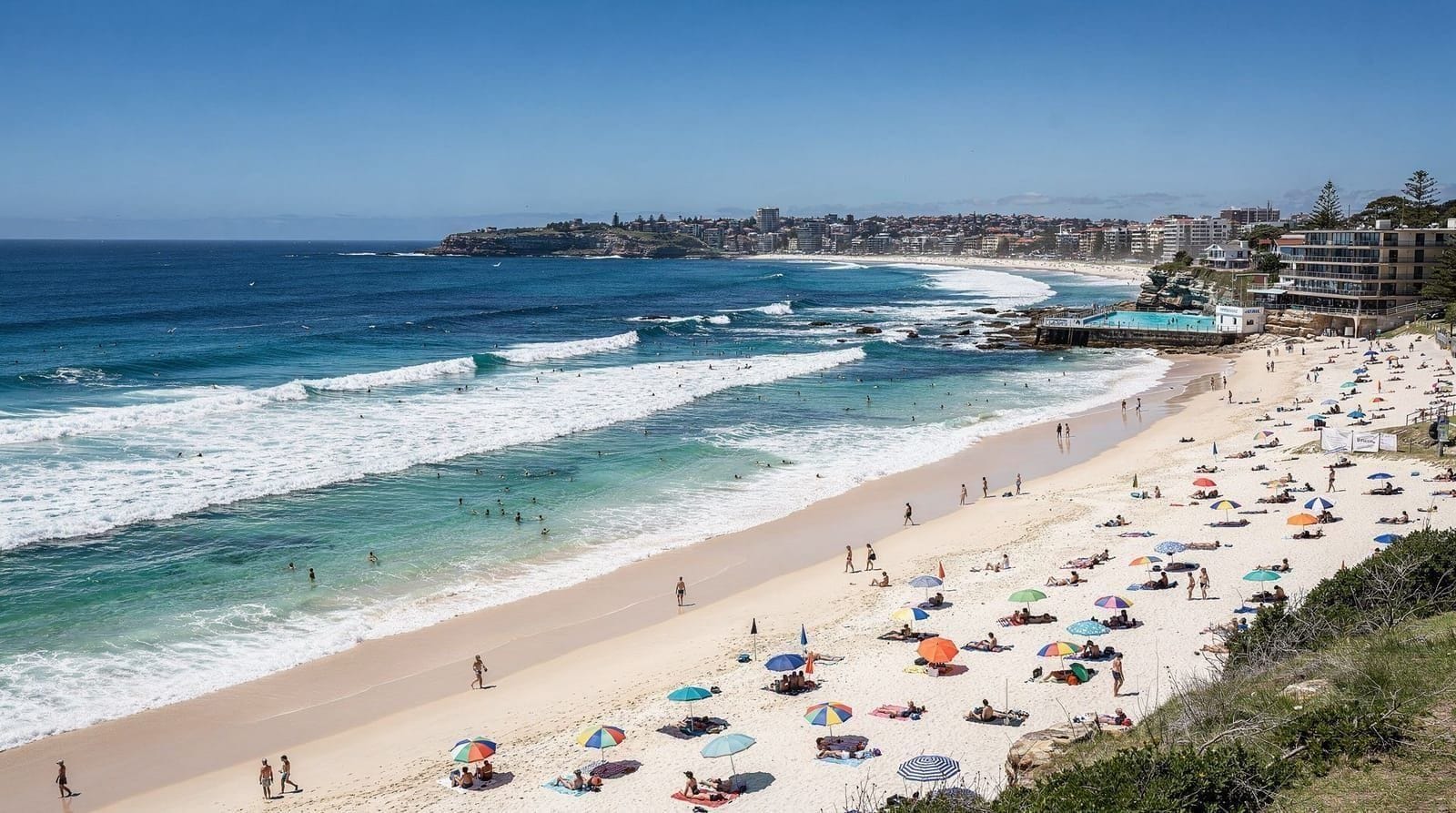
Red and yellow flags mark the patrolled zone where surf lifesavers are actively watching. Always swim between these flags.
- Bondi Beach: Patrolled daily year-round (lifeguards and volunteer lifesavers)
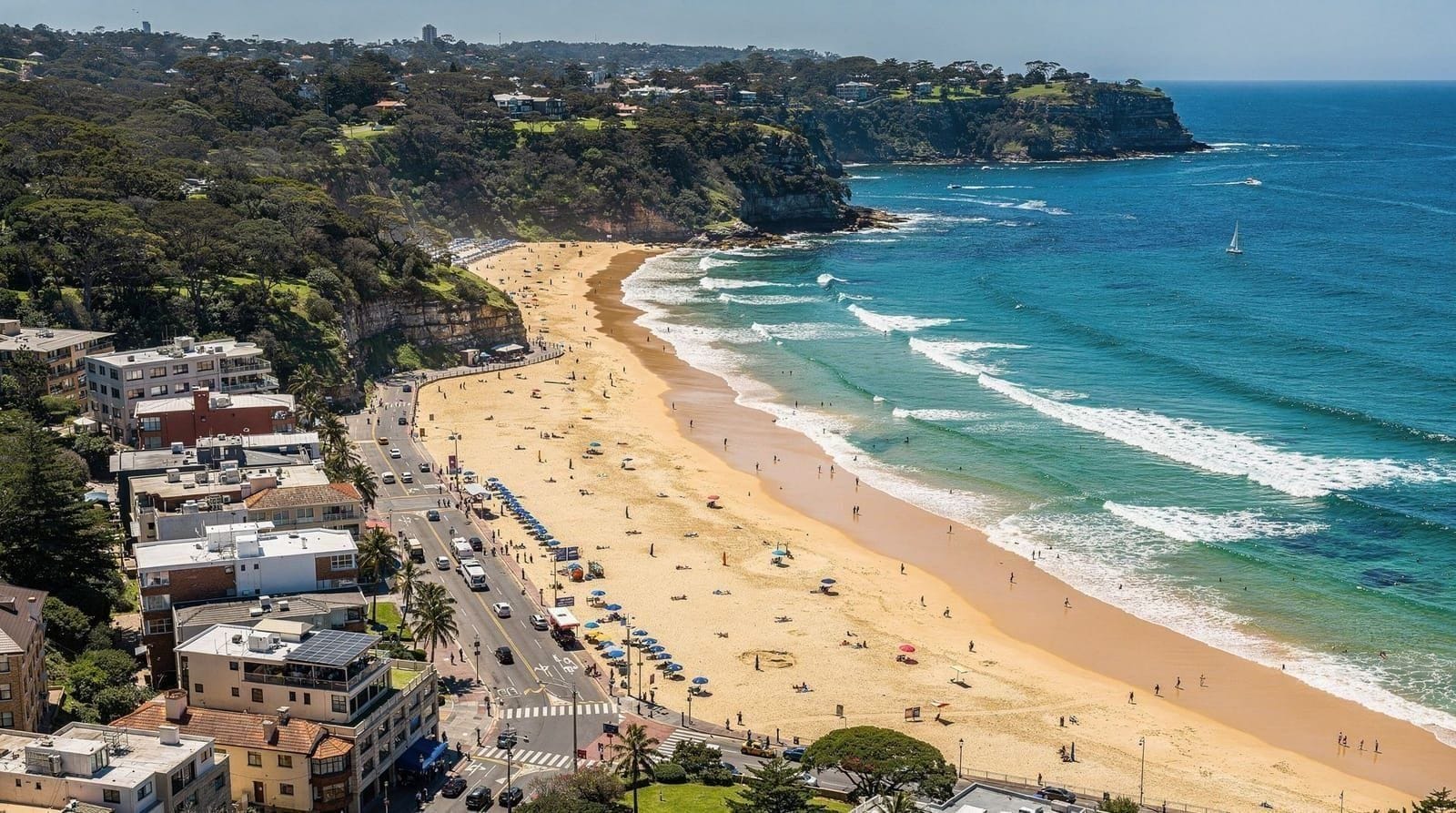
- Manly Beach: Patrolled daily year-round
- Coogee, Bronte, Cronulla: Patrolled on weekends and school holidays; daily in peak summer
- Smaller or northern beaches: Weekend and holiday patrol only — check Beachsafe app (official Surf Life Saving Australia resource) for current patrol status
Never swim at unpatrolled beaches if you are not an experienced ocean swimmer.
Bluebottles (Portuguese man o’war)
Bluebottles (Physalia utriculus, a small relative of the Portuguese man o’war) wash up on Sydney beaches, particularly in summer and after onshore winds. They are blue, translucent and have a distinctive inflated float with trailing tentacles. Contact causes an intense burning sting.
If stung:
- Remove tentacles carefully — do not rub the skin
- Rinse with seawater (not fresh water, which can activate unfired stinging cells)
- Apply heat (hot water immersion if available) to relieve pain
- Seek lifeguard assistance for severe reactions or if near the face/throat
Check the Beachsafe app or ask lifeguards for bluebottle reports before entering the water.
Sharks
Shark attack in Sydney is statistically very rare. Most Sydney beaches within the harbour or near headlands have shark nets (a mitigation system, not a physical barrier). Precautions: avoid swimming at dawn, dusk and night; avoid areas near river mouths after heavy rain; exit the water if fish are jumping near the surface.
UV radiation
Sydney’s UV intensity is significantly higher than anywhere in Western Europe and higher than the US east coast. The thin ozone layer over Australia amplifies UV even on mild days.
- UV index in summer: Regularly 10–14 (extreme scale). 10 minutes unprotected exposure can cause burning in fair skin.
- UV index in winter: 4–6 (moderate to high). Burns are less likely but long outdoor days still risk damage.
- Cloud cover does not stop UV: Up to 80% of UV penetrates overcast skies.
Protection:
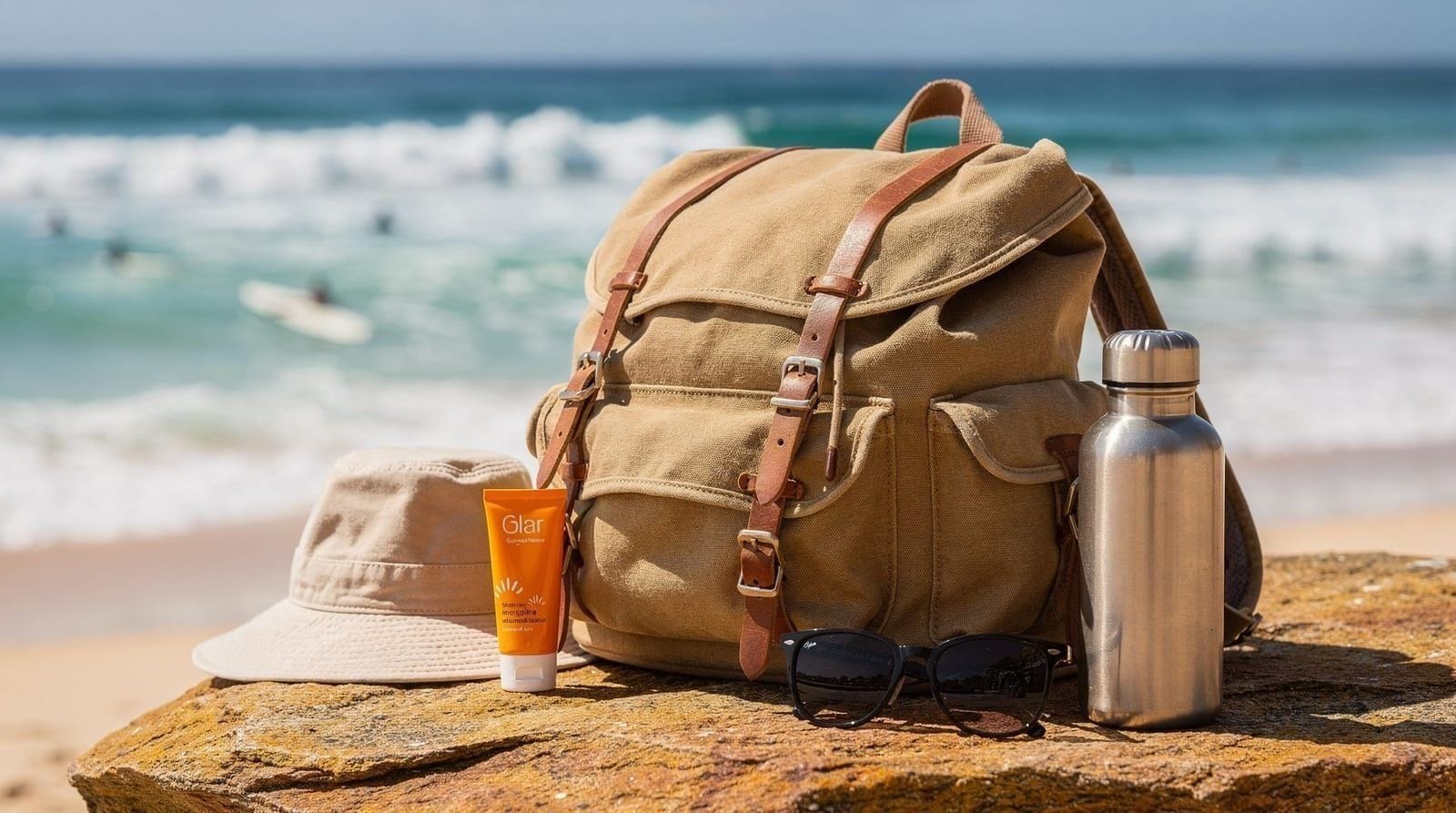
- SPF 50+ sunscreen (Cancer Council or equivalent), applied 20 minutes before going outside, reapplied every 2 hours
- Wide-brim hat (minimum 6 cm brim; baseball caps do not protect neck and ears)
- UV-blocking sunglasses (UV 400 rating)
- UV-protective clothing (UPF 50+ rated swimwear/outdoor shirts)
- Avoid prolonged sun exposure 10am–4pm in summer
This is the most-dismissed safety item by visitors from the northern hemisphere and the most consistently harmful. Apply sunscreen every day, not just beach days.
Bushfires
Bushfire season in New South Wales runs officially October–March, with highest risk in November–January. Fires in the outer Blue Mountains, Royal National Park and coastal scrubland areas are possible and can produce significant smoke in Sydney.
For most tourists visiting central Sydney, bushfires are not a direct risk. Hazards:
- Smoke: Air quality can deteriorate significantly during major fire events — check NSW Government AQI (Air Quality Index) if you have respiratory conditions
- Day trip areas: If hiking in Blue Mountains National Park or Royal National Park during fire season, check the NSW Rural Fire Service “Fires Near Me” map before departing. Do not enter closed fire areas.
Fires rarely affect central Sydney directly. If you are doing coastal or mountain day trips in summer, RFS.NSW.gov.au is the definitive real-time resource.
Neighbourhood safety overview
Generally very safe: CBD, Circular Quay, The Rocks, Darling Harbour, Surry Hills, Newtown, Manly, Bondi, Coogee, Parramatta CBD, Chatswood, Mosman.
Use standard urban awareness (especially late at night): Kings Cross (late-night entertainment zone), Central Station precinct late at night, some sections of George Street between Town Hall and Central.
Exercise more care: Western Sydney outer suburbs (Blacktown, Cabramatta, Bankstown after hours) are not typical tourist destinations. If you venture there, standard city-aware behaviour is appropriate.
Traffic and road safety
Left-hand traffic: Australia drives on the left. Pedestrians from right-hand-traffic countries consistently look the wrong direction when crossing. Most CBD pedestrian crossings have “LOOK RIGHT” or “LOOK LEFT” painted on the road — follow it.
Cycling: Sydney CBD has a growing cycling network but road cycling alongside cars requires attention. Helmet wearing is compulsory by law for all cyclists.
Jaywalking: Technically illegal in NSW (fines apply) though enforcement is patchy. Use pedestrian crossings.
Common scams
Sydney has fewer tourist scams than many comparable international cities. Those that exist:
“Aboriginal artwork” stores: Many tourist-area souvenir shops sell mass-produced goods (often made overseas) marketed as Aboriginal art. Authentic Aboriginal art bears a certificate of authenticity from a recognised community or artist. Legitimate galleries include Cooee Art Gallery (The Rocks) and the Art Gallery of NSW shop. See the tourist traps guide for detail.
Airport taxi overcharging: Licensed taxis have metered fares and should not negotiate a flat rate to the CBD. If a driver quotes a fixed high rate rather than using the meter, refuse and get a different taxi or use Uber/Ola (which show the fare upfront).
“Free tour” tip pressure: Several operators run “free walking tours” in the city centre that are de facto tip-operated. These are legitimate (many are excellent) but know what you are signing up for. Standard tip is AUD 20–30 for a 2-hour tour.
Accommodation cancellation terms: Sydney’s short-let market includes some unverified private operators on accommodation platforms. Read cancellation policies carefully; booking via established platforms with buyer protection is advisable.
Water and food safety
Tap water: Sydney tap water is safe, well-filtered and actively tested. No need for bottled water. The travel tips guide covers this.
Food safety: Sydney’s food standards are high. The NSW Food Authority restaurant grading system is publicly searchable online. “Food outlet closed” notices on restaurant windows indicate a serious breach — avoid.
Raw fish and oysters: Sydney Fish Market is a well-regarded and inspected facility. Oyster freshness at Sydney restaurants is generally reliable. Check that any seafood restaurant you visit has received its food authority rating.
Safety for specific visitor groups
Families with children
The main hazards for families are UV radiation (highest risk for young children) and rip currents at beaches. See the Sydney with a baby guide for age-specific UV advice.
For beach visits with children: Manly Cove (harbour side, no surf), Balmoral Beach (shark-netted, calm water) and Fairy Bower rock pool (Manly) are safer than open-ocean patrolled beaches for very young children who cannot read or respond to rip current conditions.
Solo female travellers
Sydney is generally safe for solo female travellers by international comparison. The specific precautions relevant here are:
- Late-night entertainment zones (Oxford Street, Kings Cross): standard urban awareness
- Beach swimming: swim at patrolled beaches during patrol hours, not alone at dawn or dusk
- Rideshare at night: use apps that display driver details; share trip with a contact
Older travellers and those with mobility limitations
Sydney’s terrain is uneven in historic areas — The Rocks cobblestones, steep sections of the Bondi to Coogee walk, ferry gangways. The Opal network is mostly accessible (lifts at most CBD stations) but some older bus stops and some ferry wharves have limited accessibility infrastructure. Check Transport for NSW accessibility maps before planning routes.
Medical facilities are excellent. Major public hospitals have emergency departments available to all visitors (costs apply for non-Medicare holders).
Wildlife safety
The wildlife safety concerns most relevant to Sydney visitors are practical and minor:
Spiders: The funnel-web spider is Sydney’s most medically significant spider (potentially lethal bite). Funnel-webs live in garden soil and under rocks, mainly in outer suburban and bush areas. In practice, visitors to central Sydney, beaches and tourist areas are extremely unlikely to encounter one. If staying in bushland accommodation or doing overnight camping: check shoes before putting them on, do not put hands under logs or rocks.
Snakes: Several Australian snake species are venomous. In Sydney, snake encounters are rare in urban areas. They occur occasionally in national park day trips (Royal National Park, Blue Mountains). Keep to marked trails, make noise when walking, and give any snake you see a wide berth. If bitten: apply a pressure bandage (immobilisation is more important than the bandage) and call 000 immediately.
Magpies (spring nesting): From August to November, some territorial magpies swoop pedestrians and cyclists near their nests. This is a Sydney-specific cultural institution — locals often know which trees to avoid. If a magpie swoops you, walk quickly away from the area. It is alarming but rarely causes injury. Many Sydneysiders cycle with cable ties attached to their helmet as a deterrent (aesthetically challenging but effective).
Sharks in the harbour and beaches: Sydney Harbour has resident bull sharks in some areas. Swimming in the harbour outside designated shark-netted areas is inadvisable. At beach parks, shark nets (actually drum lines, not physical barriers) are in place at most major Sydney beaches. Net maintenance season is April–October; nets are removed in some areas outside these months.
Heat safety in summer
Sydney’s summer heat (January and February especially) poses real risk to visitors unaccustomed to sustained high temperatures:
- Heat exhaustion: heavy sweating, weakness, cold/pale/clammy skin, faint or dizzy — move to shade or air conditioning, rehydrate with water
- Heat stroke: hot, red and dry skin, rapid pulse, loss of consciousness — a medical emergency. Call 000.
- Prevention: drink 2–3 litres of water on hot outdoor days, avoid alcohol in peak heat, wear lightweight light-coloured clothing, rest in shade during 12–4pm
Air conditioning is standard in hotels, restaurants, shopping centres and the Opal train and bus network. Plan afternoon heat as indoor time in summer.
Natural disaster awareness
Bushfires: See the bushfire section above. For inner-city visitors the smoke impact is more likely than direct fire exposure. NSW Air Quality Index is monitored at environment.nsw.gov.au.
Storms and lightning: Sydney experiences occasional severe thunderstorms, particularly in late afternoon in summer. If caught outdoors, move to shelter — lightning strikes at Bondi and other headland beaches have occurred. Do not shelter under isolated trees.
Coastal flooding: Major storms can close coastal walks and low-lying coastal paths. The Manly scenic walkway, Bondi to Coogee, and some northern beaches paths may close temporarily. Check local conditions via Transport for NSW or the relevant national parks website.
Safety on the harbour: guided activities
Sydney Harbour is the setting for some of the city’s most memorable activities, and most of them are run by operators with their own safety briefings, equipment and trained staff. For visitors who want an adrenaline fix without improvising, a guided option is the safer route compared with going alone.
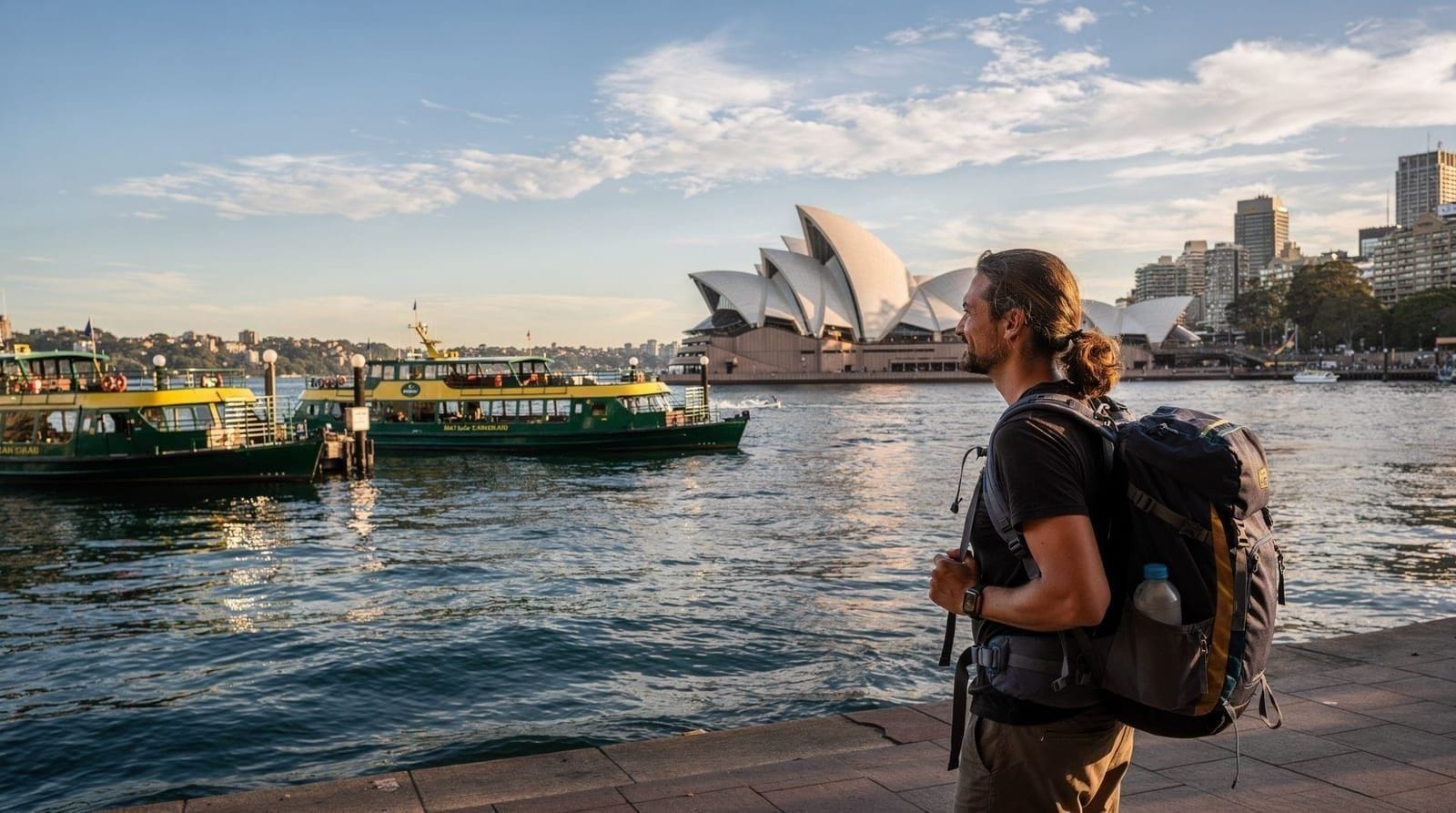
Heights are a good example. A guided bridge climb over the Harbour Bridge involves a safety briefing and fitted equipment before you set foot on the structure, and a daytime session such as a summit climb of the Harbour Bridge in daylight lets you see exactly where you are stepping. If you are unsure whether the climb suits you, the BridgeClimb versus Pylon Lookout comparison explains the calmer alternative. The Harbour Bridge guide covers the rest of the structure’s story.
On the water, speed and spray are the main considerations. Hold on, follow the crew’s instructions, and keep sunglasses and hats secured. A fast ride such as a jet boat ride departing from Circular Quay comes with a briefing before departure; read the jet boat guide to know what to expect, and the jet boat versus sailing comparison if you would rather keep things gentle.
For something quieter, paddling is a lovely way to see the harbour, but it is also where sun and wind matter most. An early start on a guided sunrise kayak on the harbour keeps you out of the harshest sun, and a guide handles the ferry and boat traffic for you. The harbour kayaking guide has more on what to wear and how to prepare. Whatever you choose, apply sunscreen first and tell the operator about any medical condition or injury when you book.
Getting around safely
Public transport is one of the easiest ways to stay safe in Sydney: it avoids drink-driving worries, unfamiliar left-hand roads and parking in isolated spots. The Opal card guide explains how to tap on and off, and the getting around Sydney guide compares the options. The Sydney trains guide and the ferries guide cover the two modes most visitors use. After a long flight, the airport to CBD guide shows how to reach your hotel without taking an unmetered ride. If you are tempted to rent a vehicle, the driving in Sydney and NSW guide explains why caution is needed on unfamiliar roads, and the guide to whether you need a car helps you decide.
Nights out and late-night areas
Most nights out in Sydney pass without incident, but the usual rules apply: stay with friends, keep an eye on your drink, and plan your way home before you head out. The Kings Cross then and now guide describes how that district has changed, and the nightlife guide and best bars guide help you pick venues you will feel comfortable in. For a calmer evening with a view, the rooftop bars guide is a good start. The LGBTQ scene guide is useful for travellers looking for welcoming venues.
More beach and bush reading
Beach-specific questions deserve their own pages. The Bondi Beach guide and the Manly Beach guide cover how each beach works, and the best beaches guide helps you choose one that suits your confidence in the water. Nervous swimmers can look at the ocean pools guide, and the shark nets and safety guide goes deeper on the shark question. For walkers, the coastal hikes guide, the Royal National Park guide and the Blue Mountains best hikes guide explain what the trails are like. The guide to avoiding scams in Sydney expands on the scams section above, and the Sydney for first-timers guide puts safety in the wider context of a first trip.
Emergency numbers summary
| Service | Number |
|---|---|
| Police, Ambulance, Fire | 000 |
| International standard | 112 |
| Text relay (hearing/speech) | 106 |
| NSW Police non-emergency | 131 444 |
| Poisons Information Centre | 13 11 26 |
| Marine Rescue NSW (water emergencies) | 000 (VHF channel 16 at sea) |
The travel tips guide covers the broader practical logistics of arriving and navigating Sydney. The packing guide covers sun protection and seasonal gear in detail.
Solo travel safety in more detail
Sydney is a genuinely workable solo destination, for women and men. The solo travel Sydney guide covers accommodation choices, meeting other travellers, and neighbourhood-by-neighbourhood notes for anyone travelling alone in more depth than the summary above. The core safety principles carry over from the general advice on this page: patrolled beaches during patrol hours, standard awareness in late-night entertainment precincts, and rideshare apps with driver details visible over unmarked cars.
If something goes wrong on a day trip
Day trips to the Blue Mountains or the Royal National Park carry a different risk profile from central Sydney — mobile reception can be patchy on some trails, and help is further away. Tell someone your planned route and return time, carry water, and check the NSW Rural Fire Service “Fires Near Me” map during bushfire season (October–March) before setting out. If you’re relying on public transport for the trip, the Sydney to Blue Mountains transport guide covers realistic timings so you’re not caught out after the last train.
Frequently asked questions about Sydney safety guide
Is it safe to swim at Sydney beaches outside the flagged area?
It is significantly riskier. Rip currents cause the large majority of beach rescues in Australia and are often invisible to an untrained eye. Lifesavers actively monitor the flagged zone; outside it, help may be much slower to arrive if something goes wrong.
Do I need to worry about sharks when swimming in Sydney?
Shark attacks are statistically very rare in Sydney, and most major beaches have shark mitigation nets in place during the warmer months (roughly April to October). Ordinary precautions — avoiding dawn, dusk and night swims, and getting out if fish start jumping near the surface — cover the realistic risk.