Sydney Harbour
Sydney Harbour guide: best cruises, ferry routes, harbour islands, kayaking past the Opera House, whale watching (May–Nov), and honest value-for-money
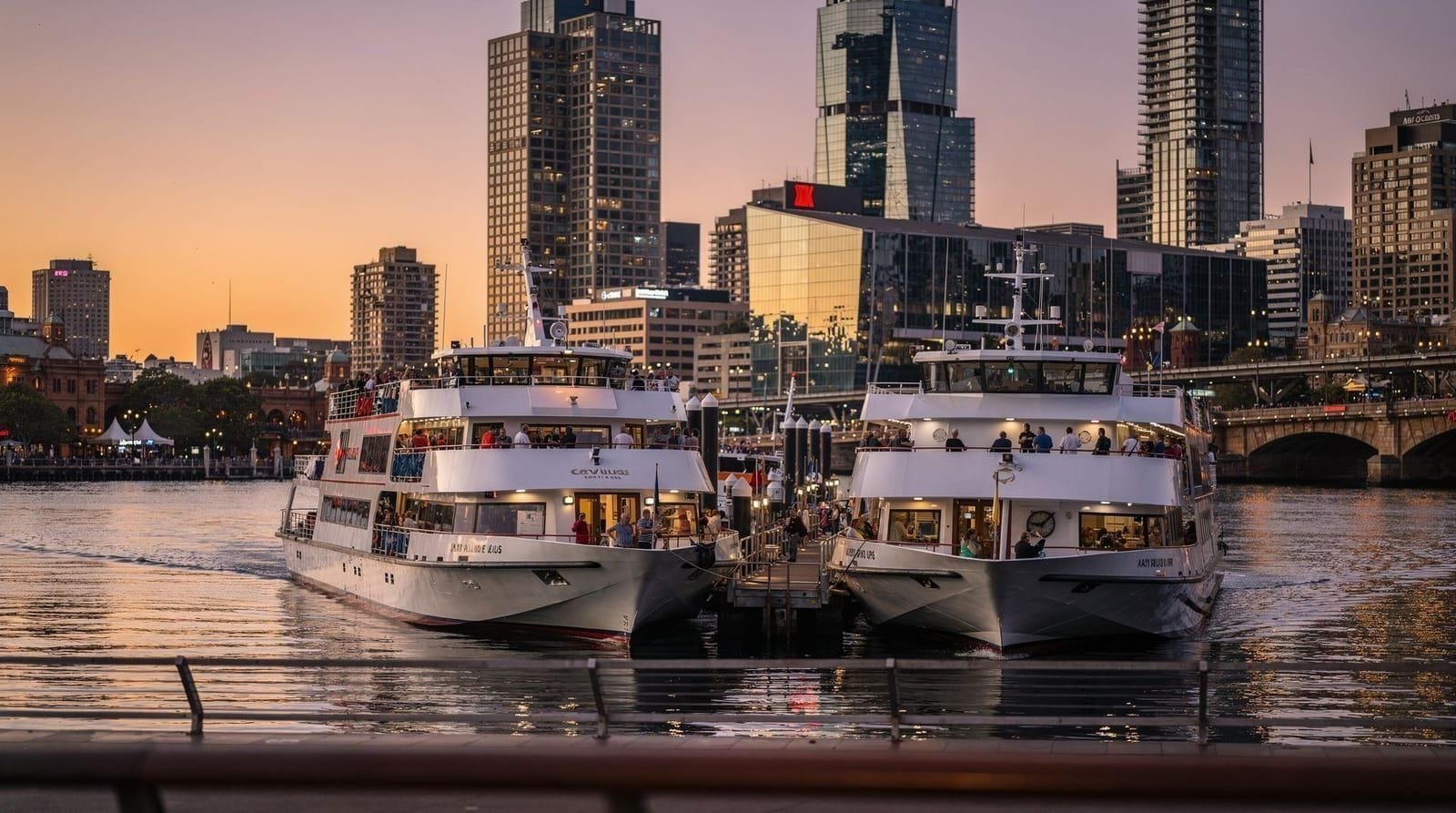
Sydney: Harbour sunset catamaran cruise
Duration: 1 hour
Quick facts
- Best for
- Iconic views, cruises, kayaking, ferry journeys, whale watching (May–Nov)
- Time needed
- 2–4 hours (cruise or kayak) to multiple days (exploring all harbour areas)
- Ferry hub
- Circular Quay (Wharves 1–6), all Opal/contactless card
- Whale season
- May–November (peak June–August)
- Don't miss
- Sunrise kayak past the Opera House, sunset catamaran cruise
- Avoid
- Dinner cruise packages with mediocre food at inflated prices
The harbour that defines a city
| At a glance | |
|---|---|
| Where | Port Jackson, from the Heads to the Parramatta River, 54 sq km of water and 240+ km of foreshore |
| Cost | Manly Ferry on a standard Opal fare (weekend Opal cap A$9.65); sightseeing cruises, kayaking and whale-watching tours: prices vary by operator (see their official websites) |
| Time needed | 2–4 hours for a cruise or kayak session; 1–3 days to explore islands, beaches, and multiple ferry routes |
| Getting there | Circular Quay (Wharves 1–6) is the main hub, reached on foot or by train/bus/light rail into the CBD |
| Best time | Year-round; June–August for whale watching, late May–mid June for Vivid Sydney’s harbourside light installations |
Port Jackson — Sydney Harbour’s formal name — extends roughly 20 kilometres inland from the Pacific Ocean at North Head and South Head to the Parramatta River. It contains 54 square kilometres of water, more than 240 kilometres of foreshore, eight harbour islands, and the two structures that have become synonymous with Australia on the global stage: the Sydney Opera House and the Harbour Bridge.
The harbour is not just scenic backdrop. It is a functioning transportation network used daily by commuter ferries, working vessels, private sailboats, kayakers, and whale-watching cruises. Understanding how it works — which ferries go where, which headlands to walk for the best views, and which cruise operators deliver value for money — is the difference between a passive harbour photograph and an active harbour experience.
This guide covers all of it: the ferry network, the best cruises, kayaking, the harbour islands, and when and how to see the humpback whales that pass through between May and November.
The ferry network: your most valuable harbour asset
Circular Quay’s six ferry wharves are the gateway to the harbour and, if used correctly on weekends, the best-value sightseeing in Sydney. With an Opal card or contactless payment, fares depend on the route, and the daily cap of AUD 9.65 applies from Friday to Sunday. This means you can take unlimited ferry journeys on a Saturday or Sunday for less than AUD 10, including the spectacular 30-minute crossing to Manly.
Wharf 2 — Manly Ferry: The Manly Ferry is frequently described as one of the world’s great 30-minute commutes. It leaves from Circular Quay, crosses the main harbour body, passes through the Heads, and arrives at Manly Wharf. The return journey gives you a different set of views. On a clear day, both the Opera House and the Harbour Bridge are visible from the ferry deck. This single trip, at Opal prices, delivers more harbour viewing time than most commercially marketed sightseeing cruises.
Wharf 4 — Taronga Zoo: The zoo ferry crosses from Circular Quay to Mosman Bay in about 12 minutes. The Taronga zoo entry includes a combined ferry and zoo ticket option. Even if you are not visiting the zoo, the short crossing gives you exceptional harbour views from the water.
Wharf 5 — Balmain and Parramatta: The Parramatta Ferry runs upriver through the Harbour and into the Parramatta River — a 55-minute journey that is the most extensive harbour exploration available on a standard Opal fare.
The Sydney Ferries guide covers all routes, timetables, and interchange options at Circular Quay.
Harbour cruises: navigating an overcrowded market
Sydney Harbour cruises are a competitive market with significant variation in quality and price. A few honest observations before you book:
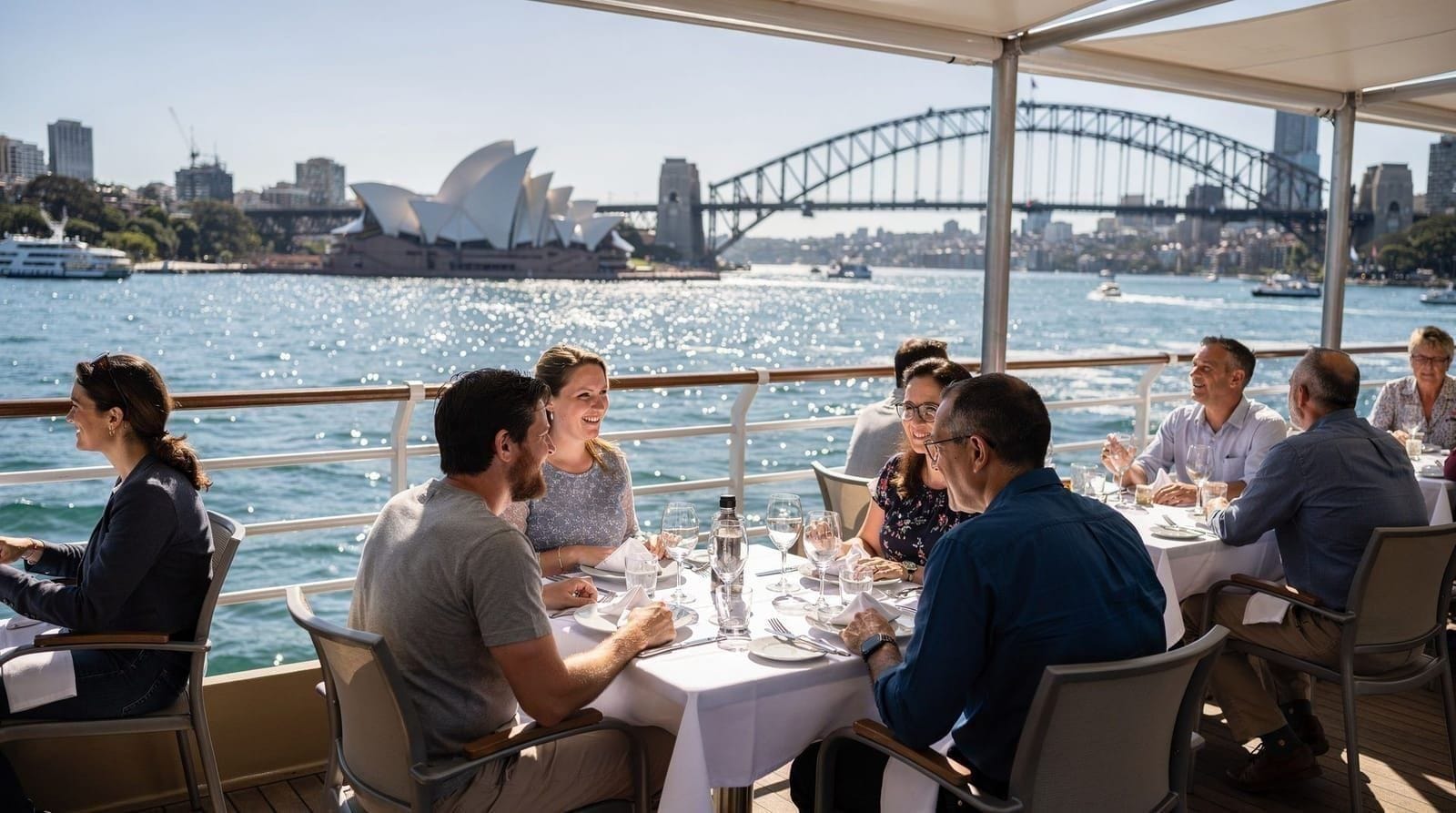
The dinner cruises are rarely worth their price in culinary terms. The food on most of the large-vessel dinner cruises is hotel-banquet standard — adequate but not something you would seek out on land. You are paying for the experience of eating on the harbour, which has genuine appeal, but it is worth being realistic about what the food will be.
Sydney Harbour tall ship lunch cruise — sailing a historic tall ship through the harbour is qualitatively different from a motorised cruise vessel and is worth the premium if you’re choosing between the two.
The shorter sightseeing cruises (1.5–2 hours) offer a more focused harbour experience. The Harbour Highlights cruise covers the Opera House, Harbour Bridge, Fort Denison, and the main harbour landmarks with a commentary track. For first-time visitors who want to see the harbour from the water without committing to a full-day or evening experience, this is the most efficient option.
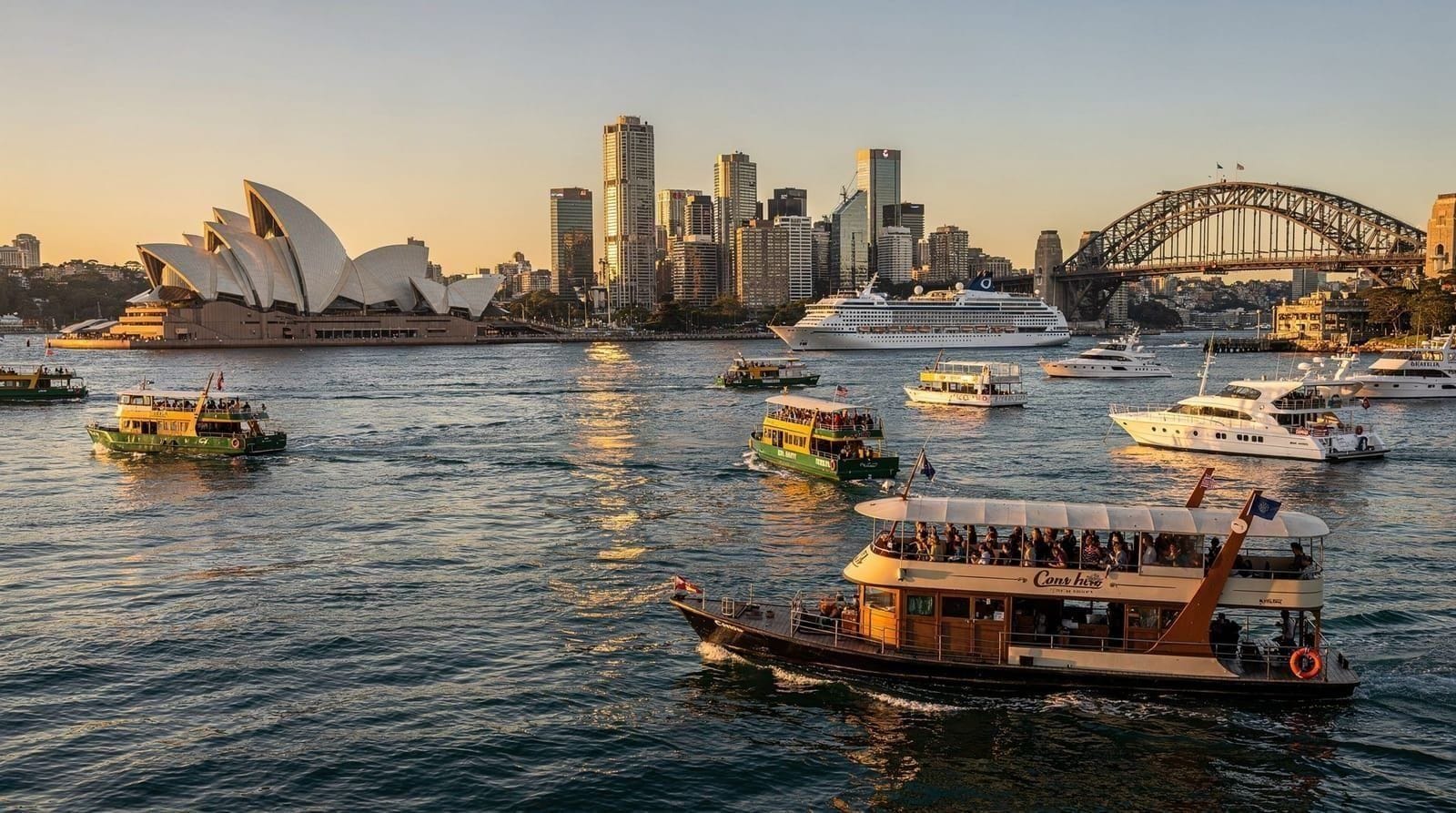
Sydney Harbour highlights cruise from Circular QuayThe sunset catamarans (1–1.5 hours) are straightforward: a catamaran departs Circular Quay around 5–6pm depending on the season, sails to the main harbour landmarks, and returns after sunset. A drink is usually included. The logistics are simple, the views are spectacular, and the price is reasonable. This is the easiest upgrade from the Manly Ferry experience for someone who wants a structured harbour experience.
Sydney Harbour sunset catamaran cruiseKayaking: the closest you get to the water
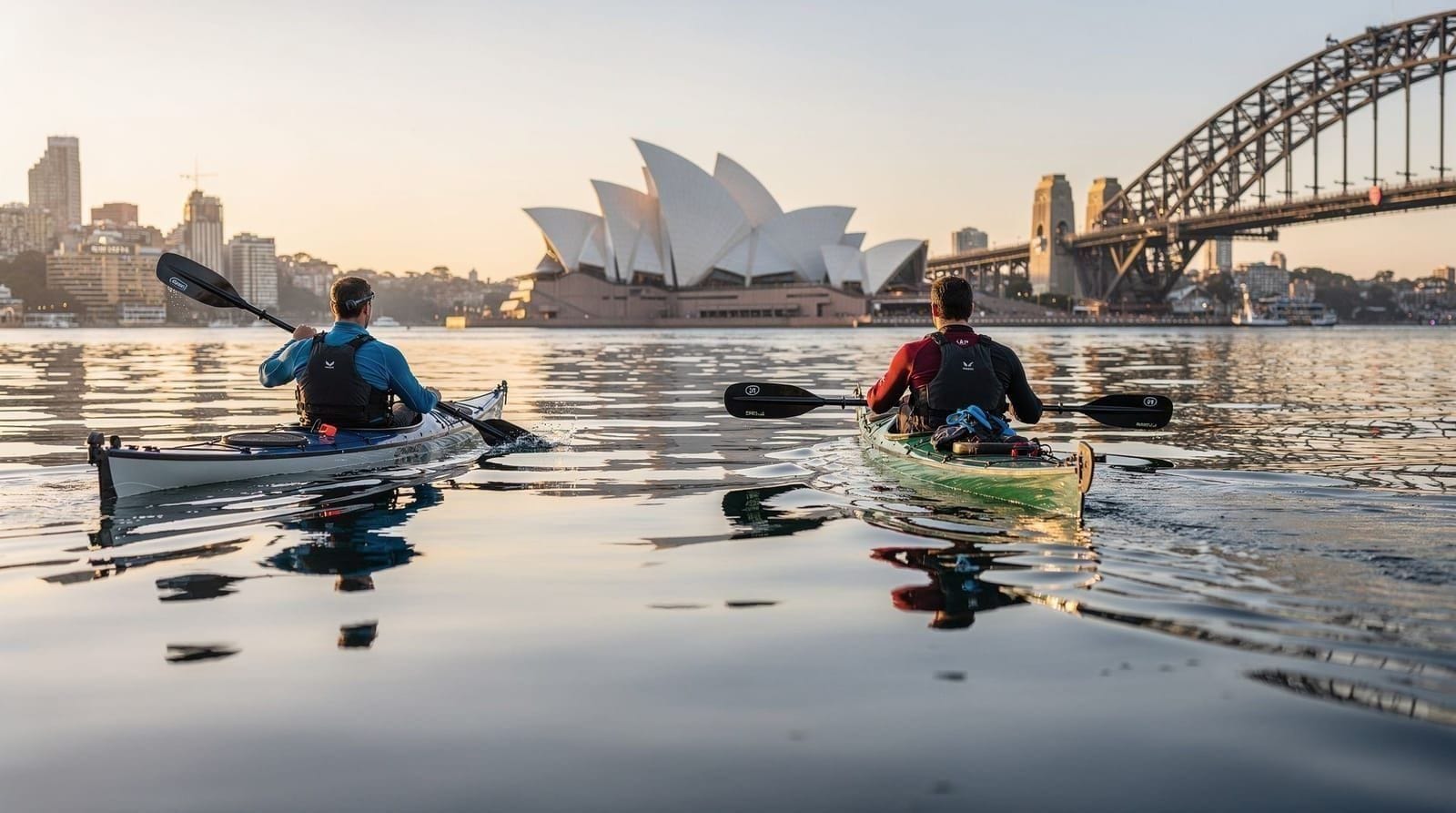
Kayaking on Sydney Harbour puts you at water level between the Opera House and the Harbour Bridge — a perspective that no cruise vessel can match. Several operators run guided kayak tours from a base at Lavender Bay (North Sydney side) or from Milsons Point.
The sunrise kayak (2 hours, 6–8am) is the most sought-after session. In summer, the light on the Opera House at dawn is extraordinary. Group sizes are small (6–10 paddlers), the guides provide good historical and environmental commentary, and the pace is relaxed enough for beginners. No prior kayaking experience is required — the harbour is calm in the early morning and the guides are experienced with beginners.
Sunrise kayak: Opera House and under the Harbour BridgeThe sunset kayak and the goat island kayak tour are the other popular options. Goat Island (Memel) is one of Sydney Harbour’s eight islands and was used as a gunpowder magazine in the colonial period; the kayak tour includes a landing.
For a deeper comparison of kayak options and what to expect, the Sydney Harbour kayaking guide covers operators, routes, and preparation.
Whale watching: the May to November season
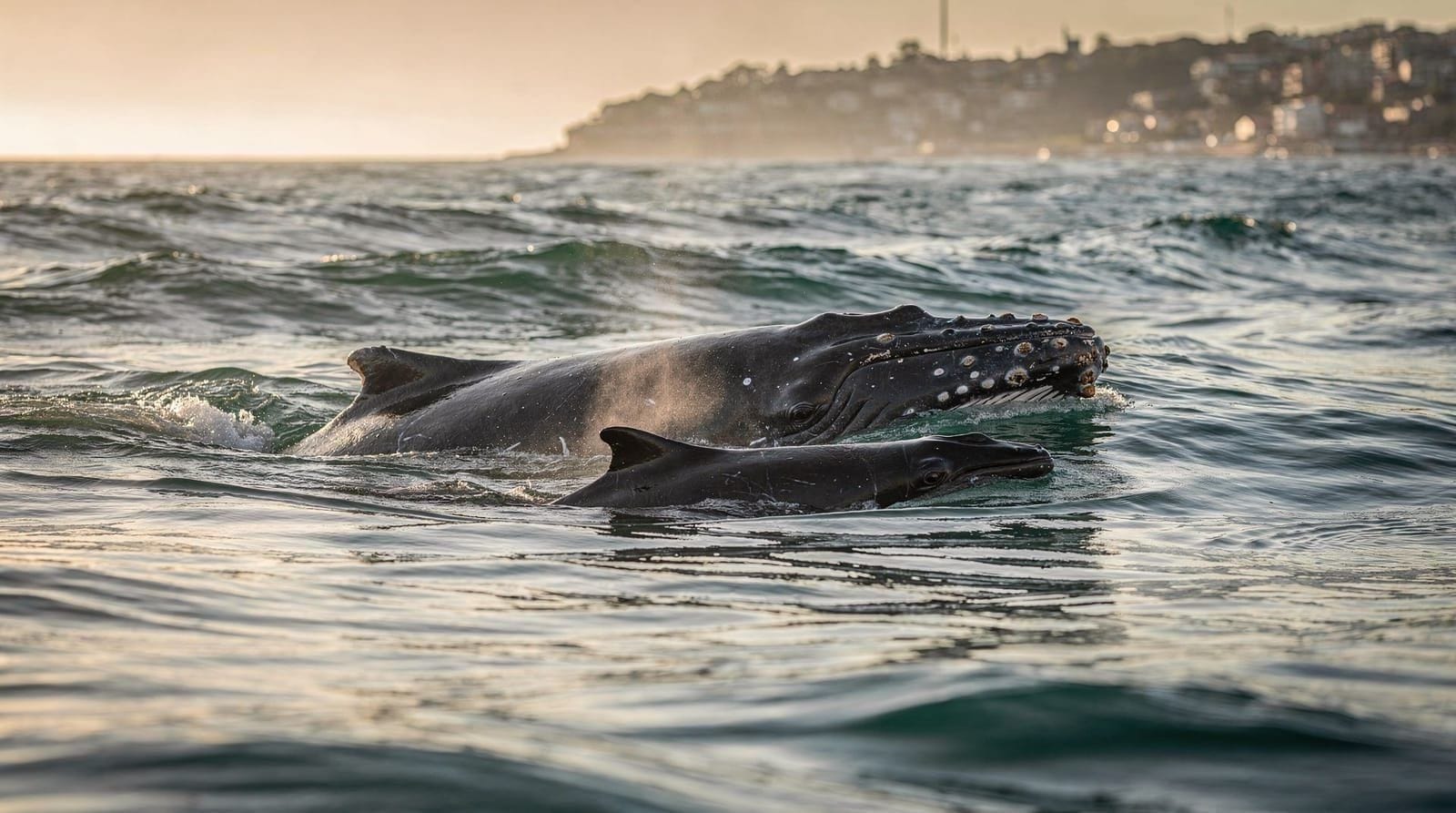
Between May and November each year, humpback whales migrating along the east Australian coast pass through the waters around Sydney Heads. The main migration runs north from Antarctica in May and June (the whales heading to warmer breeding grounds) and south from September through November (returning to Antarctic feeding grounds). The peak months are June, July, and August, when sightings are most consistent.
Several whale-watching cruise operators depart from Circular Quay and head out through the Heads into the open ocean. Tours typically last 2.5–3 hours. The better operators offer a whale sighting guarantee — if no whales are spotted, you receive a free re-trip. A trip with a guarantee is meaningfully better value than one without.
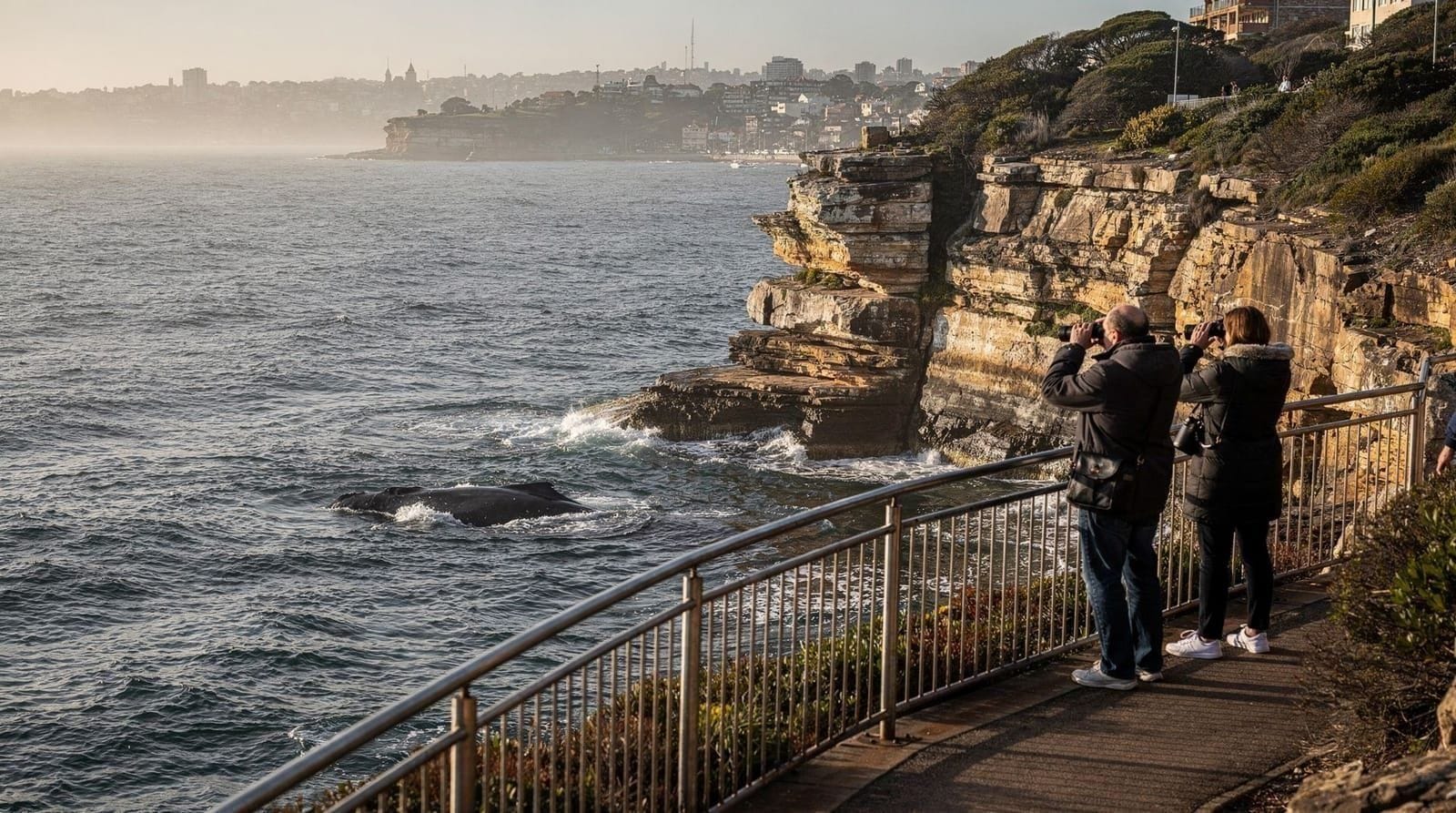
The best viewing positions from land are South Head, North Head (Manly side), and Watsons Bay. A walk to the South Head Heritage Trail gives elevated views across the ocean approach to Sydney from the southern headland. During peak season (June–August), resident naturalists sometimes position themselves at North Head and can provide current sighting information.
For the full seasonal breakdown and best operators, see the whale watching Sydney guide.
The harbour islands
Sydney Harbour contains eight islands, most of which are accessible by ferry or water taxi. The most interesting for visitors:
Fort Denison (Murimurh/Pinchgut) is the small stone fortification in the middle of the harbour visible from Circular Quay. It was used as a punishment island in the colonial era (prisoners were left on the rock with minimal food — hence “Pinchgut”) and then fortified in the 1840s for harbour defence. Tours run by Sydney Harbour Federation Trust depart from Circular Quay.
Cockatoo Island (Wareamah) is the largest of the harbour islands and has both convict-era infrastructure and early-20th-century industrial dry-dock facilities. The island is accessible on the regular ferry from Circular Quay (F3 line) and is free to explore during the day. It has camping facilities for those who want to sleep on a harbour island, and hosts regular art exhibitions, including the Sydney Biennale.
Shark Island and Clark Island are smaller, accessible only by water taxi, and primarily used for picnics and swimming. They are more remote-feeling than Fort Denison or Cockatoo Island.
Practical planning
The harbour is best experienced across multiple visits rather than in a single extended session. A practical sequence for a 3-day first visit might be:
Day 1: Manly Ferry crossing (Circular Quay to Manly and back), walk the Manly foreshore, return ferry at sunset. Day 2: Sunrise kayak (6–8am), free morning in The Rocks, harbour highlights cruise in the afternoon. Day 3 (if whale season May–November): Whale watching cruise departing around 9am, 2.5–3 hours at sea.
For a structured 3-day first-time Sydney itinerary or a 7-day Sydney and surroundings plan, the harbour features prominently in each.
Frequently asked questions about Sydney Harbour
What is the cheapest way to see Sydney Harbour?
The Manly Ferry from Circular Quay gives 30 minutes of harbour viewing each way on a standard Opal fare (AUD 9.65 daily cap on weekends). This is the best-value harbour experience in Sydney. The free walk along the foreshore from Circular Quay to the Opera House and around Farm Cove costs nothing. Mrs Macquarie’s Chair in the Royal Botanic Garden provides one of the harbour’s most photogenic vantage points for free.
When are whales visible in Sydney Harbour?
Humpback whales are most reliably seen between May and November, with the peak period in June through August. Sightings from land are possible from North Head (Manly), South Head (Watsons Bay), and sometimes from the Circular Quay waterfront during peak migration. Whale watching cruises operate throughout the season. See the whale season guide for year-specific migration information.
How long does the Manly Ferry take?
The regular Manly Ferry (F1 route) takes approximately 30 minutes from Circular Quay to Manly Wharf. The Manly Fast Ferry (private operator, not Opal-capped) takes 18 minutes but costs considerably more. For the harbour views, the regular ferry is better value.
What is Cockatoo Island and how do I get there?
Cockatoo Island is the largest harbour island, located roughly in the centre of the harbour west of the Bridge. The F3 ferry from Circular Quay stops there (check timetable for return services). The island has convict-era sandstone tunnels, industrial dry-dock infrastructure from the World War era, and regular art exhibitions. Day visits are free; camping is available for a fee. See the Cockatoo Island guide for full details.
Are harbour dinner cruises worth the money?
For most visitors, no. Dinner cruises typically serve food that is roughly equivalent to a hotel buffet. The experience of being on the harbour at night is genuine and worth something, but the price premium over a sunset cruise plus a restaurant dinner is significant. If you want an evening on the water, a sunset catamaran cruise followed by dinner in a nearby restaurant delivers better value and usually better food.
Can I swim in Sydney Harbour?
Yes. There are several harbour beaches (Nielsen Park, Balmoral, Chinamans Beach) and harbour ocean pools that are calm and largely protected from the surf conditions of the ocean beaches. Harbour waters are generally safe for swimming, though jellyfish (bluebottles) can be present in summer and you should check conditions before entering unfamiliar harbour beaches. The beaches safety guide covers harbour and ocean swimming conditions in detail.
Is BridgeClimb worth it compared to a harbour cruise?
They deliver different things. BridgeClimb puts you on top of the Harbour Bridge arch itself, which no cruise can replicate; a sightseeing cruise covers more of the harbour’s breadth — Fort Denison, the Opera House, and the main bays — at a much lower price. Budget-conscious visitors often do a cruise or the Manly Ferry first and treat BridgeClimb as a separate, optional splurge. See the BridgeClimb vs Pylon Lookout guide for the cheaper alternative.
Choosing between the main harbour experiences
With so many ways to see the harbour, the practical question is usually which one to prioritise on a limited schedule. The table below compares the main options by cost, time, and what each one is actually good for.
| Option | Cost | Duration | Best for |
|---|---|---|---|
| Manly Ferry | Opal fare | ~30 min each way | Best value; spectacular views at commuter prices |
| Sightseeing cruise | Varies by operator | 1.5–2 hrs | First-timers wanting a guided overview with commentary |
| Sunset catamaran | Varies by operator | 1–1.5 hrs | A relaxed, scenic evening without full dinner-cruise cost |
| Sunrise kayak | Varies by operator | ~2 hrs | Getting close to the water; small groups, active travellers |
| Whale-watching cruise | Varies by operator | 2.5–3 hrs | May–November visitors wanting a guaranteed-sighting trip |
| Dinner cruise | Varies by operator | 2.5–3.5 hrs | Occasion dining on the water — food quality is secondary to the setting |
Combining the harbour with a wider itinerary
The harbour is rarely a single self-contained activity — most visitors weave it through several days. A ferry crossing to Manly or Watsons Bay doubles as both transport and sightseeing, and the Sydney ferries guide and ferry day out guide both cover route combinations that make the most of a single Opal daily cap. If your visit falls in whale season, pairing a morning cruise with an afternoon walk at Watsons Bay or South Head is an efficient way to combine a paid tour with a free lookout.
Top experiences
Bookable activities with verified prices and instant confirmation on GetYourGuide.