Cockatoo Island
Cockatoo Island: free by ferry, convict-era tunnels, WWI shipyards, harbour camping, and home to Sydney Biennale exhibitions. An unusual and underrated
Sydney: Hop on hop off harbor cruise ferry ticket
Quick facts
- Best for
- Industrial heritage, convict history, harbour camping, art events
- Getting there
- F3 or F8 ferry from Circular Quay, ~20 min. Check return timetable.
- Entry cost
- Free; camping and glamping extra (see the official Cockatoo Island website for prices)
- Don't miss
- Convict-era tunnels, dry dock, Turbine Hall, harbour camping at sunset
- Art events
- Sydney Biennale held here; check calendar for exhibitions
Sydney’s largest and most unusual harbour island
| At a glance | |
|---|---|
| Where | Upper Sydney Harbour, ~5 km west of the Harbour Bridge, near Parramatta River |
| Cost | Free entry; camping and glamping are charged (see the official Cockatoo Island website for prices) |
| Time needed | Half day self-guided, or overnight camping |
| Getting there | F3 or F8 ferry from Circular Quay (~20 min) |
| Best time | Autumn (March–May) or spring (Sept–Oct); Biennale in even-numbered years |
Cockatoo Island (Wareamah in Dharug language) sits near the confluence of the Parramatta River and the upper harbour, roughly 5 kilometres west of the Harbour Bridge. It is the largest of Sydney Harbour’s eight islands and one of the most historically layered — a place that has served, at various points, as a convict prison, a girls’ reformatory, a government shipyard, a commercial dry dock, and a world-class art venue.
It is also free to visit during the day and accessible on a standard ferry fare, which makes it one of Sydney’s better-value half-day excursions for visitors who want something genuinely different from the usual Opera House and Bondi circuit.
History: convicts, ships, and girls in reform
Cockatoo Island’s first colonial use (from 1839) was as a secondary punishment site for male convicts who had re-offended after transportation. The convicts were used as labour to cut the island’s sandstone and construct the dry dock facilities that the colonial government needed for naval vessel maintenance. The convict-era barracks, cells, and the network of tunnels cut through the sandstone are the most atmospheric elements of the island today.
After transportation ended in 1840, the island transitioned through several phases: a period as the Biloela reformatory for girls (1871–1888), several decades as a government shipyard building and repairing vessels for the Royal Australian Navy, and then a long period of commercial dry-dock operation that continued until the 1990s.
The Turbine Hall — a massive industrial building dating from the early twentieth century — is now one of the island’s signature venues for large-scale art installations. During the Sydney Biennale (held in even-numbered years), artists are given the Turbine Hall and the surrounding industrial infrastructure as a canvas, with results that consistently rank among the most interesting contemporary art experiences in Australia.
Getting there and getting around
The F3 Parramatta River ferry and the F8 service run to Cockatoo Island from Circular Quay and Barangaroo. The crossing takes approximately 20 minutes from Circular Quay. Check the Transport NSW timetable before departing — return services vary by time of day, and missing the last direct service means waiting for a connecting route through Drummoyne or Balmain.
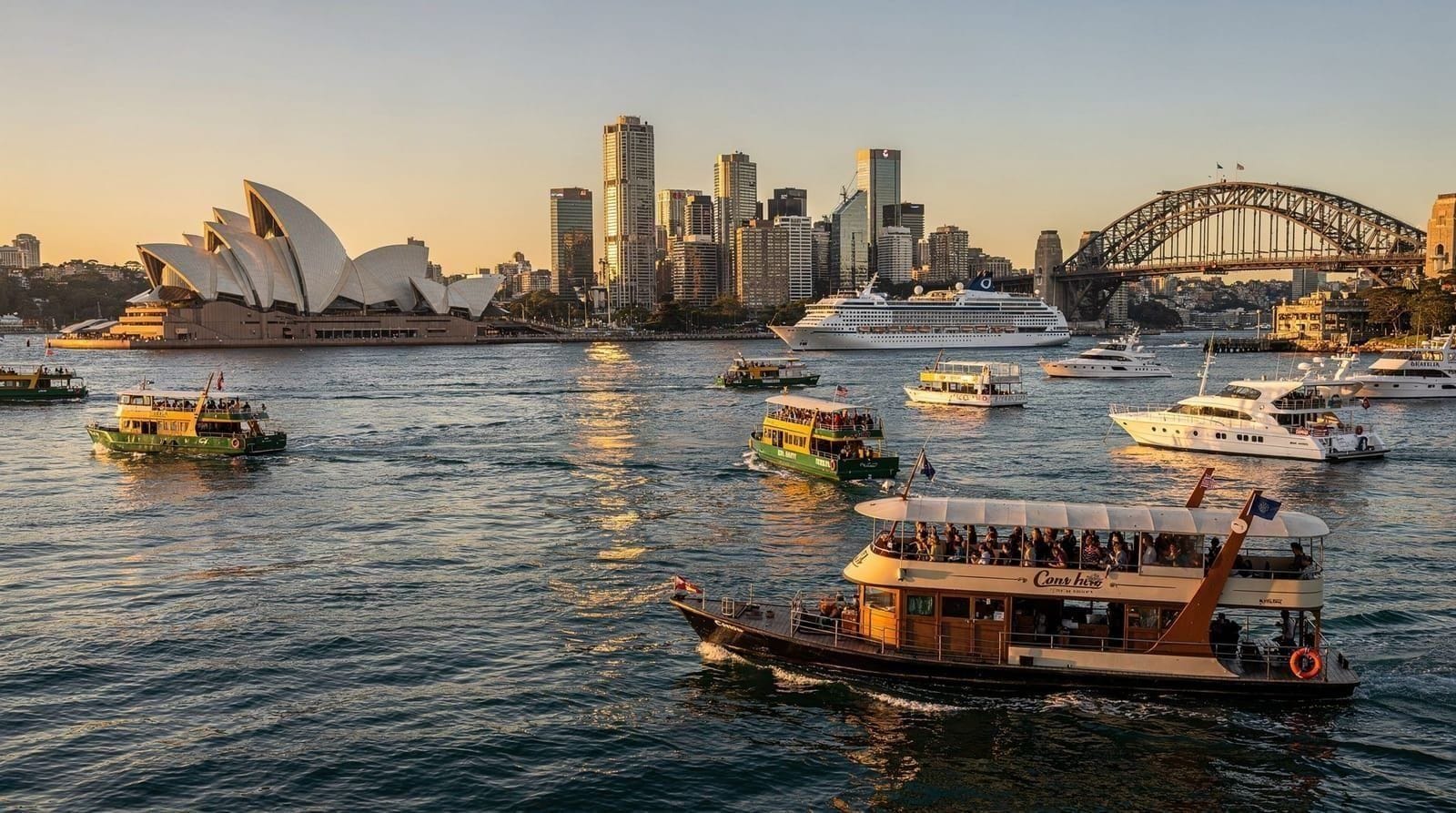
Sydney hop-on-hop-off harbour ferry ticket — the commercial hop-on-hop-off service also stops at Cockatoo Island and may offer more flexible timing than the regular F3 route if you are combining the island with other harbour stops.
The island is reasonably self-navigating — the path network is clearly marked and a self-guided audio tour is available via download or rental from the island’s visitor centre. Allow 2–3 hours for a comprehensive self-guided exploration including the convict precinct, the dry dock, the Turbine Hall, and the waterfront.
Camping on the island
Sydney Harbour Federation Trust operates a campground on Cockatoo Island’s western plateau — one of the more unusual camping experiences in any major city. Sites range from tent platforms to glamping tent options with beds and power. See the official Cockatoo Island website for current camping and glamping prices.
The logistics are straightforward: you bring your own food and equipment, take the last public ferry out (or the campsite-specific late service), and wake up on a harbour island with early morning water views before the day visitors arrive. The island has bathroom facilities, communal kitchen areas, and a small café that opens during the day. Alcohol rules apply, so check the official Cockatoo Island website before you go.
If you are planning to camp, book significantly in advance — the island is popular for both leisure camping and work retreats, and the limited site numbers sell out for popular dates months ahead. The Sydney 5-day itinerary includes Cockatoo Island as a mid-trip variation for visitors wanting to extend their harbour experience.
Art and events
The Sydney Biennale uses Cockatoo Island as one of its major venues in even-numbered years (2024, 2026, etc.). The industrial infrastructure of the island — particularly the Turbine Hall and the dry dock — provides a scale and atmospheric quality that conventional gallery spaces cannot replicate. Past Biennale works have included massive suspended installations in the Turbine Hall, sound works using the tunnel network, and site-specific pieces responding to the island’s convict history.
Outside the Biennale years, the island hosts a rotating program of exhibitions, film screenings, and events through the Sydney Harbour Federation Trust’s cultural program. Check the trust’s website for current events before visiting.
What to see on the island
Convict precinct: The sandstone barracks, solitary confinement cells, and the tunnels cut through the island’s rock are the most atmospheric historical site. The sandstone is beautifully textured and the tunnels are surprisingly extensive. A self-guided audio tour covers this area in detail.
Dry dock: The massive dry dock on the island’s southern shore can hold a destroyer-sized vessel and gives a genuine sense of the industrial scale of the 20th-century shipyard operation.
Turbine Hall: Even outside of exhibition periods, the Turbine Hall is worth seeing for its industrial architecture — a late-Victorian steel and glass structure that has the proportions of a cathedral.
Waterfront views: The island’s high points give views across the upper harbour toward Balmain, Drummoyne, and (on clear days) the city skyline. The western shore has a picnic area with harbour outlooks.
The convict tunnels in detail
The tunnel network cut through Cockatoo Island’s sandstone is the most atmospheric part of the convict heritage. The tunnels were cut by convict labour between 1839 and the 1840s, using hand tools, in conditions that were deliberately punishing. The sandstone bears tool marks from the original excavation work — a direct physical trace of the convict labour system in a way that most historical sites cannot provide.
The main tunnel runs from the northern to the southern side of the island, originally serving as a drain for the dry dock when it was pumped dry. Secondary tunnels branch off the main corridor and have been used for various storage and utility purposes over the decades. Today the tunnels are accessible on the self-guided audio tour and are well enough lit for safe navigation, though the spaces are close and the sense of containment is genuine.
Island wildlife
Cockatoo Island has a small but interesting resident wildlife population. Sulphur-crested cockatoos nest in the island’s heritage buildings and are reliably visible most mornings — the island’s name reflects the historical cockatoo presence rather than being a colonial-era designation. Silver gulls are omnipresent, particularly around the café area. Pelicans and cormorants patrol the waterfront. In winter, it is occasionally possible to spot whale spouts from the island’s northern point during migration season.
At night (for campers), the island’s position in the harbour means bats — flying foxes — are frequently visible crossing the sky between the mainland vegetation patches on either side of the river.
The ferry return question
Cockatoo Island’s single most important practical note: there is limited late-evening ferry service. The regular F3 ferry from Circular Quay typically runs its last service to the island well before midnight, and the service frequency drops significantly after 7pm. If you are visiting for a daytime event or exhibition, check the return timetable before you commit to a particular ferry time — missing the direct return means a water taxi (expensive) or a combination of ferry to Balmain or Drummoyne and then a bus back to the CBD.
For campers, this is a non-issue — you are staying overnight. For day visitors attending evening events (openings, screenings, the Biennale), confirm the return service timing in advance through the Transport NSW Journey Planner.
Comparison with Fort Denison and other harbour islands
Cockatoo Island is the most accessible and the most content-rich of Sydney Harbour’s major islands. Fort Denison (Murimurh/Pinchgut) requires a separate tour booking and has a much smaller footprint. Clark Island and Shark Island are primarily picnic and swimming destinations with minimal heritage infrastructure. Goat Island (Memel) has significant Aboriginal cultural significance but limited visitor access.
If you are interested in harbour islands as a theme rather than just Cockatoo Island, the Sydney Harbour guide covers the full island network including how to reach each one.
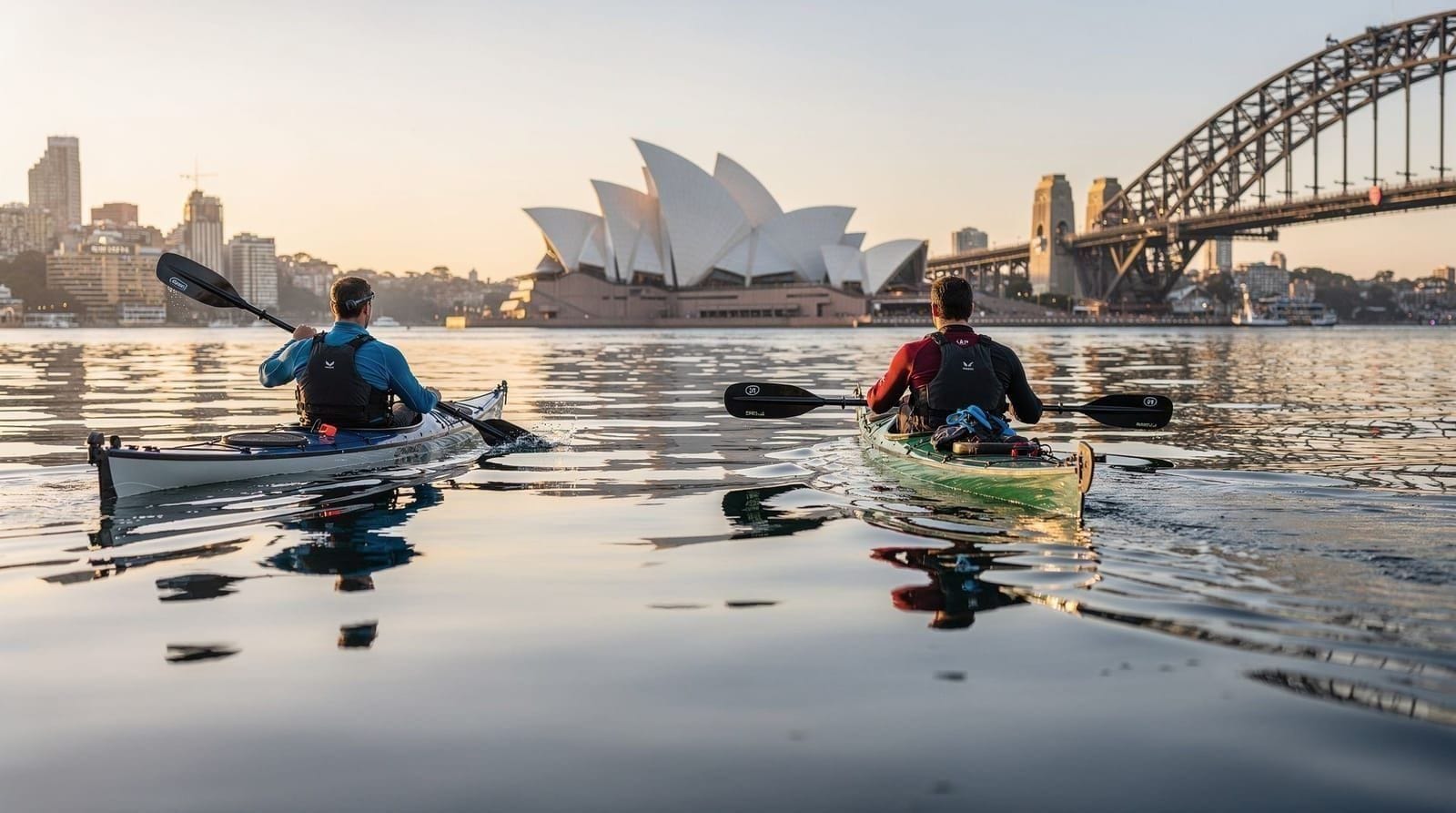
If you would rather see the islands from the water, a guided kayak paddle around Goat Island gives a very different angle on the harbour, and our Sydney harbour kayaking guide explains what to expect on the water. Visitors who prefer to stay dry can pair the island with the Sydney Harbour cruises guide options, or with a stop at The Rocks before or after the ferry.
Practical notes
Bring water and food — the island has a small café with limited hours and basic supplies, but relying on it for a full day would be optimistic. Sunscreen is essential; the island is exposed and there is limited shade outside the buildings. The terrain is mostly flat with some slightly rough paths near the convict tunnels. Closed-toe shoes are recommended for the tunnel sections.
Cockatoo Island is one of those Sydney experiences that rewards visitors who come with curiosity and leave the expected itinerary behind. The combination of convict history, industrial heritage, and art programming is genuinely distinctive, and the harbour camping experience is unlike anything available in most major cities. For a Sydney weekend itinerary covering the harbour broadly, Cockatoo Island works well as a Saturday afternoon stop, combining with the Balmain ferry and a return to Circular Quay in the evening. For a full 7-day Sydney itinerary, the island appears as a mid-week variation from the inner-city landmarks.
Who Cockatoo Island suits
Cockatoo Island rewards visitors with an interest in history and industrial architecture more than it rewards anyone expecting a conventional beach or landmark day. It works particularly well for repeat visitors to Sydney who have already done the Opera House, Bondi, and Manly circuit and want something with genuine local depth. It also suits travellers on a budget, since daytime entry and the ferry (standard Opal fare) cost far less than most Sydney harbour experiences. Families with primary-school-age children generally do well here too — the self-guided audio tour and open plateau give kids space to explore without the crowds of central Sydney attractions.
If you are new to the city, the Sydney for first-timers guide helps you decide where the island fits among the headline sights. Travellers watching costs will find more ideas in free things to do in Sydney and the honest Sydney budget guide, and the Opal card guide explains how to pay for the ferry without fuss. Anyone fascinated by the colonial layers of the harbour may also enjoy the Rocks history walk, which tells the story of the same era from the mainland side.
Combining Cockatoo Island with the rest of the upper harbour
Because the F3 ferry continues on to Parramatta after Cockatoo Island, it is easy to combine the two in a single day: explore the island for 2–3 hours, then continue upstream for another 30 minutes to see Parramatta’s own colonial heritage sites. Alternatively, combine with Balmain (accessible on the same ferry route) for lunch and a browse of Darling Street’s shops after the island visit — the Sydney ferries guide has the full route map.
Frequently asked questions about Cockatoo Island
Is Cockatoo Island worth visiting if I only have a few days in Sydney? It’s better suited to a longer trip. With only 2–3 days, prioritise the Opera House, Harbour Bridge, and Bondi; add Cockatoo Island if you have a 5-day-plus itinerary or are visiting Sydney for a second or third time.
Can you visit Cockatoo Island without paying for anything? Yes — daytime entry and exploration are free; you only pay for the ferry fare (standard Opal fare), and optionally for camping, the audio tour, or event tickets during the Biennale.
Top experiences
Bookable activities with verified prices and instant confirmation on GetYourGuide.