Sydney with toddlers — the unfiltered version
The day the Opera House made our son cry
He was two and a half. We’d hyped up the Opera House for weeks. We’d shown him pictures. We bought the ferry ticket, stood in the right spot for the photo, pointed dramatically at the sails — and he burst into tears because he’d seen a pigeon and wanted to chase it but there were too many people in the way.
This is Sydney with toddlers.
Not all of it, obviously. There were genuinely transcendent moments — the first time our daughter, then four, saw a kookaburra land on a fence post at Featherdale and laughed its rattling laugh, she stood completely still and stared at it for a full minute with her mouth open. That was worth the entire trip.
But if you’re travelling to Sydney with children under five, let us offer the version of this experience that doesn’t appear in the “family-friendly Sydney” listicles.
At a glance
| Best base | Manly, Newtown, or Surry Hills — near parks and family-tolerant cafes |
| Cost | Featherdale is noticeably cheaper than Taronga |
| Getting around | Trains are pram-accessible at most stations (a few heritage stations lack lifts); ferries need two adults for an easy pram transfer |
| Pace | Plan around 90-minute activity windows, not full adult-length days |
| Best time to visit | Outside the December–January peak if you can, for thinner crowds at zoos and beaches |
Pram logistics are genuinely hard
Sydney’s heritage precincts — particularly The Rocks and Circular Quay — are not pram-friendly. The cobblestones at The Rocks will rattle a sleeping toddler awake with surgical efficiency. The ferry wharves involve uneven gangways, and some of them (particularly the older timber piers) have gaps that are unreasonably large for families with small children.
The Harbour Bridge pedestrian walkway is pram-accessible but involves elevator access from Cumberland Street that isn’t obvious and requires you to know to look for it.
Our most useful investment: a lightweight umbrella stroller rather than our full travel system. The fold needs to be genuinely one-hand operable because you will always have a wriggling child in the other arm.
The BridgeClimb has a minimum age of eight years. There is no exception. Do not bother ringing to ask.
Taronga Zoo: the ferry makes it
Taronga Zoo is legitimately excellent for toddlers — the enclosures are well-designed, the animals are active (particularly the giraffes, who will look your small human directly in the eye), and the Sky Safari cable car from the upper to lower entrance is a highlight in itself.
What makes it work is the ferry. The ferry from Circular Quay to Taronga is a short, beautiful ride across the harbour, and the combined ticket that includes ferry plus zoo entry makes the whole logistics chain seamless. Toddlers find the boat journey as exciting as the zoo.
One honest note: Taronga is hilly. The terrain between sections involves real gradient. Budget the energy accordingly and know where the lifts are before you need them with a sleeping child over your shoulder.
Featherdale over Taronga for really little ones
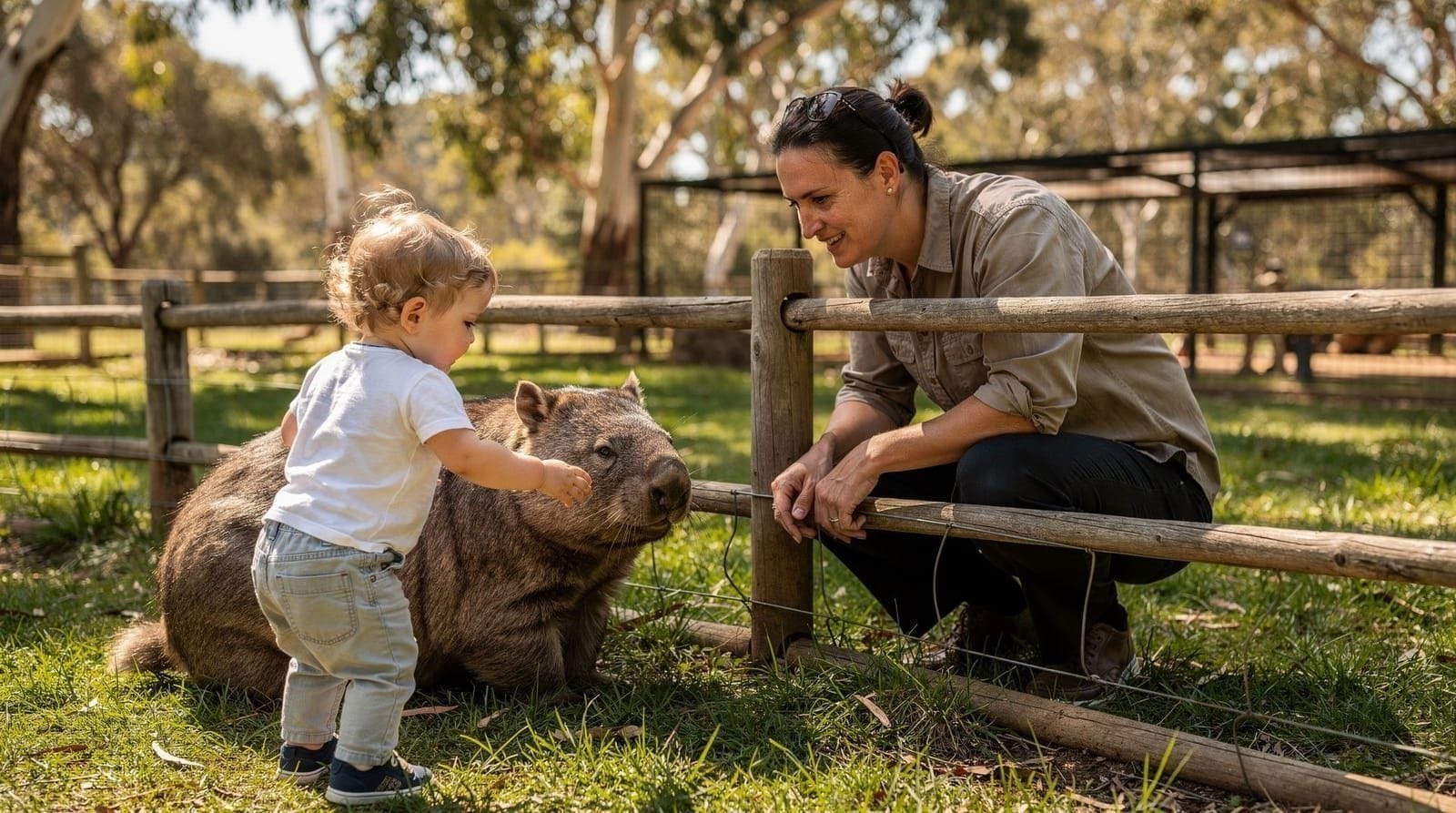
That said, for children under three, Featherdale Wildlife Park in Blacktown is the better call. Smaller, flatter, and allows direct interaction with kangaroos and wallabies in the open paddock. Our two-and-a-half-year-old fed a wallaby from a small cup of feed pellets and talked about it for the rest of the trip.
It’s also significantly cheaper than Taronga, and the train to Blacktown from Central runs frequently. From Blacktown station, bus 729 runs to the Featherdale entrance (about 10 minutes), or you can take a taxi.
The beach problem
Sydney’s famous beaches are legitimately beautiful and genuinely unsuitable for toddlers with no ocean experience. Bondi, Manly and Bronte have powerful surf breaks and strong currents. The flags mark the safest swimming section, but “safest” is relative when you’re managing an excited two-year-old who has no concept of waves.
Better options for small children:
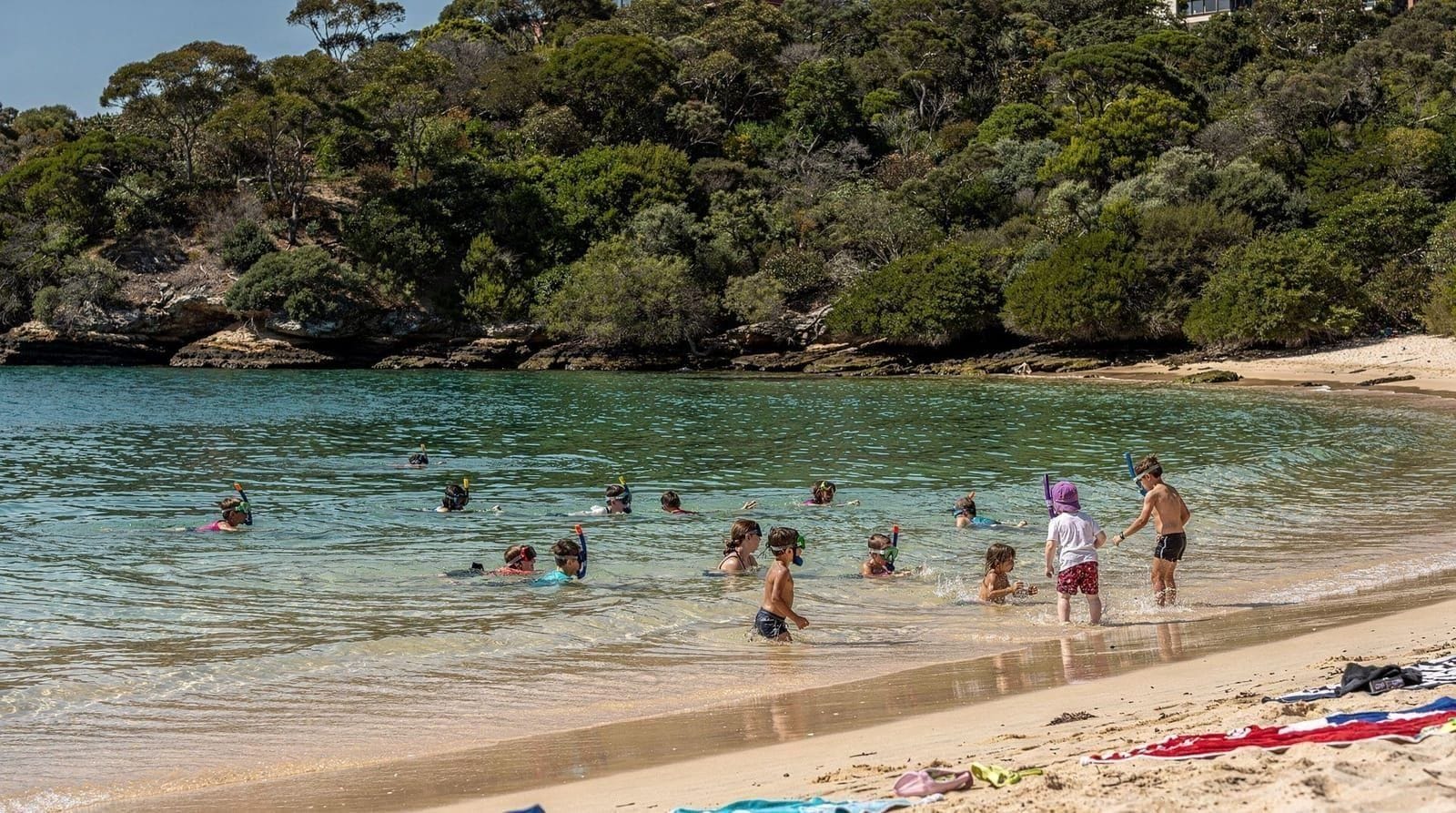
Balmoral Beach in Mosman is sheltered, shallow, and has a shark net that creates a calm swimming area. Grassy parkland backs directly onto the sand. This was our most successful beach day by far.
Shelly Beach in Manly is a small protected cove on the south side of the headland — calm water, snorkelling (for the adults), and a short walk from the Manly ferry. You can reach it easily as part of a Manly visit.
The ocean pool circuit — Malabar, Clovelly and Bronte have rock pools and ocean pools that are genuinely safe for small children, with none of the surf anxiety. Clovelly Beach in particular is a rectangular protected inlet where the water is calm on most days.
Feeding toddlers: the real challenge
Sydney’s restaurant culture is excellent but not always child-tolerant. The trendy spots in Surry Hills and Newtown have great food and no tolerance for a two-year-old who has decided to express an opinion about sitting in a high chair. This is not a criticism; it’s just geography.
The Sydney Fish Market in Pyrmont is one of the best family eating experiences in the city — sit-down options outside, sea air, something to look at, and consistently good fish and chips that even fussy eaters will accept. Allow time for the seagulls to attempt a raid; this is apparently very funny if you are under five.
The cafes around Manly’s corso are geared for families in a way that the CBD and inner-east streets generally are not. Tables spill onto wide footpaths, the vibe is tolerant, and you can usually find something resembling a plain pasta or schnitzel without having to explain your needs to a suspicious maître d’.
Nap management: the overlooked art
Every parent knows this, but it bears saying in the Sydney context: the ferry is an extraordinary toddler sedative. The morning Manly ferry at 9:30 am will very likely put your child to sleep before you reach the Heads. This is not accidental. The diesel thrum, the motion, and the sea air combine into something close to magical.
We deliberately built “ferry time” into days where we needed a reset. A return trip to Manly is paid on Opal and takes approximately 30 minutes each way. As nap infrastructure, it is wildly cost-effective.
What to skip
The Aquarium: SEA LIFE Sydney in Darling Harbour is technically good for toddlers, but the indoor, dark, corridor-based format produces overwhelming stimulation very quickly. Our kids hit saturation at about 50 minutes and spent the last 30 minutes of our visit trying to escape. If you go, plan for a short visit and leave before it becomes a negotiation.
Luna Park after 4 pm on weekends: the queues at the classic rides are genuinely long, and the combination of tired toddlers and crowds is a recipe for the specific type of experience that makes everyone question their life choices.
The Opera House interior tour: minimum recommended age is around six for meaningful engagement. The architecture from outside is free and more impressive.
What worked best overall
The Centennial Parklands — giant, flat, has a duck pond, has a playground of the kind that toddlers find inexhaustibly interesting, and costs nothing. We went on our first full day to recalibrate after the flight.
The cycle of: morning activity / ferry somewhere / lunch / nap (in pram or ferry) / beach or park / early dinner at 5:30 pm worked consistently. Trying to do any equivalent of a full adult day in Sydney with toddlers will end in collective misery.
Sydney is genuinely one of the most beautiful cities in the world to bring children to. It is also a city with a real outdoor culture — the beaches, parks, and harbour mean there is always somewhere to take a small person who needs to run. Just manage your own expectations about what a “day out” looks like for the next two to four years, and you’ll be fine.
Transport with toddlers: the unexpected win
The Opal card system is actually well-suited to travelling with young children — there’s no complex ticketing, no having to buy separate children’s fare (children under 4 travel free, ages 4–15 pay child fares), and the machines are tap-and-go rather than queue-and-fumble.
The train network is generally pram-accessible, with lifts at most major stations. The exceptions are some heritage stations (Museum Station, St James) which are old enough to lack lift access from street level. Plan around these if you’re pram-dependent. The trains themselves have pram/wheelchair spaces near the doors.
Ferries are pram-manageable with a second adult — one holds the pram, one carries the child down/up the gangway. Doing this alone requires a very robust stroller (not an umbrella pram) and good timing with the ferry staff, who are generally helpful.
Buses: unfolded prams are permitted but require the front pram bay, which may be occupied. If you’re on a tight schedule, build in bus flexibility.
Accommodation choices that actually work
Apartment-style accommodation is significantly more practical with toddlers than a hotel room for anything more than two nights. The ability to put children to bed in a separate room, cook simple meals, do laundry, and have a kitchen for breakfast is not luxury — it’s the difference between a functional trip and a logistical grind.
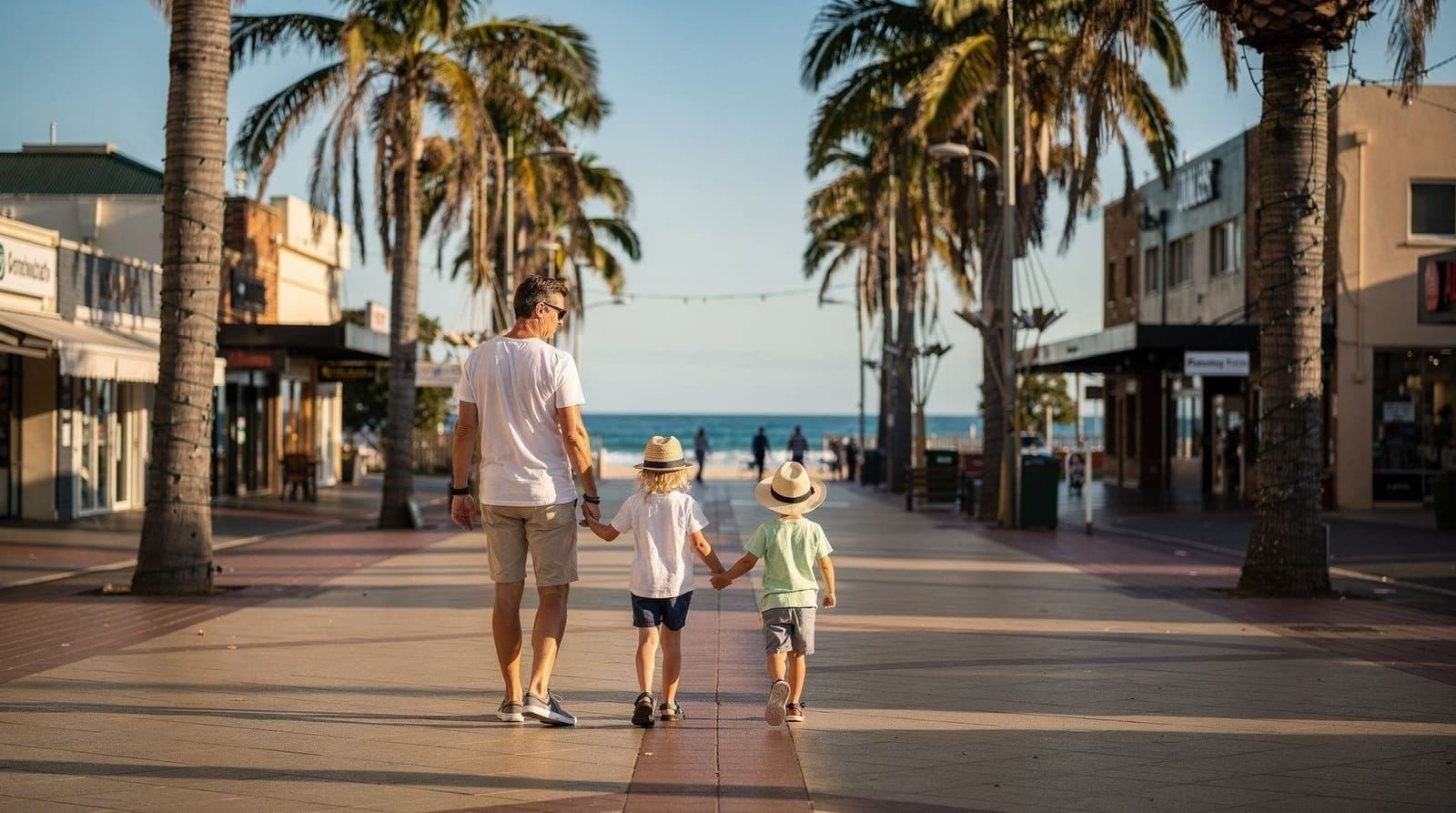
The suburb choice matters for toddler-travel purposes. Surry Hills and Darlinghurst are close to Hyde Park (enormous, flat, with good playgrounds) and well-connected. Newtown has parks and excellent café culture with family tolerance. Manly is expensive in summer but the beach proximity eliminates a huge amount of daily decision-making — walk to beach, sit, return. This is very effective with small children.
Avoid: accommodation in the CBD (no green space immediately accessible, noisy at night), Darling Harbour (same, plus very tourist-dense), and The Rocks (cobblestones that rattle prams and limited park access).
The realistic daily schedule
What we found worked was built around the principle that children under four operate in approximately 90-minute windows before needing either a meal, a sleep, or both. Working with that rhythm rather than against it:
6:30 am: Feed the children at the apartment (cheap, no restaurant waiting, no noise concerns). 7:30–9:30 am: The best two hours. Energy highest, crowds lowest. Beach, park, harbour walk, or animal time. 9:30 am: Coffee for the adults, snack for the children. Sit down. 10 am–12 pm: Main activity of the day. Zoo, aquarium, or continued outdoor time. 12–12:30 pm: Lunch. Simple, not at a tourist restaurant. 12:30–2:30 pm: Nap time. Ferry, pram walk, apartment. This is non-negotiable with children under three. 3–5:30 pm: Second activity window. Usually park, beach, or low-key neighbourhood exploring. 5:30 pm: Early dinner. 7 pm: Bedtime.
The adults then have the evening. Sydney at night is excellent for the adults in your group once the children are asleep — this is worth planning for rather than treating as an afterthought.
The things we genuinely loved
Featherdale, as mentioned, was the apex of our trip. The Botanical Garden was a reliable daily reset — free, enormous, full of birds that toddlers find inexhaustible. The ferry to Circular Quay from anywhere, because the harbour does something to small children that seems almost chemical.
The Taronga Zoo ferry-cable car-zoo circuit is genuinely brilliant and achieves the unusual feat of making the logistics as enjoyable as the destination. The giraffes visible from the cable car were a sustained highlight.
Hyde Park at 7 am on a Sunday — the fountain, the fig trees, the complete absence of crowds — was one of the genuinely peaceful moments of the trip. Bring a ball. The park is enormous and flat and ideal for a small person who needs to run in circles for 45 minutes.
When the adults need a turn
A trip built entirely around a two-year-old’s attention span is lovely and also quietly exhausting. The fix we landed on was taking turns: one parent keeps the small person busy at the apartment or the nearest park, the other disappears for a few hours of something that would be impossible with a pram. It sounds selfish until you notice how much better the whole family functions the next day.
The harbour is the obvious place to spend that turn. A sunrise kayak on the harbour fits neatly into the early window when toddlers are awake anyway, and a guided sunrise paddle across the harbour is back before the first proper meal of the day. If you would rather have the Opera House and the bridge in the same frame, a kayak trip past the Opera House and Harbour Bridge gives you the postcard view from water level, which is a very different experience from fighting the crowds on the pram-unfriendly paths around Circular Quay.
The other half of the deal matters just as much: the parent on duty gets a slow morning at a playground-friendly corner of the Royal Botanic Garden, with nobody checking the clock. Swap the next day. If you are travelling with older children as well, the rainy day guide for kids and the family attractions guide are worth a look for the siblings who can handle more.
For a slower, more reflective adult outing once someone else has the children, an Aboriginal-led walking tour with a smoking ceremony is a calm way to understand the place you are walking through. The wider context is in our guide to Sydney’s Aboriginal heritage. We would not bring a restless toddler along, so this is one for your turn.
What to do when it all goes wrong
Every trip with toddlers has the day when nothing works. In Sydney specifically: the Sydney Fish Market has saved several such days. It’s an outdoor covered space with a working market, seagulls to watch (and chase), good food at reasonable prices, and no pressure to keep children quiet. If it’s raining and the fish market feels too exposed, the SEA LIFE Aquarium is nearby and provides 1.5–2 hours of controlled indoor stimulus. The rainy day guide has more options.
For more: Sydney with kids, Sydney zoos for toddlers, and rainy day options for families.
Taronga vs Featherdale for under-fives
| Taronga Zoo | Featherdale Wildlife Park | |
|---|---|---|
| Terrain | Hilly, cable car helps | Flat, easy pram access |
| Direct animal contact | Limited | Kangaroos and wallabies in open paddocks |
| Cost | Higher, ferry combo included | Noticeably cheaper |
| Getting there | Ferry from Circular Quay — part of the fun | Train to Blacktown plus bus 729 or taxi |
| Best for | Ages 4+ who enjoy the ferry-cable car circuit | Under-3s who want up-close, low-stimulation animal time |
See the full comparison in Taronga vs Featherdale.
Beach safety for young children
Sydney’s ocean beaches carry real surf and rip risk, and the flagged sections are patrolled but not a guarantee against a strong current. For toddlers and very young children, sheltered swimming spots (Balmoral, Shelly Beach, the ocean pool circuit) remove the surf variable entirely rather than just reducing it. If you do take a toddler to a flagged ocean beach like Bondi or Manly, stay in the shallows well inside the flags and keep a hand on them at all times — the shore break alone can knock a small child off their feet.
A couple of questions people ask
Is Sydney easy to visit with a toddler in a pram? Mostly yes, with exceptions — heritage precincts like The Rocks and a handful of older stations lack good pram access. Budget extra time and check lift access at any station you’re relying on.
What’s the single best toddler activity in Sydney? For under-threes, Featherdale Wildlife Park for direct animal contact at a flat, manageable pace. For four and up, the Taronga ferry-cable car-zoo circuit is hard to beat.