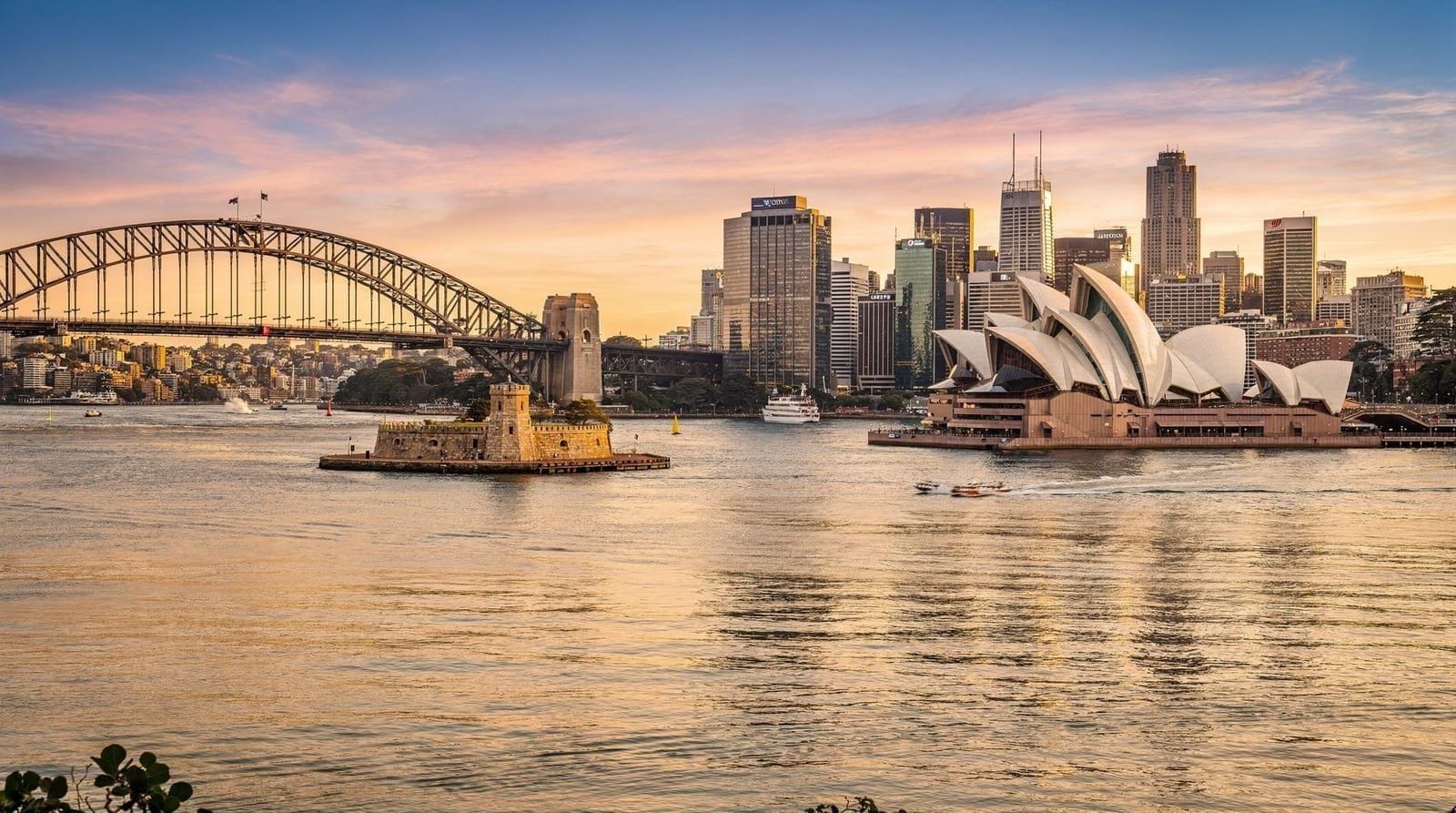
Circular Quay
Circular Quay is Sydney's transport hub — Opera House, Harbour Bridge views, ferry wharves to Manly, and some of the city's most overpriced restaurants.
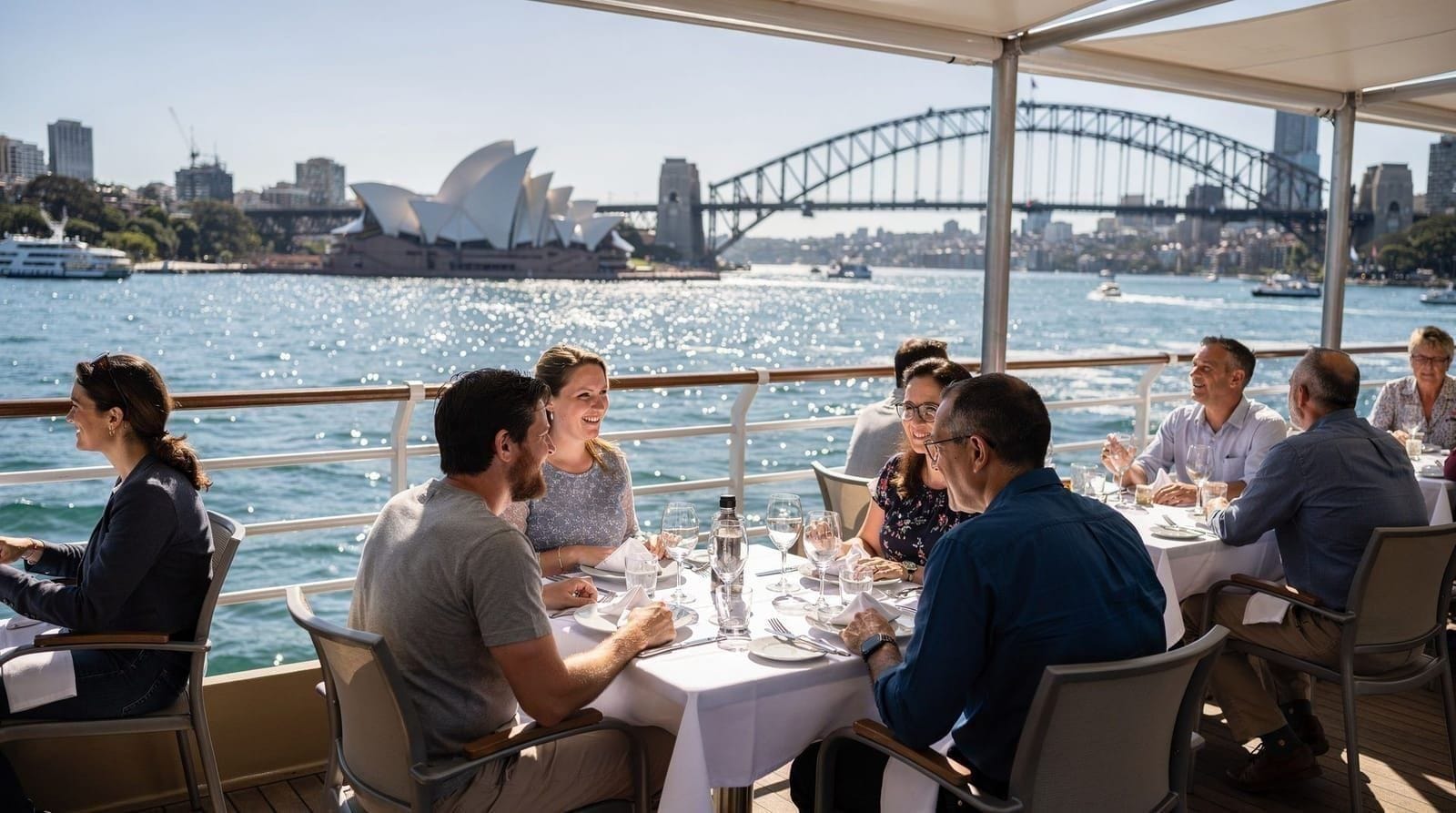
Sydney: Harbour sightseeing cruise from Circular Quay
Quick facts
- Best for
- Ferries, Opera House access, Harbour Bridge views, foreshore photography
- Getting there
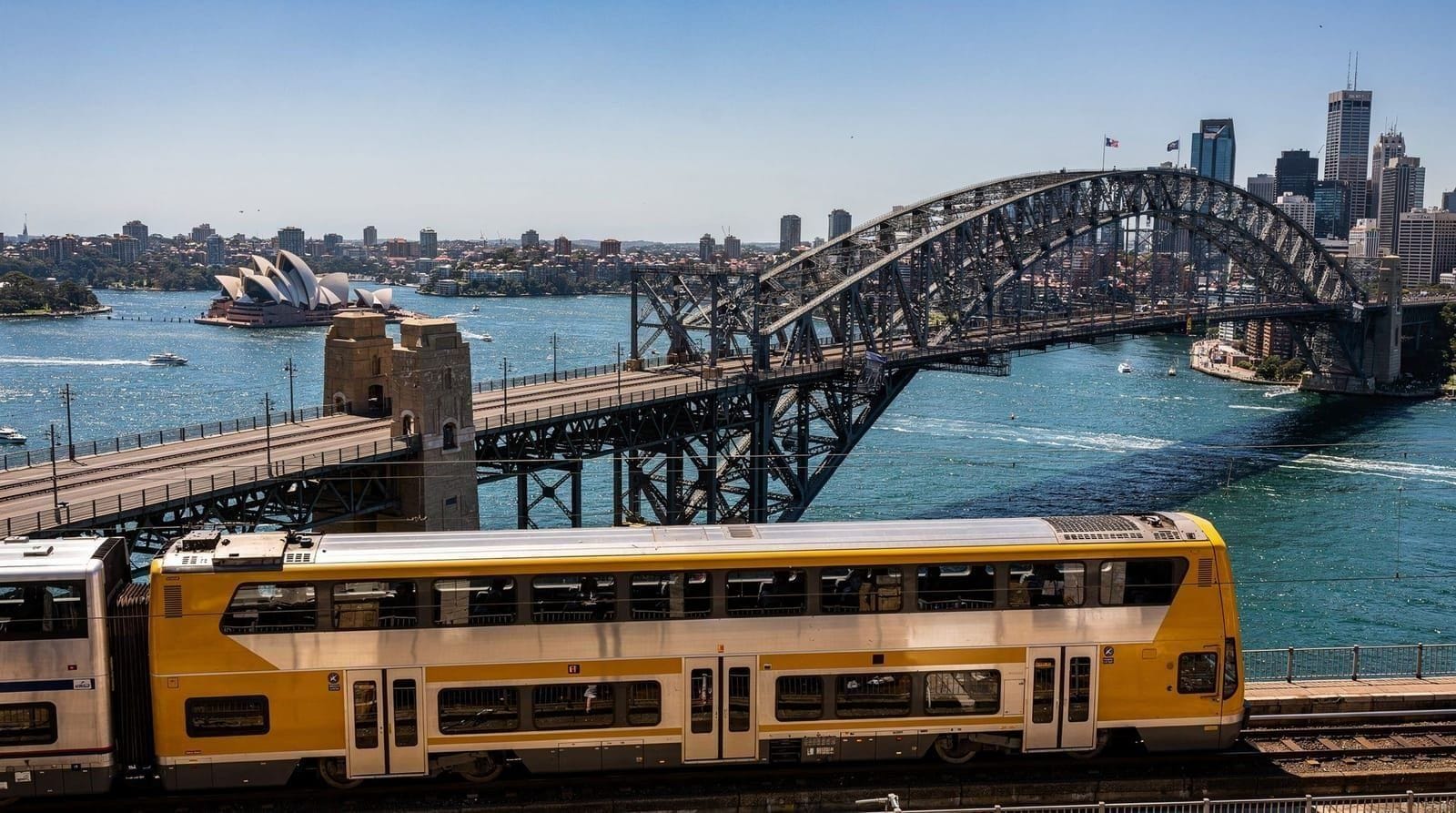
- Train to Circular Quay (all eastern suburbs and North Shore lines)
- Ferry wharves
- Manly (F1), Taronga Zoo (F2), Parramatta River (F3)
- Avoid
- Waterfront restaurants — expect AUD 40–60 for average mains
- Don't miss
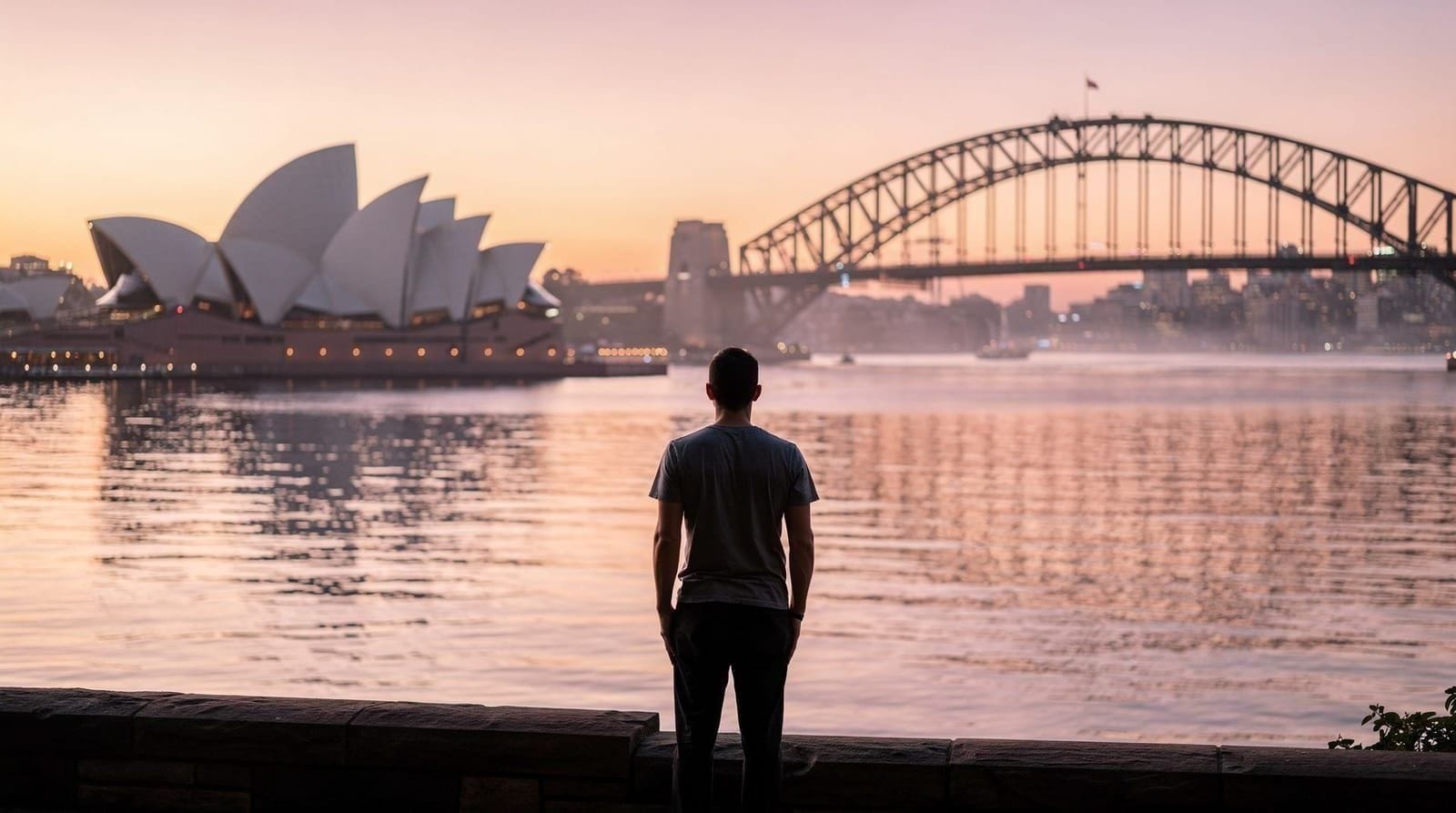
- Morning walk from Circular Quay to Opera House forecourt at sunrise
The gateway to Sydney Harbour
| At a glance | |
|---|---|
| Where | Northern edge of the CBD, on Sydney Harbour, between the Opera House and The Rocks |
| Cost | Free to walk the foreshore; ferry fares are distance-based (Opal daily cap A$9.65 Friday to Sunday) |
| Time needed | Half day as a hub; combine with Opera House or The Rocks |
| Getting there | Train (T1/T2/T3/T4 or Airport Link) direct to Circular Quay Station |
| Best time | Early morning for photography and low crowds; avoid NYE unless planned |
Circular Quay is not really a destination in its own right — it is the physical hub that connects Sydney’s CBD to its harbour and, by extension, to the rest of the city’s waterfront suburbs. Every visitor to Sydney will pass through Circular Quay at least once, and most will pass through it several times. It is worth understanding what it is and what it is not before you get there.
The concourse between the train station and the ferry wharves is one of Sydney’s most heavily trafficked pedestrian spaces. At rush hour, it is impossible to move quickly; in the middle of the day, it is busy but navigable. The five-minute walk east along the foreshore to the Opera House forecourt is the most immediately rewarding thing you can do on arrival. The sequence of views as you approach the Opera House from the Circular Quay side — the roof shells gradually revealing themselves from behind the ferry infrastructure — is the urban architectural moment that Sydney does better than almost anywhere.
Restaurant warning
The waterfront strip of restaurants between the ferry wharves and the Overseas Passenger Terminal is a tourist trap that has been running for decades. The restaurants have spectacular harbour views and charge accordingly — AUD 40–60 for a main course that you could eat at equivalent quality two streets away for AUD 25–35. The views are genuine; the value is not.
This does not mean you should avoid eating near Circular Quay entirely. Café Sydney (Level 5, Customs House) is more expensive but delivers quality that justifies the price and has outstanding harbour views from a rooftop position. The Museum of Contemporary Art Australia café on the lower level of the MCA building has reasonable food, reasonable prices, and a view of the Circular Quay concourse.
For a proper meal, walk five minutes to The Rocks (north) or head into the CBD (George Street laneway cafés) and you will eat significantly better for less money. The honest-planner guide to Sydney’s tourist traps covers this in full.
The ferry wharves
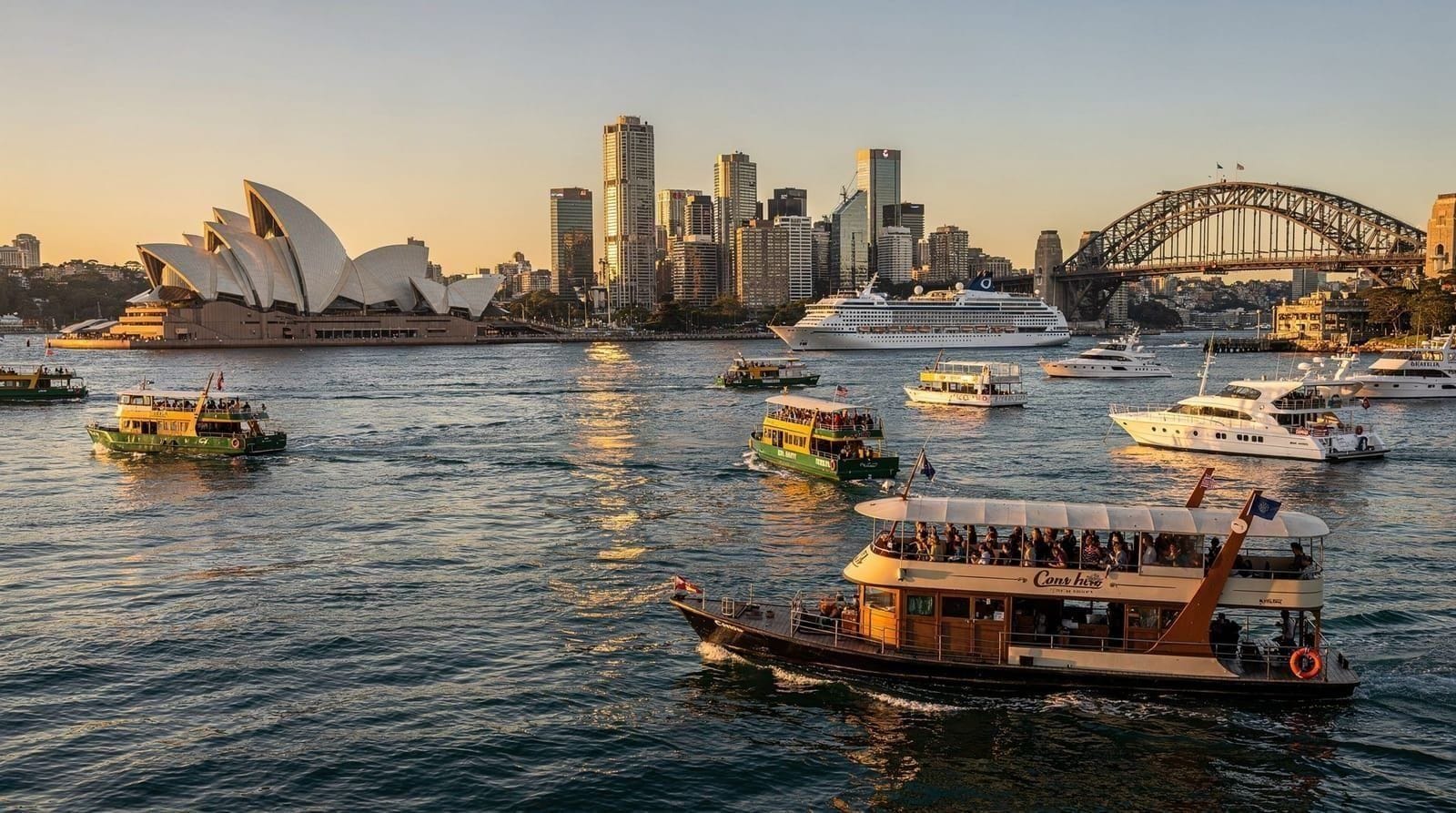
Circular Quay’s six ferry wharves are the operational core of the Sydney Ferries network:
Services include Manly (F1), Taronga Zoo (F2), Parramatta River and Cockatoo Island (F3), Pyrmont Bay (F4), Neutral Bay (F5) and Mosman Bay (F6). Check the Transport for NSW departure information for the wharf of your service.
All services run on Opal card or contactless payment. The daily cap of AUD 9.65 applies Friday to Sunday, making weekend ferry exploration extremely good value. On a Saturday with the daily cap active, you can cross to Manly, return, cross to Taronga Zoo, return, and cross to Balmain, all on the same AUD 9.65.
The Sydney Ferries guide has full timetables and connections.
Sightseeing cruises from Circular Quay
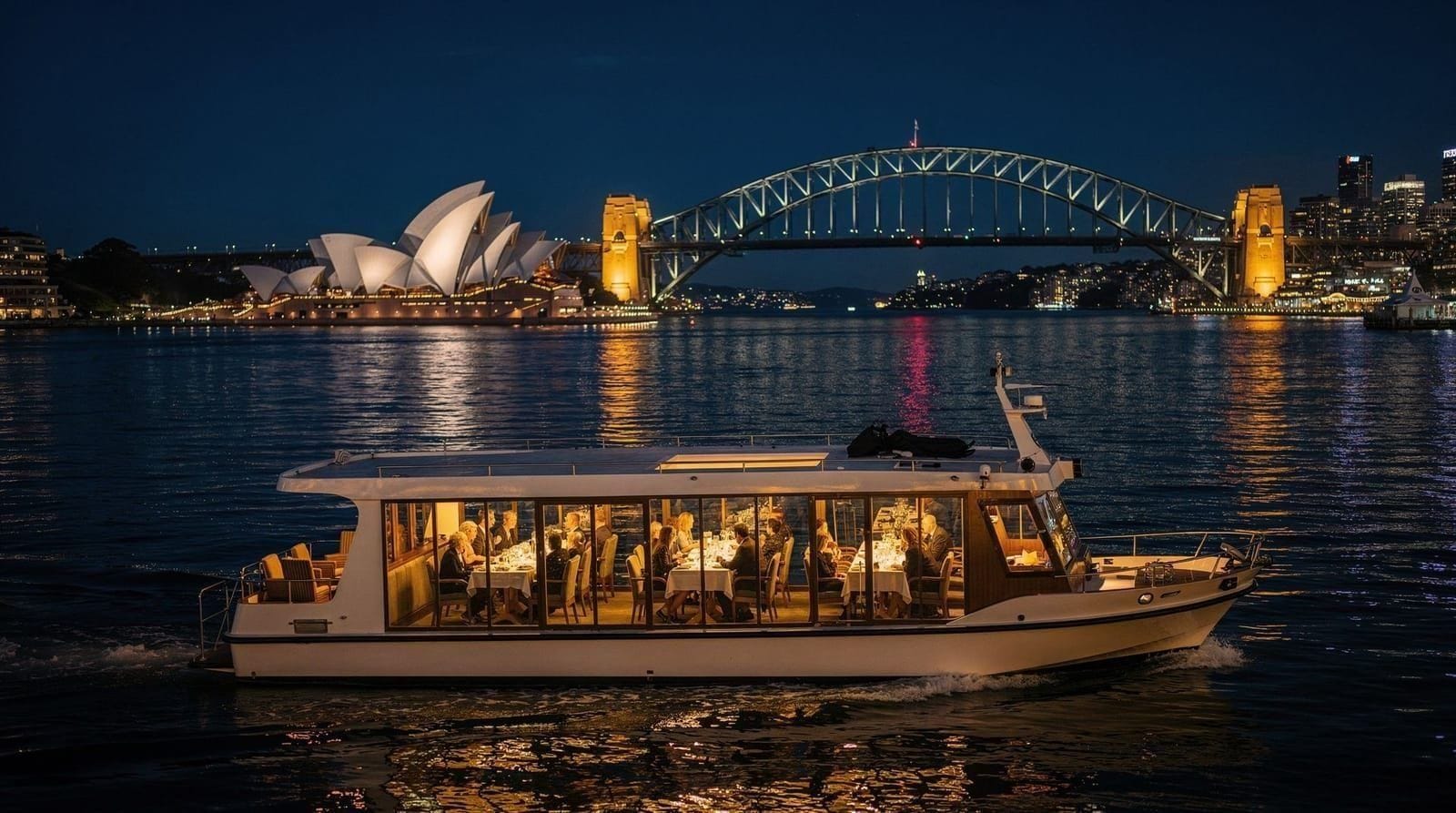
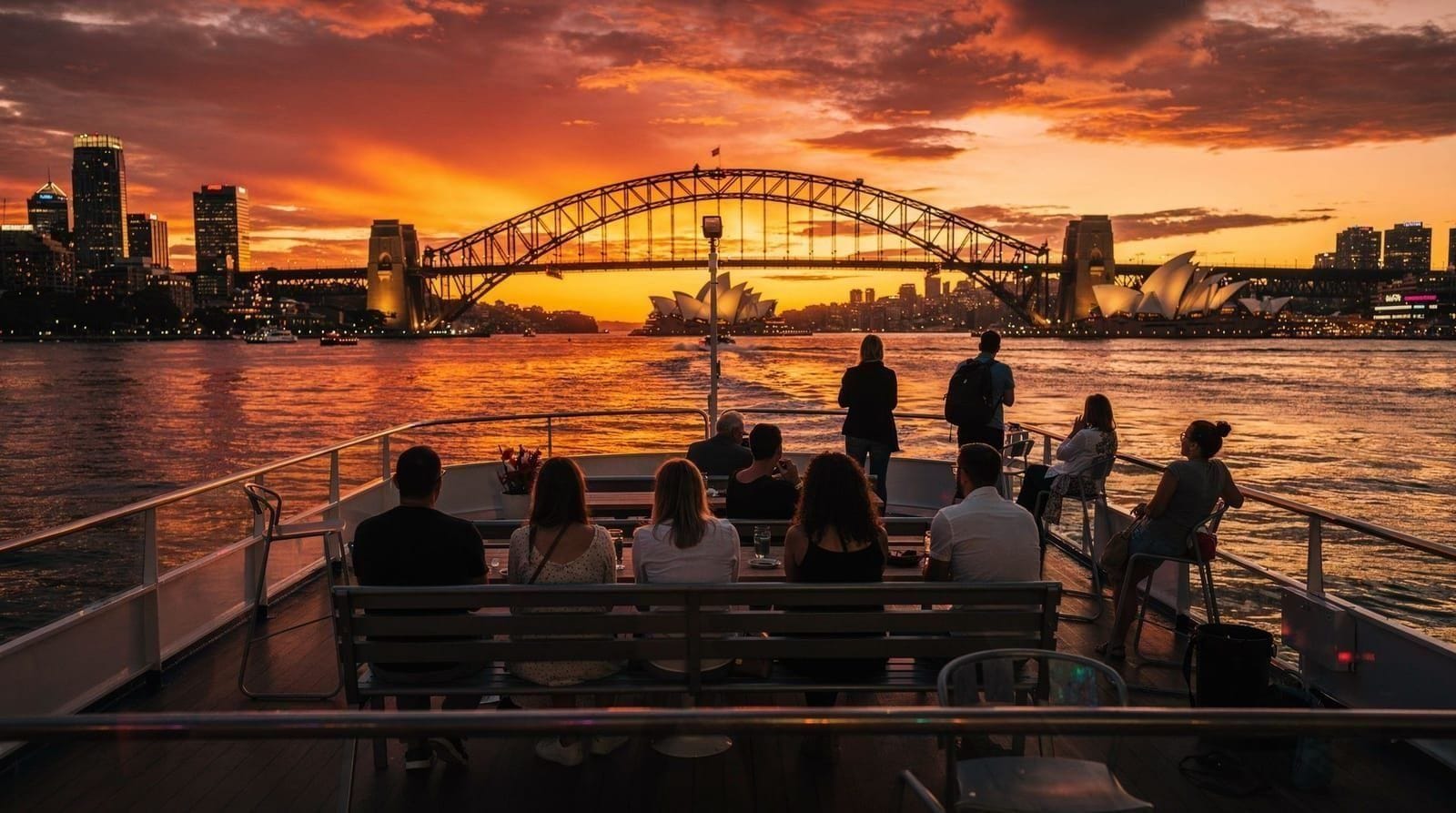
Several cruise operators depart from Circular Quay with routes covering the harbour’s main landmarks: the Opera House, Harbour Bridge, Fort Denison, Garden Island, and Clark Island. The shorter sightseeing cruises (1.5–2 hours) are the most efficient way to get oriented on the harbour, particularly for visitors who are arriving for the first time and want to understand the geography before exploring on foot.
Sydney Harbour sightseeing cruise from Circular QuayThe hop-on-hop-off ferry is a separate commercial product from the Sydney Ferries network — it stops at fewer wharves but operates with more frequency and commentary. It is useful for visitors who want guided harbour narration without committing to a set cruise duration.
Sydney hop-on-hop-off harbour ferry ticketWhat else is at Circular Quay
Museum of Contemporary Art Australia (MCA) sits on the western side of the Circular Quay concourse. Museum entry is ticketed (MCA members and under 18s enter free), and the gallery has one of the country’s strongest programs for contemporary and Aboriginal Australian art. The building’s upper levels have harbour views. Allow 1–2 hours.
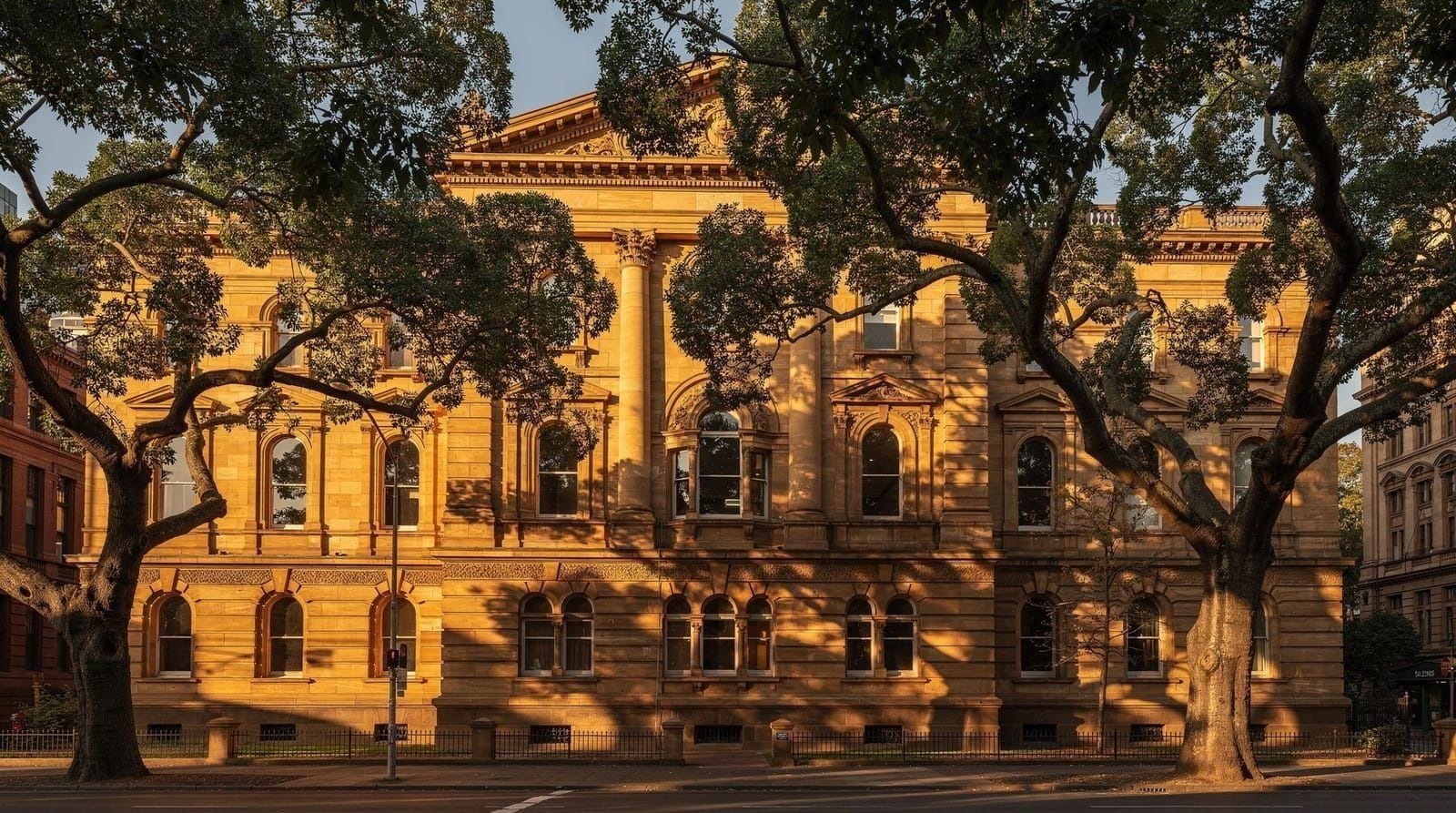
Customs House is an 1845 colonial building at Alfred Street, now converted to a public space with a library, café, and a scale model of Sydney’s CBD visible under a glass floor. Free to enter.
Cadman’s Cottage (on the waterfront near The Rocks) is the oldest surviving residential building in Sydney, built in 1816 as accommodation for the crew of the government’s water police boats. It is small and the interior is not always open, but the exterior is a genuinely significant piece of colonial architecture in an otherwise modernised precinct.
The foreshore walk continues east from the Opera House along Farm Cove to Mrs Macquarie’s Chair in the Royal Botanic Garden — a 30-minute walk that delivers some of the harbour’s best free views.
Vivid Sydney at Circular Quay
Vivid Sydney (late May to mid-June) concentrates its most spectacular installations along the Circular Quay foreshore. The Sydney Opera House is the festival’s centrepiece — its shells are used as a projection surface for large-scale light art that runs every evening. The surrounding buildings, including Customs House and the MCA, also carry installations. Fort Street and the immediate waterfront become a pedestrian-only evening circuit during the festival.
For visitors arriving during the Vivid period, the Circular Quay precinct between 7pm and 10pm is genuinely one of Sydney’s most memorable public experiences — the combination of harbour water reflections, illuminated building shells, and the scale of the projections creates an atmosphere that no other city event quite matches. Entry to the street-level installations is free. Some cruises run special Vivid routes that view the lit Opera House from the water. The Vivid Sydney guide covers the full program and what is worth paying for versus what is free.
New Year’s Eve at Circular Quay
The Sydney NYE fireworks launch from the Harbour Bridge and are most dramatically visible from the Circular Quay foreshore. This is both the best-positioned vantage point and the most overcrowded: prime foreshore positions fill early on 31 December. The 9pm family fireworks and midnight main display are visible from a wide range of vantage points around the harbour, but the Circular Quay foreshore gives you the bridge reflected in the water and the Opera House illuminated simultaneously.
Unless you have specifically planned around NYE — pre-booked a cruise, balcony dinner, or premium event — the practical advice is to position yourself somewhere less central. Kirribilli, Blues Point Reserve (north shore), or the Botanic Garden all give excellent views with less extreme crowding. The Sydney New Year’s Eve guide covers the full vantage-point breakdown with honest assessments of which spots are worth the effort.
Street performers and the concourse
The Circular Quay concourse supports a population of street performers that varies in quality from exceptional to annoying. The busking license system means that performers who have earned a place on the circuit are generally competent. Classical guitarists, jazz quartets, Aboriginal didgeridoo performers, and the occasional circus act occupy spots between the train station and the ferry wharves on most days. Tipping is not obligatory but is the only way these performers earn their income.
The concourse also has a significant population of people who solicit charity donations, petitions, and various forms of commercial sampling. These are not unique to Circular Quay but are more concentrated here than elsewhere in the CBD given the foot traffic. Politely declining is the standard approach.
Photography: best times and positions
Circular Quay’s best photography happens at extremes of the day. Sunrise (around 6–7am in summer, 6:30–7:30am in winter) gives you the Opera House shells in golden light with minimal crowds and the harbour water still. The foreshore east of the ferry wharves, facing the Opera House, is the classic position. Mrs Macquarie’s Chair in the Botanic Garden (a 20-minute walk east) gives a wider panorama including both the Opera House and Harbour Bridge in the same frame.
Blue hour (15–30 minutes after sunset) gives you the lit Opera House and Harbour Bridge against a deep blue sky, with the harbour water picking up both. This is the most technically challenging but most rewarding light for the location.
The middle of the day produces flat light and heavy crowds. Midday photography at Circular Quay is generally disappointing unless you are specifically capturing the ferry operations or the human energy of the concourse.
Getting there and around
Train to Circular Quay is the most direct route — the station is directly adjacent to the ferry wharves. Services run on the T1 (North Shore, Northern and Western Lines), T2, T3, T4 (Eastern Suburbs and Illawarra Lines), and the direct Airport Link connection. Service frequency is high during peak hours and drops to roughly every 15–20 minutes in the evenings.
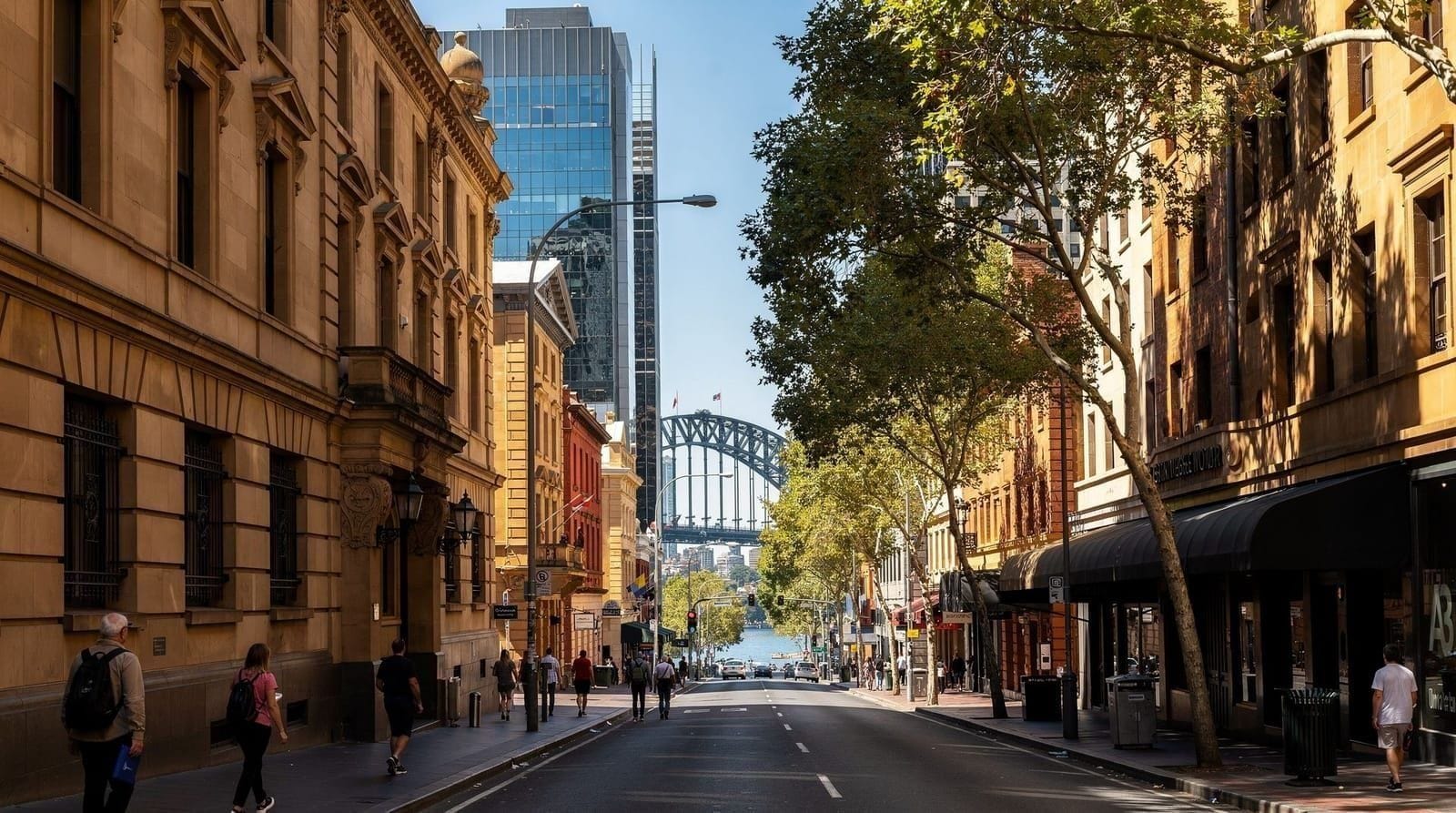
Walking from the CBD: from Town Hall station, follow George Street north for about 15 minutes. From Wynyard, walk east along Wynyard Lane or Bridge Street (10 minutes). This walk passes through the heart of the CBD retail district and is pleasant at most times of day.
Connecting to The Rocks: exit the Circular Quay concourse to the west and follow the foreshore path north; The Rocks is 5 minutes’ walk. The route passes Cadman’s Cottage and the beginning of the Rocks heritage precinct.
For getting beyond the CBD to the harbour suburbs, everything you need departs from the ferry wharves. The getting around Sydney guide explains the broader transport network including train, bus, light rail, and ferry connections across the metropolitan area.
Circular Quay as a base for first-time visitors
Because almost every harbour-facing itinerary starts or ends here, Circular Quay is the natural anchor point for planning a first day in Sydney. From the concourse you can walk to the Opera House forecourt in five minutes, to The Rocks in five minutes the other way, or take a ferry to Manly, Taronga Zoo, or Darling Harbour within half an hour. The Sydney for first-timers guide and the Sydney 3-day itinerary both use Circular Quay as the structural hub for day one, and it is worth reading either before you arrive so you are not deciding on the fly.
What Circular Quay is not good for
It is worth being honest about the precinct’s limits. It is not a place to linger for a full day — beyond the foreshore walk, the MCA, and the ferries, there is limited reason to stay once you have taken in the view. It is also not where to eat well (see the restaurant warning above), not where to shop meaningfully (the CBD’s George Street and Pitt Street Mall are a short walk south), and not a swimming or beach location. Visitors who treat Circular Quay as a full day out are usually disappointed; treating it as a 1–2 hour gateway, repeated several times over a trip, gets the most out of it.
Frequently asked questions about Circular Quay
Is Circular Quay walkable to the Opera House and The Rocks? Yes — both are about a five-minute walk from the Circular Quay concourse in opposite directions, which is why it functions as the natural hub for a first day in Sydney.
Do I need to book harbour ferries in advance? No. Sydney Ferries run on Opal or contactless tap-on/tap-off payment with no reservation required. Only the sightseeing cruises and hop-on-hop-off products benefit from advance booking in peak season.
Top experiences
Bookable activities with verified prices and instant confirmation on GetYourGuide.