Sydney Fish Market — what it is, what to eat, and how to use it
Sydney: Fish market behind the scenes tour
Duration: 2 hours
Is Sydney Fish Market worth visiting?
Yes for the retail floor — buy directly from the fish merchants for Sydney's best seafood at fair prices. Sydney rock oysters are AUD 3–4 each; fresh barramundi and whole fish are excellent value. Skip the sit-down restaurants around the market perimeter, which charge café rates for the same produce. The behind-the-scenes auction tour (from around 5–6 am) is genuinely interesting for early risers.
What Sydney Fish Market actually is
Sydney Fish Market is located in Pyrmont on Blackwattle Bay, roughly 2 km west of the CBD. It is the second largest fish market in the world by variety (after Tokyo’s Tsukiji/Toyosu), handling approximately AUD 50 million in seafood trade annually and offering over 100 varieties of seafood.
At a glance
| Where | Bank Street, Pyrmont — a 20–25 minute walk from the CBD |
| Cost | Free to browse; oysters around AUD 28–38/dozen, whole fish around AUD 28–45/kg |
| Time needed | Around 1–1.5 hours for the retail floor; 2 hours for the behind-the-scenes tour |
| Getting there | Light rail (L2/L3) to Fish Market stop, or walk via Pyrmont Bridge |
| Best time | Weekday mornings before 10 am, avoiding Christmas Eve and Good Friday |
The market operates on two levels simultaneously: a commercial wholesale auction floor (the Dutch clock auction, where buyers bid down from a high price) that runs from the early hours of the morning, and a retail floor open to the public from 7 am daily. These are distinct experiences serving distinct purposes. Understanding which one you want to visit changes how you plan your morning.
The retail floor: how to shop it properly
The retail floor is the element accessible without a tour booking. Open daily from 7 am (some days 6 am), it houses multiple fish merchants — Sydney Seafood School, Nick’s Seafood, Peter’s Fish Market, and others — competing with each other for sales from the same overall pool of overnight catch.
What to buy:
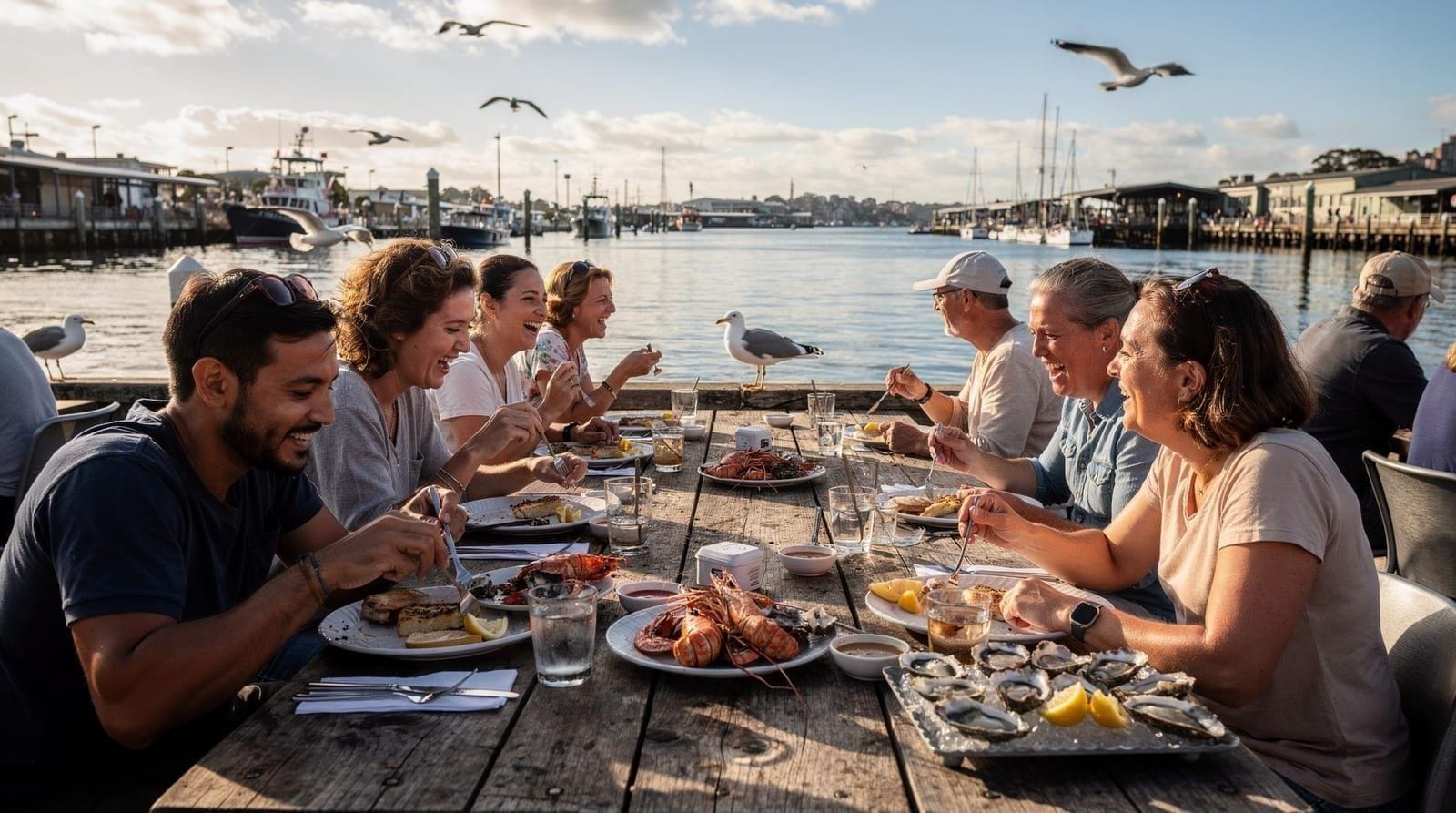
Sydney rock oysters are the headline purchase. These small, intensely flavoured native oysters have a different flavour profile to Pacific oysters (crisper, more mineral, more saline) and are difficult to find outside NSW in comparable quality. Expect AUD 28–38 for a dozen at the counter, with shucking included. For eating on site: sit on the benches on the harbour edge, outside the main building.
Barramundi (a native freshwater/brackish fish), whole snapper, john dory, and kingfish are the primary local species. Whole fish are often substantially cheaper than fillets — ask a fishmonger to clean and fillet a whole fish if you are cooking. AUD 28–45 per kg for premium species.
Sashimi-grade tuna and yellowfin are available from specialist counters. Quality is genuinely good; ask which fish was traded that morning for the freshest options.
What to avoid:
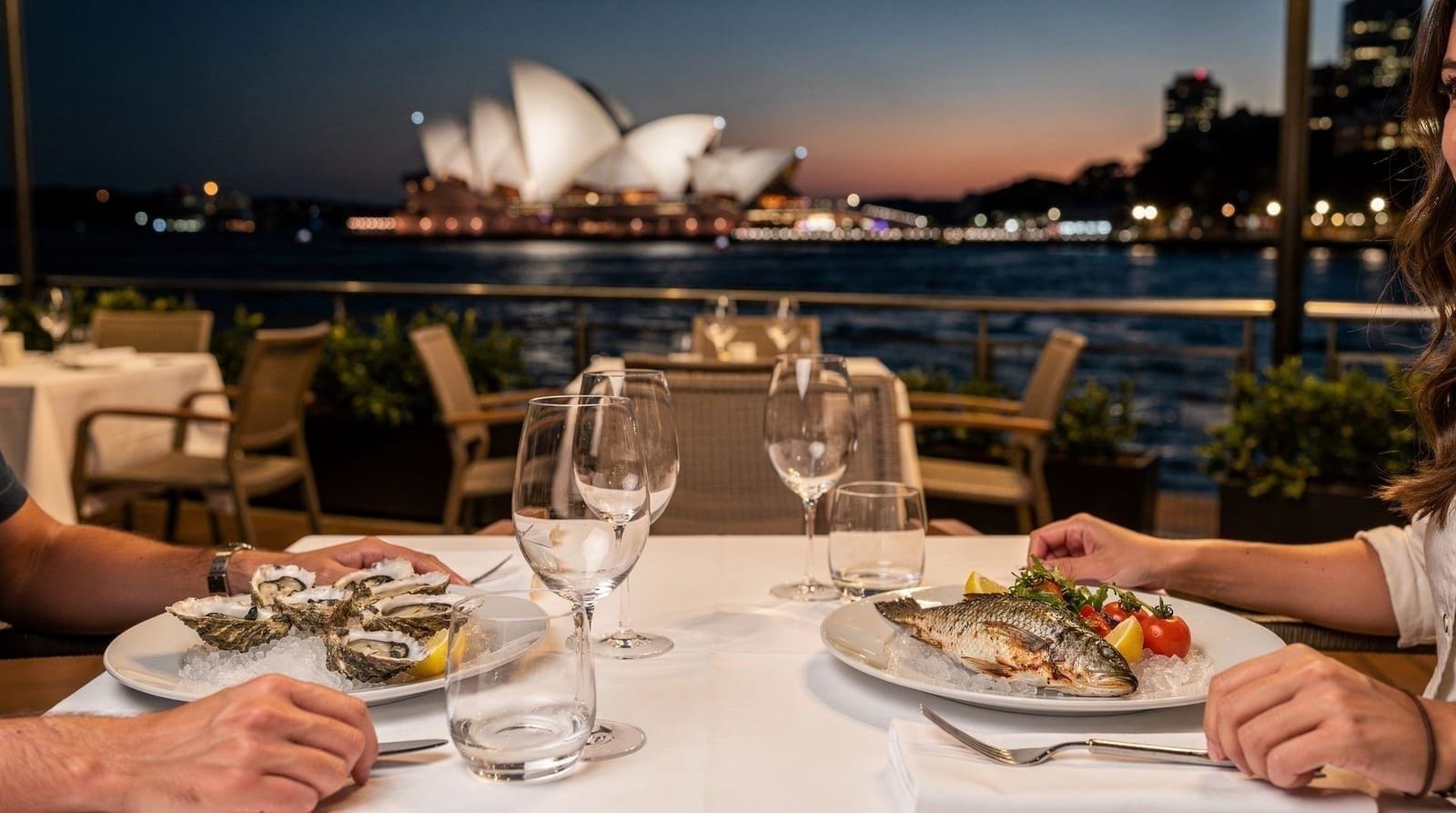
The sit-down restaurants around the market perimeter — Nick’s Seafood Restaurant, Doyle’s at the Market, and similar — charge premium restaurant prices for produce that costs half as much at the counter ten metres away. There is no quality premium to justify the markup. Buy from the counters and eat informally.
The market souvenir shops are tourist-facing and priced accordingly. Skip them.
The behind-the-scenes tour
The fish market behind-the-scenes tour (approximately two hours) takes small groups into the commercial areas of the market before the retail floor opens, including a view of the Dutch clock auction in operation.
The Dutch clock auction is the mechanical centrepiece: a large analogue clock on the auction floor that starts at a high price and ticks down; buyers hit a button to buy at the price the clock shows. It is a fast, loud, strangely compelling spectacle when several hundred thousand dollars of fish changes hands in under an hour.
The tour also covers the grading and handling process, explains the provenance of the seafood (which is more international than most visitors expect — much of the “Sydney” market stock comes from Queensland, Northern Territory and even imports), and typically includes a tasting component.
Practical: Departure is typically 5–6 am, which requires commitment. Book ahead — the tour runs daily but capacity is limited. The early start is the main deterrent; the experience rewards it.
A morning walking tour of the market is a more accessible alternative with a later start time, covering the retail floor, buyer relationships and tastings without the 5 am alarm.
Getting there and practical information
Address: Bank Street, Pyrmont, NSW 2009.
Getting there by foot: A 20–25 minute walk from the CBD via Darling Harbour and Pyrmont Bridge. Pleasant walk through the casino precinct and along the water.
By light rail: Tram from Circular Quay or Central Station to Fish Market stop (L2/L3 lines). Journey approximately 12–18 minutes from Circular Quay. The tram stop is directly adjacent to the market.
By bus: Multiple routes serve Pyrmont; check Transport NSW journey planner.
Parking: Available at the market but limited and can fill by 9 am on weekends. Not recommended.
Opening hours: Daily from 7 am; individual retailer hours vary, so check the official Sydney Fish Market website. The behind-the-scenes auction tour starts before this — check specific booking times.
Best time to visit: Weekday mornings before 10 am for fresh stock and without weekend crowds. Christmas Eve and Good Friday draw enormous queues starting before opening time — avoid those dates unless you have a specific reason.
The fish market in the broader Pyrmont context
Pyrmont is a former industrial peninsula that has undergone significant transformation over the past 25 years. The Star casino is the dominant feature on the waterfront; the fish market occupies the bay immediately south. Star City and the casino complex offer no particular reason to visit; the fish market is the genuine local draw.
Nearby: the Pyrmont Bridge leads back across Darling Harbour to the CBD; the walk across gives good views of Darling Harbour’s water and the city skyline. The Australian National Maritime Museum is a short walk from Pyrmont Bridge on the Darling Harbour side — entry is included with an all-inclusive ticket.
For context on how the fish market fits into Sydney’s broader food scene, see the Sydney food tours guide and the Sydney best restaurants guide.
Is the redevelopment finished?
Sydney Fish Market has been operating under a long-running redevelopment plan, with a purpose-built new market building intended to replace the current 1960s-era structure on an adjacent Blackwattle Bay site. Timelines for these large public infrastructure projects shift, so treat any specific opening date with caution — check the market’s own site or your accommodation for the latest status before visiting, since access routes and the exact building in use can change during the transition.
Combining the fish market with the rest of Darling Harbour
Because it sits only a 20–25 minute walk from Darling Harbour via Pyrmont Bridge, the fish market works well as a half-day loop rather than a standalone trip. A typical sequence: arrive early for the retail floor and a seafood breakfast on the harbourside benches, walk back across Pyrmont Bridge into Darling Harbour, and finish at the Australian National Maritime Museum or one of the harbour’s other attractions. If you’d rather judge for yourself whether Darling Harbour deserves a full afternoon, the Darling Harbour: overrated? guide is worth reading first.
How to build a seafood breakfast or lunch at the counters
The simplest way to eat well here is to treat the market as a self-assembled picnic. Walk the whole floor once before you buy anything, because the merchants sit side by side and the displays change with what came in overnight. Note which counters have the busiest queues of locals, which usually signals turnover and freshness, then come back and order. Ask the person serving what is best today rather than pointing at the most familiar fish; they know what was traded that morning and will often steer you to something cheaper and better than what you had in mind.
A good first round is a dozen Sydney rock oysters, shucked at the counter, eaten straight away on the harbour-edge benches with a squeeze of lemon. If you want something warmer, many counters sell cooked items such as grilled fish, prawns and seafood platters that you can carry outside. Share a platter between two or three people and add a loaf of bread and a salad from a nearby stall; it is a more generous meal than most sit-down options and you control the pace.
Bring a little patience in the middle of the morning, when tour groups and families arrive together. If a bench is taken, the waterfront edge usually has space a few steps further along. Watch for gulls and pelicans, which are bold around open food; keep your platter close and your lid on.
Buying fish to cook at home
If your accommodation has a kitchen, the market is one of the best places in Sydney to stock it. Choose a whole fish with clear, bright eyes, firm flesh and a clean sea smell rather than anything strongly fishy. Ask the fishmonger to scale, gut and fillet it for you; the service is part of the counter experience and saves you a messy job. Take the bones and head too if you plan to make a stock the next day.
Prawns, scallops and squid are all worth a look, and the fishmonger will tell you honestly how long each will keep. Bring a small cooler bag if you will be out and about afterwards, since Sydney’s sun is strong and fresh seafood spoils fast. If you are staying in an apartment near the harbour, our where to stay in Sydney guide covers areas where cooking for yourself is easy, and the Sydney on a budget guide explains how a market lunch can stretch a tight daily spend.
Who the market suits best
Food-focused travellers get the most from the market, but it also works for families, because children tend to enjoy the tanks, the colours and the sheer variety on display. Solo visitors will find it an easy, sociable place to eat without feeling out of place, and our solo travel in Sydney guide lists other places that work in the same way. Anyone who dislikes strong smells, early starts or crowds should aim for a weekday morning and keep the visit short.
If you are short on time, the market pairs well with the rest of a food-led day. The Sydney foodie weekend itinerary shows how to fit a market breakfast around other meals, and the cheap eats guide helps you plan the rest of the day without overspending. For a more structured introduction, a guided tasting walk through the market explains what you are eating and where it comes from, which is useful if you are unsure how to choose at the counters.
Making the most of your visit
Come with a loose plan rather than a strict schedule. The market rewards wandering, and the best finds are often the stall you did not intend to visit. Wear closed shoes, since floors can be wet, and carry a bag for purchases. Cards are widely accepted, but having a little cash can speed up small purchases at busy counters.
Think about the weather as well. On a bright day the harbourside benches are the highlight of the trip; on a wet one, you can shop and eat under cover and still enjoy the market, and our rainy day Sydney guide has further ideas if the weather turns. If you are visiting in the warmer months, the Sydney in summer guide explains how to plan around the heat, and going early keeps both you and your seafood cooler.
Finally, respect the working nature of the place. This is a real market where people earn a living and buy their own dinner, so step aside for trolleys, avoid blocking counters while you decide, and ask before taking photographs of staff or the auction floor. A friendly attitude and a few good questions will earn you better advice than any guidebook, including this one. For wider planning, the Sydney for first-timers guide shows where a market visit fits within your first days in the city.
Frequently asked questions about Sydney Fish Market
Do I need to book to visit the Sydney Fish Market retail floor?
No booking is needed for the retail floor — it's open to the public daily from around 7 am (some days 6 am) and you simply walk in and buy from any of the fishmonger counters. Only the behind-the-scenes auction tour and guided walking tours require advance booking.Is Sydney Fish Market cheaper than buying seafood at a restaurant?
Generally yes, for anything bought directly from the fishmonger counters and eaten informally on the harbourside benches. The sit-down restaurants around the market perimeter charge closer to standard restaurant prices for the same produce, so the savings come from buying at the counter, not from the market's sit-down dining.
Top experiences
Bookable activities with verified prices and instant confirmation on GetYourGuide.