Sydney beaches for families — the honest guide to safe and fun swimming
Sydney: Guided transparent kayak tour of Manly cove beaches
Which Sydney beach is safest and best for families with young children?
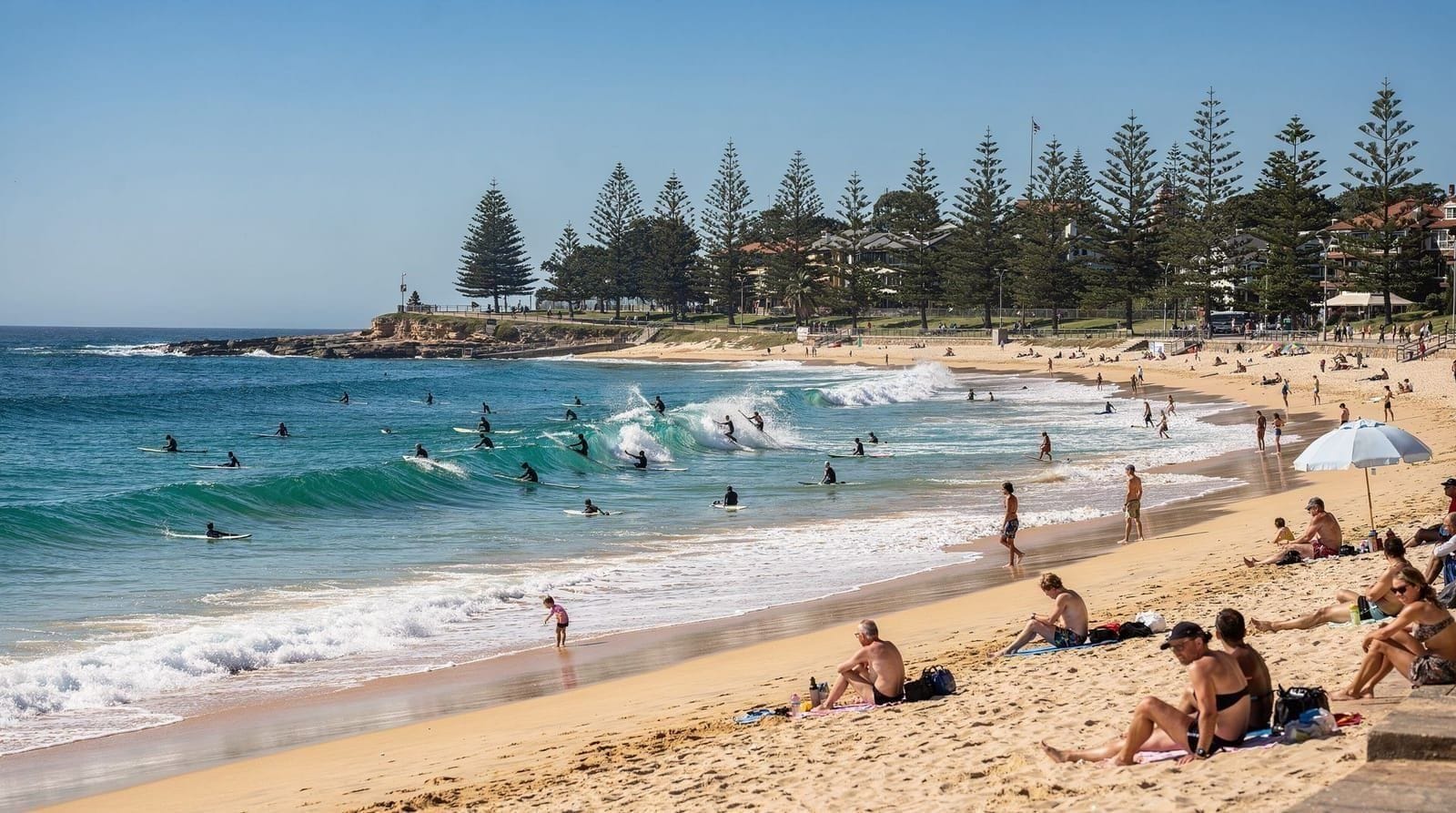
Shelley Beach (Manly), Balmoral Beach (Mosman), and Coogee Beach are the most family-friendly options. Shelley and Balmoral are in protected bays with no surf — ideal for toddlers and non-swimmers. Coogee has a large patrolled area and good facilities. Bondi is iconic but the surf can be too strong for young children, especially on northerly or southerly swells.
Sydney’s beaches are the single most compelling free attraction in the city. The metropolitan area contains over 100 beaches ranging from the famous eastern suburbs surf beaches to quiet protected harbour bays. For families with children, the challenge is knowing which beach suits your needs — calm water for toddlers, manageable surf for older children, good shade and facilities for an all-day visit, or practical transport logistics.
At a glance
| Best for toddlers | Shelley Beach (Manly) or Balmoral Beach — both calm, no surf |
| Cost | Free entry to all beaches; a small fee applies at some ocean pools (check each pool’s official website) |
| Time needed | Half a day to a full day per beach |
| Getting there | Manly Ferry from Circular Quay for Shelley/Manly; bus or train for the eastern suburbs beaches |
| Best time of year | Autumn (March–May) for the best balance of warm water and fewer crowds |
Understanding Sydney beach safety
Rip currents: the most important safety factor
Rip currents cause around 80% of surf beach rescues in Australia. They are channels of water moving seaward through the surf, typically visible as dark, choppy water with less breaking surf than surrounding areas. They pull swimmers away from the beach quickly — the instinct to fight a rip by swimming directly back to shore is wrong and exhausting.
If caught in a rip: stay calm, float if possible, and swim parallel to the shore until you’re out of the rip channel, then swim to the beach at an angle. Signal for help by raising an arm if unable to return.
The single most important rule at Sydney surf beaches: swim between the red and yellow flags. Surf lifesavers position the flags at the safest patrolled section of the beach. This applies to adults and children. Unpatrolled areas are higher risk.
When beaches are patrolled
Main Sydney beaches are patrolled by surf lifesavers from late September through late April, typically 7:00 AM to 7:00 PM (hours vary by beach). Outside these hours and dates, beaches are unpatrolled. Some beaches have year-round lifeguard coverage — Bondi is one exception.
In winter (June–August), most ocean beaches are safe for experienced swimmers but are unpatrolled. This is not a practical time for families with young children at surf beaches; harbour beaches remain good year-round.
UV radiation
Sydney’s UV index is frequently 11+ (extreme) in summer (December–February) and 6–8 (high) in spring and autumn. Apply SPF 30+ sunscreen 20 minutes before beach exposure, reapply every 2 hours (more frequently if swimming), and dress children in UV-protection rash vests. Avoid direct sun between 10 AM and 3 PM in summer — sit under shade or an umbrella during peak hours. These are not suggestions but practical harm-prevention measures; burns at Sydney’s UV levels happen in under 15 minutes for pale-skinned children.
Best family beaches in Sydney
Shelley Beach (Manly) — best for toddlers and non-swimmers
Shelley Beach is on the headland 1.5 km from Manly Beach. It faces southeast into a protected bay, meaning there is no surf and the water is calm even on rough days. Families with children under 6 who cannot reliably handle surf should go directly to Shelley rather than Manly ocean beach. There’s a small kiosk, toilets, and a grass picnic area. Snorkelling is excellent (it’s a marine reserve). No entry cost. Access is by a 15-minute walk from Manly or via a small road at Bower Street.
Transport: Manly Ferry from Circular Quay (30 minutes, at the standard Opal fare), then walk 15 minutes.
Balmoral Beach (Mosman) — harbour bay, calm water
On the harbour side rather than the ocean, Balmoral is a wide sandy beach on Middle Harbour with no surf whatsoever. The water is clear, shallow for a long way out, and the beach is patrolled in summer. There’s a rotunda, a children’s playground, picnic tables, and good cafes nearby on The Esplanade. Combined with a visit to Taronga Zoo (15 minutes drive), it makes a natural full-day combination.
Transport: Bus routes from the CBD involve changes; most families with young children drive or use rideshare.
Coogee Beach — patrolled surf beach with excellent facilities
Coogee is the most family-friendly of Sydney’s eastern beaches. The beach is wide (400 metres), consistently patrolled, has clean changing rooms and toilets, and a good flat foreshore park (Gordon’s Bay Lookout one side, Coogee Park the other). The surf is moderate — better suited to families with children 6+ who are comfortable in the water. The nearby rock pool at McIver’s Baths (women and children only) adds an option.
Transport: Bus routes 314, 372, 376 from the CBD (~25 minutes). No train to Coogee.
Manly Beach — best overall beach but not for toddlers
Manly’s ocean beach is 1.7 km of patrolled sand. The surf is generally moderate — manageable for children who can swim confidently and adults. The village behind the beach (The Corso) has abundant food and amenities. For families with older children (8+), Manly Beach is excellent. For toddlers and non-swimmers, go to Shelley Beach instead.
The Manly Ferry from Circular Quay makes the journey itself an experience rather than a chore.
Bronte Beach — small, family-friendly, great rock pool
Bronte is a compact patrolled beach between Bondi and Coogee on the coastal walk. The main attraction for families is the large tidal pool (Bronte Baths) at the south end of the beach — calm water suitable for young children regardless of surf conditions. The beach has shade trees, good barbecue facilities, and a popular local café scene. Surf is moderate; toddlers are better in the tidal pool.
Transport: Bus 379 from Oxford Street (~30 minutes from CBD).
Cronulla Beach — south Sydney, less crowded
Cronulla, in the Sutherland Shire about 25 km south of the CBD, has a long beach (multiple sections) that is consistently less crowded than the eastern beaches. The south Cronulla section near the Esplanade is calm and family-friendly. Reliable surf lifesaving presence. Takes 45 minutes from Central Station by train (Cronulla Line) — the train ride is itself a pleasant suburban journey. A good option for families staying longer who want to escape the tourist concentration of Bondi and Manly.
Bondi Beach — iconic but manage expectations
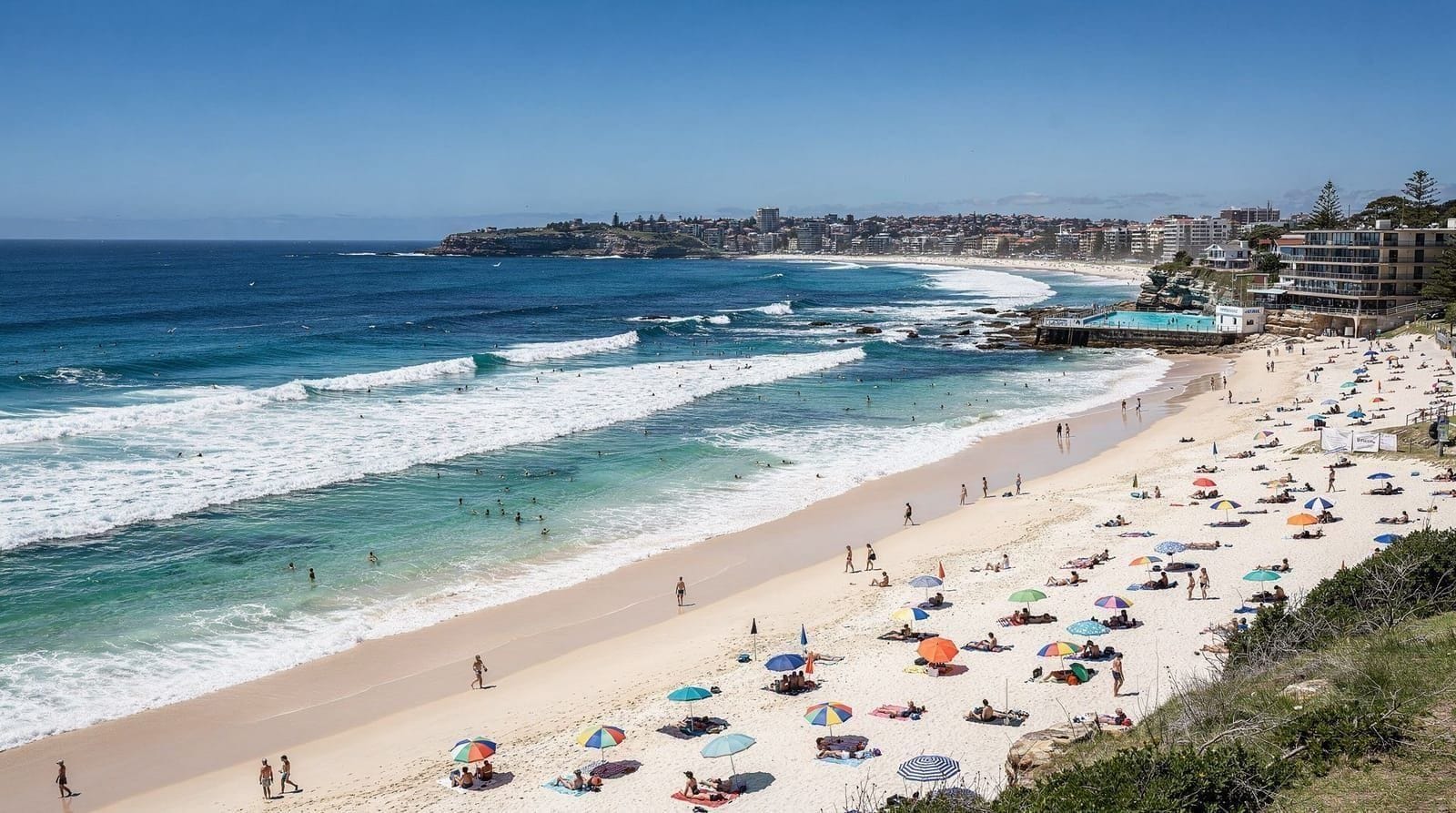
Bondi is Sydney’s most famous beach. For experienced swimmers, it’s excellent — reliable surf, consistent patrol, a vibrant village behind it, and a tidal pool (Bondi Icebergs) at the south end. For families with toddlers or young non-swimmers: the surf can be powerful, particularly on northeast swells, and the crowd is substantial in summer (December–January). Bondi remains a worthwhile visit — just go with realistic expectations about beach conditions for children under 7. The Bondi to Coogee Coastal Walk departing from the south end of the beach is one of Sydney’s best free experiences.
Transport: Bus 333 or 380 from the CBD; no direct train to Bondi Beach.
What to bring
For a half-day or full-day beach visit with children:
- SPF 50+ sunscreen (apply before leaving and pack for reapplication)
- UV rash vests for children
- Shade — a beach umbrella or pop-up tent
- Sufficient water — at least 1 litre per person in summer
- Snacks — beach kiosk prices are high; a packed lunch is practical
- Nappy change supplies (changing rooms at main beaches)
- A small first aid kit (coral grazes and jellyfish stings are common)
- Sand toys (secondary, but children under 6 are often content digging for hours)
Jellyfish
Bluebottles (Portuguese Man-o-War) wash up on Sydney’s ocean beaches during summer and on north-easterly wind days. They sting. A bluebottle sting is painful but not dangerous for most people — rinse the area with seawater (not fresh water), remove any visible tentacle with tweezers or a card, and apply ice. Do not rub the sting area. Check beach reports and the local lifeguard’s social media before visiting in bluebottle-prone conditions (summer, after north-easterly winds).
Combined family beach and attraction days
Manly is the natural combination: Manly Ferry + Manly village + Shelley Beach + the option of wild penguin viewing after dark (see penguins at Manly). This gives a low-cost full day of genuinely varied Sydney experiences.
Coogee pairs naturally with the Bondi to Coogee coastal walk for older children — start at Bondi, walk the cliffs (6 km, allow 2–3 hours with stops), arrive at Coogee beach for swimming and lunch.
For a full overview of family planning in Sydney, see Sydney with kids and the 5-day family itinerary.
Ocean pools: the alternative to surf swimming
Sydney has an extraordinary collection of ocean pools — saltwater pools carved into the rocks at the base of headlands, filled by tidal action. These are genuinely excellent for children who want a swimming experience without surf and without the chlorine of an indoor pool.
Bronte Baths (Bronte Beach): A large tidal pool at the southern end of Bronte Beach. No entry fee. Fills with fresh seawater on every incoming tide. Safe for children who are not strong swimmers; the pool is deeper in the middle so young children should stay near the walls.
Wylie’s Baths (Coogee): A heritage tidal pool at the southern end of Coogee beach. Small entry fee (AUD 6.50 adult, AUD 3.20 child or concession). Has changing rooms, a small café, and a community atmosphere. One of Sydney’s more loved ocean pools.
Bondi Icebergs (Bondi): The most famous ocean pool in Sydney. Managed by a swimming club, with year-round membership and public swimming sessions. Entry AUD 10 adult, AUD 7 child. The pool is often dramatically photographed with waves crashing over the southern wall. Note: not always safe for young children when heavy swell washes over the sides — check conditions on arrival.
North Sydney Olympic Pool (Milsons Point): An outdoor heated 50-metre pool adjacent to Luna Park. Entry AUD 11 adult. Not an ocean pool but an outdoor heated option with harbour views — excellent for laps and for children who want guaranteed swimming without surf conditions.
Patrolled beach hours and conditions in 2026
Sydney’s patrolled beaches are managed by Surf Life Saving NSW. Most major beaches are patrolled from late September to late April (the summer season), 7 AM to 7 PM approximately. Out of these hours, conditions are unmonitored.
Year-round patrolled beaches (with lifeguards present every day) include Bondi Beach, Manly Beach, and Coogee Beach. Other beaches are patrolled only during the summer patrol season.
The Surf Life Saving NSW website (sls.com.au) and BeachSafe app publish real-time hazard ratings for all patrolled beaches — a useful 30-second check before leaving your accommodation.
Sharks and beach safety context
Shark incidents at Sydney beaches are extremely rare. Shark nets are deployed at most Sydney ocean beaches between September and April (the patrol season). The nets run parallel to the beach about 170–250 metres from shore and are approximately 150 metres long — they don’t form a complete barrier but significantly reduce the risk of shark encounters.
Shark sightings from the beach or headland are occasionally reported and can result in temporary beach closures. The SharkSmart app (available from the NSW Department of Primary Industries) shows tagged shark locations in real-time. For most visitors, shark incidents are not a realistic concern at patrolled beaches during standard swimming hours.
The greater practical hazard is rip currents — significantly more common, less visible, and responsible for the vast majority of beach rescues. Swim between the flags.
Best season for Sydney beach visits with children
| Season | Water temp | Crowds | Notes |
|---|---|---|---|
| Autumn (Mar–May) | ~21–23°C early, ~18°C by May | Reduced | Often the best overall window — warm water, lower UV, shoulder-season prices |
| Summer (Dec–Feb) | ~22–25°C | High, especially weekends | Peak bluebottle risk; go on weekdays if possible |
| Winter (Jun–Aug) | ~17–18°C | Low | Cool for young children; harbour beaches (Balmoral, Shelley) still comfortable |
| Spring (Sep–Nov) | ~18°C rising | Moderate | Patrol season resumes late September; water still cool early in the season |
Autumn (March–May): Often the best beach season. Water temperatures are still warm from summer (around 21–23°C in March, dropping to 18°C in May). Crowds are reduced. UV levels are lower than summer peak. Shoulder season accommodation prices make this the most practical beach holiday window for international families.
Summer (December–February): Peak beach season. Water warm (22–25°C), strong UV, crowds on weekends. Weekday beach visits in January are manageable; weekend afternoons at Bondi or Manly are genuinely crowded. Bluebottle jellyfish risk is highest in this period.
Winter (June–August): Water temperature 17–18°C — cool for recreational swimming but many locals swim year-round with a wetsuit. Not recommended for young children, but the beaches are uncrowded and the views are often spectacular.
Spring (September–November): Water warms from 18°C upward. Patrol season resumes late September. Good for children who want to swim once the water is comfortable but before summer crowds arrive.
Snorkelling beaches for children
Several Sydney beaches offer good snorkelling that works for children aged 8+ with basic snorkelling equipment:
Shelly Beach (Manly): A marine reserve with clear water, rocky reefs, and schools of fish, including blue gropers, wobbegongs, and stingrays. The best snorkelling close to Sydney. Calm water makes it accessible for children.
Clovelly (between Bronte and Coogee): A long, narrow beach in a rock-lined cove. Extremely calm — the shape of the cove almost eliminates swell. The water is clear and shallow. A large blue groper (a blue wrasse species that can reach 70 cm) has lived in Clovelly for years and is a local celebrity. Good for children 6+.
Gordons Bay (between Coogee and Clovelly): An unofficial snorkelling and diving bay with an underwater nature trail. Not patrolled for swimming but very calm. More suitable for older children with parental supervision.
Other family-friendly beach options
Families staying longer or wanting to avoid the busiest spots have several further options. The best beaches in Sydney guide covers the wider list beyond the family-specific picks here, and the Bondi to Coogee coastal walk is worth doing with older children even outside a swimming day, purely for the clifftop scenery. For a deeper look at shark nets and how they work, see the shark nets and safety guide. If your visit falls during the school holiday period, check the Sydney school holidays guide for dates, since beaches are noticeably busier during these windows.
Planning around the beach you choose
If Manly is your pick, the Manly destination page and the Manly Beach guide cover the village, the ferry and the surrounding walks in more detail. Families who cannot decide between the two most famous names can read Bondi vs Manly for a direct comparison, or the Bondi Beach guide if the eastern suburbs suit your accommodation better.
Beaches also sit comfortably alongside other family days. The Sydney ocean pools guide goes deeper on the tidal pools described above, and the best family attractions in Sydney are a good fallback for the days when the weather or the swell rules out the water. If you are building a longer trip around the coast, the Sydney coastal beaches itinerary strings several of these stops together.
Older children who are confident in the water sometimes want more than a swim. A guided paddle such as a kayak trip around the coves and quiet beaches near Manly can add variety to a Manly day, though it suits older, capable children rather than toddlers. For a wider look at the northern coastline, a guided tour of the northern beaches and Ku-ring-gai takes the driving and parking off your hands, and the northern beaches guide shows what each stretch of sand offers. Families with time to travel further can look at a day out to the beaches of Jervis Bay with koalas and kangaroos. None of these are needed for a good beach day; they are options when you want a change from the usual routine.
Frequently asked questions about Sydney beaches for families
What is the safest Sydney beach for a family with a baby or toddler? Shelley Beach (Manly) and Balmoral Beach are the two most reliable choices — both are protected bays with no surf, shallow water, and calm conditions even when the ocean beaches are rough.
Are Sydney beaches free to visit? Yes, all Sydney beaches are free to access. A small number of heritage ocean pools (Wylie’s Baths, Bondi Icebergs, North Sydney Olympic Pool) charge a modest entry fee.