A day on Sydney's ferries — slow travel done properly
The premise
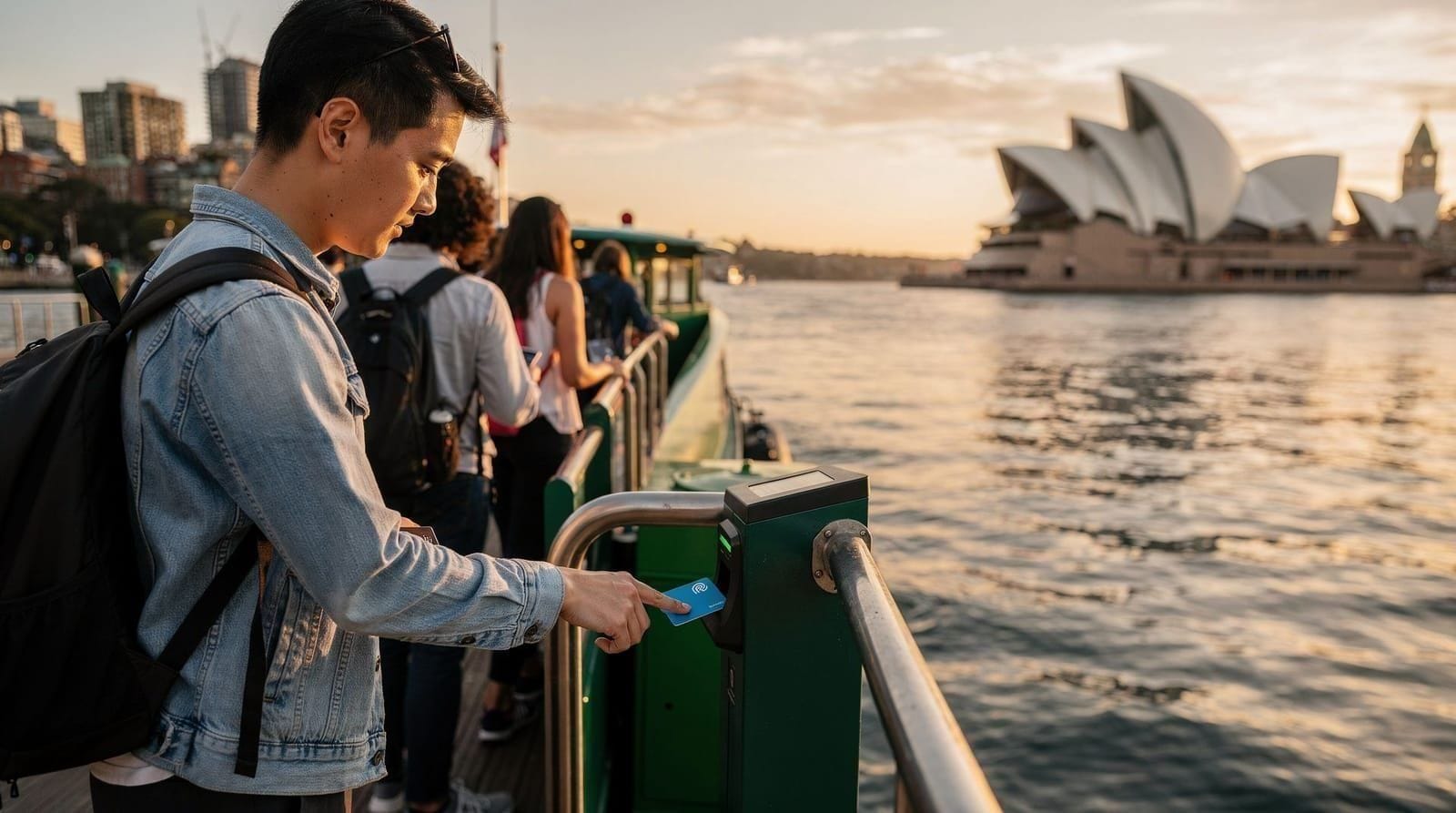
I spent a Saturday doing nothing but riding Sydney’s public ferries. No goal, no itinerary, no lunch reservation. Just an Opal card loaded with $40 and the ferry network map.
The total cost for the day was $17.80 — the daily Opal cap, which kicked in after my third or fourth journey. After that, every ferry was free.
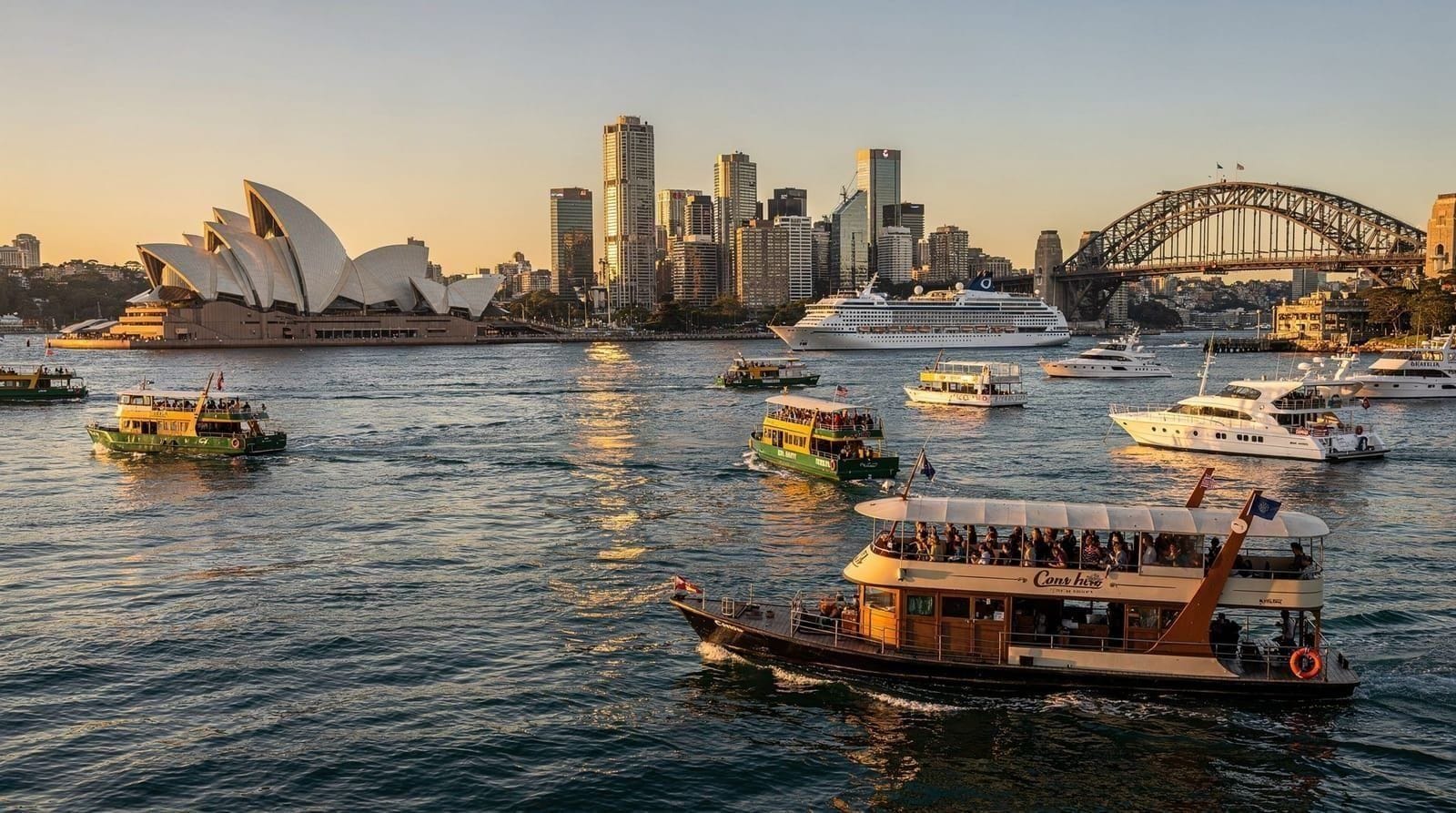
The reason I’m writing this is not that the ferries are a hidden secret — Sydneysiders use them daily, and the Manly Ferry is famous enough to appear in most destination guides. The reason is that treating the ferry network as a day’s leisure activity, rather than as transport to a specific destination, reveals a Sydney that most visitors never see. The harbour is enormous. The ferry routes cover it comprehensively. And public ferries go to places that tour operators don’t.
| At a glance | |
|---|---|
| Where | Sydney Harbour ferry network, starting and ending at Circular Quay |
| Cost | Limited by the Opal daily cap (A$19.30 Mon–Thu, A$9.65 Fri–Sun and public holidays; see the official Transport for NSW website) |
| Time needed | A full day (roughly 8am–6pm) covers three or four routes comfortably |
| Getting there | Circular Quay wharves 2–5, reached by train, bus, or light rail |
| Best time | Spring or early summer weekdays, when the light is good and wharves are less crowded than weekend afternoons |
The morning ferry: Circular Quay to Manly
Start at Circular Quay. The Manly Ferry departs from Wharf 3 roughly every 20 minutes on weekdays and every 30 minutes at weekends (check the Transport for NSW timetable). The journey takes about 30 minutes.
I’ve done this crossing in summer and in spring, and November — warm without humidity, the jacarandas not quite done on the streets above the quay — was the best version. The ferry swings out past the Opera House and heads north through the inner harbour, passing the Harbour Bridge to the west and Middle Harbour to the east. You pass Watson’s Bay and South Head on the right as you round the corner towards the open ocean approach to Manly.
The best seats on the Manly Ferry are on the upper deck outdoor section at the stern. This is not a subtle observation — everyone knows it, and on busy services those seats fill quickly. The less-contested alternative is the bow end of the upper deck, where the view forward compensates for missing the Opera House framing.
Manly on a November Saturday morning is busy but not unmanageable. The Corso — the pedestrian mall connecting the ferry wharf to the beach — is lined with cafes that charge what you’d expect. I had coffee at a place called Barefoot Coffee on Sydney Road, two minutes’ walk from the wharf, which was both cheaper and better.
Manly Beach itself is good: long, wide, well-maintained, with the Queenscliff headland to the north and South Steyne to the south. The surf was running two feet on my visit, and a dozen or so learners were being taught in the white water. After an hour on the beach, I walked back to the wharf.
The middle of the day: the inner harbour routes
The ferry back from Manly to Circular Quay is the same 30-minute crossing in reverse. From Circular Quay, I switched to the F3 route to Parramatta River — not Parramatta itself, but the river journey, which is the second-best ferry experience on the network.
The Parramatta River service passes under the Harbour Bridge, into the western reaches of the harbour, and up the river past Cockatoo Island. Cockatoo Island is a UNESCO World Heritage Site — a former convict prison and naval shipyard sitting in the middle of the river — and you can disembark here, spend as much time as you like exploring the industrial heritage, and catch the next ferry onward. Entry to the island is free.
I got off at Cockatoo Island for about 45 minutes. The dry docks, the convict-era sandstone buildings, and the industrial equipment left in place from the WWII shipbuilding period make it the kind of place that rewards curiosity. There is a café and a campsite (you can genuinely camp on Cockatoo Island, which seems implausible until you see the grassy areas with harbour views). The museum is small but well-curated.
The ferry from Cockatoo Island continues to Parramatta, passing Meadowbank and Rydalmere. The western reaches of the river lack the drama of the inner harbour but have a quieter, residential quality — you see the back of Sydney rather than the front. I rode to Parramatta and back, which is about 1.5 hours each direction and felt slightly long on the return. For a pure harbour-watching day, I’d recommend Cockatoo Island as the western terminus and taking the ferry back from there.
Afternoon: the eastern harbourside
From Circular Quay, the F9 route to Watsons Bay is the afternoon ferry. It passes Garden Island (the naval base), Double Bay, Rose Bay, and Vaucluse before arriving at Watsons Bay, at the tip of the South Head peninsula.
Watsons Bay has two things worth noting. First, Doyle’s on the Beach — the famous Sydney fish and chip institution — is here, and if you visit on a weekend, expect a queue. The fish and chips are good without being extraordinary, and the prices reflect the location. Second, and more interesting, is the ten-minute walk from the Watsons Bay ferry wharf to The Gap — the dramatic clifftop lookout where the sandstone headland drops vertically into the ocean. It is genuinely impressive, and it is free.
The walk from The Gap back to Camp Cove (a small sheltered beach on the harbour side of the peninsula) passes through the South Head Heritage Trail, which includes lighthouses and former gun emplacements from the colonial era. On a clear November afternoon with good light on the harbour, this walk was the best hour of the day.
The Sydney ferry guide routes I didn’t cover
A full day barely covers the network. The routes I didn’t take:
F2 to Taronga Zoo: The ferry to Taronga Zoo wharf is a legitimate way to approach the zoo, but also a scenic route to Mosman for its own sake. The wharf at Taronga sits directly below the zoo, and even without entering, the views of the city from Mosman are worth the trip.
Neutral Bay and Cremorne Point: These short routes into the leafy north shore suburbs give a glimpse of how the other half of Sydney lives — waterfront houses on gentle slopes, private jetties, Norfolk Island pines. Neither is a destination in itself, but as pure harbour viewing they are excellent.
Palm Beach: The Palm Beach ferry from Manly or Church Point runs north through Pittwater and the Ku-ring-gai waterway. It is a longer commitment — the Pittwater area is a working estuary with a distinct character from the harbour — but if you have a spare day and want to see the northern beaches from the water, this route is less visited and genuinely beautiful.
The numbers
Daily Opal cap: $17.80 (at November 2020 fares; the cap is now A$19.30 Monday to Thursday and A$9.65 Friday to Sunday). Coffee at Manly: $4.50. Lunch at Watsons Bay (fish tacos from a takeaway near the wharf, not Doyle’s): $16. Total spend: $38.30.
A standard Sydney harbour sightseeing cruise is about 90 minutes of narrated harbour viewing. The ferry network covers more geography and runs all day. The narrated cruise has the advantage of a commentary that explains what you’re looking at — if that’s valuable to you, the harbour cruises guide covers the honest options — but as a way to experience the harbour itself, the public ferry is hard to beat.
If you like the idea of the water but want someone else to handle the commentary, the simplest upgrade is a one-off cruise rather than a replacement for the ferry day. Something like a sightseeing cruise departing from Circular Quay pairs well with a ferry day: you ride the public boats for the freedom and the geography, and spend one stretch on a narrated boat to put names to the headlands and bays you’ve been gliding past. Doing the cruise first, then the ferries, means you know what you’re looking at for the rest of the day.
Hopping off: Neutral Bay and the North Shore villages
One category of ferry destination that barely registers in visitor guides: the short routes into the lower North Shore harbour villages. Neutral Bay, Cremorne Point, Mosman — these are ten to fifteen minute crossings from Circular Quay that deposit you in wealthy, leafy residential neighbourhoods with waterfront parkland, harbour views, and almost no other tourists.
Cremorne Point Reserve is worth half an hour specifically. The point is a finger of land extending into the harbour, ringed by a walking path with views across to the Opera House and the CBD skyline that, by this point in the day, feel genuinely fresh. Locals use it for dog walking and lunchtime picnics. There is a free swimming pool at the southern end of the point, right on the water.
Mosman village — a five-minute walk from the Mosman Wharf — has a high street that operates at a price point calibrated for some of Sydney’s wealthier residents, but the cafes and the single good restaurant strip are worth knowing about. The Taronga Zoo ferry terminus is adjacent; if you’re including the zoo in your itinerary, the ferry arrival is significantly more dramatic than the bus approach.
The light through the day
One of the pleasures of an all-day ferry itinerary is watching the harbour light change from morning to afternoon. Sydney Harbour in the morning, with the sun coming from the north-east, has a clear, high-contrast quality that favours photography. By late afternoon, the light flattens and warms, and the Manly return ferry — particularly in late spring and summer — catches the harbour in a reddening late-afternoon light that the morning crossing doesn’t have.
Planning a return Manly ferry for 5–6pm rather than mid-afternoon isn’t just a timing preference; it’s a different visual experience. The same is true for the Watsons Bay return: leaving at 4pm rather than 2pm means arriving back at Circular Quay in the early evening light with the Opera House shells catching gold.
If the golden light is the thing you’re chasing, it’s worth knowing there are boats built around exactly that. a sunset cruise aimed at photographers keeps you on the water for the best part of the evening, and for a more relaxed version, a lunch cruise with a seated à la carte menu lets you eat while the harbour slides past. Neither is necessary — the public ferry at 5pm does a very good job on its own — but they suit days when you want a sit-down meal instead of takeaway fish tacos.
The practical case for slow ferry days
Sydney rewards slow travel. The city’s pace — which feels rushed in the CBD but dramatically unhurried on the water — suits long ferry journeys better than almost any other kind of travel.
A day on the ferries is also a genuinely good antidote to over-scheduled itineraries. If you’ve been ticking off landmarks for three days, a Saturday of ferry routes with no particular agenda recalibrates your relationship to the city. You end the day having seen things you didn’t plan to see and spent money you didn’t expect to spend (in my case, very little). That is roughly what slow travel is supposed to be.
The Sydney 7-day itinerary builds a ferry day into its structure for this reason. It works best as a contrast day — after two days of intensive sightseeing, a ferry day is restorative. Try it in November, when the light is good and the city is warming up but not yet at peak summer intensity. The full Sydney ferries guide has current timetables, fare information, and the complete list of routes and wharves.
When to do a ferry day
The experience changes a lot by season, and it’s worth planning around it rather than just picking whatever day is free.
| Month | Weather on the water | Wharf crowds | Notes |
|---|---|---|---|
| Dec–Feb (summer) | Warm to hot, strong UV, occasional afternoon storms | Heavy, especially Manly on weekends | Go early; the 8–9am Manly ferry is far calmer than midday |
| Mar–May (autumn) | Mild, often clear | Moderate | Arguably the best window — comfortable temperatures, fewer crowds |
| Jun–Aug (winter) | Cool, whale season on some outer routes | Light | Bring a jacket for the upper deck; light is flat but the harbour is at its quietest |
| Sep–Nov (spring) | Warming, jacaranda season inland | Moderate, building toward summer | November (as in this account) is close to ideal |
If you’re visiting during whale season, June to November, keep an eye out from the outer decks on the Manly and Watsons Bay routes — whales occasionally pass close enough to the harbour mouth to see from a standard ferry, though a dedicated whale-watching tour is the reliable way to see them.
If you only have half a day
Not everyone can give up a full day to this. If you’ve only got half a day free within a 48-hour Sydney itinerary, the single best-value substitute is the Circular Quay–Manly return plus an hour on Manly Beach — it’s the most scenic single crossing, it’s self-contained, and you’re back at Circular Quay within about three hours including beach time. Skip Parramatta and Watsons Bay in that case; they’re worth it but not essential on a tight schedule.
For a slightly more active version of the same idea, Sydney Harbour kayaking covers some of the same inner-harbour water from a very different vantage point, and a proper sunset harbour cruise is the version with commentary and a drink in hand if the DIY ferry approach isn’t your style.
Frequently asked questions about A day on Sydney’s ferries
Is a Sydney ferry day out worth it if I’ve never been to Sydney before? Yes, but treat it as a complement to, not a replacement for, seeing the headline sights up close. A first-time visitor gets more out of doing the Circular Quay–Manly return early in the trip (it’s genuinely one of the best ways to see the Opera House and Harbour Bridge from the water) and saving the longer Parramatta or Watsons Bay legs for a day when the basics are already covered.
Can you do a full ferry day in winter? Yes — the routes run year-round and winter (June–August) has the lightest crowds of any season, but bring a proper jacket for the open upper decks, where the wind off the harbour is noticeably cooler than street level.