Watsons Bay
Watsons Bay is Sydney's most scenic harbour village — The Gap sea cliffs, South Head Heritage Trail, Doyle's seafood, and whale watching from the headland.
Sydney: Whale watching adventure cruise
Quick facts
- Best for
- Sea cliff walks, whale watching (May–Nov), harbour views, seafood lunch
- Getting there
- Ferry F9 from Circular Quay or bus 324/325 from CBD (~40 min)
- Don't miss
- South Head Heritage Trail, Lady Bay Beach, The Gap at sunset
- Avoid
- Driving on weekends — parking is severely limited and the bus/ferry is faster
- Whale viewing
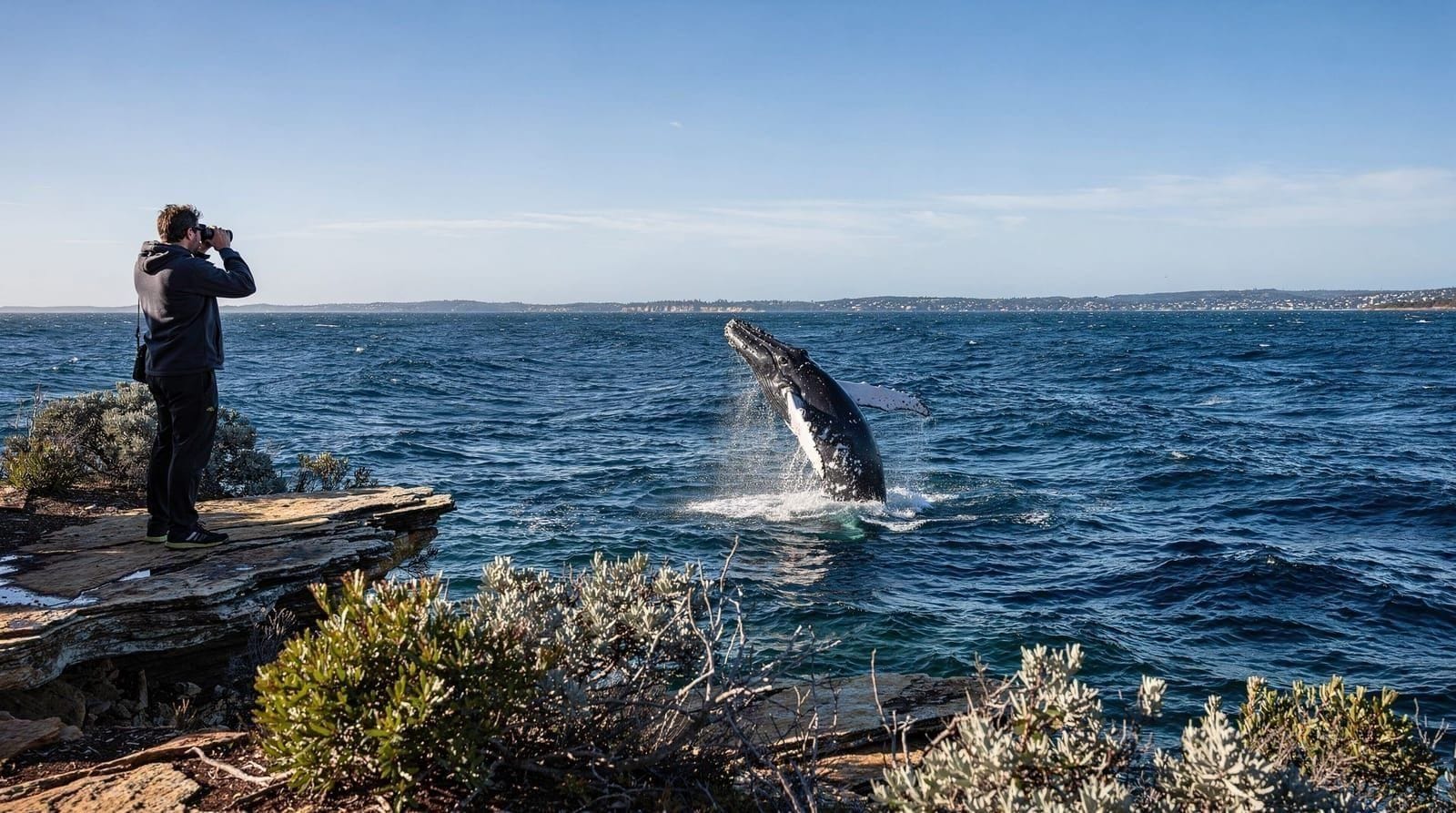
- South Head gives the best land-based whale watching in Sydney (May–Nov)
At a glance
| Where | Southern tip of the South Head peninsula, ~11 km from the CBD |
| Cost | Free to walk The Gap and South Head Heritage Trail; ferry fare on Opal (check the official Transport for NSW website); lunch A$20–55 depending on venue |
| Time needed | Half day to a full day |
| Getting there | F9 ferry from Circular Quay or bus 324/325 (~35–40 min) |
| Best time | Autumn/spring for walking; June–August for whale watching from the cliffs |
Sydney’s southern headland village
Watsons Bay sits at the southern tip of the South Head peninsula, a narrow finger of land that separates Sydney Harbour from the Pacific Ocean. The village is about 11 kilometres from the CBD by road but feels considerably more removed — a cluster of heritage cottages, a small harbour beach, a pub, and one of Sydney’s most significant pieces of coastal scenery.
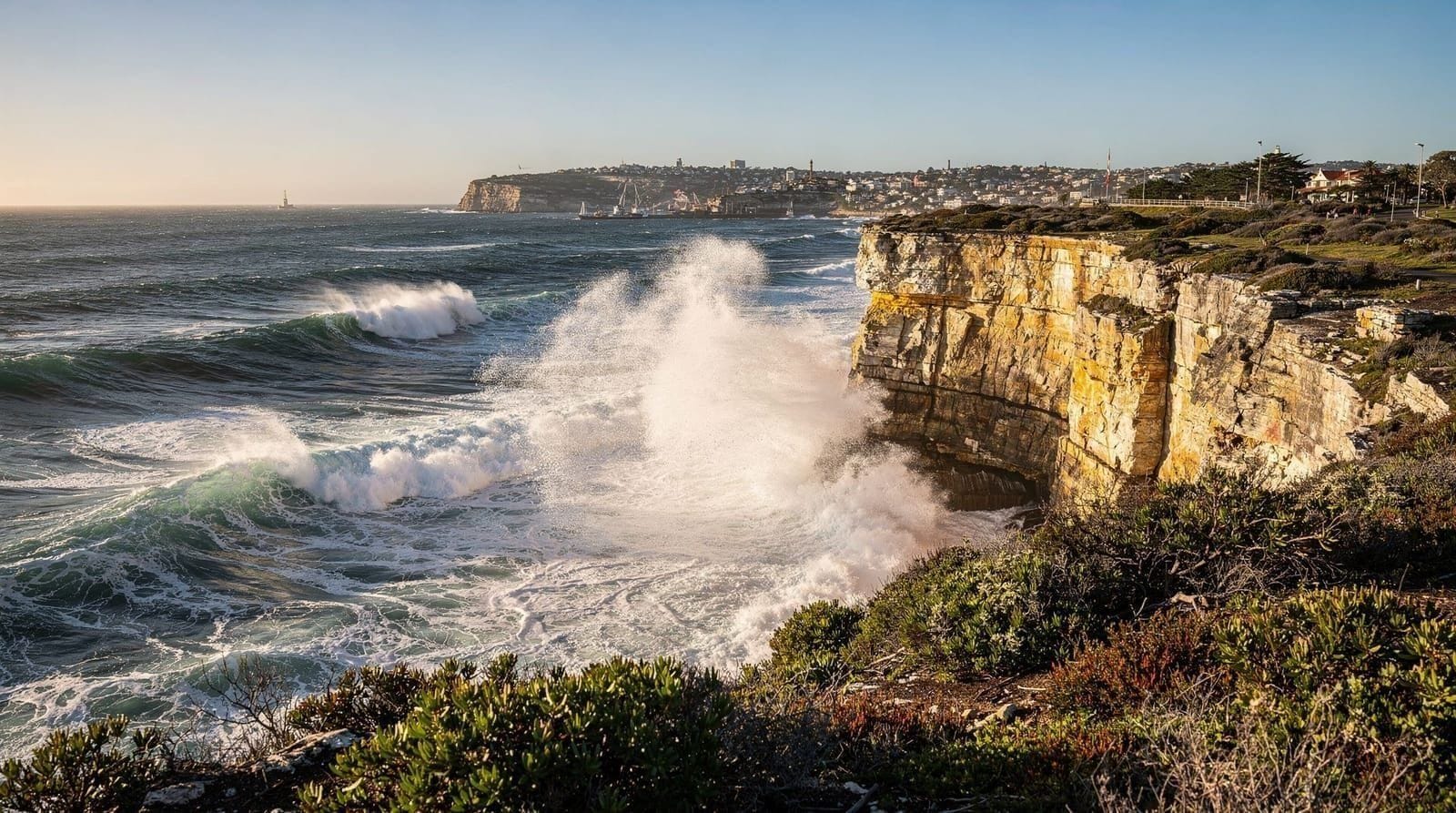
The headland above Watsons Bay gives you two dramatically different views simultaneously: the sheltered harbour side with its calm water and inner-city skyline, and the exposed ocean side where The Gap — a sheer 25-metre cliff face — confronts the full force of the Pacific. Walking between these two perspectives in a single afternoon is one of Sydney’s best free experiences.
The Gap and South Head Heritage Trail
The Gap is a coastal cliff formation on the ocean side of Watsons Bay, formed by the Pacific Ocean’s ongoing attack on the sandstone headland. The cliffs drop approximately 25 metres to churning water below, and on heavy swell days the noise and spray are substantial. It is a genuinely dramatic piece of geology.
The Gap Park has safety infrastructure — fences, viewing platforms — and a memorial to the late Don Ritchie, a Watsons Bay resident who spent decades at the cliffs speaking to people in crisis and is credited with preventing a significant number of suicides over his lifetime. The plaque is worth reading.
The South Head Heritage Trail begins at Watsons Bay and runs along the ocean-facing cliffs to South Head itself — a 2-kilometre walk (one way) that passes the Gap, Lady Bay Beach, and Hornby Lighthouse before reaching the headland. The walk takes about 45–60 minutes each way. From South Head, on a clear day in winter, you can see humpback whale spouts from the cliff top without any optical equipment. During peak migration (June–August), naturalists sometimes position themselves here to call sightings.
The land-based whale watching guide covers the best headland positions in detail.
Getting there: ferry is the right answer
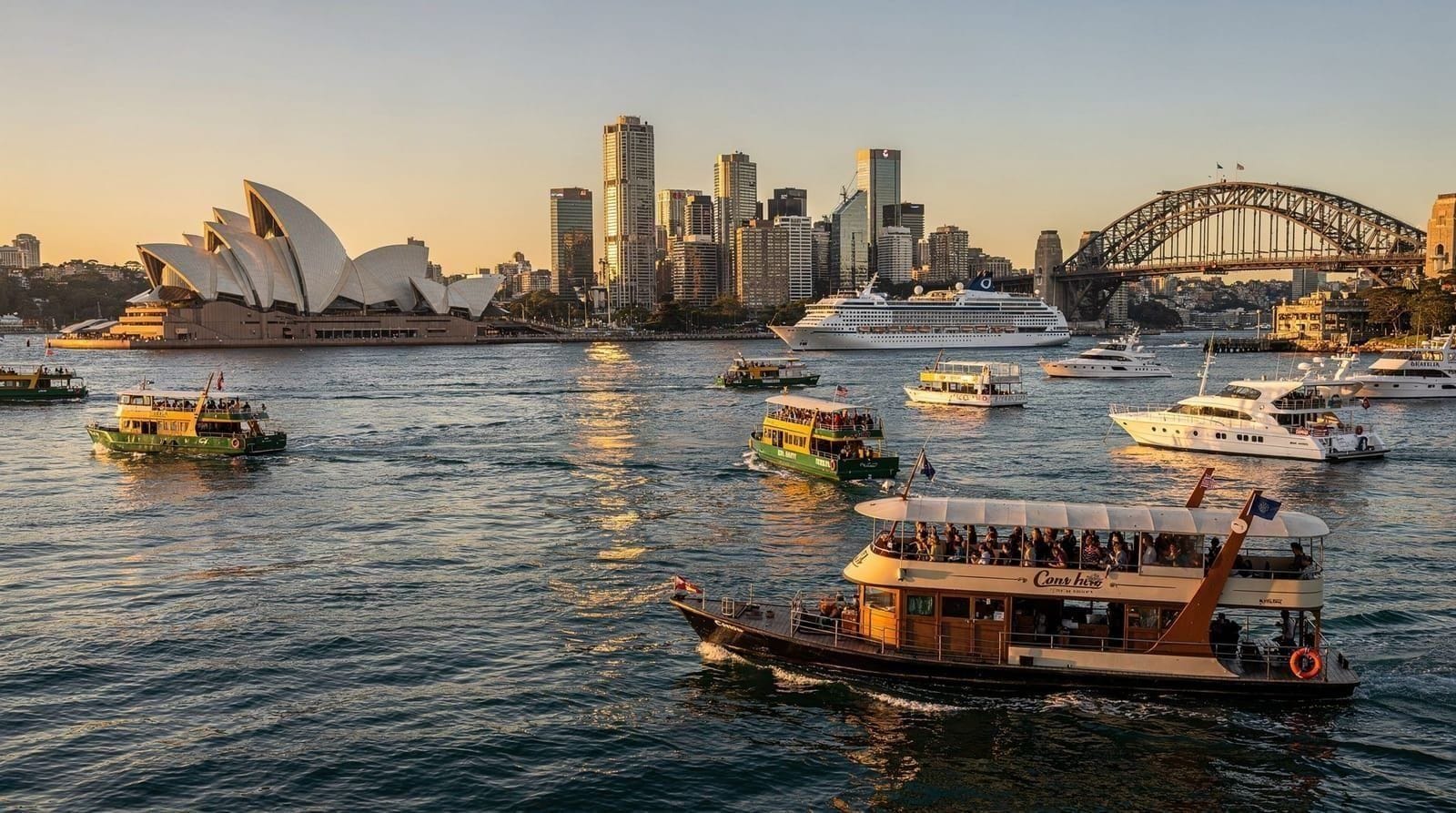
The F9 ferry from Circular Quay runs direct to Watsons Bay Wharf and passes through some of the most interesting inner-harbour geography — Double Bay, Rose Bay, the foreshore of the eastern suburbs. The journey itself is scenically worthwhile. Ferries depart roughly every 30–60 minutes on the regular schedule; check the Transport NSW Journey Planner before you go.
Bus services 324 and 325 run from the city to Watsons Bay in 35–40 minutes and give you a ground-level view of Double Bay and Vaucluse. Useful if the ferry timing doesn’t work.
Driving is the worst option at weekends. Parking at Watsons Bay is limited and frequently full by 10am on a sunny Saturday. The combination of no parking and a 40-minute park-and-walk from the nearest available space makes the ferry meaningfully faster door-to-door.
Doyle’s and the lunch question
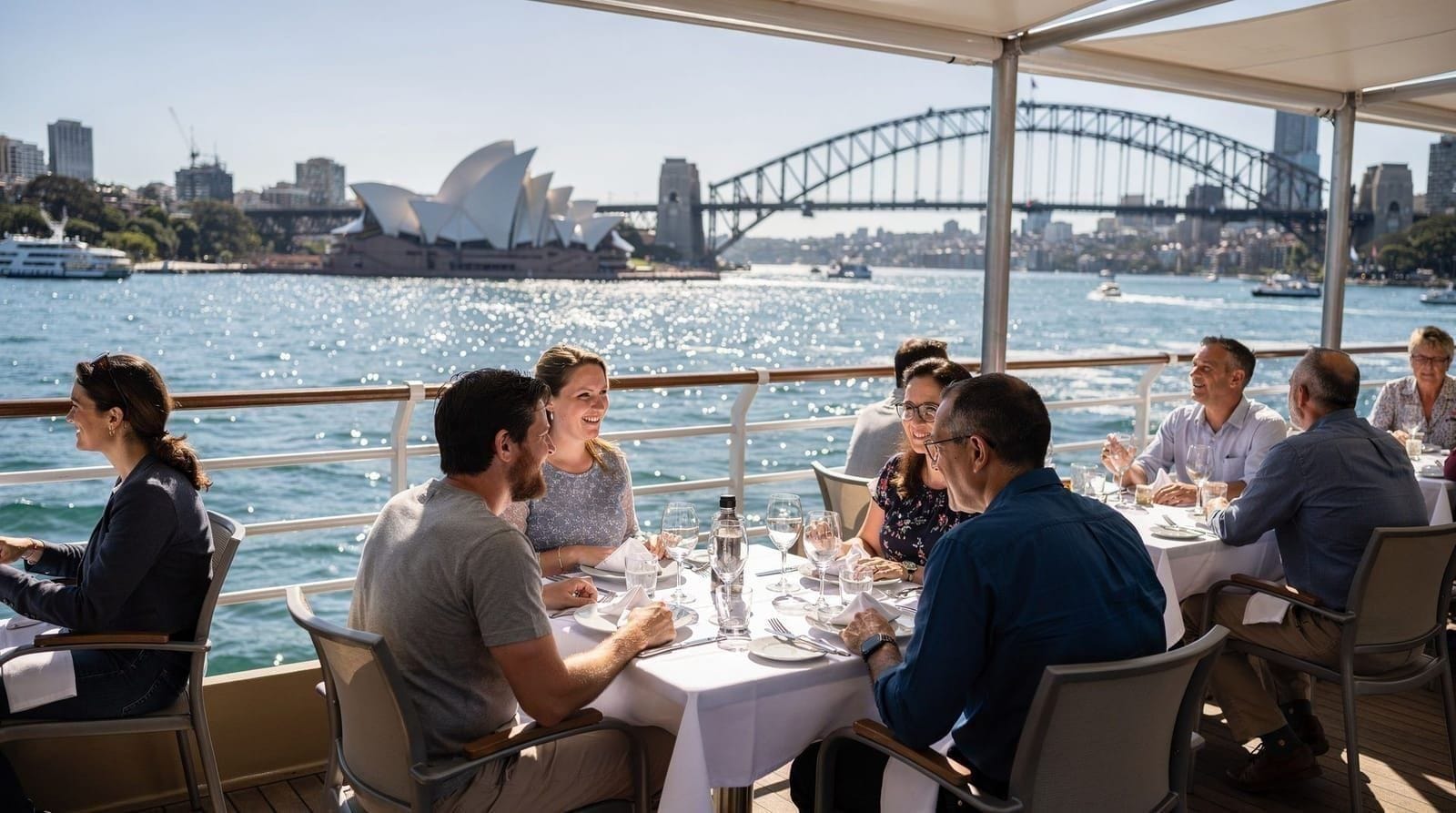
Doyle’s on the Beach at Watsons Bay is one of Sydney’s longest-running seafood restaurants, open since 1885. It is famous enough to appear in most Sydney travel guides. The food is solid without being exceptional — fresh fish and prawns at harbourside prices (AUD 38–55 for a main). The view is outstanding. Whether it is worth the premium over equivalents in the CBD depends on what you are paying for: the location and heritage, or the food itself.
The Watsons Bay Hotel beer garden (next to the beach) is a more relaxed option with a broader menu and lower prices. On a sunny afternoon, the hotel beer garden with a cold beer and a view across the harbour is one of Sydney’s simpler pleasures. The hotel also has a restaurant section that is notably better value than Doyle’s if you want a proper meal.
Whale watching context
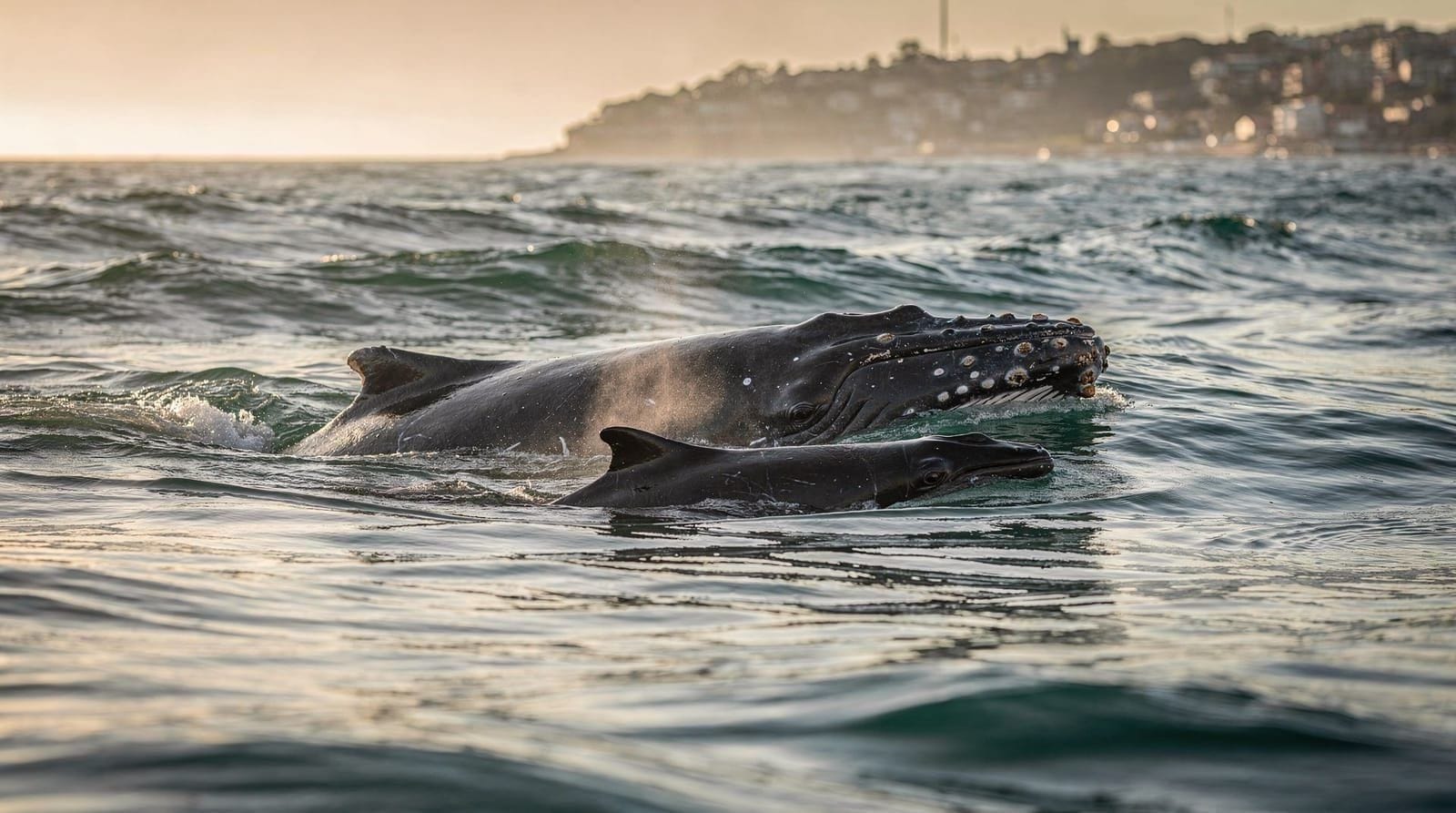
During the humpback whale migration (May–November, peak June–August), Watsons Bay and South Head are among the best land-based viewing positions in Sydney. The whales pass through the Heads — the narrow gap between North Head (Manly side) and South Head — as they migrate north in autumn and south in spring. At South Head, you are looking directly at the Heads from the southern cliff. During peak season, there are days when whales are visible for extended periods from the cliff top.
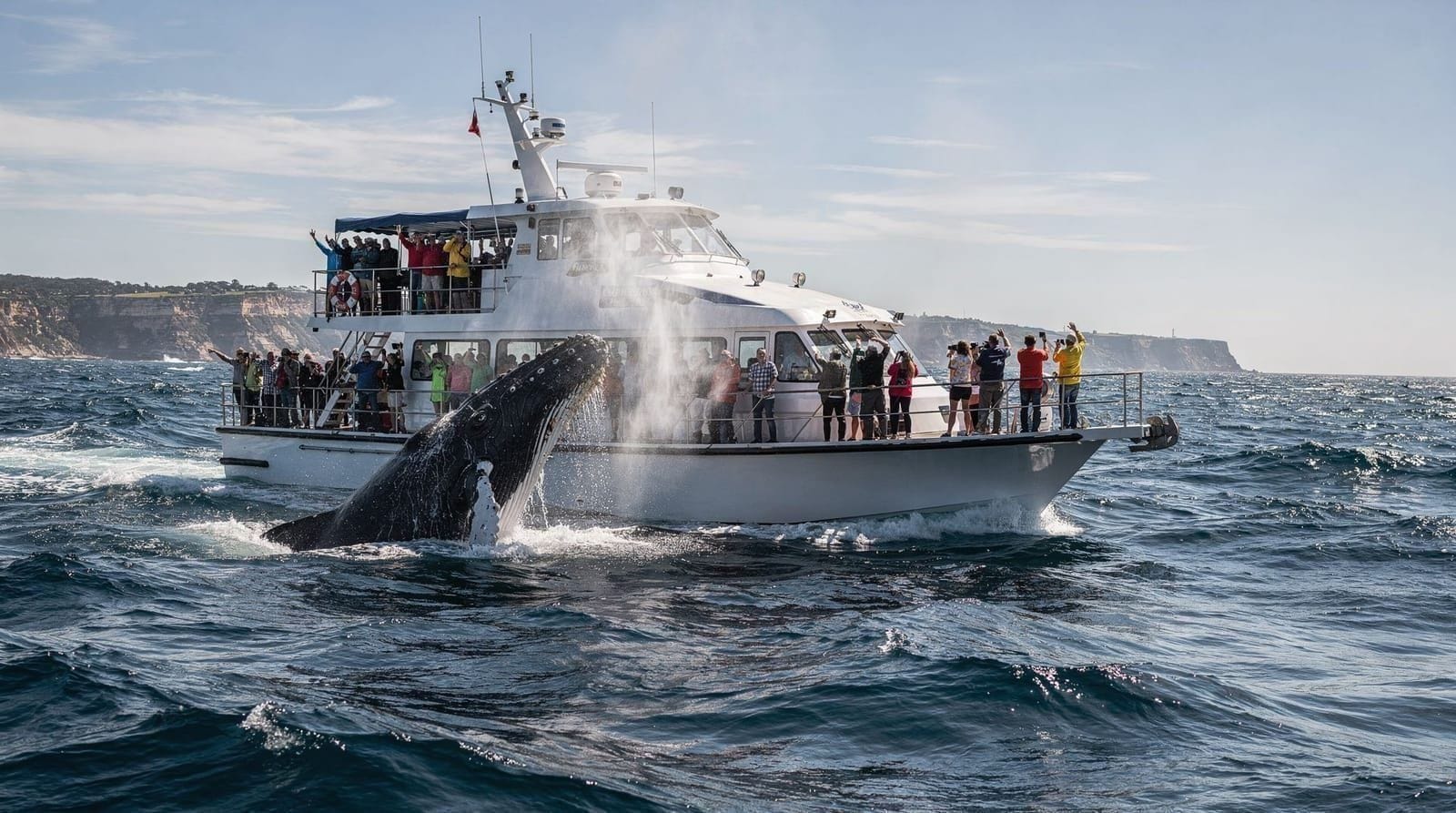
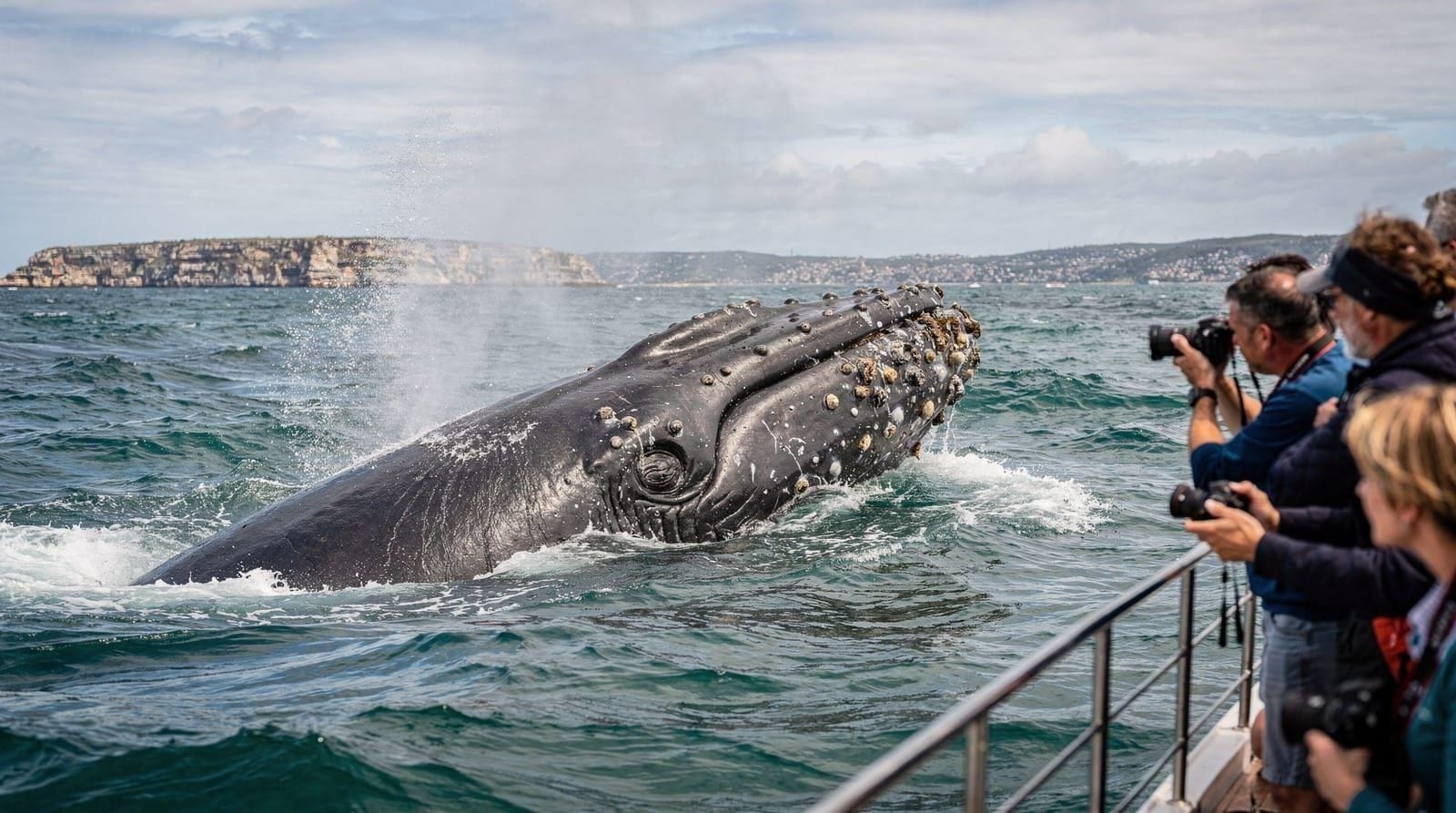
If you want to get closer, whale watching cruises depart from Circular Quay. These are a different experience — you are among the whales rather than watching from a distance — and are recommended for anyone visiting during the peak June–August window.
Sydney whale watching adventure cruise from Circular QuayFor the full seasonal guide to whale watching from both land and water, see the whale watching Sydney guide.
If you would rather see the headland from the water, a whale watching cruise passes the same cliffs, and the best whale watching tours guide compares the operators. A smaller-group option is a wildlife-focused whale watching cruise, which suits visitors who want dolphins and seabirds as well as whales.
Lady Bay Beach
On the harbour side of South Head, accessible via the Heritage Trail, Lady Bay is a small, somewhat sheltered beach. It is also one of Sydney’s few clothing-optional (nudist) beaches — which should be mentioned in the interest of not surprising anyone. The beach has no facilities. Snorkelling is good on calm days due to the rocky reef edges.
Camp Cove beach
Immediately north of Watsons Bay village, accessed via Victoria Street and a short walk past the marine rescue station, Camp Cove is a small, calm harbour beach with a genuinely fine sandy bottom. It is one of the few Sydney beaches that is both safe for children (protected from surf and generally calm) and aesthetically outstanding — the harbour-facing outlook takes in the North Head across the water, and on clear days you can see the entrance to the Pacific beyond.
Camp Cove is reliably less crowded than the ocean beaches even on summer weekends. Facilities are minimal: a small changing area, no café. Bring water and snacks.
The Gap: beyond the photographs
The Gap is one of those places where the experience of being there significantly exceeds anything a photograph communicates. The cliff face drops roughly 25 metres, but the combination of the exposed rock, the ocean swell attacking the base, and the spatial relationship between you and the water below creates a physical sensation that photographs cannot reproduce.
The viewing platforms have been carefully designed since the safety upgrades of the late 2000s — the barrier infrastructure makes the space feel safer without removing the exposure. In heavy weather, spray from waves breaking on the base of the cliffs reaches the viewing area.
The area immediately around The Gap has one of Sydney’s most poignant recent memorials. Don Ritchie lived in the house immediately adjacent to the cliff and spent more than five decades speaking with people in crisis at the edge. The accounts of his conversations — consistently calm, interested, non-judgmental — and the number of people he is credited with redirecting from the edge are documented on a small memorial plaque. It is worth a few minutes’ reading.
Walking between The Gap and South Head
The South Head Heritage Trail between The Gap and South Head takes approximately 45–60 minutes one way. The path follows the ocean-facing cliff edge, which means exposure to wind and, on heavy swell days, spray. The track is well-maintained and clearly signposted. The lighthouse at South Head (Hornby Lighthouse, 1858) is the oldest lighthouse on the New South Wales coast and is functional — automatic, but still operational.
Between The Gap and the lighthouse, the trail passes Lady Bay Beach (the clothing-optional area) and several elevated viewpoints over the entrance to the harbour. In winter, these viewpoints are among the most productive positions for watching humpback whales passing through the Heads. Bring binoculars for whale season visits — the whales can be surprisingly distant from the cliff, and a good pair of 8x binoculars makes an enormous difference.
The eastern suburbs ferry route
The F9 ferry runs direct from Circular Quay to Watsons Bay; check the official Transport for NSW website for the wharf, timetable and journey time.
Return timing: check the ferry schedule before leaving the village. The return service frequency drops significantly in the evenings, and missing the last direct service means a longer bus journey back.
Combining Watsons Bay with a harbour day
Watsons Bay works well as a half-day excursion from the CBD. A practical programme: ferry from Circular Quay at 10am, walk the South Head Heritage Trail (2 hours), lunch at the Watsons Bay Hotel, ferry return in the afternoon. If you are on a 5-day Sydney itinerary, this works as an afternoon addition to an eastern suburbs morning (Bondi, Bronte).
For whale season visits as part of the winter whale itinerary, Watsons Bay is worth combining with an afternoon whale watching cruise departing from Circular Quay. Spend the morning on land at South Head for potential sightings, take the ferry back to Circular Quay, and join an afternoon cruise for closer water-level encounters.
For the broader coastal beaches itinerary, Watsons Bay connects the harbour ferry circuit to the eastern beaches via Bondi — a bus (380) runs between Watsons Bay and Bondi Junction at the standard Opal fare.
If you would rather arrive by water in the evening, a sunset sailing on a catamaran shows you the same eastern harbour shoreline in softer light, and the sunset harbour cruises guide lays out the alternatives. For a wider look at the water, the Sydney Harbour cruises guide explains how the main options differ, and the Sydney Harbour page covers the rest of the shoreline.
Pairing Watsons Bay with a neighbouring stop
Watsons Bay sits well alongside other harbour and coastal destinations. Manly faces it across the Heads, so seeing both gives you the two sides of the harbour entrance, and the Bondi to Coogee walk is the natural companion if you want a second coastal walk on another day. The Watsons Bay and The Gap guide goes deeper on the cliff-top section, while the Sydney coastal hikes guide places this walk among the others. Visitors short on time may find the Sydney weekend in 48 hours itinerary a useful frame for deciding where a half day here fits, and the Sydney ferry day out post gives a first-hand account of a day on the water.
Watsons Bay versus a dedicated whale watching cruise
If your main goal is whales rather than the village itself, it’s worth deciding in advance whether land-based viewing at South Head or a paid cruise from Circular Quay suits you better. Land viewing is free, unpredictable, and dependent on binoculars and patience; a cruise costs more but gets you close to the animals with a naturalist narrating. The whale watching versus cruise guide and whale season Sydney guide cover the trade-offs and the specific weeks when sightings peak.
Ferry etiquette and timing tips
The F9 route is popular on weekends, and the ferry can fill up at Circular Quay before it even reaches the outer wharves. Arriving 10–15 minutes before departure secures a seat, ideally on the open rear deck for photos of Double Bay and Rose Bay as you pass. For a broader look at how the ferry network fits into a Sydney visit, see the Sydney ferries guide and the Opal card guide for fares and tapping on/off correctly.
Top experiences
Bookable activities with verified prices and instant confirmation on GetYourGuide.