Sydney Aboriginal heritage — authentic cultural experiences and sites
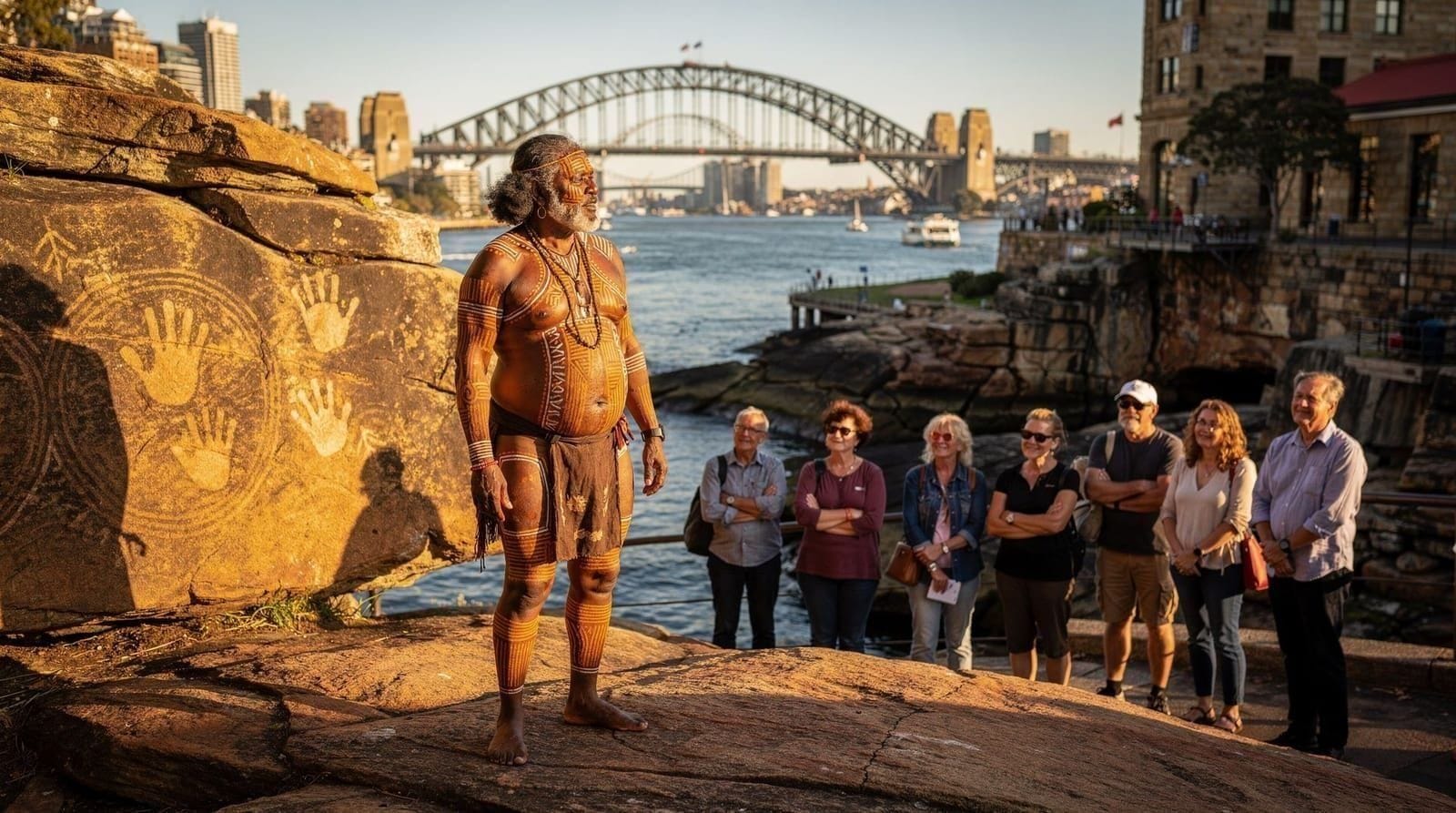
Sydney: Aboriginal rock art tour with smoking ceremony
Duration: 3 hours
What are the best Aboriginal cultural experiences in Sydney in 2026?
The Royal Botanic Garden Aboriginal Heritage Tour (AUD 36), the BridgeClimb Burrawa Aboriginal experience, and the rock art walks in Ku-ring-gai Chase National Park are the most substantive options. Avoid generic "Aboriginal souvenir" shops — most sell mass-produced goods with no connection to local culture.
At a glance
| Best single option | Royal Botanic Garden Aboriginal Heritage Tour (AUD 36 for adults, 1 hour) |
| Where to book | Directly through the Botanic Garden, or via the tour operators linked below for the rock art and BridgeClimb versions |
| Time needed | Half a day for one experience; a full day to combine two or three (see the planning section below) |
| Getting there | Circular Quay / St James train station for the Botanic Garden and Rocks-based experiences; Ku-ring-gai Chase requires a train plus local bus or the full-day tour pickup |
| Best time of year | Year-round — outdoor rock art walks are more comfortable in the cooler months (April–October) given Sydney’s strong summer UV |
Whose country is Sydney?
Sydney sits on Eora Country — the territory of the Eora people, a collective term for the coastal clans of the Sydney basin, including the Gadigal (around Sydney Cove and what is now the CBD), the Cadigal (Bondi), the Birrabirragal (Birchgrove/Balmain), and several other clans. The Dharug people occupied the inland country to the west, including areas that are now western Sydney and the Blue Mountains. The Dharawal occupied the southern coastal regions.
Continuous Aboriginal occupation of the Sydney region has been confirmed by archaeological evidence dating back at least 30,000 years. The Aboriginal people living here when the First Fleet arrived in 1788 had sophisticated social structures, extensive trade networks, ceremonial traditions, and a detailed knowledge of the harbour, bush, and coastal environment.
This is not ancient history presented for tourists. There are living Aboriginal communities in Sydney today — several thousand people identifying as Gadigal, Dharug, or Dharawal descended from the original inhabitants. Some of them run the cultural tours described in this guide.
What a genuine cultural experience looks like
The difference between authentic Aboriginal cultural experiences and the tourist commodity version is significant and worth spelling out plainly.
Authentic: Tours and experiences led by Indigenous guides who can speak from living cultural knowledge — family stories, language, relationship to specific sites. Rock art interpretation by people whose ancestors made the art. Programs developed with the involvement of Aboriginal communities.
Commodity: Mass-produced “Aboriginal art” prints (often manufactured overseas or made by non-Aboriginal artists), generic “boomerang throwing” activities marketed to cruise ship passengers, souvenir shops selling generic “didgeridoo and kangaroo” merchandise.
Sydney’s tourist market contains both. The experiences described below are the former — verified as led by Aboriginal people with genuine connection to the culture they’re presenting.
Royal Botanic Garden Aboriginal Heritage Tour
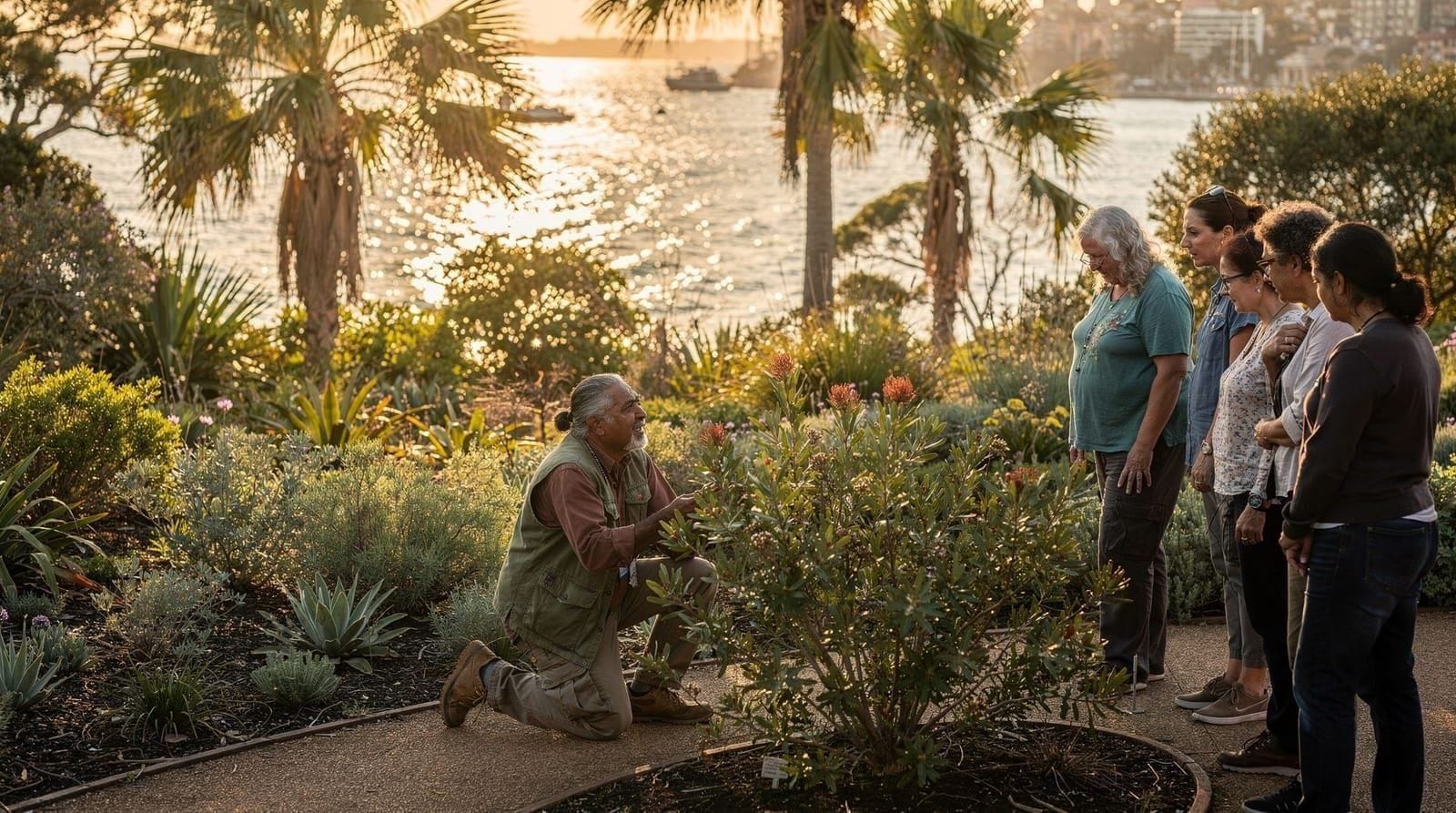
The Royal Botanic Garden Aboriginal Heritage Tour is operated by Aboriginal rangers employed by the Botanic Gardens and Parks Authority. The 1-hour walk through the gardens covers Gadigal and Cadigal use of native plants for food, medicine, and ceremony, the geography of the original foreshore, and the early period of contact with the First Fleet.
Entry: AUD 36 adults, AUD 23 children (7–15). Tours depart from the Garden Shop. Booking is strongly recommended — tours run on Thursdays, Fridays and Saturdays (excluding public holidays) and fill to capacity.
This is the most accessible and substantive Aboriginal cultural experience in central Sydney. The garden setting provides natural context that is hard to replicate elsewhere — several of the plants discussed have direct documented associations with the original Eora population of the Sydney basin. See the dedicated Royal Botanic Garden Aboriginal tour guide for complete details.
Rock art walking tours — Sydney’s living landscape
The Sydney region contains hundreds of Aboriginal rock art sites, carved into the sandstone that underlies the city. Most are in national park areas north and south of the city. The carvings (called engravings or “petroglyphs” in archaeological terminology) typically show animals, fish, human figures, and abstract designs.
Ku-ring-gai Chase National Park
Ku-ring-gai Chase, approximately 45 minutes north of Sydney by train and bus, contains the largest concentration of accessible Aboriginal rock art sites in the Sydney region. The Basin Track, Red Hands Cave, and Resolute picnic area walks all pass significant engraving sites with interpretation panels.
The full-day Aboriginal explorer tour covers Sydney’s national park rock art sites with an Aboriginal guide, providing interpretation that significantly exceeds what the static signs at the sites offer. This is a substantial commitment (8 hours) but the most thorough rock art experience available from Sydney.
Self-guided visits to the open rock art sites are free with the national park entry fee (a per-vehicle fee applies; check the official NSW National Parks website for the current amount). The Basin Trail from Ku-ring-gai station is the most commonly used access point.
Royal National Park
The Royal National Park, 34 km south of the CBD, also contains significant rock art sites. The Curra Moors Loop passes multiple engraving sites. Access is by train to Loftus or Engadine and then walking — no car required.
BridgeClimb Burrawa — Indigenous interpretation of the Harbour Bridge
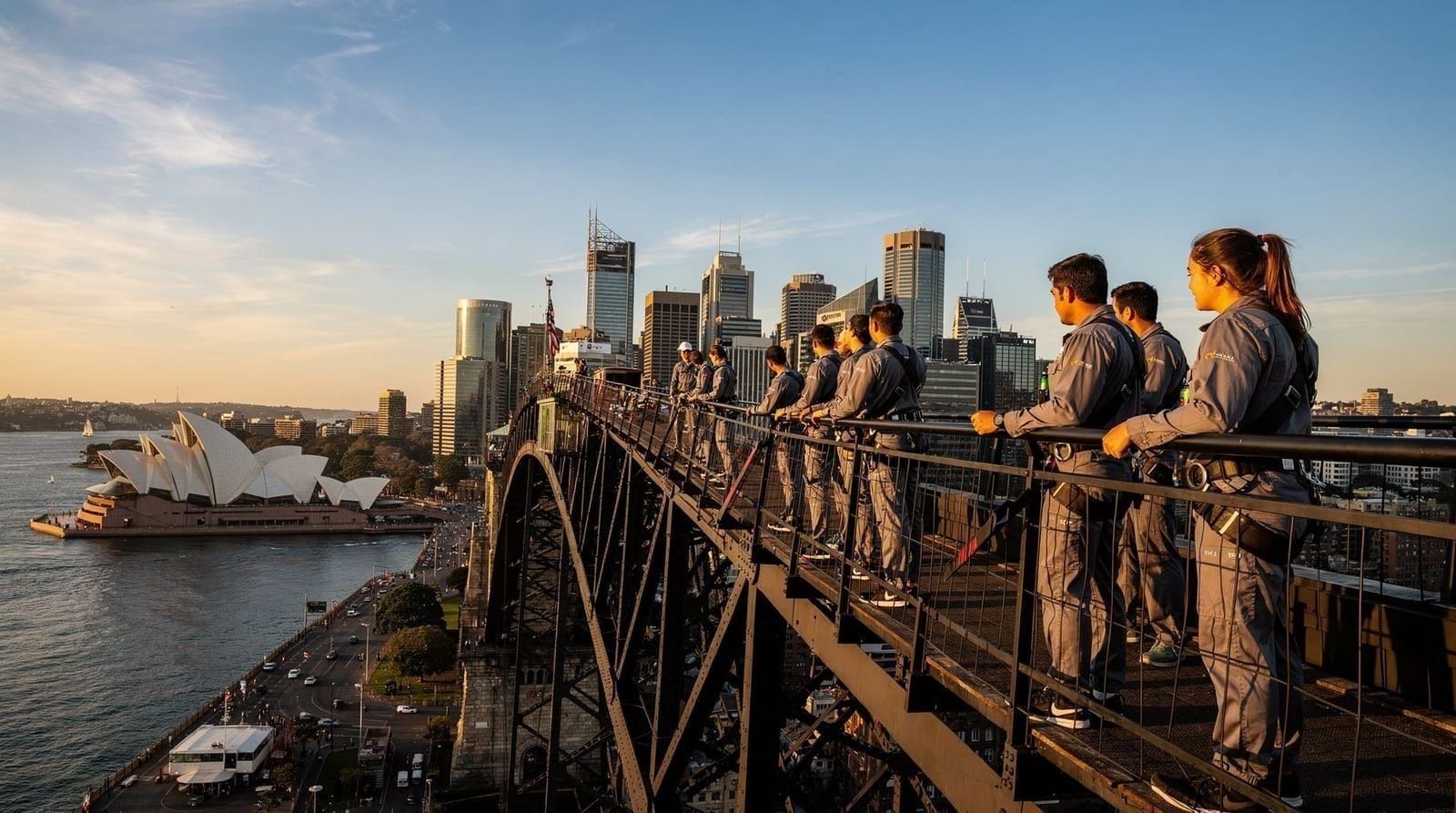
The BridgeClimb Burrawa experience is the Harbour Bridge climb programme that incorporates Gadigal cultural interpretation. The word “burrawa” means “iron/steel” in Gadigal language and was the name the Aboriginal people of the harbour gave to the bridge when it was constructed.
This is the version of the BridgeClimb worth doing if Aboriginal heritage is a priority for your visit. The guide incorporates Gadigal stories about the harbour and the country below the bridge, which standard climb programmes do not include. The physical climb experience is identical — 3 hours, the full summit arch at 134 metres above sea level.
Price: check the official BridgeClimb website for current prices. More expensive than the standard climb, but the cultural component is substantive rather than superficial. See the BridgeClimb guide for a full comparison of climb variants.
Rock art and smoking ceremony walk — inner west Sydney
The Aboriginal rock art tour with smoking ceremony operates in and around the inner city and north shore areas, visiting accessible rock art sites and concluding with a traditional smoking ceremony — a purification ritual used in many Sydney Aboriginal ceremonies.
Duration: approximately 3 hours. This tour is suitable for visitors who want an immersive cultural experience without a full day commitment.
The smoking ceremony is not theatrical performance — it is a living cultural practice conducted by the guide. The distinction matters. Visitors are welcome to participate respectfully.
The Yiribana Gallery — Art Gallery of NSW
The Yiribana Gallery at the Art Gallery of NSW (free, permanent collection) is one of Australia’s most significant public displays of Aboriginal and Torres Strait Islander art. It holds works spanning from traditional bark painting and desert acrylic painting to contemporary political art.
This is the right venue for visitors whose primary interest is the visual arts tradition rather than on-Country experiences. The Yiribana Gallery alone justifies a visit to the AGNSW. See the Art Gallery of NSW guide for opening hours and what else the gallery holds.
The Australian Museum (free general entry) also has a major First Australians gallery covering cultural artefacts, archaeology, and contemporary perspectives. It provides broader historical context than the art gallery but is less focused on contemporary practice.
Honest assessment — what to avoid
”Aboriginal souvenir” shops in The Rocks and tourist areas
A significant proportion of the Aboriginal-themed merchandise sold in Sydney’s tourist areas — dot paintings, boomerangs, decorative shields, mass-produced didgeridoos — is manufactured overseas or by non-Aboriginal businesses and has no connection to Indigenous cultural production. Buying this merchandise does not support Aboriginal artists or communities.
If you want to buy authentic Aboriginal art, use the MCA Shop (which clearly states provenance), the Art Gallery of NSW Shop, the Cooee Aboriginal Art gallery in Paddington, or the ATSIAB (Aboriginal and Torres Strait Islander Art Alliance) website, which lists verified dealers.
Generic “cultural experience” packages in tourist precincts
Several tour operators in Circular Quay and Darling Harbour offer brief Aboriginal “cultural experience” packages involving a didgeridoo demonstration and a boomerang throw. These are generally produced by non-Aboriginal operators using Aboriginal performers in a way that reduces living culture to entertainment. The experiences described above are substantive alternatives.
Understanding country acknowledgement
Most public events in Sydney begin with an Acknowledgement of Country — a formal recognition that the event is taking place on Aboriginal land. The standard form acknowledges the Gadigal people of the Eora Nation as the traditional custodians of the Sydney CBD area. Visitor events typically use a Welcome to Country, which must be delivered by an Aboriginal elder from the relevant country, rather than the non-Aboriginal Acknowledgement.
This practice is not unique to tourist contexts — it is standard in government, corporate, educational, and cultural settings across Australia. Visitors who encounter it can treat it as a genuine orientation to where they are, not a purely ceremonial formality.
Planning an Aboriginal cultural day in Sydney
A realistic day itinerary combining multiple experiences:
Morning: Royal Botanic Garden Aboriginal tour (check current days and times on the official Royal Botanic Garden Sydney website; book in advance). Covers Gadigal plant knowledge and the original harbour environment.
Lunch: Café in the Botanic Garden or the MCA café nearby (10-minute walk).
Afternoon (1:30pm–3:30pm): Yiribana Gallery at the Art Gallery of NSW (free), then the Australian Museum First Australians gallery if time permits.
Evening option: The Rocks ghost and history walking tour (starts at dusk) for a different perspective on how colonisation affected The Rocks district.
For visitors with more time, the full-day National Park Aboriginal Explorer tour provides the deepest engagement with Country — rock art, bushfood, and extended guide contact time. It requires a full dedicated day and is best suited to visitors with a genuine sustained interest in the subject.
See the getting around Sydney guide for how to navigate between the Botanic Garden, the AGNSW, and The Rocks using the Opal card.
Comparing the main Aboriginal cultural experiences
| Experience | Duration | Approx. price | Best for |
|---|---|---|---|
| Royal Botanic Garden Aboriginal Heritage Tour | 1 hour | AUD 36 | First-time visitors, anyone with limited time |
| Rock art walk with smoking ceremony | ~3 hours | Mid-range (check current listing) | Visitors wanting an immersive but not full-day experience |
| BridgeClimb Burrawa | 3 hours | Check the official BridgeClimb website | Combining the harbour bridge climb with Gadigal interpretation |
| National Park Aboriginal Explorer (full day) | ~8 hours | Higher, full-day rate | Visitors with a genuine sustained interest in Country and rock art |
| Yiribana Gallery, AGNSW | Self-paced, 1–2 hours | Free general entry | Visitors most interested in the visual arts tradition |
Booking and etiquette notes
Aboriginal-guided tours in Sydney run on limited schedules and genuinely sell out, particularly the Royal Botanic Garden tour and the smoking ceremony walk — book at least a few days ahead in peak season (December–February and school holiday periods). Wear closed shoes and bring water for the rock art walks, which involve uneven bush terrain.
During a smoking ceremony, follow the guide’s instructions about participation — it is a living cultural practice, not a photo opportunity staged for tourists. Photography of specific sacred sites may be restricted; the guide will tell you where this applies. Tipping is not required but is appreciated for small-group tours.
For visitors staying in the CBD without a car, the Sydney for first-timers guide and the Rocks history walk pair naturally with the Aboriginal heritage experiences above, since several sites (The Rocks, the Botanic Garden, Circular Quay) overlap geographically.
The dedicated Rocks Dreaming tour is another option specifically focused on this precinct’s Aboriginal history, and the Royal Botanic Garden guide covers the wider garden beyond the Aboriginal tour itself. Visitors interested in a broader range of guided cultural options should also check Aboriginal cultural tours in Sydney for the full current list.
Frequently asked questions about Sydney Aboriginal heritage
Is it appropriate for tourists to take part in a smoking ceremony? Yes — smoking ceremonies offered as part of guided tours are conducted specifically for participants, with the guide explaining what’s happening and inviting respectful participation. It differs from a private or community ceremony, where participation without invitation would not be appropriate.
Can I visit Aboriginal rock art sites without a guide? Yes, many sites in Ku-ring-gai Chase National Park and the Royal National Park are open to the public with interpretation panels, and are free to visit beyond the national park entry fee. A guided tour adds cultural context and interpretation that the signage alone doesn’t provide, which is the main reason to pay for one.
Top experiences
Bookable activities with verified prices and instant confirmation on GetYourGuide.