The Rocks history walk — Sydney's convict precinct on foot
Sydney: The Rocks 90 minute history walking tour
Duration: 1.5 hours
How long does it take to walk around The Rocks in Sydney?
A self-guided walk covering the main historical sites takes 2–3 hours at an unhurried pace. Guided tours run 90 minutes to 3.5 hours and include access to stories and context not available from signs alone.
Why The Rocks matters
| At a glance | |
|---|---|
| Where | The Rocks, adjoining Circular Quay |
| Cost | Self-guided walk is free; guided tours are priced by the operator |
| Time needed | 2–3 hours self-guided, 90 minutes to 3.5 hours if guided |
| Getting there | Circular Quay train station, walkable from the CBD in 10–15 minutes |
| Best time | Weekday mornings for a quieter walk; weekends if you want the markets running too |
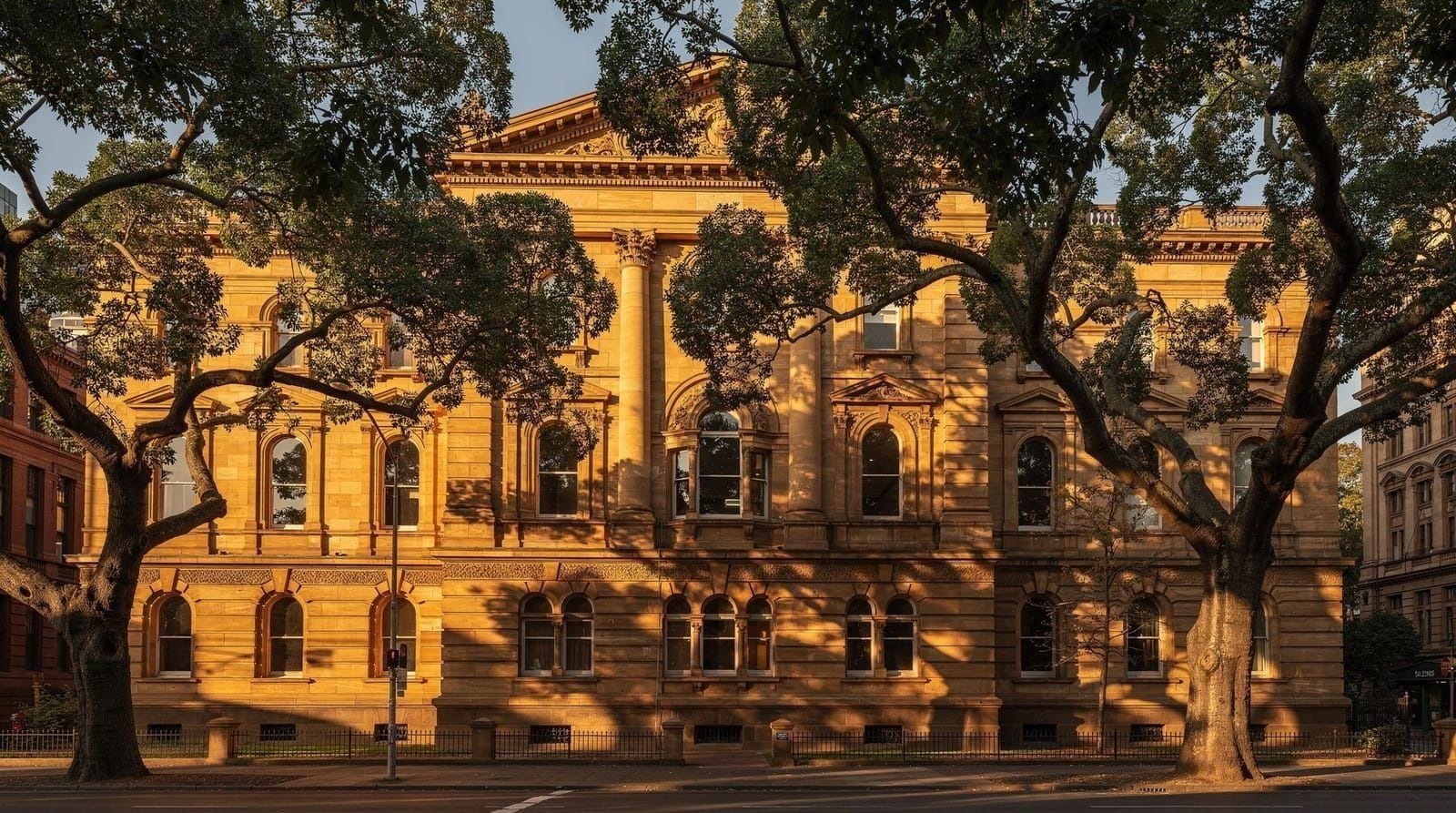
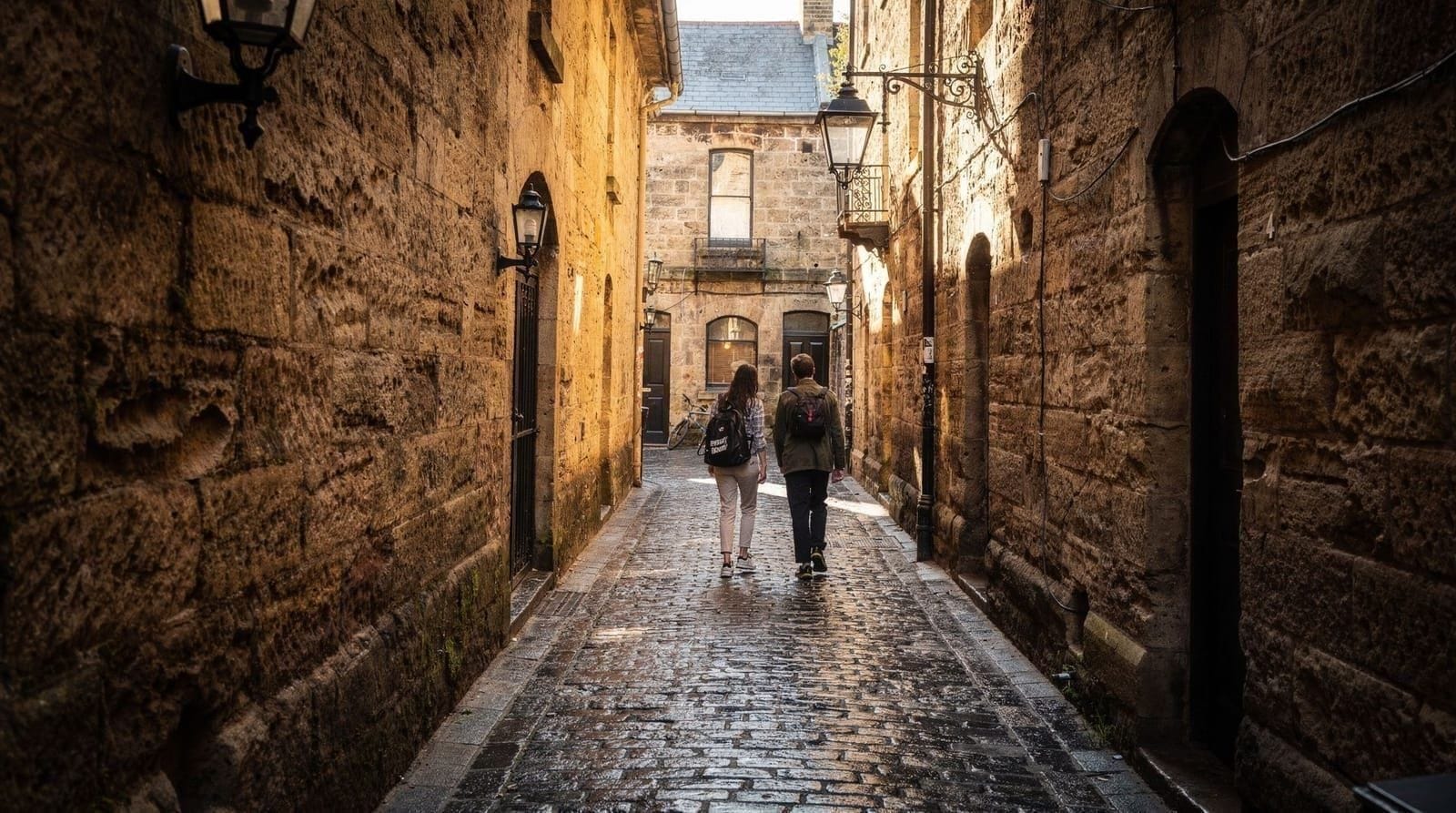
The Rocks is where Sydney began. When the First Fleet arrived in January 1788 and Arthur Phillip chose Sydney Cove as the settlement site, the rocky sandstone headland on the western side of the cove became the first European construction zone in Australia. Within months, convict labour had built a camp of tents, then timber structures, then the sandstone buildings that still stand today — some of the oldest colonial architecture on the continent.
The neighbourhood’s history is layered and not uniformly comfortable. Convicts were the original workforce. The Aboriginal Eora people, for whom Sydney Harbour had been a home for tens of thousands of years, were progressively displaced from these shores. The Rocks became a rough working-class district in the 19th century, a site of plague quarantine in 1900, and a battleground in the 1970s when community activists successfully blocked demolition of the entire precinct.
That activism is worth knowing about. In 1971, the NSW government proposed razing the terrace houses and sandstone warehouses to build tower blocks. The Green Bans movement — a coalition of trade unions and residents — refused to work on the demolitions, saving The Rocks essentially intact. The neighbourhood you walk through today exists because of that refusal.
Self-guided walk — from Circular Quay to Observatory Hill
Starting point: Exit Circular Quay train station and turn left (west) along Alfred Street toward George Street.
Time: 2–3 hours at an easy pace. Approximately 3–4 km total depending on diversions.
Stop 1: First Fleet Park and Customs House (0 min)
The First Fleet Park, directly in front of Circular Quay, marks the original landing site. It’s not much to look at — a small park with a fountain — but it’s genuinely the spot where the First Fleet came ashore. The Customs House building (1843, rebuilt 1885) behind it has a scaled model of the CBD under a glass floor in the reading room — free to enter and worth five minutes.
Stop 2: Cadmans Cottage — oldest surviving house (10 min)
Walk north along George Street into The Rocks precinct. Cadmans Cottage at 110 George Street dates from 1816 and is the oldest surviving dwelling in Sydney. It was built as barracks for government coxswains (the men who rowed officials across the harbour). John Cadman, who gave the house its name, was a convict transported for horse-stealing who became a government boatman.
The cottage is managed by Place Management NSW; check current access and any entry fee before you go. The interior is modest — a few rooms of period furniture and interpretation panels — but the age and survival of the building is the point.
Stop 3: Susannah Place Museum (15 min)
At 58–64 Gloucester Street, Susannah Place is a row of four terrace houses built in 1844 that operated as working-class homes and small shops continuously until 1990. The museum preserves the interiors with remarkable fidelity to different periods — 1840s through to mid-20th century. Open Thursday to Saturday, with entry by guided tour; check the official Museums of History NSW website for current prices.
This is the most authentic domestic history experience in The Rocks, and the most visited. The guided tour is the only way in, and it is worth doing. The shop in the front terrace sells provisions and is genuinely atmospheric.
Stop 4: Argyle Cut (30 min)
The Argyle Cut is a rock passage hacked through the sandstone ridge that separated The Rocks from Millers Point. Work began in 1843 using convict labour with hand tools. The depth of the cut — roughly 15 metres — represents an enormous amount of physical labour in difficult conditions.
Walk through the cut to reach Millers Point on the western side, or turn back and continue north on Gloucester Street.
Stop 5: The Rocks Market and Playfair Street (35 min)
On weekends (Saturday and Sunday), the Rocks Market occupies the area between Circular Quay West and George Street. It sells jewellery, art prints, clothing, and food. The quality varies — some genuine artisan work, some tourist commodity merchandise. Browse critically.
Playfair Street, running parallel to George Street, has some of the best examples of restored 19th century commercial buildings, now occupied by galleries, small restaurants, and retail.
Stop 6: Dawes Point and the Harbour Bridge pylon (45 min)
Continue north to Dawes Point Park — the headland directly under the southern end of the Harbour Bridge. William Dawes established Australia’s first meteorological and astronomical observatory here in 1788. The park is now a harbour viewpoint with close-up views of the bridge pylon.
The Pylon Lookout (inside the southeastern bridge pylon) is a separate ticketed attraction (check the official BridgeMuseum website for current prices) with 360-degree views. It’s a more honest option than the BridgeClimb if budget is a concern — the views are similar and the price is a fraction of the cost. See the BridgeClimb vs Pylon Lookout guide for a detailed comparison.
Stop 7: Observatory Hill (60 min)
Walk back south and uphill via Upper Fort Street to Observatory Hill. The Sydney Observatory (1858) sits at the top and is operated by Museums of History NSW. Free to walk around the grounds — the hill itself is a public park with excellent views over the western harbour, Darling Harbour, and the CBD.
For current Observatory opening hours and any night sessions, check the official Museums of History NSW website. The café at the base of the hill is a reasonable stop for coffee before heading back to Circular Quay.
Guided tours of The Rocks — honest assessment
Three types of guided tour operate in The Rocks: historical walking tours, convict history tours, and ghost tours. All operate on foot and depart from the Rocks Discovery Museum or George Street.
90-minute history tour
The Rocks 90-minute history walking tour covers the major historical sites with a guide who can explain context that signs cannot. This is the right option for most visitors — it’s tightly paced, doesn’t try to be exhaustive, and gives a genuine grounding in what happened here between 1788 and the 20th century.
The guide-to-group ratio matters: tours of 15 or fewer people are substantially better than large groups. Most operators cap at 20 participants.
Convict colony walking tour
The 2-hour Convict Colony walking tour goes deeper into the transportation system and convict experience — specific stories, named individuals, the social hierarchy of early colonial Sydney. More appropriate for visitors with a pre-existing interest in 18th and 19th century British social history.
Ghost tour
The Rocks ghost tour operates after dark and focuses on the district’s numerous plague deaths, murders, and associated folklore. It is explicitly theatrical rather than historical — a entertainment product rather than education. Some guides are excellent storytellers; others are not. Worthwhile if you’re in The Rocks on a weekend evening and want an unusual way to spend 90 minutes, less recommended as a primary historical introduction.
The Rocks Discovery Museum — free and worth 45 minutes
The Rocks Discovery Museum at 2–8 Kendall Lane is free to enter and provides a solid historical overview of the precinct from Aboriginal occupation through to the 1970s conservation battles. The collections include artefacts from archaeological excavations of the area (significant quantities of domestic goods from the 1800s have been uncovered during various building works).
This is the right first stop if you’re doing a self-guided walk — the exhibition provides context that makes the subsequent walk more meaningful. Open daily 10am–5pm.
Eating and drinking in The Rocks — practical notes
The Rocks has some of the city’s oldest surviving pubs and some tourist-trap restaurants charging significantly more than the quality justifies. Brief honest notes:
The Lord Nelson Brewery Hotel (19 Kent Street) — opened 1842, brewing its own beer since 1986. Genuine pub atmosphere, genuinely decent food. The building is three stories of rough sandstone and has not been over-restored.
The Hero of Waterloo (81 Lower Fort Street, 1843) — Sydney’s oldest pub with retained original sandstone walls and a long-standing claim to having a tunnel below that was once used for press-ganging sailors. The tunnel story may be apocryphal; the pub itself is real and good.
Avoid: The restaurant strip on The Rocks main square directly north of Campbells Cove. Several restaurants here charge premium prices for mains with harbour views. The views are genuine; the food rarely justifies the prices. The Circular Quay waterfront restaurants one block east have the same problem.
Getting to The Rocks
Circular Quay is the transport hub. Trains (City Circle line, stop: Circular Quay), ferries (all harbour routes), and buses (multiple routes along George Street) all converge here.
Walking from the CBD takes 10–15 minutes from Town Hall or Martin Place. The Rocks is also directly accessible from Wynyard station (George Street exit) if coming from the north.
The Opal card guide covers fares and the daily cap — the AUD 9.65 Friday/weekend daily cap makes it particularly good value if you’re combining The Rocks with a ferry to Manly or the Opera House visit. The getting around Sydney guide covers all transport modes in detail.
Aboriginal heritage in The Rocks
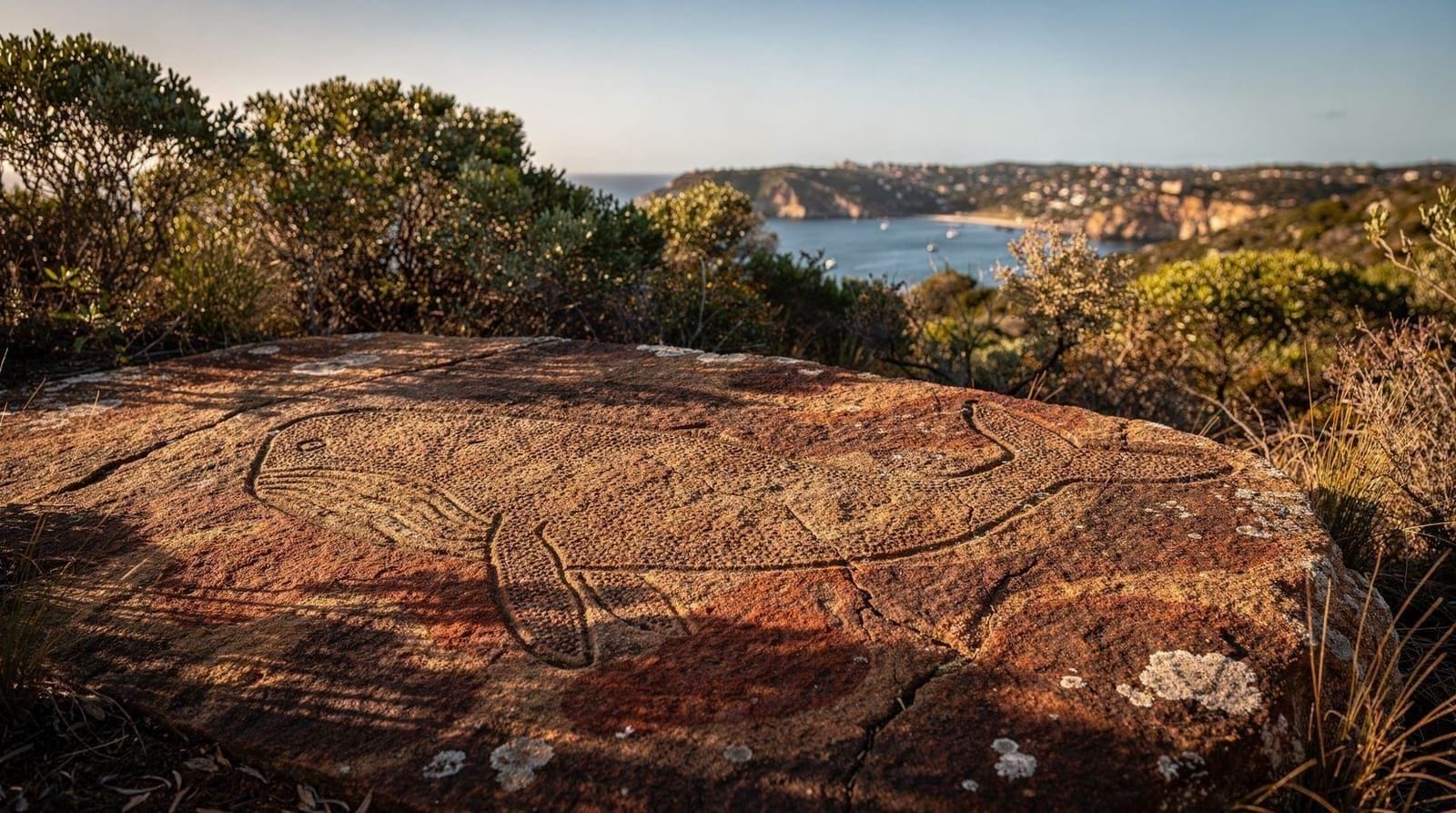
The sandstone of The Rocks precinct contains some of the Eora people’s Sydney Harbour country, though the visible built environment is almost entirely colonial. The Eora people had settlements around Sydney Cove for thousands of years before 1788.
There are no surviving Aboriginal structures in The Rocks — they predated European construction materials — but the Rocks Discovery Museum addresses Aboriginal history with some care, and the walk from Circular Quay to Observatory Hill passes sites with documented Aboriginal connections. The Sydney Aboriginal heritage guide covers deeper engagement with this history across the city.
The most substantive Aboriginal cultural experience in central Sydney is the Royal Botanic Garden Aboriginal Heritage Tour — a guided walk by Indigenous rangers. See the Royal Botanic Garden Aboriginal tour guide for details.
For a walk that puts Aboriginal history at the centre rather than the periphery, The Rocks Dreaming tour covers the same streets from the Gadigal perspective, including the 1789 smallpox epidemic and the displacement that followed — a useful complement to the convict-era focus of this self-guided walk.
Combining the walk with the rest of the harbour
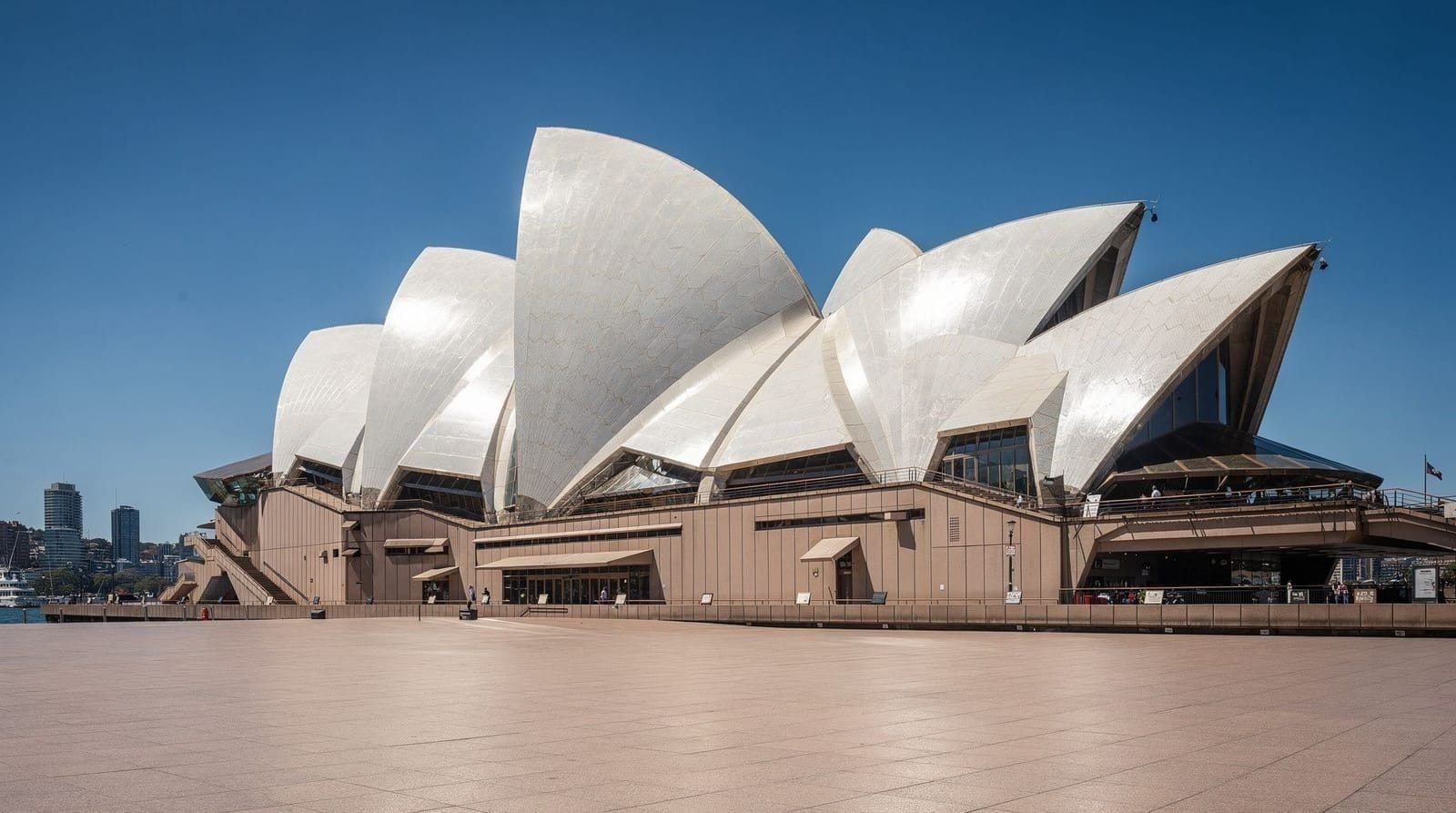
Because The Rocks sits directly against Circular Quay, it pairs naturally with a harbour-focused day. Many visitors finish the Observatory Hill loop, then walk back down to Circular Quay for the Sydney Opera House forecourt or a ferry to Manly or Watsons Bay. If you’re planning a first Sydney visit around this area, the Sydney for first-timers guide sequences The Rocks alongside the other CBD-adjacent highlights so you’re not backtracking across the city.
If time is short, prioritise Cadmans Cottage, Susannah Place, and the Discovery Museum over the full Observatory Hill loop — those three sites carry most of the genuine historical weight in under an hour combined.
Frequently asked questions about The Rocks history walk
Is The Rocks worth visiting if I’ve already seen the Opera House and Harbour Bridge? Yes — it’s a different kind of sight, closer to a walkable outdoor museum than a single landmark, and most of it (the self-guided walk, Discovery Museum, Cadmans Cottage) is free.
How does The Rocks history walk compare to The Rocks Dreaming tour? This walk focuses on convict-era and colonial architecture and stories from 1788 through the 20th century. The Rocks Dreaming tour covers the same streets from the Gadigal Aboriginal perspective, including 60,000 years of prior occupation. They’re complementary rather than overlapping.
Top experiences
Bookable activities with verified prices and instant confirmation on GetYourGuide.