The Rocks Dreaming tour — Aboriginal heritage in Sydney's oldest district
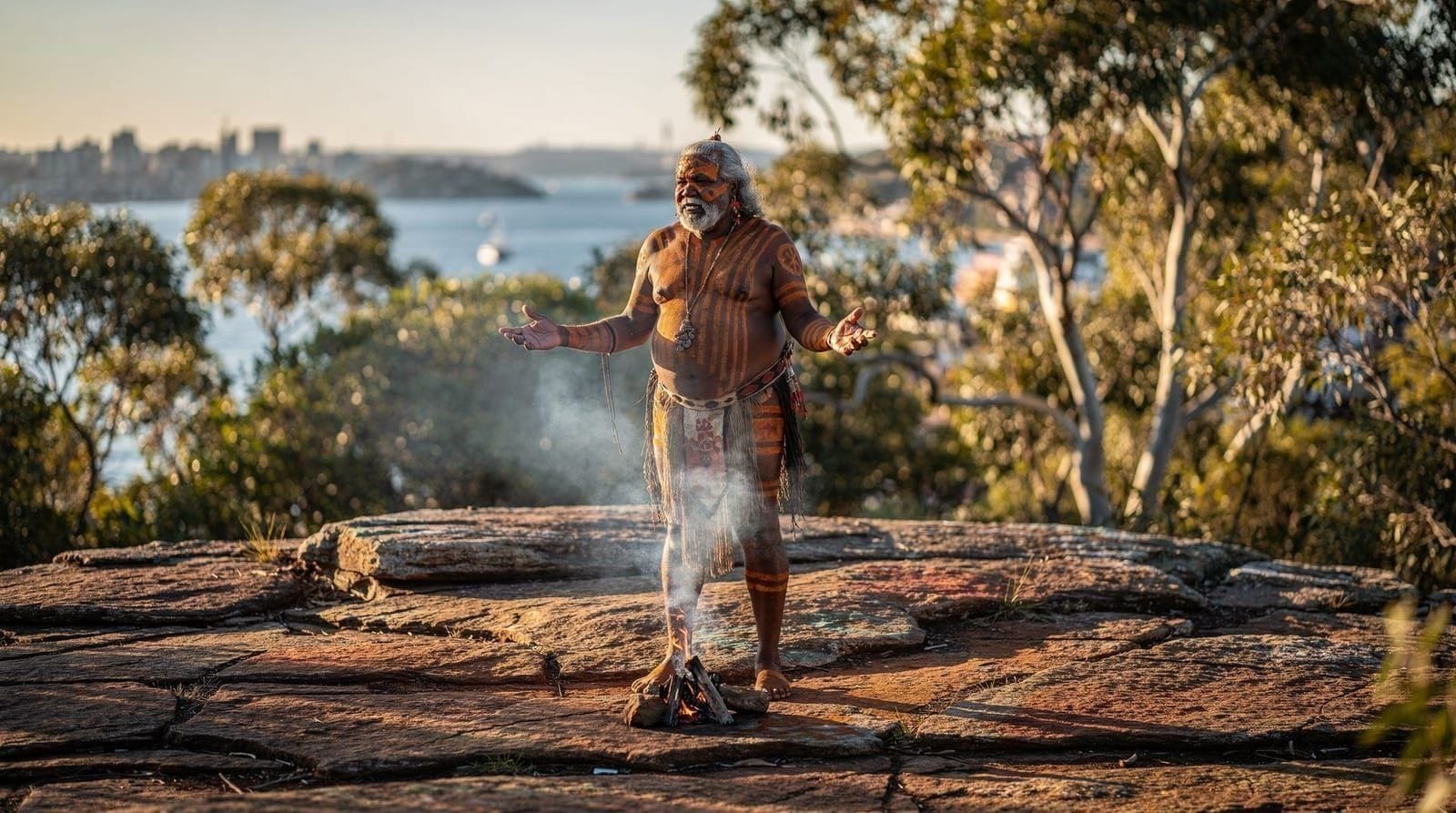
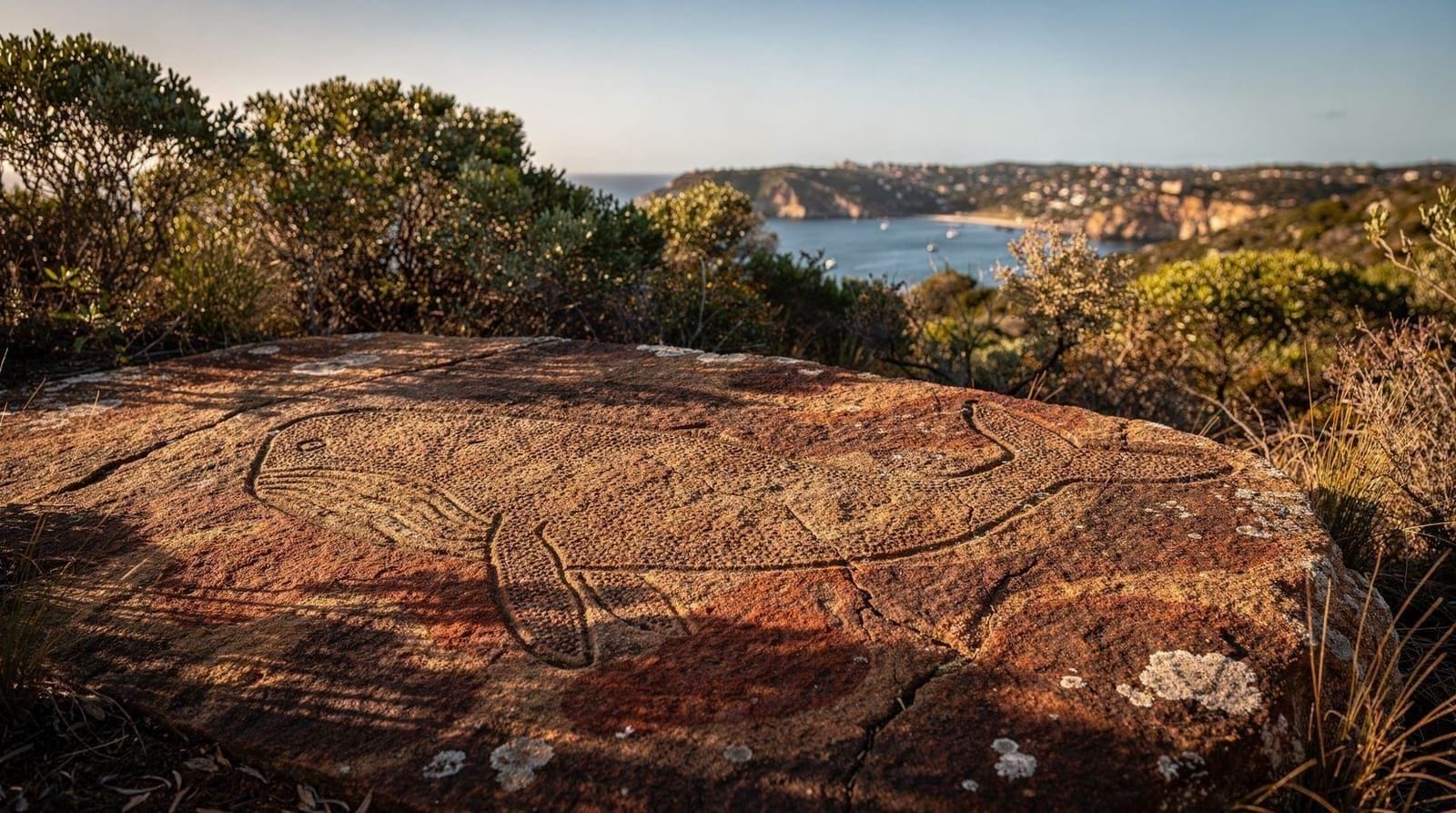
Sydney: Aboriginal rock art tour with smoking ceremony
Duration: 3 hours
What is The Rocks Dreaming tour about?
The Rocks Dreaming is a 90-minute walking tour of The Rocks district that focuses on the pre-colonial Aboriginal history of the area — the Gadigal people's relationship to the harbour foreshore — alongside the colonial history most visitors associate with The Rocks. It contextualises the 1788 settlement within 60,000 years of prior occupation.
What The Rocks is and why it matters for Aboriginal history
| At a glance | |
|---|---|
| Where | Meeting point in The Rocks, typically the Customs House forecourt or The Rocks Discovery Museum |
| Cost | Check current pricing with the operator when booking |
| Time needed | Around 90 minutes, plus extra if combining with the Discovery Museum or markets |
| Getting there | Circular Quay train station, around 3 minutes’ walk |
| Best time | Weekday mornings for smaller groups; weekends if pairing with The Rocks markets |
The Rocks is Sydney’s oldest European settlement — the area where the British First Fleet landed in January 1788 and established the colony that would become Australia. Most visitors encounter The Rocks as a heritage tourist precinct: colonial sandstone buildings, the weekend market, the Harbour Bridge approach, and the pubs that claim to be Sydney’s oldest.
The Rocks Dreaming tour approaches the same geography from a different starting point — 60,000 years before 1788. The area now occupied by the colonial streetscape was Gadigal Country, part of the landscape the Gadigal people occupied, managed, and understood through knowledge systems that predate every European institution.
The tour runs approximately 90 minutes and walks visitors through sites in The Rocks district that carry both colonial and Aboriginal heritage significance, with a guide who covers both layers of history.
What the tour covers
The tour begins at a meeting point in The Rocks (confirm exact location when booking — it has varied between The Rocks Discovery Museum entrance and the Customs House forecourt) and proceeds on foot through several key sites.
Key themes covered:
- The Gadigal relationship to the harbour foreshore — food sources, fishing practices, ceremonial sites, and the management of the landscape through burning and water use.
- The first contact period of 1788–1800 — what the Gadigal community experienced during the establishment of the colony, including the catastrophic smallpox epidemic of 1789 that killed an estimated 70% of the Aboriginal population of the Sydney basin.
- The displacement of Aboriginal people from their Country as the colonial footprint expanded.
- The ongoing presence and cultural continuity of Aboriginal people in Sydney despite systematic attempts at erasure.
- Gadigal language — place names, ecological vocabulary, and the linguistic traces that have survived into modern Sydney geography (Woolloomooloo, Cammeray, Parramatta).
The tour is not exclusively about pre-colonial history — it connects Aboriginal heritage to contemporary realities and acknowledges that Gadigal people continue to maintain connection to this Country.
How it compares to the standard Rocks walking tours
Several walking tours operate in The Rocks. The most common are the history walking tours run by Sydney Living Museums and independent operators, focusing on colonial architecture, convict history, and the social development of the early colony. These are well-run and informative for their stated purpose.
The Dreaming tour adds a temporal layer that the standard tours omit — the 60,000 years before 1788. For visitors who have already done a standard Rocks historical walk (or who have read about the colonial history), the Dreaming tour provides genuinely new perspective on the same geography.
For visitors combining both interests, the most efficient structure is to do The Rocks Dreaming tour first (Aboriginal and colonial context together) and supplement with the Rocks history walk if deeper colonial-era detail is wanted.
What to expect practically
Duration: Approximately 90 minutes. Physical demands: Minimal — paved streets throughout, gentle grades. Group size: Varies by operator; typically 8–15 participants. What to bring: Comfortable shoes, weather-appropriate clothing (no shade on parts of the route), water.
The colonial history the tour walks through
The Rocks district is the most historically layered part of Sydney. A few key facts establish the context:
January 1788: The British First Fleet arrives at Sydney Cove. Governor Phillip notes the presence of the Gadigal people on the southern shore. Initial contact is cautious but not immediately violent.
April 1789: A smallpox epidemic spreads through the Aboriginal population around Sydney Cove. Watkin Tench, an officer of the First Fleet who kept detailed journals, records that Aboriginal bodies are found throughout the harbour area. Estimates suggest the epidemic killed between 50% and 90% of the Gadigal people in the Sydney basin within eighteen months of British arrival.
1790–1810: Progressive establishment of farms and buildings across Gadigal Country. Aboriginal people are increasingly excluded from the foreshore they had inhabited. Some, including the famous figures of Bennelong and Barangaroo, negotiated a position within the colonial order; others resisted and were killed.
The Rocks as a convict precinct: The dense network of laneways, doss houses, and pubs that developed in The Rocks from the 1790s through the mid-1800s is the layer most commonly presented to tourists. The Rocks was rough, disease-ridden, and the centre of the colonial port economy. This history is real and worth understanding — but it begins 60,000 years into the middle of a longer story.
The Dreaming tour contextualises the colonial layer within the longer Aboriginal history, which is an unusual and valuable perspective.
What to do in The Rocks before or after the tour
The Rocks Discovery Museum (Kendall Lane, free entry): A small but serious museum covering the archaeological, social, and Aboriginal history of The Rocks precinct. The archaeological collection includes material from excavations of the Rocks underground — the original colonial street level is several metres below the current surface. Worth an hour.
Cadmans Cottage: The oldest surviving building in Sydney (1816), used by the Water Police and later for harbour services. Now managed by Place Management NSW; check current access and opening details with them before you go.
The weekend market: The Rocks markets (Saturday and Sunday, George Street) are one of the better artisan markets in Sydney — local designers, food producers, and craftspeople, with a smaller proportion of the mass-produced tourist tat found in the shops surrounding them. Worth a browse but do not confuse the market stalls with the souvenir shops.
Barangaroo: A 10-minute walk west from The Rocks along the harbour foreshore brings you to Barangaroo Reserve — a significant redevelopment of the former container wharf into a foreshore park incorporating Gadigal cultural interpretation and native plantings. The reserve is free and well-designed; the interpretation materials are honest about the history of the site and the broader colonial context.
Practical information
Meeting point: Confirm when booking — The Rocks departure points change. Most tours meet at the Customs House forecourt (31 Alfred Street, Circular Quay) or near The Rocks Discovery Museum.
Getting there: Circular Quay train station (3 minutes walk). Numerous buses stop at the adjacent Wynyard or Circular Quay stops. The Rocks is walkable from the CBD.
Duration: 90 minutes. Physical requirements: Minimal — flat, paved streets throughout. Booking: Check the Sydney Living Museums website or the Dreamtime Southern X operator for current tour times and online booking. Tours run on selected days; advance booking recommended.
What to bring: Comfortable shoes, weather-appropriate clothing. No particular equipment needed.
Cost: Check current pricing with the operator when booking.
Connecting to other Aboriginal experiences in Sydney
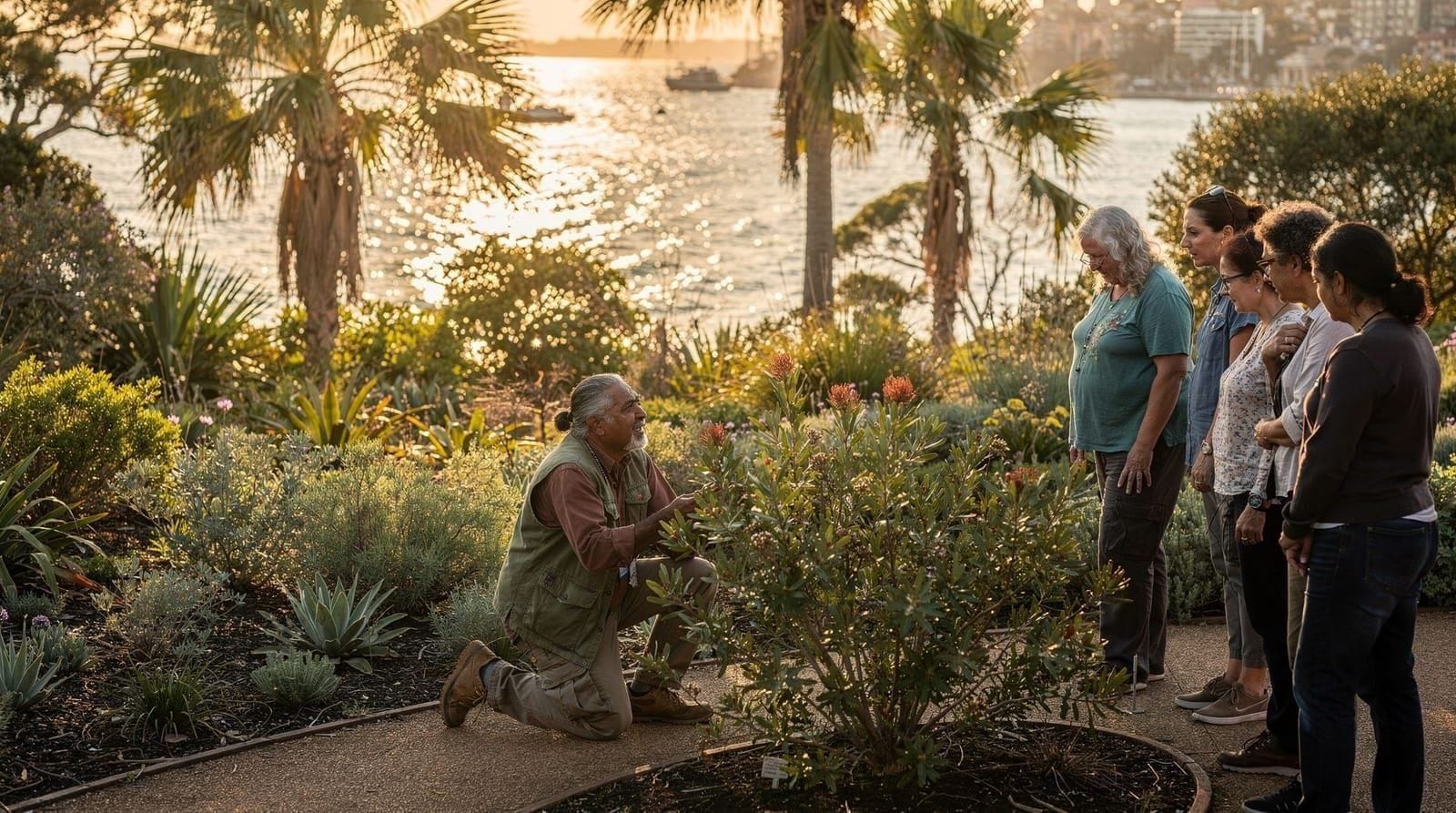
The Rocks Dreaming tour pairs well with the Royal Botanic Garden Aboriginal tour — the two cover adjacent aspects of Gadigal cultural heritage (the urban foreshore and the plant knowledge of the garden) and can be combined in a single day.
For a more immersive experience involving rock engravings and a smoking ceremony in a national park setting, the Aboriginal rock art tour takes visitors to Lane Cove National Park and offers more direct engagement with pre-colonial material culture away from the tourist precinct.
For the bridge perspective on Aboriginal heritage, the BridgeClimb Burrawa experience approaches the same harbour landscape from an elevated angle, with cultural content developed with community input.
If you prefer to book a guided experience in advance, a few options sit naturally beside this one. an Aboriginal-led walk that includes a smoking ceremony gives a more ceremonial angle, while a bridge climb with Aboriginal cultural content suits visitors who want the harbour seen from above. Our Harbour Bridge guide and BridgeClimb guide explain how those fit into a wider plan.
Context on The Rocks as a tourist precinct
The Rocks is one of the more tourist-saturated areas of Sydney — the weekend markets, heritage pub circuit, and souvenir shops attract very large numbers of visitors. The commercial fabric of the precinct is largely unconnected to any Aboriginal cultural heritage. Many shops sell items marketed as Aboriginal art or souvenirs without provenance or community connection.
Visitors interested in genuine Aboriginal cultural material should seek out Boomalli Aboriginal Artists Co-operative in Leichhardt (15 minutes from The Rocks by bus) or specialist galleries in the CBD, rather than the general souvenir trade in The Rocks. The Aboriginal cultural tours guide covers this distinction in detail, including what authentic Aboriginal art provenance looks like.
The Gadigal people today
The Gadigal people are not historical figures. The Metropolitan Local Aboriginal Land Council (MetroLALC) represents Aboriginal people with connections to the metropolitan Sydney area, including Gadigal descendants. Community members work in cultural education, arts, healthcare, land management, and advocacy across the city.
The City of Sydney council formally acknowledges Gadigal custodianship of the land at its meetings and has embedded Aboriginal cultural recognition in several public spaces and artworks in the CBD area. The prominent Eora Journey public artworks at Circular Quay, the interpretation at Barangaroo Reserve, and the Gadigal language signage in several public libraries reflect a shift in civic culture that began in the 1990s and continues to develop.
For visitors combining colonial and Aboriginal history
The Rocks history walk covers the convict-era and Federation-period history of the precinct in depth — the complement to the Dreaming tour’s Aboriginal focus. Both tours cover the same physical geography from different temporal and cultural starting points.
The Sydney Aboriginal heritage guide covers the broader landscape of Aboriginal cultural heritage across Sydney — from the harbour to Parramatta and beyond — for visitors who want to extend their engagement beyond the central precinct.
For a Sydney itinerary that integrates Aboriginal cultural experiences with other first-timer highlights, the Sydney 3 days first time itinerary includes a half-day Aboriginal cultural block alongside Harbour Bridge, Opera House, and Bondi.
Booking the right operator and time of day
Two operators have run versions of this tour in recent years — Dreamtime Southern X and, on some dates, Sydney Living Museums’ own Aboriginal-focused program. Availability shifts, so confirm which operator is running on the date you want before booking rather than assuming a fixed weekly schedule. Morning departures tend to run with smaller groups than afternoon slots, which matters if you want to ask the guide questions rather than just listen in a crowd of 15.
If you’re combining the tour with a broader day in the harbour precinct, doing it first thing means you can walk straight to Circular Quay afterwards for the ferry to Manly or a look at the Sydney Opera House forecourt, both a short walk away.
Adding a colonial-era walk to the same day
Because the Dreaming tour deliberately puts Aboriginal history first, many visitors like to follow it with a second walk that fills in the convict and early-colony story. If you would rather book that in advance than turn up on the day, a guided walk through the convict colony streets of The Rocks is a natural companion, and it reads differently once you have heard the earlier layer of history. The Rocks history walk guide helps you choose between the formats, and the Sydney Aboriginal heritage guide shows where else the story continues.
For an evening alternative, the precinct’s laneways take on a different mood after dark, and our Sydney tourist traps guide is worth a look before you commit to any of the busier heritage-pub circuits. If you are building a longer stay around these walks, the Circular Quay and Barangaroo pages cover what sits within easy walking distance, and the free things to do in Sydney guide lists no-cost stops that pair well with a morning on foot.
Why the smallpox history matters to how the tour is told
Guides on this tour typically spend real time on the 1789 epidemic rather than treating it as a footnote, because it explains the demographic collapse that colonial accounts often gloss over or omit entirely. Understanding that scale of loss changes how the rest of the colonial-era sites in The Rocks — the pubs, the laneways, the “oldest building” claims — should be read: as a story that continued on top of catastrophic disruption, not on empty ground.
Frequently asked questions about The Rocks Dreaming tour
Is The Rocks Dreaming tour suitable for children? It’s a walking tour with a fair amount of historical narration, including material on the smallpox epidemic and displacement, so it suits older children and teenagers better than young kids. For families with younger children, the Royal Botanic Garden Aboriginal tour is generally a gentler, more hands-on introduction.
Can I do this tour without booking in advance? Advance booking is recommended rather than optional in practice — tours run on selected days only, group sizes are capped, and walk-up availability is not guaranteed, particularly on weekends.