Royal Botanic Garden Aboriginal heritage tour — plants, Country, and memory
Sydney: Foraging food tour Sydney native Aussie food
Does the Royal Botanic Garden offer Aboriginal cultural tours?
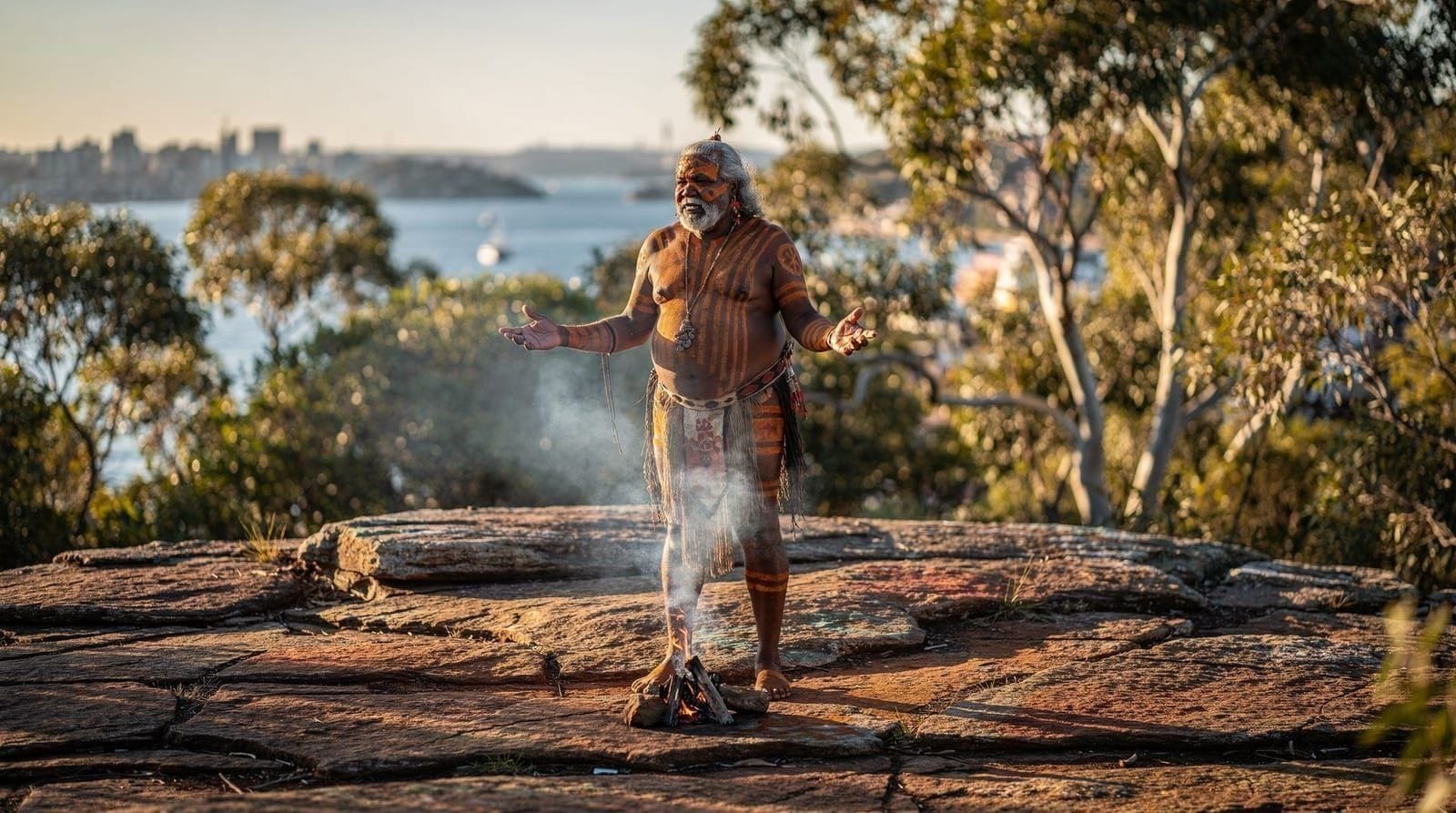
Yes. The Royal Botanic Garden runs guided Aboriginal heritage tours focusing on Gadigal plant knowledge — the food, medicine, fibre, and ceremonial uses of plants in the garden and the surrounding landscape. The garden itself is free to enter. Guided Aboriginal tours are bookable through the garden and the Sydney Living Museums.
At a glance
| Where | Royal Botanic Garden, adjacent to the Sydney Opera House and Circular Quay |
| Cost | Garden entry free; guided Aboriginal heritage tour typically around A$20–35 per adult |
| Time needed | Self-guided trail 45–60 minutes; guided tour 90 minutes–2 hours |
| Getting there | 10 minutes’ walk from Circular Quay, or 10–15 minutes from St James/Martin Place stations |
| Best time | Morning, before the garden gets busy; check the tour schedule in advance as it doesn’t run daily |
The garden on Gadigal Country
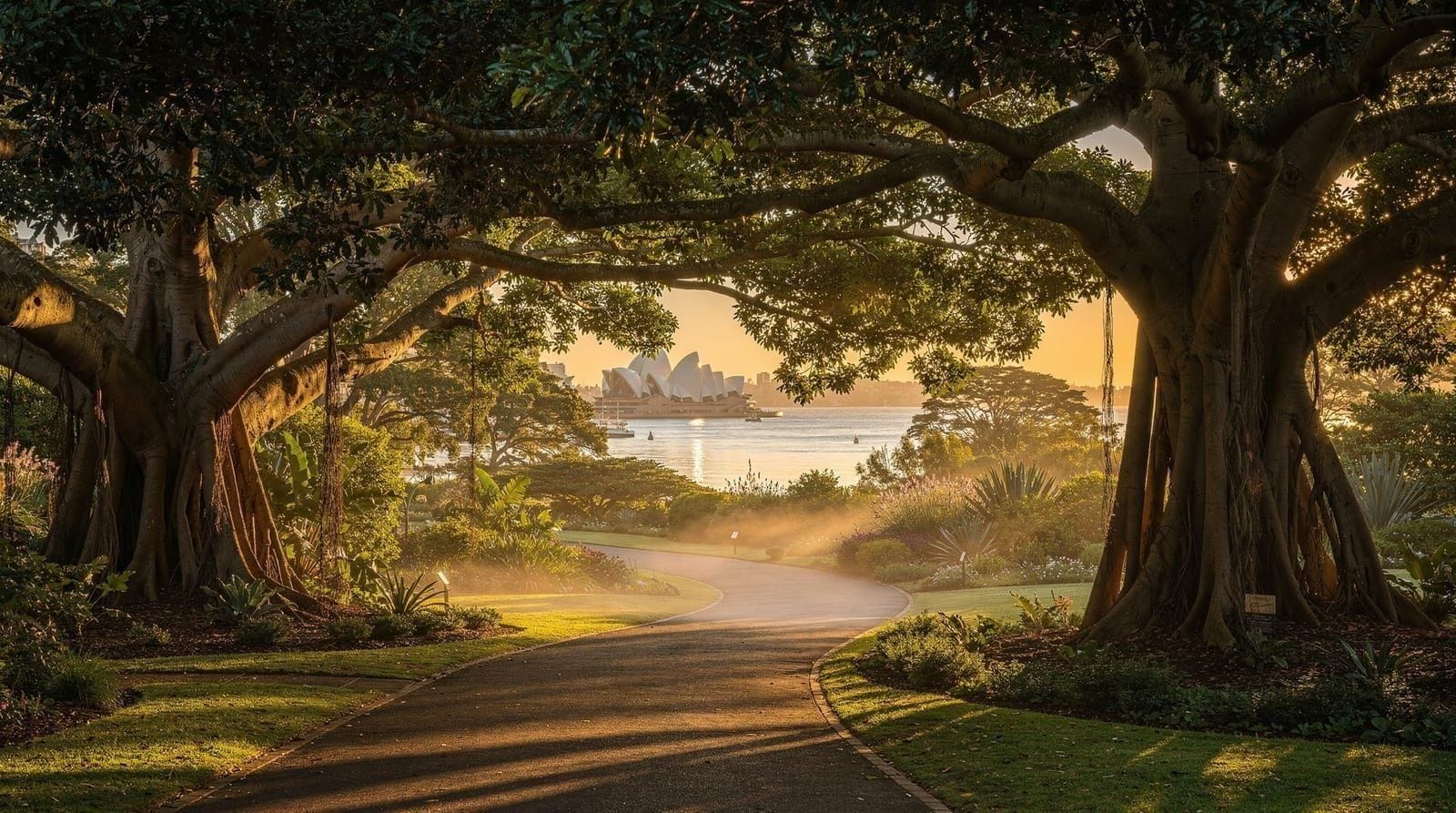
The Royal Botanic Garden occupies the foreshore east of the Sydney Opera House, on land that has been some of the most significant and contested in Australian history. This is the site where the First Fleet established its first farm in 1788 — a farm whose expansion displaced the Gadigal people from one of their most significant resource areas around Sydney Cove.
Before 1788, the Gadigal people maintained sophisticated ecological knowledge of this landscape — the edible, medicinal, and ceremonially significant plants of the foreshore, the sandstone plateaus, and the waterways. The Royal Botanic Garden, despite being a colonial institution that literally paved over this history, has developed a serious and thoughtful approach to Gadigal plant heritage in recent decades.
The result is one of the more accessible Aboriginal cultural experiences in Sydney: a combination of a free, self-guided plant heritage trail and a bookable guided tour with Gadigal cultural interpretation.
The self-guided First Nations trail
The garden contains a self-guided First Nations trail with interpretation signs that include:
- Gadigal and Bundjalung language names for significant plants
- Traditional uses of plants for food, medicine, cordage, and tool-making
- Information about the ecological management of the landscape through fire and seasonal harvesting
The trail is free to walk at any time during garden opening hours (approximately 7 am to dusk, no entry fee). A trail map is available at the garden’s information centre near the Garden Palace Gates entry (Mrs Macquaries Road).
Significant plants on the trail include:
- Cabbage Tree Palm (Livistona australis): The edible growing tip was a food source; the leaves used for cordage and thatch.
- Coast Banksia (Banksia integrifolia): Flower spikes were soaked in water to produce a sweet drink; the wood used for fire-making.
- Lomandra (mat rush, Lomandra longifolia): Seeds ground for flour; leaves split for weaving; stems used in hunting tools.
- Saltbush (various species): Leaves eaten; ash used as a salt substitute.
- Sydney Red Gum (Angophora costata): Bark used for canoe construction; sap for glue and medicine.
The plants are labelled with both scientific and common names, and the Aboriginal interpretation signs are substantial rather than tokenistic.
The guided Aboriginal heritage tour
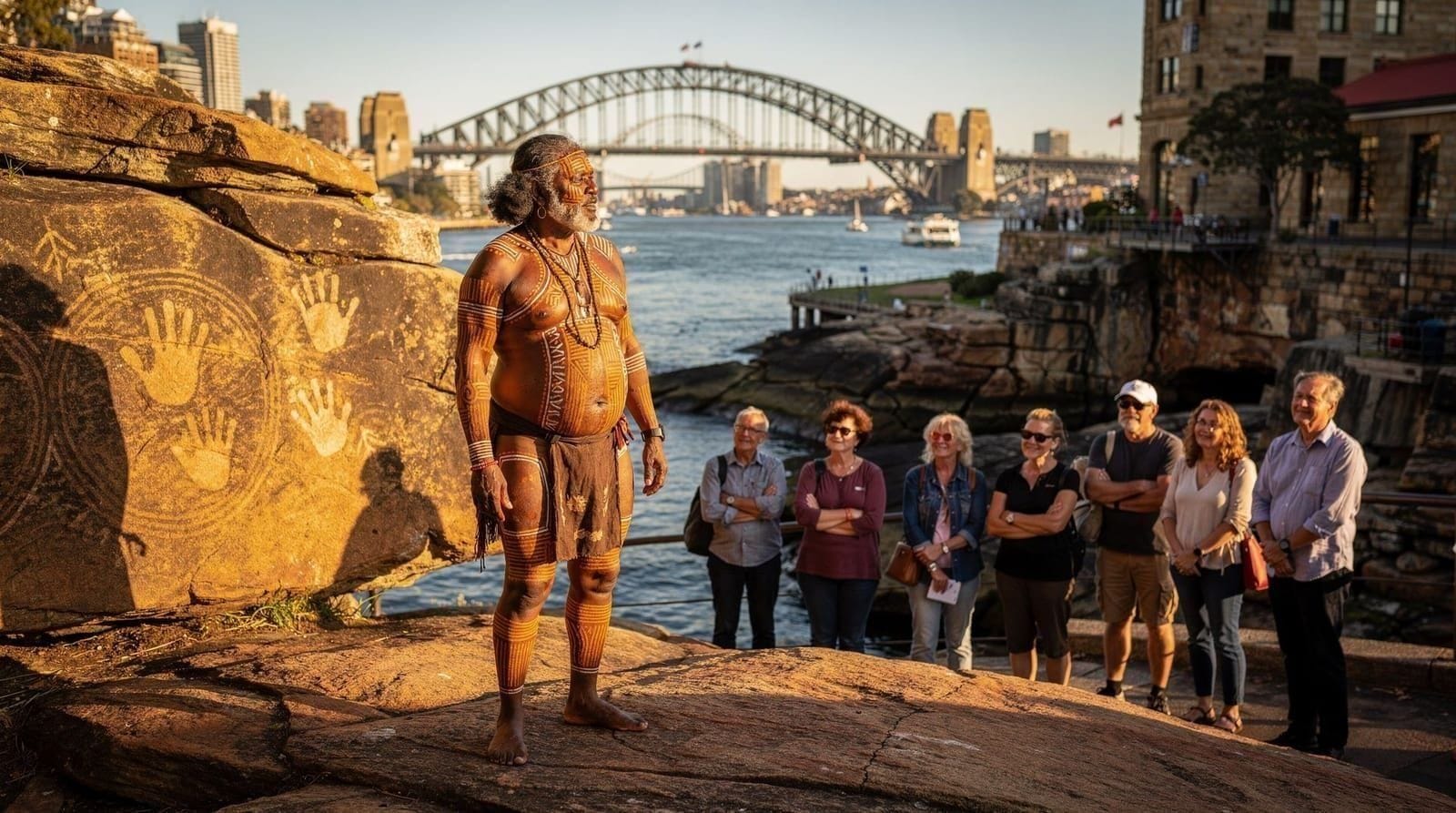
Guided Aboriginal heritage tours of the garden run on selected days (book in advance — check the Royal Botanic Garden website for current schedule and pricing). The tours are led by guides with specific training in Gadigal cultural heritage, in partnership with community knowledge holders.
What a guided tour adds: Context that the signage cannot convey — the seasons of harvest and ceremony, the way plants were processed and preserved, the protocols around gathering from Country, and the knowledge systems that link plant use to broader ecological understanding. A guided tour also allows visitors to ask questions directly, which the self-guided trail cannot accommodate.
Duration: Typically 90 minutes to 2 hours. Meeting point: Main Garden Shop or visitor centre — confirm when booking. Pricing: Check the Royal Botanic Garden Trust website for current rates (typically AUD 20–35 for adults).
The garden’s colonial history — an honest account
The Royal Botanic Garden was established in 1816 on the site of Australia’s first government farm. The farm itself was established in 1788 on land central to the Gadigal seasonal economy — the foreshore provided shellfish, fish, and plant foods that supported the Gadigal through the annual cycle. The farm displaced this.
Between 1788 and 1850, the Aboriginal population of the Sydney region was reduced by approximately 80–90%, primarily through introduced disease (smallpox, tuberculosis, measles) and violence. The knowledge systems associated with the plants in the garden’s current collection were nearly destroyed in this period.
The garden has, particularly since the 1990s, engaged in active recovery of this knowledge through collaboration with surviving Aboriginal communities. The First Nations trail represents that recovery — partial, ongoing, and honest about its incompleteness.
Combining with other Aboriginal experiences
The Royal Botanic Garden tour pairs naturally with The Rocks Dreaming tour — both cover the Gadigal heritage of the immediate harbour foreshore, and together they provide a comprehensive introduction to pre-colonial and colonial-period history within walking distance.
For rock art and smoking ceremony experiences, the Aboriginal rock art tour in Lane Cove National Park extends the experience to material culture sites away from the urban core.
Practical information
Getting there: The Royal Botanic Garden is adjacent to the Sydney Opera House and Circular Quay. Walk from Circular Quay (10 minutes along the harbour foreshore), or from St James or Martin Place train stations (10–15 minutes).
Entry: The garden itself is free. Guided tours are separately booked and paid.
Accessibility: The main garden paths are paved and accessible to mobility aids. Some sections of the First Nations trail involve slightly uneven surfaces.
Hours: Open daily from approximately 7 am until dusk. Gates times vary by season — check the Royal Botanic Garden website.
What to bring: Comfortable shoes (paths are paved but extensive), water, sun protection (the open foreshore sections are fully exposed).
Significant plants in the Gadigal knowledge system
The First Nations trail uses actual specimens to illustrate the breadth of Gadigal plant knowledge. A few key examples:
Sydney Red Gum (Angophora costata): Its smooth orange-pink bark peels seasonally and was used for canoe construction. The gum from bark wounds was used as adhesive and for skin conditions. The tree’s deep roots made it a reliable indicator of underground water.
Cabbage Tree Palm (Livistona australis): The growing tip was a food source — sweet and starchy. The leaves were plaited for baskets and matting. Early European settlers nearly eradicated the palm from Sydney’s harbour foreshore by harvesting the tips for the colonial hat trade — “cabbage tree hats” were ubiquitous in the early colony.
Lomandra longifolia (mat rush): Seeds ground into flour for flatbread. Leaves split for weaving bags, mats, and fishing equipment. Used in temporary shelter construction.
Banksia integrifolia (coast banksia): Flower spikes soaked in water produced a sweet nectar drink. The woody cones were used as containers and in fire-making — the cone’s dry cellular structure catches and holds embers effectively.
Warrigal greens (Tetragonia tetragonioides): A native spinach growing in sandy coastal soils. Contains oxalic acid and requires blanching before eating — knowledge that implies sophisticated understanding of plant chemistry.
The garden as managed landscape
The concept of a botanic garden as a collection for scientific study is European. The Gadigal understanding of this landscape was different but not less sophisticated — deep empirical knowledge of plant properties, embedded in oral tradition and seasonal ecological management.
The burning practices that maintained the harbour foreshore’s plant communities produced a landscape early Europeans described as “park-like.” That naturalness was itself a cultural achievement. The government farm established in 1788 began replacing Gadigal-managed landscape with European agriculture; the Royal Botanic Garden now ironically preserves some of the native species that Gadigal management supported.
Gadigal language in the garden
Plant labels on the First Nations trail include Gadigal language names alongside scientific names. This is part of a broader language recovery effort — the Gadigal language was severely damaged by colonisation, and vocabulary reconstruction draws on historical records (including First Fleet journals) and community knowledge.
The names often encode information about the plant — its use, its season, its ecological relationships. Recognising these names in a contemporary garden is a small but meaningful act of linguistic recovery.
Connecting to wider Gadigal heritage
The garden tour is most valuable in combination with other experiences:
The Rocks Dreaming tour (guide here): Focuses on the harbour foreshore and colonial-era history, contextualised within Aboriginal occupation. The two tours cover adjacent geography and complementary themes.
Aboriginal rock art tour (full guide): Takes visitors to Lane Cove National Park engravings with a Gadigal guide. Introduces the material culture dimension — the engravings themselves — that neither the garden nor The Rocks tour directly addresses.
Australian Museum: The First Nations collection (College Street, CBD, AUD 18 adult) includes significant Eora material with thoughtful contemporary presentation.
A practical morning combining garden and harbour
- Arrive at the garden by 8 am via Circular Quay ferry or train
- Walk the First Nations trail (self-guided, 45–60 minutes)
- Continue along the harbour foreshore to the Opera House forecourt
- Coffee at Opera Bar (harbour views, tourist pricing — the setting justifies it)
- Walk across to The Rocks for the colonial context layer
Total time: 3–3.5 hours. Cost: approximately AUD 15–25 including coffee. This sequence places the garden’s Aboriginal plant knowledge in immediate geographic proximity to the colonial establishment at The Rocks — the contrast is instructive.
The garden beyond the Aboriginal tour
The Royal Botanic Garden destination guide covers the garden’s full scope — the rose garden, the fernery, the restaurant, the seasonal events, the view to the Opera House and Harbour, and the free guided general walking tours that run daily. The Aboriginal heritage tour is one component of a garden that rewards several hours of exploration.
For visitors with limited time, the self-guided First Nations trail takes 45–60 minutes and can be combined with a walk along the harbour foreshore to the Opera House — a logical and free 2-hour structure that covers two of Sydney’s most significant free attractions.
For the broader landscape of Aboriginal cultural heritage across Sydney, the Sydney Aboriginal heritage guide covers sites from the harbour to Parramatta. For a first-timer itinerary integrating Aboriginal experiences with other highlights, the Sydney 3 days first time itinerary structures the Aboriginal half-day logically alongside the Harbour Bridge, Opera House, and Bondi.
Booking and what to expect on the day
The guided tour is not a daily fixture — it runs on selected days, so check the Royal Botanic Garden’s current schedule before building a morning around it. Group sizes are kept small (often under 20), which keeps the experience conversational rather than a lecture. Dress for weather exposure: much of the walking is along the open foreshore with little shade, and the Sydney packing guide is worth a look if you’re travelling light and need sun protection basics.
If the scheduled tour doesn’t align with your dates, the self-guided First Nations trail covers the same core plant knowledge without a booking requirement — a reasonable fallback for time-poor visitors. Either way, allow time afterwards to sit at Mrs Macquaries Point or walk on to the Sydney Opera House forecourt, since both are a short walk from the garden’s Aboriginal trail sections.
Other ways to go deeper on Gadigal plant and cultural knowledge
If the garden’s own tour doesn’t fit your dates, or you want a second layer after it, a few bookable options sit close by. A guided session on foraging native food in the botanic gardens is one route: a guided native-food foraging walk in the botanic gardens builds directly on the plant uses described on the trail, and it suits visitors who learn best by tasting and handling rather than reading signs.
For the ceremonial side, an Aboriginal walking tour with a smoking ceremony adds the protocol and welcome that a plant trail can only hint at. It fits naturally on the same day as the garden, since both stay around the harbour foreshore and the city edge, and it sits well alongside the Sydney Aboriginal heritage guide.
If you would rather see the wider landscape than the city centre, an Aboriginal-led explorer day in the national park shows plants like the ones on the trail growing in the bush, and the Royal National Park and Royal National Park guide pages explain what that landscape offers. Visitors who want to stay on foot in town can also pair the garden with the Sydney CBD, the Circular Quay waterfront, the Sydney Harbour edge, or The Rocks history walk.
A few related pages help you plan around the visit:
- Sydney for first-timers places the garden within a wider first trip.
- Free things to do in Sydney lists other no-cost options near the foreshore.
- Getting around Sydney and the Opal card guide cover the ferry and train legs of the morning.
- Sydney Harbour Bridge guide and the Sydney weekend in 48 hours itinerary show where this half-day can slot in.
- Best time to visit Sydney helps you choose a season that suits an open, exposed walk.