MCA Sydney — Museum of Contemporary Art guide and tips
Sydney: Harbour sightseeing cruise from Circular Quay
Is the MCA Sydney free to enter in 2026?
Museum entry is ticketed (see the official MCA website for current prices); MCA members and under 18s enter free. The MCA is closed on Tuesdays.
The MCA at a glance
| Detail | Info |
|---|---|
| Where | 140 George Street, Circular Quay West, The Rocks |
| Cost | Museum entry is ticketed (see the official MCA website); members and under 18s free |
| Time needed | Around 1.5–2 hours for the permanent collection; add 45–60 minutes for a special exhibition |
| Getting there | Circular Quay train station or any Circular Quay ferry wharf, about 6-minute walk |
| Best time | Weekday mornings (not Tuesday) shortly after 10am opening, or Thursday evenings before the 9pm close |
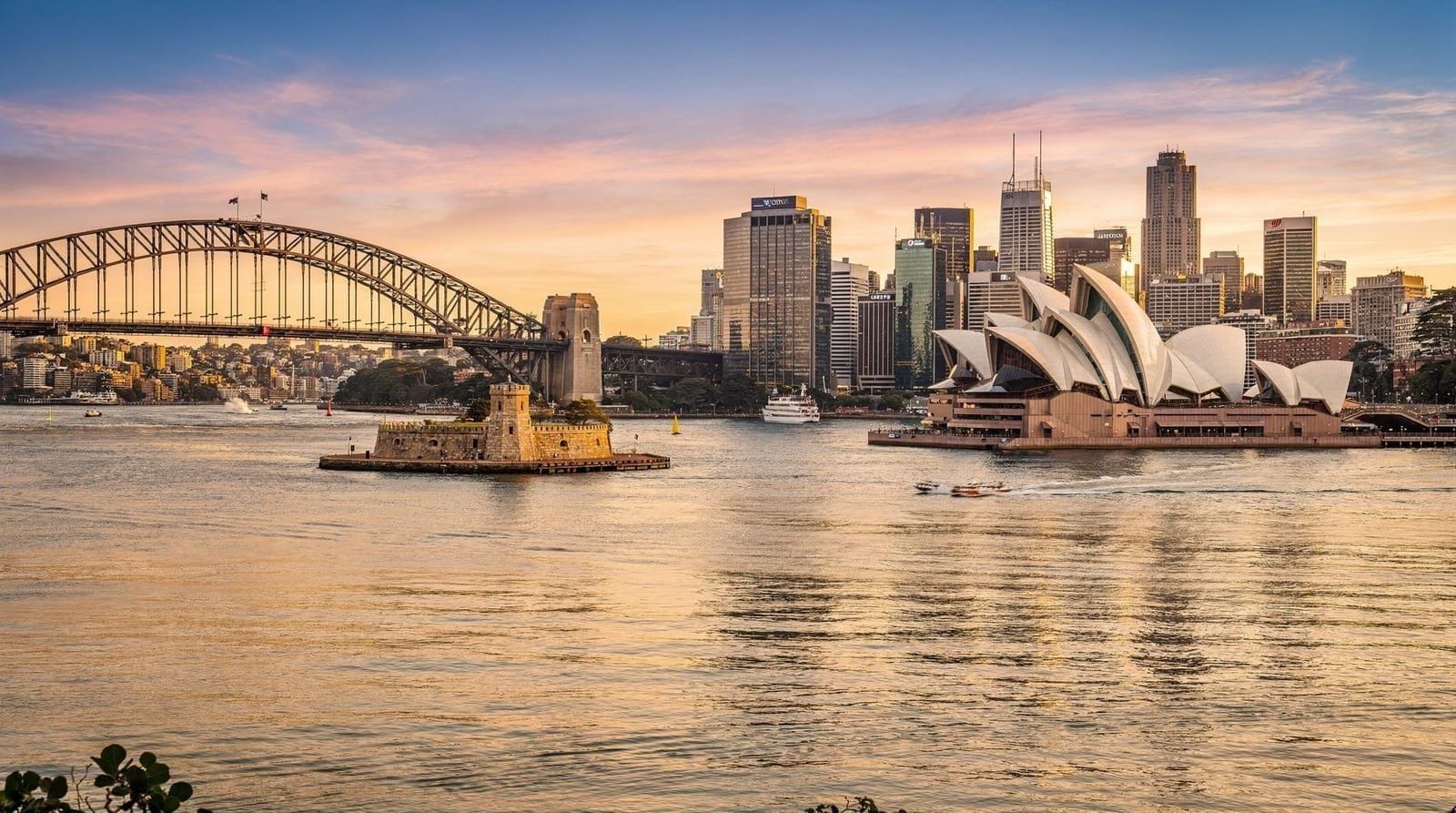
The Museum of Contemporary Art Australia (MCA) occupies a 1952 Art Deco building on the western edge of Circular Quay, with direct views across the harbour to the Opera House and Harbour Bridge. It is Sydney’s dedicated contemporary art space — focused on work from 1950 to the present — and one of the city’s most genuinely useful cultural experiences.
The permanent collection holds over 4,500 works by Australian and international artists, though only a fraction is displayed at any one time. The gallery refreshes its permanent hang periodically, so repeat visits are worthwhile. Special exhibitions, usually running two to three months, bring major international loans and large-scale commissions.
Unlike the Art Gallery of NSW, which covers art history across centuries, the MCA’s scope is deliberately narrow. This makes it easier to visit in two hours without feeling overwhelmed. It is an excellent choice for visitors who want substantive contemporary art without the encyclopaedic exhaustion of a national collection.
Location and getting there
Address: 140 George Street, The Rocks, Sydney. The museum faces Circular Quay West, directly adjacent to the ferry terminals.
Nearest transport: Circular Quay train station (about 6-minute walk) or any ferry terminal at Circular Quay. This is one of the easiest cultural venues in Sydney to reach — virtually every visitor to the city passes through Circular Quay multiple times.
Opening hours: 10am–5pm Wednesday to Monday (until 9pm on Thursdays). Closed on Tuesdays and on 25 December; open on all other public holidays. Museum entry is ticketed; MCA members and under 18s enter free.
The proximity to Circular Quay means the MCA is frequently combined with ferry trips — Manly, Watsons Bay, and Taronga Zoo ferries all depart from nearby wharves. See the Sydney ferries guide for timetables and Opal fares.
The permanent collection — what to see
Australian contemporary art
Australian contemporary work is the MCA’s core strength. The collection covers painting, sculpture, video, photography, and installation, with particular depth in work produced from the 1990s to the present.
Artists well represented include Tracey Moffatt (photographic series dealing with race and gender in Australia), Gordon Bennett (whose paintings interrogate colonial identity and Aboriginal representation), and Emily Kame Kngwarreye (one of the most significant Aboriginal painters of the 20th century, whose dot-paintings sell at auction for AUD 1–2 million).
The gallery’s commitment to showing work by living artists — and purchasing it into the permanent collection — means the MCA functions as a genuine barometer of what’s happening in Australian art now, not a retrospective institution.
International contemporary art
The international section is smaller than the Australian holdings but includes significant works by artists with global reputations. The collection is strongest in American and European post-war work, with some holdings in Asian contemporary art reflecting Australia’s geographic context.
Aboriginal and Torres Strait Islander art
Like the Art Gallery of NSW, the MCA holds a substantial Indigenous Australian collection. The approach here tends toward more recent conceptual and political work by Aboriginal artists, rather than the traditional desert painting tradition. Artists like Richard Bell and Destiny Deacon, whose practice is explicitly engaged with questions of land, sovereignty, and representation, are well represented.
Special exhibitions
The MCA runs three to four major exhibitions annually. These tend to be survey shows of single artists (often at career-defining moments), thematic group exhibitions exploring particular questions in contemporary practice, or internationally travelling shows that originate at major European or American institutions.
Museum entry is ticketed; check the official MCA website for current prices. MCA members and under 18s receive free entry.
The MCA is one of the few Sydney venues to attract genuinely international contemporary art shows. In recent years it has hosted exhibitions of work by Yayoi Kusama, Marina Abramovic (as part of a touring retrospective), and major surveys of Australian Aboriginal art curated for international audiences. Check the programme well in advance if visiting Sydney for a specific show.
The MCA Café — rooftop views worth having
The MCA Café on Level 4 has direct views across Sydney Harbour to the Opera House, the Harbour Bridge, and the Manly ferry route. This is one of the best value views in Sydney — the Circular Quay restaurant strip around the corner is significantly more expensive and broadly not worth the premium.
The café is open to the general public without a museum ticket. Check the official MCA website for café hours. The outdoor terrace fills quickly on fine weather days — arrive at opening or accept queuing.
A word of practical honesty: this is a museum café operating at Sydney prices, not a destination restaurant. The food is competent but unremarkable. The view is excellent. If you want a better meal at a slightly higher price, Café Sydney on the Customs House (five minutes on foot) or the restaurants at the Opera House precinct are alternatives, though the Opera House establishments charge a significant premium for their setting.
The MCA Shop
The MCA Shop at street level has a stronger design focus than most Australian museum shops. It stocks art books (Australian and international), jewellery by established Australian makers, design objects, and a good range of prints. The range of children’s art books is particularly good.
Notably: this is a reliable place to buy Indigenous Australian art prints from authenticated artists, with proper attribution and provenance information. The “Aboriginal souvenir” market (dot-painting prints, mass-produced items sold in tourist shops without clear origin) is widespread in Sydney’s tourist areas. The MCA Shop is one of the few accessible retail spaces where provenance is clearly stated.
Accessibility and practical tips
The MCA is fully step-free: lifts connect all four levels, and accessible toilets are available on each floor. Cloakroom storage near the entrance is useful if you’re arriving with day bags before a ferry trip. Guided tours of the permanent collection run on selected days — check the day’s programme at the information desk, since these are a good way to get context on the Aboriginal and contemporary Australian rooms without paying for an audio guide.
Photography without flash is permitted in the permanent collection; some loaned works in special exhibitions restrict photography, and signage at the entrance to each exhibition will say so clearly.
Visiting with children
The MCA runs regular family programs, particularly on weekend afternoons and during school holiday periods. The “Family Space” in the museum offers art-making materials and activities linked to current exhibitions. These are free and do not require booking, but can fill up during peak school holiday periods.
Under 18s receive free entry. The building is pushchair-accessible throughout (lifts on all levels). The harbour-facing terrace has a low wall — appropriate supervision for young children is necessary near the balcony edge.
MCA vs Art Gallery of NSW — a practical comparison
Both have good cafés with views, and both are within 20 minutes of each other. The honest distinction:
Choose the MCA if: You want a focused, two-hour contemporary art experience in an excellent harbour location, you’re short on time, or you have children who engage better with bold, non-representational work.
Choose the AGNSW if: You want breadth — Australian colonial art, European Old Masters, Asian art, and a much larger Aboriginal collection. The AGNSW also has better facilities (larger café, better shop, more accessible parking) and a physically larger building.
Both are worth visiting on the same day if you have time. Walk from the MCA to the AGNSW through the Royal Botanic Garden (about 20 minutes) or along Macquarie Street (15 minutes). See the Art Gallery of NSW guide for details on that collection.
Combining the MCA with a day at Circular Quay
The MCA’s Circular Quay location makes it natural to combine with several other things:
A visit to The Rocks (immediately north of the museum) takes 2–3 hours and covers Sydney’s oldest colonial precinct — sandstone warehouses, the Observatory Hill, and several good cafés. See the Rocks history walk guide for a structured itinerary.
A harbour ferry to Manly leaves from Wharf 3 at Circular Quay (30 minutes, Opal card accepted). The Manly ferry is a genuine tourist experience in itself and the beach at the other end justifies the trip. See the Manly beach guide.
The Sydney Opera House is a 10-minute walk east along the Quay — the building is viewable without a tour, though a guided tour is worth considering (see the official Sydney Opera House website for tour prices). See the Sydney Opera House guide for honest assessment of the different tour options.
All of this is reachable without a car using the Opal card. The Circular Quay area is Sydney’s single best-connected public transport hub.
Seeing the harbour from the water after the galleries
The terrace on Level 4 gives you the harbour from above; the natural follow-up is to see it from the water. Once you have finished with the art, a cruise from the wharves next door turns the view you just admired into a moving one. A sightseeing cruise from Circular Quay such as a relaxed harbour sightseeing cruise suits a gentle afternoon, while the sunset harbour cruises work well if you stayed for the late Thursday opening.
If you prefer something more active, a guided kayak paddle past the Opera House and Harbour Bridge gives a very different angle on the same landmarks. Our Sydney Harbour kayaking guide explains what to expect, and the Circular Quay neighbourhood page lists what else is within walking distance of the museum.
Whichever you choose, the MCA works best as the calm, indoor start to the day, with the water-based activity as the reward afterwards. If you are building a longer stay around the quay, the Sydney weekend in 48 hours itinerary shows how a museum morning and a harbour afternoon fit together, and the Sydney museums guide covers the other galleries worth pairing with it.
Practical summary
| Detail | Info |
|---|---|
| Museum entry | Ticketed (members and under 18s free) |
| Opening hours | 10am–5pm, closed Tuesdays (Thu to 9pm) |
| Nearest station | Circular Quay (about 6-minute walk) |
| Best café view | Level 4 rooftop terrace |
| Suitable for children | Yes — family programs on weekends |
| Photography | Allowed in permanent collection |
For first-time visitors to Sydney building an itinerary, the MCA slots naturally into a Circular Quay morning — gallery from opening (10am), rooftop café for lunch, then ferry to Manly or a walk through The Rocks in the afternoon. This is one of the most satisfying half-days Sydney offers. It also pairs well with a broader first-timer’s Sydney plan if this is your first visit to the city.
Frequently asked questions about MCA Sydney
Do I need to book MCA tickets in advance? Check the official MCA website for ticketing. For major special exhibitions, especially blockbuster international shows, booking a timed ticket online in advance is worthwhile on weekends to avoid a queue at the desk.
Is the MCA suitable for a rainy day in Sydney? Yes — it’s one of the better wet-weather options at Circular Quay, since the whole visit (galleries, café, shop) happens indoors, and it sits right next to the Circular Quay transport interchange so you’re not walking far in the rain to reach it.