Cronulla beaches guide — Sydney's train-accessible surf coast
Sydney: From Bondi beach fun 2 hour surf experience for beginners
Duration: 2 hours
Is Cronulla worth visiting from Sydney?
Yes, especially if you want an ocean beach without Bondi crowds. Cronulla is 55 minutes by train from the CBD, has 4 km of beaches, a local food scene at fair prices, and connects by ferry to Bundeena and the Royal National Park. Best for a weekday half-day or full day.
| At a glance | |
|---|---|
| Where | Sydney’s south, 37 km from the CBD |
| Cost | Standard Opal train fare; Bundeena ferry fare paid on board (check the official Cronulla Ferries website) |
| Time needed | Half a day for the beaches alone; a full day if adding the Bundeena ferry and a national park walk |
| Getting there | T4 Cronulla Line train from Central, around 55 minutes |
| Best time | Weekdays and shoulder seasons (autumn/spring) for the quietest beaches; year-round for the ferry and walks |
What Cronulla is
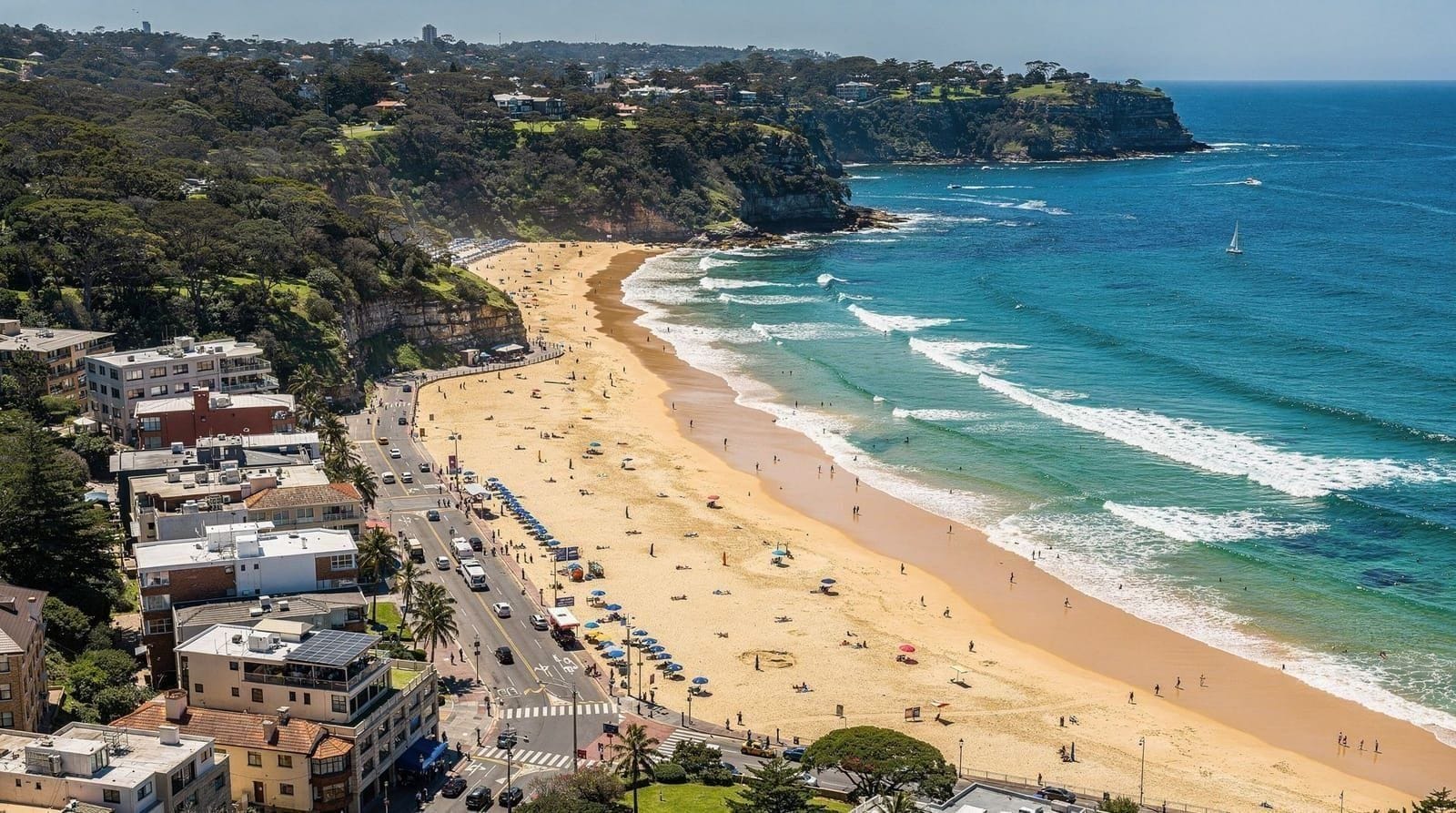
Cronulla has a distinction unique in Sydney: it is the only ocean beach directly reachable by train. The Cronulla line runs from Central Station in the CBD and terminates at Cronulla Wharf — the beach and the town are a 5-minute walk from the station.
That accessibility, combined with the relative unfamiliarity of Cronulla to most overseas visitors, produces a beach suburb that functions as a genuine local community rather than a tourist infrastructure. The beaches are maintained to the same standard as Bondi; the prices at cafes and restaurants are noticeably lower.
The area also serves as the gateway to the Royal National Park to the south, reachable via ferry from Cronulla Wharf to Bundeena.
How to get to Cronulla
By train: T4 Cronulla Line from Central Station or Bondi Junction. Journey time is approximately 55 minutes from Central (standard Opal fare, within the daily cap).
Services run regularly throughout the day. The Cronulla line is single-track and services run less frequently than main lines — check the Opal Travel app or Transport NSW Journey Planner for current timetables.
By car: 37 km south of the CBD via the M5 and Captain Cook Drive. On-street parking is available near the northern beaches; a council car park sits near the main beach. Much easier to park here than at Bondi or Manly.
The beaches
Cronulla is not one beach but a series of beaches running from north to south along a 4 km stretch:
Cronulla Beach (main beach, the North Cronulla section)
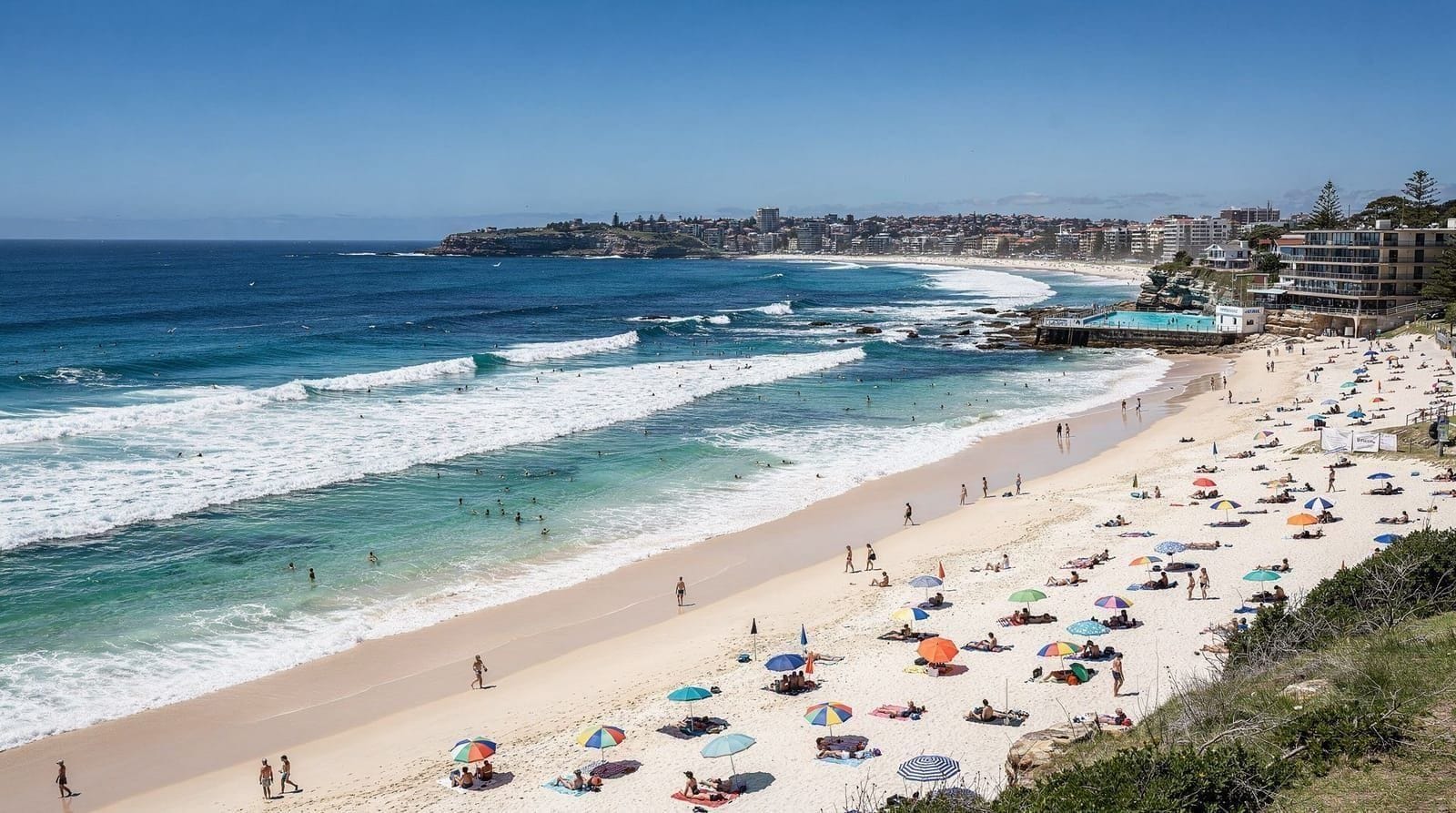
The main beach section directly below the town centre is about 1 km of sand facing south-east. This receives consistent ocean swell from the Tasman Sea. The beach is patrolled by the Cronulla Surf Life Saving Club — one of the oldest in Australia, established 1906. Standard facilities: change rooms, showers, surf hire, lifeguard patrols.
The surf breaks best on an east to south-east swell. Wave height is similar to Bondi — typically 0.8–1.5 m, occasionally larger in winter south-easterlies.
South Cronulla Beach
A continuation of the main beach to the south, separated by a small park and access road. Slightly less developed behind it; local families dominate. The surf is similar. Fewer tourist amenities — no surf schools here, but the same level of lifeguard patrol.
Cronulla Baths
An ocean pool at the south end of the main beach — a free, open-air tidal pool in the sandstone rock shelf. Less famous than Icebergs or Wylie’s but functional, free, and rarely crowded on weekdays.
See the Sydney ocean pools guide for the full context of Sydney’s pool network.
Elouera and Wanda Beaches (northern section)
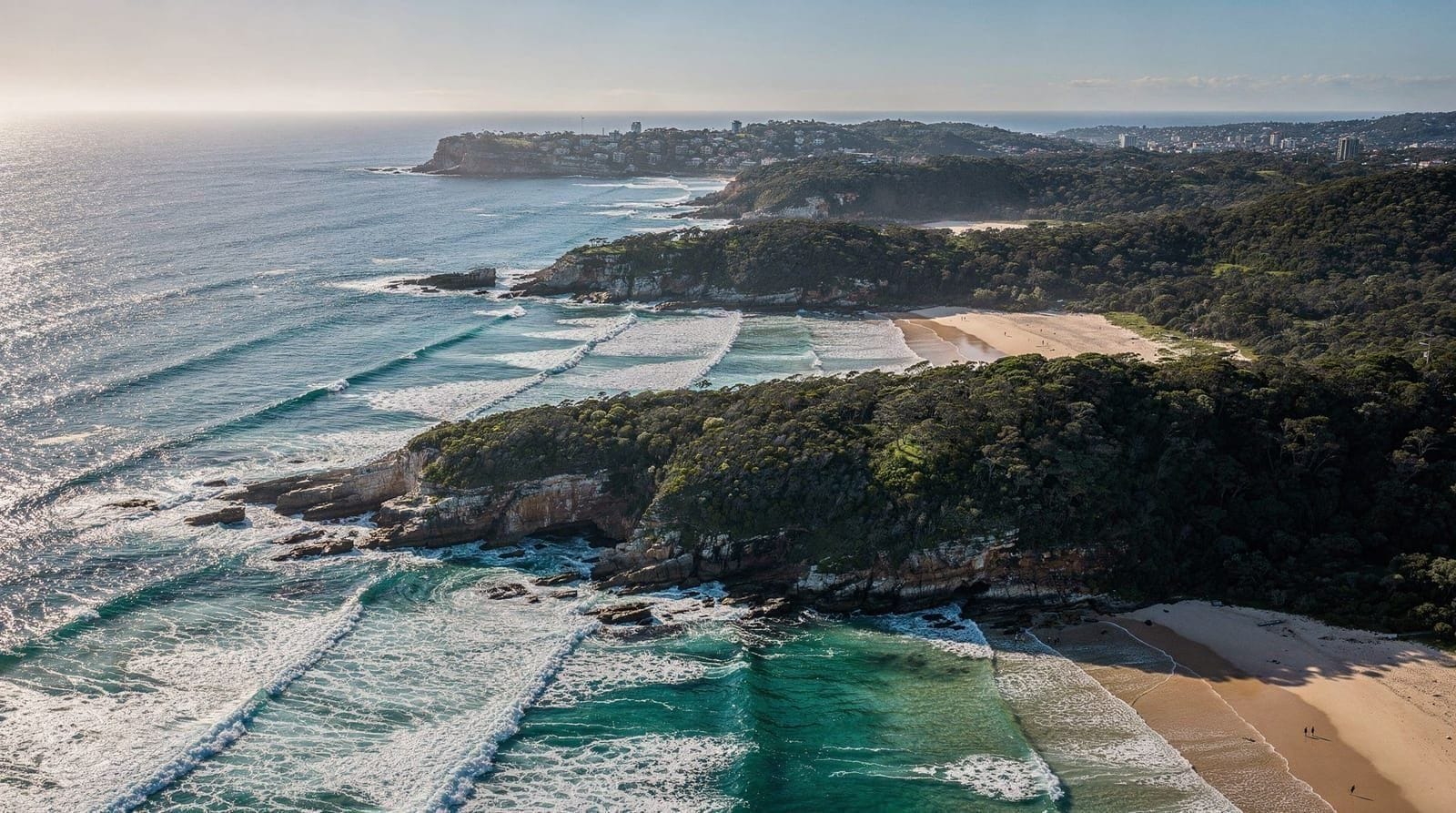
North of the main Cronulla beach, accessed via Gunnamatta Ave, are two less-visited beaches: Elouera (medium size, slightly less consistent surf) and Wanda (broader, with lower crowds and sometimes better surf conditions). These are popular with local surfers who avoid the main beach crowds on weekends.
The Cronulla to Bundeena ferry
This is the most significant thing distinguishing Cronulla from a standard suburban beach. A small passenger ferry (Cronulla Ferries, not an Opal service — cash or card purchase on board) runs from Cronulla Wharf to Bundeena on the southern shore of Port Hacking.
The crossing takes 30 minutes and deposits you in Bundeena — a small village on the edge of Royal National Park. From Bundeena, several walking trails lead into the national park, including:
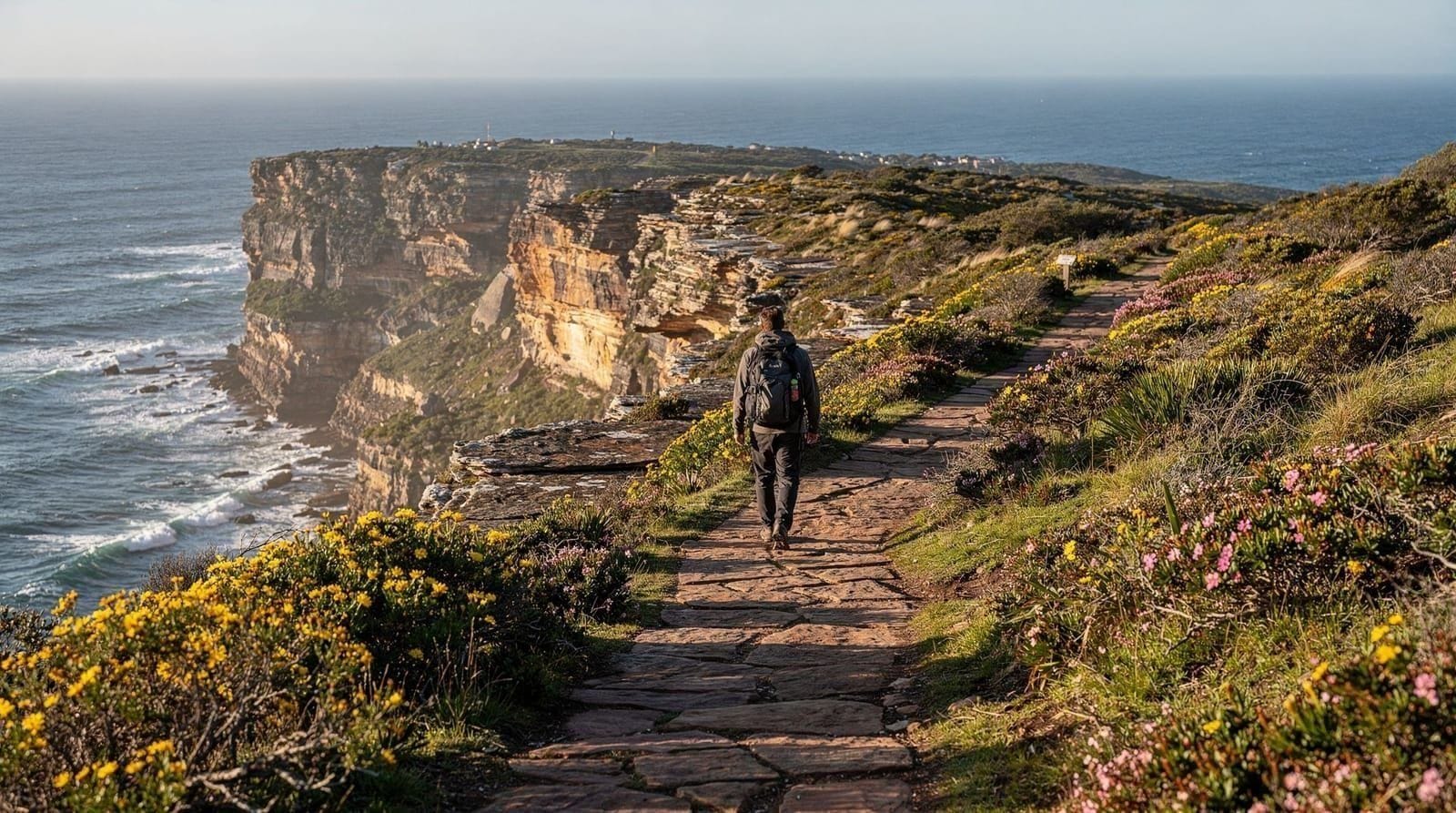
Bundeena to Marley Beach walk (3.5 km one way, 1.5 hours): A coastal track through heath and banksia woodland to a remote beach where swimming is not patrolled but the setting is exceptional. The contrast with the suburban beaches to the north is dramatic.
Little Marley / Marley Headland: Extensions of the above walk onto exposed headland with Pacific views.
Royal National Park coastal trail (Figure 8 Pools and beyond): The Figure 8 Pools are natural tidal pools carved by wave action into the rock shelf south of Bundeena — one of the more remarkable geological formations in the Sydney coastal region. Access requires a day’s hiking or a park transport service; check the Royal National Park visitor information for current access conditions as the trail can be closed after storm damage.
The full Royal National Park guide covers the park’s hiking options in detail, including the Grand Pacific Drive coastal drive from Sydney.
Food and the Cronulla strip
The pedestrian shopping strip along the Cronulla foreshore (The Kingsway) has a genuine local-neighbourhood feel rather than a tourist precinct. Prices at cafes and restaurants are noticeably lower than equivalent venues at Bondi or Manly.
Northies Hotel (Cronulla’s Northern Hotel): A large pub directly across from the beach with outdoor seating, standard pub food at standard pub prices (AUD 20–30 for a meal). A reliable and unpretentious option.
The Salty Pelican: A seafood restaurant near the main beach with decent quality and fair prices by Sydney standards.
IGA and Coles on The Kingsway: For picnic supplies at straightforward supermarket prices — this is where local families do their shopping before heading to the beach.
When to visit
Cronulla’s surf faces south-east and performs best in autumn and spring swells. The beach is most enjoyable from March to November — summer is obviously fine but the crowds increase and school holiday periods (late December through late January) are the busiest.
Winter is genuinely pleasant for a day trip — walking the Bundeena tracks, exploring the coastal strip, and having the beach largely to yourself. Water temperature in winter drops to around 17°C, which is cold for swimming without a wetsuit but manageable for a brief dip.
Weekday vs weekend: The difference in crowd levels between a Tuesday and a Saturday at Cronulla is more pronounced than at Bondi, where the tourist presence smooths out the variation. On a weekday in autumn, Cronulla’s main beach can feel almost empty.
Cronulla by season
| Season | Water temp | Crowds | Notes |
|---|---|---|---|
| Summer (Dec–Feb) | Around 22–24°C | Busiest, especially school holidays | Best swimming conditions but the fewest quiet moments |
| Autumn (Mar–May) | Around 19–21°C | Moderate | Often the best surf; a favourite local season |
| Winter (Jun–Aug) | Around 17°C | Quietest | Cold for swimming without a wetsuit, but the beach and Bundeena walks are near-empty |
| Spring (Sep–Nov) | Around 18–20°C | Building back up | Whale season overlaps (see the whale watching Sydney guide) with land-based sightings possible from the Cronulla headlands |
Cronulla vs Bondi and Manly
Cronulla is often compared to Sydney’s two headline beach suburbs. The short version: Bondi has the bigger reputation and easier bus access from the east; Manly has the ferry ride and a livelier strip; Cronulla has the train access, lower prices, and the unique Bundeena/national park connection that neither of the others offer. For a direct comparison of the other two, see Bondi vs Manly. If beaches generally are the priority rather than any one suburb, the best beaches in Sydney guide and the Sydney beaches for families guide both give the wider picture.
Combining Cronulla with a coastal walk
Sydney’s east has its own famous coastal walk (Bondi to Coogee); Cronulla’s version is smaller in scale but the Bundeena to Marley Beach track offers a genuinely different, wilder experience within the same day trip. Compare the two using the Sydney coastal hikes guide, which places Cronulla’s walks alongside the eastern suburbs options and other bushwalking around the harbour.
Cronulla in honest context
Cronulla’s reputation was significantly affected by the 2005 Cronulla riots — a series of racially motivated incidents that received national and international coverage. The subsequent two decades have seen substantial demographic and cultural change in the suburb. The area is now diverse, and visitor experiences are unremarkable in terms of any social tension. Mentioning this context is honest; dwelling on 20-year-old events would be misleading.
Surfing at Cronulla
Cronulla has a surfing culture that is less photographed than Bondi’s but genuinely significant. The Cronulla Surf Life Saving Club (founded 1906) was one of the first in Australia and reflects the suburb’s historical connection to ocean swimming and surf rescue.
The main break at North Cronulla Beach works best on a south to south-east swell with an offshore northerly wind — these conditions typically occur in autumn and winter. Wave height averages 0.8–1.2 m in standard conditions, occasionally larger in bigger south-east swells that wrap around the headland from the open Tasman Sea.
Wanda Beach, a 2 km walk north of the main beach, has a slightly more open exposure and can produce better surf in certain swell windows. It is less patrolled than the main beach; experienced surfers use it regularly, visitors without surf experience should stick to the patrolled sections.
Surf schools operate at Cronulla Beach — check local operators near the main beach. The cost and structure is comparable to Bondi and Manly.
If you would rather have a lesson fixed in advance than hunt for a school on the day, the eastern beaches have bookable options too, such as a beginner session at Bondi through a two-hour group surf lesson at Bondi, or a surf lesson at Maroubra. Both are a different trip from Cronulla, so pick one only if your plans keep you on the eastern side of the city. The surfing for beginners guide explains what to expect from a first lesson.
Wildlife in the area
The Royal National Park, accessible by ferry from Cronulla, supports significant wildlife diversity that is rarely visible at urban beaches. The park protects populations of:
- Swamp wallaby and red-necked wallaby (commonly seen on trail edges)
- Eastern grey kangaroo (in grassy clearings, particularly at dusk)
- Echidna (occasionally seen at roadside edges and park paths)
- Kookaburra, yellow-tailed black cockatoo, and glossy black cockatoo (forest areas)
- Lyrebird (in the dense gully forests — heard more often than seen)
The Bundeena to Marley Beach trail passes through heathland that supports a range of lizard species and coastal birds. Bring binoculars for the park visit.
If you prefer not to organise the ferry and trail logistics yourself, a guided day trip into the Royal National Park covers the same wild coastline without the timetable juggling, and it leaves your day free to look for wildlife rather than check return times.
For Cronulla-based wildlife observation without entering the national park, the Figure 8 Pools (accessed from Otford, on the south side of the park, or by hiking the coastal track) are in a section of intertidal reef that supports sea stars, anemones, and various fish species.
The Kurnell Peninsula
Across Port Hacking from Cronulla is the Kurnell Peninsula — the site of Captain Cook’s first landing on the east coast of Australia in April 1770, eighteen years before the First Fleet arrival at Sydney Cove. The Botany Bay National Park at Kurnell protects this heritage site.
Kurnell is accessible by bus from Cronulla or by car (approximately 20 minutes driving from the Cronulla train station). The Kamay Botany Bay National Park visitor centre covers the history of Cook’s landing and the ecology of the peninsula. A coastal walk from the visitor centre to Cape Solander offers whale watching opportunities from May through November — Cape Solander is regarded as one of the best land-based whale watching points near Sydney.
Bus: Cronulla to Kurnell via bus 987 (infrequent; check timetable). Car: From Cronulla Station via Captain Cook Drive, approximately 20 km.
For dedicated whale watching from land, the land-based whale watching Sydney guide covers Cape Solander and other viewpoints in detail.
Eating and drinking in Cronulla
Northies Hotel (Cronulla’s Northern Hotel, 6 Beach Street): A large pub venue directly across from the northern end of the beach. Reliable food — steaks, burgers, fish — at standard pub prices (AUD 22–35). Outdoor area with partial beach views. Open daily for lunch and dinner.
The Salty Pelican (61 Gerrale Street): Seafood restaurant with a local following. Fresh fish, reasonable prices by Sydney standards. Good for a sit-down lunch after the beach.
Cronulla Shopping Centre (Cronulla Piazza, 3 minutes from the beach): Woolworths and specialty food shops for picnic supplies at standard supermarket prices — significantly cheaper than beach-area cafes.
Cafe strip (Cronulla Street and the beachfront): Several cafes near the beach and along the main shopping strip. Quality varies; prices are noticeably lower than equivalent venues at Bondi or Manly.
Practical information
ATM: Available on the Cronulla shopping strip and in the Cronulla Centre. Toilets: Public toilets at multiple points along the beach, at the car park areas, and at the surf club. Surf hire: Available from shops near the main beach; bodyboards and surfboards. Lifeguards: Patrol year-round at the main beach, weekend-only in winter at the satellite beaches.
Linking Cronulla to an eastern Sydney day
A viable day structure: CBD → train to Cronulla (~55 min) → morning beach or Bundeena ferry and national park walk → lunch in Cronulla → afternoon return to CBD.
For visitors with more time, the Wollongong and Grand Pacific Drive guide extends this southern coastal route further along the Illawarra escarpment to Sea Cliff Bridge and Kiama.
For context on Sydney’s beach landscape as a whole, the best beaches in Sydney guide compares Cronulla honestly with the eastern suburbs and northern beaches options.