Best day trips from Sydney — distances, times, and honest advice
Sydney: From Sydney Port Stephens day trip
What is the best day trip from Sydney?
The Blue Mountains is the easiest and most rewarding — 104 km west, reachable by train in about 2 hours, with dramatic gorges, the Three Sisters, and Scenic World rides all within walking distance of Katoomba station. For something different, Hunter Valley (wine) and Port Stephens (dolphins, dunes) both justify the longer drive. All three are covered in detail below.
| At a glance | |
|---|---|
| Where | Blue Mountains, Hunter Valley, Port Stephens, Jervis Bay, Canberra, Wollongong, Royal National Park, Central Coast, Southern Highlands |
| Cost | Train fares for closer options (paid with Opal); AUD 100–200 per person for guided tours further afield |
| Time needed | A single day for most; Canberra and Port Stephens are tight without an early start |
| Getting there | Train (Blue Mountains, Wollongong, Central Coast), or car/guided tour (Hunter Valley, Port Stephens, Jervis Bay, Canberra) |
| Best time | Autumn (Mar–May) for comfortable temperatures across all regions; May–Nov for whale watching add-ons |
Sydney sits at the centre of one of Australia’s most diverse day-trip networks: sandstone plateaus to the west, wine country to the north, dolphin bays to the northeast, pristine white-sand bays to the south, and the Australian capital inland. Most destinations are within a 3-hour drive, and a handful are accessible by ordinary train. This guide runs through the eight most worthwhile options with real distances, drive times, public transport alternatives, and an honest assessment of how much each destination rewards the effort.
Blue Mountains — 104 km, ~1.5 hours
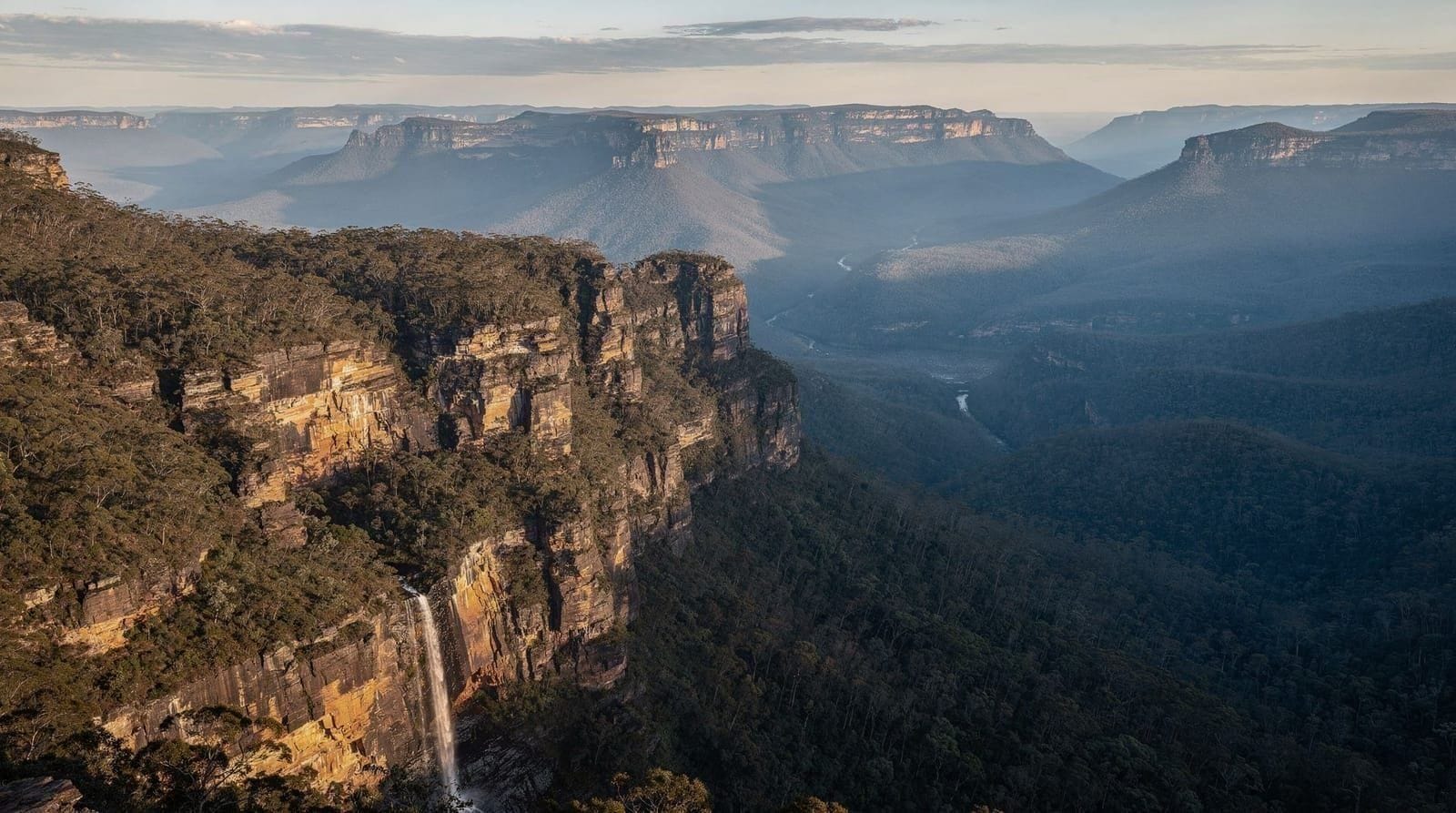
The Blue Mountains is, without contest, the best-value day trip from Sydney. The train from Central Station reaches Katoomba in about 2 hours; by car on the M4 Western Motorway the distance is 104 km and the drive takes roughly 1.5 hours outside peak hour. The elevation — around 1,000 m above sea level — gives the mountains a dramatically different feel from coastal Sydney: cooler, mistier, and with eucalyptus oil haze turning the valleys genuinely blue in certain light.
At Echo Point you get the famous Three Sisters rock formation view without spending a cent. Scenic World, a 10-minute bus ride away, bundles four rides — including the world’s steepest passenger railway plunging into a Jurassic rainforest — in one ticket (see the official Scenic World website for current prices). The Katoomba Falls lookout, Prince Henry Cliff Walk, and the Gordon Falls picnic area in Leura are all free. If you arrive by train, the 686 bus links the station to Echo Point and Scenic World.
Dedicated hikers should consider the Federal Pass walking track, a 9 km loop connecting Echo Point, Scenic World, and Katoomba Falls — allow 3.5–4 hours. The steeper trails down into the valley require some fitness but nothing technical.
For the full picture, see the Blue Mountains day trip guide. If you want to combine mountains with Jenolan Caves in one day, a guided tour handles the logistics better than self-drive; see Jenolan Caves for context on cave entry pricing (see the official Jenolan Caves website for current prices).
Best month: March–May (autumn) for cool air and lower crowds; June–August for near-empty lookouts and misty valley light.
Hunter Valley — 160–170 km, ~2–2.5 hours
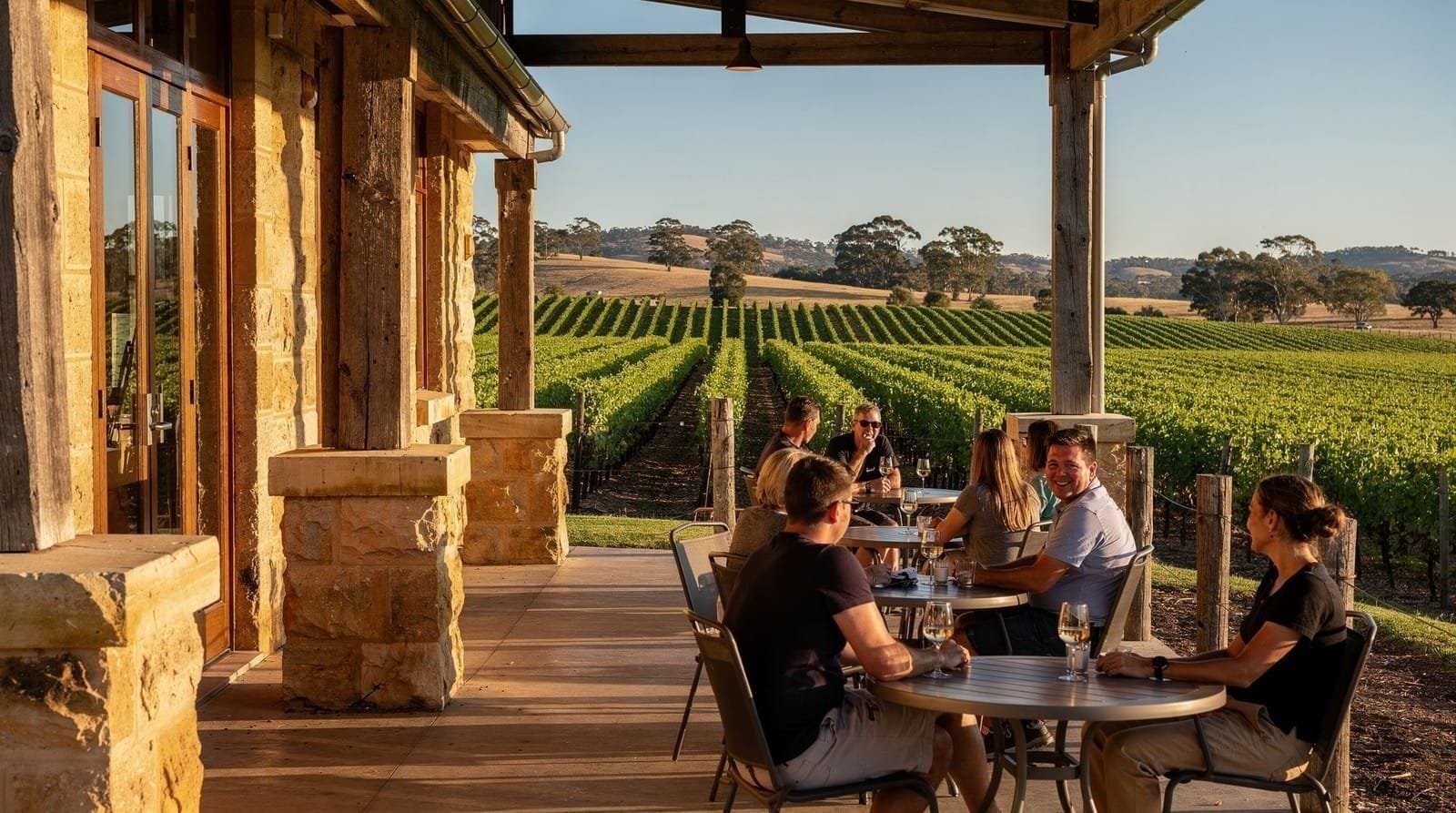
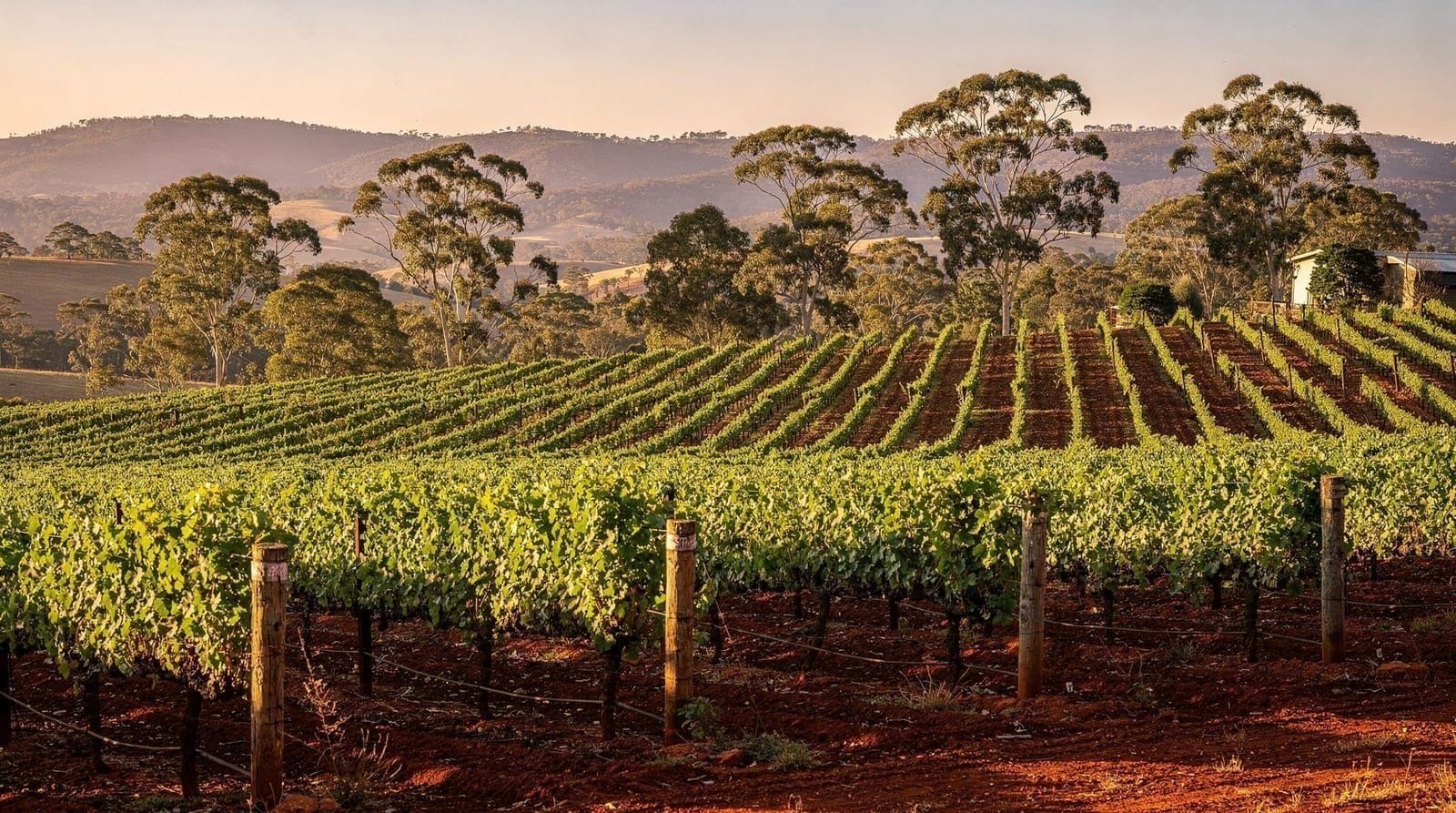
The Hunter Valley wine region lies 160–170 km north of Sydney on the F3 Pacific Motorway, a drive of about 2 to 2.5 hours. The problem with driving yourself is that you have come to visit a wine region — the only sensible approach if you want to drink is to book a guided day tour from Sydney.
The Pokolbin sub-region around Broke Road and McDonalds Road concentrates the highest density of cellar doors: Brokenwood, Tyrrell’s, Two Fat Blokes, Pepper Tree, and dozens more. A typical guided tour includes 3–4 winery stops with tastings, a cheese-and-charcuterie platter or sit-down lunch, and pickup from your Sydney hotel. Prices run from around AUD 120 to AUD 200 per person depending on the inclusions and vehicle quality.
Full-day Hunter Valley wine tour with lunch from SydneyBeyond wine, Hunter Valley also produces excellent artisan cheese (Fromart, Hunter Valley Cheese Company), chocolate (Adora Handmade Chocolates), and gin (Distillery Botanica). If you are self-driving, a good dry-visit approach focuses on food rather than wine — lunch at one of the region’s gastropubs and cheese tastings are genuinely worthwhile without the wine.
Hunter Valley is worth an overnight if you want a relaxed immersion. The accommodation around Pokolbin includes boutique guesthouses and vineyard cottages, many attached to wineries. For the full guide, see Hunter Valley day trip.
Best month: March–May (harvest season, vivid colours, food events) and September–October (spring, quieter than harvest).
Port Stephens — 209 km, ~2.5–3 hours
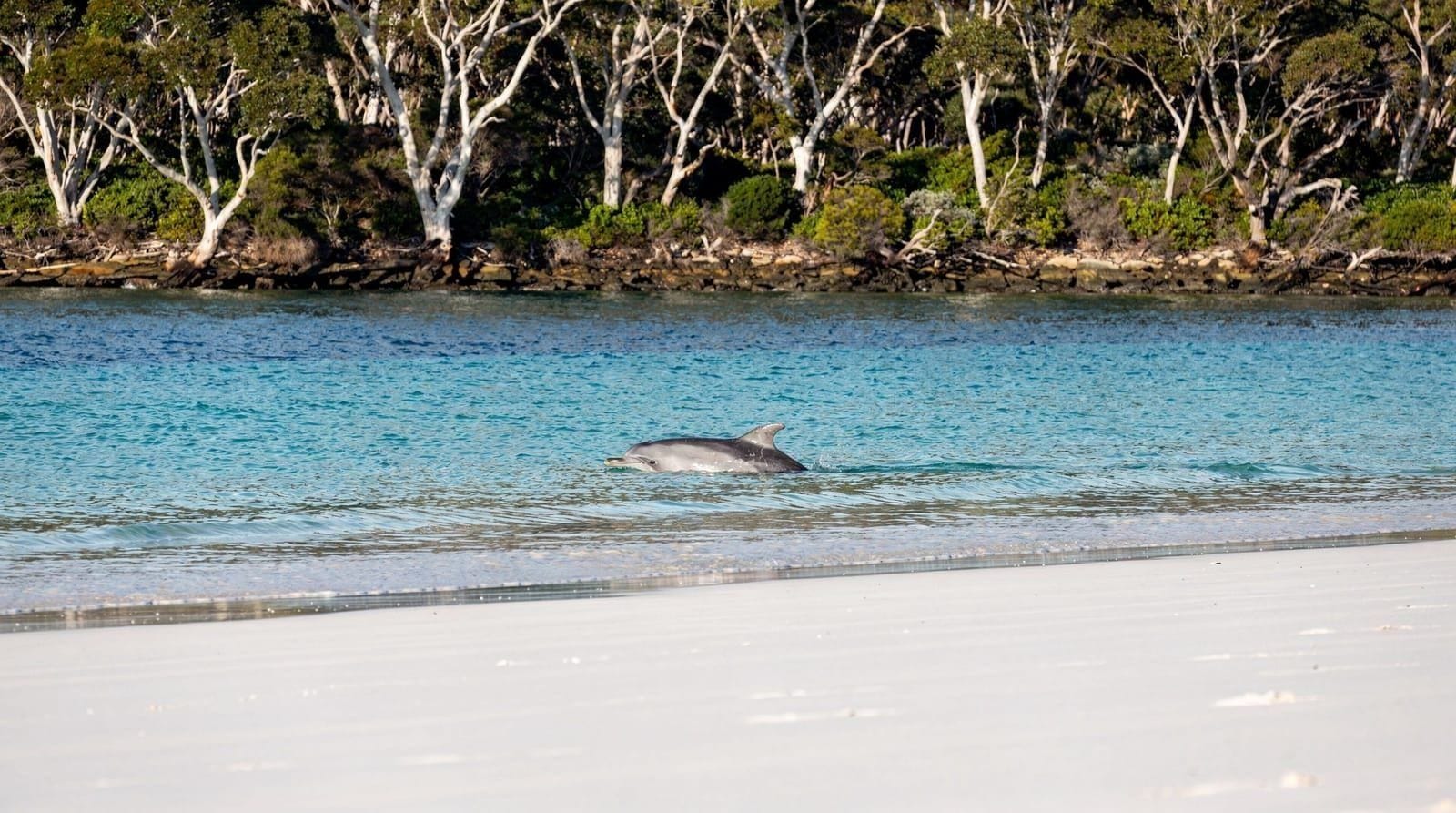
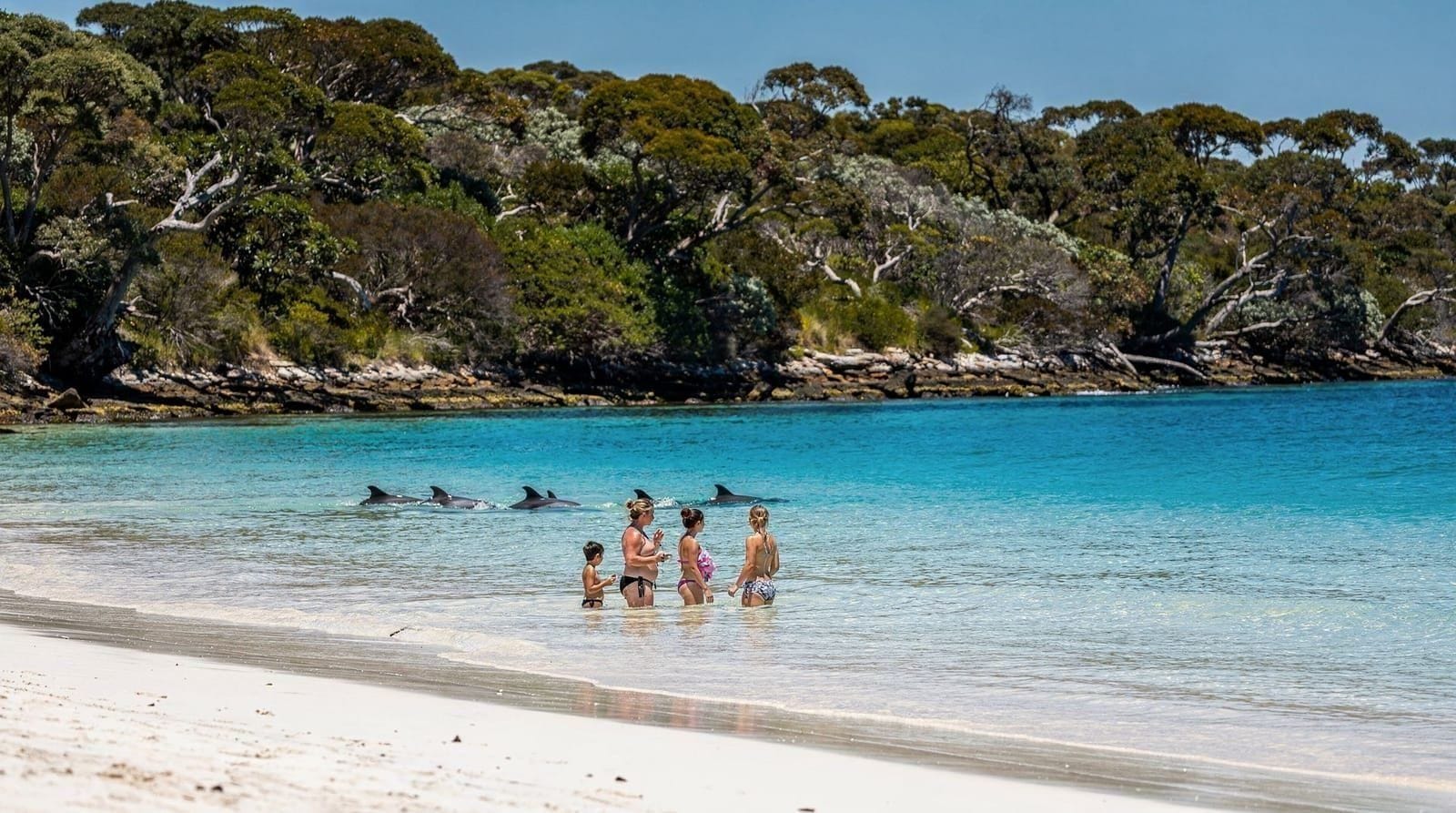
Port Stephens is the closest place to Sydney with guaranteed wild dolphin sightings and the most dramatic sand dunes on the New South Wales coast. The drive is 209 km north of the CBD via the F3, taking 2.5–3 hours. No practical train route exists; you need a car or a guided day tour.
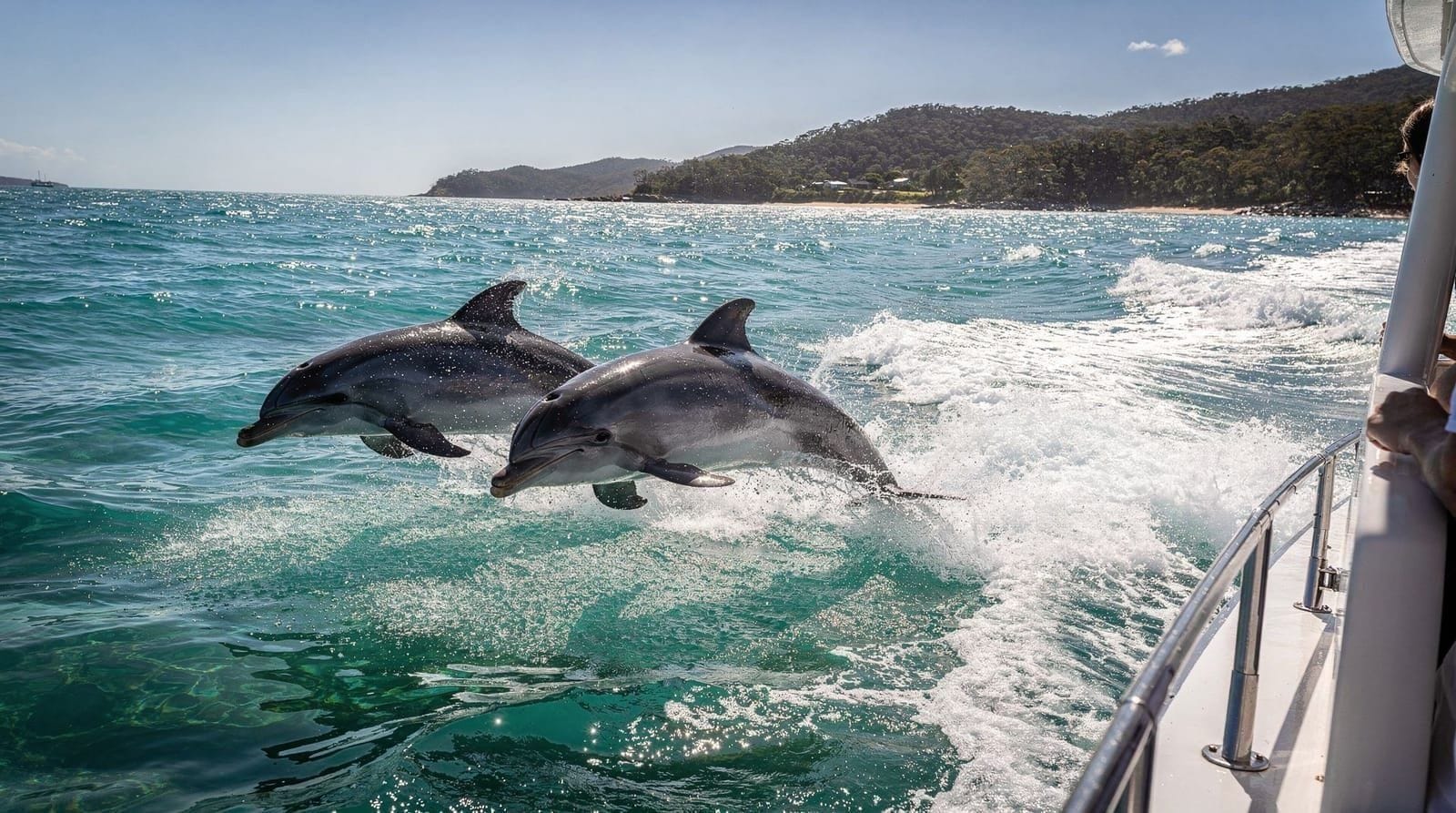
The bottlenose dolphin population in the bay is estimated at around 100–120 individuals, and dolphin-watch cruises from Nelson Bay and Tea Gardens depart several times daily. The Stockton Sand Dunes — stretching over 32 km and reaching 30 m high — are the largest moving sand dunes in the Southern Hemisphere. Sandboarding operators run 4WD beach tours with sandboard hire from Anna Bay.
Port Stephens dolphin cruise and sandboarding day trip from SydneyAt 209 km each way, this is a long day unless you depart before 7 am. A guided tour that combines the dolphin cruise and dune activity in one package makes better use of your time than arranging each separately. For the full logistics, see Port Stephens day trip.
Best month: May–November for whale watching in addition to dolphins; June–August for peak humpback numbers.
Jervis Bay — 196 km, ~2.5–3 hours
Jervis Bay, about 196 km south of Sydney via the Princes Highway and the Jervis Bay Road turn-off near Nowra, has some of the whitest sand beaches in the world — Hyams Beach reputedly holds a Guinness record for white sand. The drive takes 2.5–3 hours, with no practical public transport link.
Booderee National Park occupies the southern headland and charges a vehicle entry fee (check the official Parks Australia website for the current fee). Within the park, Green Patch Beach, Murrays Beach, and the Cape St George lighthouse walk are all worthwhile. The town of Huskisson on the northern shore of the bay has most of the cafes, dolphin cruise operators, and the Jervis Bay Maritime Museum.
Jervis Bay day tour from Sydney with dolphin watching cruiseWhale watching is exceptional here during the migration season (May–November). Jervis Bay sits on the whale highway between the Antarctic feeding grounds and the warmer Queensland breeding areas, and tour operators run morning cruises with a high sighting rate. See the full Jervis Bay day trip for operator comparisons and beach-by-beach breakdown.
Best month: June–August for whale watching; October–November for warm water and lower crowds than the summer holiday rush.
Canberra — ~240 km, ~3–3.5 hours
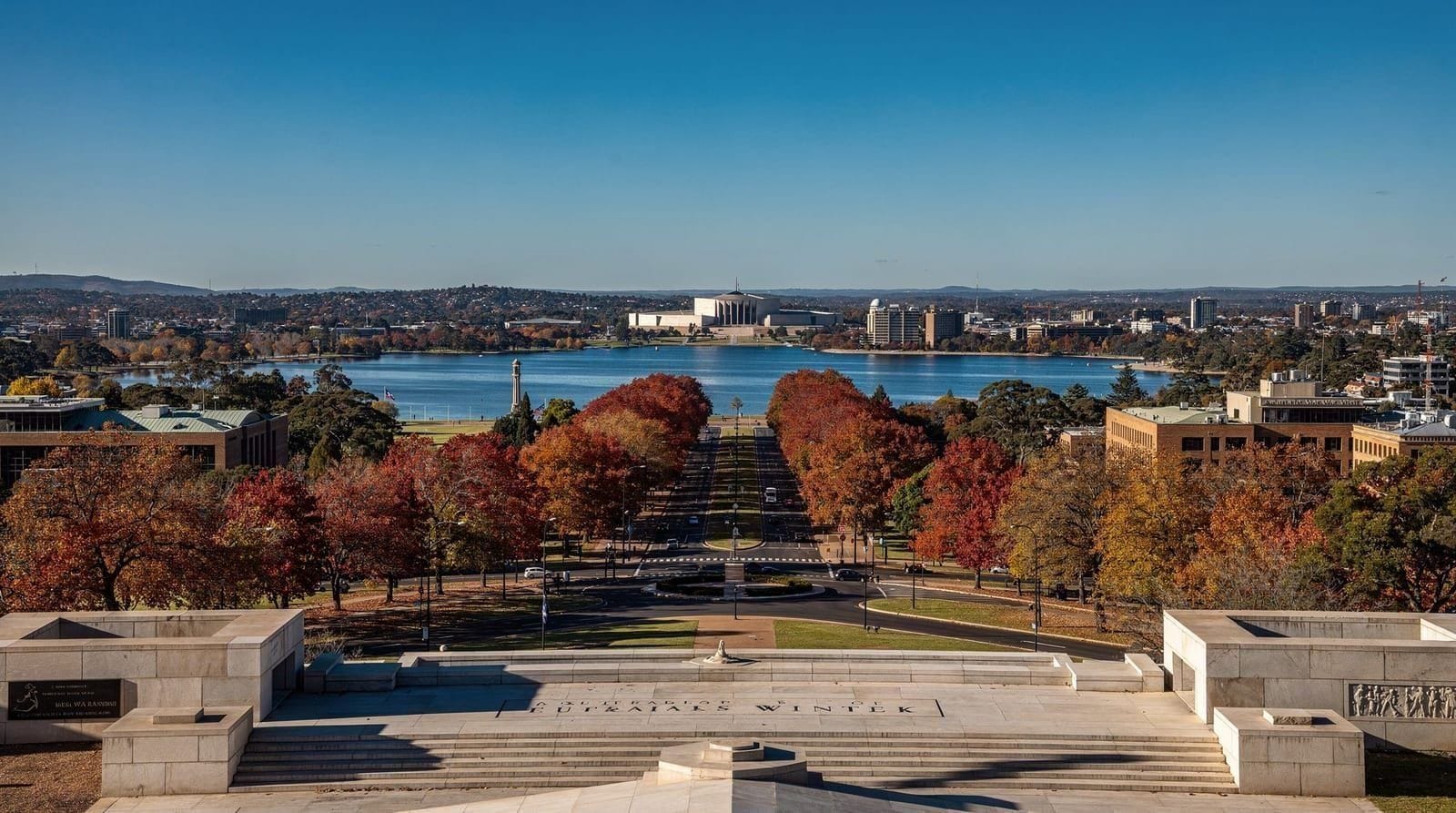
Canberra, the Australian capital, sits about 240 km southwest of Sydney via the Hume Highway, a drive of roughly 3 to 3.5 hours. Unlike the nature-focused options above, Canberra is a city destination: Parliament House, the Australian War Memorial, the National Gallery of Australia, the National Museum, and Lake Burley Griffin. There is a NSW TrainLink coach from Sydney Central coach terminal (not the train), taking about 3.5 hours.
A day trip is logistically tight — you arrive mid-morning and need to leave by 3–4 pm to be back in Sydney at a reasonable hour. The Australian War Memorial is the most compelling single attraction and justifies 2–3 hours on its own. Parliament House is free to enter and the Senate and House of Representatives galleries can be visited when Parliament is sitting. The National Gallery is excellent and free for the permanent collection.
Canberra day tour from SydneyFor the full guide with specific entrance times and ticketing, see Canberra day trip.
Best month: March–May for comfortable temperatures; September–October for the Floriade flower festival at Commonwealth Park.
Wollongong and the Grand Pacific Drive — ~85 km to Wollongong, ~1–1.5 hours
Wollongong is a beach city 85 km south of Sydney CBD, reachable by train from Central Station in about 90 minutes (paid with Opal). But the real draw is the Grand Pacific Drive — one of Australia’s most celebrated coastal roads, running from the Royal National Park’s southern edge at Stanwell Tops down to Kiama via the Sea Cliff Bridge, a 665-metre arch bridge that hangs over the Tasman Sea cliffs.
The Sea Cliff Bridge lookout is free and one of the most photographed spots on the NSW coast. Wollongong itself has a surf beach, a historic lighthouse, and the Nan Tien Temple — the largest Buddhist temple in the Southern Hemisphere. Kiama, another 20 km south, is known for the Kiama Blowhole and accessible beaches. The full Wollongong and Grand Pacific Drive guide covers the drive section by section.
Best month: September–October (spring, mild, fewer crowds); March–May (autumn, warm sea, minimal humidity).
Royal National Park — 36 km, ~40 minutes
Royal National Park is the world’s second-oldest national park (established 1879), sitting just 36 km south of Sydney CBD. By car from the city, the northern entry at Loftus or the Audley visitor centre is about 40 minutes. By train, Waterfall station on the Illawarra Line sits on the park’s southern edge (~1 hour from Central).
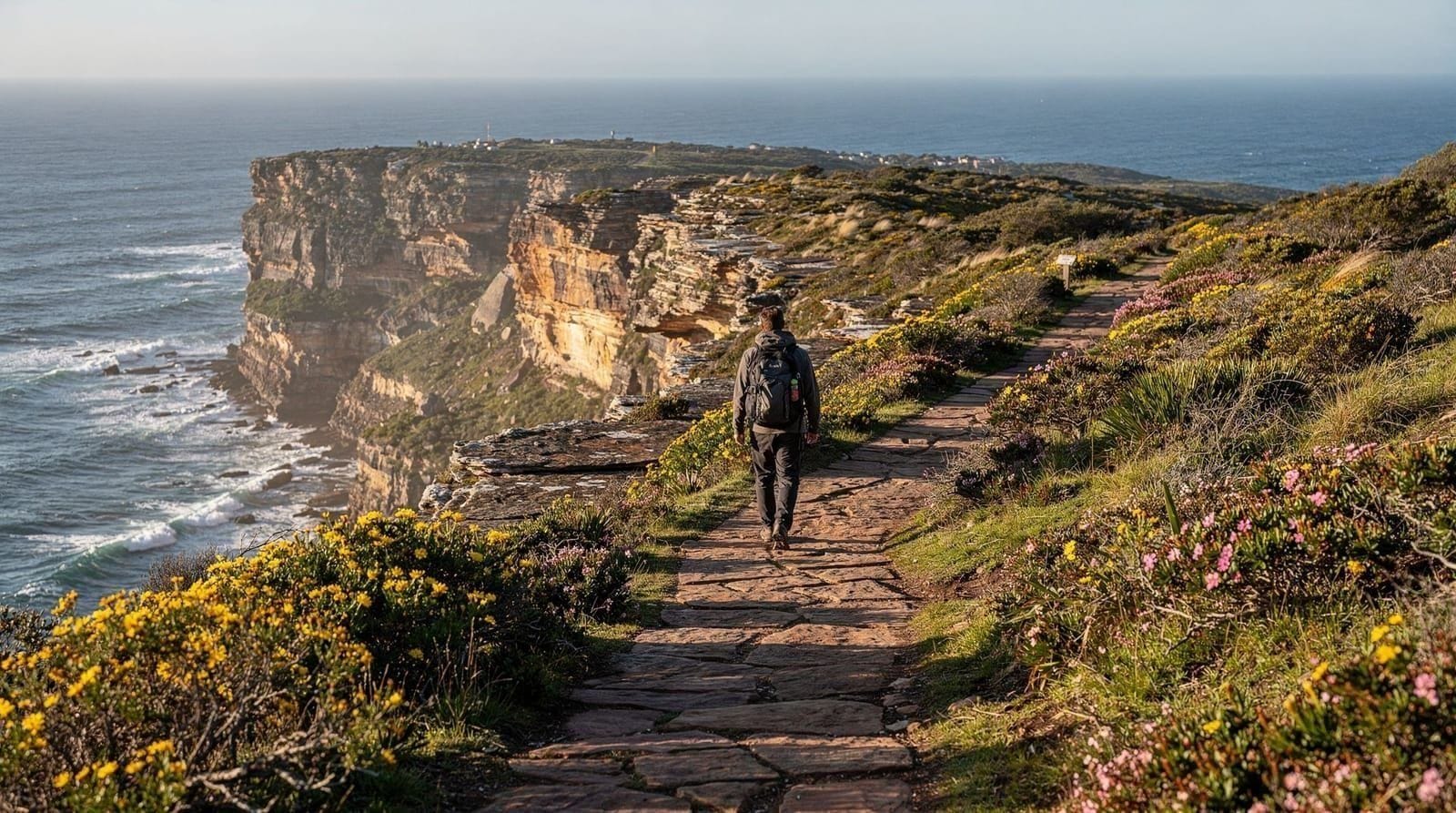
The park’s star attraction is the Coastal Track — a 27 km walk from Bundeena (ferry from Cronulla) to Otford, generally walked south to north over two days but workable as a full-day walk from Bundeena to Garie Beach (about 12 km). The Bald Hill lookout near Stanwell Park offers paragliding launch sites and sea-cliff views. Entry is AUD 12 per vehicle (or free on foot and bicycle). See the full Royal National Park guide for track conditions and logistics.
Best month: April–May (wildflower season begins) and September–November (peak wildflowers in the heath).
Central Coast and Southern Highlands
The Central Coast sits between Sydney and Newcastle: Gosford is 80 km north via the F3, about 1 hour by car or 70–75 minutes by train from Central. The main draws are Brisbane Water National Park, Bouddi National Park, The Entrance lagoon (pelican feeding at 3:30 pm daily), and Terrigal beach. It is more a relaxed beach escape than a sightseeing-dense destination.
The Southern Highlands — Bowral, Mittagong, and Berrima — are around 110 km southwest of Sydney via the Hume Highway, about 90 minutes by car. There is a NSW TrainLink service to Moss Vale. The region is known for gardens (Tulip Time festival in September–October), antique shops in Berrima (a preserved Georgian village), and rolling pastoral scenery. The Central Coast day trip and Southern Highlands day trip cover each in detail.
Comparison table
| Destination | Distance | Drive time | Train? | Best for |
|---|---|---|---|---|
| Blue Mountains | 104 km | ~1.5 hrs | Yes (~2 hrs) | Scenery, hiking, families |
| Royal National Park | 36 km | ~40 min | To southern edge | Coastal hiking, wildlife |
| Wollongong / Grand Pacific Drive | 85 km | ~1–1.5 hrs | Yes (~90 min) | Scenic drive, beaches |
| Central Coast | 80 km | ~1 hr | Yes (~75 min) | Beaches, national parks |
| Southern Highlands | 110 km | ~1.5 hrs | Partial (Moss Vale) | Gardens, antiques, villages |
| Hunter Valley | 160–170 km | ~2–2.5 hrs | No | Wine, food |
| Jervis Bay | 196 km | ~2.5–3 hrs | No | White beaches, whales, dolphins |
| Port Stephens | 209 km | ~2.5–3 hrs | No | Dolphins, sand dunes, beaches |
| Canberra | ~240 km | ~3–3.5 hrs | Coach only | Museums, Parliament, history |
Getting the most out of a Sydney day trip
Start early. For any destination over 150 km, leaving Sydney before 7:30 am avoids peak traffic on the motorways and gives you maximum time on the ground.
Weekends vs weekdays. The Blue Mountains, Wollongong, and Royal National Park are significantly less crowded on weekdays. Hunter Valley cellar doors often have better staff time and more personal tastings midweek. Jervis Bay and Port Stephens are packed in summer holidays (December–January); aim for shoulder seasons.
Combine if you can drive. Wollongong + Royal National Park, or the Central Coast + Reptile Park (at Somersby), or Hunter Valley + Barrington Tops for keen nature travellers — adjacent regions reward flexible driving routes more than guided tours.
Guided tours for drinking destinations. Hunter Valley is the obvious case, but Jervis Bay and Port Stephens also benefit from guided packages if you want to combine a cruise with a 4WD dune experience without the logistics of booking separately.
Seasonal timing matters. Whale season (May–November, peak June–August) transforms Port Stephens and Jervis Bay from dolphin spots into world-class whale watching destinations. Wildflower season (September–October) is peak time for Royal National Park heathland walks. For the best time to visit Sydney across all regions, that guide has the month-by-month breakdown.
Related itineraries
If day trips form the backbone of your NSW visit, the Sydney 7-day itinerary including surroundings and the 10-day NSW itinerary give structured multi-day plans that loop Blue Mountains, Hunter Valley, and the coast efficiently.
For families weighing wildlife parks and beach days, Sydney with kids covers which day-trip destinations work best for younger children — Royal National Park and the Central Coast top the list for easy terrain and beach access.
Self-drive vs guided tour: the honest trade-off
The decision between hiring a car and booking a guided tour comes down to three factors: comfort with left-hand driving on unfamiliar rural roads, whether alcohol is involved, and how many stops you want to pack in. Hunter Valley is the clearest case for a guided tour — a self-drive wine day means either skipping tastings or having a designated driver miss most of the point. Blue Mountains and Wollongong, by contrast, are easy either way since both have direct train access and walkable town centres once you arrive. For Port Stephens, Jervis Bay, and Canberra, a guided tour typically wins on efficiency simply because the point-to-point driving eats into the day, and a tour operator has already worked out the most efficient stop sequence.
If you do self-drive, remember that fuel and tolls on the F3 and M4 motorways add up, and NSW enforces strict mobile-phone and speed camera rules — an unfamiliar rental car with a tourist plate is not treated any differently.
Frequently asked questions about Best day trips from Sydney
Can you do the Blue Mountains as a day trip from Sydney?
Yes — it is the definitive Sydney day trip. The train from Central Station takes about 2 hours to Katoomba and is paid with Opal (on weekends the AUD 9.65 daily cap covers the full return). Echo Point, the Three Sisters, and Scenic World are all within a short bus or walk from the station, so you do not need a car.How far is Hunter Valley from Sydney?
Hunter Valley is roughly 160–170 km from the CBD, about 2 to 2.5 hours by car via the F3 Pacific Motorway. There is no direct train to the wine country; guided tours from Sydney are the most practical option for visitors who want to drink rather than drive. Expect to pay AUD 100–200 per person for a quality guided day tour including tastings and lunch.Is Port Stephens worth a day trip from Sydney?
If dolphin watching and sand dunes appeal, yes — but at 209 km it is a long day. Factor 2.5–3 hours each way by car, leaving perhaps 5 hours on the ground. A guided tour is more efficient since it handles driving and combines activities (dolphin cruise, sandboarding). Staying overnight makes the experience noticeably more relaxed.Can you do Canberra as a day trip from Sydney?
You can, but the 240 km drive (3–3.5 hours each way) leaves limited time in the capital. A guided coach tour making an early start is the most practical option; expect to be back in Sydney by 9 pm. One night is better if you want to cover Parliament House, the Australian War Memorial, and the National Gallery properly.What day trips from Sydney can you do by public transport?
Blue Mountains by train (Central → Katoomba, about 2 hours) is the standout. Wollongong is also trainable from Central in about 90 minutes (paid with Opal). Royal National Park is reachable by train to Waterfall or Sutherland, though you need a car or a tour to reach trailheads within the park. Hunter Valley, Port Stephens, and Jervis Bay all require a car or guided tour.What is the cheapest day trip from Sydney?
Royal National Park and Wollongong are the cheapest — train fares to either are modest, and the parks themselves have free sections. The Bondi to Coogee walk is technically free (ferry to Circular Quay, bus or walk to Bondi), though that is more a half-day city excursion than a regional day trip. Blue Mountains by train on a weekend is excellent value given the AUD 9.65 daily cap covers the return.What is the best season for Sydney day trips?
Autumn (March–May) is the consensus pick — temperatures between 18–24°C, lower crowds than summer, and wildflowers in the national parks. Spring (September–October) runs a close second with jacaranda blooms. Summer (December–February) is busy and hot, though Blue Mountains in summer is cooler than the city. Winter (June–August) is quiet and cheap; whale watching from Jervis Bay and Port Stephens is at its peak June–August.Should I book a guided day tour or drive myself?
Driving suits people who want flexibility and are comfortable on left-hand traffic. Guided tours earn their cost when you want to visit a wine region (Hunter Valley) and drink during the day, when you are unfamiliar with Australian rural roads, or when a tour combines multiple stops more efficiently than public transport. Most tours include hotel pickup from the CBD. Budget AUD 100–180 per person for a guided day tour.
Top experiences
Bookable activities with verified prices and instant confirmation on GetYourGuide.
Sydney: Canberra day tour from Sydney
Sydney: Royal National Park day trip
Wollongong: Sydney Jervis Bay tour with beaches koalas kangaroos

Sydney: Wine tour from Sydney inc lunch cheese choc vodka
Sydney: Port Stephens dolphin cruise sandboarding day trip