Why Sydney in autumn is the city's best-kept secret
| At a glance | |
|---|---|
| Where | City-wide — the coastal walks and harbour foreshore benefit most |
| Cost | Accommodation is usually cheaper than January peak rates |
| Time needed | 5–7 days minimum to cover the city plus a day trip |
| Getting there | Same as any Sydney visit — Kingsford Smith Airport, then train or Opal-card transport into the city |
| Best time | Second half of April into early May |
The city locals actually enjoy
Ask any Sydneysider when they prefer their own city and the honest answer is rarely December. Peak summer — the weeks around Christmas and New Year — brings the city’s full population outdoors simultaneously, adds the school holiday crowd, and pushes accommodation prices to their annual maximum. By mid-February, locals are quietly relieved when the school term restarts.
Autumn, by contrast, is when Sydney exhales.
March arrives with the humidity of summer still present but softening. By April, the light has changed: it’s lower and more golden, the mornings are cooler, and the famous harbour takes on a deeper, more saturated blue. May is arguably the best single month in the Sydney calendar — warm enough to swim at Bondi, cool enough for long coastal walks, and uncrowded enough to actually enjoy both.
This is not a secret Sydney keeps deliberately. It’s simply that most international travel planning runs on Northern Hemisphere intuitions, and “autumn” anywhere in March-May sounds counterintuitive. That instinct quietly benefits everyone who gets here.
If you want the on-the-ground version of this season, our write-up of autumn walks around Sydney Harbour shows how the foreshore feels once the summer crush has gone. And if you are still weighing the calendar as a whole, the best time to visit Sydney guide sets autumn against every other season.
What the weather actually does
Sydney’s autumn (March to May) is defined by the transition from humid subtropical summer to mild, dry winter. Average highs sit between 22°C and 25°C through March and April, dropping to around 19°C by late May. Rainfall is statistically lower than summer — the wettest months are June and July in Sydney, not the autumn months, which surprises many visitors from the Northern Hemisphere.
What you get in practice: sunny days with low humidity, the occasional cool evening that makes dining outside without a fan actually pleasant, and ocean temperatures that lag behind air temperatures (the water is still around 21-22°C through April, left warm from summer). If you want to swim, you can still swim. If you want to walk the Bondi to Coogee coastal path without arriving at the other end as a sweating ruin, autumn is the window.
Packing is easier too. You do not need a heavy coat, but a light layer for evenings and a hat and sunscreen for midday are sensible, and the Sydney packing guide covers the rest. Because the days are settled, the free things to do in Sydney become a real plan rather than a fallback: wandering the Royal Botanic Garden, strolling the foreshore, or simply sitting by the water.
The one unpredictability is that La Niña years can push heavier rain into March and April. Check the Bureau of Meteorology forecast before finalising plans, but as a general pattern, autumn is drier and calmer than summer.
Crowds, prices, and practicality
The school holiday crunch is the dominant driver of Sydney pricing and crowd patterns. The Christmas–January period and the late-September–October school holidays (spring, in Southern Hemisphere terms) are the peak demand periods. Autumn falls between them.
From mid-February through May (excluding Easter weekend, which shifts year to year), you can generally expect:
- Accommodation rates lower than January peaks, depending on the property type and location
- Wait times at popular restaurants that reflect actual demand, not tourist overflow
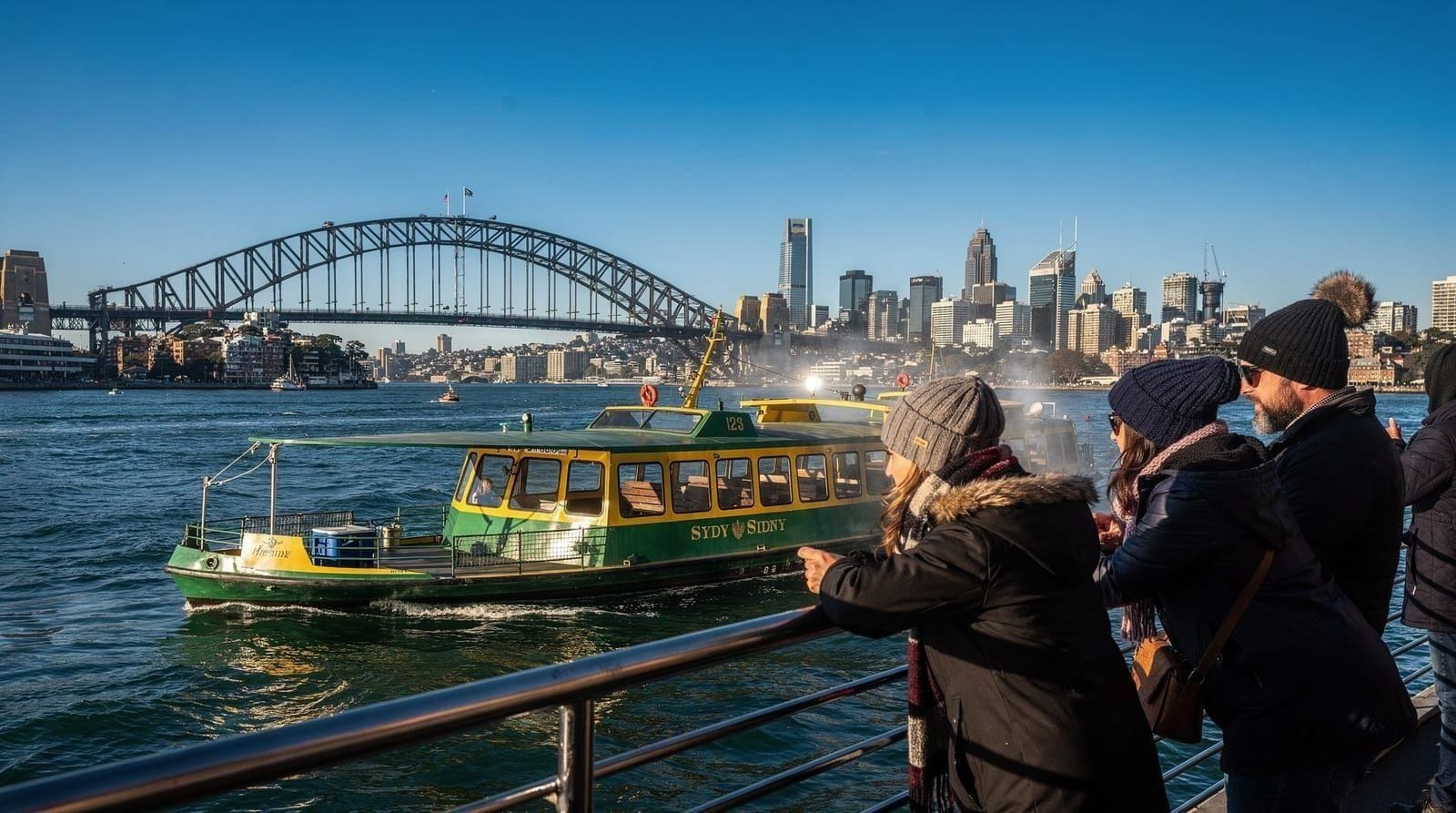
- Ferry queues at Circular Quay that clear in minutes rather than half an hour
- Bondi Beach on a Tuesday morning where you can actually see the sand
Getting around is easier when the network is not packed. Trains, buses and ferries all run on the same card, and the Opal card guide or our plain-English Opal card explainer will sort it out before you land. For the wider picture on moving about, see getting around Sydney.
Easter weekend is the main caveat. The long weekend (Good Friday through Easter Monday) creates a mini-peak that affects accommodation in particular. If your trip overlaps with Easter, book accommodation well in advance and expect the coastal walk to be busy on the public holidays themselves.
Autumn month by month
| Month | Weather | Crowds | Notes |
|---|---|---|---|
| March | Warm, still humid, highs ~24–25°C | Moderate, tapering from summer | Mardi Gras (late Feb–early March) still drawing crowds to the inner city |
| April | Cooler, drier, highs ~22–23°C | Low, except Easter weekend | Royal Easter Show; best light for photography |
| May | Mild, highs ~19°C, still swimmable water | Lowest of the shoulder season | Arguably the best single month; whale season begins late in the month |
The Royal Easter Show and autumn events
One reason autumn feels livelier than its off-peak pricing suggests: Sydney’s autumn calendar is genuinely good. The Royal Easter Show at Sydney Olympic Park is a legitimate Australian institution — a 12-day run (19–30 March in 2027) of \1. It is chaotic and Australian in equal measure. If you have children, it is worth one day of your trip unreservedly.
Mardi Gras runs in late February or early March depending on the year. The Sydney Gay and Lesbian Mardi Gras parade is one of the world’s largest pride events, drawing huge crowds to Oxford Street and the surrounding inner-city suburbs. Even if the parade itself falls outside your dates, the Fair Day event in Victoria Park (Sunday 14 February in 2027) is a free festival with a strong community atmosphere.
The Archibald Prize — Australia’s most prominent portrait prize — has its annual exhibition at the Art Gallery of NSW (see the gallery’s official website for dates). General entry to the gallery is free, and the Archibald generates genuine public engagement in a way few art prizes do anywhere. People have opinions about who should have won.
The coastal walk case
The Bondi to Coogee coastal walk is one of Sydney’s genuinely exceptional pieces of urban infrastructure — six kilometres of sandstone path hugging the clifftops between Bondi and Coogee, passing through Tamarama, Bronte, and Clovelly along the way. It can be done in two hours at a brisk pace or stretched to a full half-day with beach stops and a long lunch.
In summer, doing this walk between 10am and 3pm is an exercise in endurance rather than enjoyment. The combination of sun, humidity, and the sheer number of people on the path makes it functional but not pleasant. In autumn, the same walk on a weekday morning is close to perfect: clear air, warm sun without heat stress, and a quality of light that photography on your phone will actually capture accurately.
The ocean pools along the route — Bronte Baths, Clovelly, the Bondi Icebergs — are also far more accessible. The Icebergs pool at Bondi is one of the world’s most photographed swimming facilities for a reason, but in peak summer the queues and crowds make it a performance rather than a swim. In March and April, you can arrive, pay your entry fee, and have an entirely reasonable morning without feeling you are a tourist prop in someone else’s Instagram content.
On the water and in the city
Autumn is also a good moment to get onto the harbour itself. The calmer, softer mornings suit paddling, and an early outing such as a sunrise kayak on the harbour lets you watch the light change over the water before the ferries get busy. Our Sydney harbour kayaking guide explains what to expect if you have never done it.
If you would rather see the harbour from above, the lower evening light is what makes the bridge worth the effort. a twilight climb over the Harbour Bridge pairs the golden hour with the city switching on its lights, and the BridgeClimb guide compares the options so you can pick sensibly. For a gentler evening, sunset harbour cruises make the same point from deck level.
Autumn walking suits history and culture as well. The Rocks history walk is far more pleasant without summer heat, and it sits comfortably alongside Sydney’s Aboriginal heritage, which deserves more than a passing mention on any trip. A guided experience such as an Aboriginal walking tour with a smoking ceremony is a thoughtful way to begin, and the Aboriginal cultural tours guide lists other approaches.
For ferry-minded travellers, a ferry day out shows how far a single Opal tap can take you, and the Manly beach guide covers the classic destination at the end of the line.
The day-trip window
Sydney’s best day trips benefit particularly from autumn conditions. The Blue Mountains, roughly two hours west of the city by train, are at their most visually dramatic in autumn — the eucalyptus forest on the escarpment catches the lower autumn light at an angle that turns the entire Three Sisters formation a deeper, more complex colour. If you have ever looked at photographs of Echo Point and wondered why the real thing looks less dramatic than expected, the answer is usually that you visited in peak summer at midday.
The Hunter Valley, roughly 2.5 hours north of Sydney, is a wine region where the vintage harvest runs through March and April. Visiting during harvest means the working vineyards are active, cellar doors offer current vintage tastings, and the region has a purposeful energy that the off-season lacks. Autumn foliage in the Hunter is modest by European standards but present — the deciduous trees planted at older estates add a visual element that is absent in summer.
For the drive south, the Royal National Park and the Sea Cliff Bridge near Wollongong are particularly compelling in autumn. The park’s coastal scrubland and heathland have an understated colour shift in the cooler months, and the grand Pacific Drive has none of the summer weekend traffic that can make it frustrating.
If you want a longer plan built around the Blue Mountains, the two-day Blue Mountains itinerary and the Blue Mountains destination page give you the detail, while the Blue Mountains day trip guide suits anyone with just one free day.
What autumn gets wrong
Autumn is not perfect. A few things to factor honestly:
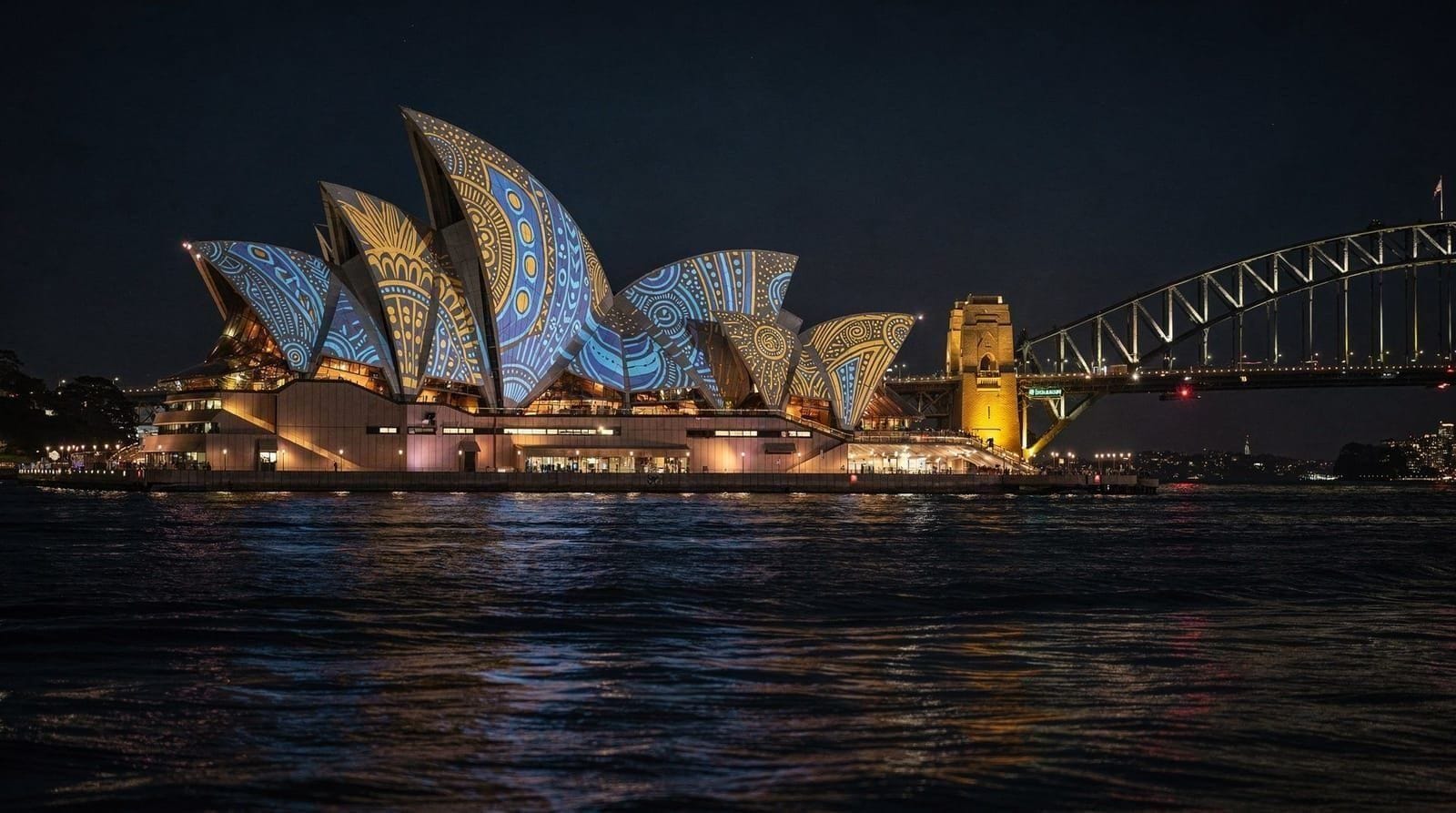
Vivid Sydney — the city’s major light and music festival — runs in late May and into June. If your trip ends before late May, you’ll miss it. Vivid is the one event that makes winter in Sydney arguable as a travel period in its own right, and if the dates align, it’s worth building an itinerary around.
Whale season starts late. The humpback whale migration past Sydney begins in earnest in May and peaks in June–August. If whale watching is a priority, the earlier autumn months won’t deliver. By late May the first whales appear, but peak sightings are a winter activity. See the Sydney whale watching guide for more.
Some beaches can be blustery. The southern beaches like Cronulla and Maroubra catch a consistent south-easterly swell in autumn that makes them attractive for surfers but choppy for casual swimming. Bondi is more sheltered. The northern beaches — Manly, Curl Curl, Dee Why — are also generally calmer.
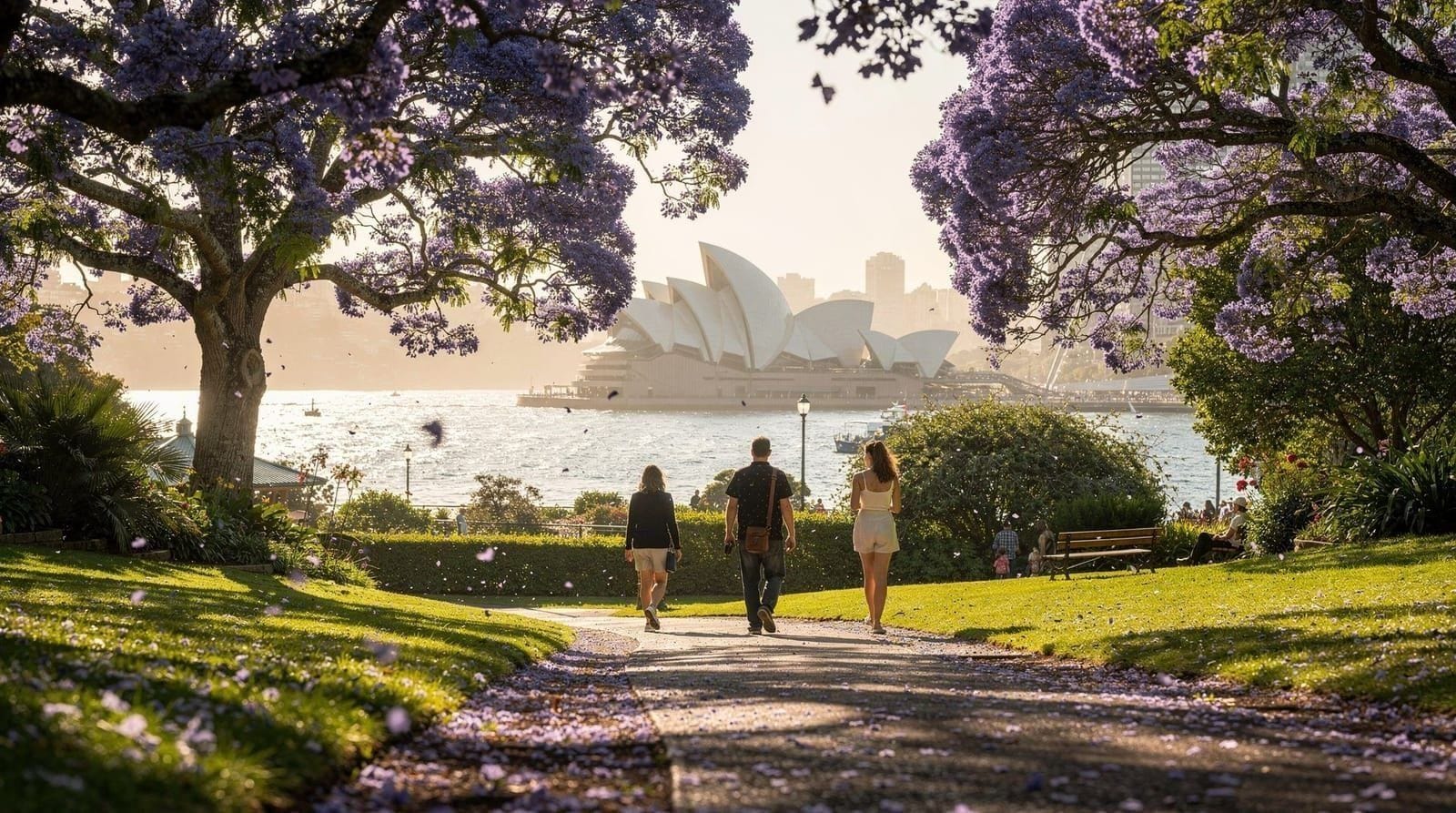
If you are visiting later in the season and curious about what follows, what to expect from whale season is a useful preview, and the Vivid Sydney guide explains the festival that closes the autumn calendar. For a different seasonal flavour, jacaranda season belongs to spring rather than autumn, which is a good reason to treat the two as separate trips.
Practical timing
If you can choose freely within autumn, the second half of April into early May is the sweet spot. Easter has passed, the school term is in session, the weather is settled, and you have arrived at the period where Sydney is most itself: not performing for visitors, not straining under heat, just going about its business in a climate that rewards being outside.
The Bondi to Coogee walk, a harbour ferry out to Manly for lunch, an afternoon at the Art Gallery of NSW, an early dinner in Surry Hills — these are the rhythms of Sydney in autumn, and they are genuinely good. No superlatives required.
Short on time? The 48-hour weekend itinerary and the three-day first-timer plan both work well in this season, and Sydney for first-timers is a good companion read. Coffee stops along the way are easy to find, as our coffee snob guide shows, and a ferry from Circular Quay makes a natural start to any day.
Plan around a 5–7 day minimum to do the city and at least one day trip justice. The Sydney 5-day essentials itinerary was built with this kind of shoulder-season visit in mind.