Whale season 2026 — what to expect and when to go
The migration is already beginning
If you’re reading this in May, the humpbacks are already moving. The first northward-migrating whales typically pass the Sydney coastline from May, heading north from their Antarctic summer feeding grounds to breed in the warmer waters off Queensland. By the time you’re reading this, the season is underway.
If you’re still deciding when to travel at all, our guide to the best time to visit Sydney and the notes on Sydney in winter put the whale months in the wider seasonal picture.
Here is a current, practical guide to Sydney’s 2026 whale season — what species to expect, how to see them well, and what the trip operators won’t always tell you.
| At a glance | |
|---|---|
| Where | Boat tours from Circular Quay, Darling Harbour, Manly; land-based from Cape Solander, Barrenjoey, Bondi-to-Coogee headlands |
| Cost | Land-based watching needs no booking (park entry fees may apply); boat tour prices vary by operator, so check the operator’s official website |
| Time needed | 2–3 hours for a boat tour or a land-based session |
| Getting there | Drive to Cape Solander or use the Transport for NSW trip planner; drive or bus to Barrenjoey; boats depart the main harbour wharves |
| Best time | Mid-June to mid-September for the most reliable sightings; May and November are the riskier edges |
What you’ll actually see
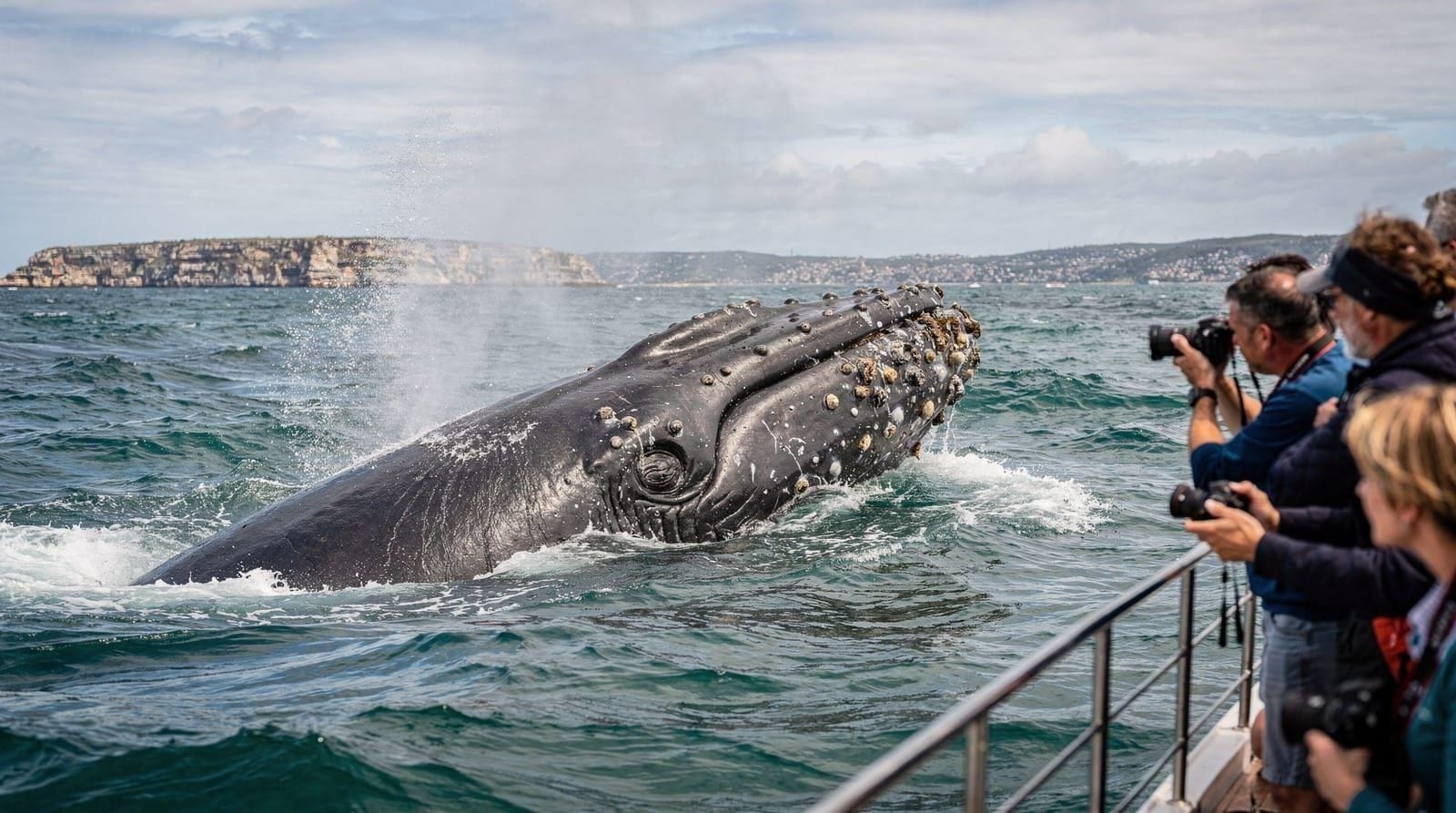
The dominant species along the NSW coast is the humpback whale (Megaptera novaeangliae). They’re large enough to spot from headlands — adults typically 14–17 metres, 30–40 tonnes — and behaviourally expressive: breach, spy-hop, lobtail, and pectoral fin slaps are all commonly observed.
The southern right whale (Eubalaena australis) is less common but occasionally sighted, particularly in the southern part of the migration corridor. They’re slower-moving and sometimes approach boats closely.
Blue whales are rarely sighted close to Sydney but are not impossible in deeper offshore waters.
Orca (killer whales) pass through occasionally as hunters of juvenile humpbacks during the northern migration in May–June. If an operator mentions orca sightings in the days before your booking, that’s a genuine reason to go earlier rather than later.
The two windows: north and south migration
The Sydney whale season is actually two overlapping movements:
Northward migration (May to July): Humpbacks travel north along the coast, typically 5–15 km offshore. They’re often in pods of two to four, sometimes larger aggregations. Behaviour is purposeful — they’re travelling — but still produces significant surface activity.
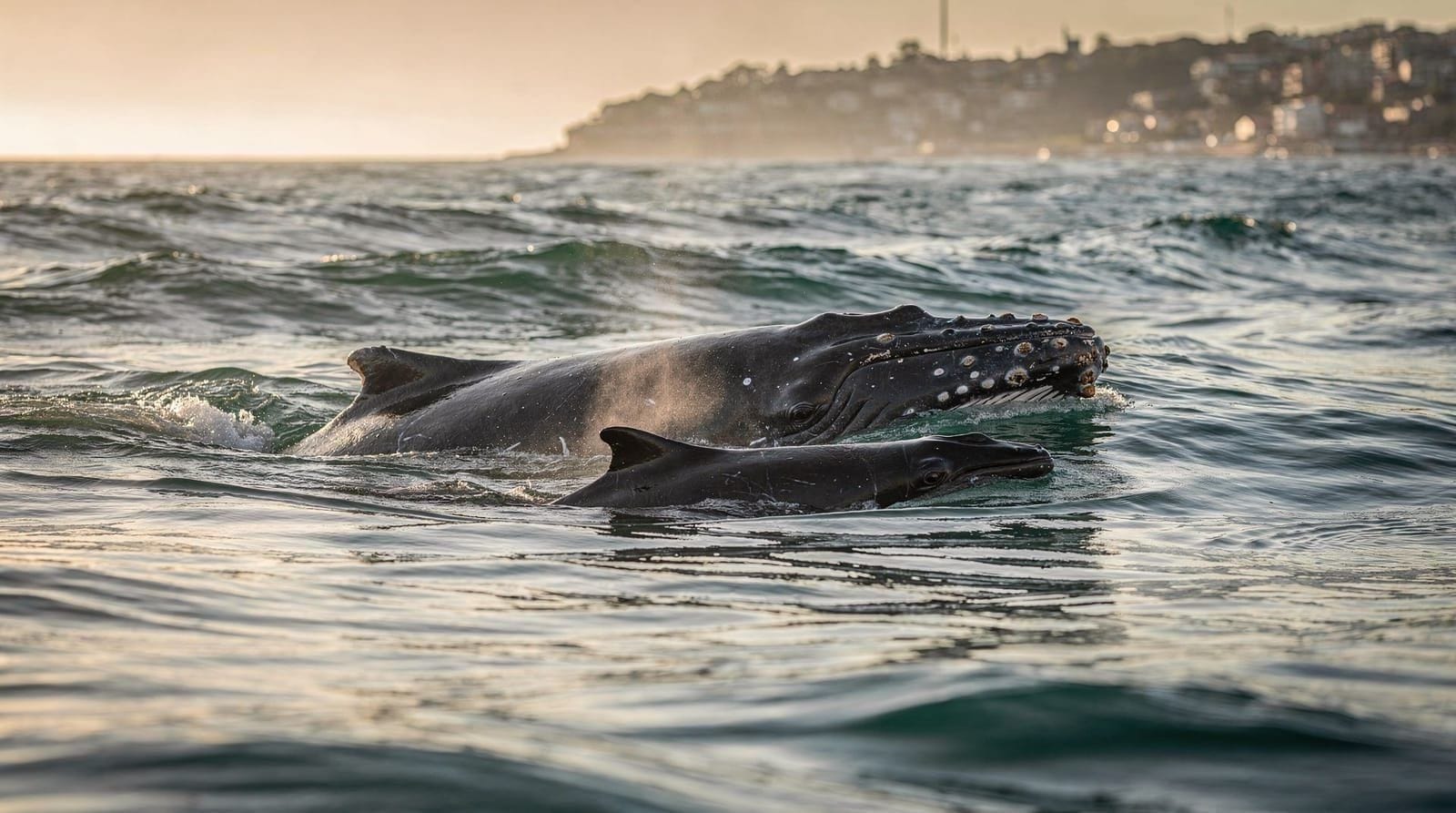
Southward migration (September to November): The return journey, with calves born in Queensland now accompanying the adults. Calves are more playful and less focused, so the southward migration produces more surface activity. Mothers with calves are sometimes more cautious of boats but the behaviour is generally more spectacular.
The July overlap window: In late June and July, both northward latecomers and early southward travellers are sometimes present simultaneously, which can produce high whale counts.
Land-based watching: genuinely good in 2026
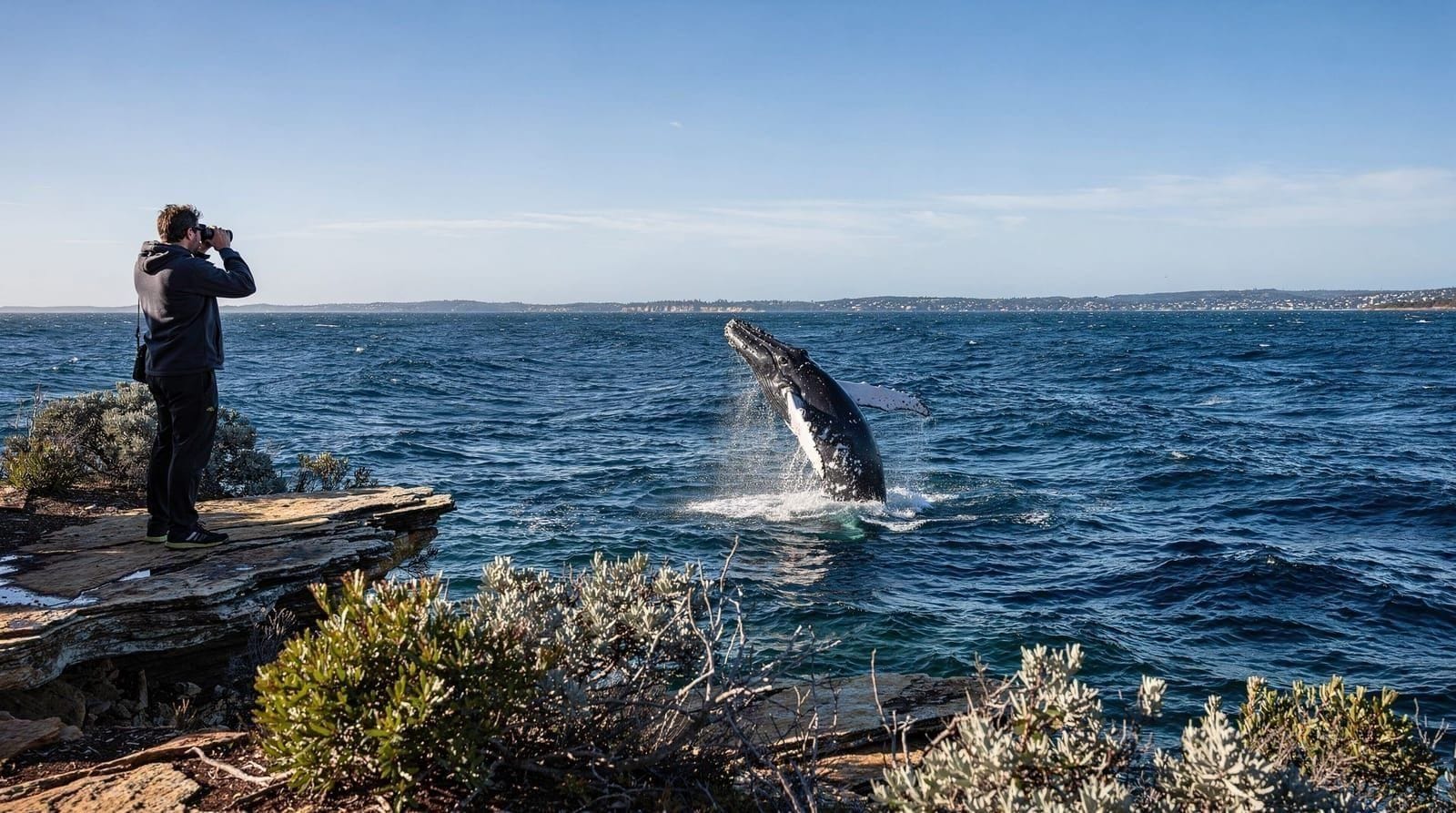
Land-based whale watching from Sydney’s headlands is underestimated. On a clear day with good swell conditions, the elevated cliff-top viewpoints can produce sightings as satisfying as a boat trip — and the vantage point from above lets you see approaching blows (the exhaled spray visible up to 500 metres away) that boat-level observers miss.
Best land spots:
-
Cape Solander (Kurnell, Botany Bay): The cliff-top lookout has a viewing platform with information displays about local whale species, and arguably the best whale-watching position in metropolitan Sydney. A park entry fee applies per vehicle in the Kurnell area (see the official NSW National Parks website). For public transport, use the Transport for NSW trip planner.
-
Barrenjoey Headland (Palm Beach): Northern end of Sydney, requires a drive or the bus from Palm Beach. The channel between the headland and Lion Island is a documented whale corridor — patience is well rewarded.
-
Bondi to Coogee coastal walk headlands: The headlands between Clovelly and Coogee are accessible on foot and can produce excellent sightings when whales are close to shore. No specific infrastructure but the elevated position is good.
For full land-based guidance: land-based whale watching Sydney.
Getting to these headlands is part of the plan. The Sydney trains guide and the Opal card guide explain how to pay for the journey, and if you’d rather skip public transport, driving in Sydney and NSW covers the practicalities. The Palm Beach guide is useful if Barrenjoey is on your list, and the Bondi to Coogee walk is a pleasant way to combine coastal scenery with a whale lookout.
Boat tours: what to look for
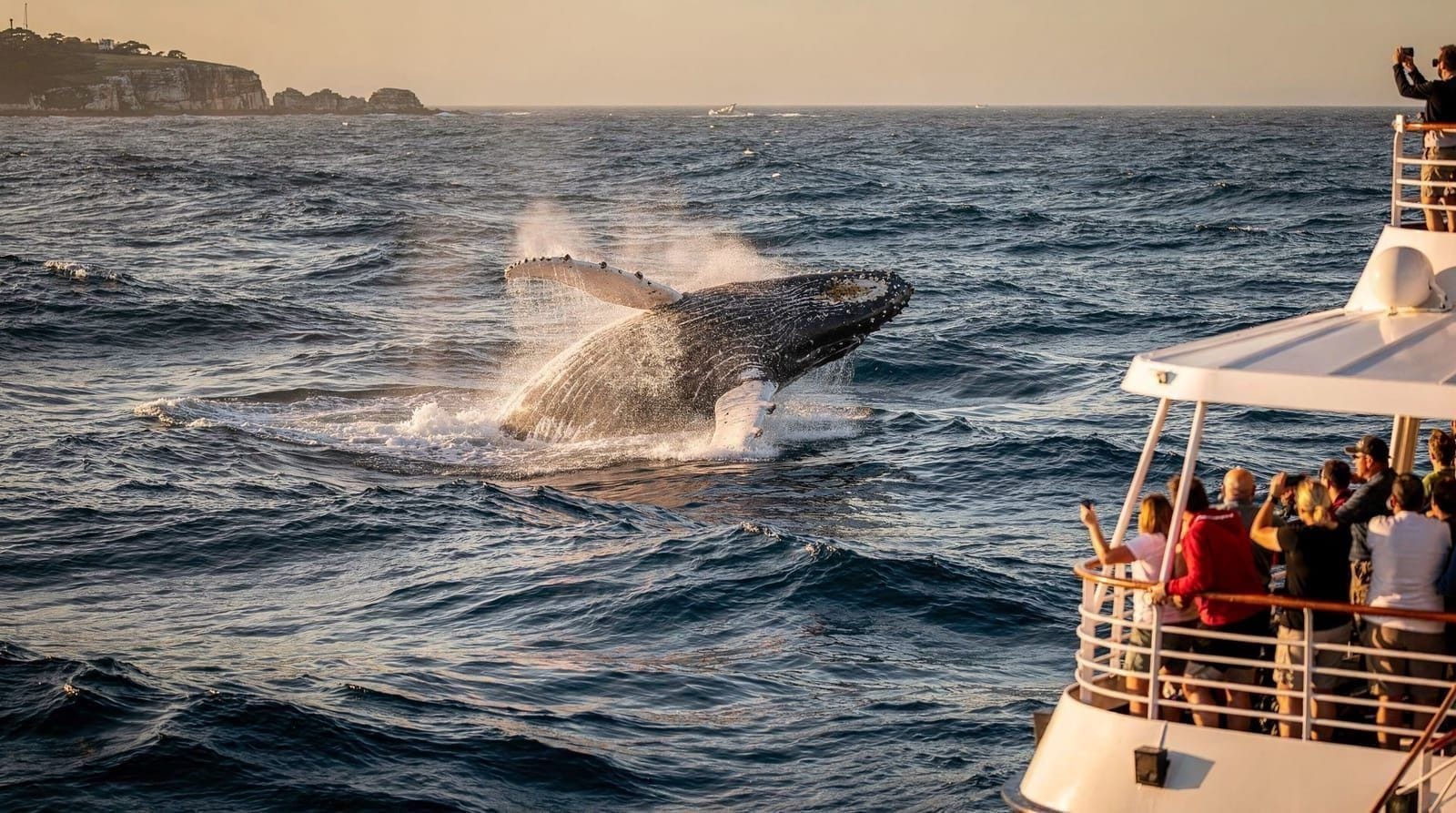
A good whale-watching boat trip from Sydney produces close encounters with humpbacks that are impossible from the shore — particularly breach behaviours and underwater passes where the animal comes within a boat-length.
The Sydney fleet operates primarily from Darling Harbour, Circular Quay, and Manly. The standard trip is 3–3.5 hours. Key considerations:
Boat size matters: Smaller vessels (under 50 passengers) have more flexibility to manoeuvre and spend time with individual whales. Larger vessels are more stable and better for those susceptible to seasickness.
Morning vs afternoon: Morning departures tend to have calmer sea conditions. Afternoon is when whale activity picks up in some conditions, but the sea state is less predictable.
“Guaranteed or free” policies: Several operators offer a free return trip if no whales are sighted. Check the operator’s official terms.
The Sydney whale watching adventure cruise is a well-regarded mid-size operation with experienced guides and a track record of genuine cetacean knowledge rather than just boat tours with whales as a backdrop.
For those who want a calmer, longer experience: the breakfast whale watching cruise combines the early-morning calm conditions with a meal, running from approximately 7 am.
If you’re weighing the two formats, whale watching versus a cruise lays out the trade-offs, and the overview of whale watching cruises in Sydney compares what the different departures offer.
Port Stephens: the alternative to Sydney
If you’re prepared to travel 200 km north of Sydney, Port Stephens near Nelson Bay provides whale watching in calmer, more sheltered bay conditions. The resident bottlenose dolphin pod of around 90 individuals is a year-round bonus. The combination of dolphin cruise plus sandboarding at the dunes makes Port Stephens a genuinely excellent full-day alternative to a standard Sydney whale watching trip.
For whale watching specifically, the Nelson Bay whale watching express operates during the peak season with very good sighting rates.
Jervis Bay: the secret peak
Jervis Bay, 180 km south of Sydney, sees the highest concentration of humpbacks during the August southward migration when the bay acts as a natural shelter. The sighting rates at Jervis Bay in August are consistently higher than at Sydney, and the Jervis Bay whale watching cruise typically has excellent success during this window.
For the full picture of the southern coast, the Jervis Bay day trip guide and the Jervis Bay destination page explain what else is worth doing there, and the Port Stephens day trip guide does the same for the north.
Month-by-month 2026 guide
May: Season opening. Early-season migrants, more variable sightings, smaller crowds, best prices.
June: Vivid Sydney overlaps with peak northward migration. June is one of the best months — Vivid at night, whales by day. See the Vivid Sydney guide for the festival side.
July: Overlap of northward and southward travellers. High count potential. School holidays (last two weeks) increase demand.
August: High sighting rates.
September to October: Southward migration continues. Spring weather improving. A very good window that many visitors underestimate.
November: Season closing. Sightings becoming more unpredictable but possible until mid-November.
Seasickness: the honest conversation
The ocean off Sydney is the Tasman Sea, which is not a gentle body of water. A 3-hour trip in moderate swell on a small vessel will produce nausea in people who would normally consider themselves fine at sea. If you’re even slightly uncertain, take a non-drowsy seasickness medication (Stugeron/cinnarizine, widely available at Australian pharmacies) two hours before departure.
The difference between a whale watching trip that is extraordinary and one that is miserable is frequently this preparation.
Understanding humpback behaviour
Knowing what to look for transforms the whale watching experience from passive to active. The behaviours most commonly observed from Sydney:
Blowing (spouting): The exhaled spray is visible up to 400–500 metres away in calm conditions. Humpbacks produce a column of vapour about 2.5–3 metres high. This is what you’re scanning for from headlands.
Breaching: Full body leaves the water and the whale lands on its side or back with a significant splash. One of the most spectacular cetacean behaviours and relatively common with humpbacks — typically 3–5 consecutive breaches before the animal resumes normal swimming.
Spy-hopping: The whale rises vertically, head out of the water, apparently observing the surface world. This is exactly what it looks like — the animal is looking around.
Pec slapping (pectoral fin slapping): Lying on one side and repeatedly slapping the long pectoral fin on the water surface. Communication behaviour, possibly connected to surface cleaning.
Lobtailing: Lifting the tail fluke out of the water and slapping it on the surface. Often precedes a dive.
A tour guide who can identify these behaviours and point them out before they happen significantly improves the experience. When vetting tours, ask whether guides have marine biology backgrounds or substantial cetacean observation experience — this is the difference between pointing at a blow and explaining what it means.
What happens when nothing is seen
The “guaranteed or free return trip” policy offered by some Sydney whale watching operators varies from one operator to the next, so check the operator’s official terms for exactly what it covers.
In practice, sighting rates are high from June to September, but never guaranteed.
The higher-risk periods are the season edges: early May and mid-November. In these windows, the miss rate rises because the migration timing is variable year to year. If you’re flexible on timing, mid-June to mid-September is the most reliable window.
Land-based watching: equipment and positioning
If you’re watching from Cape Solander, Barrenjoey Headland, or the Bondi coastal walk headlands, binoculars make the difference between spotting a distant blow and seeing an actual whale. A 10x42 binocular is the practical sweet spot — magnification high enough to resolve whales at 800m, field of view wide enough to scan the horizon efficiently.
A complete Sydney whale season itinerary
For visitors specifically timing a Sydney trip around whale season, a suggested framework:
Day 1: Arrive, get oriented. Evening at Vivid if it’s June. Day 2: Cape Solander or Barrenjoey land-based watching in the morning (2–3 hours). Afternoon at leisure. Day 3: Morning whale watching boat trip from Circular Quay or Darling Harbour. If whales are prolific, this is the peak experience. Afternoon at Taronga Zoo. Day 4: Blue Mountains day trip — the winter light in the valleys is different from summer. Day 5: If not yet satisfied with whale encounters, a second boat trip from a different departure point; or Jervis Bay day trip if southward migration is running well.
The Sydney winter whale itinerary on this site covers this in detail with practical booking information.
For full season details and booking guidance: whale watching Sydney guide, best whale watching tours, and whale season calendar.