A perfect Sydney Sunday — one day, no plan, letting the city lead
7:15 am — Circular Quay before anyone else arrives
The ferry terminal at Circular Quay on a Sunday morning before eight is one of the better-kept secrets of the city. The tourist crowds that will pack these wharves by ten are still in bed. The commuters aren’t here on Sundays. What you get is the harbour — actually get it, without competition — and the ferry workers who’ve been here since five.
| At a glance | |
|---|---|
| Where | Circular Quay to Manly and back, plus the Royal Botanic Garden and Sydney Harbour foreshore |
| Cost | Up to A$9.65 on Opal (Sunday travel cap), plus A$40–60 for coffee, lunch, and an evening drink |
| Time needed | A full day, roughly 7 am to after dark |
| Getting there | Ferry from Circular Quay Wharf 3 (catamaran 18 min, Freshwater-class 30 min) |
| Best time | Any Sunday, though summer (Dec–Feb) gives the longest daylight window |
The water is flat in January before the afternoon northerly arrives. The light comes from the east, cutting low across the harbour and turning the tiles on the Opera House shells a warm cream that’s different from the harsh noon version. A few joggers come through on the foreshore. A pelican sits on a piling at Wharf 2 with the authority of something that has been doing this far longer than the city.
The Manly ferry boards at Wharf 3. On Sundays the Opal cap is A$9.65 for the entire day, which means everything you do on transit today costs you no more than this amount regardless of how much you travel. It’s one of the better transport policies in the country and the fact that it’s barely publicised is some kind of institutional modesty that Sydney has otherwise not cultivated.
7:45 am — The Manly ferry
The ferry is a high-speed catamaran on the main route, though on some Sunday timetables the slower, older Freshwater-class ferries operate, and if one of those is your ferry consider yourself lucky. The Freshwater ferries are wide, low-slung, and diesel-scented in a way that feels ancient and correct. They take 30 minutes to Manly compared to the catamaran’s 18.
The crossing goes out through the heads — the two sandstone cliffs at the entrance to Port Jackson where the harbour meets the Tasman Sea. On calm mornings the water inside the heads is glass; outside it shifts and rolls. In January, there’s always a dinghy race in progress somewhere on the harbour, and white sails catch the early light.
Manly wharf arrives with the Corso directly ahead — the pedestrianised main street connecting the harbour side to the ocean beach. At 8 am on a Sunday the Corso is navigable. By 10 am on a summer weekend it’s a shuffling crowd. This timing window is the whole point.
8:30 am — Manly beach in the good hour
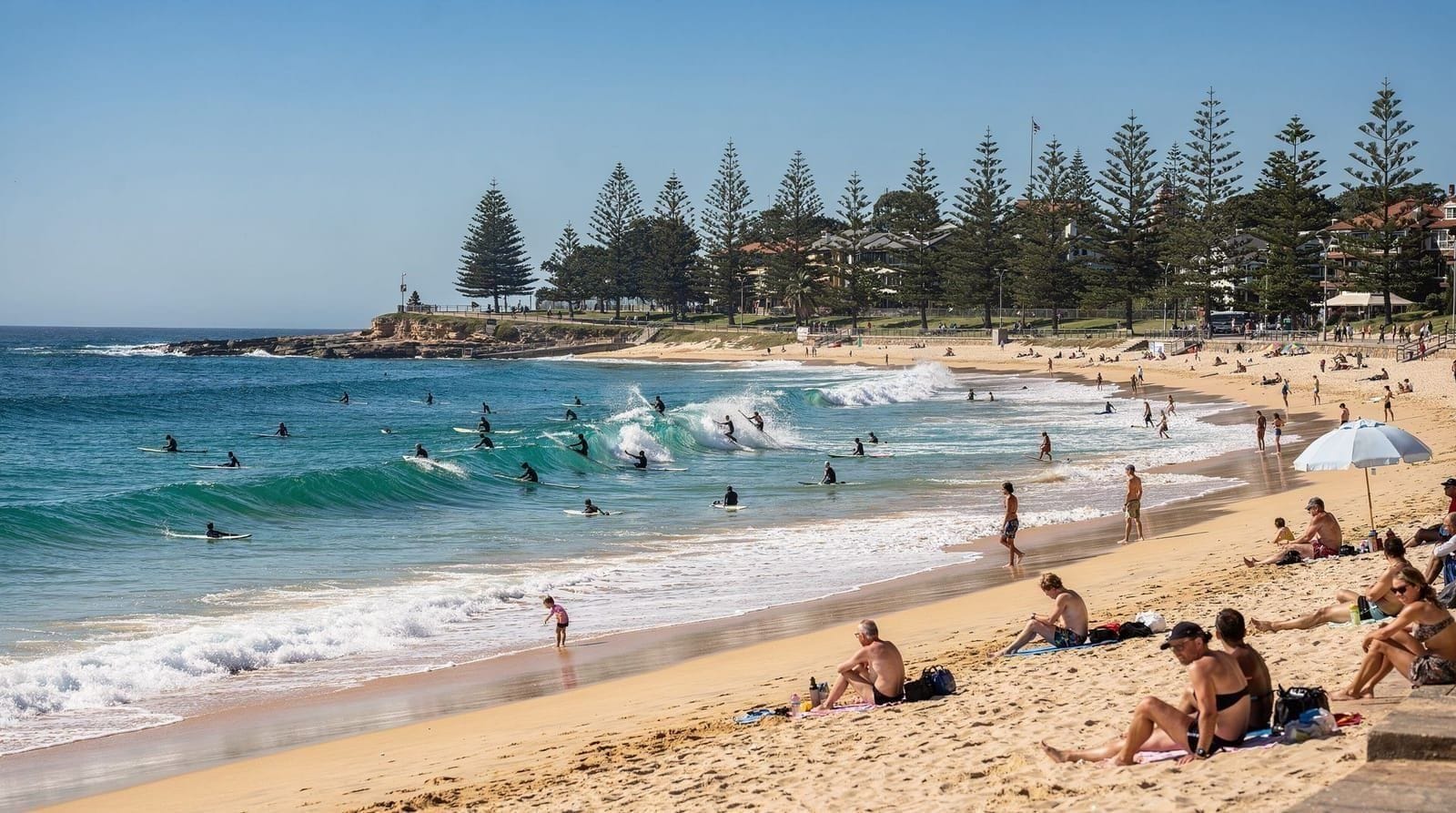
Manly Beach is one of the genuinely beautiful urban beaches in the world. The Corso empties onto the beach’s flat white sand between two arms of Norfolk Island pines that have been here since the 1850s. The surf is rolling in at head height this morning, and the nipper training session (junior surf lifesavers in their orange caps and rashies) is underway at the northern end.
The water in January is 23°C. Swimming before 9 am when the beach patrol has set the flags is technically unofficial, but the beach is watched by professionals from 7 am in summer. A morning swim here — cool water after the warmth of the ferry, the swells rolling you around while the city wakes up behind the hills — is among the purely pleasurable things available in Sydney.
Afterwards, sit at one of the cafes on South Steyne (the road behind the beach) for coffee. The café competition on this strip is intense, which keeps quality high. A flat white runs A$5.50 and it will be properly made.
10:30 am — The Spit to Manly walk, partial
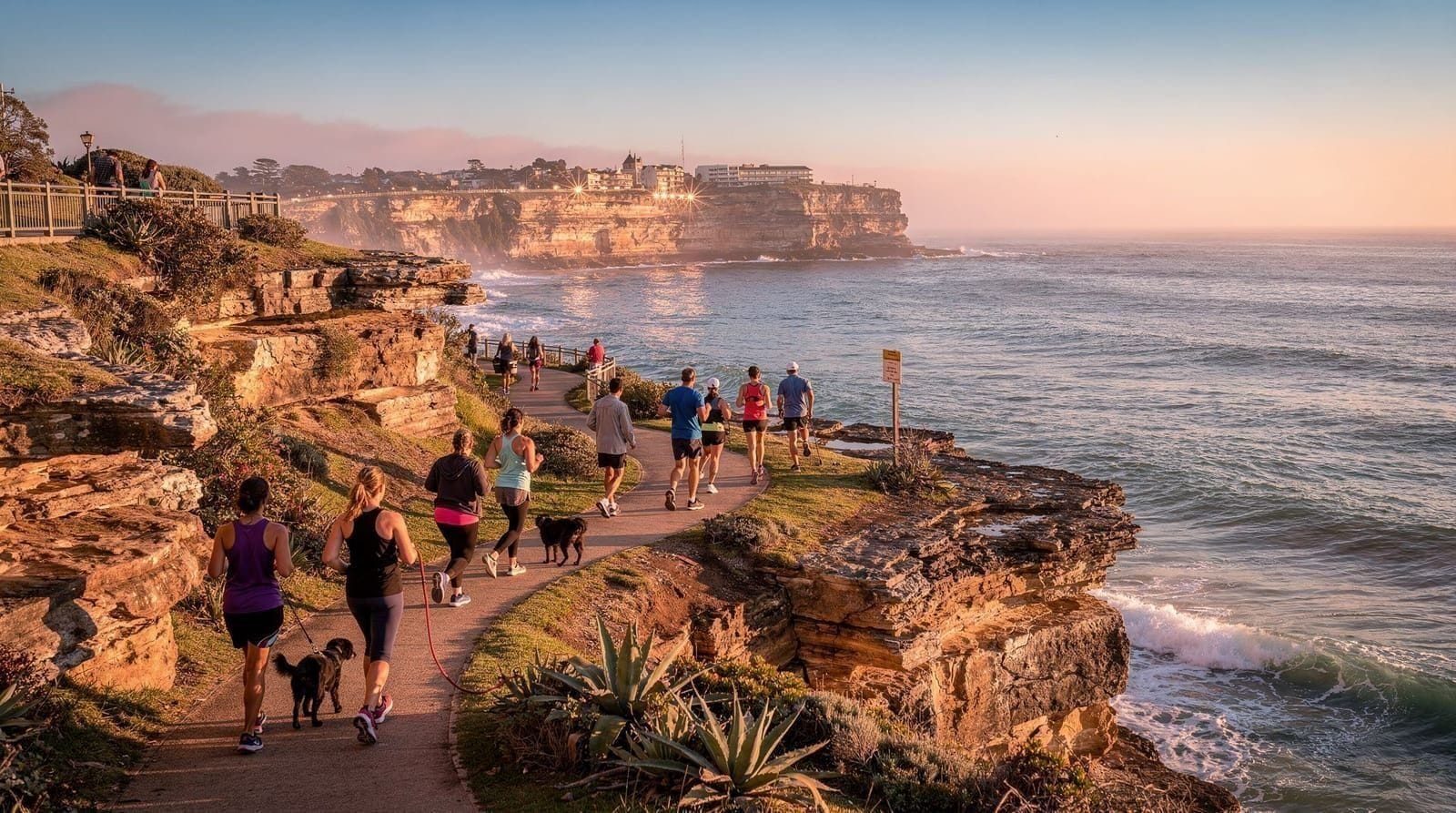
The Manly Scenic Walkway runs 10 km between Spit Bridge and Manly, and on a hot January Sunday doing the whole thing is ambitious. But the first 2 km from Manly itself — walking west along the harbour foreshore through Manly Cove and into Dobroyd Scenic Reserve — is always worthwhile and takes about 45 minutes.
The harbour track here is elevated enough to give you views back toward the Bridge and Opera House that most tourists don’t find because they’re not on the trail system. You pass small protected coves, banksia and grevillea scrub, and the occasional swimmer floating in one of the harbour inlets. This section is genuinely wild in a way that surprises people who expect “urban walkway” to mean concrete.
Return to Manly by the same route or walk back through the backstreets to the Corso for lunch.
12:30 pm — Lunch and the slow return
Manly has a decent lunch culture now independent of its tourist trade. The options at the northern end of the Corso and along Whistler Street include good Japanese, reliable Italian, and a fish and chips option that varies in quality but on a good day justifies the harbour walk. Budget A$22–35 for a sit-down lunch.
The 2 pm return ferry has the afternoon light working in the other direction — coming from the north now, hitting the sandstone of the CBD and the cliffs of the national parks to the south. The opera house sails are visible from about halfway across, and by the time the ferry slides into Circular Quay the whole harbour composition is in front of you.
3:30 pm — The Botanic Garden
Sunday afternoon in the Royal Botanic Garden is a Sydney institution. The garden runs along the harbour east of the Opera House, and the walk along Farm Cove — the crescent of harbour that faces north — is flat, shaded, and consistently beautiful.
There are ibis in the garden who have no dignity and are well aware of it. There are fruit bats hanging in the enormous Moreton Bay figs near the Macquarie Street entrance, visible from below as dark shapes clustered in the canopy. The rose garden near the central avenue is past its best in January (that’s spring and early summer work) but the frangipani and the summer annuals are flowering.
The garden closes at sunset, which in January is 8 pm. Arriving at 3:30 pm gives you four and a half hours, which is too long to walk through systematically but the right amount of time to find a bench and stay in one place for a while, watching the light change on the water.
6 pm — The harbour at evening
The evening light on Sydney Harbour in January is the particular reward of summer. The sun sets behind the western suburbs around 8 pm, but the golden hour starts about 6:30–7 pm when the light drops below the angle of direct glare and begins warming everything horizontal — the water, the stone, the white ferries passing.
Walk from the Botanic Garden back to Circular Quay along the foreshore. The Customs House at Circular Quay has a bar with outdoor seating that catches this light directly. A glass of local wine runs A$16–18 here, which is Sydney harbour pricing, but the view is included and you’ve earned it.
The evening Manly ferry is packed — Sunday evenings, day-trippers returning — but a ferry to Kirribilli (10 minutes) or Neutral Bay (15 minutes) is quieter and gives you the harbour from the north shore at the best hour.
A note on the Sunday Opal cap
Everything above — the Manly ferry, the return ferry, any buses taken during the day — comes under the A$9.65 Sunday Opal cap. You tap on with your Opal card, you go. Once A$9.65 is spent, everything else is free. On a day where you do as much moving around as above, the public transport bill for the full day is no more than A$9.65.
This is, genuinely, a good deal.
7 pm — The decision
By 7 pm on a Sunday you’re in a familiar Sydney situation: the evening is good, you’re not tired enough to go home, and the city has several things to offer depending on what you want to do with it.
Option 1: The Rocks for the Sunday evening, which is lower-key than Saturday but still atmospheric — the old sandstone terraces, the narrow laneways, the heritage pubs that have been selling beer on this same ground since the convict era. The Lord Nelson Brewery Hotel on Kent Street brews its own ales and has been doing so since 1986, which is not particularly long in European terms but is Sydney’s oldest continuously licensed pub.
Option 2: Newtown for the evening, which is completely different — King Street between King and Newtown stations is one of the better strips for casual food and drink in Sydney, and on Sunday evenings it settles into a rhythm that isn’t the manic Friday energy but isn’t the nothing of Monday either. The Courthouse Hotel has outdoor seating under the stars. The vegetarian and vegan options at this end of King Street are extensive enough that they’re not a compromise for anyone.
Option 3: The ferry home via Kirribilli (no additional fare once you have reached the A$9.65 cap), which takes 10 minutes, involves crossing the harbour one final time in the evening dark with the Bridge lit above you and the Opera House marking the eastern shore. This is not a bad way to end any day.
Swapping in a paid highlight
Everything above is free or close to it, but nothing stops you from trading one stop for something booked. The easiest swap is the early morning: if the empty harbour at the Quay appeals to you, a sunrise paddle on the harbour puts you on the water before the ferries get busy, and you can still make a later boat across to Manly. Our early-morning kayak session on the harbour suits people who would rather be on the water than beside it, though it does mean an earlier alarm than the 7:15 am start described here.
If you want a bigger view of the city, the evening is the moment. The Harbour Bridge guide explains the options, and the BridgeClimb guide covers what the climb involves. For this particular day, a twilight climb over the Bridge replaces the Botanic Garden and Customs House legs rather than adding to them, so treat it as a trade, not an extra. The BridgeClimb versus Pylon Lookout comparison is worth reading if the price makes you hesitate.
For a faster pulse, the harbour also has a noisier side. A jet boat ride leaving from Circular Quay is the opposite of the Freshwater ferry’s slow rhythm, and the jet boat guide lays out how the different rides compare. Most people will be happier keeping the day quiet, but it is good to know the choice exists.
Other ways to build the same day
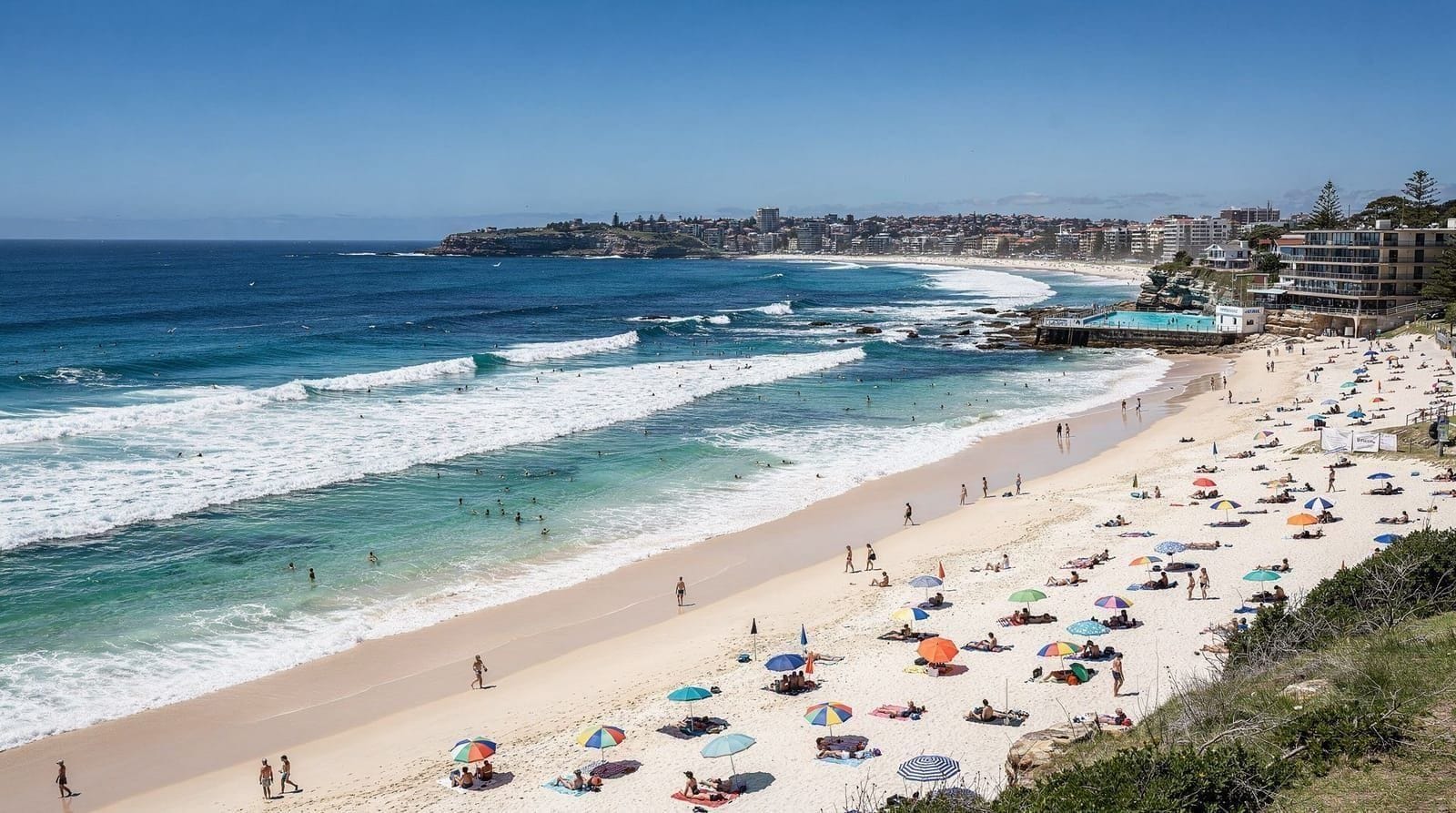
The shape of this Sunday is flexible, and the rest of the site gives you plenty of material to rearrange it. If the beach is the main draw, Bondi versus Manly helps you decide which sand to spend the morning on, and the Bondi to Coogee walk is a good coastal alternative to the Manly foreshore track. If you like water without surf, the Sydney ocean pools guide lists swims that suit a slower Sunday.
For the evening, the Sydney rooftop bars guide and the best bars guide give more choice than the three options above. If you would rather eat well than drift, the best restaurants guide and cheap eats guide cover both ends of the budget. Coffee people should open the Sydney coffee culture guide before the Manly café stop, and our coffee snob blog post goes further.
Not every Sunday has perfect weather, and the rainy day survival guide is the fallback. If you are travelling with a family, the Sydney with kids guide shows how to shorten the plan. For a ferry-focused version of the same idea, read a Sydney ferry day out, and for a different corner of the city, a local weekend in the Inner West. The Sydney ferries guide has the practical detail on wharves and timetables, and the Opal card guide explains how the fare cap works.
What makes a Sydney Sunday different from other cities
The thing that’s specific to Sydney on a Sunday is the relationship between the water and the day. Most world cities have good Sunday infrastructure — parks, markets, café culture, the relative quiet of a day off. Sydney has all of those, plus the harbour, which operates as a kind of public commons on Sundays in a way that’s genuinely distinctive.
The people kayaking across Shelly Beach at 8 am. The dinghy races around the harbour between 10 am and 2 pm. The ferry to Manly that departs every 30 minutes with a passenger mix that includes swimmers and surfers and families and retired couples who’ve been taking this ferry for 40 years. The afternoon swimmers at Balmoral whose dogs wait on the beach. The stand-up paddleboarders rounding Cremorne Point at sunset.
None of this is organised or programmed. It’s just what Sydneysiders do on Sundays because they live here and the harbour is there. Being in the middle of it, even as a visitor, gives you a sense of what the city actually is when it’s not performing for anyone.
The things you don’t do on a perfect Sydney Sunday
Don’t go to Darling Harbour on a Sunday afternoon. The tourist infrastructure there — the convention centre, the restaurants, the SEA LIFE/WILD LIFE complex — is good at what it does, but Sunday afternoon at Darling Harbour is its busiest moment and the contrast with the harbour’s quieter register elsewhere is jarring. Save it for a weekday or a rainy day when the crowding is less.
Don’t try to eat brunch at a famous Bondi café between 10 am and 1 pm. The waits are 40–80 minutes. The food is good but not 80-minute-wait good. Come back at 7 am or 2 pm, or accept that the café strip on Bondi’s Campbell Parade is a lunch crowd rather than a restaurant experience.
Don’t underestimate the Centennial Park option on a Sunday. If you have children, a bicycle, or a desire to sit in the middle of something enormous and green, Centennial Park on a Sunday morning is one of Sydney’s consistent pleasures — and it’s larger than Hyde Park in London, with cycling loops, equestrian tracks, duck ponds, and 47 species of native birds.
The honest conclusion
A perfect Sydney Sunday does not require planning, expense, or anything beyond an Opal card and the willingness to go somewhere. The city’s public infrastructure — the harbour, the parks, the ferry network, the coastal walks — is set up for this kind of low-planning high-reward day in a way that very few cities manage.
The A$9.65 Opal Sunday cap is part of the structure. The harbour is the rest of it. Put them together and you have the day.
Adapting this Sunday to other seasons
The version above is a January (summer) Sunday, but the structure holds year-round with adjustments. In autumn and winter (May–August), the water in Manly drops to 18–20°C — still swimmable for the committed, but the golden hour on the harbour arrives earlier (around 4:30–5 pm rather than 6:30–7 pm) and the Botanic Garden closes as early as 5 pm, so the day compresses by two or three hours. Winter is also whale season on the harbour approach — it’s not unusual to spot a humpback breaching from the Manly ferry between June and October, which the summer version of this day doesn’t offer.
If a swim isn’t the priority, the same shape works starting later — a 9 or 10 am ferry still gets you the quieter Corso before the day-tripper crowds build past 11 am.
Frequently asked questions about A perfect Sydney Sunday
Does this Sunday plan work if you don’t like ferries or get seasickness? Most of it does — the Botanic Garden, The Rocks, and Newtown legs need no boat at all. Swap the Manly ferry for a train to Bondi Beach via Bondi Junction for a land-based equivalent morning.
Is Circular Quay to Manly worth doing on a weekday instead of Sunday? The Sunday Opal cap and the specific quiet-then-crowd rhythm described here are Sunday-specific advantages, but the ferry and Manly beach are good any day. A weekday visit trades the cap savings for even thinner crowds.
For more on planning your time: getting around Sydney, Sydney for first timers, and the Sydney 3-day itinerary.