WILD LIFE Sydney Zoo — complete visitor guide
Sydney: Wild life Sydney optional breakfast with the koalas
What is WILD LIFE Sydney Zoo and is it worth visiting?
WILD LIFE Sydney Zoo is an indoor zoo in Darling Harbour focused on Australian native animals — quokkas, wallabies, wombats, Tasmanian devils, koalas, and crocodiles. It's a convenient CBD option, though smaller and pricier per hour than Taronga Zoo. The Breakfast with the Koalas experience is the standout product. Tickets start from AUD 39 per adult when booked ahead online on weekdays outside school holidays (AUD 49 on the day).
WILD LIFE Sydney Zoo sits immediately next to SEA LIFE Sydney Aquarium on the Darling Harbour waterfront, making the two venues a natural pairing for a full indoor family day in central Sydney. Unlike Taronga Zoo — which covers species from around the world — WILD LIFE focuses exclusively on Australian wildlife, giving it a coherent identity for international visitors who want to see native fauna in a CBD-accessible setting without making the ferry trip to Mosman.
| Where | 1–5 Wheat Road, Darling Harbour |
| Cost | Adult AUD 49 on the day (from AUD 39 online in advance on weekdays outside school holidays), child AUD 36 (from AUD 26) |
| Time needed | Around 1.5–2.5 hours |
| Getting there | Town Hall station + 10-min walk, or light rail to Convention Centre |
| Best time | First 2 hours after opening for the nocturnal house; avoid midday during school holidays |
The zoo occupies a large multi-storey building and is entirely indoor, making it one of the more practical wet-weather options in Sydney. Nine themed habitat zones cover the full breadth of Australia’s distinctive wildlife, from tropical rainforest species to desert-adapted animals.
Location and getting there
WILD LIFE Sydney Zoo is at 1–5 Wheat Road, Darling Harbour — the same address cluster as SEA LIFE Aquarium and Madame Tussauds. Getting there:
- Train: Town Hall station (George Street exit), then a 10-minute walk through the CBD and down Market Street to Darling Harbour
- Light rail: get off at Convention Centre or Pyrmont Bay, then walk to the zoo
- Ferry: Darling Harbour ferry wharf is a 3-minute walk
- Walking from Circular Quay: 20 minutes along the harbourfront via the Museum of Contemporary Art and Barangaroo
There is no practical on-site parking. Arriving by public transport is strongly recommended — Darling Harbour has limited, expensive parking in surrounding stations.
Tickets and pricing
- Adult: AUD 49 on the day (from AUD 39 online in advance on weekdays outside school holidays)
- Child: AUD 36 on the day (from AUD 26 in advance); concession AUD 39 (from AUD 29)
- Children 0–1: free. For current family pricing, check the official WILD LIFE Sydney website.
Booking ahead online can save up to 20%. Timed entry slots are available and advisable during NSW school holidays when the zoo can reach capacity by midday.
Combine with SEA LIFE Sydney Aquarium — book the combo passIf you’re planning to visit both SEA LIFE and WILD LIFE, the Sydney attractions combo pass costs less than buying the tickets individually; check the official WILD LIFE Sydney website for the current saving:
Sydney attractions combo pass — choose 2, 3, or 4 venues including WILD LIFEThe Breakfast with the Koalas experience
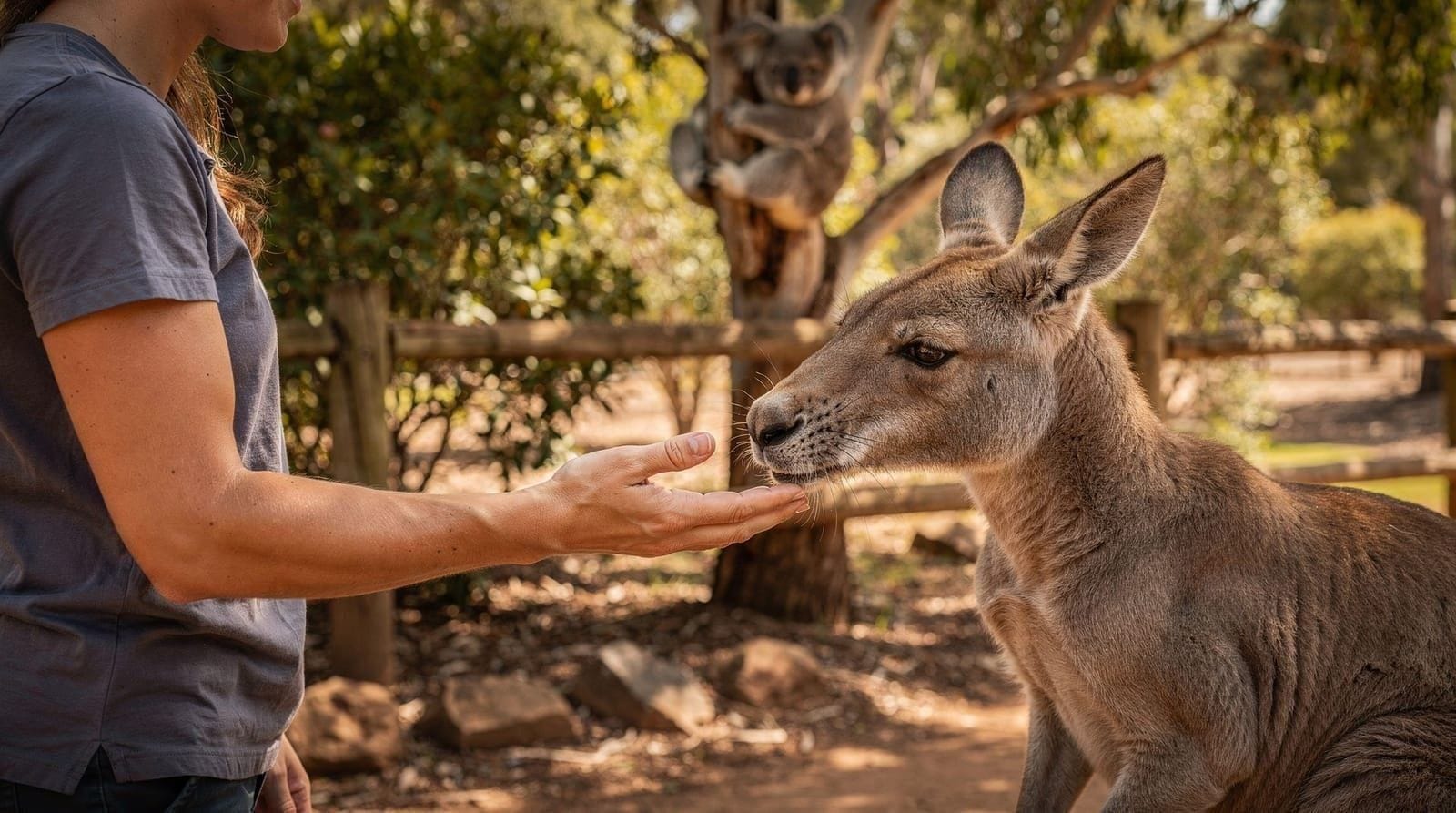
The premium product at WILD LIFE is a small-group morning session in the koala habitat, with a buffet breakfast and a keeper-led presentation about koala biology, conservation, and the zoo’s programme. Group size is limited to around 20 people, so the koala viewing is unhurried. The keeper discusses the animals individually — their names, personality differences, feeding habits — giving it a personal quality that general admission doesn’t.
Cost is from AUD 99 per adult, including zoo entry and a koala photo (7:15–9:30 am, maximum 40 people). The breakfast is a standard buffet (pastries, fruit, coffee, juice) rather than a restaurant-quality meal, but the setting is the point. This is genuinely a good experience for families with koala-enthusiastic children or adults doing a once-in-a-trip wildlife encounter.
WILD LIFE Sydney Zoo — Breakfast with the Koalas experienceNote on koala holding: New South Wales regulations prohibit the public holding of koalas (unlike Queensland and South Australia). The Breakfast experience involves close observation and keeper-assisted photo opportunities, not unsupervised holding.
What’s inside: the nine habitat zones
Butterfly Tropics
The entry exhibit — a large enclosed tropical butterfly garden with hundreds of free-flying butterflies. The space is warm, humid, and bright; butterflies from multiple species land on visitors without provocation. This is consistently the exhibit that most surprises adult visitors who expected a serious wildlife zoo and get something more theatrical. For children, it’s immediately engaging. Photographers in particular respond well to this zone.
Woodland
Australia’s temperate woodland species — including the greater glider, mountain pygmy possum, and various native birds. The exhibit simulates the eucalyptus woodland of southeast Australia. Lighting is naturalistic; animals may be sheltering or sleeping depending on time of visit.
Nocturnal House
One of the more scientifically interesting exhibits. Housing bilbies, bettongs (small rat-kangaroos), eastern barred bandicoots, and brushtail possums in artificial nighttime conditions, the nocturnal house allows visitors to observe animals that are genuinely active at this time. Bilbies in particular are engaging — large rabbit-like ears, pointed noses, and rapid burrowing behaviour. The bilby is critically endangered in the wild, primarily due to introduced predators (foxes and cats). This exhibit has conservation significance beyond entertainment.
Koala Walkabout
The main draw of the general admission experience. A multi-level walkabout allows viewing of koalas at tree height via elevated platforms — a better angle than looking up at them from ground level. Koalas sleep up to 20 hours per day, so they’re typically sitting still in a fork or against a branch, eyes half-closed. The proximity is impressive; you can observe the texture of their fur, their long curved claws (adapted for gripping bark), and the leaf-pungent smell of their breath at close range.
Wombat Walkabout
A short walkthrough enclosure with southern hairy-nosed wombats. Wombats are one of Australia’s more underrated animals — compact, powerful, and surprisingly fast. The walkthrough design means you’re in the enclosure with them at ground level. Animals may approach for food if keeper staff are present during feeding times. This exhibit works particularly well for children, who are roughly wombat height.
Wallaby Cliffs
A simulated sandstone cliff face with a small group of rock wallabies. Rock wallabies are smaller than kangaroos, with more dexterous feet adapted for climbing rocky surfaces. The exhibit demonstrates this behaviour in a way that flat ground enclosures can’t.
Tasmanian Devil exhibit
One of the most iconic Australian animals. Tasmanian devils are the world’s largest surviving carnivorous marsupial — the size of a medium dog with a bite force disproportionate to their body weight. The species is endangered due to devil facial tumour disease, a contagious cancer. The exhibit includes background on the conservation programme and the zoo’s involvement in the insurance population. Feeding presentations are scheduled daily; outside feeding times, the animals may rest.
Crocodile habitat (freshwater and saltwater)
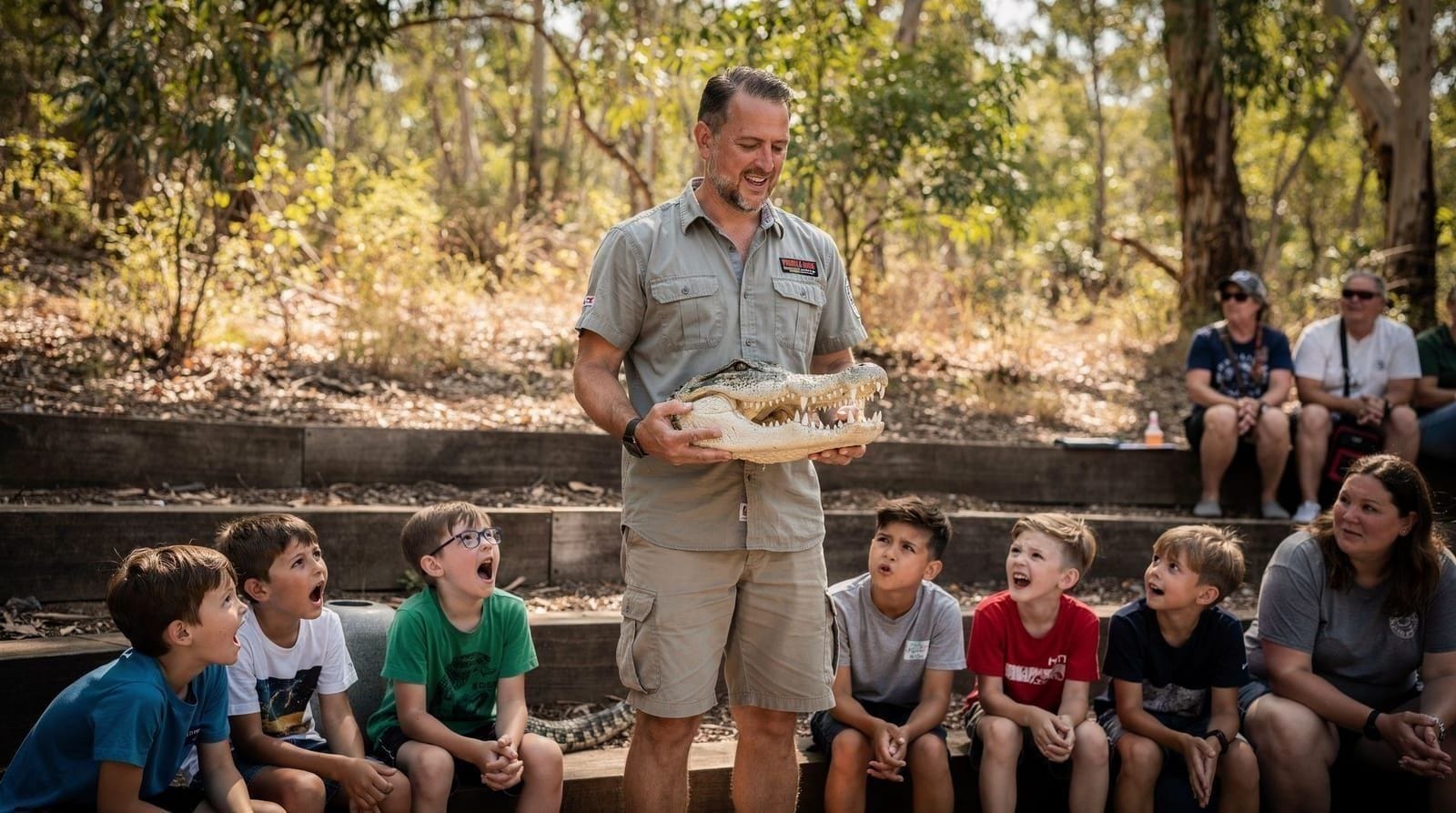
The zoo has both freshwater and saltwater crocodile exhibits. The saltwater crocodile is Australia’s largest reptile — in the wild, males can reach 6 metres and 1,000 kg. The zoo’s specimen is substantial enough to convey the scale of the animal. Saltwater crocodiles are the most dangerous apex predator in Australia’s north; the exhibit design makes this clear through the context provided.
The crocodile display here is more interesting than SEA LIFE’s crocodile exhibit. For the most impressive crocodile presentation in the Sydney region, however, the Australian Reptile Park at Somersby has larger animals and a dedicated feeding programme.
Quokka habitat
One of the very few places to see quokkas on the east coast of Australia. Quokkas are native to southwestern Western Australia (mainly Rottnest Island near Perth), and the Darling Harbour population represents a significant convenience for visitors who can’t travel across the continent. The animals have become famous on social media for their facial expression — a natural upward curve of the mouth that reads as a smile. The exhibit is modest in size but the animals are always engaging.
Comparing WILD LIFE to Taronga Zoo
The choice between WILD LIFE Sydney Zoo and Taronga Zoo is one of the most frequent questions for Sydney visitors interested in Australian wildlife:
Choose WILD LIFE if:
- You want Australian animals only and don’t want to take the ferry
- You have 1.5–2.5 hours rather than a full day
- You’re combining with SEA LIFE Aquarium (next door) for a full Darling Harbour morning
- You want the Breakfast with the Koalas experience in a CBD-accessible setting
- Rain or extreme heat has made outdoor plans impractical
Choose Taronga Zoo if:
- You want a world-class zoo with international species (gorillas, giraffes, snow leopards)
- You want the 12-minute harbour ferry experience as part of the day
- You’re happy to spend 4–6 hours and can manage a hilly terrain
- You specifically want the best harbour views combined with wildlife
Both is not unreasonable for a multi-day Sydney trip — the collections don’t substantially overlap (WILD LIFE Australian fauna, Taronga broad international including Australian), and they’re genuinely different experiences. See best zoos and aquariums in Sydney for a full comparison.
Practical advice: visiting tips
Time your visit around the Nocturnal House. Animals in the nocturnal zone are most reliably active in the first 2 hours after opening (10–12 PM) when the exhibit is dark relative to the outside and the animals haven’t been disturbed by heavy visitor traffic.
Check keeper presentation schedules. Tasmanian devil feedings and koala keeper talks are the most worthwhile. Times are posted at the entrance on a daily board. Arriving early enough to catch the morning presentation is worth it.
Combine with SEA LIFE on the same day. The exhibits are designed to complement each other — SEA LIFE covers marine Australia, WILD LIFE covers terrestrial Australia. Combined they represent a thorough overview of Australia’s distinctive wildlife in a single Darling Harbour visit.
Food inside the zoo: There is a small cafe at WILD LIFE with standard cafe fare at elevated prices. Better options are a 5-minute walk away in the Darling Harbour precinct. Bring snacks for children rather than relying on the internal cafe.
Accessibility: The zoo is fully wheelchair and pram accessible throughout — lifts between all levels, wide corridors, accessible toilets on each floor.
Visiting WILD LIFE as a solo adult or couple (without children)
WILD LIFE is often categorised as a family attraction, but it works well for adult visitors with a genuine interest in Australian wildlife. The nocturnal house, in particular, is more engaging for adults than for many children — the bilby, bettong, and bandicoot conservation context is interesting to anyone who understands Australia’s conservation crisis with small marsupials.
The butterfly garden is also reliably enjoyed by adults — the scale, colour, and the novelty of large tropical butterflies landing on you is simply pleasant regardless of age.
For adults visiting as a couple or solo, allow 1.5–2 hours and focus on the exhibits that reward longer observation: the nocturnal house, the koala platforms (especially when a keeper is present), and the Tasmanian devil feeding presentation.
WILD LIFE and the broader Darling Harbour day
Darling Harbour as a precinct offers more than just the wildlife venues. A full Darling Harbour day might look like:
- 10 AM: Arrive at WILD LIFE (or SEA LIFE) — spend the morning
- 12:30 PM: Lunch at Cockle Bay Wharf or Pyrmont Bridge Hotel (better value than the tourist waterfront restaurants)
- 1:30 PM: Second venue (SEA LIFE or WILD LIFE)
- 4:00 PM: Walk to the Chinese Garden of Friendship (small entry fee, serene)
- 5:00 PM: Australian National Maritime Museum (free quay exhibits)
- 6:30 PM: Dinner in Darling Harbour or walk back to the CBD via King Street Wharf
The precinct is connected by the Pyrmont Bridge pedestrian walkway, which gives views over Darling Harbour and the city skyline. The walk from King Street Wharf along the waterfront to the aquarium takes about 8 minutes and is pleasant.
Conservation programmes at WILD LIFE Sydney Zoo
WILD LIFE is accredited by Zoo and Aquarium Association Australasia and participates in several conservation breeding programmes, including the Tasmanian devil recovery programme (responding to devil facial tumour disease) and the bilby insurance population. Staff in the nocturnal house are usually willing to discuss these programmes in detail with interested visitors.
The zoo also runs community education programmes and school group visits aligned with the Australian curriculum. If you’re visiting with a school group, the zoo’s education team provides pre-visit materials.
Honest assessment
WILD LIFE Sydney Zoo is a well-designed, professionally maintained attraction that delivers on its proposition: a comprehensive Australian wildlife experience in a convenient CBD location. It doesn’t try to compete with Taronga Zoo on breadth — it’s a focused Australian collection — and this clarity of purpose works well. The butterfly garden and nocturnal house are genuinely excellent; the koala platforms deliver close-proximity viewing that the bigger zoo can’t always match. The price is high relative to the 2-hour duration, but this is consistent with Sydney’s major attractions market.
For visitors with limited time who want Australian wildlife without the ferry trip to Mosman, WILD LIFE is the right choice. For a comprehensive zoo experience, Taronga is the better day. For hands-on animal encounters at lower cost, Featherdale Wildlife Park offers more tactile experiences per dollar.
How WILD LIFE fits a rainy-day or family itinerary
Because it’s entirely indoor, WILD LIFE is one of the most reliable wet-weather options in central Sydney, alongside the Art Gallery of NSW and the Australian Museum (both free general entry). If you’re building a broader wet-weather plan, the Sydney rainy day survival guide covers other options across the city, and the rainy day Sydney with kids guide focuses specifically on family logistics.
If you’re visiting with toddlers rather than school-age children, note that the walkabout-style enclosures (Wombat Walkabout in particular) work well at toddler eye level — see Sydney zoos for toddlers for age-specific advice across all of Sydney’s wildlife venues, including how WILD LIFE compares to Taronga’s dedicated kids’ zones.
Booking timing and avoiding queues
NSW school holiday periods are the main crowding risk — timed-entry tickets sell out for popular midday slots, and the Koala Walkabout in particular gets three-deep at the rail by early afternoon. Booking the first available timed slot of the day avoids most of this. Outside school holidays, walk-up availability on weekdays is generally fine, though booking ahead online on weekdays can still save up to 20%.
Top experiences
Bookable activities with verified prices and instant confirmation on GetYourGuide.