Australian Reptile Park — visitor guide (Central Coast)
Somersby: Australian reptile park day pass
Is the Australian Reptile Park worth the trip from Sydney?
Yes, if you have a full day and access to a car. The park at Somersby (Central Coast) is 1 hour from Sydney and offers encounters you can't get in the city — platypus, platypus egg hatching (seasonal), spider milking shows, crocodile feedings, and hands-on interactions with pythons and blue-tongue lizards. Adult entry is AUD 58.99 at the gate (AUD 53.99 online). Not ideal without a car.
The Australian Reptile Park is located at Somersby on the Central Coast of New South Wales, about 80 km north of Sydney — roughly 1 hour by car. It is not a day trip easily done without a vehicle, but for visitors with access to a car (or willing to join an organised tour), it offers experiences that genuinely don’t exist in Sydney’s CBD wildlife venues. Specifically: platypus in captivity, live spider venom milking demonstrations, large saltwater crocodile shows, and some of the most accessible reptile handling experiences in Australia.
| At a glance | |
|---|---|
| Where | Somersby, Central Coast NSW (around 80 km / 1 hour north of Sydney) |
| Cost | Adult AUD 58.99 at the gate (AUD 53.99 online), child AUD 36.99 (AUD 32.99 online), family pass AUD 159.99 (AUD 145.99 online) |
| Time needed | Around 3–4 hours for a thorough visit |
| Getting there | Car via the M1 recommended; train to Gosford + taxi possible but slower |
| Best time | Arrive near 9am opening for the best chance of active platypus and the first spider/crocodile shows |
The case for visiting
Most of Sydney’s wildlife parks focus on the charismatic mammals — koalas, kangaroos, wombats. The Reptile Park covers those too (there’s a dedicated mammal area), but the point of difference is its reptile and arachnid programme. The park is the only facility in Australia that milks venomous spiders and snakes for antivenoms used in hospitals nationally — it saves an estimated 300 lives annually. This background gives the park an unusual depth beyond tourist entertainment.
Australian Reptile Park day pass — book onlineKey exhibits and shows
Spider milking demonstration
Keepers demonstrate the venom extraction process from Sydney Funnel-Web Spiders (one of the world’s most venomous spiders). The process is shown from behind glass, but the explanation of the antivenoms programme is genuinely educational. This is the park’s signature attraction and the primary reason many adults visit specifically.
Crocodile feeding
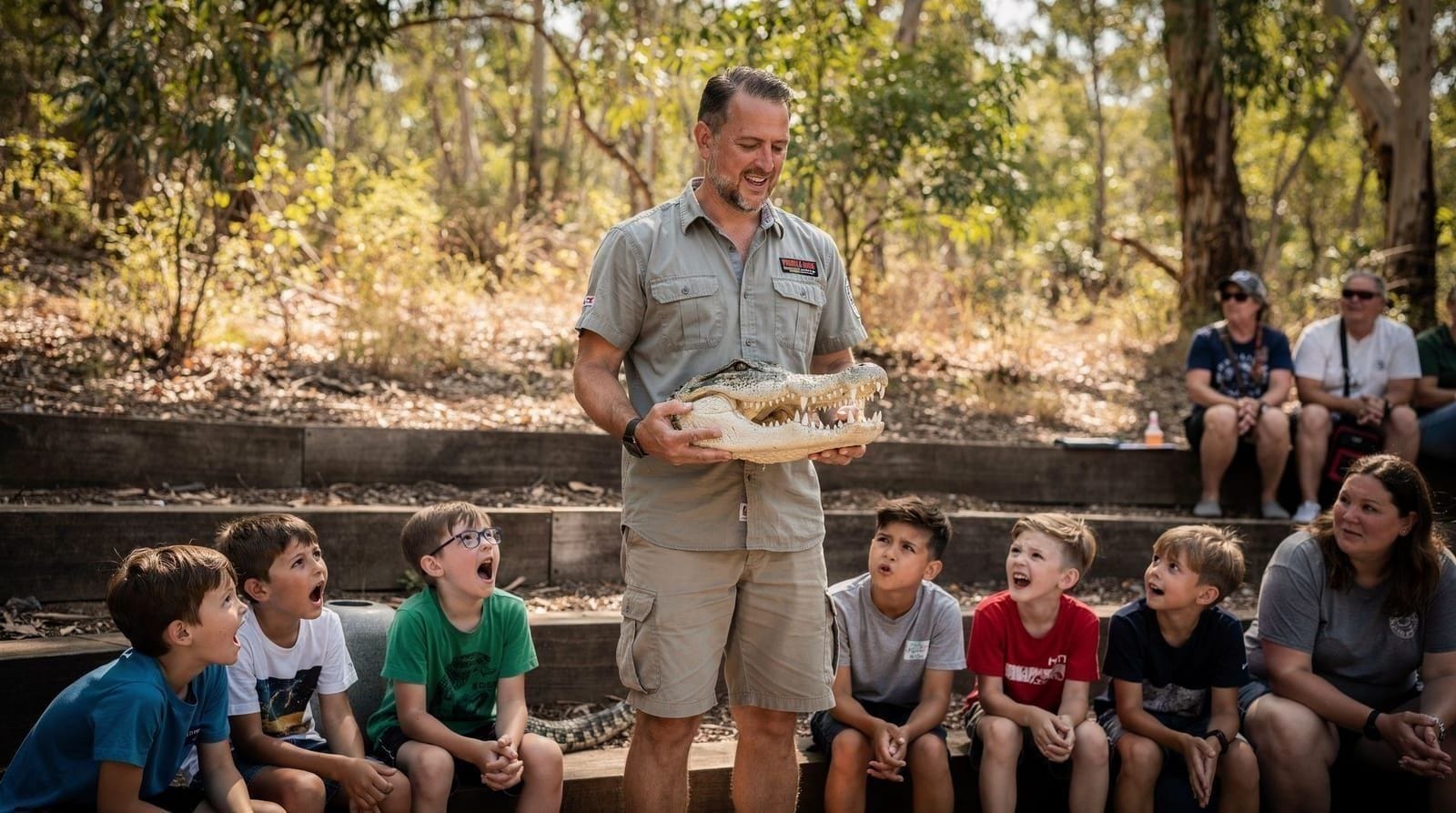
The Reptile Park has both freshwater and saltwater crocodiles. Saltwater crocodiles are fed on a schedule (check the daily programme board at entry) — a staff member with a long pole lowers meat into the enclosure while explaining the animal’s biology. The behaviour during feeding is spectacular and the park’s crocodile is a large adult specimen.
Platypus
One of the most difficult Australian animals to see in the wild or captivity. The Reptile Park has a dedicated platypus habitat with viewing opportunities. Platypuses are most active during feeding — a morning arrival (park opens at 9 AM) gives you the best chance of seeing them swimming rather than sheltering.
Reptile handling
Staff conduct snake handling presentations Photo sessions with a python, baby alligator or koala are held daily (11:30 am and 2:30 pm in the current schedule).
Alligator Bay and lizard habitats
American alligators share space with large Australian goannas (monitors) and several python species. The park also has a substantial collection of bearded dragons, thorny devils, and bluetongues in individual enclosures.
Mammal section: koalas, wombats, kangaroos
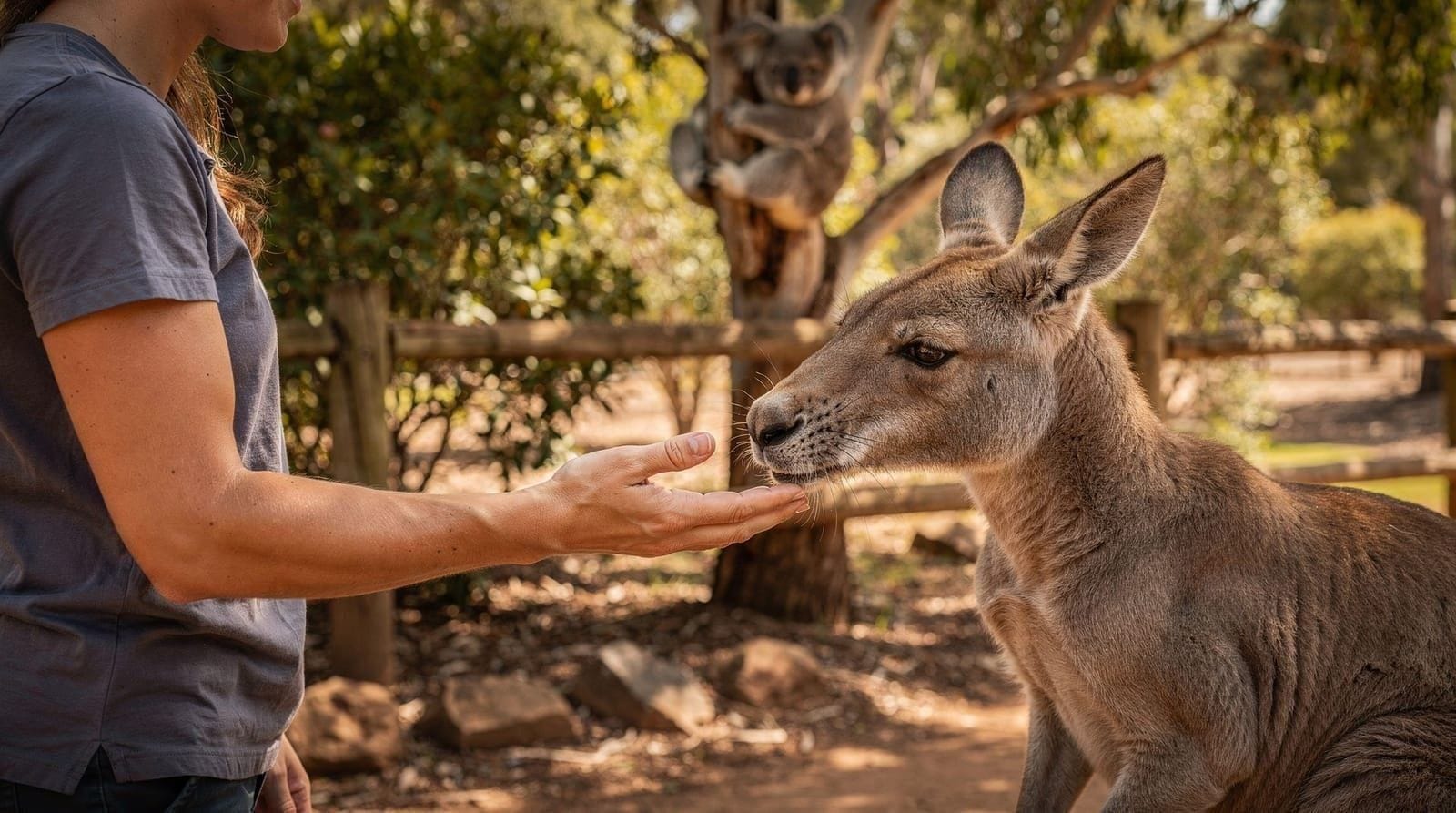
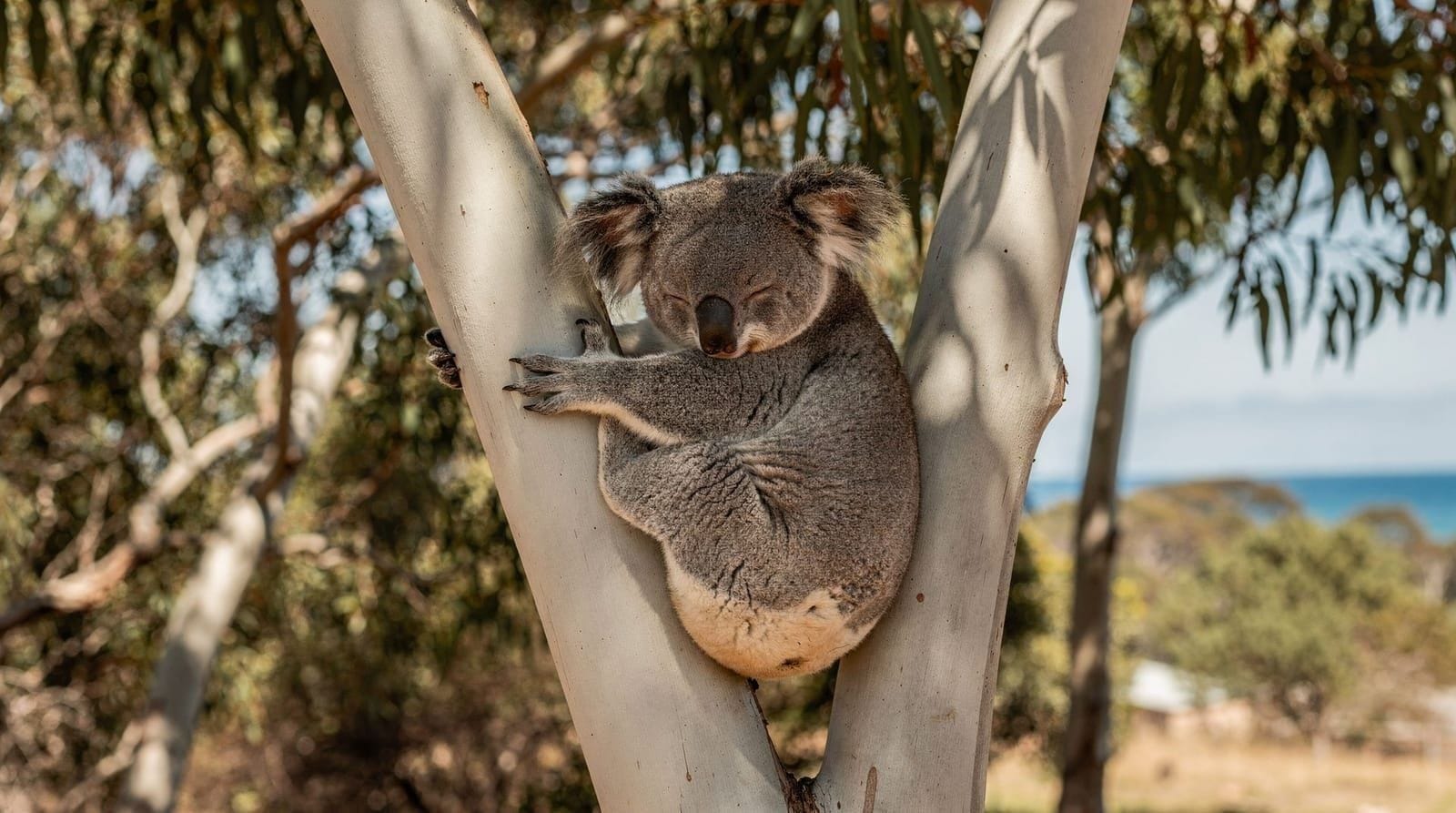
The park has a solid native mammal section with koalas, free-roaming kangaroos and wallabies, wombats, quolls, and echidnas. Kangaroos can be hand-fed from animal food purchased at entry. While this section is good, it’s not the Reptile Park’s primary appeal — Featherdale Wildlife Park in Western Sydney does the hands-on mammal experience equally well and is more accessible from the CBD.
Getting there
By car (recommended)
From Sydney CBD, take the Pacific Motorway (M1) north to Exit 152 (Gosford/Central Coast). Somersby is just off the highway. Drive time from the CBD is approximately 60–75 minutes in light traffic; allow 90 minutes with morning peak congestion. The park has ample free parking on-site.
By train + taxi
Train from Central Station to Gosford (about 75 minutes on the Central Coast Line). From Gosford station, a taxi or rideshare to the park is about 10–15 minutes. This is feasible but makes the return trip dependent on rideshare availability in a suburban area — not ideal.
By organised tour
Some day tour operators combine the Reptile Park with nearby Central Coast beaches (Avoca Beach is 20 minutes away). This is the best option for visitors without a car:
Sydney: Reptile Park and Avoca Beach day trip from SydneyTickets and pricing
- Adult: AUD 58.99 at the gate (AUD 53.99 online)
- Child (3–15): AUD 36.99 (AUD 32.99 online)
- Under 3: free
- Family (2 adults, 2 children): AUD 159.99 (AUD 145.99 online)
The park is open 9:00 AM to 5:00 PM daily. Closed Christmas Day.
Practical information
- Address: 1 Pacific Highway, Somersby NSW 2250
- Duration: 3–4 hours for a thorough visit including all shows
- Facilities: On-site cafe and kiosk, picnic areas with shade, accessible toilets
- Accessibility: Good accessibility across most areas; some paths are gravel
- Best for: Families with children 5+, adults interested in reptiles and venomous animals
The antivenom programme: why the park matters beyond tourism
The Australian Reptile Park’s snake and spider milking programme is not incidental to its identity — it is the primary reason for the park’s scientific significance. Australia’s funnel-web spiders (of which there are over 40 species, with the Sydney Funnel-Web being the most dangerous) produce venom that acts on the human nervous system and can cause death within hours. Before the development of antivenom in 1980, Sydney Funnel-Web bites were frequently fatal.
The antivenom production process requires a continuous supply of live venom. The Park collects donated live Sydney Funnel-Web Spiders from the public (residents regularly find them in their gardens) and milks them twice weekly. Each spider produces only a tiny amount of venom — 0.2 mg on average — so large numbers are needed. The venom is sent to bioCSL (now Seqirus) for antivenom production.
Since the antivenom became available in 1980, there have been no recorded deaths from Sydney Funnel-Web Spider bites in Australia. The Park has run its venom programme throughout this time; see the official Australian Reptile Park website for current figures. This gives the milking demonstration a significance beyond spectacle: you’re watching a process that has saved hundreds of lives.
The same programme operates for eastern brown snakes, one of the world’s most venomous snakes and responsible for the majority of snake bite deaths in Australia.
Combining the Reptile Park with a Central Coast day
The park’s location 80 km north of Sydney on the Pacific Highway makes it convenient to combine with other Central Coast activities. The Central Coast’s appeal for families extends well beyond the park itself:
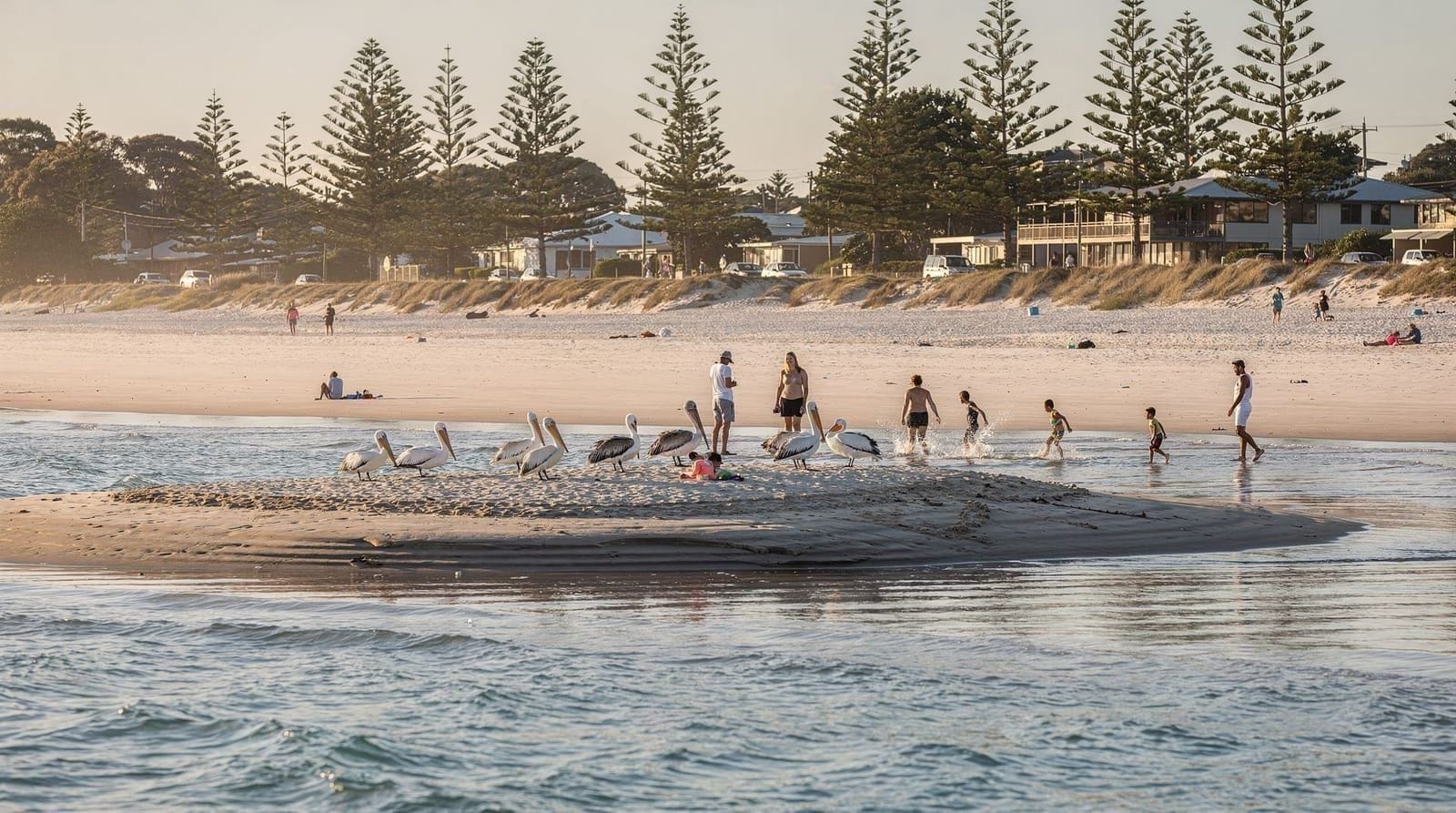
Avoca Beach (20 minutes from Somersby): A patrolled surf beach in a small coastal village. Less crowded than Sydney’s eastern beaches, with a good cafe strip and a lagoon behind the beach that is calmer for young children. One of the better beach day destinations accessible from Sydney.
Terrigal (25 minutes from Somersby): A larger coastal town with an excellent patrolled beach, good restaurant strip, and a rockpool at the headland that works well for younger children. The Haven (northern end of Terrigal) is a calmer swimming area.
Gosford Waterfront and HMAS Adelaide Dive Site: Gosford is the Central Coast’s main town. The HMAS Adelaide is a decommissioned warship sunk as an artificial reef off Avoca Beach — a world-class dive site for certified divers, though not relevant to family visitors.
A practical day structure with a car: Reptile Park 9 AM–12 PM (including the spider milking show and crocodile feeding), then drive 20 minutes to Avoca Beach for lunch and a swim, return to Sydney via the M1 motorway in the late afternoon.
Planning for the shows
The spider milking and crocodile feeding are the two time-sensitive experiences. Check the current schedule on the park website or at the entrance board. Snake milking runs at 10:30 am; check the daily show times on the park website.
Keeper talks for other animals (wombats, echidnas, Tasmanian devils) are additional scheduled sessions. The daily programme is posted at the entrance each morning.
Accessibility and families with young children
The park is largely accessible — most main pathways are sealed or compacted gravel, and the main areas are flat. Some off-path areas near the waterway exhibits are gravel. Prams work throughout the standard visitor circuit.
Children under 5 get less from the spider milking (the biology explanation is detailed) but respond well to the crocodile show (visually dramatic), the snake handling demonstrations, and the kangaroo hand-feeding area. The platypus display (where present) is a consistent hit with all ages.
Honest assessment
The Reptile Park is a legitimate, important wildlife facility that does serious conservation work alongside its tourism operation. It’s not the most polished attraction in the region — facilities are functional rather than glamorous — but the shows are educational and the animal collection is genuine. The spider milking and crocodile feeding alone justify the entry price for most visitors who make the trip.
The location is the main barrier. Without a car, the logistics are cumbersome enough that most Sydney visitors will reasonably skip it in favour of more accessible options. If you’re doing a Central Coast day trip and have a car, it’s worth including as a morning or afternoon stop before heading to a beach. The combination of genuine scientific work, accessible wildlife encounters, and proximity to good beaches makes the Australian Reptile Park a distinctive day out that Sydney’s CBD wildlife venues can’t replicate.
For an alternative wildlife experience closer to the CBD, see Featherdale Wildlife Park. For a full overview of Sydney’s wildlife options, see best zoos and aquariums in Sydney.
Frequently asked questions about the Australian Reptile Park
Do I need to be interested in reptiles to enjoy the Australian Reptile Park?
No. The park has significant non-reptile content — the kangaroo and wallaby feeding area, koala viewing, wombats, echidnas, and the platypus exhibit all appeal to visitors with broader wildlife interests. The spider milking demonstration is scientifically interesting regardless of your feelings about spiders. The crocodile feeding is visually dramatic for anyone. Most visitors who are not reptile enthusiasts find the park more enjoyable than expected.
Is the Australian Reptile Park suitable for young children (under 5)?
Yes, with some caveats. The free-roaming kangaroo and wallaby area is excellent for young children. The koala viewing and wombat encounters are good. The spider milking demonstration involves a glass barrier and may be better suited to children aged 5+ who can understand the presentation. The crocodile feeding is dramatic and some toddlers find the noise (a large crocodile striking at food creates a loud snap) startling. Overall, young children enjoy Featherdale more than the Reptile Park purely on the tactile animal encounter dimension.
Can you see platypus at the Australian Reptile Park?
Platypus have been part of the park’s collection and are one of the more remarkable encounters the park offers — platypus are notoriously difficult to see in the wild and very few facilities outside Australia hold them. However, platypus availability can vary; check the park’s website or social media for current exhibit status before making a specific trip.
What is the best way to get to the Australian Reptile Park without a car?
The most practical public transport option is train to Gosford (from Central Station, 75 minutes on the Central Coast Line), then taxi or rideshare to the park (10–15 minutes). Rideshare availability at Gosford station varies — Uber typically has vehicles available but wait times can be 5–10 minutes. Returning to Sydney, arrange your rideshare pickup before you’re ready to leave to avoid a long wait in a suburban area. The organised tour option (departing from central Sydney) is significantly easier if you don’t want to manage these logistics independently.
How does the Australian Reptile Park compare to Featherdale Wildlife Park?
They serve different purposes. Featherdale, in Western Sydney, is closer to the CBD and better for hands-on mammal encounters (koalas, kangaroos, wombats) without the drive. The Reptile Park’s distinguishing strength is its reptile and arachnid programme — the spider milking and crocodile feeding shows, plus the antivenom conservation story, are not replicated anywhere in the city. See the Taronga vs Featherdale comparison for how the CBD options stack up, and treat the Reptile Park as the pick if reptiles and the venom-milking programme specifically interest you and you have a car.
Central Coast day trip context
If the Reptile Park is one stop on a broader Central Coast day, the Central Coast day trip guide lays out a fuller itinerary covering the beaches and towns mentioned above. For families weighing whether a car-dependent day trip like this is worth it against staying closer to the city, the best zoos and aquariums in Sydney guide and koalas near Sydney guide cover the more accessible alternatives.
Top experiences
Bookable activities with verified prices and instant confirmation on GetYourGuide.