Sydney in summer — what to expect December to February
Sydney: Guided transparent kayak tour of Manly cove beaches
What is Sydney like in summer (December to February)?
Sydney summer is hot, expensive and crowded. Temperatures average 24–30°C with heatwaves to 40°C+ in January. It is the most expensive time to visit — accommodation costs 40–60% more than winter. The advantages are long days, excellent beach swimming, New Year's Eve fireworks, and Mardi Gras in late February. Plan for heat management and book everything months in advance.
| At a glance | |
|---|---|
| When | December to February |
| Cost | Highest of the year — accommodation around 40–60% above July rates |
| Weather | Hot, 24–30°C average, heatwaves to 40°C+ possible in Jan/Feb |
| Best for | Beach swimming, long evenings, NYE, Mardi Gras (late Feb) |
| Book ahead | Yes — 4–6 months for NYE, several weeks for January generally |
Sydney’s summer (December through February) is the most intensely marketed travel period and the one that generates the most mixed visitor experiences. This guide gives you the honest picture.
Weather in Sydney summer
| Month | Average high | Average low | Rainfall days | Sea temp |
|---|---|---|---|---|
| December | 26°C | 18°C | ~10 days | 22°C |
| January | 26°C | 19°C | ~11 days | 23°C |
| February | 26°C | 20°C | ~12 days | 24°C |
These averages undersell the heat extremes. Sydney has experienced multiple consecutive days above 40°C in January and February in recent years. During heatwaves:
- The western suburbs and inland areas reach 42–47°C while the coast stays at 32–36°C
- Air conditioning in accommodation goes from nice-to-have to essential
- Outdoor activities between 11am–4pm are genuinely uncomfortable for most visitors from cooler climates
- Humidity rises in February (Feb is wetter than January)
UV index in December–February regularly reaches 14–16 (extreme scale). This is the most dangerous UV period in Australia. SPF 50+ sunscreen, a hat and avoiding prolonged unprotected sun exposure are not optional. See the Sydney safety guide for detail.
Costs in summer
Summer is the most expensive period across the board:
- Accommodation: 40–60% more expensive than July. A 3-star hotel room in the CBD runs AUD 250–380 in January vs AUD 180–240 in July.
- Flights: Summer school holidays (mid-December to late January) generate peak demand. Intra-Pacific routes are particularly affected.
- Tours and activities: Whale watching is not in season, but harbour cruises and popular experiences remain fully priced.
NYE in particular requires accommodation booked 4–6 months in advance for anything near the harbour. Good hotel rates around Circular Quay for 31 December routinely exceed AUD 600–1,000 per night.
What summer is good for
Beach swimming: Ocean temperatures of 22–24°C make December–February the best swimming months. Bondi, Manly, Coogee, Bronte and the northern beaches are at their most inviting. Early morning swims (before 9am) beat the crowds and the worst UV.
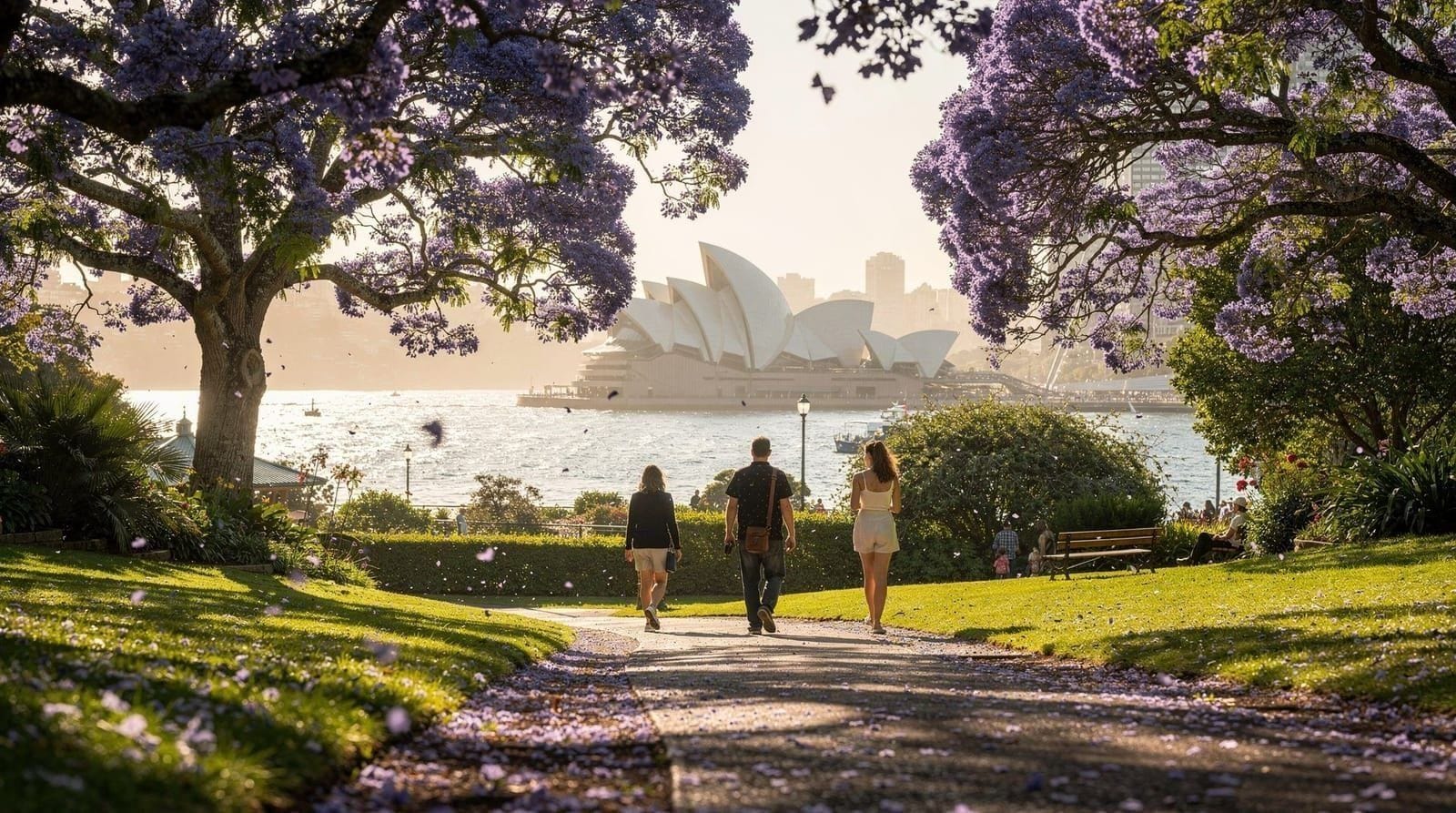
Long days: December days in Sydney run approximately 14 hours of daylight. Sunset after 8pm gives evening outdoor time that simply does not exist in winter. Harbour sunsets at 8:15pm with a cold drink are among Sydney’s better summer moments.
Outdoor dining and live music: Summer is peak season for outdoor festivals, pub gardens and harbour-facing restaurants. The City of Sydney runs outdoor cinema (Moonlight Cinema at Centennial Park, Open Air Cinema at Mrs Macquaries Point) through summer.
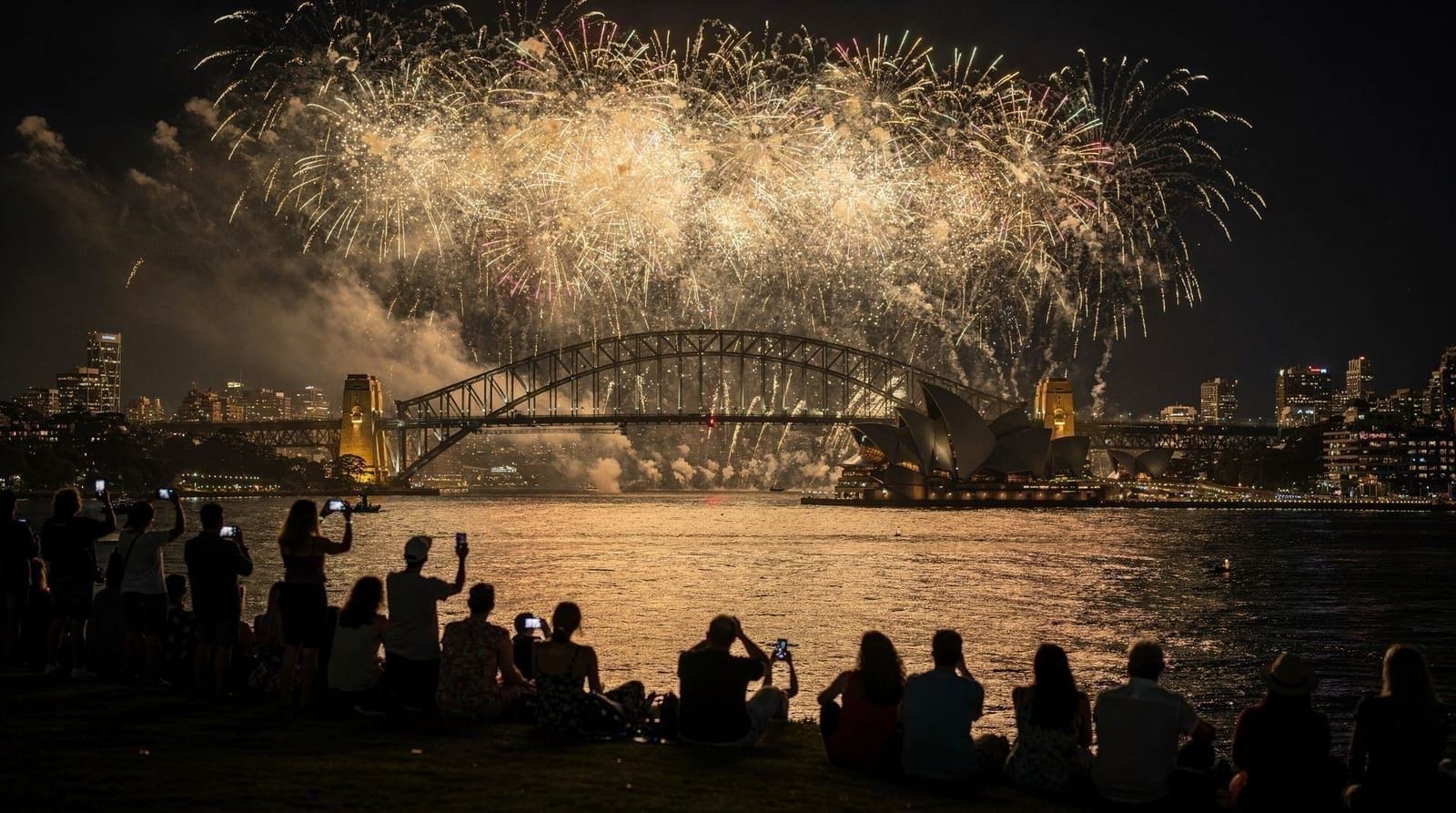
NYE fireworks: Sydney Harbour’s New Year’s Eve fireworks are a genuine world spectacle — one of the first major NYE events of the global calendar (Sydney is UTC+11 in summer). See the dedicated NYE guide.
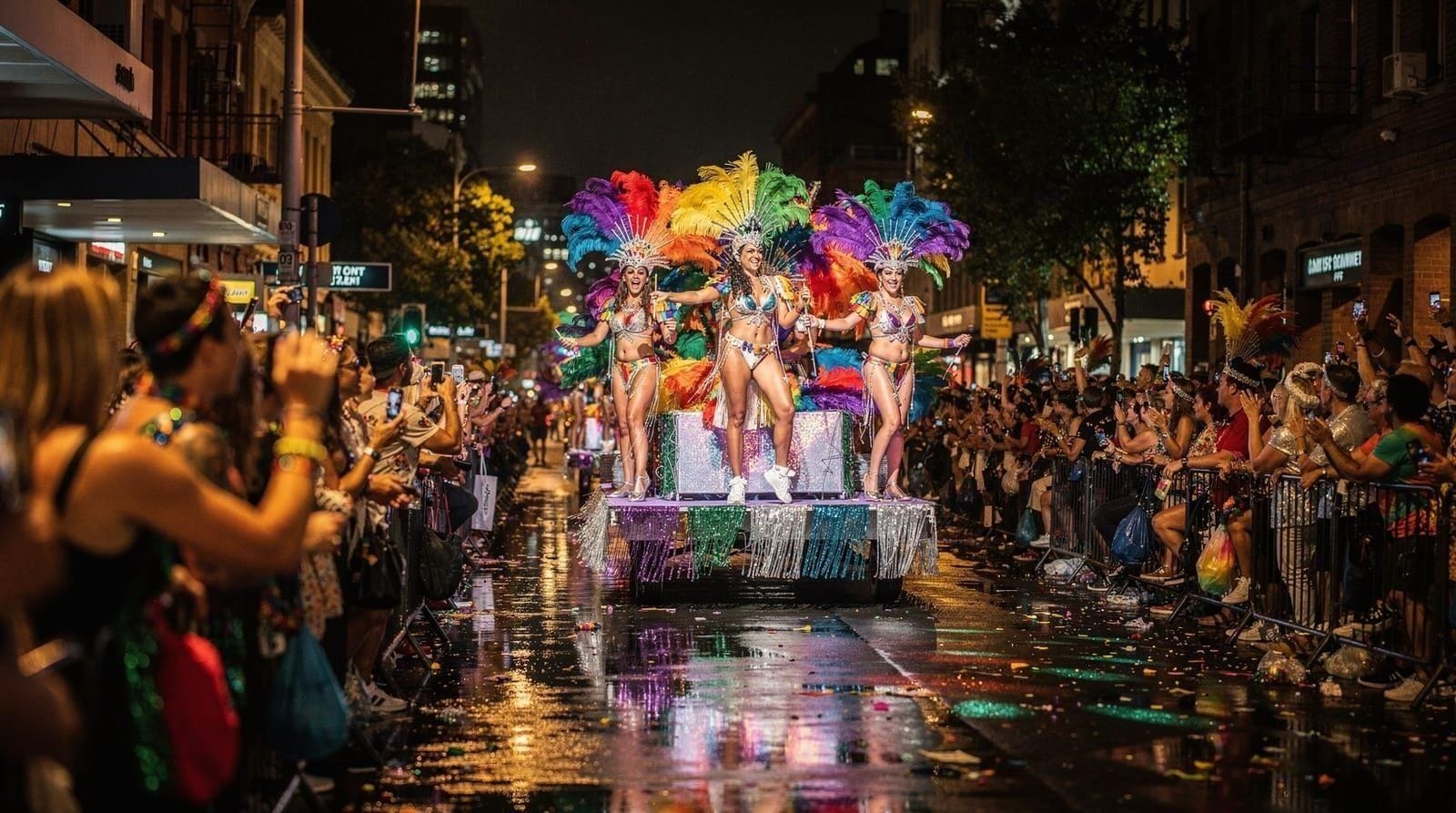
Mardi Gras (February): The Sydney Gay and Lesbian Mardi Gras festival runs through most of February, with the main parade in late February on Oxford Street. See the Mardi Gras guide.
What summer is not good for
Budget travel: Summer pricing means that the same trip costs significantly more than in autumn or winter.
Avoiding crowds: Bondi on a January Saturday with good surf is an experience of crowd density rather than a beach experience. The coastal walk from Bondi to Coogee is still enjoyable but shared with hundreds of others at peak times. Arrive before 8am for a meaningful beach experience.
Families with young children: The combination of 38°C days, UV at 14+, and child sun sensitivity (particularly for infants) makes extended outdoor days genuinely taxing. See the Sydney with a baby guide for season-specific advice.
Day trips: The Blue Mountains in December–January during a heatwave can reach 35–38°C in the valley. Hikes that are enjoyable in April become heat-management exercises in January. Consider the timing carefully.
What to wear in summer
- Lightweight cotton or linen — synthetics trap heat
- Swimwear (bring multiple sets; things dry fast)
- Rashguard/UV swim shirt for beach days
- Sandals for beach/casual; comfortable walking shoes for sightseeing
- A light cardigan or thin layer for air-conditioned restaurants and public transport — Sydney’s indoor cooling is often aggressive
See the full packing guide for a seasonal packing list.
Summer events calendar
| Event | Dates | Notes |
|---|---|---|
| Sculpture by the Sea | Late Oct–early Nov | Free outdoor sculpture exhibition |
| City2Surf running race | August (preparation in Dec–Feb) | Not in this season but popular motivator |
| NYE Sydney | 31 December | Harbour fireworks, massive crowds |
| Sydney Festival | January | Major arts festival: theatre, outdoor events, free performances |
| Australia Day | 26 January | National holiday; fireworks and events in harbour |
| Mardi Gras Festival | Mid-Feb to early March | LGBTQIA+ celebration, culminating in Oxford Street parade |
Practical tips for summer visitors
Book accommodation immediately after confirming travel dates. January and NYE dates sell out months ahead. February for Mardi Gras sells out similarly, particularly accommodation on or near Oxford Street.
Plan mornings: Do all outdoor sightseeing before noon. Reserve afternoons for air-conditioned activities — galleries, shopping centres, cinema, indoor dining.
Use harbourside ferries in the evening: Sydney Harbour in the late afternoon and evening during summer is at its most photogenic. The ferry to Manly at 7pm on a summer evening is one of the genuinely excellent free Sydney experiences.
Stay hydrated: Sydney tap water is safe and good. Carry a water bottle everywhere and refill frequently. Heat stress is real and sneaks up fast on visitors not accustomed to intense sun.
For visitors considering whether summer is worth the premium, see the full best time to visit Sydney seasonal comparison. For a detailed summer itinerary, the Sydney summer 7-day itinerary structures the season well.
Specific summer activities worth doing
Early morning coastal swim at Bondi Icebergs: The Bondi Icebergs Swimming Club runs a seawater ocean pool built into the cliff at the southern end of Bondi Beach. Open to the public year-round. In summer, a 6:30–7am visit means cooler temperatures, no crowds, and the specific pleasure of an ocean pool with waves crashing over the edge. Entry AUD 10.
Sunset ferry to Watsons Bay: The Watson’s Bay ferry from Circular Quay takes about 25 minutes and arrives at one of Sydney’s most historically significant harbour peninsulas. The Gap (dramatic cliff lookout), Camp Cove (small harbour beach popular with families), and Doyle’s on the Beach (seafood restaurant) all sit within a short walk. The return ferry at sunset provides good harbour views.
On the water, early or late: Summer is the season when the harbour itself is the main attraction. Paddling is at its best in the calm of the morning, and a kayak trip from Manly out to the quiet coves and beaches keeps you cool and away from the busiest sand. For something faster, a jet boat ride from Circular Quay is an easy way to feel the breeze in the hottest part of the day. Compare the options in the Sydney Harbour kayaking guide, the jet boat guide and the Manly beach guide, or see Manly and Circular Quay for what else is nearby.
Moonlight Cinema at Centennial Park: Sydney’s open-air cinema season runs through summer. Centennial Park (Moonlight Cinema), Mrs Macquaries Chair (Open Air Cinema) and various other locations run evening screenings. Bring a blanket, arrive early for a good position. See the official Moonlight Cinema website for ticket prices.
NSW national park coastal walks: The Royal National Park coastal walk (from Bundeena to Otford) is best done in shorter sections. Day 1 from Bundeena to Era Beach covers the most dramatic clifftop sections. The park ferry from Cronulla to Bundeena is part of the experience. This walk in summer requires serious heat preparation — carry 2+ litres of water and start before 8am.
Summer and families — specific advice
Families with children have both advantages and challenges in Sydney summer. The specific advantages:
- School holiday programming: Sydney’s museums, galleries and parks run extensive holiday programmes
- Extended daylight: activities that feel rushed in other seasons have more time
- Beach swimming: the best weather for children who enjoy the water
The challenges:
- School holiday pricing and crowding (mid-December to late January)
- UV management for children (repeated application required every 2 hours)
- Afternoon heat making outdoor activity impractical 12–4pm
The best family attractions Sydney guide and Sydney with kids guide have summer-specific activity recommendations.
Day trips in summer
Blue Mountains in summer: The Blue Mountains are 5–7°C cooler than Sydney CBD on a hot day — a 38°C Sydney day becomes a 31–33°C day in Katoomba. This makes the Blue Mountains a legitimate summer escape on heat-wave days, though the valley floor sections can still be warm and the sun exposure at Echo Point is significant. Go early, bring water, and avoid any sustained walking between 11am and 3pm.
Hunter Valley in summer: Wine tasting is excellent year-round but summer (December–January) brings the peak tourist influx to the valley. Weekend visits in summer are crowded. Weekday visits or early-morning arrival (most cellar doors open 10am) are more comfortable. The valley is hotter than Sydney — 40°C-plus days in January.
Northern beaches day trip: Palm Beach and Avalon Beach in the northern beaches are worth the drive in summer. These are significantly less crowded than Bondi and Manly on weekdays, and the Pittwater lagoon side at Palm Beach offers calm water for families.
If you would rather not drive on a hot weekend, a guided day around the northern beaches and Ku-ring-gai Chase hands the traffic and parking to someone else. The northern beaches guide, the Palm Beach guide and the Northern Beaches destination page help you choose where to spend the day, and the Sydney coastal beaches itinerary strings several of them together.
Harbour Bridge climb at twilight: The summit looks different once the heat of the day has eased, and a twilight climb to the summit of the Harbour Bridge lets you watch the light change over the harbour. Read the BridgeClimb guide and the BridgeClimb vs Pylon Lookout comparison before booking, and book early since summer slots fill fast. Other evening options are in the sunset harbour cruises guide and the Sydney Harbour cruises guide.
Summer budget realities — a final note
Summer is Sydney’s premium season for a reason — the city is genuinely at its most vibrant, full and alive during December through February. Bondi at 8am in January with good surf, a flat white from a café on Hall Street, and the coastal walk ahead of you is an excellent experience by any measure. The beach culture, harbour life, and long evenings are real Sydney at its peak.
The question is whether you want to pay a 40–60% premium for accommodation and deal with larger crowds to have it. For many visitors, the answer is yes — particularly those connecting a southern hemisphere summer escape with a European winter break. For those who have flexibility, March–May delivers 90% of the summer experience at significantly lower cost.
See the where to stay in Sydney guide to book ahead for summer, and Sydney trip cost for the detailed budget comparison across seasons.
Summer-specific photography and sightseeing advice
Sydney summer provides exceptional photography conditions:
Golden hour timing: Sunrise at approximately 5:45–6:00am (December–January). Sunset at 8:00–8:15pm. Both ends of the day provide the best light for harbour photography and avoid peak UV. The Opera House at dawn from Mrs Macquaries Point, with the Harbour Bridge and first commuter ferries crossing, is one of the more photographically rewarding experiences in Sydney.
Avoiding haze: Summer heat creates atmospheric haze that affects long-distance photography, particularly views from the Blue Mountains. Clear days occur most reliably after cold fronts pass through (following rain). Check the Bureau of Meteorology forecast for Blue Mountains visibility if a photography day trip is planned.
Beach photography: The hour after sunrise at Bondi (6:00–7:30am in December–January) provides excellent light for beach photography with far fewer crowds than later in the day. The Bondi Icebergs pool at this time is photographically exceptional.
Summer and the Opal card
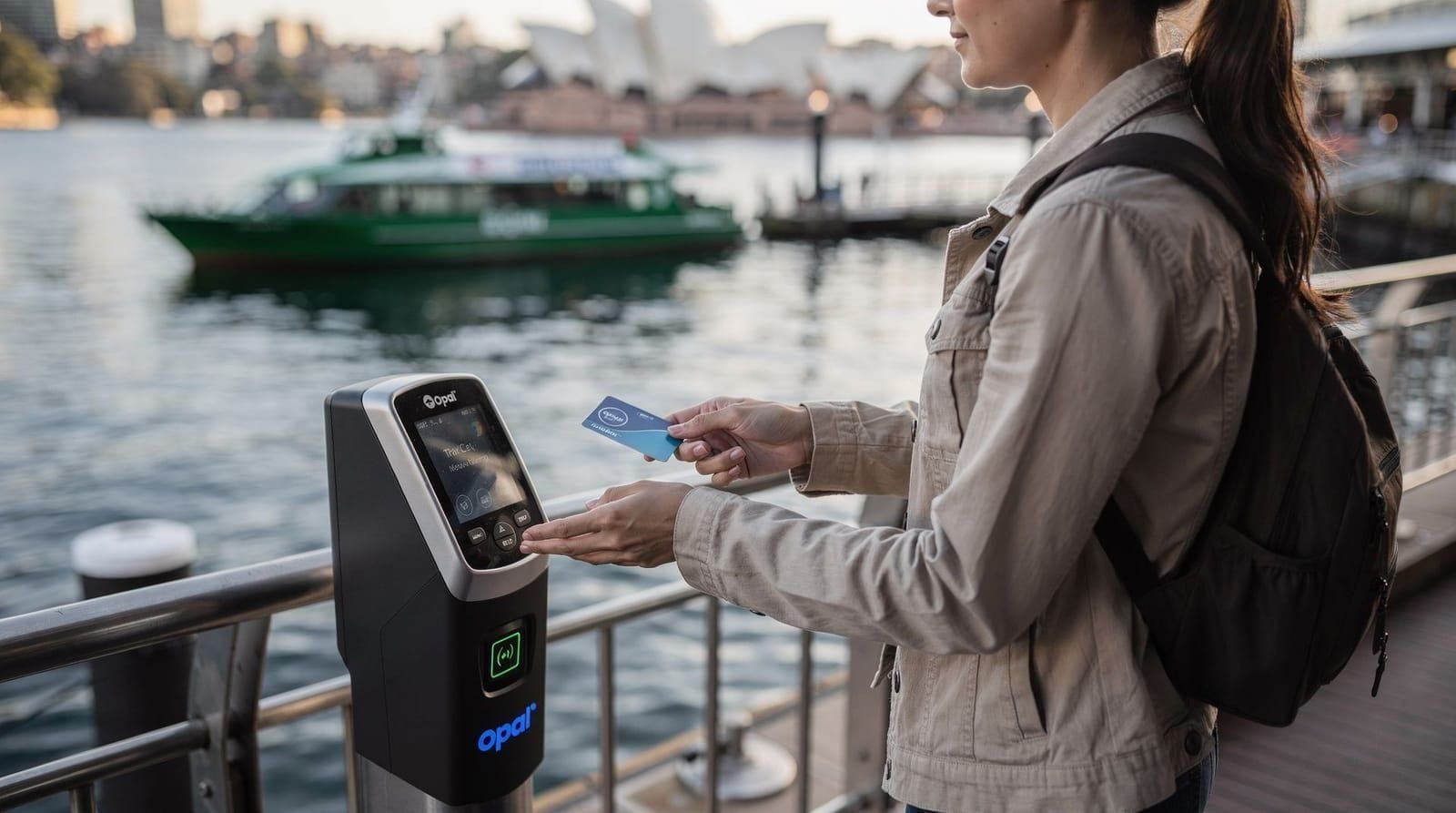
Summer changes the Opal card experience in one important way: weekend and public holiday caps apply to additional dates.
Summer public holidays on the Opal network:
- Christmas Day (25 December): public holiday rate (AUD 9.65 cap)
- Boxing Day (26 December): public holiday rate
- New Year’s Day (1 January): public holiday rate
Christmas Day travel is capped at AUD 9.65 — a full day of harbour ferries, Manly trips and CBD exploration for no more than that.
Sydney outdoor pools in summer
Sydney has an excellent network of ocean rock pools and harbour pools that provide safe, clean swimming alternatives to beach surf:
- Bondi Icebergs Pool: The most famous, 50m seawater pool with waves crashing over, at the southern end of Bondi Beach. Entry AUD 10. Worth the cost for the setting alone.
- McIver’s Ladies Baths (Coogee): Women-only ocean pool, one of the oldest in Australia. Free entry.
- Bronte Pool: Ocean pool adjacent to Bronte Beach. Free, good shade in the morning.
- Fairy Bower Ocean Pool (Manly): Small, sheltered, popular with families.
- Dawn Fraser Baths (Balmain): Enclosed harbour pool, heritage-listed. AUD 7.50 entry.
These pools are safer than open beach swimming (no rips, no surf hazard) and many are beautifully positioned. The Sydney ocean pools guide covers all major options.
Summer vs winter — the quick comparison
| Factor | Summer (Dec–Feb) | Winter (Jun–Aug) |
|---|---|---|
| Accommodation | Highest of the year | Lowest of the year, 30–40% cheaper |
| Ocean swimming | Excellent, 22–24°C | Not recommended without a wetsuit, 16–18°C |
| Crowds | Heaviest, especially beaches and NYE | Lightest, easy queues at major attractions |
| Signature event | New Year’s Eve fireworks, Mardi Gras (late Feb) | Vivid Sydney (late May–mid June), whale watching |
| Day trips | Blue Mountains can be very hot in the valley | Blue Mountains crisp and clear, best photography light |
If the budget or crowd trade-off gives you pause, see the full Sydney in winter guide for the opposite end of the year, or the best time to visit Sydney guide for the shoulder-season case.
Summer transport and getting around
Summer’s long daylight and higher visitor numbers change a few practical details. Ferries to Manly and Watsons Bay run more frequent summer timetables, and queues at the Circular Quay ferry wharves on weekend afternoons can run 20–30 minutes at peak times — arrive early or take an off-peak sailing.
The Opal card guide covers fares and caps that apply year-round; nothing changes for summer except the public holiday caps outlined above. If you are not planning to drive, the getting around Sydney guide and is a car needed in Sydney guide are worth reading before booking a rental for a summer trip — traffic to the beaches on hot weekends is genuinely heavy.
Frequently asked questions about Sydney in summer
Is Sydney too hot to visit in summer? Not for most visitors, but heatwave days (38–40°C+) require real heat management — plan outdoor activity for morning and evening, and treat 11am–4pm as an indoor window. Coastal areas stay several degrees cooler than the western suburbs.
Is January or February better for visiting Sydney in summer? January is hotter and more crowded (school holidays, NYE aftermath, Australia Day); February is marginally cooler but wetter and hosts Mardi Gras from mid-month. Neither is meaningfully cheaper than the other — both sit at peak pricing.