Sydney Mardi Gras guide 2027 — parade, events and planning
Sydney: Street art multicultural food tour
When is Sydney Mardi Gras 2027 and what should I know before going?
Sydney Mardi Gras 2027 runs 12 February to 7 March. The main parade on Oxford Street takes place on Saturday 6 March 2027, from 6pm to 11pm. The festival includes parties, exhibitions, theatre and community events spread over several weeks. The parade is free to watch from the Oxford Street footpath; ticketed grandstand seating provides better views. Book accommodation at least 3–4 months ahead.
| At a glance | |
|---|---|
| Where | Oxford Street, Darlinghurst, ending at Moore Park |
| Cost | Free to watch from the footpath; grandstand ticket prices are on the official Sydney Mardi Gras website |
| Time needed | One evening for the parade; the full festival runs three weeks |
| Getting there | Train to Museum Station (10-minute walk to the start) or bus along Oxford Street |
| Best time | 2027 parade is Saturday 6 March; arrive 4–5 hours early for a good footpath spot |
Sydney Mardi Gras is the largest LGBTQIA+ event in the Southern Hemisphere and one of the most significant LGBTQIA+ cultural events in the world. First held in 1978 as a political march that ended in police confrontations, it has evolved into a festival drawing international visitors alongside Sydney’s large queer community. The 2027 theme is HYPERBLOOM.
The festival structure
Mardi Gras is not just the parade. The 2027 festival runs 12 February–7 March:
Fair Day (Sunday 14 February 2027): A large free community festival at Victoria Park in Camperdown (10am–9pm) — markets, performances, dog show, community organisations. Attended by tens of thousands and a good entry point to the festival atmosphere for first-time visitors.
The Parade (Saturday 6 March 2027, 6pm–11pm, Oxford Street and Flinders Street): The centrepiece. Floats, marching groups, performance artists and community organisations travel from Hyde Park along Oxford Street to Moore Park. The full parade takes 2–3 hours to pass. Participants include LGBTQIA+ organisations, corporate groups (many with genuinely creative floats), political contingents and international guests.
Party: The official Mardi Gras Party was paused for 2026; check the official Sydney Mardi Gras website for any 2027 party details.
Supporting programme: Theatre (Sydney Opera House programming, NIDA productions), visual art exhibitions, film screenings, comedy nights, and community-specific events run throughout the festival period.
Watching the parade
The Oxford Street parade route runs from Elizabeth Street south-west toward Moore Park. The parade is free to watch from the footpath along the route.
Free footpath viewing: Arrive 2–3 hours before the parade begins (The 2027 parade runs from 6pm to 11pm). Popular sections near Hyde Park at the start of the route, the Taylor Square/Oxford Street intersection (historically the heart of the march), and the middle sections of the route fill early. Bring something to stand on for viewing over crowds.
Ticketed grandstand: Temporary grandstand seating is erected at several points along the route, with tickets available via the Sydney Mardi Gras website. Grandstand ticket prices are listed on the official Sydney Mardi Gras website. These sell out. Buy as soon as the ticketing window opens (typically 3–4 months before the parade).
Parade commentary: The ABC typically broadcasts the parade live — useful for following the narrative of each float entry.
Accommodation during Mardi Gras
Hotels in the Darlinghurst/Oxford Street corridor (Kirketon Hotel, 57 Hotel, various Oxford Street guesthouses) are the most convenient and fill first. For good alternatives within walking distance: Surry Hills (15-minute walk to the parade route), Newtown (accessible by bus to Oxford Street).
Book 3–4 months ahead minimum. Prices in the Oxford Street area run 30–50% above normal weekend rates for parade weekend.
Getting around during the festival
The Oxford Street precinct during parade weekend is closed to vehicles. Public transport — train to Museum Station or bus to the Oxford Street stops — is the only practical option. Museum Station is a 10-minute walk to the start of the parade at Hyde Park.
After the parade: trains run all night, but expect very significant queuing at Museum and Kings Cross stations post-parade. Walking to a less-crowded station (Town Hall, 25 minutes) is sometimes faster.
What else to do during the festival period
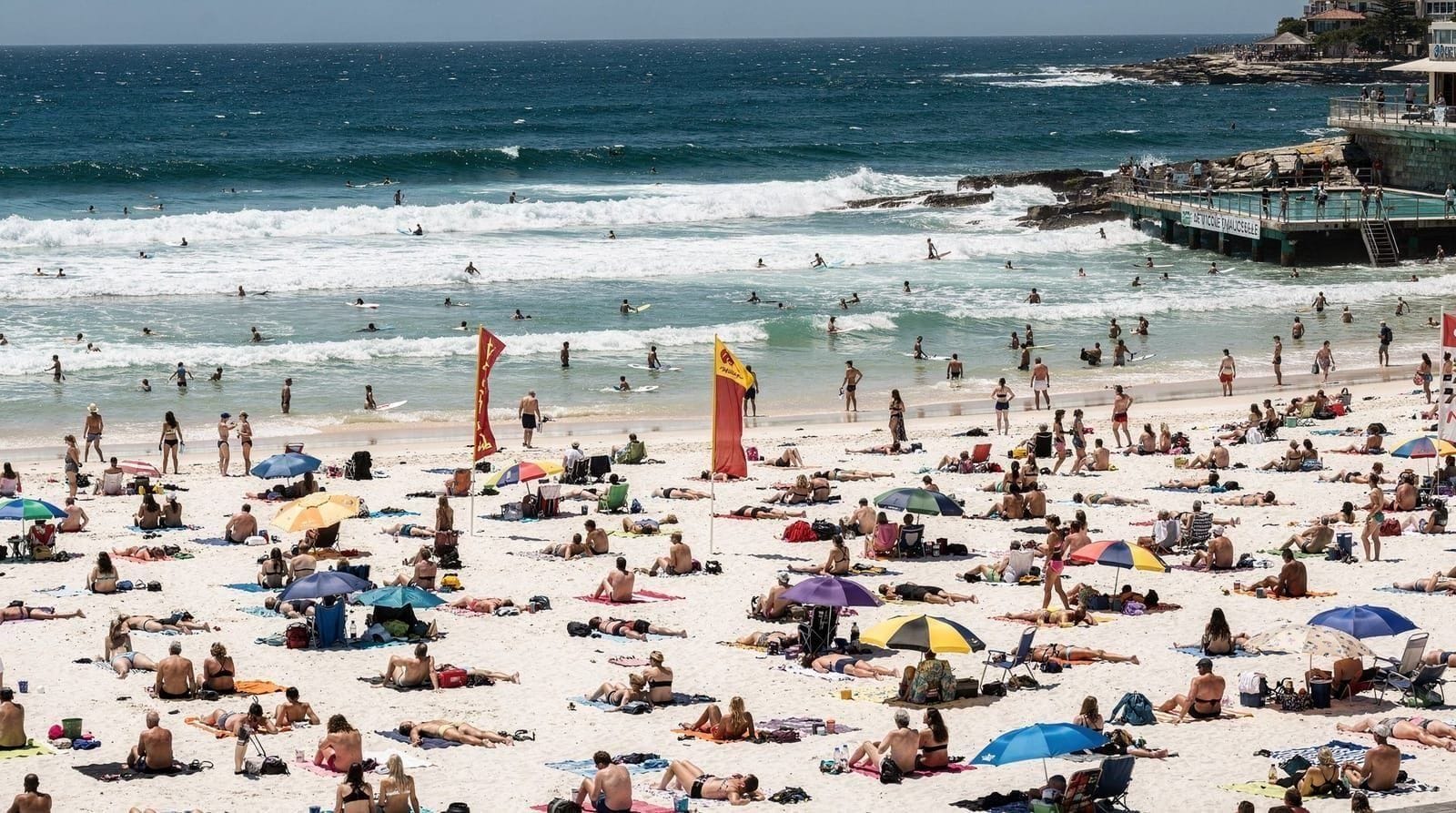
The three weeks of Mardi Gras coincide with late summer — ideal beach weather. Bondi Beach attracts significant festival attendance, particularly Fair Day weekend. Several Mardi Gras events occur at Bondi Pavilion.
The Newtown and Darlinghurst arts scene has gallery openings and performance events tied to the Mardi Gras calendar — check the official programme on the Sydney Mardi Gras website.
The festival is genuinely warm and welcoming to visitors from outside the LGBTQIA+ community — Mardi Gras has long positioned itself as a community festival rather than an exclusive event. Straight-presenting visitors are standard at all main events and are explicitly welcomed.
Costs for Mardi Gras visitors
The parade and Fair Day are free. The main costs:
- Parade grandstand seats: see the official Sydney Mardi Gras website for prices
- Official after-party (Party): paused for 2026; check the official Sydney Mardi Gras website for 2027 details
- Accommodation premium: AUD 40–100/night above normal rates for Darlinghurst/Surry Hills
- Venue entry for associated parties/events: typically AUD 30–60 per event
A 4-night trip for Mardi Gras parade weekend (arriving Thursday, departing Monday) with mid-range accommodation, two events and transport runs approximately AUD 600–900 excluding flights and official tickets.
First-time visitor orientation
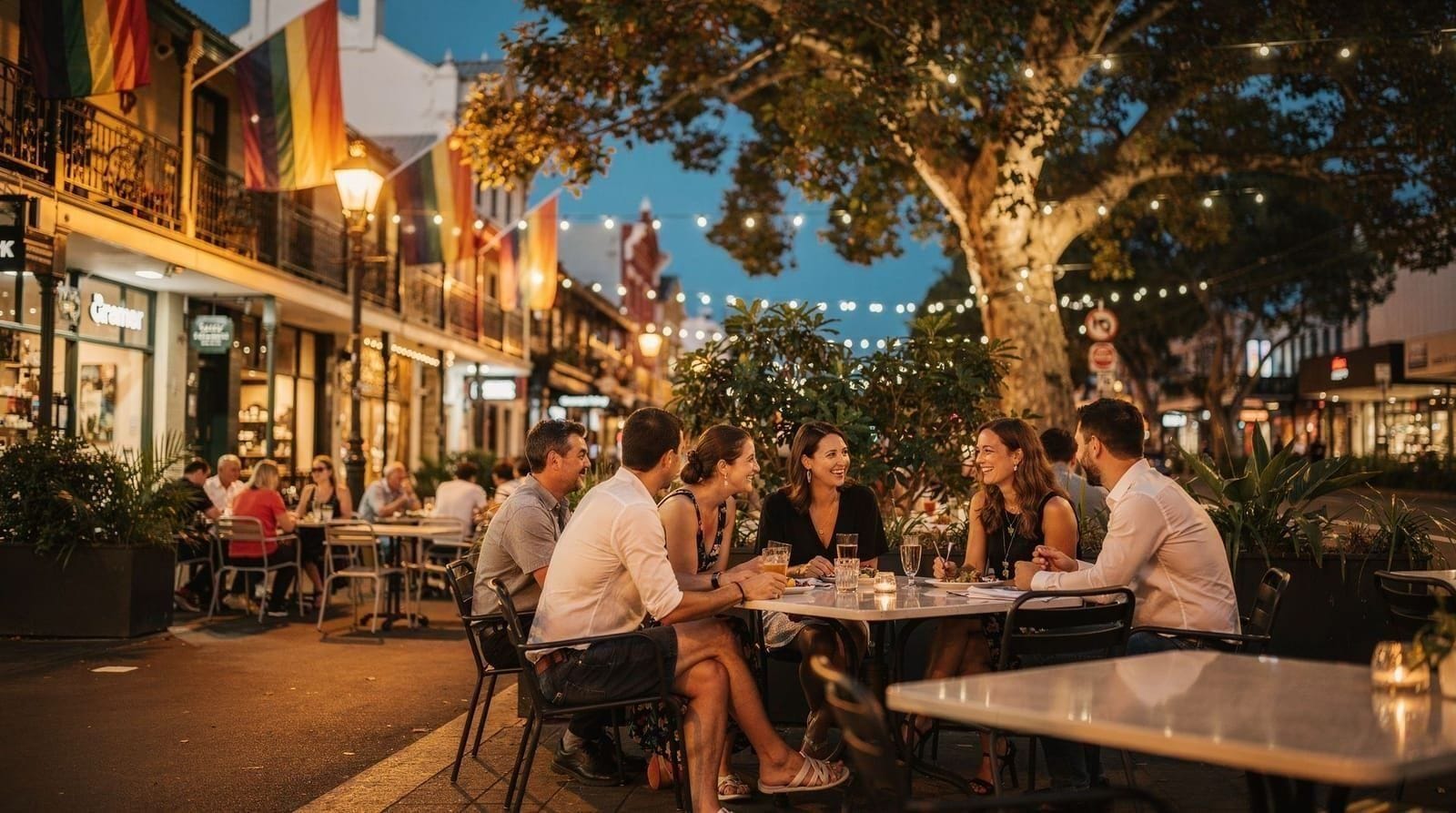
Useful context: Oxford Street between Hyde Park and Taylor Square has historically been the centre of Sydney’s LGBTQIA+ nightlife. The neighbourhood is called Darlinghurst. Under NSW lockout laws introduced in 2014, the late-night venue landscape changed significantly (Oxford Street venues were included in early versions of the laws, later amended). Several institutions — the Stonewall Hotel, Oxford Art Factory, The Beresford — remain operational.
LGBTQIA+ geography beyond Oxford Street: Newtown (King Street) has an active queer community and LGBTQIA+-friendly pubs and cafés year-round. Erskineville and Surry Hills also have significant queer-community presence. See the Sydney LGBTQIA+ scene guide for the year-round picture.
The best time to visit Sydney guide covers how Mardi Gras fits into the broader February calendar, including the late-summer weather context. For accommodation help, see where to stay in Sydney.
History and context
The first Sydney Gay and Lesbian Mardi Gras march took place on 24 June 1978. Approximately 1,000 people marched to the sounds of a single truck-mounted sound system playing disco music. Police arrested 53 people as the march turned south along Darlinghurst Road; many were subsequently outed in newspapers. The arrests and their aftermath — including sustained media harassment of those named — galvanised Sydney’s LGBTQIA+ community and ultimately contributed to the decriminalisation of male homosexuality in NSW in 1984.
The event has grown from a political march to a global cultural celebration, but its political origins remain acknowledged at the start of every parade when community elders (the “78ers”) lead the procession. This context matters to understanding why Mardi Gras carries a weight and meaning that goes beyond a general street festival.
The 2027 theme: HYPERBLOOM
HYPERBLOOM is the 2027 festival theme. Check the official Sydney Mardi Gras website for how it shapes the floats, the art programme and the official communications.
What international LGBTQIA+ visitors need to know
Attitude and safety: Sydney is one of the most accepting major cities in the Asia-Pacific region for LGBTQIA+ visitors. Same-sex relationships have been legally equal in NSW since 2010 (relationship register) and nationally since the Marriage Equality Act 2017. Public displays of affection between same-sex couples are common and unremarkable in the Darlinghurst precinct and at all Mardi Gras events.
Community infrastructure: The Oxford Street precinct has a decade of adjusted infrastructure following the NSW lockout laws (2014–2020), which had a significant impact on late-night venue density. The current scene is less concentrated on Oxford Street itself and more distributed across Darlinghurst, Surry Hills and Newtown. The Stonewall Hotel (175 Oxford Street) and ARQ Sydney (16 Flinders Street) remain major LGBTQIA+ clubs. The Imperial Hotel in Erskineville (famous as the filming location for “Priscilla, Queen of the Desert”) has a strong drag performance programme.
Safety: Mardi Gras itself is a heavily policed event — safety on the night of the parade is excellent. Incidents in surrounding streets in the days before and after are rare. Standard city-awareness applies in all entertainment zones.
Planning a first-time Mardi Gras visit — timeline
6+ months ahead: Research accommodation options; popular Oxford Street/Darlinghurst hotels fill fast for parade weekend.
3–4 months ahead: Book accommodation. Monitor the Mardi Gras website (mardigras.org.au) for the programme release and ticket sales opening dates.
2–3 months ahead: Buy parade grandstand tickets as soon as sales open. Check the official website for any 2027 Party details.
6–8 weeks ahead: Book any specific ticketed events (Opera House programme, comedy shows, exhibitions with timed entry).
1–2 weeks ahead: Plan the parade route section you will watch from; research transport routing for post-parade departure.
Beyond the parade — the full festival
The 3-week festival period is rich with programming beyond the main parade:
Queer Screen’s Mardi Gras Film Festival: An annual film festival of LGBTQIA+ cinema running alongside the festival proper. Multiple screenings across Sydney venues.
Art Month Sydney (March, overlapping): Sydney’s annual art month runs in March with gallery openings and art events that complement the Mardi Gras visual culture calendar.
The Harbour foreshore events: Several Mardi Gras satellite events at Barangaroo and the inner harbour are held in the weeks around the festival.
Costs breakdown — full Mardi Gras trip
For a 5-night trip around parade weekend (arriving Thursday 4 March, departing Tuesday 9 March):
| Expense | Estimated cost (AUD) |
|---|---|
| Accommodation (5 nights, Darlinghurst guesthouse) | 750–950 |
| Parade grandstand and Party tickets | see the official Sydney Mardi Gras website |
| Food and drink (5 days) | 300–450 |
| Transport (Opal, 5 days) | 65–97 |
| Events/exhibitions (2–3) | 60–150 |
| Total (excl. flights and official tickets) | ~AUD 1 175–1 647 |
This is approximately €764–1 071 at current exchange rates, or US$846–1 186.
The Sydney trip cost guide covers general Sydney budget planning. For broader Mardi Gras and LGBTQIA+ venue information, see the Sydney LGBTQIA+ scene guide.
The Mardi Gras parade — what to expect watching from the footpath
The parade experience from the Oxford Street footpath is different from any other major parade context. Some practical detail:
The route: The parade starts at Hyde Park North (Elizabeth Street and College Street intersection), travels southwest along Oxford Street, and ends at Driver Avenue/Moore Park. The total route is approximately 1.6 km. The procession takes 2–3 hours to fully pass any given point.
Float structure: Entries are a mixture of community organisations (LGBTQIA+ advocacy groups, health organisations, sports clubs), corporate sponsors, government organisations (including often the Police — a controversial inclusion given the 1978 arrests), international contingents, and cultural/artistic performances. The 78ers — original marchers from the first 1978 parade — typically lead the procession.
Sound: The sound system is substantial. Oxford Street becomes a continuous wall of music during the parade. Earplugs are genuinely useful for those sensitive to loud music or accompanying children.
Costumes: The creative standard of both float and individual costumes has been consistently exceptional in recent editions. Expect elaborate fabrication, performance art-level presentation and significant creative investment from major community organisations.
Timeline on parade night: The 2027 parade runs from 6pm to 11pm. The road is closed from around 3pm. Good viewing positions are secured from 4–5pm onward for the main Oxford Street stretch.
What to do in the days around the parade
If arriving on the Thursday or Friday before parade Saturday:
Thursday: Oxford Street neighbourhood exploration — the Stonewall Hotel, local bars and cafés are in pre-parade mode. Good evenings for food in Surry Hills or Darlinghurst without parade-weekend crowd pressure.
Friday (night before parade): Fair Day is held earlier in the festival (Sunday 14 February 2027). Pre-parade events run in multiple venues. This is when the international visitor influx peaks and the atmosphere in the precinct intensifies.
Saturday (parade day): The parade atmosphere builds through the day. Street parties begin in the afternoon on Oxford Street and surrounding blocks. The official parade begins in the evening.
Sunday (day after): Recovery day for most participants and visitors. Cafés and brunch spots in Surry Hills and Darlinghurst are active. The Bondi beach area often draws Mardi Gras visitors for a post-parade beach day (late February temperatures are 24–26°C).
A note on accessibility
Mardi Gras has made significant efforts to improve accessibility in recent years:
- Accessible seating zones in the grandstand areas
- Auslan (Australian Sign Language) interpretation at major events
- Quiet zones for sensory sensitivities at Fair Day
- Accessible toilet facilities along the parade route
Visitors with mobility limitations or other access needs should check the official mardigras.org.au website for the current year’s accessibility guide, which details specific provisions for parade day and individual events.
Mardi Gras weather
Late February in Sydney: average 26°C, humidity rising (February is one of the wetter months), occasional afternoon thunderstorms. Parade night can be warm and humid. Dress lightly and bring a small umbrella or packable rain jacket for the preceding days. The parade itself happens rain or shine.
The best time to visit Sydney guide covers the full February–March weather context, and Sydney in summer covers the broader summer period that Mardi Gras falls within.
Combining Mardi Gras with the rest of a Sydney trip
Because the festival runs three weeks and the parade itself is a single evening, most visitors build a broader Sydney stay around it rather than a dedicated Mardi Gras-only trip. Late February is peak beach weather, so pairing the festival with beach days at Bondi Beach or Coogee is common. If this is your first Sydney visit, the Sydney for first-timers guide and the Sydney 3-day itinerary help slot the festival into a wider plan. General safety guidance for the precinct at night is covered in the Sydney safety guide.
Filling the daytime around the festival
Because the parade is an evening event, the hours before it are best spent away from the crowd. A relaxed way to use them is food: a guided street food walk through Chinatown or, if you prefer a different angle, a street art and multicultural food tour keeps you moving and fed before a long standing night. Our cheap eats guide and Sydney best restaurants guide help if you would rather plan your own meals, and the coffee culture guide covers where to recharge in the morning.
Mardi Gras also sits well beside Sydney’s deeper history. The march of 1978 is one chapter of a much longer story on this land, and an Aboriginal walking tour with a smoking ceremony is a thoughtful way to add that context to a festival trip. The Sydney Aboriginal heritage guide and the Aboriginal cultural tours guide explain the options, and the Rocks history walk covers the colonial side of the city centre.
If you have a free morning or the day after the parade, the harbour is the obvious reward. The Sydney Harbour cruises guide and the Sydney ferries guide show how to see the water cheaply or in style, while a twilight climb of the Harbour Bridge suits visitors who want a big view before the evening begins; the BridgeClimb guide helps you decide. For nights out beyond the parade, the Sydney nightlife guide and best bars in Sydney are good starting points, and the Mardi Gras weekend blog post gives a first-hand account of how a weekend can unfold. If you are building a longer trip around the festival, the Sydney 5-day essentials itinerary is a useful frame, and Surry Hills and Newtown make easy bases for eating and wandering.
Frequently asked questions about Sydney Mardi Gras guide 2027
Do you need a ticket to watch the Sydney Mardi Gras parade? No — the Oxford Street footpath viewing is free. Tickets are only required for grandstand seating and any official Party.
Is Sydney Mardi Gras only for LGBTQIA+ visitors? No. Mardi Gras is explicitly welcoming to all visitors, and straight-presenting attendees are common at the parade, Fair Day and most public events. Some smaller community events may be more community-specific.