Where to see koalas near Sydney — the honest guide
Sydney: Featherdale wildlife park general entry ticket
Where is the best place to see koalas near Sydney?
For guaranteed close-up viewing, Featherdale Wildlife Park (Doonside, 45 minutes from CBD) and WILD LIFE Sydney Zoo in Darling Harbour are the most reliable city-region options. In the wild, Royal National Park to the south and the forests around Jervis Bay give the best chances. A koala holding experience requires travelling to Queensland or South Australia — NSW prohibits it.
At a glance
| Where | Featherdale (Doonside, 45 min from CBD), WILD LIFE Sydney Zoo (Darling Harbour), Taronga Zoo (Mosman, by ferry), or wild in Royal National Park |
| Cost | Park entry prices vary (see each park’s official website); free (aside from transport) for wild sightings |
| Time needed | Half a day for a park visit; a full day if combined with a Blue Mountains or Central Coast trip |
| Getting there | Train + short taxi to Featherdale; light rail/ferry to Darling Harbour or Taronga; car or tour for Royal National Park |
| Best time | Year-round for parks; early morning or late afternoon for wild sightings, September–February for hearing male bellowing calls |
Koalas are among the most requested wildlife encounters for international visitors to Australia, and Sydney sits on the southern fringe of their natural habitat range. The good news: you can see koalas with reasonable certainty without leaving Greater Sydney. The honest context: koalas sleep up to 20 hours a day, are high in the canopy (often invisible), and are not naturally interactive animals. Setting expectations clearly before you go saves disappointment.
What you’re actually going to see
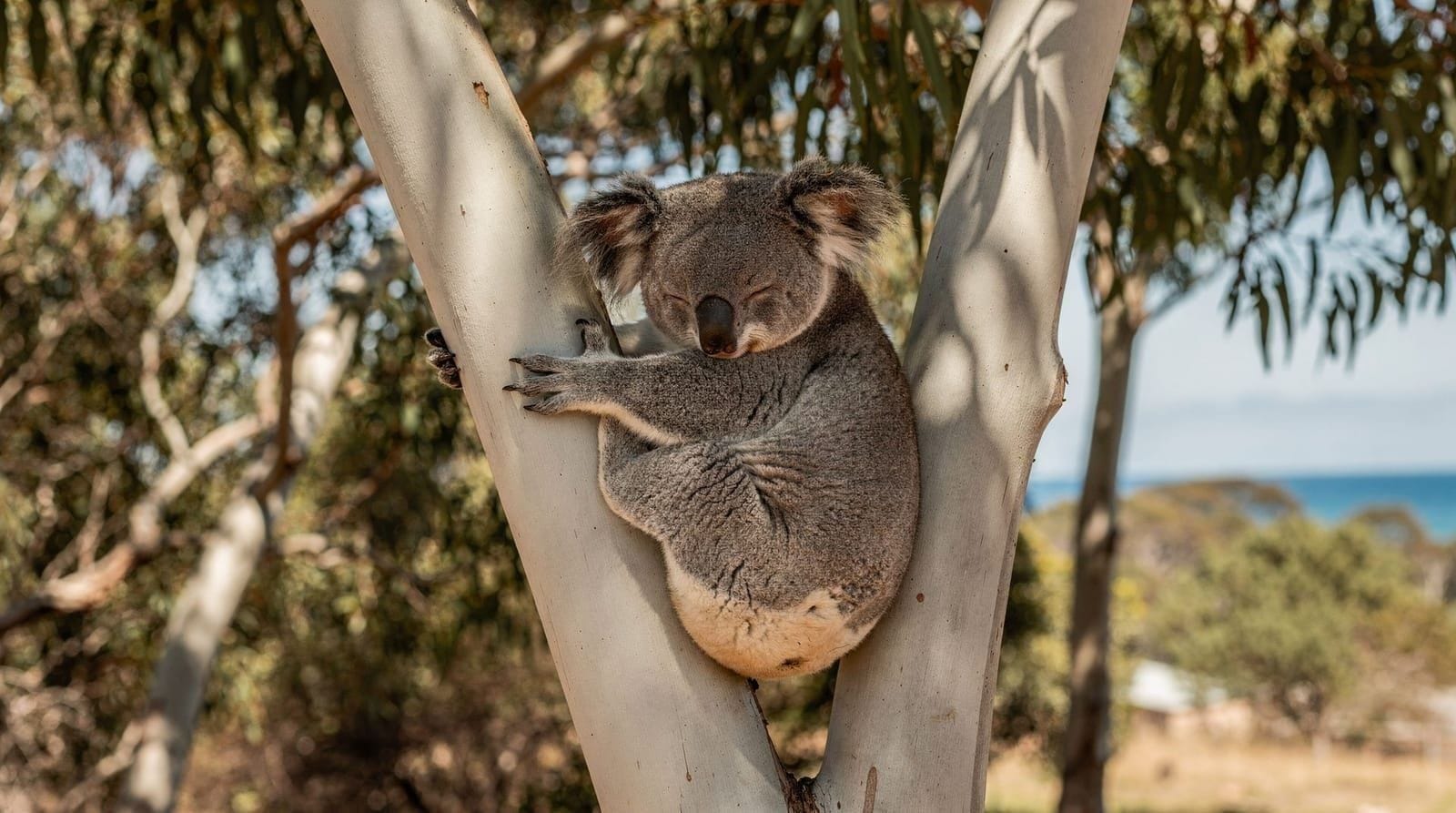
Before covering specific locations, it’s worth being direct about the koala encounter. Koalas spend the overwhelming majority of their lives sleeping in tree forks or curled against branches. This is not lethargy — it’s an energy conservation strategy. Eucalyptus leaves have very low nutritional value and contain toxins that require significant metabolic effort to detoxify. Koalas sleep to survive.
In a wildlife park, a koala encounter typically means observing an animal that is sitting still, eyes partly closed, in a tree. At close range (1–2 metres), this is still engaging — the size of the animal, the texture of the grey fur, the large rounded nose and dark brown eyes, and the visible claws are all striking. But if you’re expecting an active, responsive animal, you’ll be disappointed.
Wild koala encounters are a different quality. Finding a wild animal on its own terms, in its natural environment, even if it’s sleeping 15 metres up a gum tree — has a different resonance from a managed park experience. Both are worth pursuing if you’re in Sydney long enough.
Wildlife parks with koalas near Sydney
Featherdale Wildlife Park (Doonside — 45 minutes from CBD)
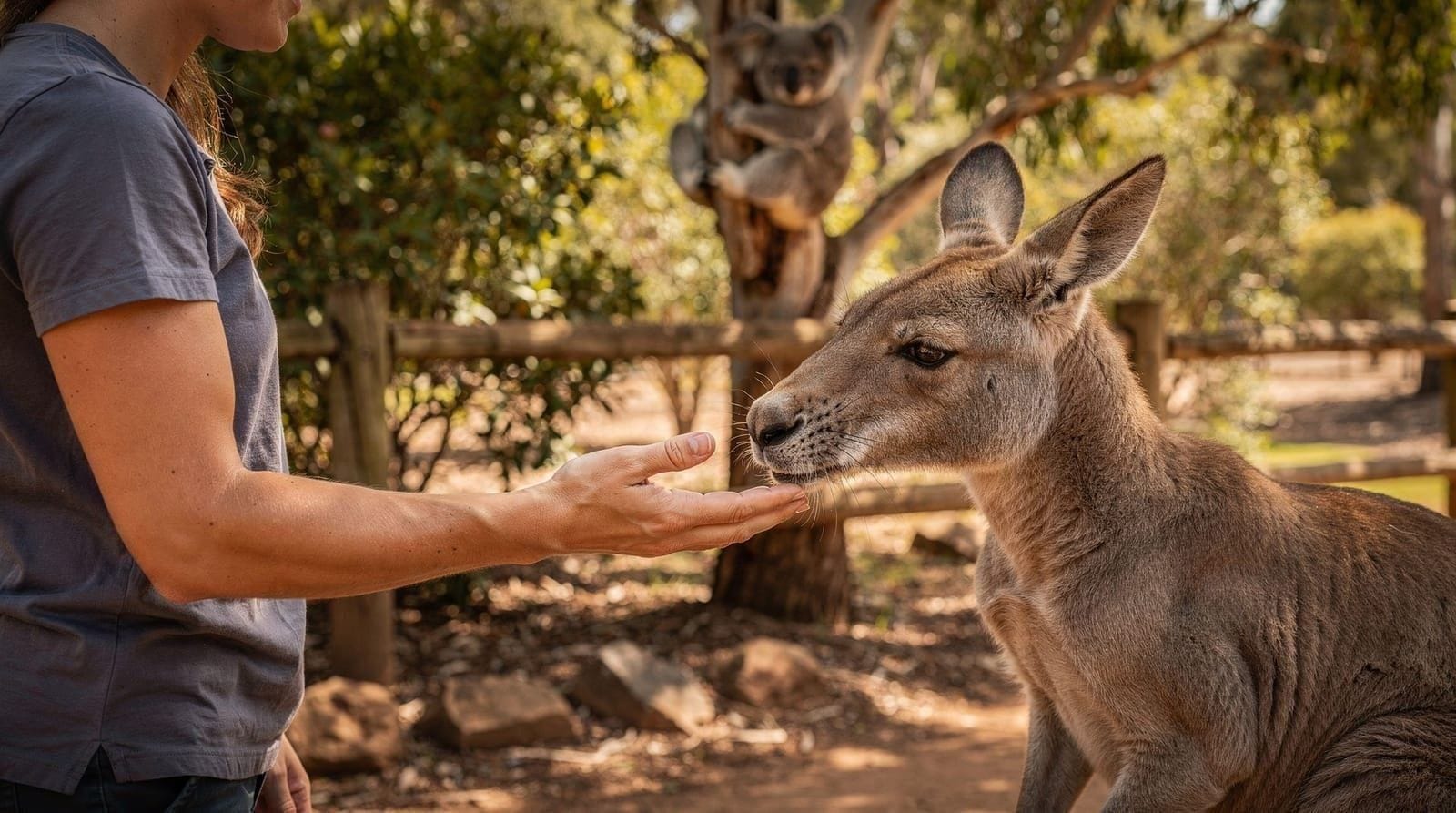
The most affordable guaranteed-koala option if you want close encounters. Featherdale’s koala population occupies a walkthrough exhibit with viewing platforms at tree height. Koala photo experiences with a keeper are available at an additional cost, including a professional photograph. The park also has free-roaming kangaroos and wallabies (you walk among them), wombats, Tasmanian devils, echidnas, and a range of reptiles and birds.
See the official Featherdale Wildlife Park website for current entry prices. The 45-minute journey from the CBD is the main practical barrier.
Featherdale Wildlife Park general entryGetting there: Train to Blacktown (Western Line, 30–40 minutes from Central) plus taxi/rideshare (10 minutes, AUD 15–18). See Featherdale Wildlife Park guide for full logistics.
WILD LIFE Sydney Zoo (Darling Harbour — CBD)
The most convenient city-centre option. The multi-level Koala Walkabout at WILD LIFE puts visitors at eye-level with the animals via elevated platforms — a better vantage point than looking up at them from ground level. You cannot hold koalas (prohibited in NSW), but viewing platforms allow observation at arm’s-length distance through open barriers.
The Breakfast with the Koalas experience (priced on top of entry; see the official WILD LIFE Sydney Zoo website) is a small-group morning session in the koala habitat with a keeper presentation. It’s the premium option if you want guaranteed extended time with the animals.
Entry: see the official WILD LIFE Sydney Zoo website for current prices. See WILD LIFE Sydney Zoo guide.
Taronga Zoo (Mosman — 12 minutes by ferry)
Taronga has a dedicated koala habitat in the Australian Walkabout section. Viewing platforms approach the animals at close range. The combination of koala viewing with the broader zoo (gorillas, giraffes, seals, penguins) and the harbour ferry experience makes Taronga the best overall wildlife day — though not the cheapest. See the official Taronga Zoo website for current ticket prices, including ferry combinations.
See Taronga Zoo guide.
Australian Reptile Park (Somersby — 1 hour from CBD)
The park has a solid native mammal section alongside its reptile and spider collection, including koalas in a viewing exhibit. Requires a car or organised tour. The 1-hour drive is a genuine commitment but makes sense if combined with a Central Coast day — the park sits near Gosford and can be paired with Avoca Beach or Terrigal for a full day out.
See Australian Reptile Park guide.
Wild koalas near Sydney
Wild koala sightings near Sydney are genuinely possible but require patience and realistic expectations. The metropolitan koala population has been declining — urban expansion, dog attacks, and road mortality have reduced numbers significantly in the last two decades. The populations that remain are in protected habitat corridors.
Royal National Park (Sutherland Shire — 45 minutes south by car)
Australia’s oldest national park, immediately south of Sydney. The park’s eucalyptus forests in the southern sections — particularly around Bundeena, Maianbar, and the Area 24 campground — have confirmed resident koala populations. The Bundeena ferry (from Cronulla station) accesses the park’s north end.
To maximise sighting chances: walk slowly on park trails in early morning (7–10 AM) or late afternoon (4–6 PM) and scan the canopy systematically, looking for rounded grey shapes in tree forks. Look at the base of smooth-barked eucalypts for fresh claw marks — diagonal parallel scratches in the bark indicate recent use. Rangers at the Audley Visitor Centre can advise on current hotspot locations.
No guarantee of a sighting. On a good day in the right habitat, a persistent walker might see 2–5 koalas. On a bad day, none.
Glenbrook and lower Blue Mountains
The lower Blue Mountains foothills around Glenbrook, Lapstone, and Blaxland have koala habitat in the national park zone. The Glenbrook Gorge and the park trails near Jellybean Pool pass through suitable eucalyptus woodland. This area is accessible by train (Glenbrook station, 60 minutes from Central on the Blue Mountains Line).
Manly and Sydney Harbour National Park
The Sydney Harbour National Park fragments — particularly the Dobroyd Head and North Head areas near Manly — have small koala populations that have received conservation attention. Sightings here are infrequent but documented. The North Head walking trails through Manly are worth doing for other wildlife reasons (sea views, shorebirds) even without a koala encounter.
Jervis Bay (2.5–3 hours south)
The forests around Jervis Bay, including Booderee National Park, have healthy koala populations in eucalyptus woodland. A day trip to Jervis Bay (famous for its beaches, dolphins, and whale watching) can include koala spotting at Booderee — ask at the visitor centre for current sighting areas. The combination makes for an excellent southern coastal day trip.
Sydney: Jervis Bay tour including beaches, koalas, and kangaroosWhat the koala encounter is actually like in a park
It’s worth repeating the biology because it shapes expectations. At Featherdale or WILD LIFE, you approach within 1–2 metres of an animal that is almost certainly sitting still. What you get:
- The size (surprisingly large — adult koalas are 4–15 kg, bigger than most people expect)
- The fur texture (thick, grey, dense — visible even at a distance)
- The distinctive broad nose and dark eyes
- The long curved claws (essential for bark-gripping, startling when seen up close)
- The eucalyptus smell — distinctly medicinal and sharp
- The occasional slow eye-blink or ear twitch
This is a genuinely interesting observation, not a disappointing one — but it’s passive rather than interactive. If you want an active animal encounter near Sydney, hand-feeding kangaroos at Featherdale is more dynamically engaging.
The koala holding question
New South Wales does not permit public holding of koalas. This frequently surprises international visitors who have seen photos of people holding koalas and assumed it was legal throughout Australia.
NSW regulations classify koala holding as a form of captive wildlife interaction that requires specific licensing unavailable to commercial tourist operators. The rationale is animal welfare — koalas experience stress when handled by strangers, and unlimited holding sessions compound this.
Queensland (notably at Lone Pine Koala Sanctuary near Brisbane) and South Australia permit regulated koala holding under specific welfare standards. If you specifically want the holding experience, you need to travel to one of those states. This is a common reason for a pre-Sydney Brisbane stopover among international visitors who know about the rule in advance.
Organised wildlife day tours near Sydney
Several Sydney-based operators run day circuits combining multiple wildlife encounters, typically including a wildlife park stop alongside other attractions:
Sydney: Nature and wildlife Australia in one day tourThese tours typically include Featherdale Wildlife Park, possibly the Blue Mountains or another regional highlight, and sometimes a koala encounter as the headline activity. They’re practical for visitors who don’t want to handle logistics independently and are comfortable with a group tour format.
Planning your koala encounter visit
For most visitors with 3–5 days in Sydney who specifically want a koala encounter, the most efficient approach is:
-
Visit Featherdale Wildlife Park as a half-day (morning, 9 AM–12 PM), combined with a Blue Mountains day trip if you have a car or join a guided tour. This gives you guaranteed koala viewing plus the kangaroo hand-feeding, both at the best price point.
-
Alternatively, include WILD LIFE Sydney Zoo as part of a Darling Harbour day (combined with SEA LIFE Aquarium). The CBD convenience is the main advantage; the koala experience is comparable to Featherdale’s, minus the hands-on kangaroo element.
-
For wild koala sightings, Royal National Park requires its own half-day and should be attempted only if you have flexible time and access to a car or can join a park-specific tour.
For full park comparisons, see best zoos and aquariums in Sydney and the broader Sydney with kids guide for family-focused planning.
Fitting koalas into the rest of your trip
A koala visit rarely needs a day of its own. The easiest way to plan it is to pick the area you’re already heading to and add the nearest option.
If your days are centred on the harbour, the Darling Harbour area puts WILD LIFE Sydney Zoo within walking distance of other attractions, while Manly and the Manly beach guide pair naturally with a wildlife stop on the ferry side of the harbour. If you can’t decide between the two big parks, Taronga versus Featherdale sets out the trade-offs side by side.
If you’re heading south, Jervis Bay and the Jervis Bay day trip guide are the natural home for a wild-koala attempt, and the Royal National Park destination page covers the closer bushland option. North of the city, the Port Stephens day trip and the Central Coast day trip both offer a different kind of wildlife day, and the best day trips from Sydney guide helps you choose between them.
Travelling with young children changes the equation. A seated, calm animal is easier for small visitors than a fast-moving exhibit, and the Sydney zoos for toddlers guide explains which parks suit pushchairs and short attention spans. If you are in the city in winter, the whale season guide shows how to add a very different animal encounter to the same trip, and the Sydney 48-hour weekend itinerary is a useful template if you only have a short stay and want to see where a wildlife visit could slot in.
Koala behaviour: what to know before your visit
Understanding koala biology makes any encounter more meaningful, whether in a park or the wild.
Why they sleep so much
Eucalyptus leaves are the koala’s primary food source. They are highly toxic (containing phenolic compounds and essential oils) and very low in nutrition. Koalas have specialised gut bacteria that detoxify the leaves, but the process is metabolically expensive. Sleeping 18–20 hours per day is an adaptation that conserves the energy needed for this detoxification. This is not laziness — it’s a highly evolved energy management strategy.
Tree selection
Koalas are selective feeders. Despite there being over 700 species of eucalyptus in Australia, most wild koala populations rely on fewer than a dozen preferred species in their local area. Individual animals show strong preferences — some trees are visited repeatedly, others ignored entirely even if they’re the same species. Researchers tracking koala movements find that individual animals often have established circuits of 5–15 trees they use over weeks or months.
Social behaviour
Koalas are largely solitary outside the breeding season (September–February). Males in breeding season are highly vocal — the “bellowing” call is distinctively loud and low-pitched for an animal of their size. You may hear this at wildlife parks during the breeding season.
Conservation status
Koalas are currently listed as Endangered under the Environment Protection and Biodiversity Conservation Act in New South Wales, Queensland, and the Australian Capital Territory. In South Australia and Victoria they remain Vulnerable. The 2019–2020 Black Summer bushfires burned significant koala habitat and killed large numbers of koalas. Urban expansion, vehicle strikes, disease (chlamydia is widespread in wild populations), and dog attacks continue to threaten the species.
Wildlife parks contribute to conservation through education, insurance populations (captive breeding in case of population crashes), and the monitoring of their individual animals’ health. Several parks contribute to chlamydia treatment programmes and release programmes for recovered wild animals.
How to identify a koala in the wild
For visitors attempting wild sightings, the following helps:
- Look at tree forks and branch junctions, not at the trunk or among the leaves. Koalas wedge themselves into branch angles.
- Look for an asymmetric shape — a sleeping koala in a tree looks like a grey lump with no distinguishable head or limbs. It does not look like a toy koala.
- Listen. Male koalas bellow in the breeding season (September–February). The sound carries several hundred metres and is unmistakable — a series of deep, loud belches.
- Look at the base of trees. Fresh claw marks on smooth-barked gums (parallel diagonal scratches, 2–4 cm wide) indicate recent use. If the marks look fresh and white (not weathered), the animal may be in the tree.
- Scan from a distance first using binoculars before approaching. Close approach to a wild koala causes stress and they may move or descend, which is dangerous for the animal.
Koalas versus other Australian animals: planning your wildlife priorities
If you have limited time in Sydney and need to prioritise, here’s a frank assessment:
Koalas are iconic but passive. The most memorable wildlife encounters in Australia are often with animals that are active and responsive — kangaroos that eat from your hand (Featherdale), dolphins in their natural habitat (Port Stephens), or whales breaching at close range. Koalas are visually striking but viewing a sleeping animal through glass is a less interactive experience.
For the full Australian wildlife encounter, combine a Featherdale visit (kangaroos + koala photo) with the Manly Ferry and a whale watching cruise (in season, May–November). This gives you active animal encounters across multiple environments.
For the specific koala encounter, WILD LIFE Sydney Zoo or Featherdale are the most convenient options. For the most immersive koala habitat in the region, the Taronga Zoo Australian Walkabout with its multi-level viewing platforms is the best in Sydney.
Frequently asked questions about Where to see koalas near Sydney
Can I see koalas for free near Sydney? Yes, in the wild — Royal National Park, the lower Blue Mountains around Glenbrook, and the Manly/Sydney Harbour National Park bushland all have documented koala populations you can look for at no cost beyond transport. There’s no guarantee of a sighting, unlike a wildlife park, where entry buys a near-certain close-up view.
Do I need a full day to see koalas near Sydney? Not necessarily. Featherdale Wildlife Park or WILD LIFE Sydney Zoo can both be done as a half-day trip and combined with other CBD or Blue Mountains plans. A dedicated wild-sighting trip to Royal National Park is better treated as its own half-day, since the search itself takes time.
Top experiences
Bookable activities with verified prices and instant confirmation on GetYourGuide.