Driving in Sydney and NSW — rules, tolls, and road conditions
Sydney: Harbour sunrise kayak tour
Duration: 2 hours
Is it worth renting a car to drive around Sydney in 2026?
Not for the city itself — parking is expensive (AUD 15–25/hour in the CBD), traffic is heavy, and public transport covers all major tourist destinations. A car is useful for day trips to the Blue Mountains (full flexibility), Hunter Valley wine region (essential — no practical public transport between wineries), and Port Stephens.
| At a glance | |
|---|---|
| Where | Left-hand traffic across NSW; driver seat on the right |
| Cost | Rental from around AUD 50–90/day plus tolls and fuel (around AUD 2.10–2.30/litre) |
| Time needed | Not needed for central Sydney; essential for Hunter Valley, useful for Blue Mountains/Port Stephens day trips |
| Getting there | Rentals at Sydney Airport or off-airport locations (usually cheaper) |
| Best time to drive out of Sydney | Outside weekday peak hours (7–9am, 4–6:30pm) to avoid Harbour Bridge/Eastern and Western Distributor congestion |
Driving in Australia — the fundamentals
Australia drives on the left side of the road. The driver sits on the right side of the vehicle. If you’re accustomed to right-hand traffic (US, continental Europe, China), this requires conscious adjustment, particularly at intersections and roundabouts.
International visitors from countries with right-hand traffic can legally drive in NSW on their home country licence for up to 3 months, provided it is in English or accompanied by an official translation. EU licences are acceptable. The “P1/P2 probationary” restrictions on Australian licences do not apply to international visitors.
Speed limits in NSW:
- 50 km/h in urban streets unless otherwise signed
- 60 km/h on suburban arterials unless signed
- 80–100 km/h on main roads outside urban areas
- 110 km/h on motorways
Speed cameras are ubiquitous in NSW — fixed cameras at intersections, mobile cameras in vehicles, average-speed cameras on major routes. Fines for speeding are set by NSW and rise with the speed over the limit; see nsw.gov.au for current amounts. Drive to the posted limits.
Driving on the left with the wheel on the right is easiest to learn in a car you already feel comfortable in, so choose an automatic if you normally drive right-hand traffic. Check that your home licence is in English or comes with an official translation, and that it matches the name on the booking. To line up those details for a NSW trip, you can compare cars through DiscoverCars for Sydney pick-up.
Sydney CBD driving — not recommended
Driving in Sydney’s CBD is genuinely challenging for visitors unfamiliar with Australian road rules and the city’s layout. Several specific problems:
One-way street grid: Much of the CBD uses a one-way street system. George Street is two-way in sections but restricted in others. Elizabeth Street, Pitt Street, and Castlereagh Street have varying direction restrictions. Getting lost in the CBD by car is easy.
No right turn restrictions: Many CBD intersections prohibit right turns between 7am and 7pm. These are easy to miss.
Parking cost: Commercial carparks in the CBD charge AUD 15–25 per hour. A day’s parking easily exceeds AUD 60–80.
Traffic: The Harbour Bridge, Eastern Distributor (Eastern Suburbs), and Western Distributor (Darling Harbour) are regularly congested during morning (7–9am) and evening (4–6:30pm) peak hours.
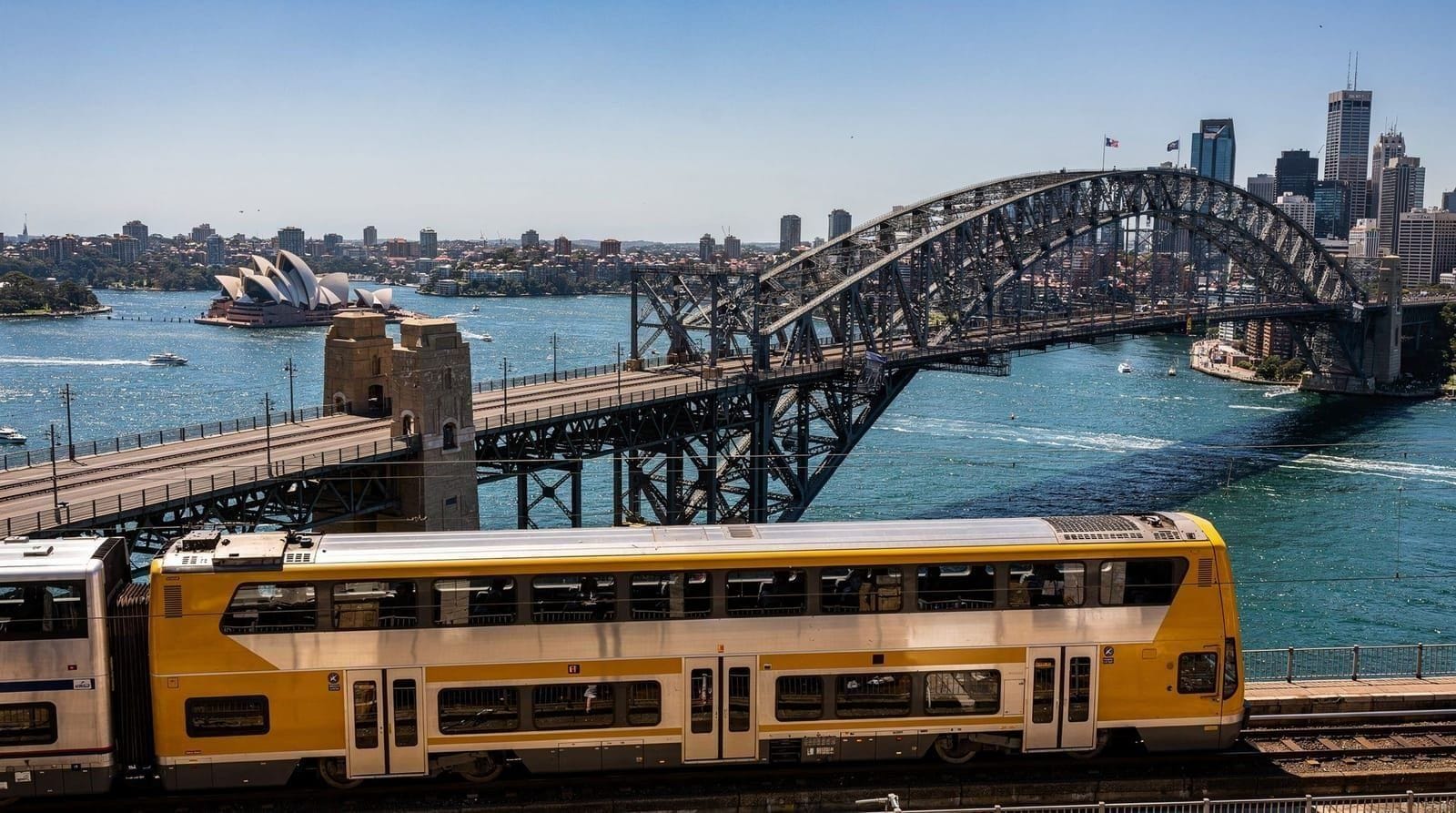
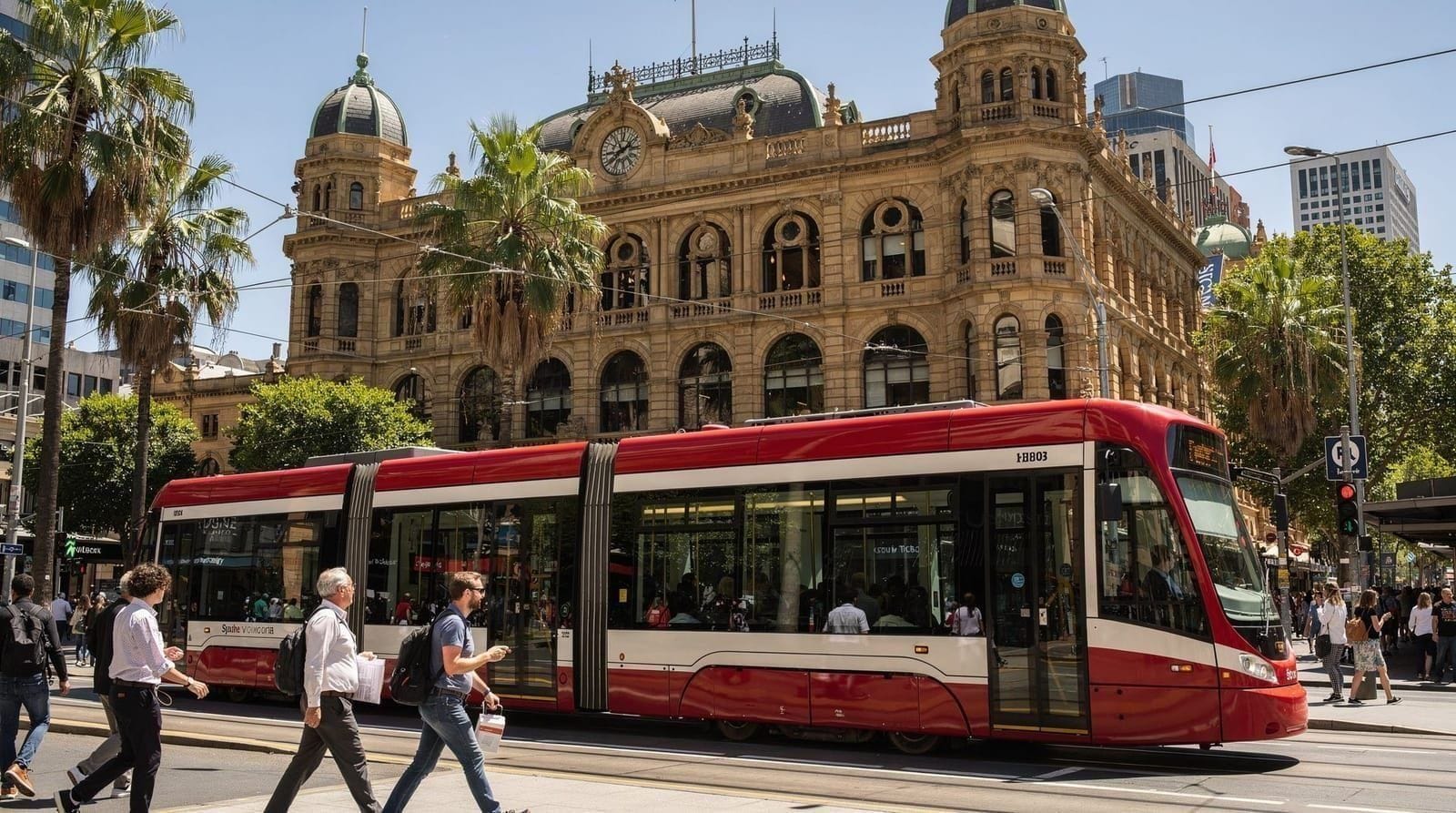
Public transport is better: For everything in central Sydney, the Opal card and public transport network are faster, cheaper, and more direct.
Sydney tollways — what you need to know
Sydney has one of the most extensive tollway networks of any Australian city. Most major motorways and tunnels are tolled, and paper cash tolls were removed years ago. All tolls are now electronic only, collected via E-Tag transponders (called E-TAG or various brand names) or by automatic number plate recognition.
If you’re renting a car
Rental car companies provide a toll management solution — typically an E-Tag fitted to the vehicle (at an additional daily fee of approximately AUD 5–10) or an administrative fee for processing toll invoices after your return.
Read your rental agreement carefully. If you drive through toll points without an E-Tag and your rental company doesn’t have an active account, you may receive toll notices weeks later with additional administration fees.
The most practical approach: ask the rental company whether the vehicle has an active E-Tag account, confirm any daily fee, and keep this active for the duration of your hire.
Major toll roads relevant to visitors
| Tollway | Where it goes | Typical toll |
|---|---|---|
| Sydney Harbour Bridge | CBD to North Shore | Toll applies southbound only (towards the city), about AUD 2.85–4.55 depending on time of day |
| Sydney Harbour Tunnel | CBD to North Shore (alternate) | Toll applies southbound only (towards the city), about AUD 2.85–4.55 depending on time of day |
| M2 Hills Motorway | City to northwest suburbs | AUD 3.81–10.75 depending on entry point |
| Eastern Distributor | CBD to Eastern Suburbs | AUD 10.59 |
| Cross City Tunnel | East–west CBD bypass | AUD 7.46 |
| Lane Cove Tunnel | Northern suburbs | AUD 4.33 |
| M5 South Western Motorway | City to southwest/airport | AUD 6.10 |
Note: the Harbour Bridge toll is southbound only (towards the city) — there is no toll when crossing from the CBD to the North Shore. Tolls are indexed each 1 January and 1 July, so check current prices at nsw.gov.au/tolling.
Car rental in Sydney — the options
Major international rental companies operate at Sydney Airport (T1 International and T2/T3 Domestic terminals): Avis, Hertz, Europcar, Budget, Thrifty, Enterprise. Smaller local operators (Bayswater, East Coast Car Rentals) are cheaper but pick-up is typically off-airport by shuttle bus.
Airport surcharge: Rental companies at the airport terminal add an airport concession fee — typically AUD 5–15 per rental. Renting from an off-airport location (usually reachable by hotel shuttle) is cheaper if you’re flexible.
Category recommendation for Sydney day trips:
- A small hatchback or compact (Hyundai i30, Toyota Corolla) is sufficient for Blue Mountains and Hunter Valley day trips.
- SUV/AWD is only needed for genuine off-road conditions in NSW (not the Blue Mountains, not Hunter Valley).
Insurance: Australian rental cars include basic third-party liability. The excess on collision damage typically runs AUD 3,000–5,000. Reduction excess products (from AUD 15–30/day) bring this to AUD 0–300. Credit card travel insurance from your home bank may cover this — check before departing.
Fuel type: Most rental cars run on 95 or 98 RON premium petrol (unleaded). Diesel variants are available but less common. Fuel prices vary — at time of writing, approximately AUD 2.10–2.30 per litre in Sydney. Regional prices may be 10–20% higher.
Road rules visitors frequently misunderstand
Give way to the right: At intersections without signals or signs, give way to vehicles approaching from the right.
Hook turn (Melbourne only): Not used in Sydney. Straight left or right turns from the appropriate lane.
Roundabout rules: Give way to all vehicles already in the roundabout (approaching from the right). Indicate your exit.
Mobile phones: Using a handheld mobile phone while driving is illegal and heavily enforced. Fixed-mount devices with hands-free are legal. The fine is AUD 434 (AUD 577 in a school zone) and 5 demerit points.
Drink driving: Blood alcohol limit is 0.05% for full licence holders (0.02% for visitors on international licences equivalent to probationary NSW status — in practice, 0.05% is the effectively enforced limit for visitors). Random breath tests are common. For most visitors, the safest approach is zero alcohol when driving.
Give way to pedestrians at crossings: At zebra crossings (unmarked raised crossings), give way to pedestrians already crossing. This is taken seriously and enforced.
Driving from Sydney for day trips
Blue Mountains
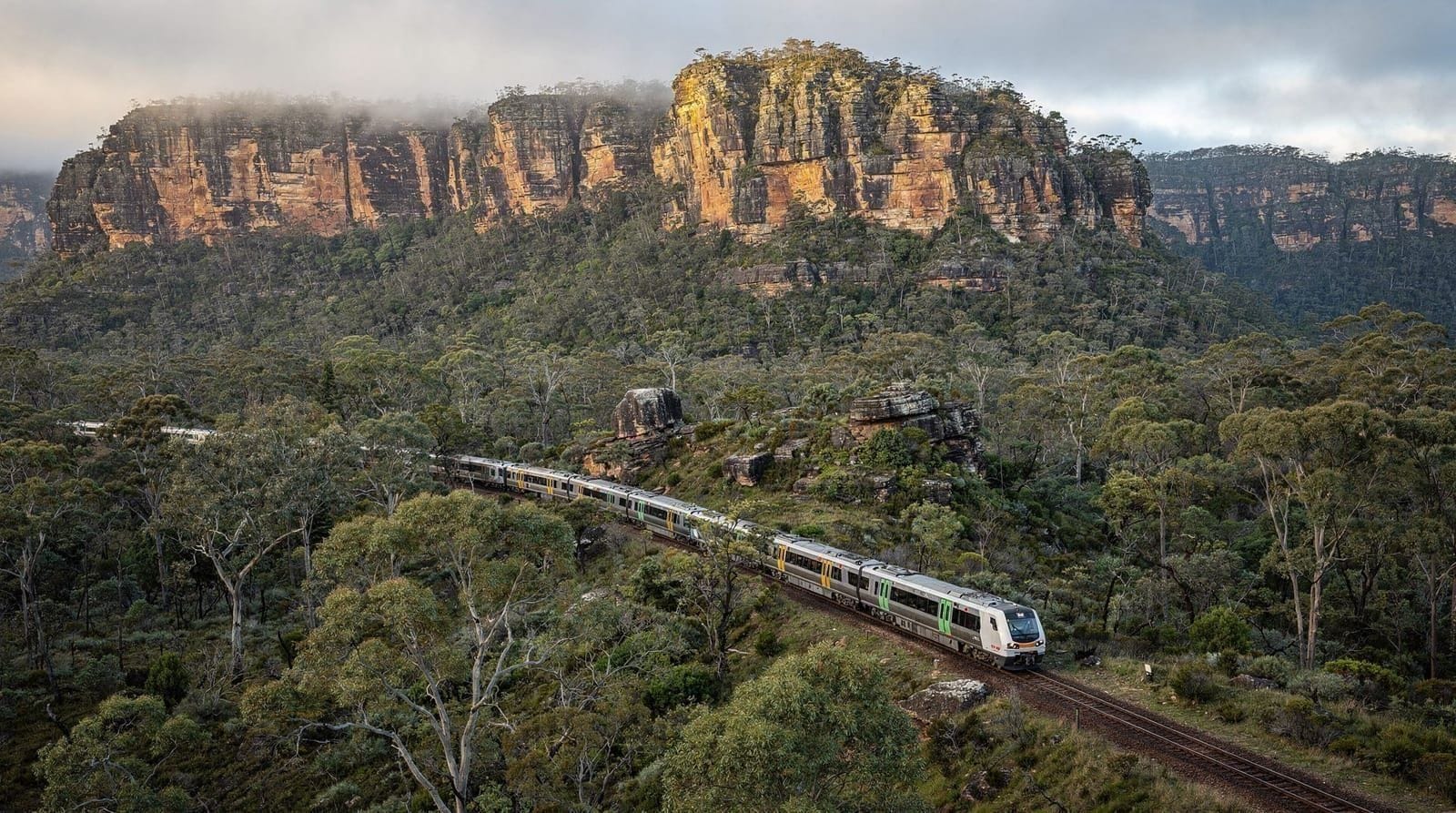
Drive west on the Western Motorway (M4) from the CBD. From the city to Katoomba is approximately 104 km, taking 1.5–2 hours depending on traffic leaving Sydney. The M4 is tolled (E-Tag required). Parking at Katoomba and Echo Point is generally free in the Echo Point carpark; arrive before 10am at weekends to secure a spot.
The scenic return via Bells Line of Road (through Richmond and Kurrajong) adds approximately 1 hour but passes through some of the most beautiful Blue Mountains country not visible from the main highway. The Blue Mountains day trip guide covers all route options.
Hunter Valley
Drive north on the M1 Pacific Motorway from the CBD to Cessnock (approximately 160–170 km, 2–2.5 hours). The M1 is tolled north of Wahroonga. Most Hunter Valley wineries are clustered around Cessnock and Pokolbin — a car is effectively essential as there is no practical public transport between wineries.
Port Stephens
Drive north on the M1 to the Newcastle link road, then east to Nelson Bay (209 km, approximately 2.5–3 hours from the CBD). A car provides full flexibility for the sand dunes, beaches, and dolphin cruise departure points. See the Port Stephens day trip guide.
South Coast (Jervis Bay, Wollongong)
Drive south via the Princess Highway (A1) or the Royal National Park coastal route. Wollongong is 82 km south (1–1.5 hours). Jervis Bay is 196 km south (2.5–3 hours). The Sea Cliff Bridge section of the Grand Pacific Drive (between Clifton and Coalcliff, south of Sydney) is one of the most scenic coastal road sections in NSW.
Further day trips worth a car
Beyond the Blue Mountains and Hunter Valley, a car opens up several other NSW day trips that are impractical or slow by public transport:
- Canberra: Around 3 hours via the Federal Highway/Hume Highway — see the Canberra day trip guide for a realistic itinerary and whether it’s worth the distance.
- Southern Highlands: Around 1.5–2 hours via the Hume Highway, covering Bowral, Berrima and Kangaroo Valley — the Southern Highlands day trip guide has the route detail.
- Jervis Bay: Around 2.5–3 hours south via the Princess Highway, for some of the whitest sand in NSW — see the Jervis Bay day trip guide.
- Central Coast: Around 1–1.5 hours north via the M1, an easier half-day option — the Central Coast day trip guide covers it.
For a broader comparison of all the day-trip options and which ones genuinely need a car versus which are fine by train or tour, the best day trips from Sydney guide is the place to start planning.
Navigation and fuel apps
Google Maps and Apple Maps both work reliably across NSW, including regional areas around the Blue Mountains and Hunter Valley, though signal can drop in the deeper Blue Mountains gullies — download offline maps before a Blue Mountains day trip as a backup. For fuel prices, the NSW Government’s FuelCheck app shows live prices at nearby stations, useful given the 10–20% price variation between metro and regional bowsers mentioned above.
Parking in Sydney
CBD: Commercial carparks are the only practical option. Major facilities at Sydney Central Station, Darling Harbour, and St James. Rates AUD 15–25 per hour, AUD 50–70 per day. Avoid Saturday afternoons when prices peak.
Inner suburbs (Surry Hills, Newtown, Paddington): Metered street parking, 1–2 hours maximum during business hours. Residential parking permits in effect in many areas (no non-residents). Harder to find than the CBD but cheaper.
Bondi Beach: The council carpark near the beach charges AUD 6–10 per hour and is often full on summer weekends. Alternative parking on side streets 15 minutes walk from the beach.
Blue Mountains / Katoomba: Free carpark at Echo Point. On peak summer and autumn weekends, it fills before 10am — park on the main street (Katoomba Street) and walk 10 minutes to Echo Point.
Harbour days when you leave the car behind
The best way to see the harbour itself is rarely from behind a steering wheel. If your rental is parked for the day, or you only collect a car for a day trip and spend the rest of your stay without one, the water is where the city shows its best side. Many of the harbour’s headline experiences start around Circular Quay and Darling Harbour, exactly the areas where driving and parking are most frustrating, so they pair naturally with a train or ferry ride in.
For a calm, early start, a paddle across the harbour at sunrise gets you onto the water before the traffic builds, and you can be back on dry land before the morning peak. Our Sydney Harbour kayaking guide explains what to expect and how to choose between the options.
If you would rather have speed than stillness, a jet boat ride from Circular Quay is the quickest way to cover the harbour’s famous landmarks. The jet boat guide compares the departure points and ride styles, and the Sydney Harbour cruises guide covers the slower, more relaxed alternatives.
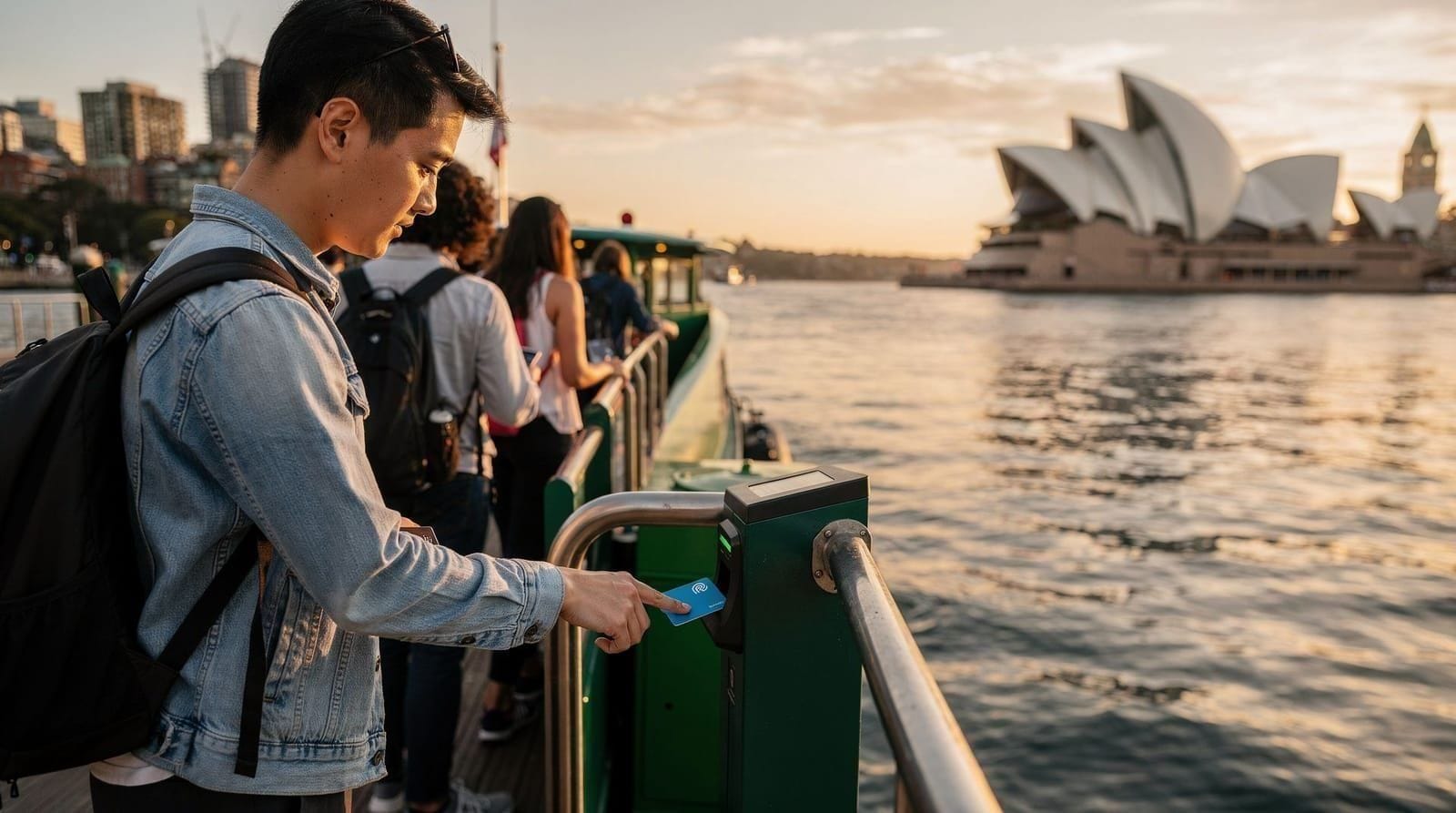
Neither needs a car, and both are easy to reach on public transport. The Sydney ferries guide shows how to get to the water without worrying about tolls or parking, which makes these a sensible way to fill the non-driving days of a longer trip.
When a car is and isn’t worth it
Worth renting for:
- Hunter Valley (no viable alternative to self-drive for multi-winery touring)
- Extended NSW road trip beyond the Blue Mountains (Jenolan Caves, Bathurst, Orange)
- Port Stephens with children or large group
- Southern Highlands or South Coast self-drive
Not worth renting for:
- Central Sydney (public transport is faster and parking is expensive)
- Blue Mountains if you’re happy with Katoomba/Scenic World only (train is adequate)
- Any destination within 10 km of the CBD
See the is a car needed in Sydney guide for a full day-trip comparison by transport mode. For the CBD and inner suburbs specifically, the Sydney trains guide and the getting around Sydney guide cover the alternative that most visitors should default to.