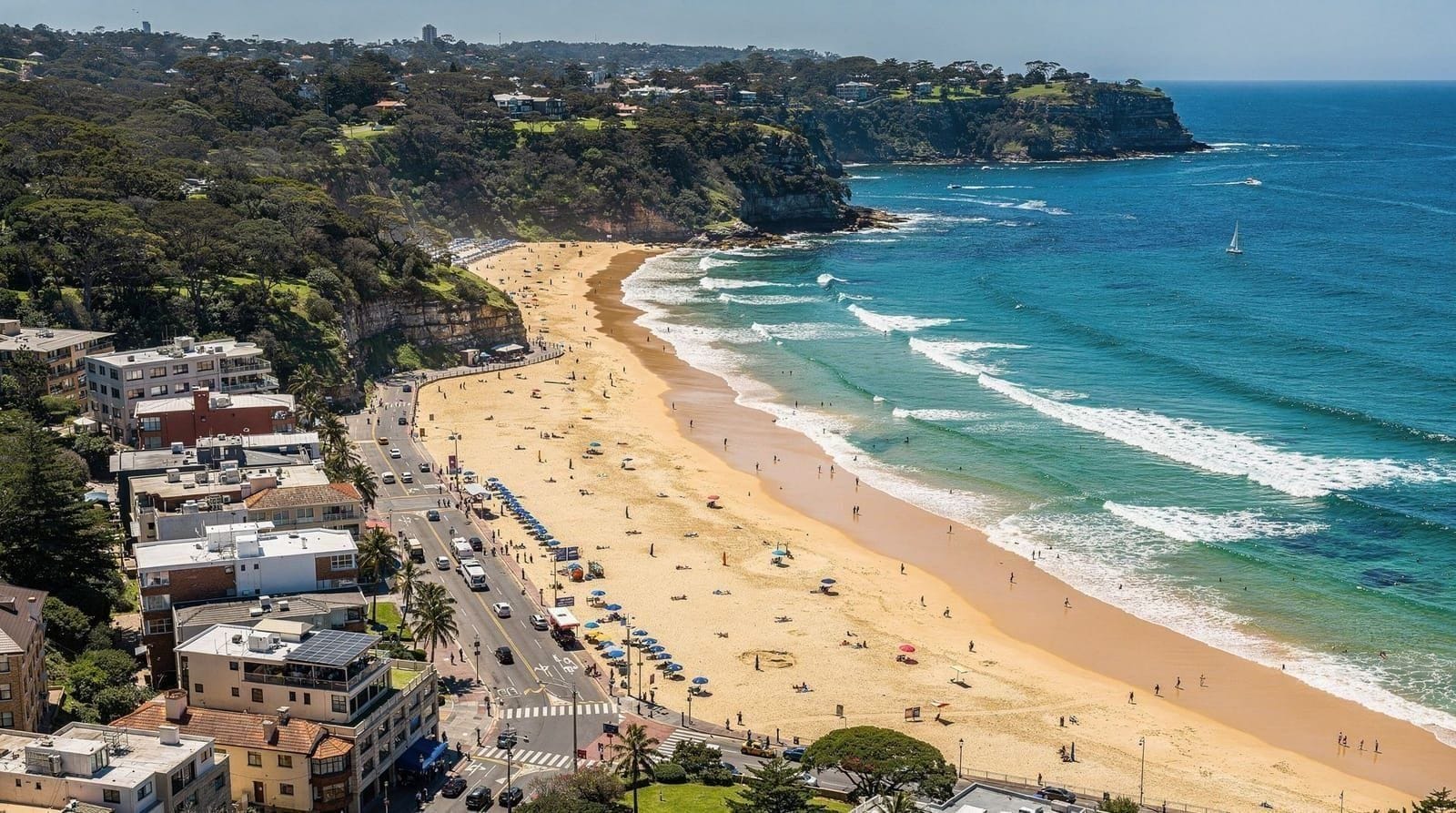
Clovelly Beach
Guide to Clovelly Beach — a narrow ocean inlet perfect for snorkelling and non-surfers, with no waves, free entry, and easy bus access from Sydney CBD.
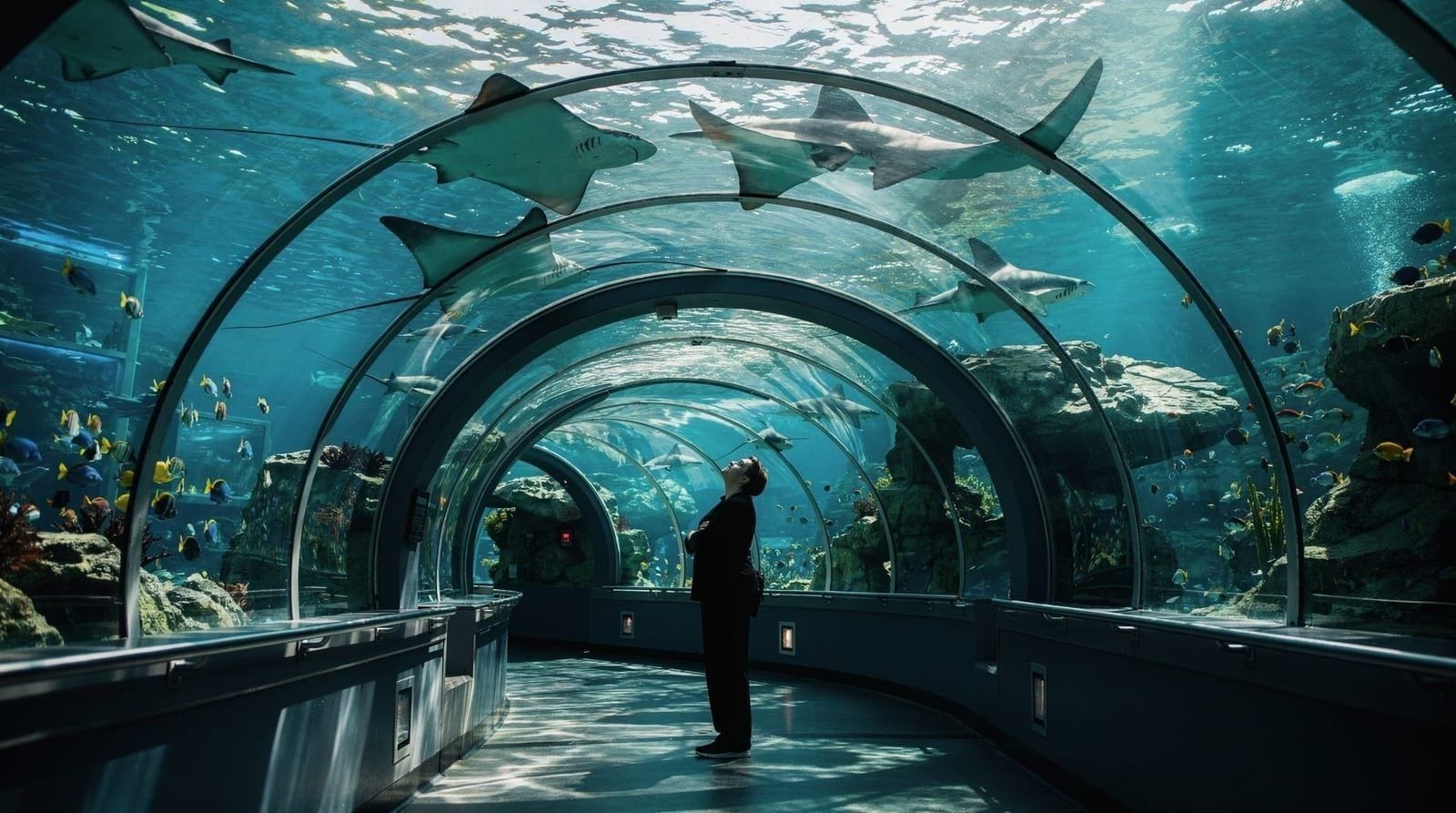
Sydney: Snorkeling tour discover Sydney s impressive SEA LIFE
Quick facts
- Distance from CBD
- 9 km (40–50 min by bus)
- Bus route
- 339 from Circular Quay
- Water conditions
- No breaking waves; narrow inlet protected by rock walls
- Entry cost
- Free (no ocean pool fee — the beach itself is the pool)
- Best months
- September–May (good for swimming); all year for snorkelling
A beach unlike the others
| At a glance | |
|---|---|
| Where | Eastern beaches, between Bronte and Coogee, 9 km from the CBD |
| Cost | Free entry; mask/snorkel hire at Coogee (prices vary by operator) |
| Time needed | 1–3 hours; combine with Bronte or Coogee for a half day |
| Getting there | Bus 339 from Circular Quay (~40–50 min), or on foot via the coastal walk |
| Best time | October–April for warmest water; sheltered and swimmable year-round |
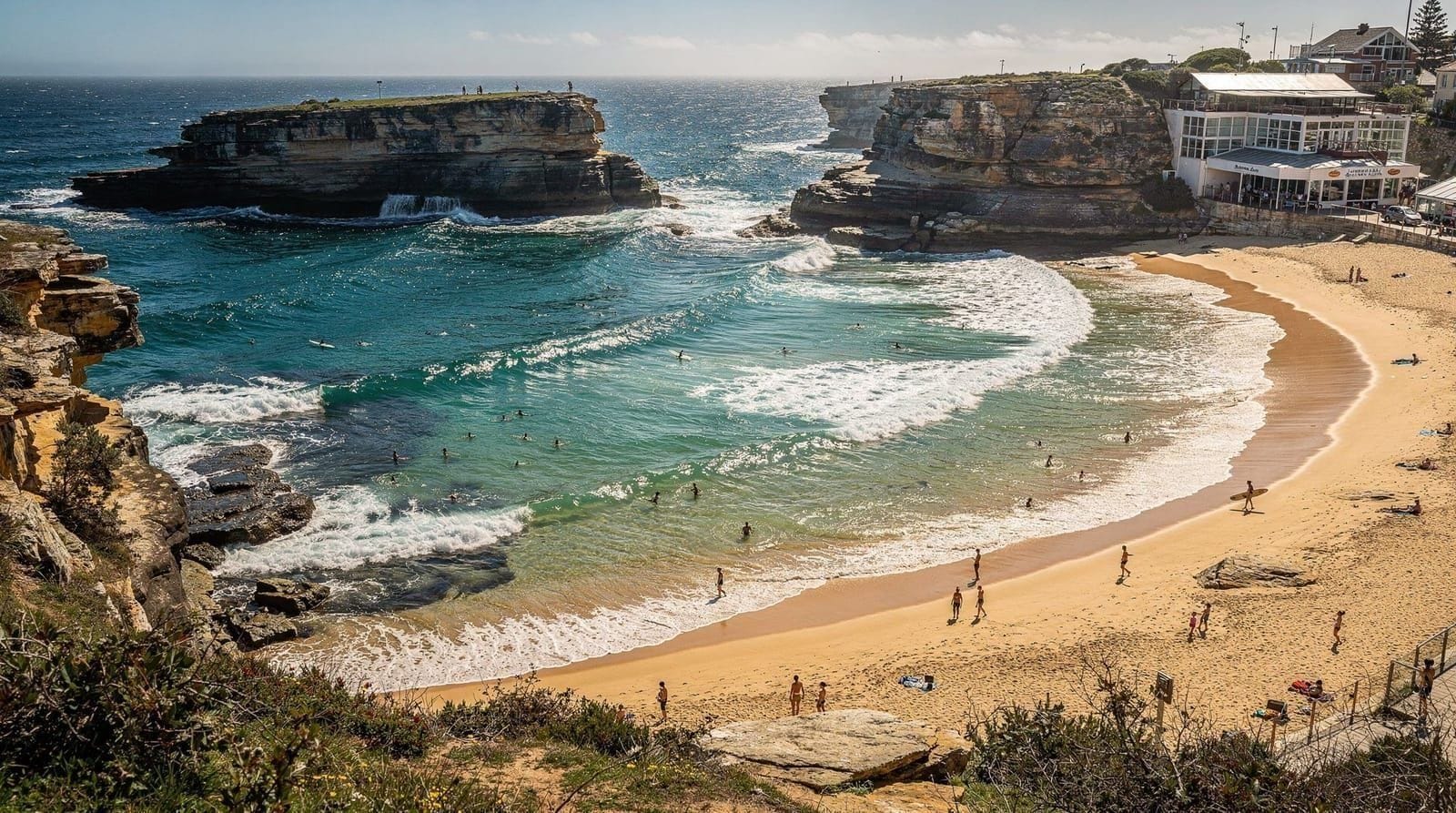
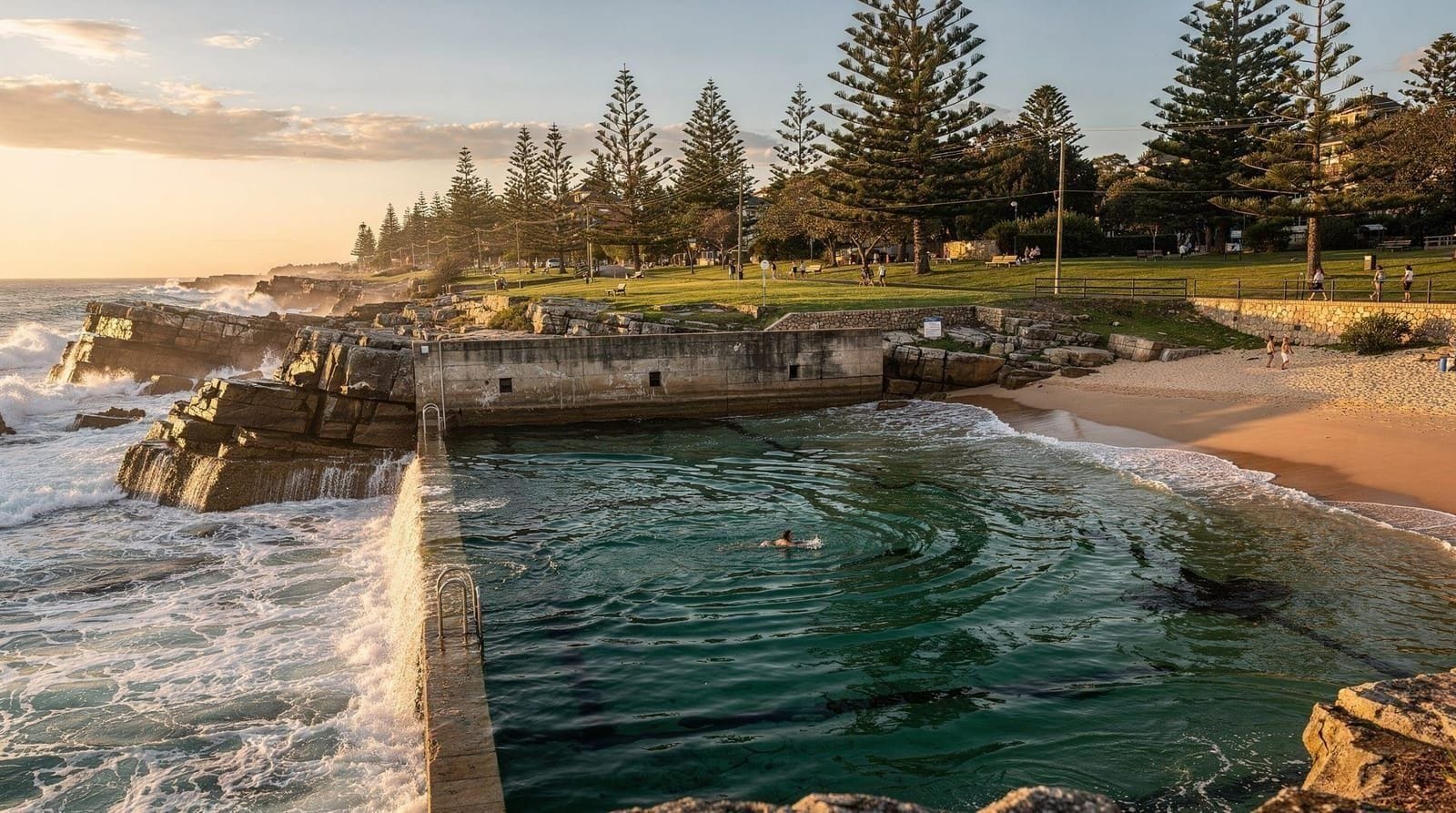
Clovelly is not technically a beach in the conventional sense. It is a narrow ocean inlet — about 50 metres wide and 150 metres long — enclosed on both sides by flat sandstone rock platforms. The opening to the ocean faces north-east, but the geometry of the inlet means that very little swell penetrates; the water inside is effectively always calm, regardless of what conditions are doing on the open coast.
This makes Clovelly unique among Sydney’s Eastern Beaches. Bondi, Bronte, Coogee — all have active surf and rip currents that make them unsuitable for non-swimmers or young children without supervision. At Clovelly, a child who can swim 25 metres confidently has a genuinely low-risk ocean swimming experience. There are no waves, no rip currents, and the water depth increases gradually from the concrete entry ramp at the southern end.
Snorkelling — the main event
Clovelly sits within the Clovelly Marine Reserve, and the combination of no fishing, calm water, and rocky substrate means the fish life here is exceptional by Sydney standards. Eastern blue groper (which can grow to 70 cm and are completely unbothered by humans), snapper, luderick, and leather jackets are commonly seen without needing to dive below the surface. The goggle-eyed rocky sea dragons (weedy and common sea dragons) appear occasionally along the northern rock wall.
Book a snorkelling tour of the Bronte–Coogee marine reserveYou do not need a guided tour to snorkel here — the entire inlet is visible from the surface and there are no currents to navigate. However, a guided tour adds species identification and context about the marine reserve ecosystem. Bring or hire a mask and snorkel (hire available from Coogee Beach nearby); fins are helpful at the northern end where the depth increases. Best visibility is in morning light before the sun reaches directly overhead.
What fish you will actually see
The marine reserve at Clovelly contains some of Sydney’s most accessible and diverse fish life. The eastern blue groper is the most celebrated resident — a large, cobalt-blue fish that can reach 70 cm in length and is completely accustomed to human presence. They will swim within arm’s reach of snorkellers without being startled. Feeding them is technically prohibited under the marine reserve rules, but historical feeding means some individuals actively approach divers.
Other species commonly seen at Clovelly:
- Luderick (blackfish): Dark, striped, school-forming; typically near the rock walls
- Yellowtail scad: Large schools that create an impressive silver curtain mid-inlet
- Snapper: Juveniles in schools near the southern entry ramp; larger individuals deeper at the northern end
- Leatherjackets: Grey-green, slow-moving, tend to hover near the rocky walls
- Moray eels: In the rock crevices along the north wall; best seen in morning when light penetrates the deeper sections
- Eastern red scorpionfish: Camouflaged against the rocks; common but easy to miss
The best snorkelling position is along the north wall, starting from the entry ramp and swimming slowly along the base of the rock. Visibility is typically 6–10 metres on a calm morning.
The rock platforms and facilities
The rock platforms on both sides of the inlet are a social institution. Sydney locals spread towels on the flat sandstone, which is genuinely comfortable for sunbathing in a way that sloping beaches often are not. The north platform is broader and catches afternoon sun; the south platform is narrower and shadier in the afternoon.
A small kiosk near the car park entrance sells drinks, ice cream, and basic snacks. The Clovelly Hotel (on Clovelly Road, five minutes’ walk uphill) is the main pub option — Tooheys on tap, pub meals in the AUD 22–32 range, a large beer garden. For better food, the options on nearby Coogee Bay Road at Coogee are worth the 15-minute walk.
Facilities include outdoor showers, basic change rooms, and toilets near the car park. No entry fee applies — Clovelly is free.
Eating near Clovelly
Clovelly has a single café-kiosk at the beach end of the car park — good for a coffee and a snack (AUD 5–12), limited menu, cash or card. Beyond that, your options are:
On Clovelly Road (5 minutes’ walk uphill): Clovelly Hotel — a traditional Australian pub with a large front bar, TAB racing screens, and a modest bistro. Pub meals AUD 22–32. Reliable rather than inspired. Good for a cold beer after a long snorkelling session.
In Randwick (15 minutes by bus on route 339): The Duke of Gloucester on Alison Road is a well-regarded gastropub with above-average food (AUD 28–38 mains). The Royal Randwick Racecourse area also has some good cafés around Market Street.
At Coogee (15 minutes north on foot or 10 by bus): Coogee Pavilion and the broader Coogee Bay Road strip give you the most dining variety closest to Clovelly.
In practical terms, Clovelly is best visited as part of a longer coastal walk day where you eat at either end (Bondi or Coogee) rather than expecting a full restaurant experience at the beach itself.
Getting there
Bus 339 from Circular Quay stops on Clovelly Road, a five-minute walk from the beach. Journey time is approximately 40–50 minutes from the CBD. There is limited free parking on Clovelly Road with time restrictions; in summer, the spots fill before 9 am on weekends.
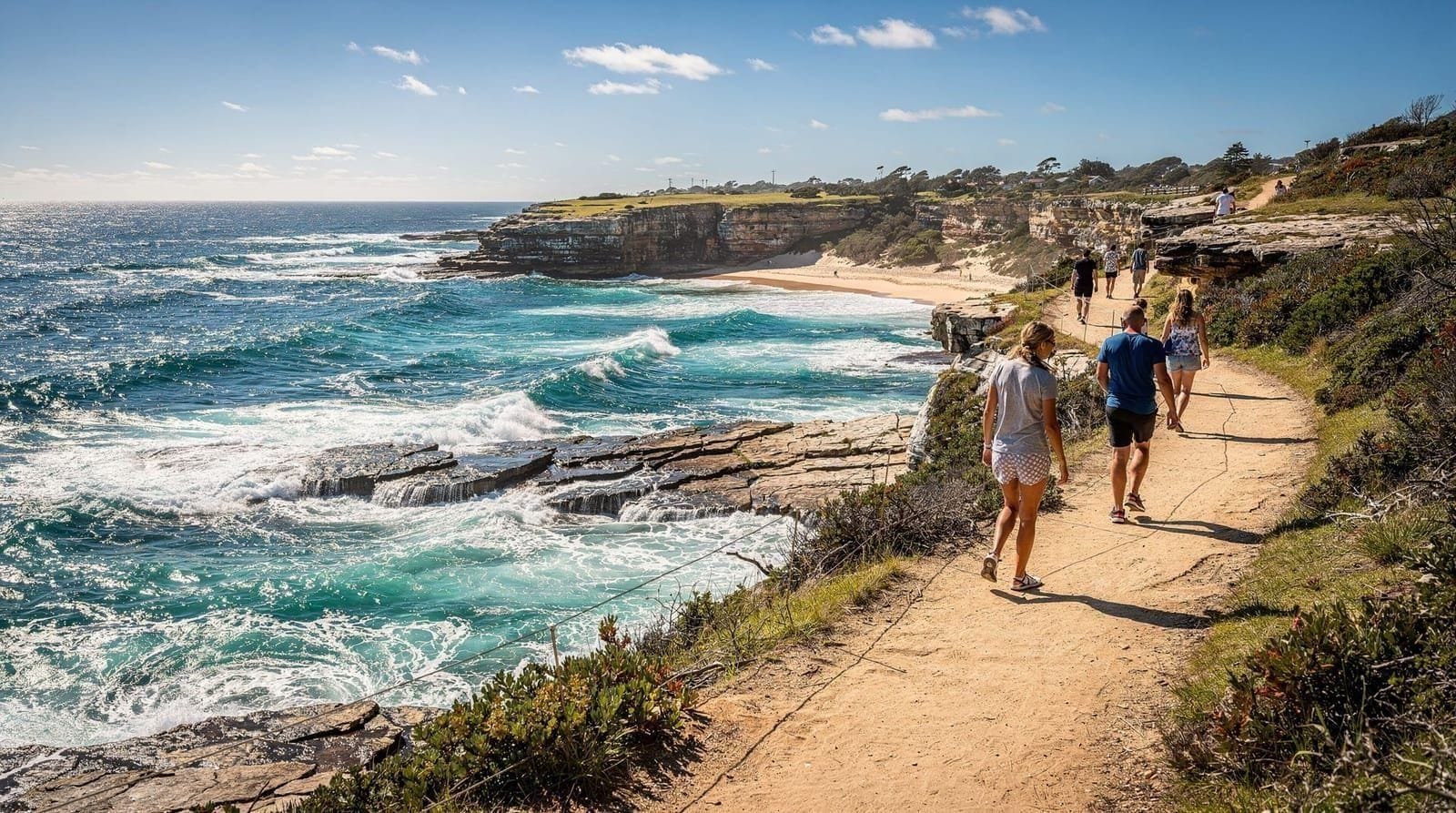
Clovelly is the mid-point of the Bondi to Coogee coastal walk, approximately 40 minutes north of Coogee and 50 minutes south of Bondi on the cliff-top path. Most walkers use it as a swimming break rather than a destination in its own right.
Seasonal conditions and water temperature
Clovelly’s water temperature mirrors the open ocean: warmest in late February–March (22–24°C) and coolest in August (17–18°C). Because the inlet is sheltered, wind has almost no effect on surface conditions — what you see is almost always what you get. Visibility for snorkelling is best from October through March when runoff is minimal and the water clarity is highest.
The main seasonal disruption is large southerly swells (typically May–July). When a genuine south swell is running (over 3 metres offshore), water surges through the gaps in the rock walls and the inlet can become agitated for an hour or so after each set. Check the Manly Hydraulics wave forecast or the Surf Life Saving app before visiting in winter if you are taking children.
What to bring and hire nearby
Clovelly has limited hire facilities on-site. The nearest snorkel gear hire is at Coogee Beach (15 minutes north on foot), where several surf hire operators rent out masks and snorkels (prices vary by operator). Fins are also available and are worth it for exploring the deeper northern end of the inlet.
Sun protection is non-negotiable. The flat sandstone rock platforms reflect UV strongly — even on overcast days, the UV index in Sydney is elevated enough to cause burns within 30–40 minutes without SPF 30+ sunscreen. Reapply every two hours. The SPF factor is not a suggestion in Sydney: the UV here is genuinely more intense than in most of Europe, reaching extreme levels (11+) on summer afternoons.
Bring water — the kiosk near the car park sells cold drinks and ice cream at moderate prices, but it has limited opening hours outside peak season. There are no restaurants at Clovelly itself; the nearest good options are at Coogee (Coogee Bay Road) or back towards Bronte.
Photography at Clovelly
Clovelly is one of the more photogenic of Sydney’s lesser-known spots, particularly in early morning light when the sun is low and the rock platforms are not crowded. The best position for photographing the inlet is from the northern rock platform, looking south — the narrow geometry of the inlet frames naturally, and the colour contrast between the blue-green water and the pale orange sandstone is striking in good light.
The blue groper fish are patient photographic subjects. A basic waterproof point-and-shoot camera produces good results at depth in Clovelly’s clear water. Underwater photography at Clovelly has appeared in multiple wildlife publications; the combination of clarity, marine life density, and calm water makes it unusually accessible.
Sunset does not reach Clovelly directly (the inlet faces north-east), but the western rock platform catches late afternoon light and the sky above the southern headland can be worth photographing on clear days in autumn and winter.
Accessing the coastal walk from Clovelly
The Bondi to Coogee coastal walk passes through Clovelly via the path along the northern edge of the inlet. From Clovelly, it is approximately 25 minutes south to Coogee and 45 minutes north to Bronte (including the climb over Bronte Headland). The path is well-maintained and signposted; no guide is required.
Most people arrive at Clovelly as a swim stop on the coastal walk rather than as a destination in itself. If you are walking the full route from Bondi to Coogee, Clovelly is the natural mid-point for a snorkel break — the walk from Bondi’s southern headland to Clovelly takes approximately 1.5 hours at a moderate pace.
Getting to Clovelly
From Circular Quay: Bus 339, approximately 40–50 minutes. Stops on Clovelly Road, five-minute walk to the beach.
From Bondi Junction: Bus 360 to the Randwick junction, then walk or change for 339. Or walk from Bondi along the coastal path (1.5 hours).
From Coogee: Walk north along the coastal path, approximately 25 minutes. Or bus 339 back towards Randwick and ask the driver for Clovelly Road.
Parking: Clovelly Road has metered street parking with two-hour limits. The small car park above the beach fills quickly on summer weekends. A 10-minute walk from residential streets (Arden Street, Cliffbrook Parade) sometimes yields free spots on weekdays.
Who Clovelly is for
Clovelly is arguably the best single beach in Sydney for travellers who want to swim in the ocean without dealing with surf. It suits families with young children, older swimmers, and anyone who finds breaking waves intimidating. It is also the best snorkelling spot on the eastern beaches for people without dive experience.
The best beaches in Sydney guide and the Sydney coastal beaches itinerary cover how to combine Clovelly with the rest of the eastern strip. Parents with children under 10 should read the Sydney beaches for families guide — Clovelly appears alongside Balmoral and Shelly Beach as one of the safest and most rewarding beach experiences in the city.
Clovelly vs Bondi and Bronte for swimming
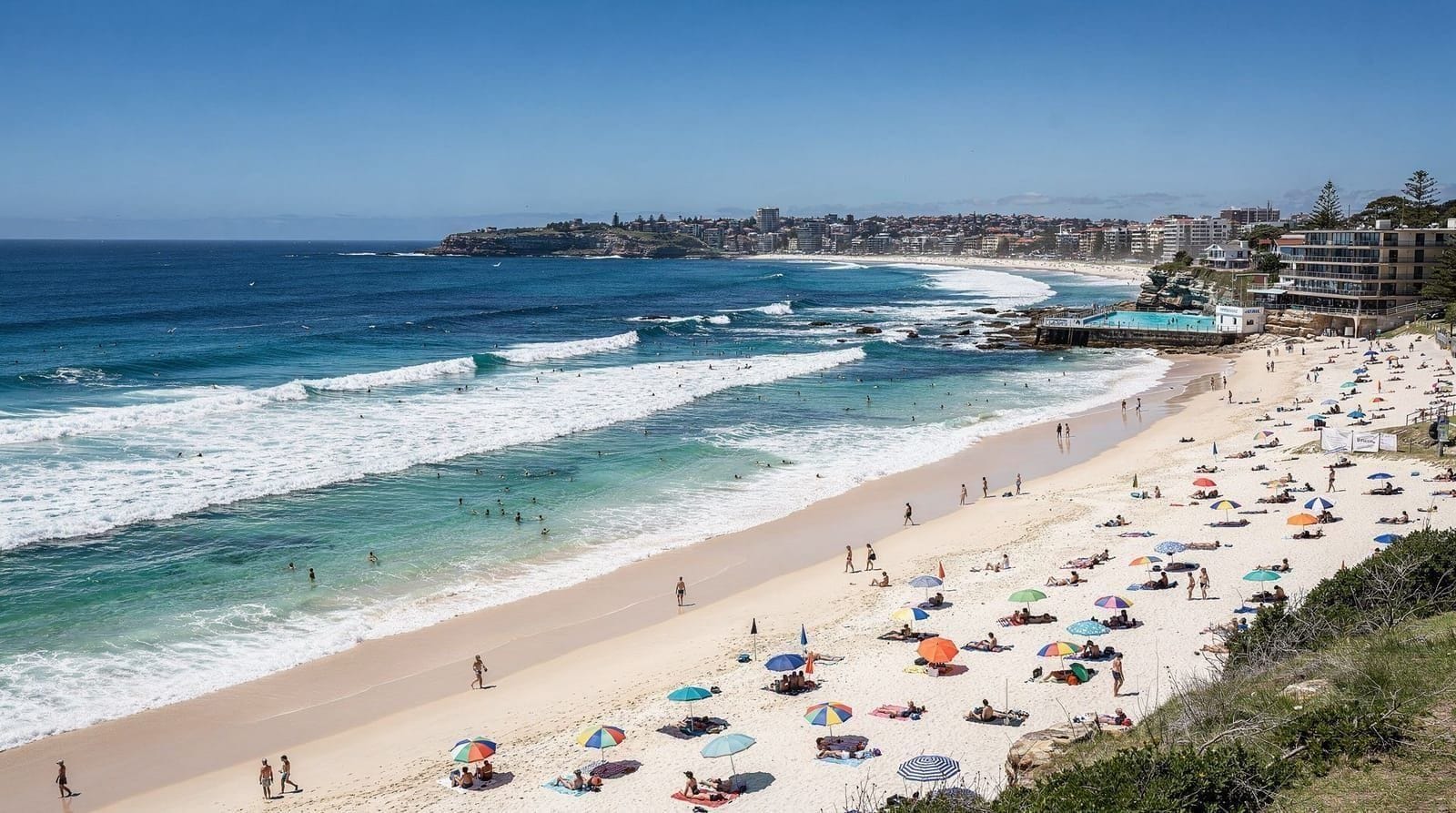
Visitors deciding where to swim on the eastern beaches face a genuine trade-off. Bondi Beach has the biggest scene, the most facilities, and reliable surf — but rip currents mean swimming outside the patrolled flags is genuinely risky. Bronte Beach sits in between: a smaller surf beach with a sheltered ocean pool at its southern end. Clovelly has no surf at all, which makes it the safest choice for non-swimmers, young children, and anyone snorkelling rather than swimming laps or catching waves. If the goal is a classic Sydney beach day with sand, sun, and a swim in the surf, choose Bondi or Bronte; if the goal is calm water and marine life, Clovelly wins outright.
Doing the full Bondi to Coogee walk with Clovelly as a stop
Clovelly’s position as the midpoint of the Bondi to Coogee coastal walk makes it the natural place to break the 6-kilometre walk for a swim. Most walkers start at Bondi in the cooler morning hours, reach Clovelly around the 1.5-hour mark, snorkel or swim for 30–45 minutes, then continue on to Coogee. Bring a dry bag or leave valuables secured — there are no lockers at Clovelly itself, only basic change rooms.
If you would rather not organise the logistics yourself, some visitors prefer a Bondi to Coogee coastal hike that includes an à la carte lunch, which fits neatly around a swim stop. Walking the other way, a coastal walk from Coogee to Bondi that finishes at the Icebergs pool passes the inlet early in the day, when the water is calmest and the platforms are quiet.
Frequently asked questions about Clovelly Beach
Is Clovelly good for young children who can’t swim well? Yes — it is one of the safest ocean swimming spots in Sydney because the rock walls block all surf and there are no rip currents, though children should still be supervised and the water still deepens gradually rather than being a shallow pool throughout.
Do you need diving experience to snorkel at Clovelly? No. The entire inlet is visible from the surface, there are no currents to navigate, and fish (including the resident blue groper) are used to human presence, making it one of the easiest snorkelling spots in Australia for beginners.
Top experiences
Bookable activities with verified prices and instant confirmation on GetYourGuide.