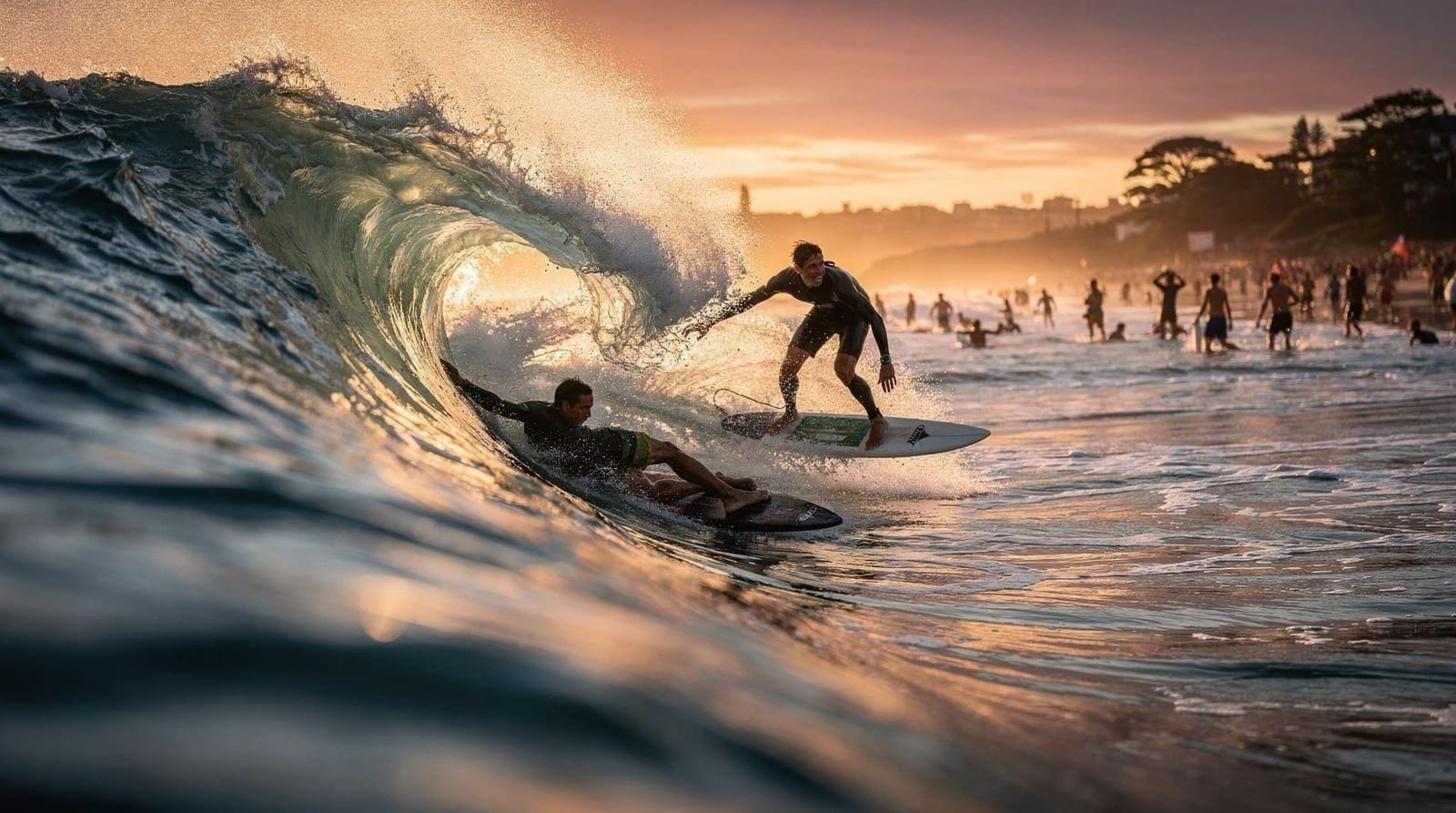
Surfing in Sydney for beginners — best beaches, lessons, and what to expect
Sydney: From Bondi beach fun 2 hour surf experience for beginners
Duration: 2 hours
Where is the best place to learn to surf in Sydney?
The north end of Bondi Beach and the northern section of Manly Beach are the standard choices for beginner lessons — shallower, slower whitewash sections, professional schools, and patrolled throughout. Maroubra is a slightly less crowded alternative with the same quality instruction.
What surfing in Sydney actually involves
| Where | Bondi (north end), Manly (north end), or Maroubra |
| Cost | Varies by school; see the surf school’s official website |
| Time needed | 2 hours per lesson (30 min sand + 90 min water) |
| Getting there | Bondi/Manly reachable by bus or ferry from the CBD |
| Best time | Autumn (March-May) for the best wave conditions overall |
Sydney’s surf is genuine — the city faces the south-east Pacific Ocean and receives consistent swell throughout the year. Average wave height at most beaches runs 0.8–1.5 m, occasionally larger in the swell windows of autumn and winter. For a beginner, this means real waves with real push, not the knee-high gentleness of a protected bay.
This is important context: Sydney surfing is not a beginners-only environment. The beaches are shared with experienced surfers who have genuine skills and a fairly specific code about right of way. Learning in a formal lesson handles this — the school sections off a dedicated area of whitewash away from the main break.
Best beaches for beginners
Bondi Beach (north end)
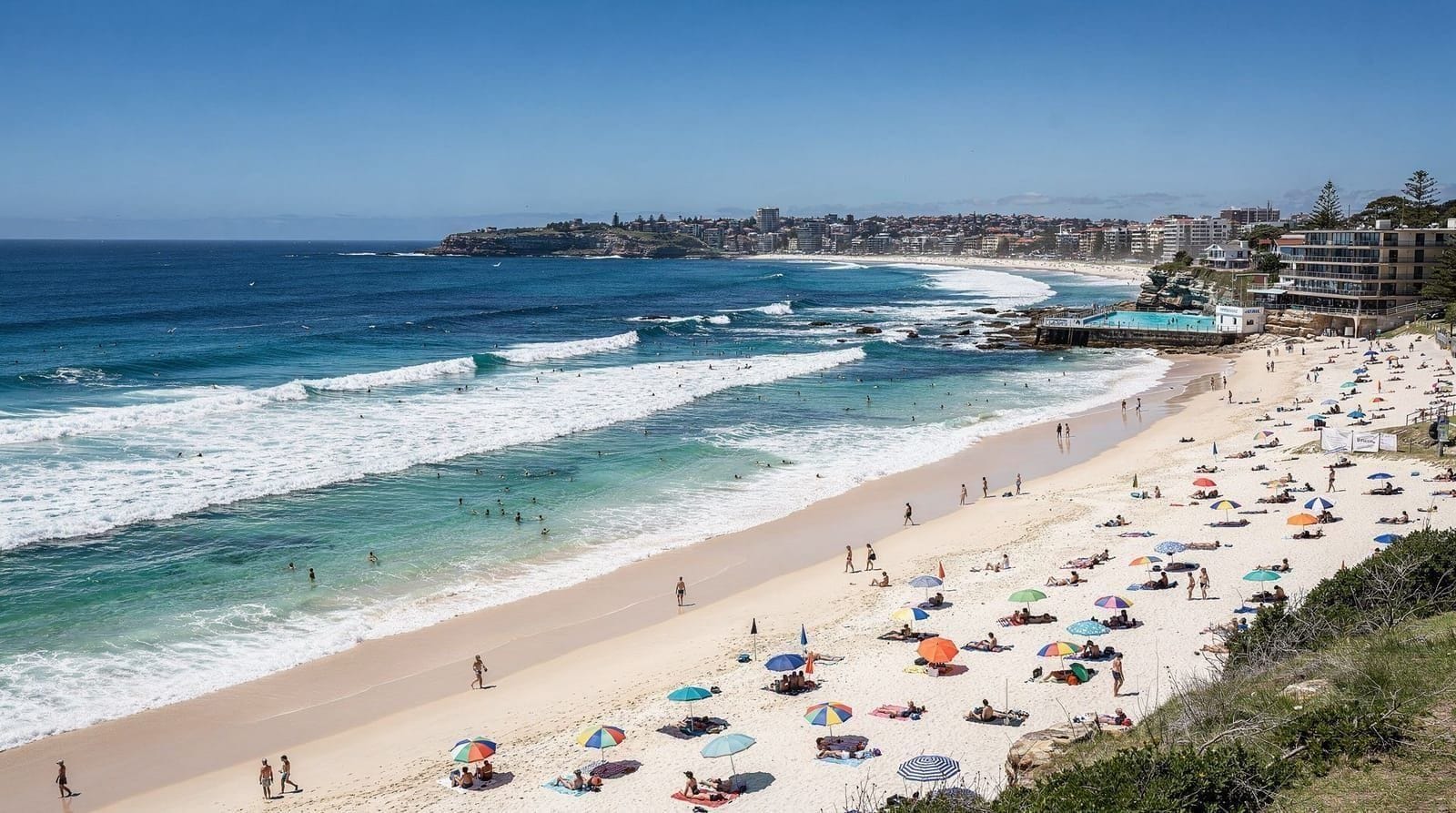
The northern section of Bondi, near the Ben Buckler headland, is the designated beginner and surf school area. The waves here have already broken further out and arrive as whitewash — slower, easier to catch, and more forgiving. Most of the organised surf schools operate in this zone.
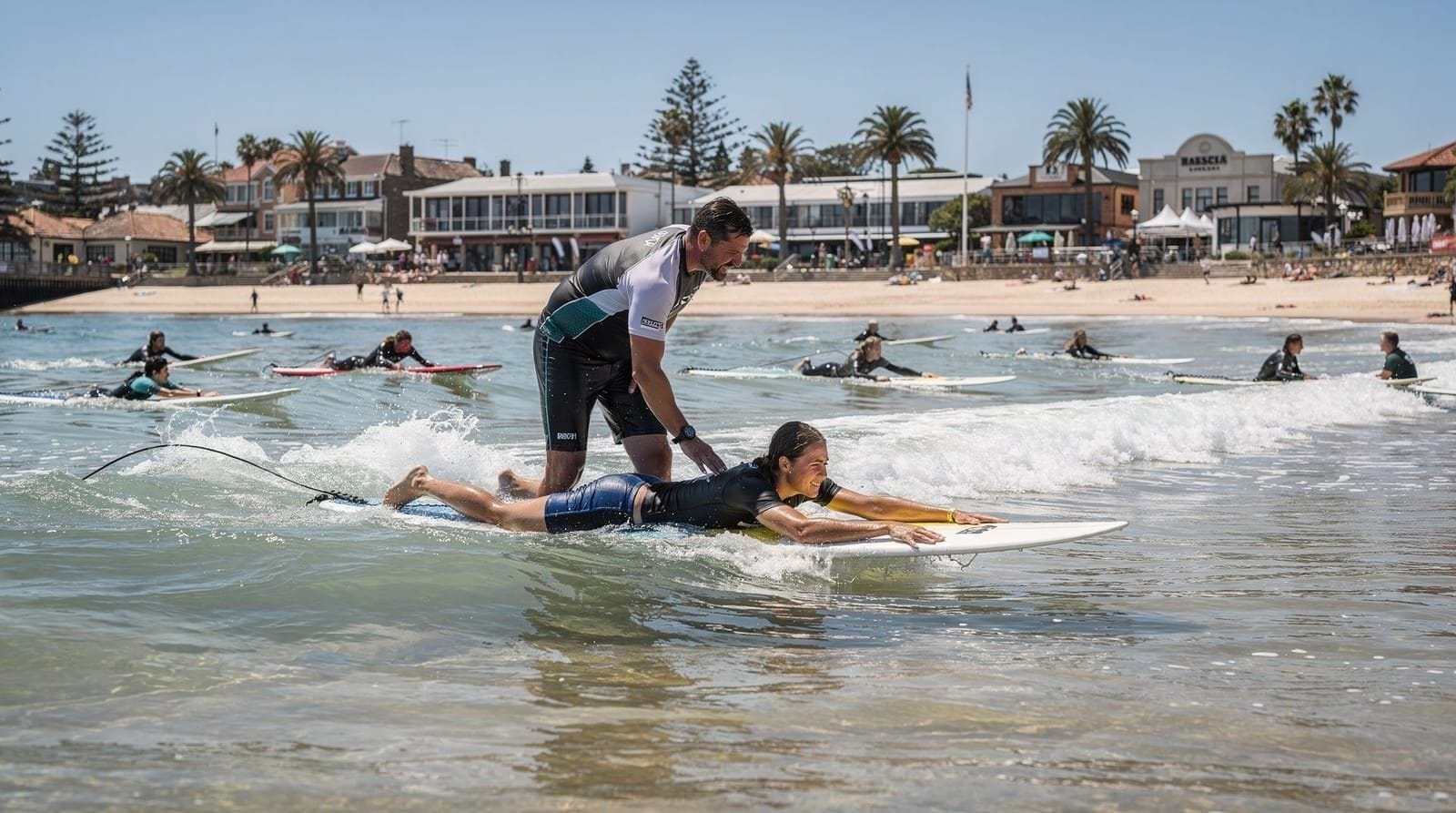
Group lessons run approximately 2 hours: 30 minutes of instruction on the sand (board handling, paddling technique, pop-up, right-of-way basics) followed by 90 minutes in the water. Most beginners stand up during the water session. Whether you stay standing consistently is a different question.
2-hour beginner surf lesson at Bondi BeachIf you want individual attention — for a specific technique, progression past whitewash, or you simply prefer one-on-one instruction:
Private surf lesson at Bondi BeachCost: Prices vary by school; see the surf school’s official website.
Manly Beach (north end)
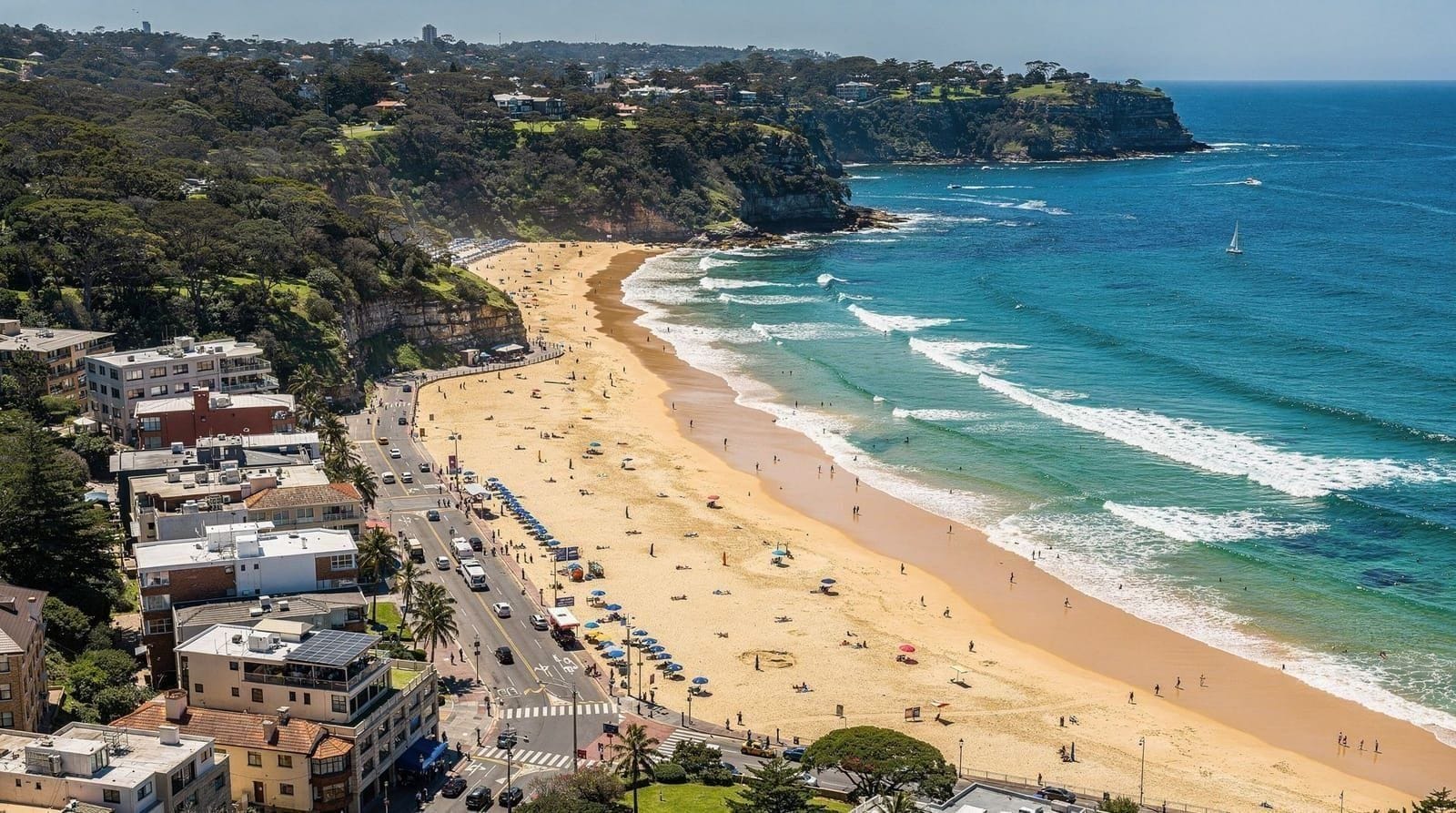
Manly’s northern section near the groyne produces similar beginner conditions to Bondi’s north end — slower whitewater, protected from the main swell energy, and used by several licensed surf schools. Manly occasionally has slightly less crowded learner zones than Bondi.
How to get there: Ferry from Circular Quay to Manly Wharf (~30 min, at the standard Opal fare). The surf school area is a 5-minute walk north along the beach from the Corso exit.
See the Manly Beach guide for full logistics.
Maroubra Beach
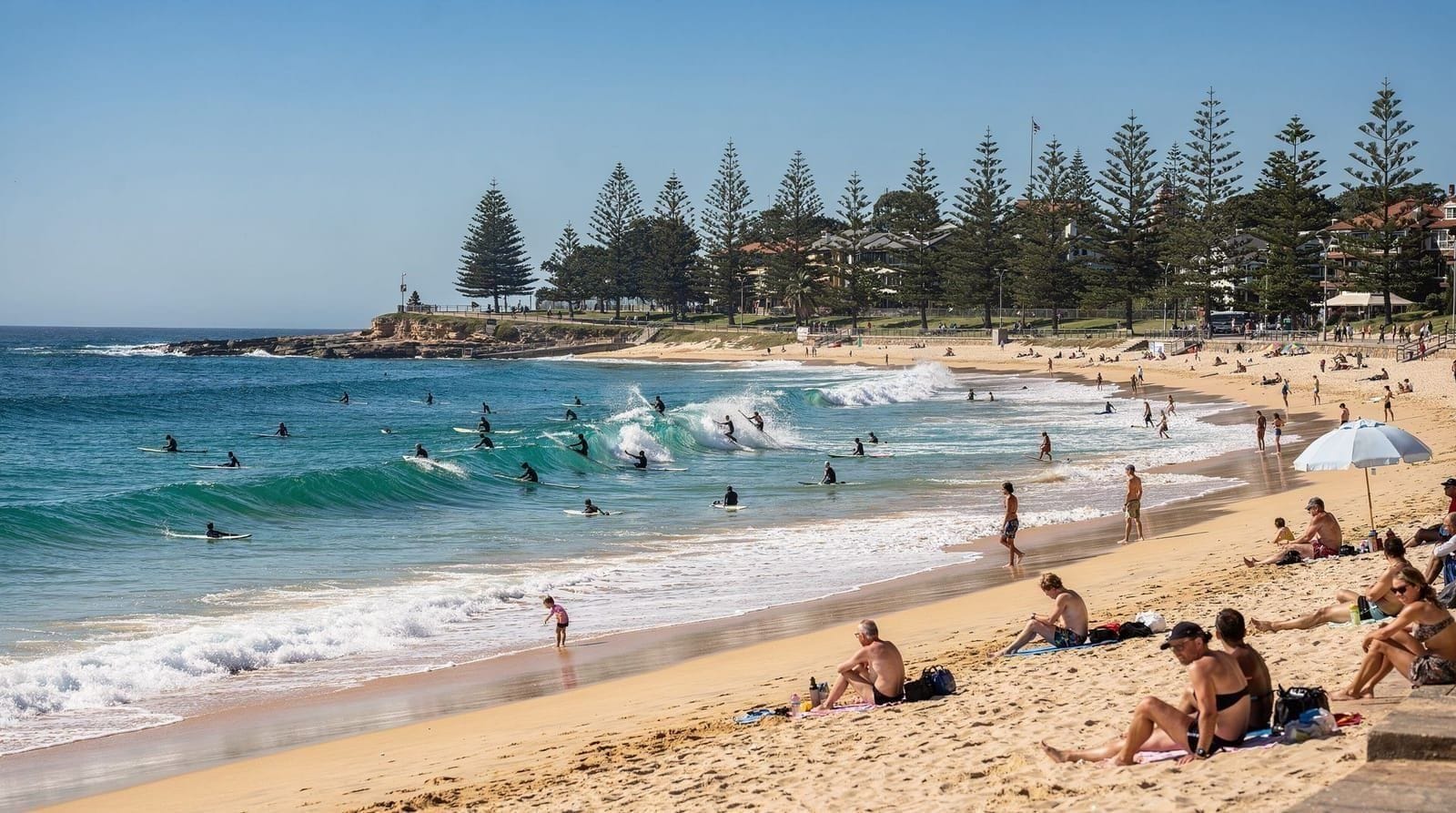
Maroubra, 8 km south of Bondi along the eastern suburbs coast, is the least tourist-heavy option. The beach is about 900 m long and consistently less crowded than Bondi. Surf schools here operate in smaller groups.
Surf lesson at Maroubra BeachTransport: Bus 395/396 from Circular Quay (~35 min).
Freshwater Beach
Freshwater, one stop north of Manly on the bus, is where surfing in Australia began in 1915. The beach is smaller and the break is gentler than Manly’s main beach. A few operators run lessons here, though it has fewer options than Bondi or Manly. Good if you are already in the northern beaches area.
What to expect in a lesson
Before entering the water: Most lessons start with 20–30 minutes on the sand. You will learn: how to lie on the board, paddling technique, how to “pop up” (the movement from prone to standing), basic right-of-way rules, and how rip currents work. This ground session is genuinely useful — beginners who rush it typically struggle more in the water.
In the water: The instructor positions you in the whitewash zone and pushes you onto waves (yes, they push — you are not expected to paddle yourself onto a wave in a first lesson). Your job is the pop-up. Most people achieve this during the 90-minute water session. Staying on the board for more than 2 seconds is harder.
What you will wear: A wetsuit (3/2 mm in summer, 4/3 mm in winter) provided by the school. Rashguard and board shorts under the wetsuit are provided or worn from home. The schools provide boards — large, foam beginner boards (called “foamies” or “mal” for malibu). These are significantly easier to ride than the boards experienced surfers use.
Physical requirements: No specific fitness level required for a first lesson. Basic swimming ability is necessary — you will fall off the board in water you can generally stand up in, but you need to be comfortable swimming in waist-to-chest deep ocean water. The lesson areas are patrolled.
Group vs private lessons
Group lessons (usually 4–8 students per instructor): Appropriate for true beginners. You get professional instruction, the collective experience is supportive, and the instructor typically catches technique errors in the water for each student. The group format limits individual attention to roughly 10–15 minutes of focused coaching per person.
Private lessons (1–2 students per instructor): Worth the extra cost (roughly double) if you have surfed before and want to improve specific skills, or if you have a limited number of sessions and want maximum attention. For an absolute beginner on a one-day visit, the group format delivers sufficient value at significantly lower cost.
Children: Most schools take children from age 7–8. Children typically progress faster than adults due to lower centre of gravity and less fear of falling. Separate children’s sessions are offered by most operators.
Surf conditions by season
Sydney’s surf is driven primarily by Southern Ocean swells moving north, with additional tropical cyclone swell in summer. Understanding the seasonal pattern helps with expectations:
Summer (December–February): Water 22–24°C — comfortable without a thick wetsuit. Swell tends to be smaller and choppier (northerly winds dominate). Good beginner conditions but the beaches are busiest.
Autumn (March–May): Water 21–22°C. This is generally regarded as the best surf period in Sydney — swell size increases as Southern Ocean storms intensify, producing more consistent, better-shaped waves. The surf school areas remain manageable. Best overall season.
Winter (June–August): Water 17°C — a 3/2 mm or 4/3 mm wetsuit is necessary. The surf is at its most powerful, which is great for experienced surfers but means the beginner sections can have larger whitewash than in summer. Cold but not prohibitive with proper equipment.
Spring (September–November): Water 17–21°C (warming). Variable conditions. A reasonable time to learn.
Safety — what actually matters
Rip currents: The main risk at Sydney beaches. Rip currents form where water draining back from the beach finds a gap in the sandbar. They move at 2–4 m/s — too fast to swim against. If caught: do not panic, do not fight it, float and signal for help (wave one arm). The current dissipates after 50–100 m.
Right of way: In open surf, the surfer closest to the peak (the highest point of the breaking wave) has right of way. Do not drop in on another surfer — it is both rude and dangerous. The school teaches this; follow the rules.
Board impact: A surfboard is a solid object in moving water. Keep your hands in front of your face when falling. This is covered in the ground session.
Jellyfish (bluebottles): Common in northerly winds from November to February. They sting sharply. If stung, do not rub the area. The lifeguards at patrolled beaches post warnings when bluebottles are present.
UV: Sydney’s UV index reaches 11+ (extreme) on summer days. Apply SPF 50+ sunscreen before the lesson and reapply after. The rashguard covers the shoulders but not the face, neck, and arms.
What it costs — a realistic budget
| Item | Cost (AUD) |
|---|---|
| Group lesson (2 hours, board and wetsuit included) | Varies by school; see the surf school’s official website |
| Private lesson (1 hour) | Varies by school; see the surf school’s official website |
| Board hire (per hour, after lessons) | Varies by school; see the surf school’s official website |
| Wetsuit hire (if going independently) | Varies by school; see the surf school’s official website |
| Transport to Bondi from CBD | See the official Transport for NSW website |
The cost of a half-day at Bondi, including the lesson and optional extra board time, depends on the school; see the surf school’s official website.
After the lesson — what next?
If you enjoyed the lesson and want to continue surfing on the same day, board hire from the same school is available (prices vary by school; see the surf school’s official website). The school’s whitewash section is off-limits for self-guided surfing (other surfers use it), but the instructors will point you to the appropriate beginner section of the beach for continued practice.
For progression over multiple days, several schools offer multi-day packages (3 consecutive lessons) at a price that varies by school (see the surf school’s official website) — significantly better value than three separate single lessons.
The surfing vs bodyboarding in Sydney guide covers the decision point between the two if you are unsure which to pursue. Bodyboarding is lower cost to hire equipment and has a faster learning curve for wave-riding in general.
Alternatives to lessons
Bodyboarding: Bodyboard hire prices vary by school; see the surf school’s official website. No instruction typically required — the technique is intuitive and the risk of hurting yourself or others is lower than with a full surfboard. Suitable for adults and children.
Surf camps: Several operators in Byron Bay (3 hours north) and other NSW coastal towns run dedicated 2–5 day surf camps for beginners. Expensive and time-consuming, but deliver far more progression than a single Sydney lesson if surfing is genuinely your goal.
Watching first: The Bondi Icebergs viewing platform and the Tamarama headland both give excellent views of the surf. Watching for 30 minutes to understand wave patterns before getting in the water is genuinely useful preparation for any beginner.
Where this fits with the rest of your beach time
A surf lesson works well as one component of a broader beach day rather than the whole day. The Bondi Beach guide and the best beaches in Sydney guide cover what else to do at each beach before or after a lesson. If the coastline itself is the draw more than the waves, the Sydney coastal hikes guide — including the Bondi to Coogee walk — is a strong pairing for the same day.
Choosing a beach for your own situation
The three standard beginner beaches suit different kinds of trip. If you are staying near the harbour and want the simplest logistics, the Bondi Beach destination page and the Bondi Beach guide show how a lesson slots into a day there. If you would rather turn the outing into a ferry ride and a walk along the sand, the Manly destination page and the Manly versus Bondi comparison help you decide which side of the city suits you. For a quieter lesson further from the main tourist flow, the wider northern beaches guide and the northern beaches destination page cover the other options up the coast.
Travelling with children or a mixed group where not everyone wants to surf is a different decision. The guide to Sydney beaches for families explains which stretches of sand work for non-surfers who want to stay close while someone else has a lesson.
How to prepare before you book
A little preparation makes the lesson go better, and none of it is complicated:
- Read the safety basics first. The Sydney safety guide and the shark nets and safety guide put ocean risk in proportion, which helps if you are nervous about your first time in real surf.
- Pack sensibly. Swimwear under your clothes, a towel, sunscreen, and a water bottle are the essentials; the Sydney packing guide covers the rest of a beach-heavy trip.
- Plan your transport. Understanding how to tap on and off makes the trip to the beach easier; the Opal card guide explains how it works on buses and ferries.
- Check the season. What the water and weather feel like changes a lot through the year, so the Sydney in summer and Sydney in winter guides are worth a look before you pick a date.
Eat lightly beforehand, arrive a little early so you are not rushing the ground session, and tell the instructor honestly how comfortable you are in the water. Instructors adjust where they place you and how much help they give based on what you say, so understating a worry only makes the session harder for you.
Making a day of it
Because a lesson takes only part of the day, it pairs naturally with other things nearby. After drying off you can walk the clifftop path between beaches, which the Bondi to Coogee walk guide describes, and the Coogee destination page shows what waits at the far end. If you want a fuller picture of how beach days fit into a trip, the Sydney coastal beaches itinerary strings several of them together.
If you would like a different way onto the water the same trip, a guided paddle is a gentler option than a board, such as a guided kayak tour around the coves near Manly. It suits people who want time on the ocean without the physical demand of learning to pop up.
Setting realistic expectations
A first surf lesson is a mix of effort, laughter, and a lot of swallowed seawater. Most people finish tired in the arms and shoulders, because paddling uses muscles that rarely get worked in daily life. That tiredness is normal and a good sign that you were doing the technique properly rather than coasting. Treat the lesson as the start of a skill, not a test, and you will enjoy it far more than if you measure yourself by how long you stayed upright.
Frequently asked questions about Surfing in Sydney for beginners
Do you need to be a strong swimmer to learn to surf in Sydney?
You don't need to be an athlete, but you do need to be comfortable swimming and treading water in waist-to-chest deep ocean conditions, since you will fall off the board repeatedly. Lessons operate in patrolled, shallower whitewash zones, but basic swimming confidence is a genuine prerequisite.What is the minimum age for a surf lesson in Sydney?
Most schools accept children from around age 7-8, with separate kids' sessions offered by most operators. Younger children generally do better with bodyboarding first, given the lower physical demand.
Top experiences
Bookable activities with verified prices and instant confirmation on GetYourGuide.