Spring in the Blue Mountains — why September and October are the right time
At a glance
| Where | Katoomba, Leura, Wentworth Falls — Blue Mountains, roughly 2 hours west of Sydney |
| Cost | Opal train fares depend on the time of day (see the official Transport for NSW website); Scenic World prices vary (see the official Scenic World website); guesthouse rates vary by property and date |
| Time needed | A full day at minimum; an overnight stay is strongly recommended for spring |
| Getting there | Train from Central to Katoomba (around 2 hours) or a guided/self-drive day trip |
| Best time | September–October, weekday mornings for the quietest lookouts |
The windows nobody tells you about
Ask Sydney Tourism when to visit the Blue Mountains and they’ll say “any time of year.” Ask someone who actually goes regularly, and they’ll probably say September and October — when the winter cold has lifted, the wildflowers are out, and school holiday crowds are still a month away.
This is not a new discovery. The spring light in the Blue Mountains has been drawing painters and photographers for over a century — Tom Roberts came here in the 1890s, Arthur Streeton worked these valleys in the 1890s through to the 1920s. The particular quality of the late spring light is real, documented, and worth experiencing.
What spring actually means in the mountains
The Blue Mountains sit at 1,000+ metres above sea level, which means they run about 5°C cooler than Sydney at all times. In September, daily highs reach 12–16°C with cool mornings. By October, you’re at 16–20°C — warm enough to hike comfortably in a light layer, cool enough to avoid the sweaty overexertion that November and December bring.
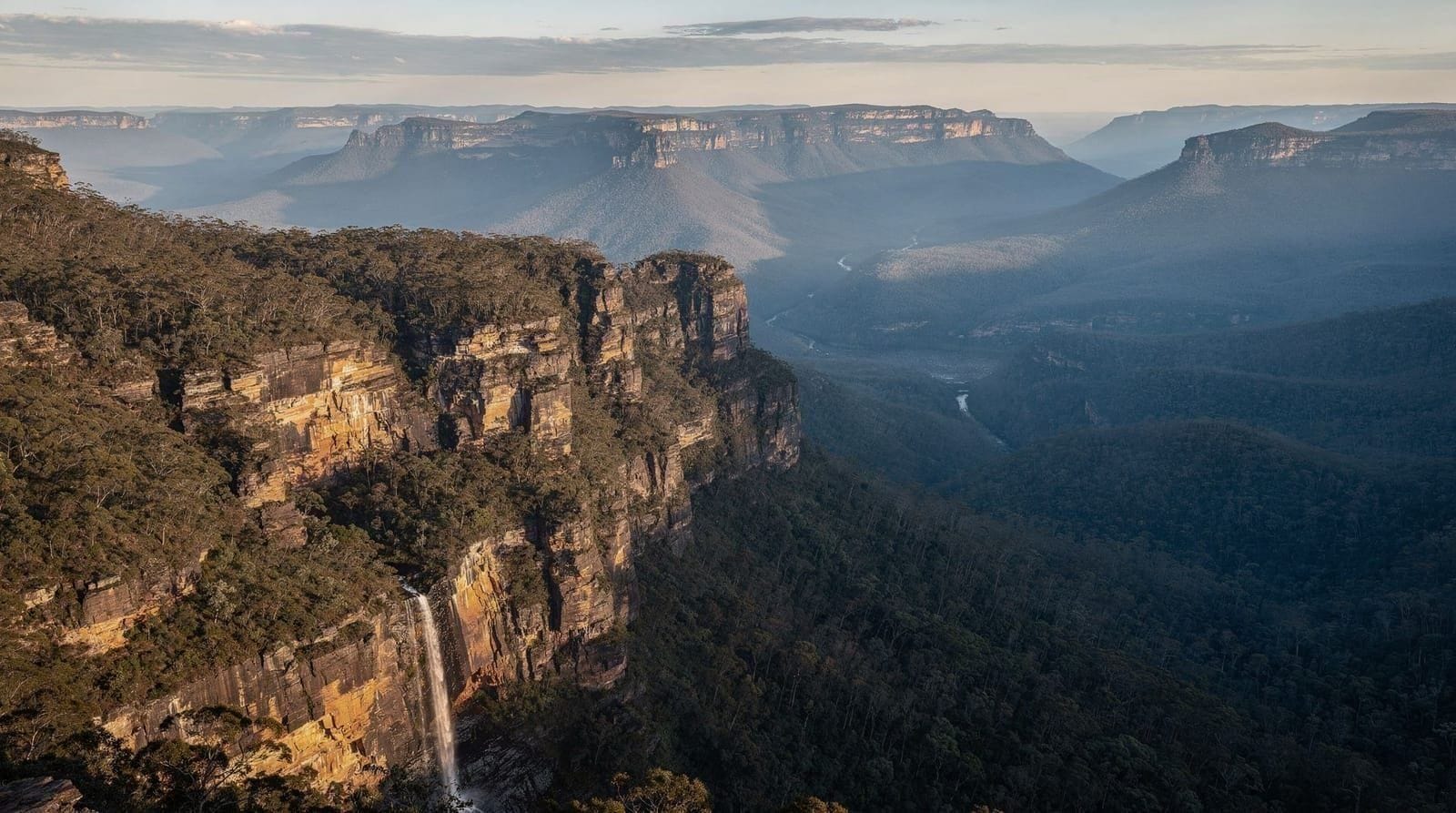
The eucalyptus haze that gives the mountains their blue appearance is at its most visible in late September through October — the oil droplets from the gum trees at this temperature and humidity scatter light in a way that turns the valleys a distinctive blue-grey on clear days. This is not a literary invention; it’s straightforward atmospheric optics, and it’s most pronounced in this temperature range.
Wildflowers: The heathland along the cliff-top walks and in the escarpment scrub comes into flower from late August through October. Waratahs — the scarlet native flower that appears on the NSW coat of arms — bloom in September and October. Wax flowers, flannel flowers, and various acacias add yellow and white. The Wentworth Falls track and the cliff walks near Leura are particularly good.
The crowds question
The Blue Mountains see heavy traffic at three points: the summer school holidays (late December through January), the long Easter weekend (variable, March or April), and the July school holidays. Spring misses all three.
The difference in experience between a summer weekend and a midweek September visit to Echo Point is substantial. In January, the viewing platform at Echo Point is crowded enough that getting a clear photo without other tourists in it requires patience or early-morning timing. In September on a weekday, you can stand at the railing for ten minutes undisturbed.
The guided tours are correspondingly calmer. The small-group Blue Mountains tour operates year-round, and the guides consistently say spring tours are among the most satisfying — manageable groups, clear conditions, and trails that are in good condition after the winter rains.
The walks to prioritise
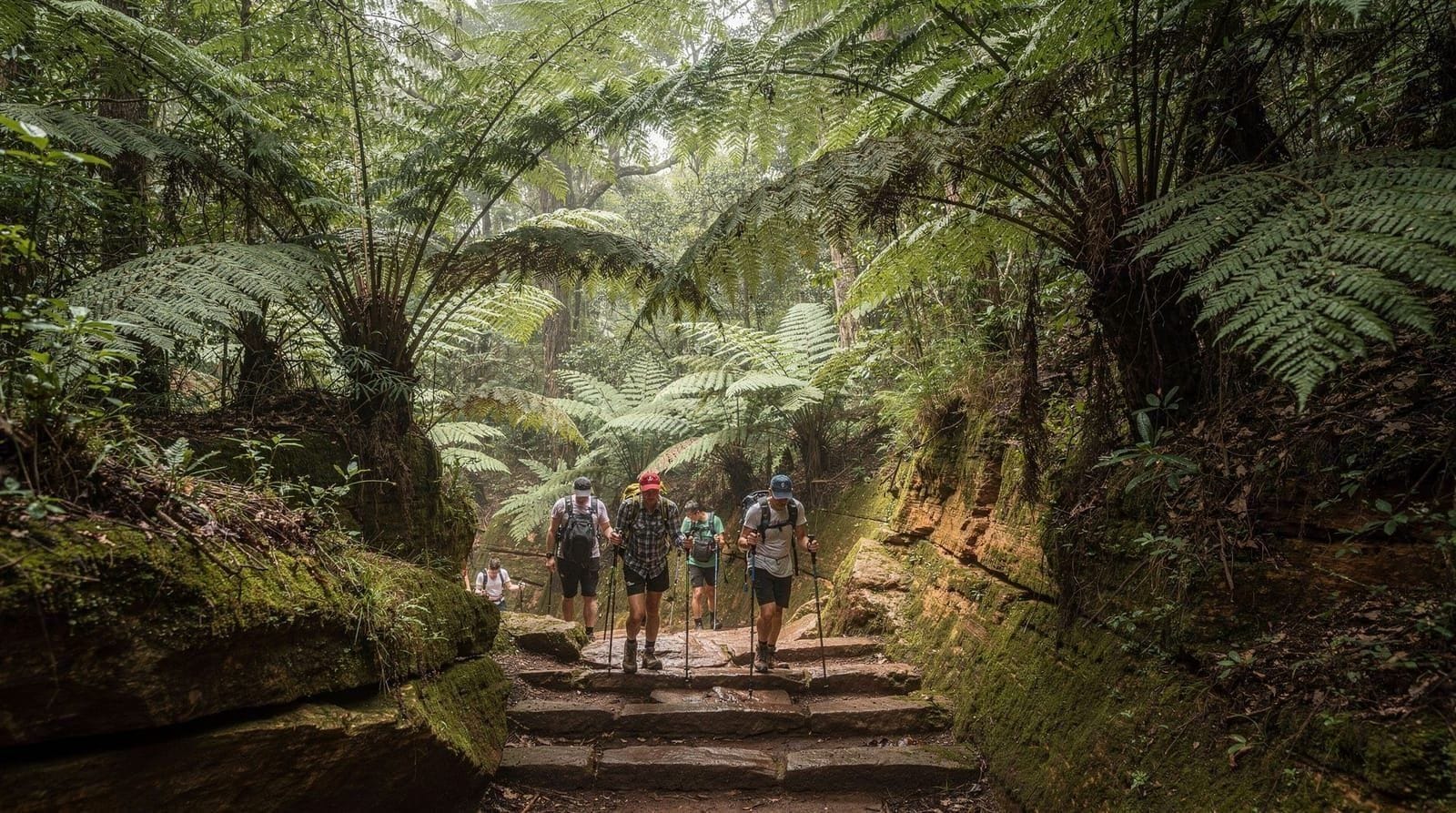
Grand Canyon Track (5.4 km, 3–4 hours): This walk descends into the canyon through dense rainforest that feels atmospheric at any season but is particularly beautiful in spring when the tree ferns are at their most vivid green. The canyon floor is sheltered and humid even on cool days, and the creek running through it after winter rains has a different quality than the trickle you’ll find in late summer.
Wentworth Falls circuit (5.5 km, 2.5–3 hours): The falls drop 187 metres in three stages, and in spring after good July–August rainfall, they run at their most impressive. The track descends to the Valley of the Waters and returns via the Conservation Hut — which serves, importantly, a genuinely good hot chocolate.
Leura Cascades to Olympian Rock (2.8 km, 1.5 hours): Shorter than the two above but among the most rewarding in spring specifically. The cascades run well, the lookouts are clear of summer haze, and the Leura township itself is worth an hour — the high street has good cafes and the garden open days in October are a local institution.
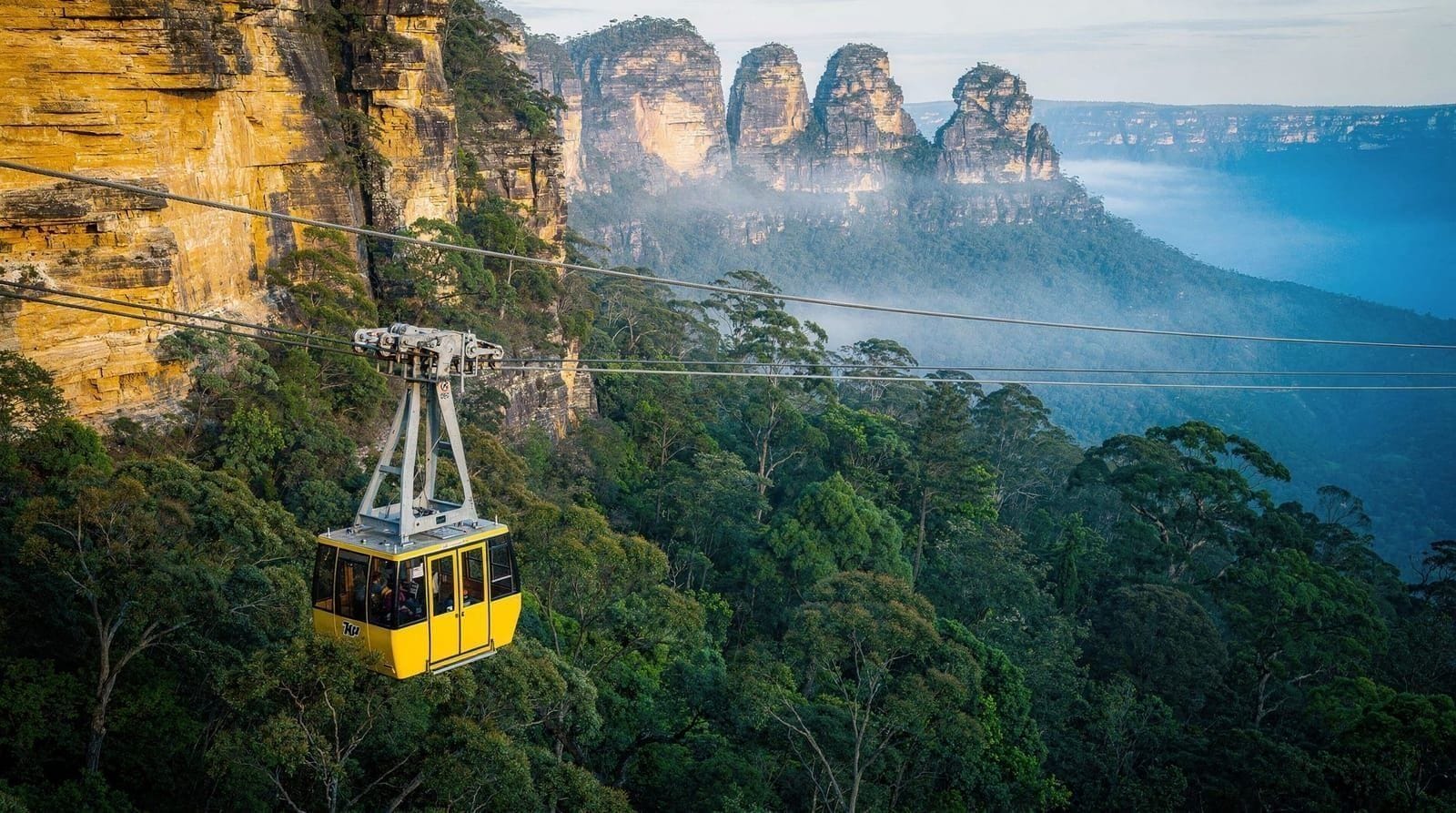
Three Sisters and Jamison Valley floor: The standard Echo Point walk is visited by everyone — that’s not a reason not to do it. The view of the Three Sisters sandstone formations from the lookout platform is genuinely stunning, and the more committed option of descending the Giant Stairway to the valley floor and back is one of the better strenuous half-days available. In spring, the ferns in the Jamison Valley are lush from winter rains.
Scenic World in spring
The Scenic Railway (the world’s steepest passenger railway, descending 52 degrees into the valley), the Cableway, and the Skyway all operate year-round. Spring is arguably the best time because the boardwalk at the valley floor — 2.4 km through Jurassic-era rainforest — is shaded and cool, and the canopy is at its most layered with new growth.
Scenic World is undeniably touristy, and the entry price is significant (check the official Scenic World website for current prices). But the Scenic Railway alone — a descent into a temperate rainforest in an open-air train car — is one of the more genuinely unusual experiences available near Sydney, and the valley boardwalk you emerge onto is beautiful by any standard.
Staying overnight: the spring argument
The Blue Mountains reward an overnight stay more than almost any other day trip from Sydney, and spring makes the case more strongly than summer. The reason: morning.
Echo Point at 7 am in late September, when the mist is sitting in the valleys below the Three Sisters and the first light is catching the sandstone faces — this is the view that appears on postcards and in art books, and it’s available only if you’re staying in Katoomba or Leura rather than commuting from Sydney.
Rates for a comfortable guesthouse in Katoomba vary by property and date, so check directly. The Carrington Hotel has been operating since 1880 and has the slightly faded grandeur of a Victorian-era mountain resort — not luxurious but atmospheric and genuinely historic.
Practical spring notes
- Train from Central to Katoomba: about 2 hours; fares on Opal depend on distance and time of day (see the official Transport for NSW website). Roughly hourly service.
- Weather: pack a waterproof layer regardless of forecast. Spring weather in the mountains is variable.
- Sunset timing: late September sunset is around 6 pm; late October is closer to 7:30 pm. The light on the valley in the hour before sunset is worth positioning yourself for.
- Cafes in Katoomba: Leura Garage (café in a converted service station on the main street) and the conservation hut café at Wentworth Falls are both reliable and warm.
The Jenolan Caves connection
Jenolan Caves makes logical sense as a Blue Mountains extension, but the caves are currently closed to the public for major road repairs; reopening is planned for early 2027 (check the official Jenolan Caves website).
Allow a full day if combining Katoomba/Echo Point with Jenolan — the two are not comfortably done in half-days each. The guided tour from Sydney that combines Scenic World with Jenolan tends to feel rushed; if Jenolan is your priority, base yourself in Katoomba overnight and drive to the caves as a day trip from there.
What the guided tours deliver in spring
The argument for a guided day in spring is slightly different from other seasons. The guides are more available and less under group-size pressure, which means more time for questions and detours. The walking conditions after the winter rains are optimal — the valley floor is moist, the waterfalls are running properly, and the dust that characterises late summer is absent.
The small-group format specifically pays dividends on the less-publicised walking opportunities. A guide who knows the area will often offer to extend a valley walk or take a side track when conditions are good and the group size permits. In January, with a full minibus and a tight schedule, this doesn’t happen. In late September with six people, it does.
The Leura connection
Leura is the village one train stop east of Katoomba, and it has a distinct character from the larger town — smaller, more manicured, with a single main street of independent shops, galleries, and one of the better restaurants on the Blue Mountains ridge. In spring the private gardens along the Leura Mall are starting to flower, and the annual Leura Garden Festival (held in October) is one of the larger private garden events in NSW.
Leura is 5 minutes by train from Katoomba and is worth building into a day even if just for a 45-minute walk and a coffee. The Silk’s Brasserie (the main restaurant on the street) is more expensive than it needs to be but delivers on quality for a dinner on an overnight stay.
Getting the most from the train journey
The Blue Mountains train from Central is not just transport — it’s a genuinely interesting journey in itself. The route climbs from the flat western Sydney basin up through Penrith, then ascends the escarpment via the Zig Zag deviation (you’ll feel the gradient) to Springwood, Lawson, Wentworth Falls, and finally Katoomba.
In spring, the escarpment section of the journey — from roughly Blaxland to Katoomba — shows the transition from suburban Sydney to true mountain country, with the ridge narrowing, the bush closing in on both sides, and the first glimpses of the valley depths visible between the trees. Sit on the left side (southbound from Central) for the better views on the ascent.
For broader planning: Blue Mountains day trip guide, best hikes in the Blue Mountains, and self-drive vs guided tour comparison.
How spring compares to the other seasons up there
| Season | Weather | Crowds | Highlight |
|---|---|---|---|
| Spring (Sep–Oct) | 12–20°C, variable but mild | Low, except Leura Garden Festival weekends | Wildflowers, waterfalls at full flow, empty lookouts |
| Summer (Dec–Feb) | Warm, occasional heat spikes | Highest — school holidays | Long daylight hours, but crowded Echo Point |
| Autumn (Mar–May) | Cooling, stable | Moderate | Clear light, fewer crowds than spring |
| Winter (Jun–Aug) | Cold, occasional fog and frost | Lowest | Atmospheric mist and fireplaces, but shorter days and some track closures after rain |
Spring and autumn are the two strongest all-round windows; spring has the edge because of the wildflowers and the fuller waterfalls after winter rain, while autumn wins on colour and stability if you want to avoid any chance of a wet track.
Bringing kids or travelling on a tighter budget
Families visiting in spring benefit from the same lower-crowd advantage as everyone else, though some of the longer walks above (the Grand Canyon Track, the Wentworth Falls circuit) are demanding for young children. The Blue Mountains with kids guide covers shorter, stroller-friendlier alternatives around Echo Point and Scenic World. If budget is the bigger constraint than time, spring’s lower accommodation pricing (compared to summer) makes an overnight stay more attainable — worth checking against how much a week in Sydney costs if you’re weighing a Blue Mountains night against other spending.
Frequently asked questions about Spring in the Blue Mountains
Is spring or autumn better for the Blue Mountains? Both are strong, low-crowd options. Spring has the edge for wildflowers and fuller waterfalls after winter rain; autumn offers slightly more stable weather. Either beats summer or the school holiday periods for crowd levels.
Do I need to stay overnight, or is a day trip enough? A day trip covers the major sights, but the best light at Echo Point — the misty early morning view — is only available if you stay overnight in Katoomba or Leura. If time allows, an overnight stay is worth the extra cost.