Jacaranda season in Sydney — when to see it and where to go
At a glance
| Where | Kirribilli (McDougall Street), Lavender Bay foreshore, Paddington’s Oxford Street, University of Sydney (Camperdown) |
| Cost | Free to view; one Opal ferry fare (around A$7–8) to reach Kirribilli from Circular Quay |
| Time needed | 2–3 hours for a Kirribilli/Lavender Bay morning walk |
| Getting there | Ferry from Circular Quay to Kirribilli or McMahons Point wharf |
| Best time | Last week of October into early November, most years; mornings for photography |
October in Sydney
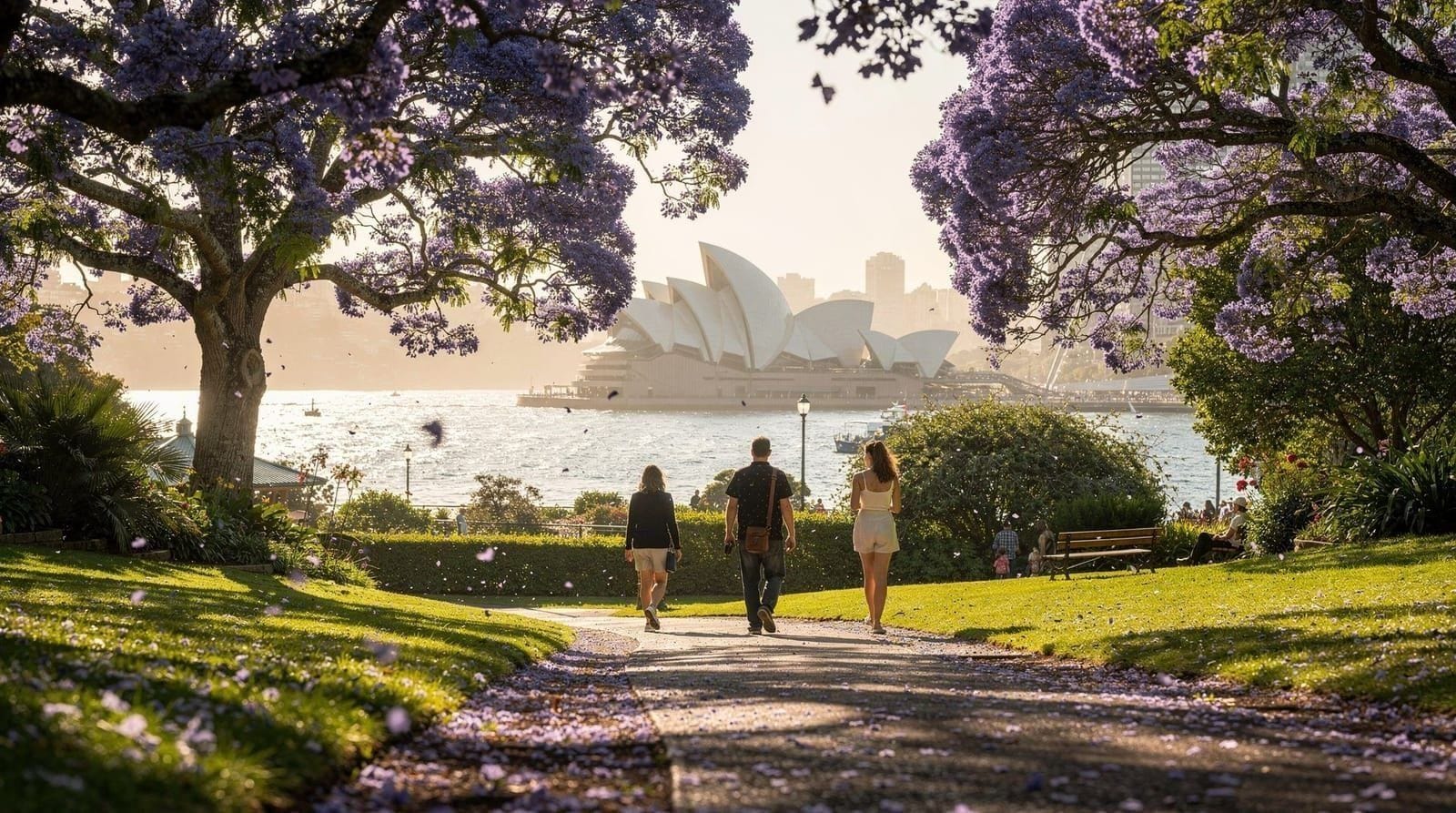
Sydney’s spring is not as photogenic as its summer on most days — the light is good but variable, the weather can swing between 28°C and 15°C in 24 hours, and the city doesn’t have the settled outdoor life of its warmer seasons. But in October and early November, approximately 10,000 jacaranda trees explode into violet-purple bloom across the city’s streets, parks, and gardens, and for three to four weeks Sydney becomes something genuinely extraordinary to look at.
The jacaranda (Jacaranda mimosifolia) is native to South America — Brazil, Argentina, Paraguay — but was introduced to Australia in the 19th century and has been planted as a street tree across Sydney and other NSW cities ever since. It is now so thoroughly associated with spring in Sydney that the period of peak bloom has acquired the unofficial name “jacaranda season,” and residents plan schedules around it.
The timing is reliably late October into early November, peaking in the last week of October most years. The exact dates depend on rainfall patterns through spring — a wetter, cooler spring delays the bloom; a dry, warm year may push it slightly earlier. The bloom lasts two to three weeks before the violet petals begin to fall, creating purple carpets under the trees that are in some ways as beautiful as the trees themselves.
Where the best streets are
McDougall Street, Kirribilli: The most photographed single jacaranda street in Sydney. A steep residential street on the lower North Shore, lined with mature specimens that form a canopy of violet across the road surface. The combination of the trees, the Victorian terraces, and the harbour visible at the bottom of the hill creates a view that is genuinely picturesque rather than just impressive. The street is residential and narrow — parking is limited and the best way to arrive is via the Kirribilli or McMahons Point ferry wharves from Circular Quay.
Lavender Bay: The foreshore area around Lavender Bay, approaching from the McMahons Point side, has multiple mature jacarandas visible from the water. The view of the trees against the harbour background, with the bridge in the distance, is the source of most of the widely circulated Sydney jacaranda photographs.
Grafton, northern NSW: This is technically outside Sydney — a three-hour drive north — but worth mentioning because Grafton hosts the Jacaranda Festival (held annually from late October into early November), with the trees planted throughout the town creating the most concentrated jacaranda display in Australia. If Sydney’s season aligns with a planned road trip north, Grafton is worth a serious detour.
University of Sydney, Camperdown: The university grounds in Camperdown have a significant number of mature jacarandas, and there is a specific campus legend that sitting under a jacaranda tree predicts exam failure — a piece of folklore that has made the university’s trees famous enough to generate their own tourism. The grounds are publicly accessible.
Oxford Street, Paddington to Darlinghurst: The stretch of Oxford Street through Paddington has jacarandas planted at intervals along the footpath. The bloom here is less concentrated than Kirribilli but the trees are integrated into one of Sydney’s most active street scenes, which makes for a different kind of watching.
Kirribilli itself, broadly: The suburb of Kirribilli on the lower North Shore is the most concentrated single neighbourhood for jacaranda viewing in Sydney. Multiple streets have significant planting, and a walk through the suburb in peak bloom — entering via the Kirribilli wharf ferry and walking the residential streets before descending to Lavender Bay — covers the best of what the northern shore offers.
The practical realities
Timing is imprecise. The bloom peaks over a week or two, not a specific weekend you can book in advance. A trip planned around peak jacaranda season should have flexibility: arriving in mid-to-late October and being there through early November covers the most likely peak window. Single-day trips from interstate specifically timed to catch peak bloom are a gamble.
It rains. Sydney’s spring can include significant rain events, and rain on jacaranda trees accelerates petal drop. A storm during peak bloom can take trees from spectacular to bare in 48 hours. Keep an eye on the BOM forecast.
Social media has created expectations. The photographs circulating in October are the best of hundreds taken at peak bloom from specific angles in optimal light. The day you arrive may be overcast, the specific street may be at 70% bloom, and the “purple footpath” effect requires flowers that are post-peak. Go with interest and openness rather than a specific photograph in mind.
Morning is better. Jacarandas look best in morning light, when the low-angled sun creates depth and texture in the flower clusters. Flat midday light flattens them. Late afternoon can also be good in certain directions.
Jacaranda season as travel motivation
Jacaranda season is one of the genuinely underused reasons to visit Sydney in October. The period from mid-October to early November is the spring shoulder season — school holidays have finished, the December–January summer peak has not arrived, and accommodation prices are reasonable. The weather is warming but not yet hot. There is enough of the city’s outdoor culture emerging to feel the summer coming without yet being in it.
Pairing a jacaranda season visit with a walk through Paddington (the Saturday market at Paddington Town Hall runs year-round) and the Surry Hills restaurant scene makes for a Sydney trip that feels genuinely seasonal rather than generic. Add the coastal walk and the coastal scrub vegetation in its spring growth phase, and you’re experiencing a Sydney that the peak summer crowds never see.
The jacaranda bloom is free to look at. The ferry to Kirribilli costs one Opal fare. The morning walk through the Lavender Bay foreshore and up through the Kirribilli streets can be done in two hours before lunch. It’s one of those Sydney experiences that costs almost nothing and delivers genuine pleasure.
What happens after the bloom
The petals fall — slowly at first, then in a rush after rain — and the trees convert to their standard green canopy for the rest of the year. The purple carpets on the footpaths and beneath the trees last a few days before street sweepers or more rain clear them.
If you’ve missed the bloom proper, you may still see the aftermath — violet petals on the ground have their own melancholy appeal. But the primary event is the canopy, and the window for that is the three weeks around the peak.
Pairing jacaranda season with the rest of a visit
The great advantage of visiting Sydney in late October for the jacaranda season is that spring is also an excellent general time to be in the city. The school holiday period in September–October ends in early-to-mid October, and from mid-to-late October through November, Sydney enters a period of warming temperatures, lower crowds, and the specific outdoor energy of a city transitioning from winter routines to summer ones.
Restaurant terraces reopen. The coastal walks are comfortable in the warming sun. The surf at Bondi and the northern beaches picks up seasonal form. The outdoor pool season begins — the ocean pools along the eastern suburbs coast are at their least crowded in early November, before the summer crowd arrives.
Spring is also the window before the harbour’s own seasonal events — Vivid ends in mid-June, the whale season has settled in by May, and the Christmas–New Year peak hasn’t arrived. A late October visit captures none of these specifically but sits in the most comfortable gap in the Sydney calendar: not peak summer, not winter, and the jacarandas as a seasonal bonus.
If you’re in Sydney for the jacaranda bloom and want to extend the activity beyond walking the purple streets, the Paddington Saturday market and the Art Gallery of NSW’s spring programs often coincide with the peak bloom period. A morning of jacaranda streets in Kirribilli, a ferry back to the CBD, and an afternoon at the gallery is a Sydney day that works on multiple levels.
Practical note on photography
The most widely reproduced jacaranda photographs are taken from specific locations at specific times of day with specific camera settings. Replicating them with a phone camera is genuinely difficult, and the attempt can distract from the experience itself.
The advice: walk the streets without a particular photography objective, let the scale and colour work on you directly, and take photographs opportunistically rather than in pursuit of a specific image. The jacaranda canopy in person is better than any photograph of it, and that’s a reasonable outcome for a free outdoor event that requires only a ferry fare to reach.
For more on Sydney’s seasonal character, the best time to visit Sydney guide covers all the seasonal highlights, including this one.
How jacaranda season compares to the rest of spring
Spring in Sydney runs roughly September through November, and the jacaranda bloom is only the most photogenic part of it. September is cooler and can still carry the tail end of winter systems. By November, the city is edging towards the summer crowds and the school holiday period tightens accommodation. Late October sits in the narrow, comfortable middle — warm enough for outdoor cafes, not yet at the humidity and crowding of December.
If you’re building a longer trip around the bloom, it’s worth pairing it with a Blue Mountains day trip — the mountains run their own spring wildflower season at roughly the same time, at a cooler altitude, which makes for a good contrast day if the Sydney weather turns wet mid-visit.
Combining it with a wider itinerary
Jacaranda season rarely justifies a trip on its own for international visitors, but it’s an excellent reason to time a longer Sydney stay for late October rather than, say, mid-November. A five-day itinerary built around this window can fold in a jacaranda morning in Kirribilli, a harbour walk, and still leave room for the Blue Mountains and the beaches.
Seeing the harbour side of the bloom
The jacarandas around Lavender Bay and Kirribilli are planted right at the water’s edge, so one of the nicest ways to understand the setting is from the harbour itself. If you’d like to add something active to the morning, an early paddle on the harbour at sunrise pairs well with a walk through the streets afterwards, because you’ve already had the best of the morning light before the day gets busy. For a more classic view of the city’s landmarks from the water, a kayak outing past the Opera House and Harbour Bridge gives a different angle on the same shoreline you’ll walk later. Both are optional extras: the bloom itself needs nothing booked, and our harbour kayaking guide explains what to expect if you’ve never paddled here before.
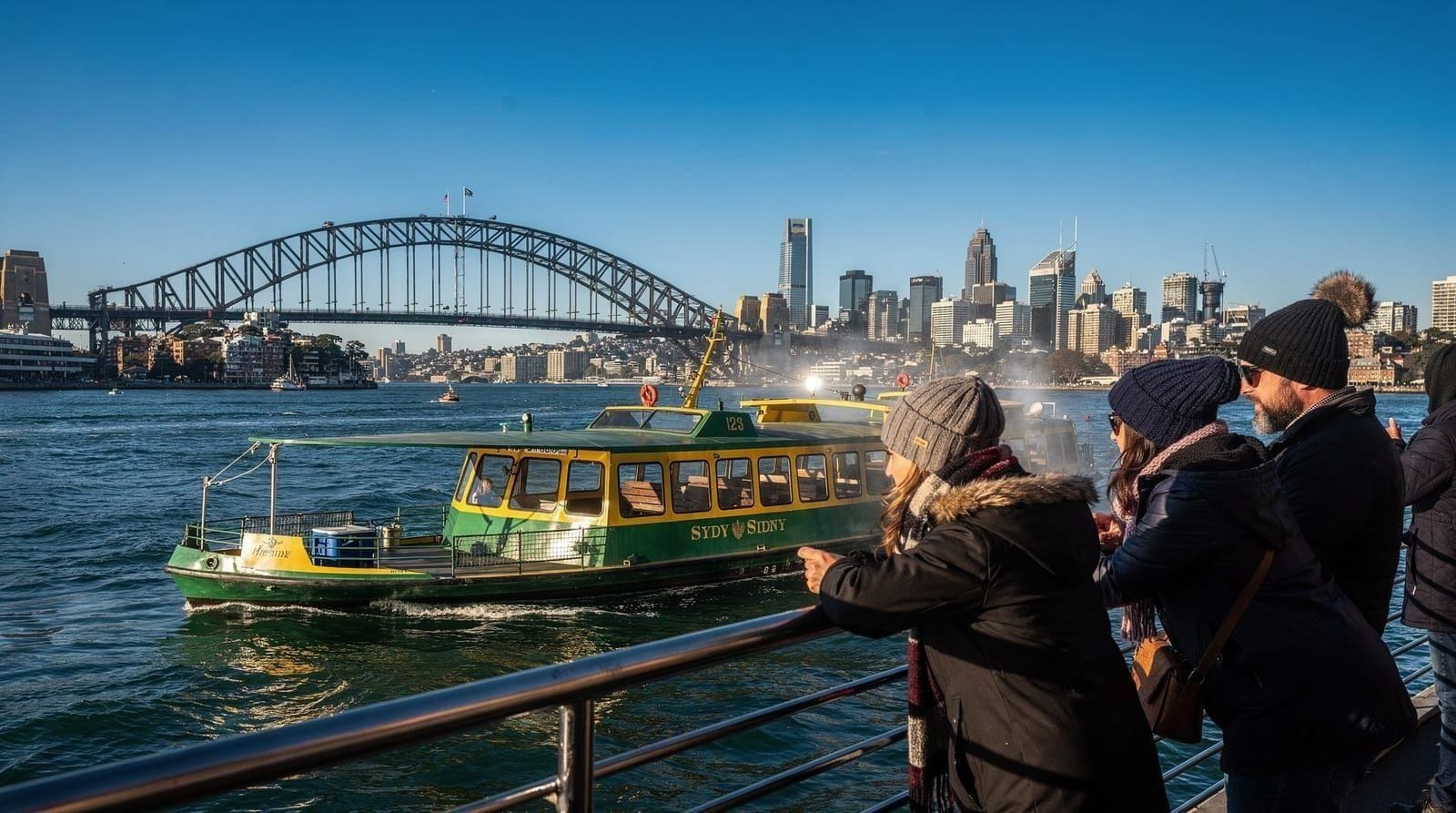
If kayaking isn’t your thing, the harbour is easy to enjoy without a booking. The Sydney ferries guide explains how the wharves work, and the Sydney Harbour and Circular Quay pages cover what to do before or after your walk. The Sydney Harbour Bridge guide is useful too, since the bridge frames many of the best Lavender Bay views, and the Royal Botanic Garden is a gentle green stop if you want more trees and flowers on the same day. Travelling on a tight budget? The free things to do in Sydney guide and the Opal card guide will help you stretch a spring visit further.
Frequently asked questions about Jacaranda season in Sydney
Is jacaranda season worth planning a trip around? It’s a strong bonus reason to visit Sydney in late October, but the bloom window is too imprecise (roughly two to three weeks, shifting with rainfall) to be the sole reason for a trip. Build flexibility into the dates.
Can you see jacarandas anywhere else near Sydney besides Kirribilli? Yes — Paddington’s Oxford Street, the University of Sydney grounds, and (further afield) Grafton in northern NSW, which hosts a dedicated Jacaranda Festival with a much denser concentration of trees than any single Sydney street.