St Mary's Cathedral Sydney — free visit guide and what to see inside
Sydney: Aboriginal rock art tour with smoking ceremony
Duration: 3 hours
Is St Mary's Cathedral Sydney free to visit?
Yes, St Mary's Cathedral is free to enter. The cathedral is open daily for visitors (not just services) from 6:30am to 6:30pm Monday to Friday and 6:30am to 7pm on Saturday and Sunday. The main nave, the stained-glass windows, and the cathedral grounds are all accessible without charge. The crypt is visited on a guided tour, including a free Sunday tour at 2pm with registration (see the official St Mary's Cathedral website).
St Mary’s Cathedral — what you need to know
| Where | College Street, facing Hyde Park (eastern CBD) |
| Cost | Free entry to the nave; crypt visited on a guided tour (free Sunday tour at 2pm, registration required) |
| Time needed | 20-30 minutes (nave), +15-20 minutes for the crypt |
| Getting there | St James station, direct exit (30 seconds) |
| Best time | Early morning for quiet; Sunday 10:30am Mass for choir and organ |
St Mary’s Cathedral is Australia’s largest Gothic Revival church and the seat of the Roman Catholic Archdiocese of Sydney. It sits on the eastern edge of Hyde Park, facing the Domain and the Art Gallery of New South Wales. Construction of the current building — in Pyrmont sandstone — began in 1868 and has continued in stages since; the iconic southern spires were not completed until 2000, making the building a 130-year project.
Entry is free. The cathedral is open to visitors throughout the day, including between services. Mass is celebrated multiple times daily; visitors are welcome to attend or simply to explore the interior quietly.
What to see inside
The nave and stained-glass windows: The nave is 107 metres long. The stained-glass windows along both sides depict scenes from the life of the Virgin Mary (the cathedral is dedicated to her), saints, and episodes from Catholic history. The western rose window above the main entrance is particularly detailed. The quality of the Victorian and 20th-century glasswork is high — comparable to European cathedral windows of the same era.
The crypt: The crypt beneath the cathedral contains a remarkable terrazzo mosaic floor depicting the Book of Genesis, made by the Melocco Brothers. The mosaic covers hundreds of square metres and is one of the most significant religious art installations in Australia. Access is by about 40 steps, on a guided tour (a free Sunday tour runs at 2pm with registration; see the official St Mary’s Cathedral website). The crypt also contains the tombs of several archbishops and a small museum of cathedral history.
The organ: The cathedral houses a large pipe organ installed in the late 20th century, played at all major services. Organ recitals are occasionally held — check the cathedral website for the schedule.
The grounds: The forecourt on College Street faces Hyde Park across the road. On the southern side, a colonnaded cloister garden provides a quiet space accessible from the Cathedral Street entrance. The northern side faces the Domain and is often used as a photography vantage point for the cathedral towers.
Best time to visit
Early morning (before 9am): The cathedral is quiet, the morning light comes through the eastern windows beautifully, and you can explore the interior without crowds.
Sunday mornings: The main Sunday Mass at 10:30am is accompanied by the full choir and organ. If you have any interest in choral music or cathedral liturgy, this is worth attending — the acoustics in the nave are excellent and the service is open to all regardless of religion.
Christmas Eve and Christmas Day: The Christmas Eve midnight Mass is one of Sydney’s significant annual events, drawing large crowds. Arrive very early if you intend to attend, and check the official St Mary’s Cathedral website for the Christmas timetable.
During Vivid Sydney: The cathedral exterior is sometimes illuminated as part of Vivid’s lighting program, making it particularly photogenic in May–June evenings.
Getting there
The cathedral faces College Street, which runs along the eastern edge of Hyde Park. Train to St James station (the station exit faces the cathedral directly — a 30-second walk). Museum station (Hyde Park western side) is a 5-minute walk. Parking is not recommended — street parking is metered and limited in this area.
Combining with nearby attractions
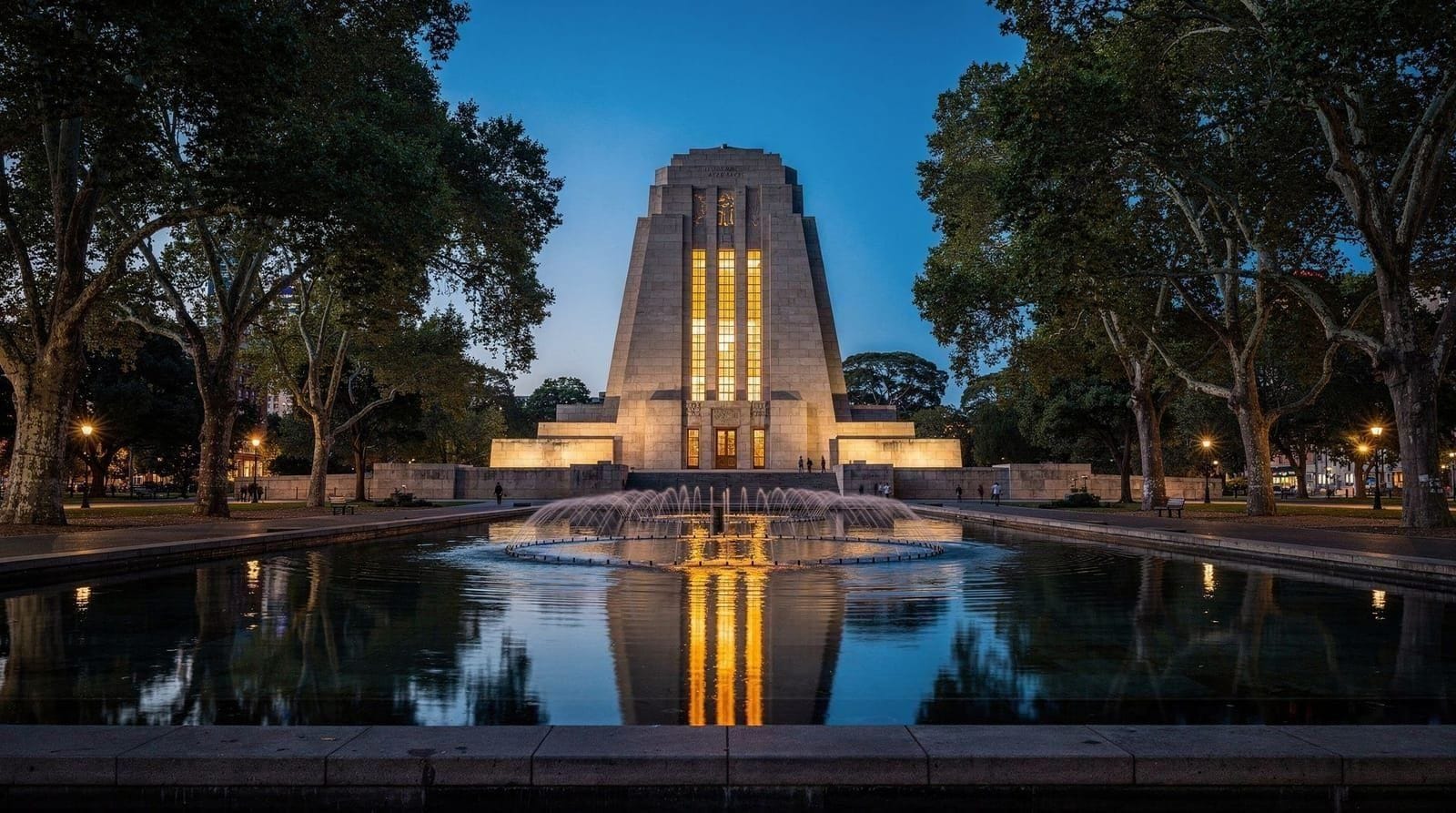
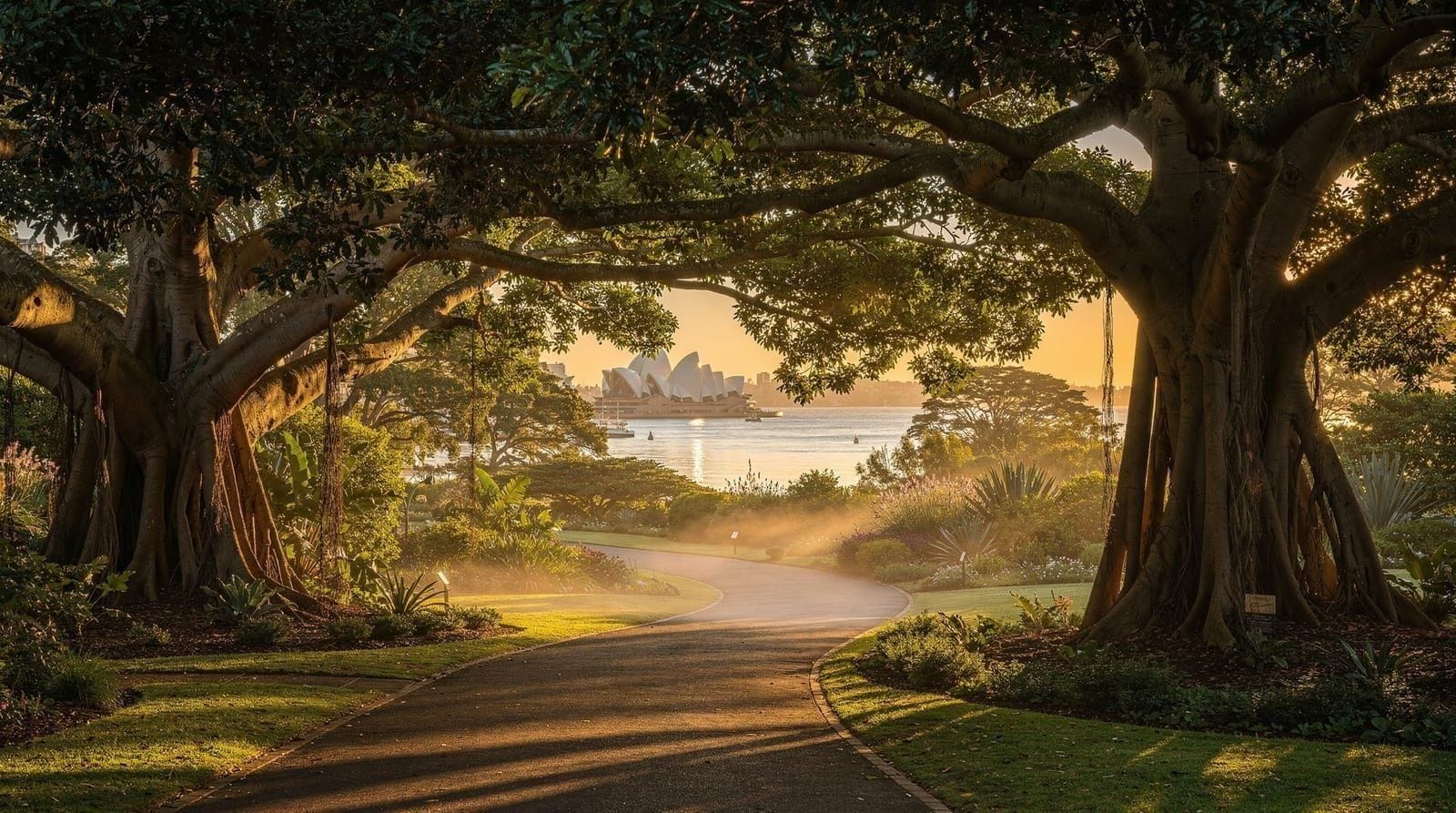
The cathedral is ideally placed to combine with Hyde Park and the ANZAC Memorial (immediately across the road, free entry — see the Hyde Park ANZAC Memorial guide), the Art Gallery of New South Wales (free permanent collection, 5-minute walk through the Domain), and the Royal Botanic Garden (10-minute walk). This eastern green corridor — Hyde Park, the Domain, the Botanic Garden — is one of Sydney’s most pleasant free half-day walks.
The Sydney museums guide covers the Art Gallery and the other major public collections nearby.
For a broader city orientation, the Sydney for first timers guide places the cathedral in the context of a two-day CBD and harbour circuit.
St Mary’s Cathedral — more detailed history
The site has religious significance dating to the founding of the colony. Governor Arthur Phillip granted the land for a Catholic place of worship in 1821, and a modest chapel was established. The first formal St Mary’s was built in 1835 and destroyed by fire in 1865 — a fire of disputed origin that left only the sandstone walls. The current building, designed by William Wardell in a style modelled on early English Gothic, began rising from those walls in 1868.
William Wardell was the foremost Gothic Revival architect in Australia, responsible also for St Patrick’s Cathedral in Melbourne and St John’s College at the University of Sydney. His design for St Mary’s was modelled closely on Lincoln Cathedral and Yorkminster in England, with a nave height of 27 metres and a plan some 107 metres long. He did not live to see the building completed — it was still under construction at his death in 1899.
The southern transept, chapels, and the rectory were added through the early 20th century. The spires — twin towers at the southern facade — were designed from the beginning but not funded until the late 1990s. They were completed in 2000 using computer-guided stone-carving technology to replicate the original Wardell designs. The addition of the spires transformed the building’s silhouette and resolved what had been a truncated appearance for 130 years.
The stained glass — what to look for specifically
Most of the cathedral’s stained glass was installed in waves corresponding to the building’s construction phases:
The north transept windows (1892): Some of the earliest glass in the building, produced by the studio of John Hardman & Co. in Birmingham — the same studio that produced windows for Pugin’s Houses of Parliament in London. The quality of the painting and the lead-work in these windows is exceptionally high by Australian standards.
The rose window above the west entrance (1929): A large circular window depicting the Virgin Mary in the centre with radiating panels. It catches the afternoon sun from around 3pm; the light effect in the nave at this time is significant.
The clerestory windows (upper nave, both sides): These run the full length of the nave and depict scenes from the lives of the apostles and the major Marian apparitions. They are best viewed from the nave floor at mid-morning when the eastern light comes through the right side.
Concerts and events
St Mary’s Cathedral hosts a regular programme of concerts, most associated with its music ministry. The choir — the St Mary’s Cathedral Choir, one of Australia’s oldest choral institutions — performs at all major Sunday liturgies and at significant feast days. Guest choirs and orchestras perform occasional concerts.
The Cathedral’s full organ (installed in 1999, one of the largest in Australia) is used at services and for occasional recitals. Organ enthusiasts should check the cathedral’s website for the recital programme — entry is either free or at low cost.
Carol services in December (including Advent Sunday concerts and the Christmas Eve midnight Mass) are among Sydney’s best free seasonal events. The acoustics in the nave are considerably better than most Sydney concert venues.
What the cathedral is not
A practical note for visitors coming from European cathedral contexts: St Mary’s is not a medieval building. It looks medieval — the architecture and craftsmanship are specifically designed to read that way — but it was built between 1868 and 2000. There are no ancient relics, no medieval carvings, and the “age” of the building is measured in decades rather than centuries.
This is not a criticism. The building is genuinely impressive and the craft quality of the stonework, glasswork, and fittings is high. But visitors expecting the patina of a Chartres or a Canterbury will find St Mary’s feels younger and less atmospheric in its material fabric than its Gothic styling suggests.
Parking and logistics
Street parking on College Street is metered and typically full during business hours. The Wilson carpark on St James Road (behind the Hyde Park Barracks) is the nearest off-street option, with rates posted at the entrance. For most visitors, the train to St James station (30 seconds from the cathedral door) is the obvious and correct choice.
The cathedral is a 12-minute walk from Circular Quay, 8 minutes from Martin Place station (Elizabeth Street exit), and 3 minutes from St James station. It is directly across College Street from the main Hyde Park fountain, making the Cathedral–Hyde Park–ANZAC Memorial sequence the most natural visiting order for this part of the CBD.
Nearby architecture worth the extra 20 minutes
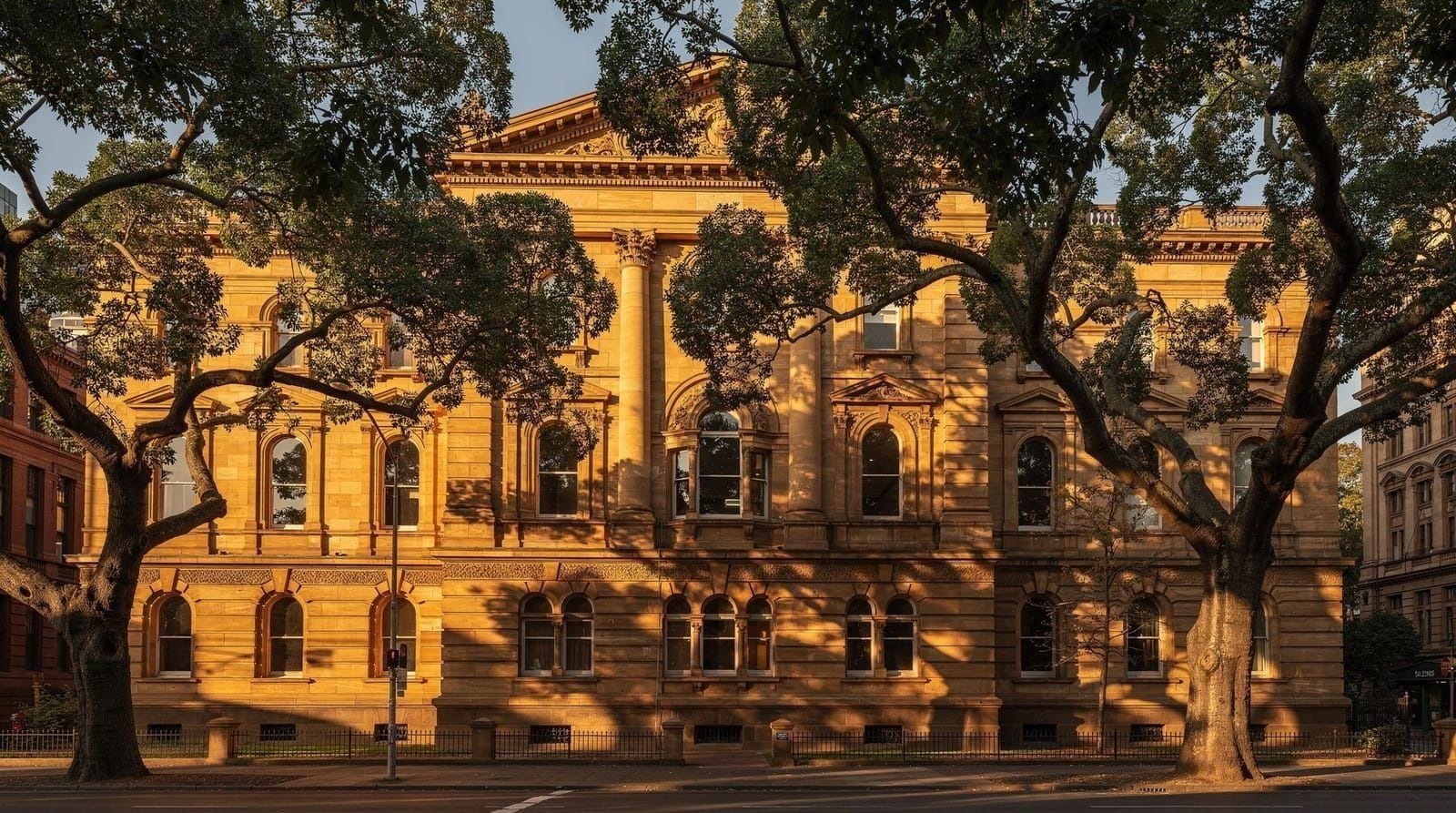
The cathedral sits inside one of the densest concentrations of heritage architecture in the CBD. The Queen Victoria Building (a 10-minute walk) is free to wander and shows the same era’s commercial Gothic-Romanesque style rather than the ecclesiastical version at St Mary’s. For visitors who like reading a city through its buildings, the Sydney architecture walk links the cathedral, the QVB, and several other CBD landmarks into a single self-guided route. The Royal Botanic Garden, a 10-minute walk through the Domain, is the natural green-space follow-up after the stonework.
Building a half-day around the cathedral
The cathedral works best as the first stop of a slow morning rather than a stand-alone visit. Start inside while the nave is quiet, spend a few minutes sitting rather than walking, and let the light and the scale of the stonework settle before you pick up your camera. Many visitors rush the interior in a few minutes and then wonder why it felt thin; slowing down is what makes the glass and the vaulting register.
From the forecourt, cross into Hyde Park and follow the avenue towards the ANZAC Memorial, then drift back through the Domain towards the harbour. If you would rather add a guided layer to the day, the Royal Botanic Garden Aboriginal tour guide and the wider Sydney Aboriginal heritage guide explain the older story of this land, which long predates any of the churches. A guided option such as an Aboriginal walking tour with a smoking ceremony pairs naturally with the colonial-era history you read about in the cathedral’s own crypt museum.
If the weather turns, the cathedral is a sensible indoor fallback, and the Sydney rainy day kids guide and the Sydney museums guide give you further covered options a short walk away.
Pairing the cathedral with a harbour view
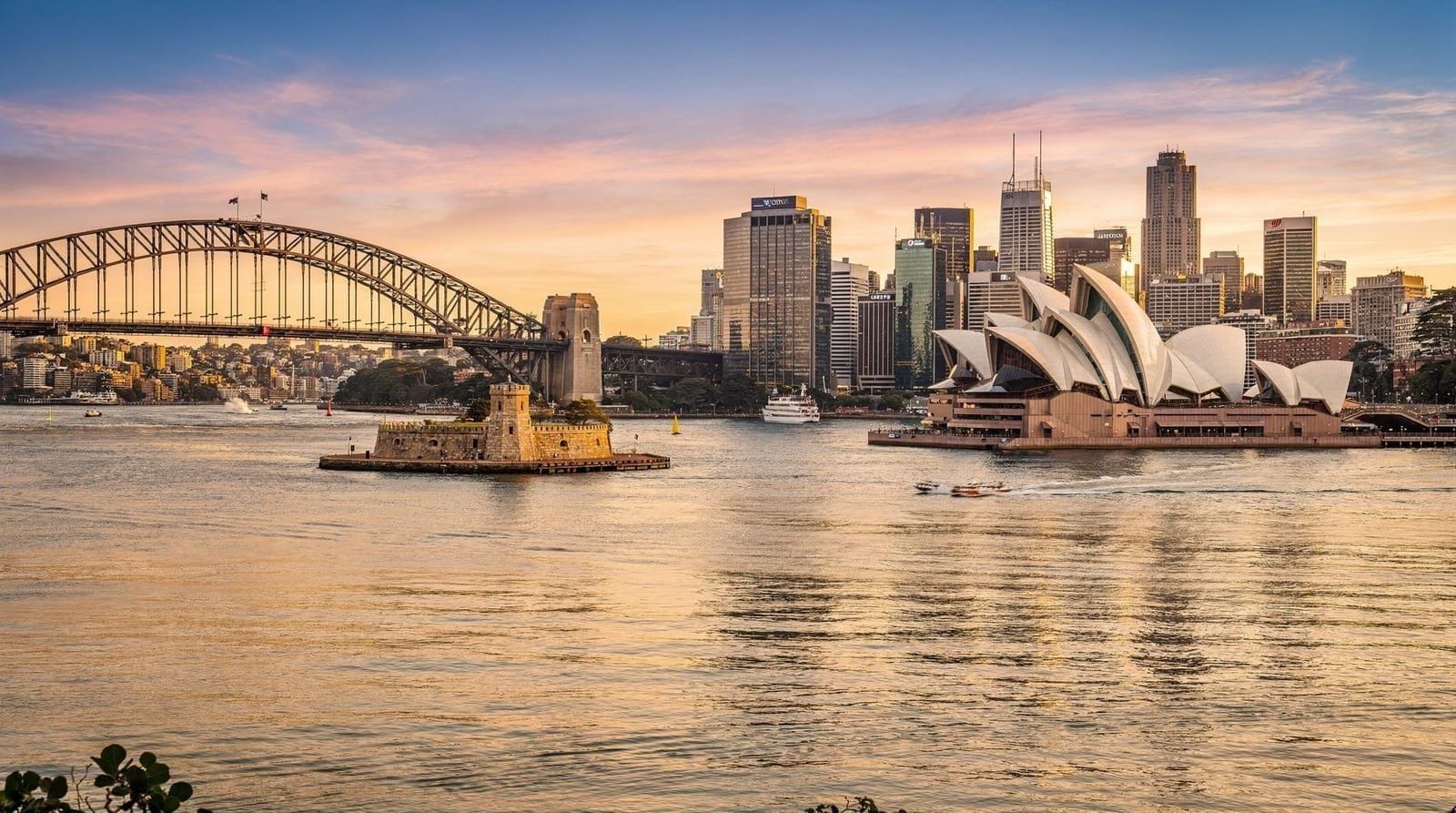
St Mary’s gives you stone, glass and quiet. What it does not give you is a view over the water, because the towers stay closed to visitors. If you want the opposite experience on the same day, head north to the harbour and look at the city from above. The Sydney Harbour Bridge guide and the BridgeClimb guide compare the options, and a daytime climb to the summit of the bridge is the obvious counterpart to a morning spent at ground level among the Gothic spires. The Sydney Tower Eye guide is a gentler alternative if you prefer a lift to a climb.
For the walk between the two, the Circular Quay destination page and the Sydney CBD page show what lies along the way, and the Sydney 3 days first time itinerary slots the cathedral into a wider plan so you are not trying to fit everything into one day.
Etiquette inside the cathedral
St Mary’s is a working church, not a museum. Dress modestly enough to feel comfortable in a place of worship, keep your voice low, and avoid walking through the nave while a service is under way. Photography of the architecture is generally fine when no service is in progress, but be considerate around anyone praying, and never use flash near worshippers. If a service starts while you are inside, you can either sit quietly at the back or step out and return afterwards. A small amount of courtesy goes a long way here, and staff and volunteers are usually happy to point you towards the quieter corners of the building.
Frequently asked questions about St Mary's Cathedral Sydney
Can you climb the towers at St Mary's Cathedral?
No, the towers are not open for public climbing. The spires and the roofline are viewed from ground level only, from College Street or the Domain side. There is no equivalent of BridgeClimb or Sydney Tower Eye here.How long does a visit to St Mary's Cathedral take?
Around 20-30 minutes for the nave and stained glass, plus another 15-20 minutes for the crypt mosaic if you join a guided tour. Most visitors combine it with a wider Hyde Park and Domain walk of 2-3 hours.