Penguins at Manly — where and when to see Little Penguins
Sydney: Manly and Shelly Beach snorkeling tour
Can you really see wild penguins at Manly Beach for free?
Yes. Little Penguins (Fairy Penguins) nest under the Manly Ferry Wharf and in rock crevices along the Manly foreshore. They return from sea after dark — the best viewing window is 30–90 minutes after sunset, particularly between May and March, when the colony comes ashore to breed. For current viewing advice and any rules, check the official Northern Beaches Council website.
One of Sydney’s most quietly remarkable free experiences is watching wild Little Penguins return to their nest sites at Manly after dark. These are not animals in an enclosure — they’re wild seabirds that have chosen to nest under the ferry wharf and in rocky burrows along the foreshore, tolerated by the local community for decades, and now a genuine (if still somewhat undiscovered by mainstream tourism) wildlife encounter.
At a glance
| Where | Manly Ferry Wharf (harbour side) and the East Esplanade promenade |
| Cost | See the official Northern Beaches Council website for current guidance |
| Time needed | Around 1–2 hours, arriving 30 minutes before sunset |
| Getting there | Manly Ferry from Circular Quay, around 30 minutes, at the standard Opal fare |
| Best time | May–March (breeding season); 30–90 minutes after sunset |
About Little Penguins
Little Penguins (Eudyptula minor) are the world’s smallest penguin species, standing around 33 cm tall and weighing approximately 1 kg. In Australia they are also known as Fairy Penguins; in New Zealand, Blue Penguins. Their plumage is blue-grey dorsally and white on the underside — the blue-grey is distinctive and brighter than most people expect.
They are native to the coastlines of southern Australia and New Zealand. Along the Australian coast, significant colonies exist at Phillip Island (Victoria), Kangaroo Island (South Australia), and various points in between. The Sydney region has smaller urban populations at several harbour locations, with Manly being the most accessible and most studied.
Little Penguins are pelagic — they spend their days at sea, diving for small fish and squid (anchovies, pilchards, and similar species). They are surprisingly capable divers, reaching depths of 40–50 metres, and can swim at up to 6 km/h. Their entire return to land is driven by reproduction and rest — they come ashore only to sleep and to raise chicks.
The Manly colony
The Manly colony is unusual for its urban location. Colonies of seabirds in the middle of one of Sydney’s busiest ferry destinations are rare by global standards, and the Manly penguins have adapted to coexist with significant human activity. The colony has nested under and around the ferry wharf for decades, with numbers fluctuating depending on predator pressure, breeding success, and the condition of feeding grounds offshore.
The core nesting sites are under the Manly Ferry Wharf structure — the underside of the concrete pontoons and the rocky foundations of the jetty. Secondary sites exist in rock crevices along the East Esplanade (the harbour-facing waterfront, not the ocean beach). The animals use these sites year-round but activity peaks during the breeding season.
The Northern Beaches Council and local volunteers maintain a penguin precinct management programme to protect the colony. For current guidance, see the official Northern Beaches Council website.
When to see them
Best months
May through March — the colony comes ashore at Manly Point and North Head from about May and stays until about March to breed. Roughly month by month:
| Period | Activity level | What’s happening |
|---|---|---|
| Mar–Apr | Lowest | Post-moult, adults mostly at sea rebuilding condition |
| May–Jul | Low–moderate | Some pairs re-establish nest sites; quieter viewing but early sunset makes timing easy |
| Aug–Sep | Rising | Courtship and territory behaviour at nest sites |
| Sep–Oct | High | Egg laying and incubation, parents alternate nest duty |
| Nov–Dec | Highest | Chicks hatching, frequent nightly foraging trips — most reliable viewing |
| Jan–Feb | Moderate, declining | Chicks fledging, adults moulting ashore for 2–3 weeks |
The breeding sequence in more detail:
- August–September: Pairs return to established nest sites and begin courtship behaviours — vocalisation, mutual preening, and territory establishment.
- September–October: Egg laying (usually 2 eggs). Incubation takes about 36 days. Both parents take turns on the nest.
- November–December: Chicks hatch. Both parents make frequent foraging trips to sea, returning nightly with food. This is when you’re most likely to see multiple penguins returning in the same evening.
- January–February: Chicks fledge and begin going to sea independently. Adults moult their feathers (a 2–3 week period when they cannot swim and remain ashore).
- March–April: Lowest activity period. Adults have completed the moult and are rebuilding fat reserves at sea before the next breeding cycle.
Best time of night
30–90 minutes after sunset. In summer (December–February), this means approximately 9:00–10:30 PM. In winter (June–August), sunset is around 5:00 PM, so penguins return around 5:30–7:00 PM — far more practical for visitors who don’t want to be out late. The winter timing is one of the less-known advantages of visiting Manly in the cooler months.
Penguins time their return to land for low light as a predator avoidance strategy — goshawks and sea eagles are their main aerial predators, and darkness provides protection. On clear, moonlit nights, returns may be slightly later; on overcast evenings, earlier.
Weather influence
Calm nights are generally better. Strong northeast winds can create difficult conditions for penguins coming ashore — they may delay their return or use alternative landing points. Checking the Bureau of Meteorology forecast for wind direction before making a special trip is worthwhile.
Where to stand at Manly
Primary location: The area around the base of the Manly Ferry Wharf, specifically the eastern rock edge adjacent to the wharf structure. Penguins come ashore from the harbour (eastern) side and move along the rocks toward their nest sites. Standing quietly on the public walkway at the base of the wharf puts you in the right position.
Do not stand on the wharf structure itself (this is the ferry loading area and is not the penguin route). The rocks immediately east of the wharf entrance, at water level, are the correct position.
Secondary location: The East Esplanade promenade, particularly the section of rocky foreshore between the ferry wharf and the swimming baths. Rock crevices here have documented nest sites; you may hear penguins before you see them — the vocalisations (a series of braying, barking calls) are distinctive.
Guidance: For current advice on where to watch and the rules in force, see the official Northern Beaches Council website.
Rules and etiquette
The rules are non-negotiable because the consequences of breaking them are real:
No white light. This is the most important rule, and the most commonly broken by uninformed visitors. White light from torches, phone screens, or camera flashes disorients the penguins and causes them to abort their approach to the shore — they turn around and return to sea, missing a night of rest and missing a feeding trip to their chicks. A single white light incident can disrupt the return of multiple birds.
If you need light for any reason, check the official Northern Beaches Council website for what is acceptable.
No flash photography. Will cause the same disorientation as a torch and may cause penguins to scatter from the shore. Night photography of penguins is genuinely difficult without specialised equipment (an ISO 6400+ capable camera and fast lens). Accept that your phone photos will be dark and noisy — the value of the experience is in presence, not Instagram content.
Stay on the path. Do not enter the rocky foreshore or approach the penguins. If a penguin comes to you (they occasionally do, particularly if you’re stationary and quiet), hold still and let it pass — do not crouch down or attempt to touch.
No food. Do not offer food to the penguins; it is counterproductive to their natural foraging behaviour and they will not take it.
Quiet. Sustained loud noise — raised voices, children calling out — causes penguins to freeze or reverse course. Maintain library volume.
What you’ll actually see
On a good night during the breeding season, you might see anywhere from 3–25 penguins returning over a 1–2 hour window. They come ashore in small groups (rarely singles; more often 2–8 at a time) and move purposefully once ashore — they’re motivated to reach their burrows and are not performing for an audience.
At the water’s edge, they emerge and stand upright, blinking and often appearing to assess the situation before moving inland. The walk from the water to the nest site takes them past the viewing area — you may have them pass within a metre. The vocalisations on arrival are distinctive and often audible before you see the animals.
In the dark, you’ll see compact, dark blue-grey shapes moving from the water with a characteristic side-to-side waddle. They are faster than you expect — Little Penguins can cover ground quickly when motivated. Children find the encounter genuinely exciting rather than anticlimactic, even in low light.
Manly as a full-day visit including penguins
The penguin viewing works best as the evening component of a full Manly day. The Manly Ferry from Circular Quay (30 minutes, at the standard Opal fare) is itself one of Sydney’s great low-cost harbour experiences. During the day:
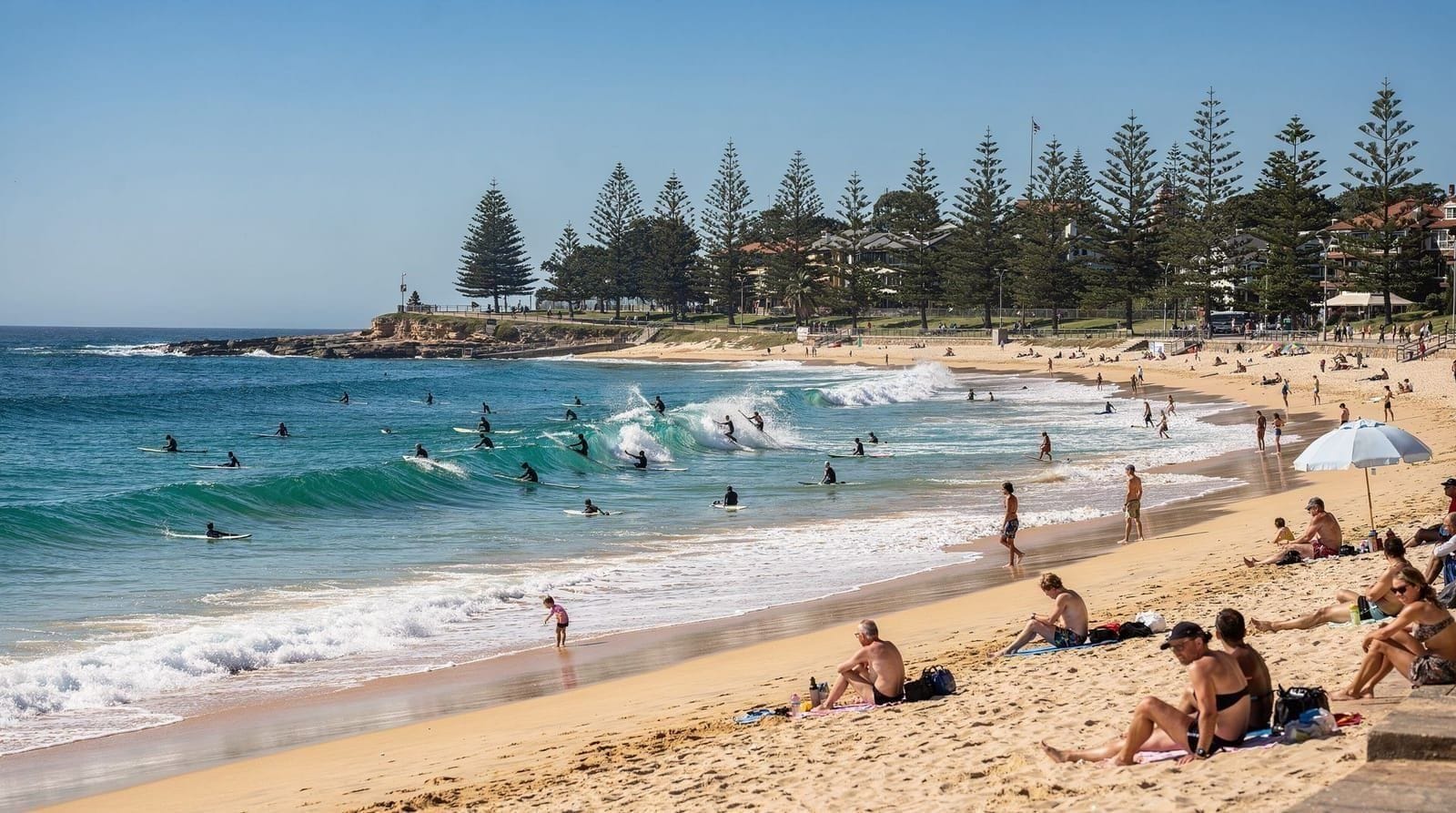
- Manly Beach (Oceanside): 1.7 km of patrolled surf beach. Suitable for confident swimmers; less so for toddlers.
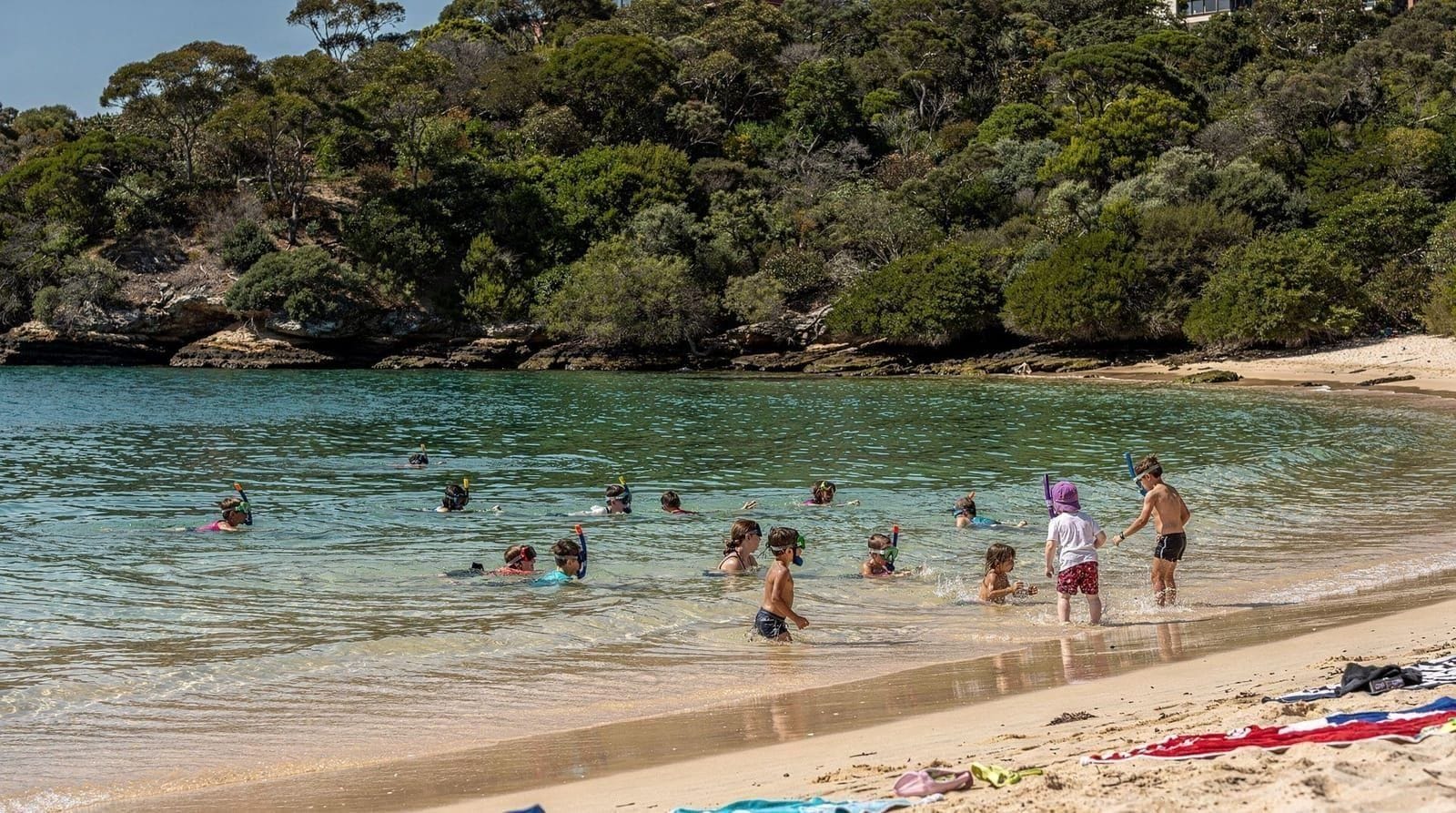
- Shelley Beach (15-minute walk): Protected bay, no surf, suitable for all ages including children and non-swimmers.
- The Corso: Manly’s main pedestrian street, running from the ferry wharf to the ocean beach. Good food options: The Pantry (breakfast, lunch), Sip (coffee), various casual restaurants for dinner.
- Manly Boardwalk: The East Esplanade promenade running along the harbour side — the route you’ll use later for penguin viewing.
- Manly Art Gallery: Small public gallery on the West Esplanade, free entry.
- Q Station (North Head): 15 minutes by bus or 30-minute walk, the former quarantine station is now a hotel and heritage site with ghost tours and historical exhibitions.
Plan dinner in Manly itself (The Bower at Shelley Beach for location, Pantry on the Corso for casual value) before the penguin viewing, rather than returning to the CBD for dinner and coming back.
If you want something more active before the evening wait, the protected water around Shelley Beach suits a guided snorkelling session in the sheltered bay, and paddlers can take in the coastline from the water on a kayak tour around the coves and beaches. Both fill the daylight hours nicely and leave you relaxed and unhurried when the light starts to fade. For a closer comparison of the two best-known beach destinations, read Bondi vs Manly; for beach-by-beach detail on the ocean side, see the Manly Beach guide.
The ferry ride itself is part of the appeal, and the Sydney ferries guide explains how the network works, while the Opal card guide covers paying for the trip. If you are shaping a wider visit, a Manly evening slots neatly into a weekend in 48 hours and the Northern Beaches guide shows what lies further up the coast.
Penguin viewing in a managed setting
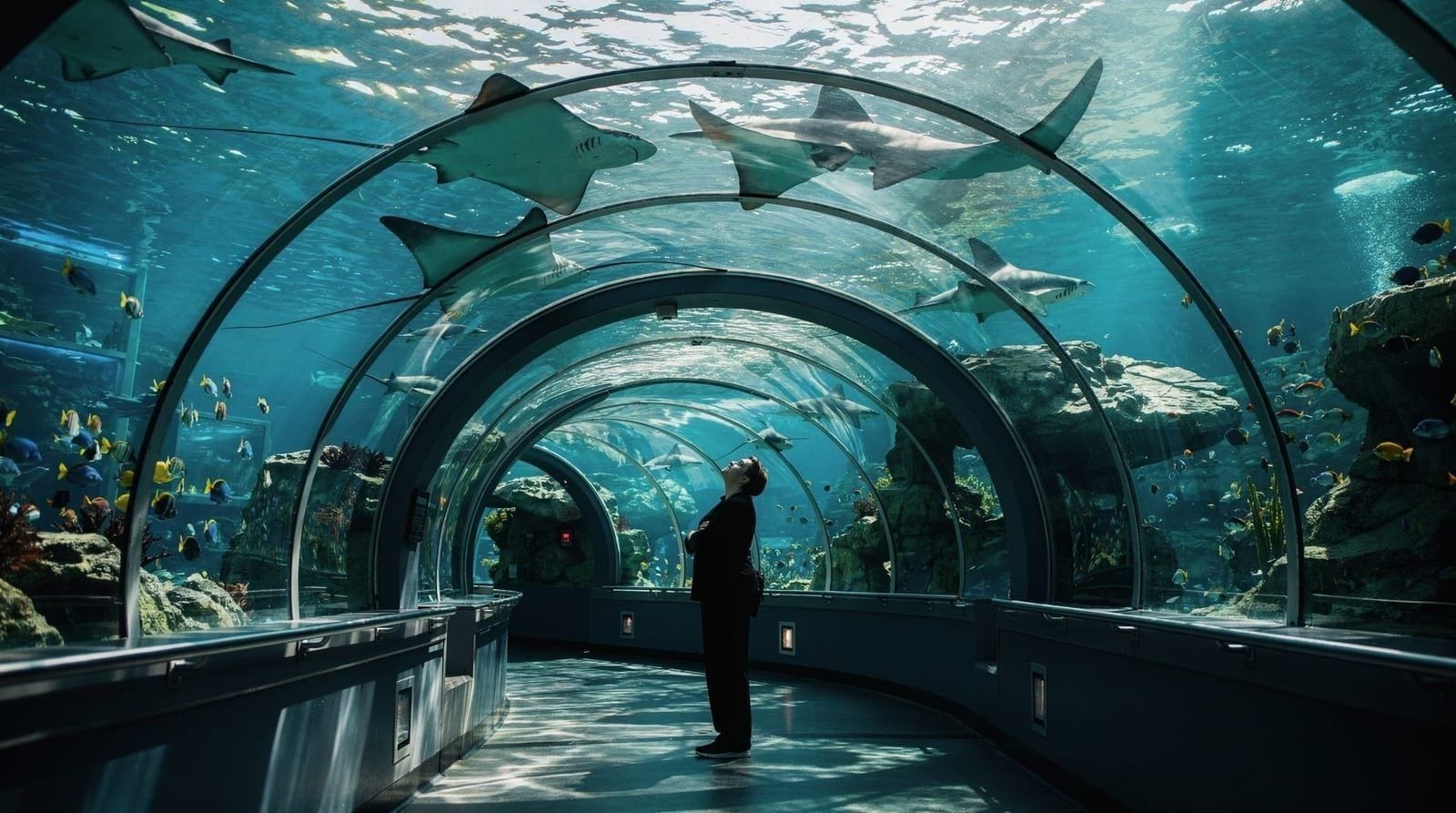
If the late-night logistics of wild penguin viewing are impractical (young children, tight schedule), SEA LIFE Sydney Aquarium in Darling Harbour has a well-maintained penguin exhibit with both Little Penguins and King Penguins. It’s a very different experience — indoor, brightly lit, managed — but it gives children and adults a close view of the species in daylight conditions.
The two experiences are complementary rather than substitutes: SEA LIFE provides the educational and visual context; Manly provides the authenticity of wild encounter.
Families weighing up how late to stay out can find broader ideas in the Sydney with kids guide, and Taronga Zoo is another daytime option for animal-minded children. Those who want to see the harbour from the water before dusk could also consider a hands-on sailing trip out of Manly, then head back to the wharf as the light drops.
Practical checklist for the penguin evening
- Arrive at Manly ferry wharf area 30 minutes before sunset
- Check the official Northern Beaches Council website for current guidance
- Set your phone to silent (or leave it in your pocket)
- No torch and no flash
- Wear a quiet outer layer (cold after dark even in summer near the water)
- Bring patience — penguins don’t arrive on a schedule
- Plan transport home: check the last Manly Ferry to Circular Quay on the official Transport for NSW website
For context on Manly as a destination, see Manly destination guide. For more Sydney wildlife options, see best zoos and aquariums in Sydney.
Frequently asked questions about penguins at Manly
Is it guaranteed that you’ll see penguins at Manly?
No. Wild animal behaviour cannot be guaranteed. On many evenings during the breeding season (roughly May to March), penguins return to the Manly wharf nesting area. But sightings depend on the evening’s conditions — weather, sea state, and how far out to sea the birds have fed that day. On a good evening in November, you might see 10–20 penguins; on an off evening, you might see none.
Can you see penguins at Manly in winter?
Yes. The colony starts coming ashore from about May, so winter evenings can work. Penguins are present year-round at the nesting site — they don’t migrate seasonally. Winter viewings are possible but less reliable than spring/summer viewings. The advantage in winter is that sunset is early (around 5 PM), meaning you don’t need to stay out late. A winter evening where penguins return at 5:30–6 PM is far more convenient for families with children than a summer evening where they arrive after 9 PM.
Are the Manly penguins the same species as the ones at SEA LIFE Aquarium?
Yes. SEA LIFE Sydney Aquarium’s Little Penguin exhibit features the same species (Eudyptula minor) that nests at Manly. The SEA LIFE exhibit also has King Penguins, which are much larger and are not native to Sydney. The comparison between the aquarium exhibit and the wild birds is interesting — the captive animals are noticeably better fed (rounder) and less hurried than wild birds returning from a long day at sea.
Is there a ranger or guide service at the Manly penguin precinct?
Do not count on one. The colony is looked after by the Northern Beaches Council and local volunteers, but staffing is not guaranteed; check the official Northern Beaches Council website for current guidance. The rules apply regardless.
Do children enjoy the Manly penguin experience?
It depends entirely on the child. Children who can manage a low-light, quiet, later-evening experience and understand what they’re looking at often find it deeply memorable. Children under about 6 who need strong sensory engagement (light, activity, visible animals) may find standing in the dark waiting for small blue shapes to emerge from the water less satisfying than expected. The experience is fundamentally more suitable for older children and adults. If you’re travelling with toddlers or very young children, the SEA LIFE Aquarium penguin exhibit is a more reliable and accessible alternative.
Do you need to book anything to see the Manly penguins?
For current booking or access information, check the official Northern Beaches Council website. This is a wild encounter on public land rather than a ticketed show. The only preparation worth doing is checking sunset time so you arrive at the right window, and checking the Bureau of Meteorology forecast for strong onshore wind, which can delay or reduce returns. If you’d rather have a guaranteed, daytime sighting, SEA LIFE Sydney Aquarium requires a ticket but removes the uncertainty entirely.
Conservation of the Manly colony
The Manly Little Penguin colony has been a focus of local conservation efforts since the 1990s. Key threats to the colony include:
- Dogs and cats: Predator attacks are the primary cause of penguin mortality at the nest sites. Dogs walking off-lead near the wharf after dark have killed penguins on multiple documented occasions. Dog restrictions apply near the penguin precinct after dark.
- Fishing line entanglement: Discarded fishing line from the wharf and surrounding rocks can entangle penguins on their return to shore.
- Light pollution: Artificial lighting from the wharf and surrounding development can disorient returning penguins, as described in the visiting rules section.
- Boating disturbance: Vessel traffic through Manly Cove can disturb penguins approaching the shore.
The volunteer monitoring programme tracks individual birds using microchip implants (standard practice for penguin conservation) and records nesting outcomes each season. This data contributes to the broader understanding of Little Penguin population trends along the NSW coast.