Sydney's Opal card — everything you actually need to know
The thing Sydney locals don’t explain because they’ve forgotten it’s confusing
If you arrive in Sydney and ask a local how to get around, they’ll say “get an Opal card” and then go back to their flat white. What they won’t tell you is how the fare caps work, why the ferry to Manly costs the same as the ferry to Watsons Bay (it doesn’t), or what happens if you tap on but forget to tap off.
This is the version they should have given you.
| At a glance | |
|---|---|
| Where to get one | Train stations, newsagencies with the Opal logo, Sydney Airport arrivals |
| Cost | Card is free; minimum A$10 top-up to activate |
| Daily cap | Around A$17.80 |
| Weekly cap | Around A$50 (Monday–Sunday) |
| Best use | Loaded at the airport on arrival, topped up as needed via the app |
What is the Opal card?
The Opal card is Sydney’s contactless transit payment card — equivalent to London’s Oyster, Melbourne’s Myki, or Tokyo’s Suica. It works on trains, buses, ferries, and light rail across Greater Sydney, the Blue Mountains, Central Coast, and as far south as Wollongong.
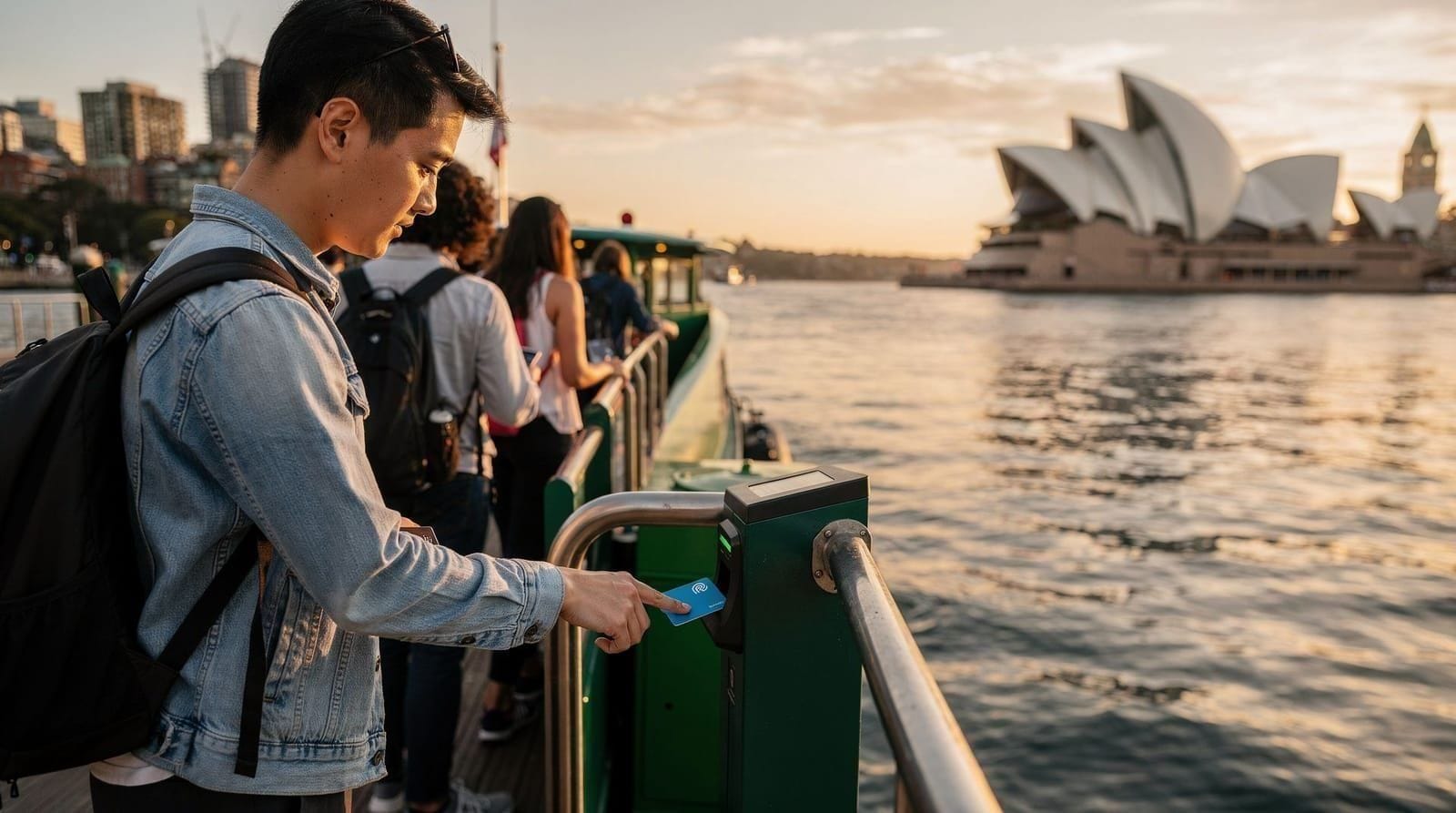
You load money onto it, tap on when you board, tap off when you exit, and the correct fare is deducted automatically. The card itself is free; you just need credit loaded onto it.
Since 2022, Sydney has also accepted contactless bank cards (Visa, Mastercard) and mobile payments on most services. Your bank card works exactly like Opal for basic fare calculations. However, bank cards do not benefit from the daily and weekly fare caps — more on those below. If you’re spending more than a day or two using transit, the dedicated Opal card is worth having.
Where to get one
- At any train station: the Opal top-up machines dispense new cards (with a minimum A$10 top-up to activate).
- Newsagencies and convenience stores with the Opal logo — there are hundreds across the city.
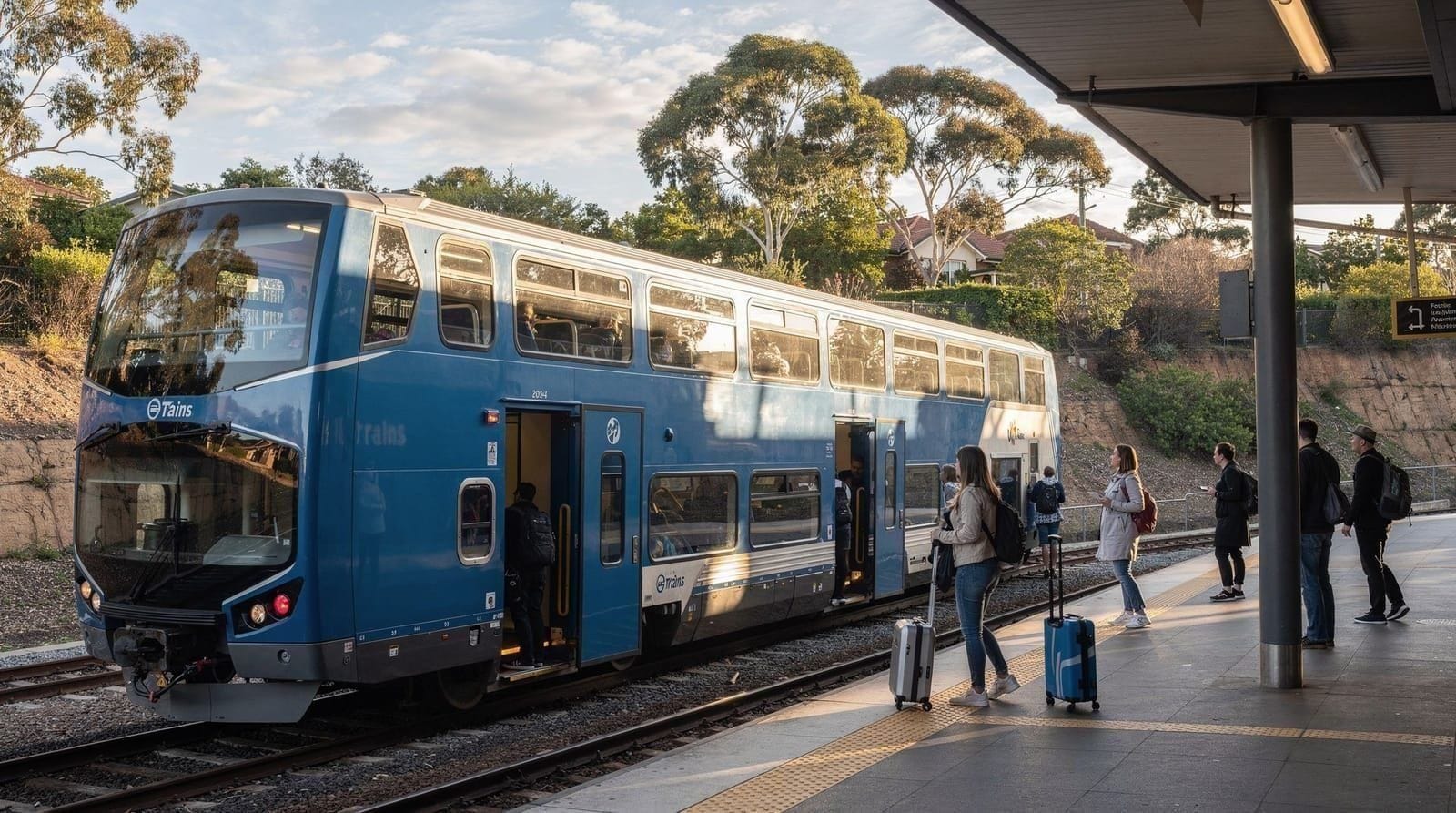
- Sydney Airport (T1 International arrivals, near the train station entrance): pick one up immediately after clearing customs before you figure out anything else.
You cannot buy Opal cards at the Airport train gates themselves, so if you arrive intending to take the train and have no card, you’ll need to go to the small retail area near the station entrance.
How fares are calculated
Fares vary by distance zone, not by a flat rate. A short hop on the train costs significantly less than a longer journey. The system uses a distance-based tap-on/tap-off model.
Key fares you’ll actually use (approximate, 2024):
- Circular Quay to Bondi Junction (train): A$2.08
- Circular Quay to Manly (ferry): A$8.52
- Circular Quay to Parramatta (train): A$4.25
- Central to Blue Mountains/Katoomba (train): A$6.38 (off-peak)
- Circular Quay to Watsons Bay (ferry): A$4.68
- Any bus within the CBD: A$2.10–A$3.90 depending on distance
The opal fare calculator tool on this site calculates exact fares for any journey.
The daily cap: the key number
Daily cap: A$17.80 (as of 2024 — verify at transportnsw.info as this changes).
Once you’ve spent A$17.80 on Opal in a single calendar day (midnight to midnight), every subsequent journey that day is free. This matters most in two scenarios:
Scenario 1: You’re doing multiple ferry trips in one day. Two return Manly ferries (A$34.08) would blow well past the cap — your effective cost for everything after the second outward journey is A$0.
Scenario 2: You’re touring extensively — train, bus, ferry, light rail. A busy sightseeing day easily reaches the cap, after which the rest of the day is free.
The weekly cap
Weekly cap: A$50 (Monday to Sunday).
If you’re in Sydney for a full week and using transit most days, your maximum spend is A$50 — well under what a London or New York visitor pays for equivalent usage. This makes Sydney’s transit genuinely affordable for active tourists, even though individual fares feel steep by international standards.
The off-peak discount
All train journeys (not ferries or buses) are 30% cheaper outside peak hours. Peak hours are defined as:
- Weekday mornings: 7:00 am – 9:00 am (tap on before 9 am)
- Weekday afternoons: 4:00 pm – 6:30 pm (tap on before 6:30 pm)
If you’re flexible on timing, travelling on the 9:05 am train instead of the 8:55 am train saves you 30% on the fare. For longer journeys like Sydney to Katoomba (Blue Mountains), this is meaningful — around A$1.90 saved each way.
The Sunday free-travel cap
Sundays: capped at A$2.80 — a flat cap for unlimited travel all day on any Sunday. This is one of the better-kept transit secrets in Sydney.
On a Sunday, you can take the ferry to Manly, train to Bondi Junction, bus to Coogee, and light rail to Central for a total of A$2.80. The Sunday cap is applied automatically — no special card needed, no code to enter.
For visitors, this makes Sunday the best day to do multi-destination exploring. The Bondi to Coogee coastal walk is a natural Sunday route: train to Bondi Junction, bus to Bondi Beach, walk the coast, bus back from Coogee — all under A$2.80.
What happens if you forget to tap off
If you tap on but don’t tap off, the system charges you the default maximum fare for that mode (train, bus, or ferry). For a short train journey, this could be triple the correct fare.
Fix: you have 60 minutes (roughly) to tap on again at any station on the same network and the system will apply a “missed tap off” correction. If you notice immediately, go back and tap. If you notice later, you can apply for a refund via the Opal website, but it requires creating an account and linking your card number.
Moral: tap off every single time, especially on ferries (where the default max fare is high).
Airport train surcharge
The Airport train line has an additional station access fee of A$14.30 for domestic, A$15.00 for international (2024 figures). This is separate from the regular train fare and applies regardless of your Opal balance.
Total cost to get from the international airport to the CBD: approximately A$21–22. This is a frequently complained-about figure and is legitimately one of the more expensive airport links in the world relative to the journey distance. If you’re splitting it between two people in a ride-share, the calculus changes — an Uber from the airport to the CBD runs around A$45–60 depending on time of day.
Ferries: the one quirk
Ferry fares use the same tap-on/tap-off system, but the journey categories work slightly differently. The Sydney Harbour “inner harbour” network includes most of the routes you’ll use as a tourist: Manly, Watsons Bay, Kirribilli, Neutral Bay. These all tap on at the same ferry terminal entry points.
One catch: some ferry wharves (particularly Parramatta River routes) have separate tap-on gates. Check before boarding.
Linking to your phone
The Opal app lets you monitor your balance, set up automatic top-ups, and track journey history. Once you have a card number (printed on the card), registering it takes two minutes and means you can top up from anywhere — useful if you’re planning an early-morning airport departure and realise the night before that your balance is low.
Common visitor mistakes with Opal
Buying a single-use ticket at the station: Single-use paper tickets exist on Sydney trains and cost significantly more than the equivalent Opal fare. A single-use ticket from the airport to the CBD is around A$22; the Opal equivalent is A$15.49. Never buy a paper ticket if you’re planning more than one journey.
Not topping up before the airport train: The machine in the arrivals hall at the international airport dispenses new cards. Do this before you reach the train gates, not at the gates themselves. If your card is low and you’re unsure, load A$30 — enough for a week of light use with the weekly cap protection.
Missing the off-peak window: The 30% off-peak discount on trains is applied based on your tap-on time. If you’re at the platform at 8:55 am and the train arrives at 9:03 am, wait for the 9:03 train and tap on after 9 am. The saving on a Blue Mountains day trip is around A$1.90 each way — small, but it adds up.
Forgetting the Sunday cap: This one doesn’t hurt you if you forget it — the cap is applied automatically — but visitors who don’t know about it sometimes make conservative plans on Sundays to avoid “spending too much on transport.” On Sundays, there is no such thing. The A$2.80 cap covers everything, everywhere, all day.
Using your bank card instead of Opal
If you’d rather not manage a separate card, your Visa or Mastercard (tap-to-pay) works on all Sydney Transit services. Fares are the same as Opal per journey. The key differences:
No caps: Your bank card does not accrue the daily cap or the Sunday cap or the weekly cap. If you take multiple ferry trips in a day, you pay full fare for each. Over a week, this adds up meaningfully.
No concession or child fares: Opal cards can be set up as child/concession cards. Bank cards are always adult full fare.
For a single day or a short transit-light visit, the bank card is perfectly convenient. For a week of active sightseeing, get the Opal card.
The ferry-to-Manly calculation
This is worth spelling out because it comes up constantly. The Manly ferry is the most expensive single transit journey most visitors take — A$8.52 one-way. A return trip is A$17.04.
On a day when you take the Manly ferry return and use any other transit (a bus, a train), you’ll very likely hit or approach the daily cap. The first A$17.80 of your Opal spending is real money; everything after is free.
Practical implication: if your Vivid cruise, BridgeClimb, or other activity is happening on the same day as your Manly ferry trip, and you’re also using a bus to get somewhere, you may find your transit for the entire day effectively capped out at A$17.80 regardless of how much more you travel.
The weekly cap arithmetic
The A$50 weekly cap resets on Monday at midnight. If you arrive in Sydney on a Wednesday, your first five days of Opal use will be capped in the partial week (Wednesday to Sunday), then reset again on Monday for your remaining days.
In practical terms: arrive midweek, use transit heavily in the first few days to exhaust the partial-week cap quickly, then have effectively free transit for the rest of that week from the cap reset point. The next Monday cap brings another A$50 maximum for the following full week.
For more detail on specific routes and the ferry network, see our Sydney ferries guide, trains guide, and getting around Sydney overview.
Using Opal beyond the city
Opal isn’t just a CBD tool — it covers a surprisingly wide area, and knowing where it stops working matters for day trips.
Blue Mountains: Opal covers the full train line to Katoomba, so a Blue Mountains day trip can be done entirely on Opal, off-peak fare included, without booking anything in advance.
Central Coast and Wollongong: Both are on the Opal network by train — a Central Coast day trip or a run down the Grand Pacific Drive to Wollongong work the same way, tap on and tap off, standard fare rules apply.
Where Opal stops working: Hunter Valley, the Southern Highlands, and Jervis Bay are outside the Opal network — you’ll need a car, a tour, or a coach service for those. See driving in Sydney and NSW and is a car needed in Sydney for the honest breakdown of when you do and don’t need to hire one.
How Opal fits into your overall trip budget
Transit is a small line item compared to accommodation and activities, but it adds up over a week. For a realistic sense of where it sits, see the Sydney trip cost guide — most visitors doing a mix of trains, buses, and the occasional ferry land somewhere between A$30–50 for the week thanks to the caps described above, which is modest next to accommodation and food.
When Opal is not the right ticket
Opal is built for getting from A to B. It is not built for sightseeing from the water, and that is where visitors sometimes pay for the wrong thing. A regular ferry tap on and tap off is the cheapest way onto the harbour, and for a first look at the Opera House and the bridge from the deck it does the job. If you would rather have commentary and the freedom to step off and on at several wharves, a hop-on hop-off harbour ferry is a different product with its own ticket, and you pay for it separately from your Opal credit. Many people book a hop-on hop-off ferry around the harbour for a relaxed day and keep Opal for the trains and buses either side of it.
The same logic applies to a zoo day. Taronga is reached by ferry from Circular Quay, and you can simply tap on with Opal and buy your entry at the gate. Some visitors prefer a bundled option that folds the crossing into the entry, such as a zoo entry ticket with the ferry and cable car included. Whether that suits you comes down to how much you value having it sorted in advance. Our Taronga Zoo guide goes through the options, and Taronga versus Featherdale helps if you are weighing up which animal day to do.
If you are building a big harbour day around Sydney Tower Eye and the water, a harbour ferry and tower observation deck combination keeps the planning simple, and your Opal card then only has to cover the trips to and from your hotel.
Planning a transit-smart day around the harbour
A few pairings work well once you understand the caps:
- Ferry first, train home. Start from Circular Quay, take a ferry out to Manly or Watsons Bay, and come back by whichever route suits you. The Manly beach guide and Watsons Bay and The Gap cover what to do when you arrive.
- A beach day with a bus leg. The Bondi beach guide and Bondi versus Manly explain which side of the city suits your mood, and either can be reached on a single Opal journey.
- City sights on foot. Between The Rocks and Darling Harbour you will walk more than you ride, so do not expect to reach the daily cap on these days.
- Airport arrival. If you are reading this before you land, Sydney Airport to the CBD lays out the choices side by side.
For a ready-made plan that already accounts for transport, try the 3 days in Sydney itinerary or the Sydney weekend in 48 hours, and see our first-time visitor tips for everything else. If money is tight, Sydney on a budget, honestly pairs well with the cap advice above. If you want the story version of the same advice, our ferry day out and first-time Sydney mistakes are good next reads.
Frequently asked questions about Sydney’s Opal card
Can I use one Opal card for two people? No — each traveller taps individually, and a single card can only be tapped by one person per journey. Groups need one card per person to travel together.
What happens to leftover Opal balance when I leave Sydney? You can request a refund of unused balance over a small threshold via the Opal website, though it requires linking a bank account and can take a few weeks to process — for balances under about A$10, most visitors simply leave it, since a returning traveller can use the same card later.