How much a week in Sydney cost us — actual numbers, July 2025
The number everyone wants but nobody posts
| At a glance | |
|---|---|
| Who this is for | Mid-range travellers, two adults sharing costs |
| Total cost | Around A$2,400 for two, one week |
| Per person per day | Around A$172 |
| Season | July 2025 (winter, lower rates) |
| Biggest line item | Accommodation, around A$1,150 for 7 nights |
Travel budgeting content is full of either vague ranges (“budget A$80-$200 per day depending on your style”) or unrealistic minimums that assume you cook every meal, stay in a dorm, and do nothing. Here is what a week in Sydney actually cost two adults in July 2025 — a real trip, with choices, mistakes, and a few splurges.
Our baseline: mid-range travellers. Not budget backpackers, not luxury tourists. We stayed in an apartment, cooked some meals, ate out a few times, used public transit, paid to get into the things we wanted to see, and did one significant guided day trip. This is the trip most couples or pairs of adult friends would actually take.
Exchange rate note: in July 2025, A$1 ≈ €0.58 / US$0.64. I’ll include rough conversions throughout.
Accommodation: A$1,148 (7 nights)
We stayed in a one-bedroom Airbnb in Surry Hills — walking distance to Hyde Park, bus access to everywhere, and a 15-minute walk to the closest beach (Coogee is a bus ride; Bondi is the same). July is winter in Sydney, which pushed prices below summer rates.
Nightly cost: A$164/night (≈ €95, US$105). For context, the same apartment in December runs A$220–240/night.
What we learned: Surry Hills was an excellent base for transit access and food, but it added A$1–3 per Opal journey to reach the main tourist areas at the harbour. If your priority is minimising transport costs, base yourself closer to Circular Quay — but expect to pay A$30–50/night more. The math roughly cancels out.
A hotel equivalent in a similar location would have run A$180–220/night for a basic double. The apartment won on value for two people because we had a kitchen.
Flights (not included)
We flew from London, and flights are outside the scope of a Sydney budget breakdown. They’re a sunk cost before you arrive. What I will note: July is low season for flights from Europe to Australia, and our return fares were around A$1,800 per person — cheaper than December/January, where comparable routes cost A$2,400–2,800.
Food and drink: A$682 (7 days, 2 people)
Groceries: A$134 total — Coles, two shops. We cooked breakfast every day and dinner three nights. A full Australian supermarket grocery run for a week’s breakfasts, lunches-at-home, and some dinners is expensive by European standards. You are not in Southeast Asia.
Coffee: A$98. This sounds like a lot, but Sydney has an extremely strong coffee culture and a flat white is A$5.50–6.50 at any decent café. We were averaging two coffees each per day — some days more. If you don’t drink coffee, your expenses here will obviously differ.
Lunches out: A$185. We ate lunch at sit-down places about four times (A$22–35 per person per meal) and the other days grabbed something more casual — pies from a bakery (A$6–8), fish and chips at Sydney Fish Market (A$28 for two), sandwiches.
Dinners out: A$265 — three dinners at proper restaurants. One at a Thai place in Newtown (A$62 for two with a glass of wine each — one of the best meals of the trip), one at a mid-range Italian in Surry Hills (A$88), and one fish dinner at Watsons Bay (A$115, including the view premium). Sydney restaurants are generally good and approximately 15–20% more expensive than equivalent quality in London or Paris.
Occasional drinks/snacks: A$110. This includes a round of drinks at a harbour bar (A$36 for two beers and a glass of wine, which felt approximately normal for Sydney), a couple of convenience store purchases, and a market coffee.
If you would rather pay once and eat well than make a dozen small decisions, a guided tasting is a fair way to fold a meal and some local context into one line of the budget. A guided tasting walk through the fish market is the version we would pick, and it pairs naturally with the cheap eats guide and the Sydney food tours guide if you want to compare formats before committing.
Food verdict: A$682 for two for a week is realistic for mid-range. Budget travellers cooking most meals could get this to A$400–450. If you’re eating out every meal, budget A$900–1,100.
Transport: A$138 (7 days, 2 people on Opal)
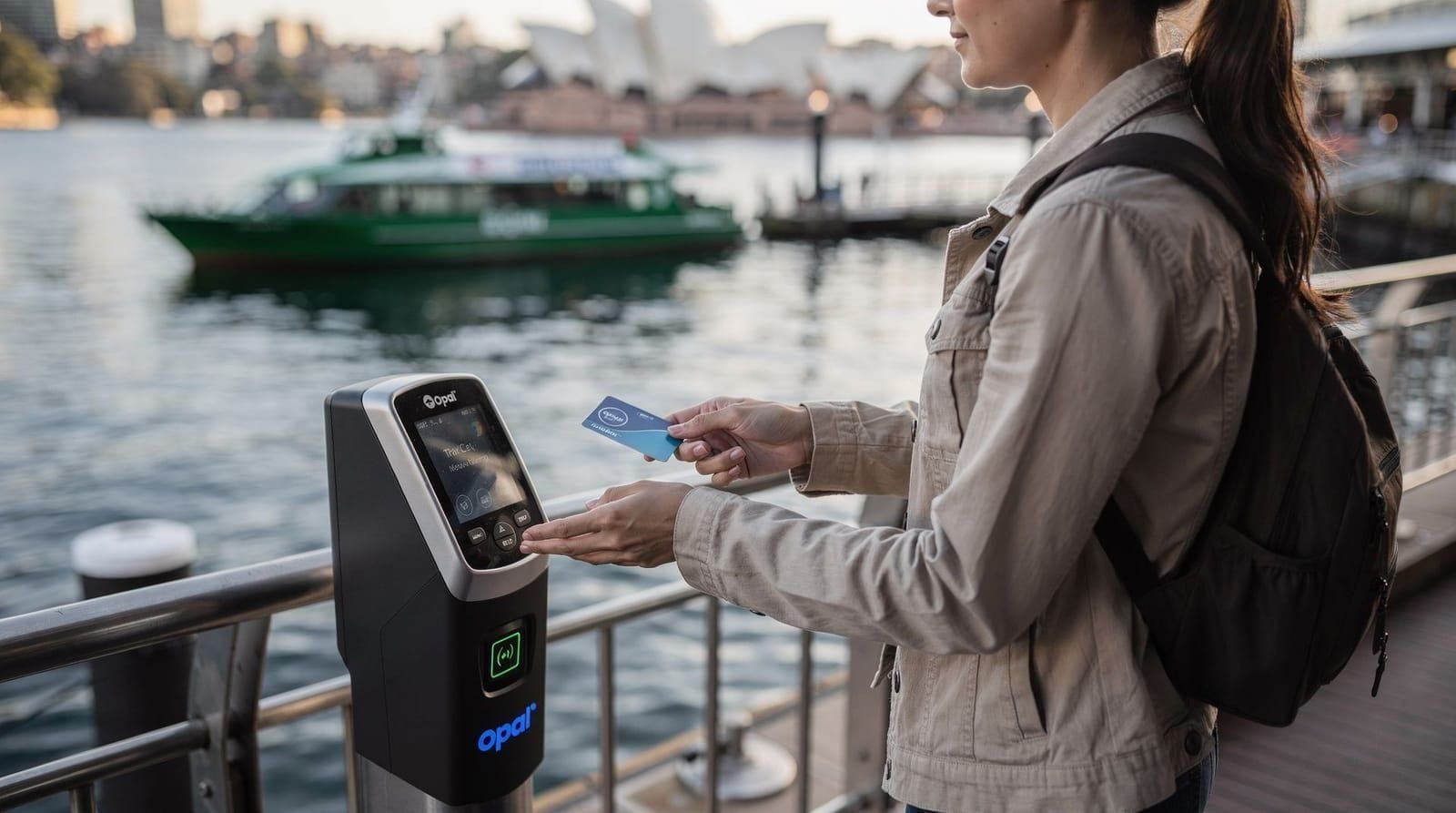
This is where the Opal card pays back. We hit the weekly cap (A$50 per person) by day four of active transit use. Total: A$100 for the week in Opal, plus A$38 for a ride-share on one late night when transit wasn’t running.
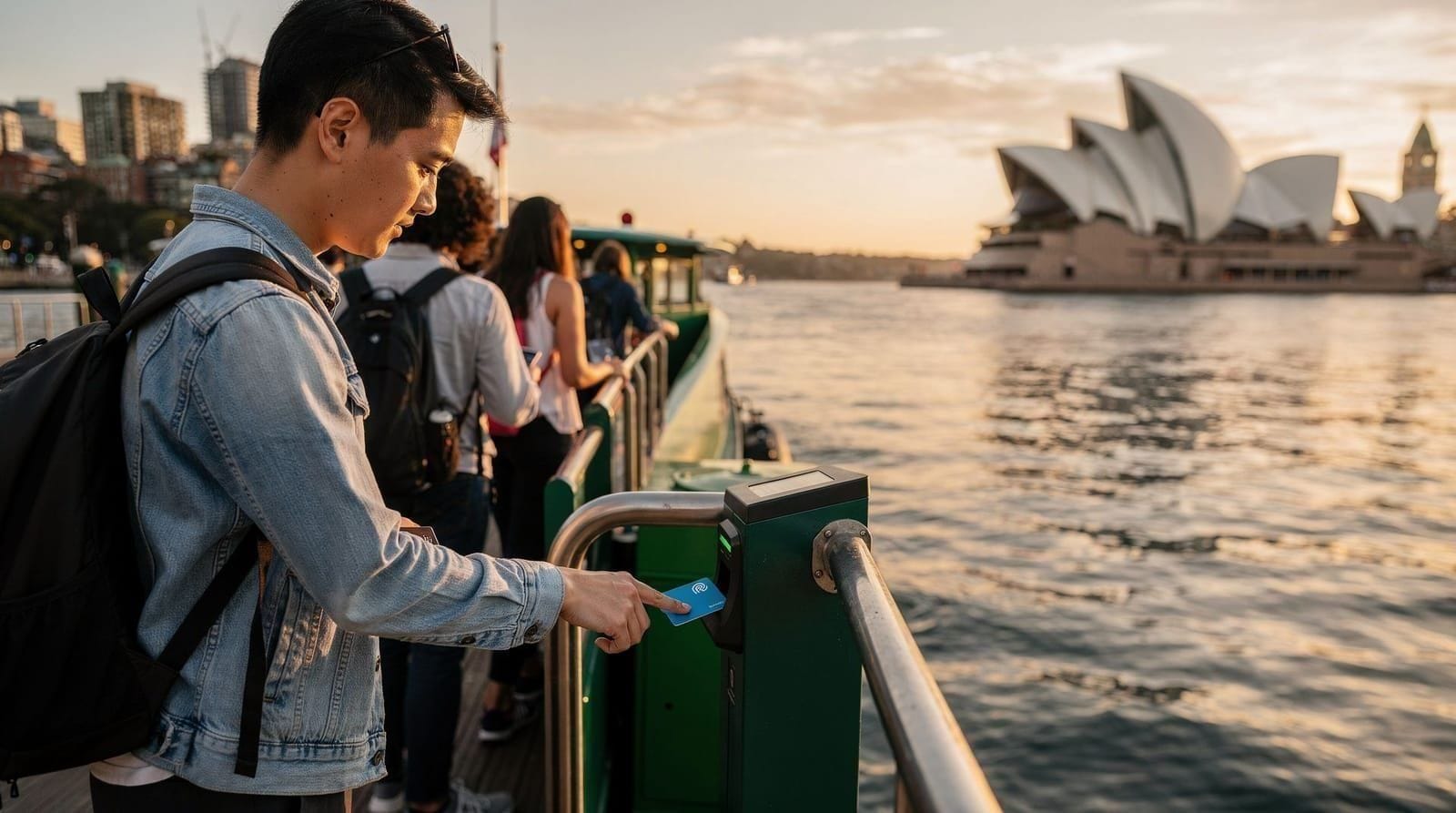
What this covered: daily trains and buses to the harbour/city, four return ferry trips to Manly (A$8.52 each), two trips to Bondi Junction, one Blue Mountains return train. In non-capped weeks this would have been closer to A$180; the weekly cap is a genuine saving for active visitors.
The ride-share at midnight was an Uber — A$38 from Darlinghurst back to Surry Hills (about 3 km). Sydney ride-share late-night pricing is not gentle.
No car for the week: we did everything on public transit plus one guided Blue Mountains day. For city-based exploration, a car is not needed and would have added car rental (check current rates with the rental companies) plus fuel plus parking stress.
Activities and experiences: A$347 (2 people)
This is the most variable category — what you pay here depends almost entirely on which experiences matter to you.
Blue Mountains guided day trip: A$149 per person (A$298 total). We chose the all-inclusive small-group Blue Mountains tour that included Scenic World, a guided hike, and lunch. This was the single biggest line item on the trip and worth every cent — having a guide who could explain the geology, the plant life, and the First Nations context of the landscape transformed the experience compared to a self-drive day with a tourist bus.
Taronga Zoo: A$49 per adult (A$98 total, including ferry combo ticket from Circular Quay). This was slightly more expensive than we’d expected but included the return ferry and the cable car.
Sydney Tower Eye: A$29 per adult (A$58 total). A quick hour — not essential, but the views from 250 metres give you a useful geographic orientation for the city.
Free activities: Royal Botanic Garden, Barangaroo foreshore walk, Bondi to Coogee coastal walk, Manly Corso and beach, The Rocks precinct, Hyde Park. A meaningful portion of what Sydney offers is genuinely free or very low-cost. We spent roughly four of our seven days doing zero-cost activity in the mornings.
Miscellaneous: A$89
Sunscreen (bought at a Priceline, A$14 — not cheap), a new bus card holder (Opal), a pharmacy stop, one book from a Newtown bookshop (A$28), and an umbrella bought in a panic at Town Hall during a sudden July shower (A$19 from a newsagent — actually a reasonable umbrella).
Total: A$2,404 for two adults, one week
That’s approximately A$1,202 per person, or:
- €697 / US$769 per person
- A$172 per person per day (€100, US$110)
Breakdown summary:
| Category | A$ total | Per person |
|---|---|---|
| Accommodation | 1,148 | 574 |
| Food & drink | 682 | 341 |
| Transport | 138 | 69 |
| Activities | 347 | 173.50 |
| Miscellaneous | 89 | 44.50 |
| Total | 2,404 | 1,202 |
What we’d do differently
The single biggest value change would be an extra night in the Blue Mountains — if you’re going to pay for the day trip to get there, staying one night in Katoomba reduces your Sydney accommodation cost by one night and lets you do a morning hike before the tour buses arrive. The saved accommodation (A$164 Surry Hills night vs ~A$140/night at a Katoomba guesthouse) barely breaks even, but the experience of having the valley to yourself at dawn is worth more than the spreadsheet shows.
We also slightly over-ate at tourist-adjacent spots. The fish and chips at Sydney Fish Market were genuinely excellent value. The more expensive meal at Watsons Bay was fine, not exceptional. In Sydney as elsewhere, you do not need to pay harbour-view prices to eat well.
The things we skipped and why
BridgeClimb: At A$174–398 for the twilight or dawn version, it’s the most expensive single activity in Sydney. We chose not to on this trip — a combination of budget decision and a preference to spend the equivalent on two extra nights elsewhere. We’ve done it before and it’s genuinely world-class. If it’s your first time in Sydney and you have the budget, it belongs on the list. If you’re return visitors or on a tight week, it’s optional.
If you do decide to fold it into your own budget, the twilight climb over the Harbour Bridge is the one we would point first-timers to. Our BridgeClimb guide walks through the options, and BridgeClimb vs the Pylon Lookout is the cheaper way to get a high view of the harbour if the full climb does not fit your week. For the wider picture of the bridge itself, see the Sydney Harbour Bridge guide.
Opera House interior tour: A$42 per person is reasonable for a 60-minute guided tour. We skipped it because we’d done it previously, not because it’s poor value. The architecture from outside is free and arguably more impressive, but the interior tour explains the building’s construction history and engineering in ways that significantly change how you see it.
Helicopter: The harbour helicopter tours start at around A$200 per person for a 20-minute flight. We didn’t do it. Objectively it’s probably exceptional. Subjectively we prefer ferry-level views and the extra walking distance. People who have done it say it’s one of the best experiences available in the city.
Two other planning notes sit alongside these. The Opera House guide and the is the Opera House tour worth it piece help you decide whether the interior is worth a slot in your own week. And if your dates are flexible, the best time to visit Sydney guide explains why a winter week like ours tends to be easier on the wallet, while Sydney in winter covers what the season feels like on the ground.
Tipping and service charges
Australia has no tipping culture. Prices on menus include service. We tipped once — a long lunch where the service was genuinely exceptional, left A$15 on a A$88 bill — and twice left nothing additional when service was average or worse. The absence of tipping anxiety is a genuine quality-of-life improvement over the US visitor experience.
Public holiday surcharges are real: on the one day during our trip that fell on a NSW public holiday, our restaurant bill carried a 15% surcharge (displayed on the menu). This is legal and normal.
Comparing against Melbourne
We’ve done a similar week in Melbourne, which is often cited as the comparable Australian city. Our Melbourne week cost approximately A$2,180 — slightly less than Sydney, reflecting lower accommodation prices in the equivalent inner-suburb locations. Melbourne’s food scene is arguably at least as good as Sydney’s, and some categories (coffee culture, restaurant density) are stronger. Sydney’s edge is the harbour — the ferry infrastructure, the coastal walks, and the sheer scale of the waterfront public realm that Melbourne’s bay doesn’t match.
For most European visitors, neither city feels dramatically expensive relative to London, Paris, or Zurich. For visitors from Southeast Asia or Central Europe, both will feel expensive.
Budget scenarios
Minimum viable week for two (cooking all meals, hostels or budget hotel, free activities, one guided day trip): approximately A$1,400 — A$700 per person.
Our mid-range week (apartment, some restaurants, Opal transit, selective paid activities): A$2,404 — A$1,202 per person.
Comfortable week (boutique hotel near harbour, restaurants most nights, full activity program including BridgeClimb): approximately A$3,400–3,800 — A$1,700–1,900 per person.
Luxury week (harbour-view hotel, fine dining, helicopter, private tour): A$5,000+ per person.
The mid-range case is the most relevant benchmark for most visitors. It delivers the full Sydney experience — the harbour, the coast, the food culture, one significant guided experience, and the freedom to use transit without calculating every journey.
Anyone weighing the two cities properly should read Sydney vs Melbourne and our Sydney versus Melbourne debate before locking in flights.
Is it worth it?
Sydney is not cheap. The question isn’t whether it’s cheap — it isn’t — but whether it delivers at its price point. Our honest answer after this trip: yes.
The harbour is not a tourist amenity that requires payment. It’s a free public space that happens to be one of the most beautiful built environments in the world. The Opal card gives you access to it from everywhere. The coastal walks are free. The galleries are free. The beaches are free. The parks are free.
The paid activities — the zoo, the guided Blue Mountains day, the tower — augmented a week that was already substantively good at A$0. The total cost felt proportionate to the experience delivered.
Where the money actually leaked
Looking back at the receipts, three categories were softer than they needed to be. The A$38 late-night Uber was avoidable — the last train from Darlinghurst was closer than we realised, and checking the getting around Sydney guide before the trip would have saved it. The A$14 sunscreen was a rookie mistake; a large bottle from a Woolworths rather than a Priceline pharmacy would have been half the price. And the Watsons Bay dinner, while pleasant, illustrates a general Sydney rule: you pay a genuine premium for a water view, and it’s worth knowing that going in rather than being surprised by the bill.
None of these are large amounts individually, but they total close to A$70 — enough for another two ferry return trips or a full day’s Opal cap for one person.
How this compares to other week-long budgets we’ve tracked
Two adults, mid-range style, one guided day trip included, is a genuinely repeatable formula. If you strip out the Blue Mountains day (A$298) and the zoo (A$98), the remaining “just Sydney, walking and eating” week drops to roughly A$1,800 for two — useful if your interest is the city itself rather than the day-trip add-ons. The Sydney trip cost guide has a longer-run average across multiple visitor profiles if you want a number that isn’t tied to one specific week in July.
Frequently asked questions about How much a week in Sydney cost us
Is A$2,400 for two people typical, or did we spend more than most visitors? It’s a reasonable mid-range benchmark. Budget travellers cooking most meals and skipping the guided day trip can do a week for A$1,400–1,600 for two; visitors wanting more restaurants and a fuller activity list should expect A$3,000–3,500.
What’s the single easiest way to cut this budget without losing much? Skip one paid attraction (the zoo or the tower, not the Blue Mountains day) and lean harder into the free harbour and coastal walks — they cost the same amount of “wow” for A$0.
If you are still shaping the trip, the Sydney on a budget in 5 days itinerary, the free things to do in Sydney list, and the blog piece is Sydney expensive in 2026 are good next reads. Before you book a base, the where to stay in Sydney guide compares neighbourhoods.
For more on Sydney costs and budgeting: Sydney trip cost guide, honest Sydney budget guide, and the Sydney budget calculator tool.